


concrete gold

The colloquial term "concrete gold" is intended to symbolise the stable value of real estate. Particularly in times of low interest rates – which are now a thing of the past – there has been an increase in investment in real estate, similar to precious metals. At the same time, the renovation and modernisation of residential properties is being driven forward. However, as is currently clearly noticeable, real estate can also be subject to a decline in value. Fuelled by the increase in key interest rates and exacerbated by rising modernisation costs, statutory renovation obligations and rising costs and levies, market values are currently falling. Although this goes almost unnoticed by private owners who use their properties themselves, the price reductions are visible in all real estate transactions, including in the context of necessary financing. Balance sheet value adjustments at large real estate companies have been filling the news for weeks.
Calls for government housing subsidies, tax incentives and direct public investment are growing louder. Questions are also being raised as to whether legislators have already done their part to facilitate investment in the drafting of civil law. Naturally, the first place to look is tenancy law, specifically sections 555 a – f and 559 – 559 e of the German Civil Code (BGB) and residential property law, specifically sections 20 and 21 of the German Condominium Act (WEG). These provisions contain numerous small levers designed to facilitate the implementation of modernisation measures. Examples include the possibility of referring to generally accepted flat rates (Section 555 c III BGB), the simplified procedure under Section 559 c BGB, and the majority requirement for structural changes and their costs in accordance with Sections 20 and 21 WEG.
At the same time, however, the legislator considers it its duty to intervene in the rental market with regulations to protect tenants from "overpriced" housing. The most prominent examples are rent controls and the reduction of the modernisation surcharge to eight per cent, together with a maximum amount in accordance with Section 559 BGB. This simultaneously takes the momentum out of the well-intentioned procedural simplification. Overall, it is therefore worth considering whether such brakes on the private rental market could be removed and replaced by bold government support for subsidised housing construction.

Intelligent composition
A 90-Degree Turn: How Rotation Creates Private Courtyards in Townhouse Living

One of a kind, every time
Kai Franke creates durable furniture that merges steel, wood, and tiles into timeless pieces.
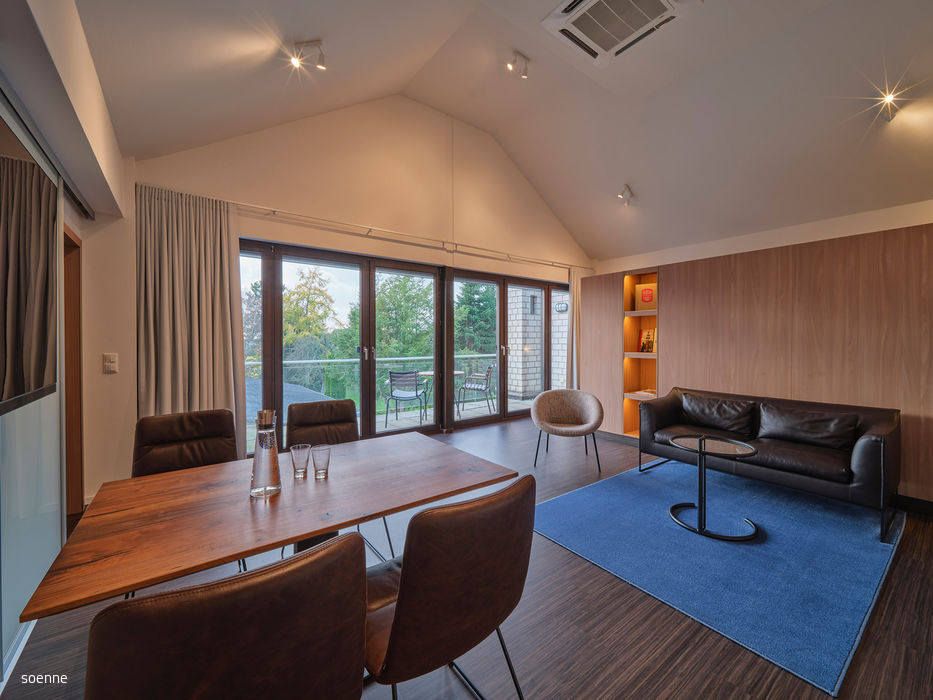
Artist Suites
Southern Essen hotel honors its famous artist ancestor with three distinctive suites

Don't Overshadow the Space
Clean industrial design lets the products shine