


A Cohesive Ensemble
A new vicarage for a parish in Lütgendortmund opens up the streetscape in a welcome way


The forecourt of St. Magdalena Catholic Parish in Lütgendortmund now presents itself as an open, welcoming, and multifunctional space. This transformation came about through the construction of a new rectory with integrated administrative offices—a design that creates a harmonious ensemble with the church. But it wasn't always this way. When Deen Architects from Münster submitted their competition entry for the new rectory, they encountered a fragmented layout: existing buildings lined the elongated site along the street. The rectory, positioned centrally with its private garden, functionally separated the church from the parish hall, which was accessible only via public roads. A tall wall further isolated the grounds.
The two-story new building now aligns its long side toward the street, defining the boundaries of the new church forecourt. This arrangement has created a new pedestrian connection between the church and community center along the new rectory. The existing wall was removed and the plaza is now framed with lawn and trees. The slightly recessed entrance to the parish office on the ground floor faces the church. Visitors enter through a vestibule directly into the open-plan front office, which connects to an adjacent back office area. Additional office spaces are positioned on the south side with views overlooking the plaza, while the north side houses the archive and other facilities. Thanks to the generous glazing on the ground floor, the building welcomes visitors with an inviting character. The necessary separation between work areas and the semi-public outdoor space is achieved architecturally through vertical wooden louvers.
Two residential units, including the rectory apartment, are located on the upper floor. They are accessed via a central staircase, which also serves the rector's study on the ground floor. The red brick veneer is a highly durable and aging-graceful facade material that was already employed for the church. This approach ensures the church and new building are perceived as a unified ensemble. The church's facade tectonics are abstracted and reinterpreted through the window framing on the new structure. The window sashes and entrance doors are executed as closed timber elements, allowing them to stand out subtly within the facade while imparting a contemporary expression to the building. The building envelope features high-performance insulation, a green roof, and triple-glazed windows. Energy is generated regeneratively through a combined heat and power unit. The basement garages include a charging station for electric vehicles.
Photos:
Peter Engländer
(Featured in CUBE Ruhrgebiet 03|24)
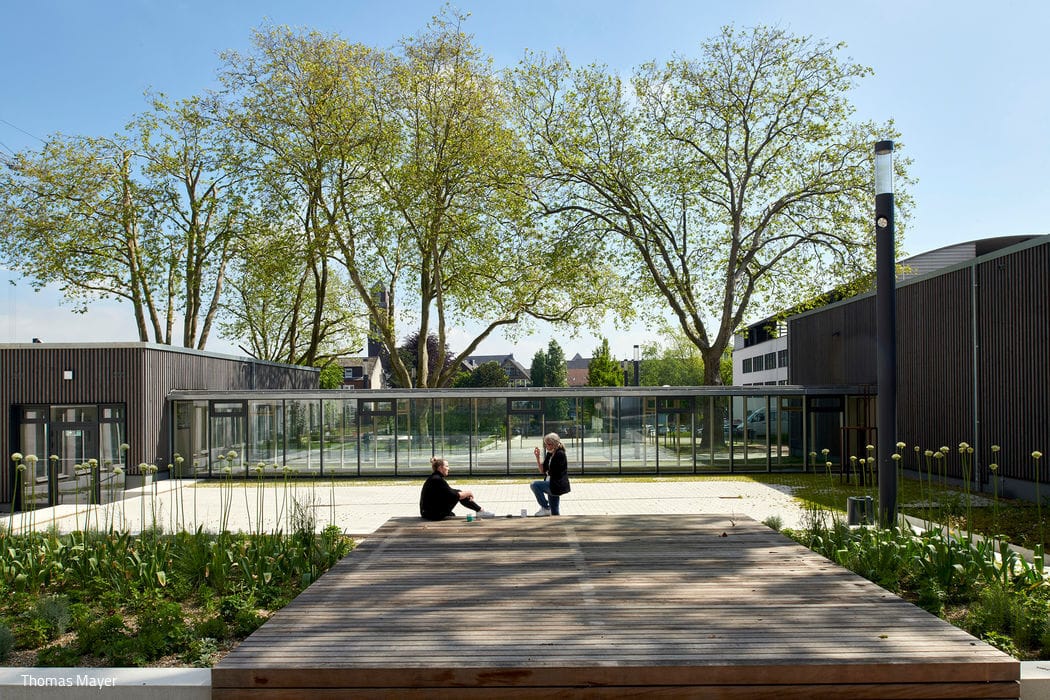
Meeting Mass with Lightness
Expanding a cultural centre with grace: lightweight additions meet landscape design
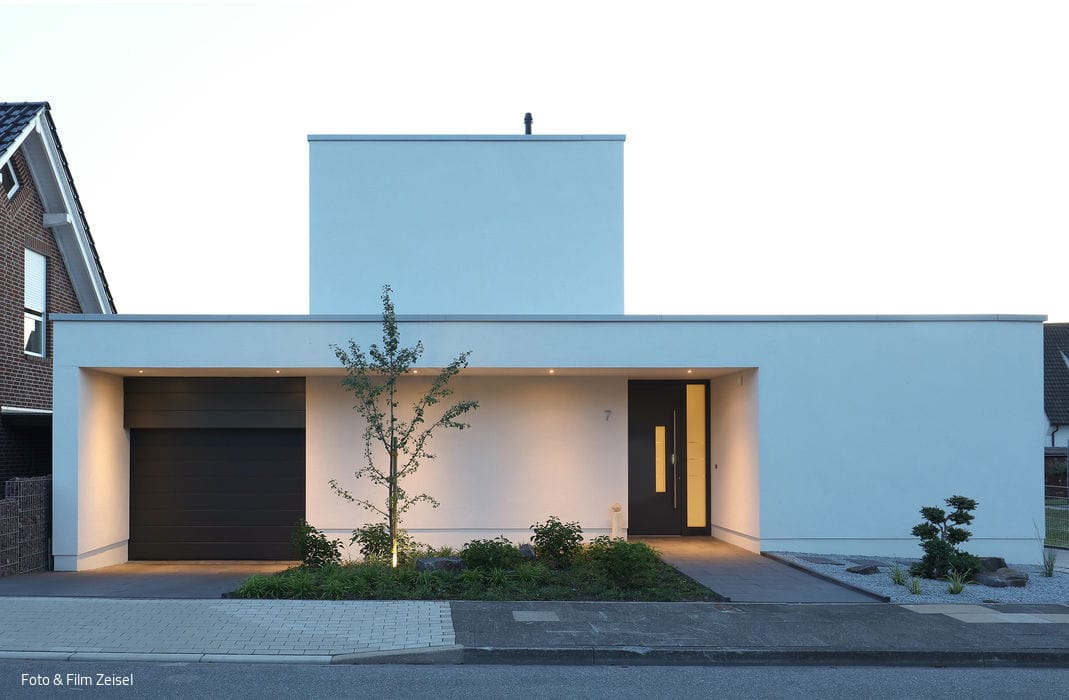
On Details and Cuts
Accessible Living with an Unexpected Layout
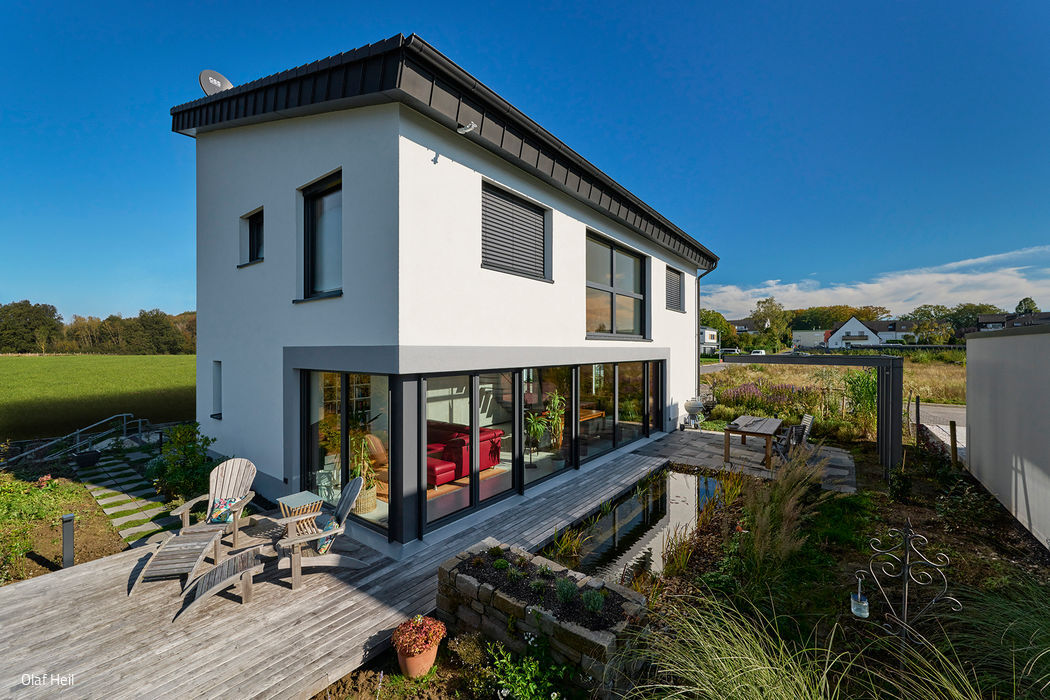
Inspiringly Sustainable
Passive House Living: Comfort and Character Combined
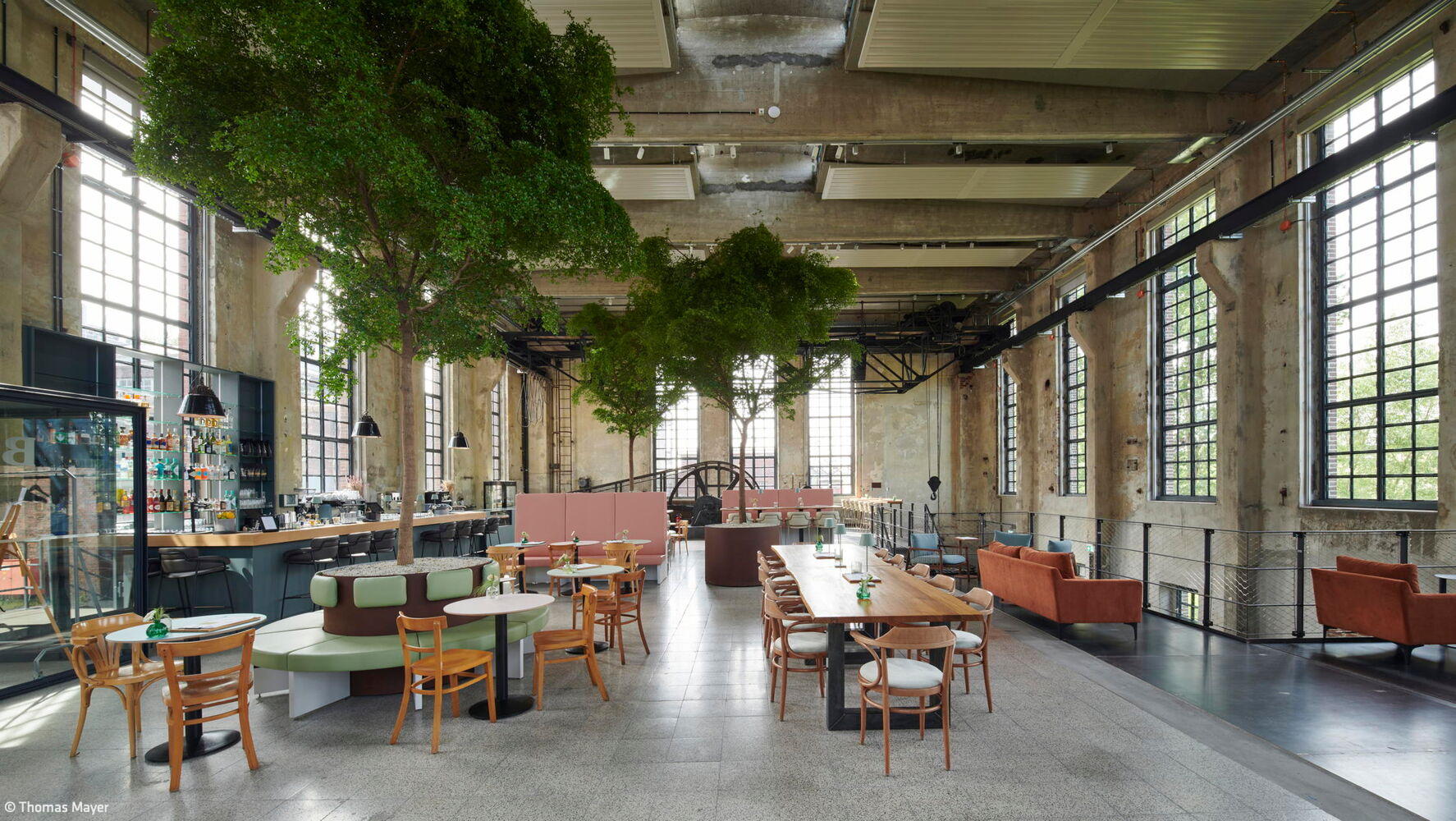
Striking Contrasts
The former gas cooling plant of the Hansa coking works now hosts an exceptional culinary experience.