


Living in the Composers' Quarter
A new residential area in an established neighbourhood in Weissensee
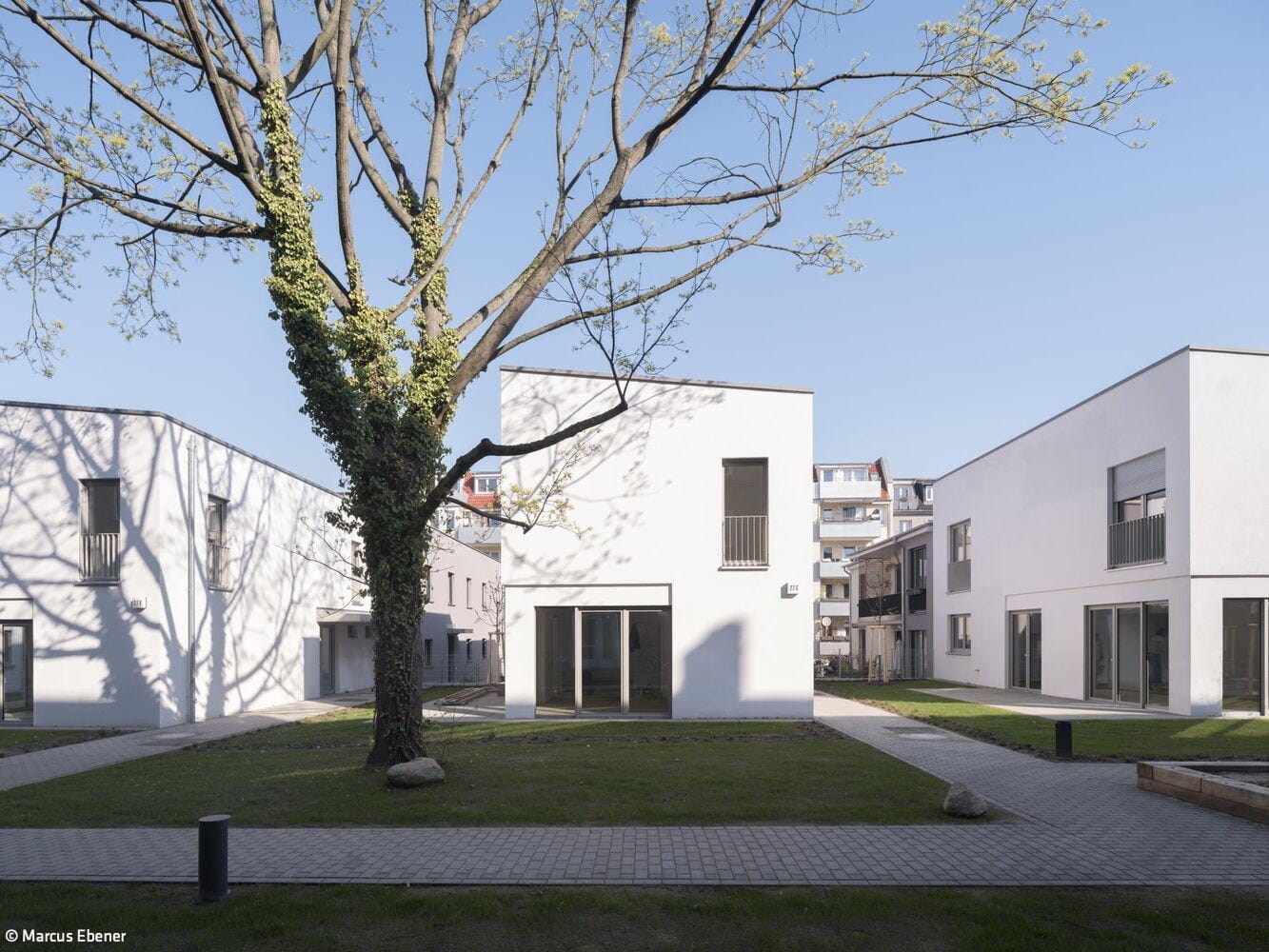
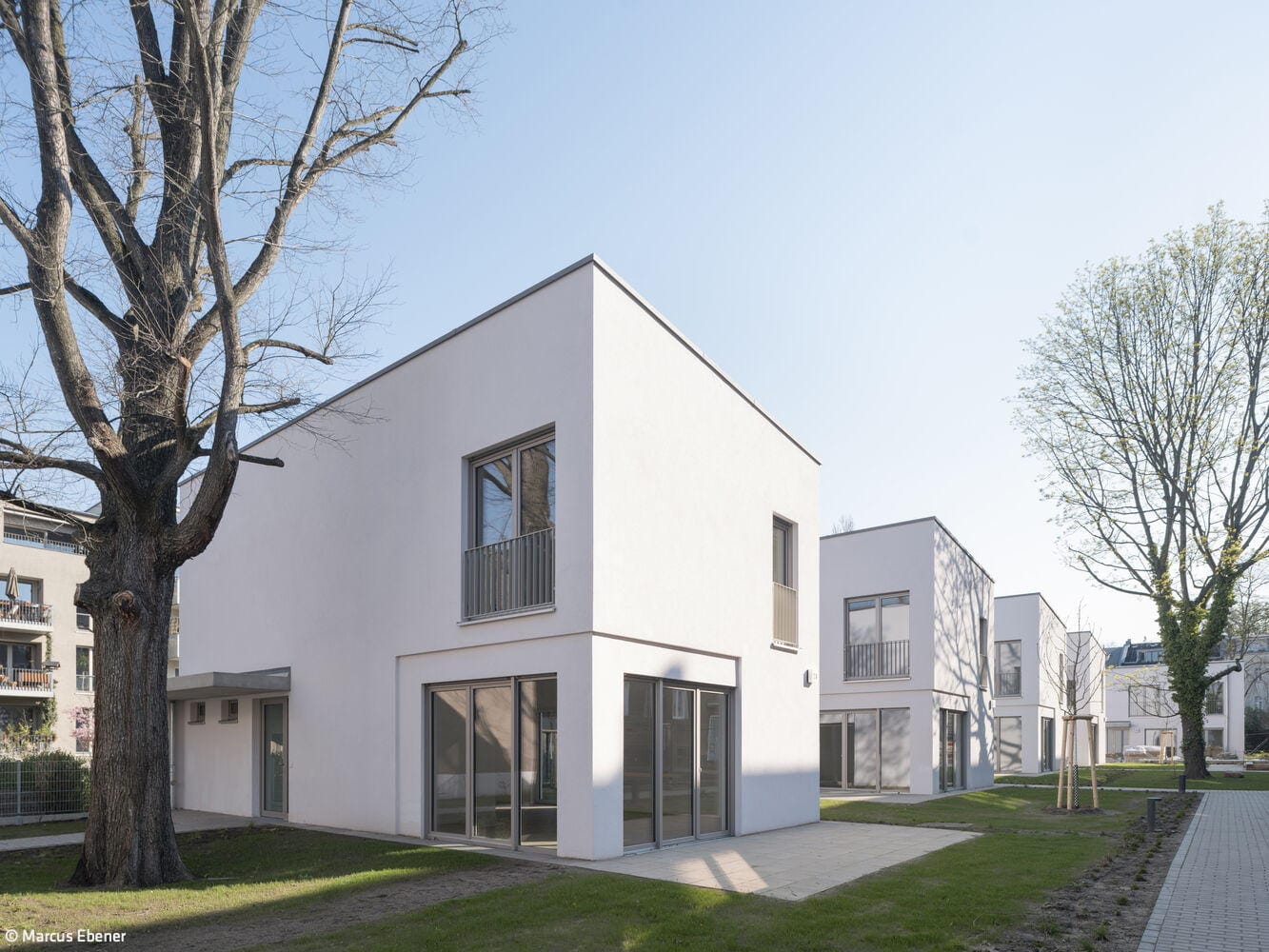
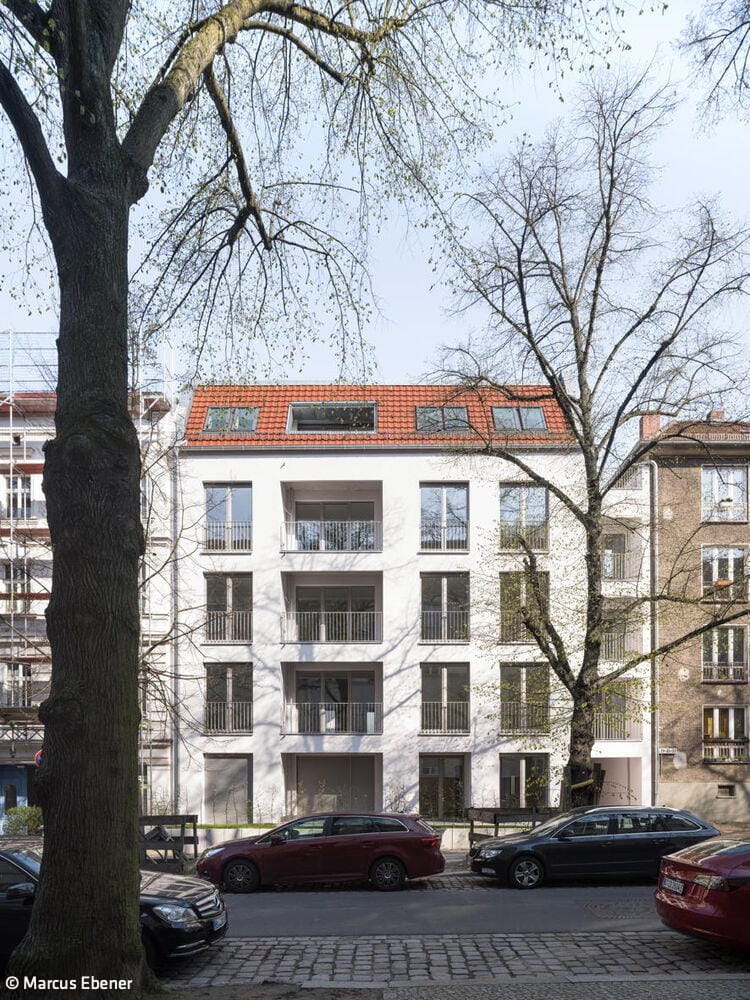
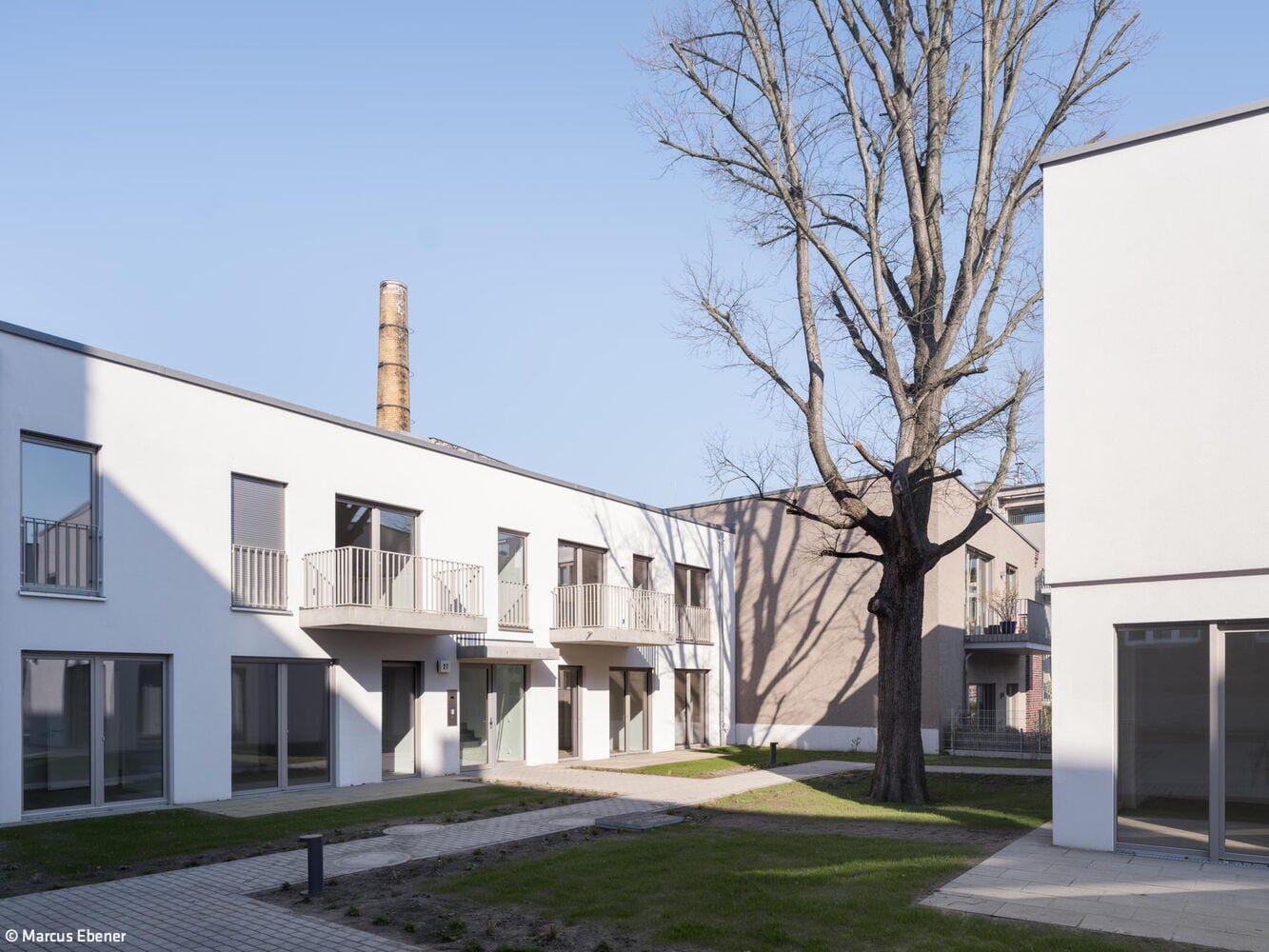
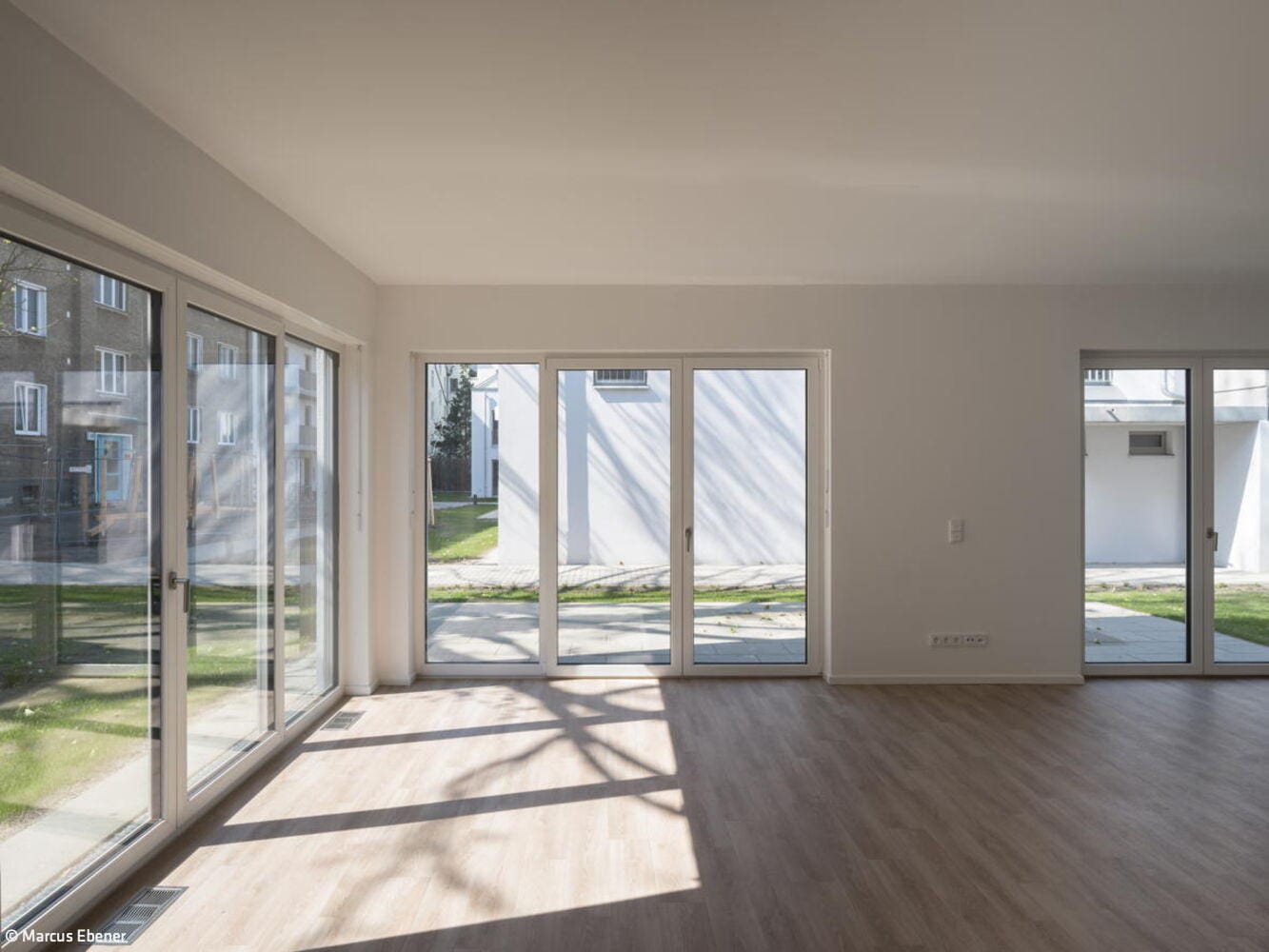
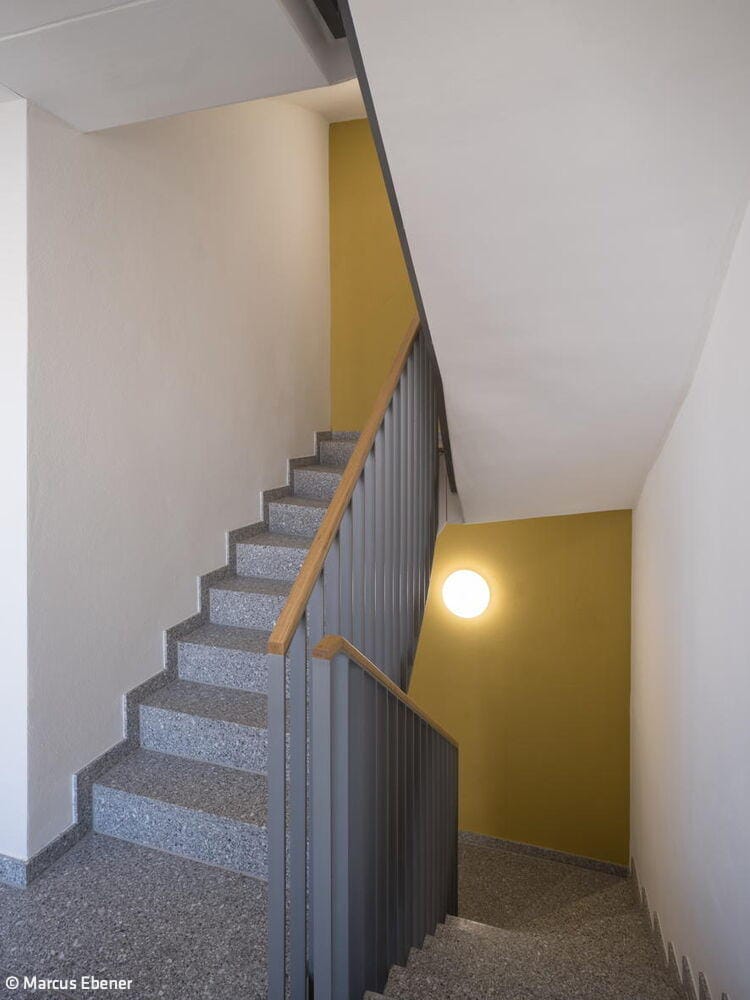
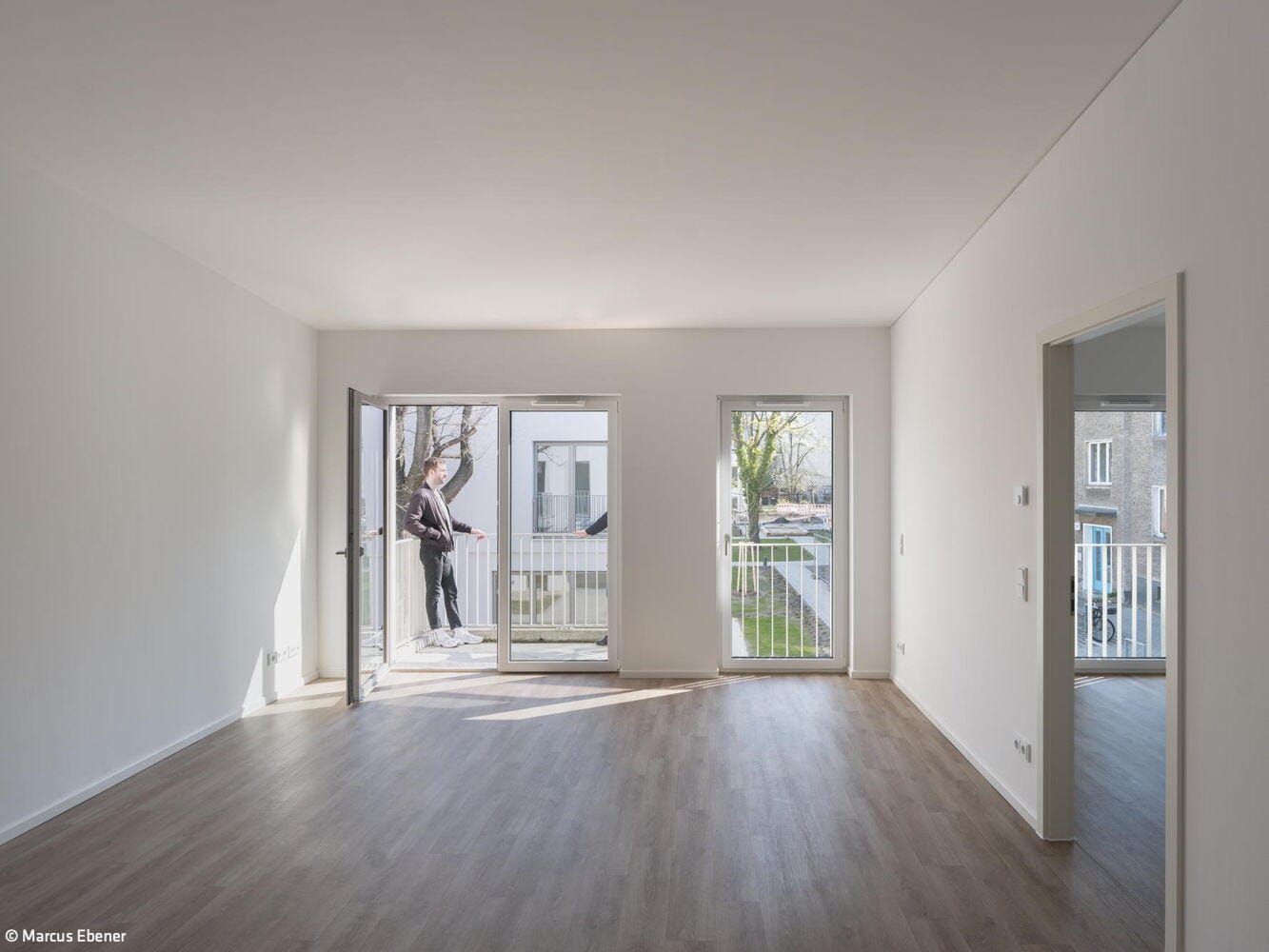
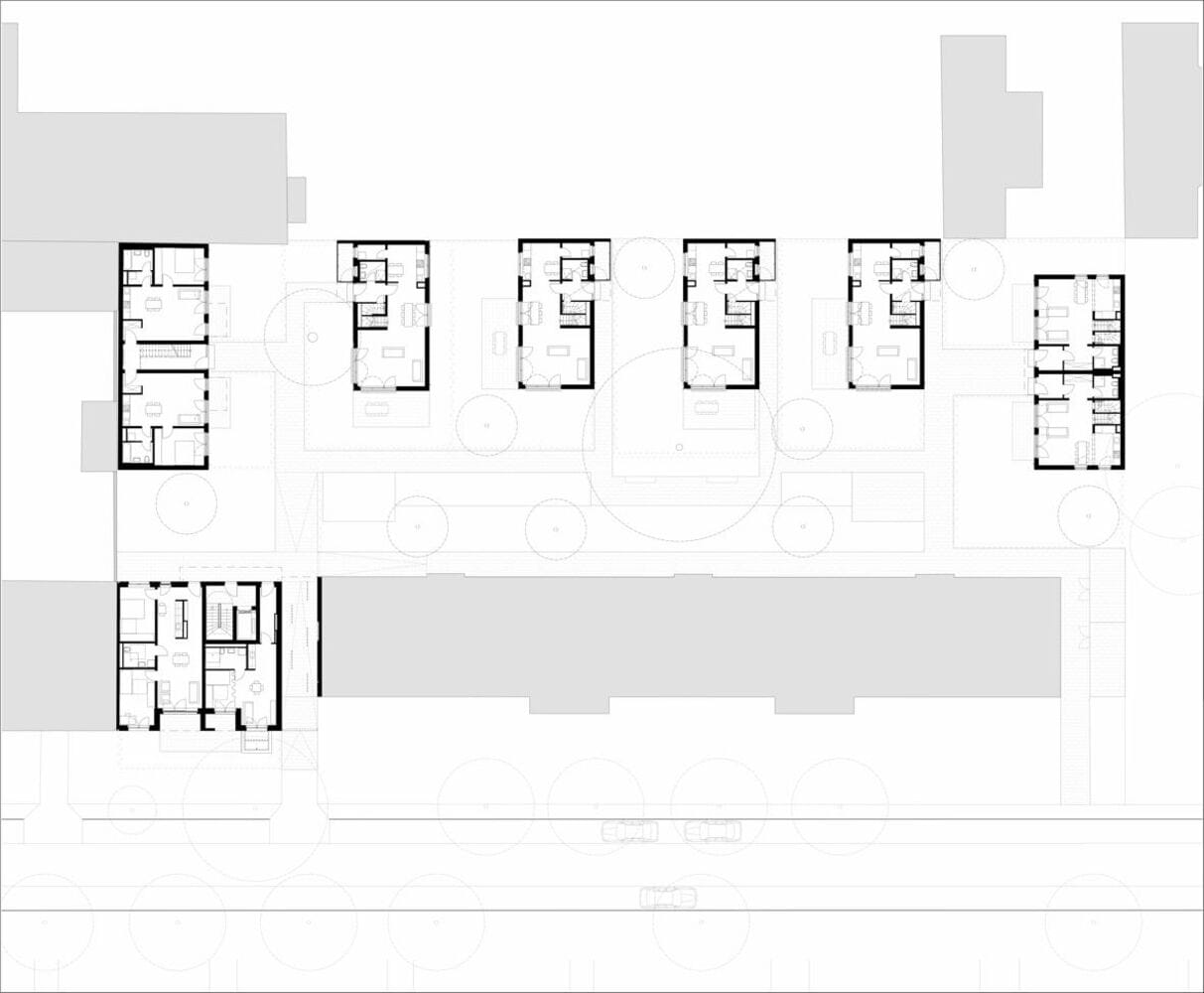
Many world-renowned composers – Mahler, Bizet and Meyerbeer – line the route to the new residential quarter on the street named after Georges Gounod in Weissensee. Here, behind a new building facing the street that fills a gap in the development, six further residential buildings are tucked away in the former inner courtyard. What sounds unimaginable has been resolved by Bollinger + Fehlig Architects in a way that does not create a feeling of confinement. Commissioned by Gesobau, the architects planned 20 flats on the plot, which measures just 2,214 m². Despite several years of construction delays caused by objections from the neighbourhood, the project was successfully completed. Fears that the new buildings might create an oppressive mass in the courtyard proved unfounded upon completion.
What makes this project unique is its modular design: the architects have distributed the residential units across several small, two-storey buildings. Four of these houses stand in a row, much like tin soldiers, and are separated from one another by plenty of greenery and open spaces. The houses are complemented by two semi-detached houses, which serve as outbuildings on the western and eastern edges of the site. The so-called ‘gatehouse’, with access to the semi-public rear courtyard, is designed as a four-storey building and blends in with the traditional surroundings in terms of eaves height. The white-plastered structures stand out favourably from most of the neighbouring houses, which often appear grey and rather indistinct. The small-scale nature of the new buildings conveys a sense of spaciousness that is otherwise more commonly found in the countryside, where there is plenty of space. In total, the seven buildings offer 20 one-, two- and three-bedroom flats. Ten of these flats are subsidised and accessible only with a WBS eligibility certificate. Generous window fronts ensure bright, welcoming rooms, which benefit further from the open spaces between the buildings. The buildings have basements but do not feature an underground car park; instead, they provide storage compartments for residents as well as storage areas for bicycles and wheelchairs. In the garden area, seating and play facilities for children invite residents to linger.
This project demonstrates how family-friendly infill development – carried out on a generous scale in the heart of a densely built-up inner-city area – can be successfully achieved.
Photography:
Marcus Ebener
www.marcus-ebener.de
(Published in CUBE Berlin 04|25)
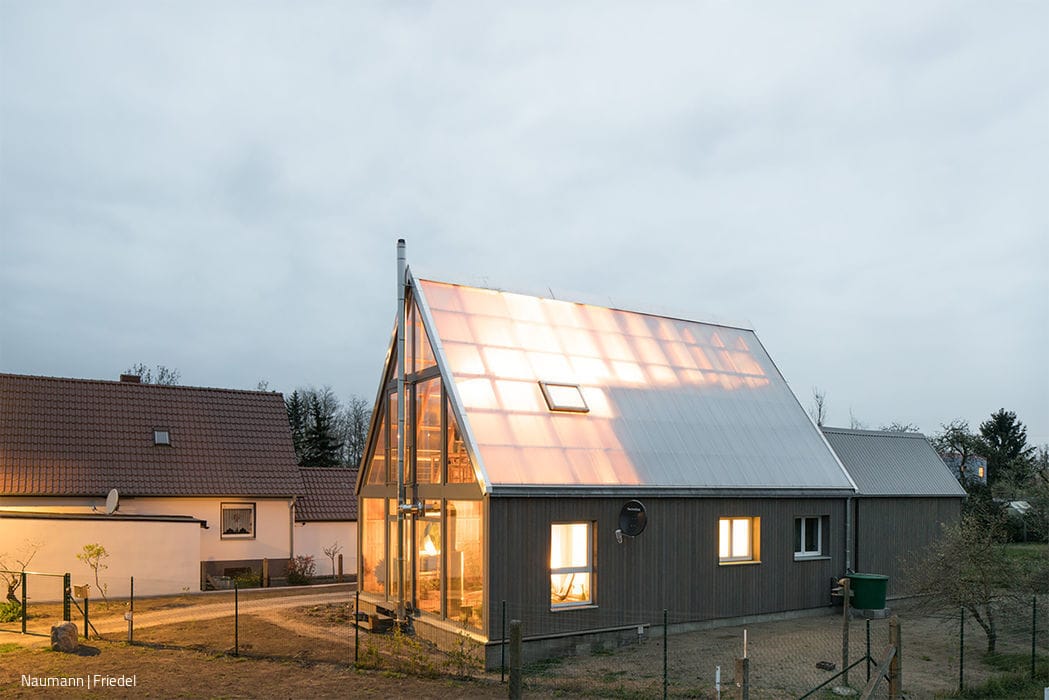
Thermal house with climate envelope
Three Goals, One Solution: Preserve the Existing Structure, Double the Space, Achieve Energy Efficiency
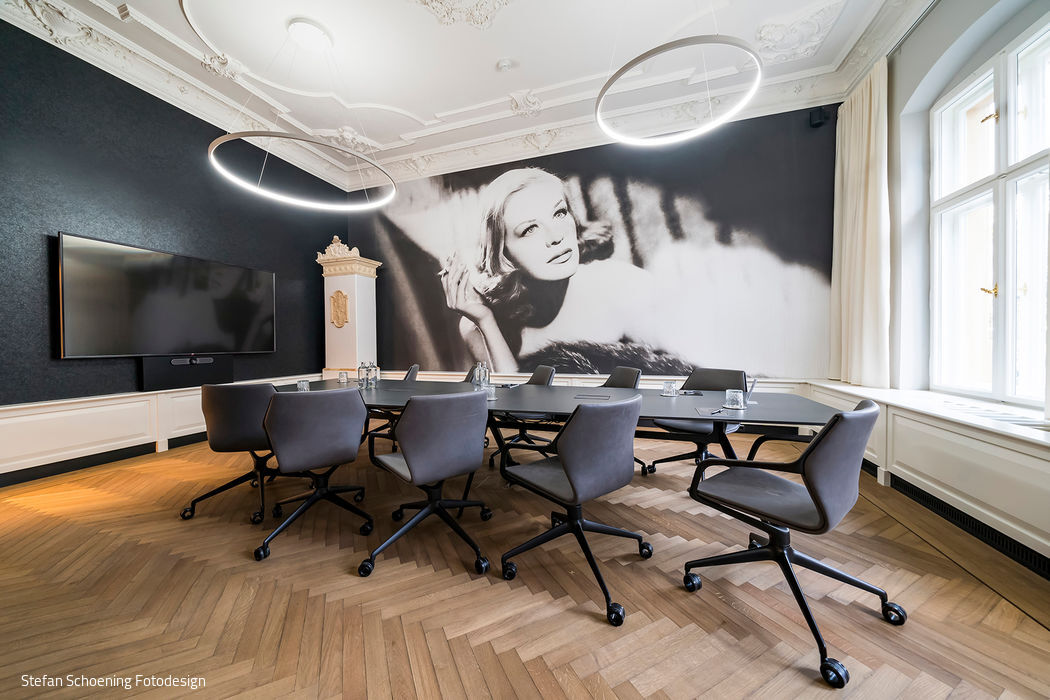
Beyond the Home Office
... step into the new office world
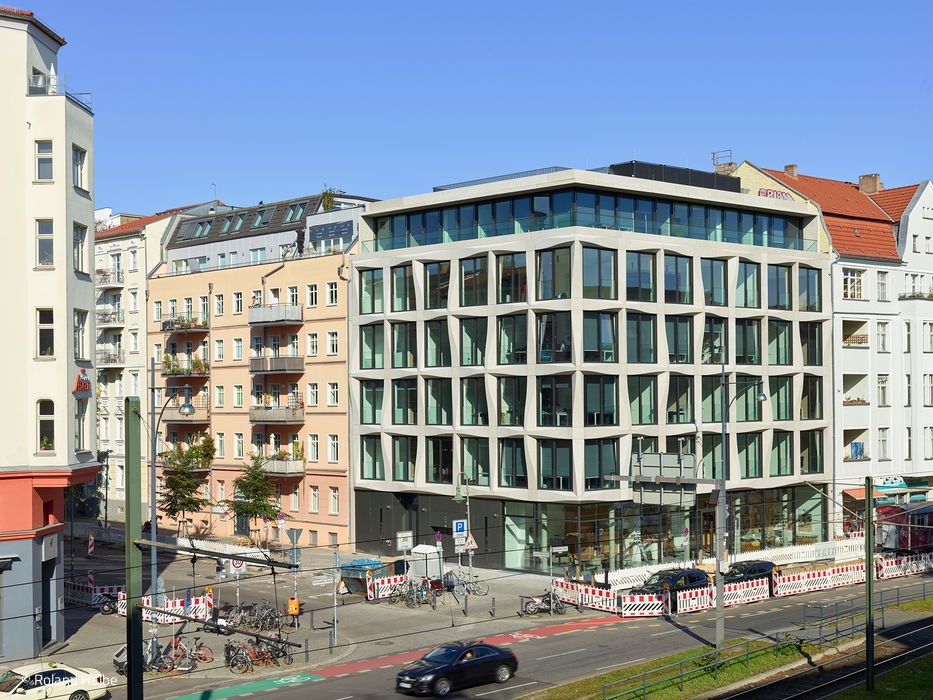
Relaxed and easy-going
New Office-Business Centre Defines Prenzlauer Berg Corner, Precast Concrete Façade
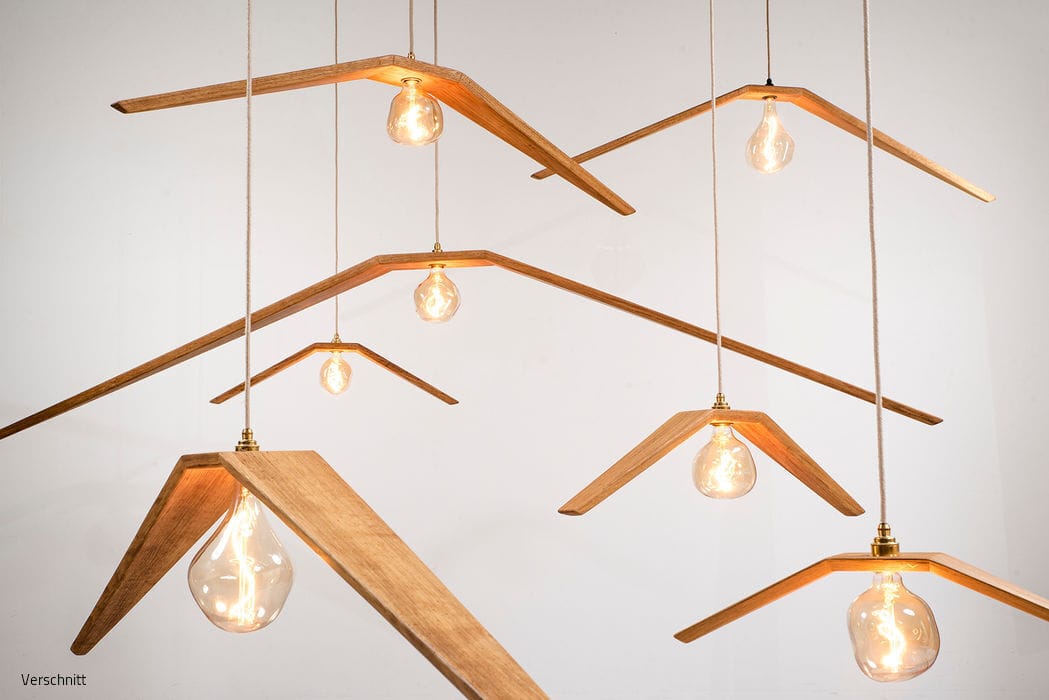
Bespoke Design Objects
Wood offcuts serve as the raw material for far more than lighting—tables, stools, cutting boards, and a bed all represent the expanding range of pieces the team creates.