


A Legend Reborn
Completely transformed, expanded, and reimagined under a new name, this historic landmark welcomes guests once again





This quirky riverside establishment even earned a place in world literature: Theodor Fontane featured it in his final novel "Der Stechlin": "Our journey's destination bears a rather curious name – the 'Eierhäuschen.' Ever since, I cannot shake the image of something oval, and I fear I shall only be relieved when I have personally beheld this strangely named Spree beauty." Yet the building's actual form belies its name. Theory suggests the original raft keeper's cottage doubled as an egg vendor – hence the unusual moniker. Historic postcards reveal the venue's former popularity: tables and chairs clustered right to the water's edge, where excursion steamers once docked – a landing stage now lovingly restored.
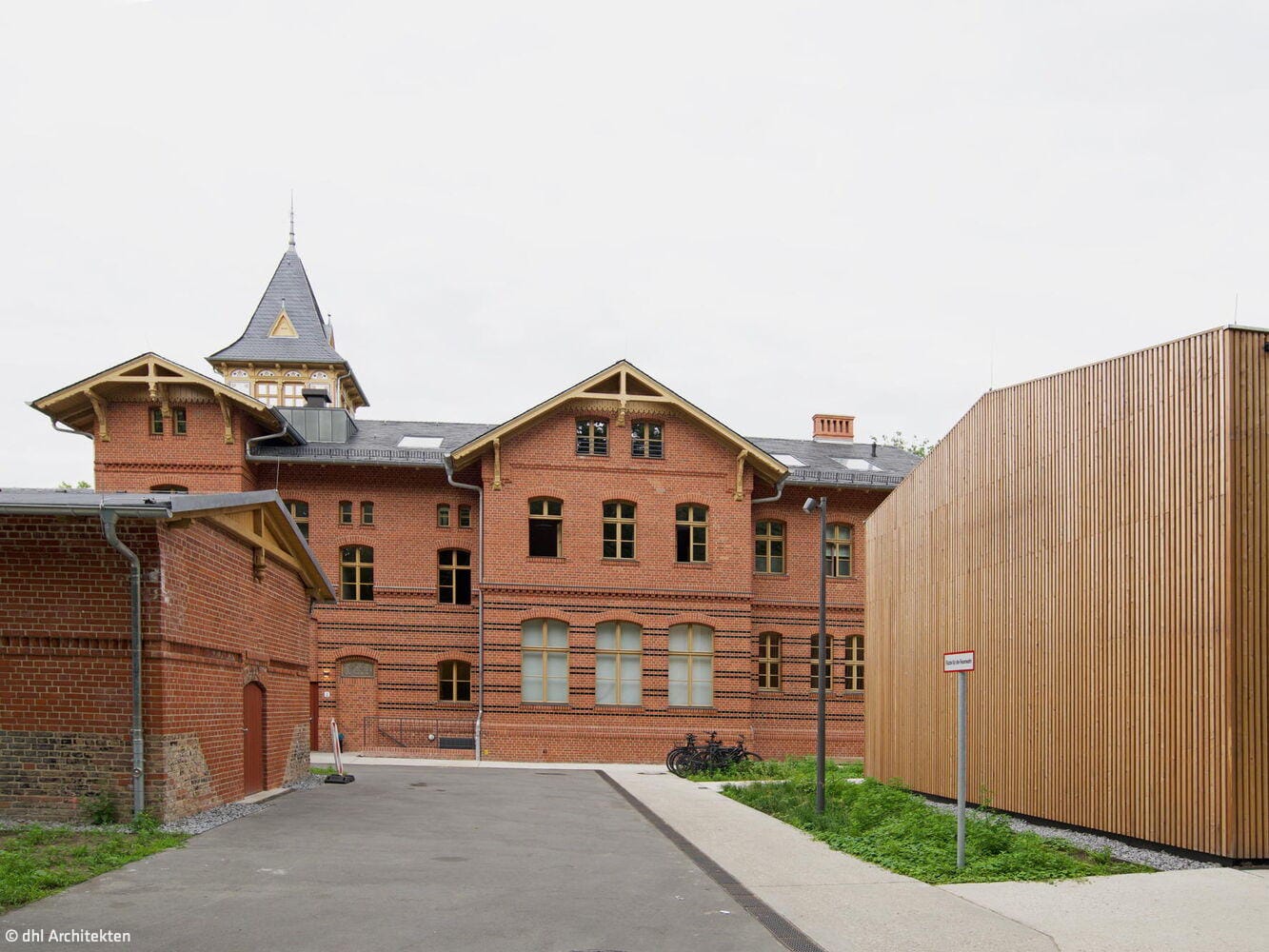
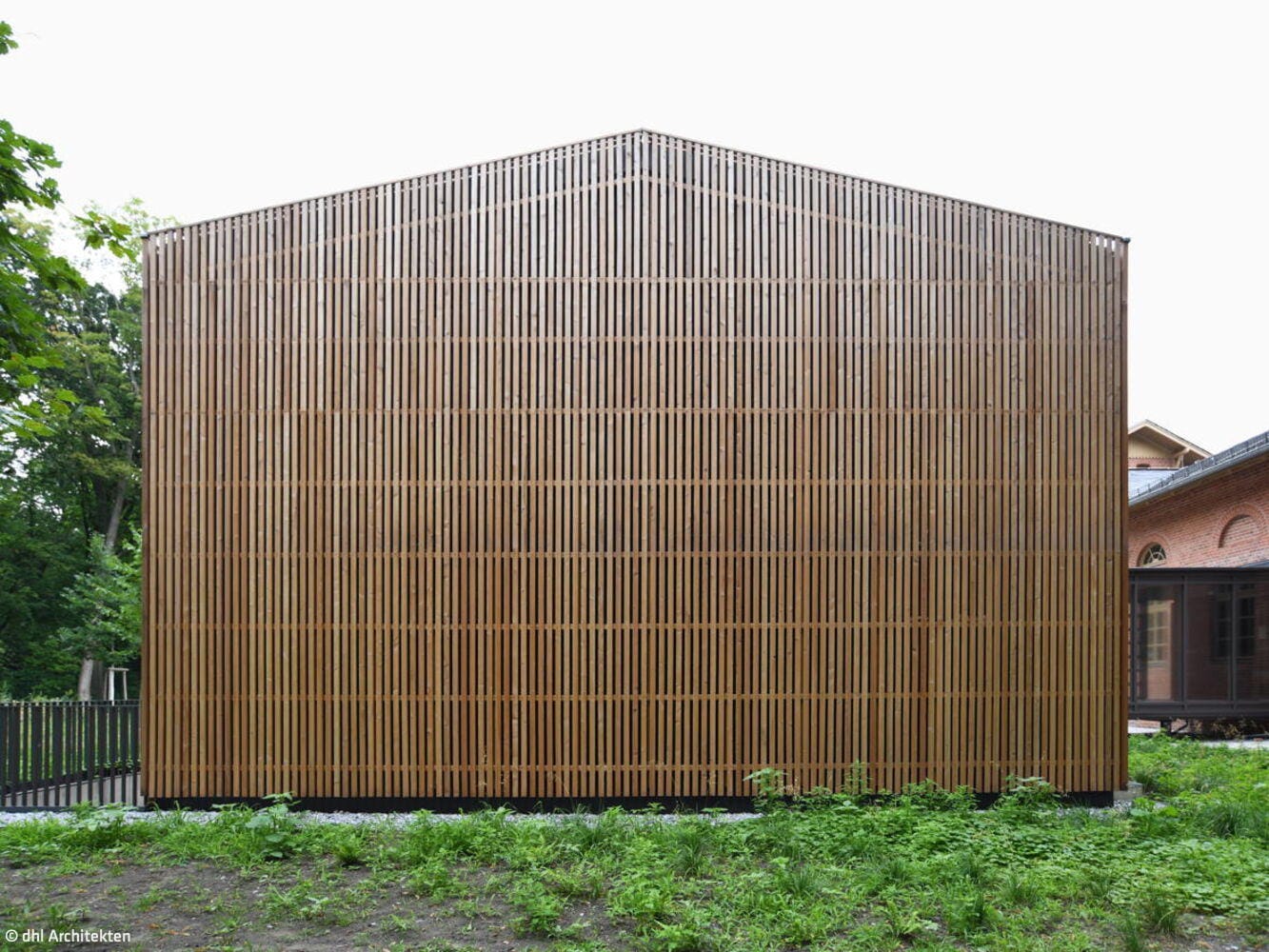
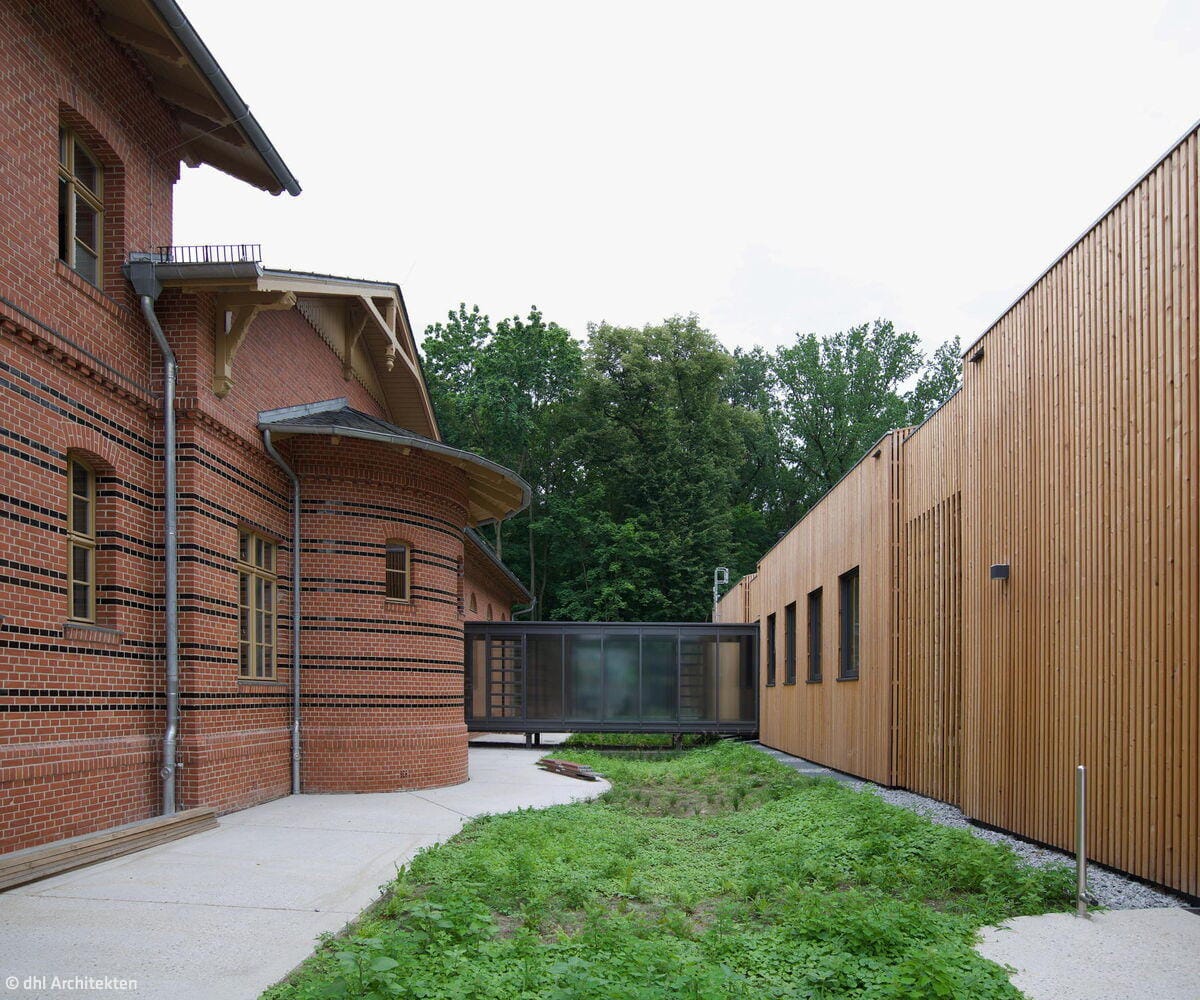
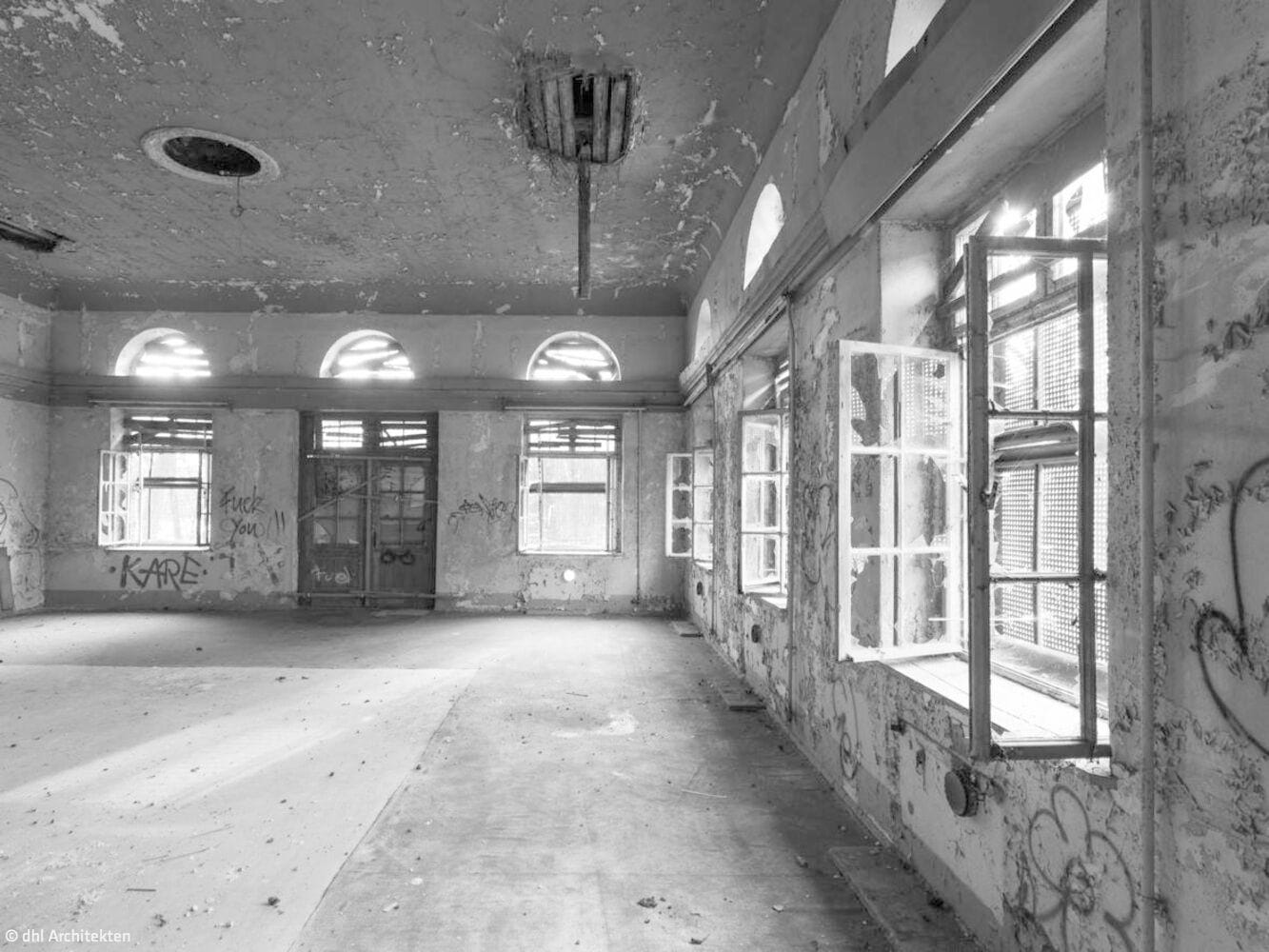
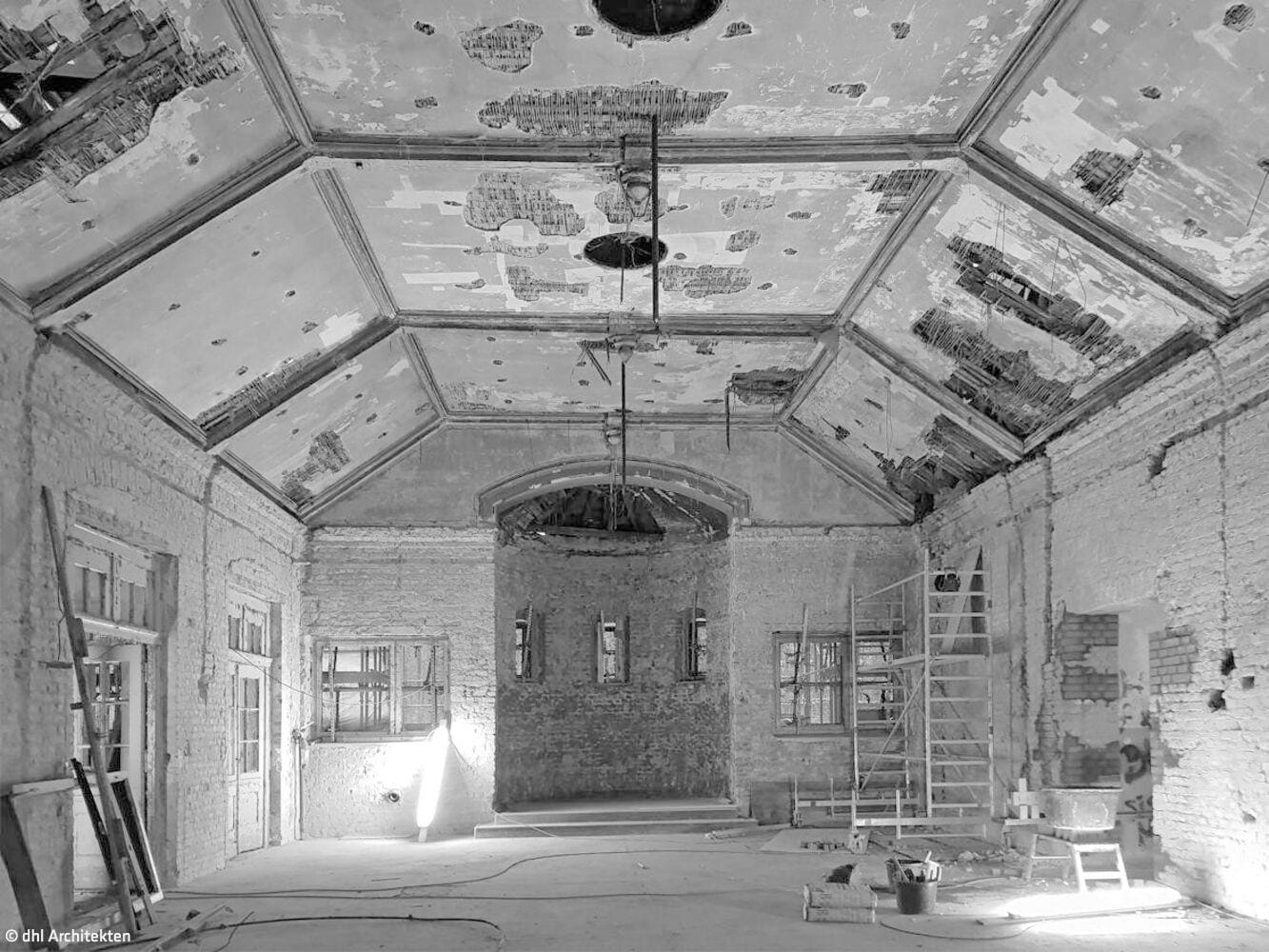
The building bears little trace of its origins as a sailors' pub. Designed by architect Karl Frobenius and erected between 1890 and 1892, it once thrived during the GDR era as a beloved riverside destination on the Spree, complemented by the neighboring Spielpark amusement park. When the park closed, the site fell into decline—overgrown, vandalized, and increasingly forgotten. What had become a true "lost place" was rescued from obscurity in 2017 by the State of Berlin, which reacquired the property. Following an intensive four-year restoration and renovation led by the architectural firm Detlev Höing-Langguth (dhl Architekten), the venue reopened in 2024 as a restaurant and beer garden, now anchoring the "Spreepark Art Space" with rotating exhibitions. The comprehensive restoration involved the complete renovation of the existing ensemble, the addition of a new structure, and full architectural coordination across all project phases. The 2,300 m² Frobenius Building was meticulously restored according to heritage conservation standards: its distinctive tall, pointed tower is once again a landmark visible from afar, while the ornate wooden gable of the two-story main building gleams with renewed brilliance. Both structures feature red brick facades. The classical brickwork—with its varied formats, colors, and decorative elements—was painstakingly preserved. The original black glazed stone layers were restored to the existing building's façade as a defining architectural feature. A new 900 m² wing housing the kitchen has been added on the west side, seamlessly connected to the original structure by a glass bridge. The south section now features a spacious dining hall with an adjoining terrace and beer garden extending toward the Spree, where landscaping continues to develop. The new operators have named their establishment "EI-12437-B".
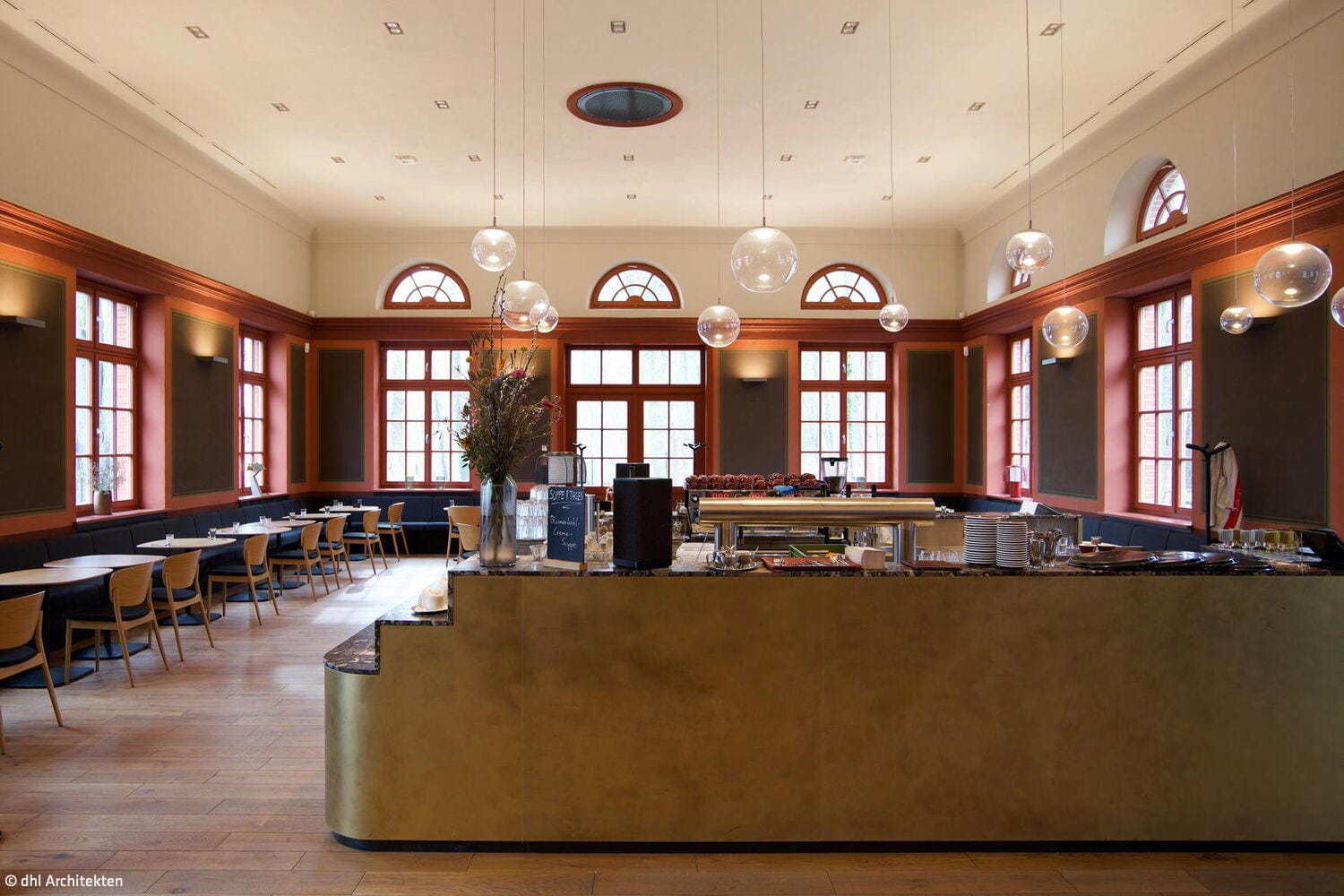
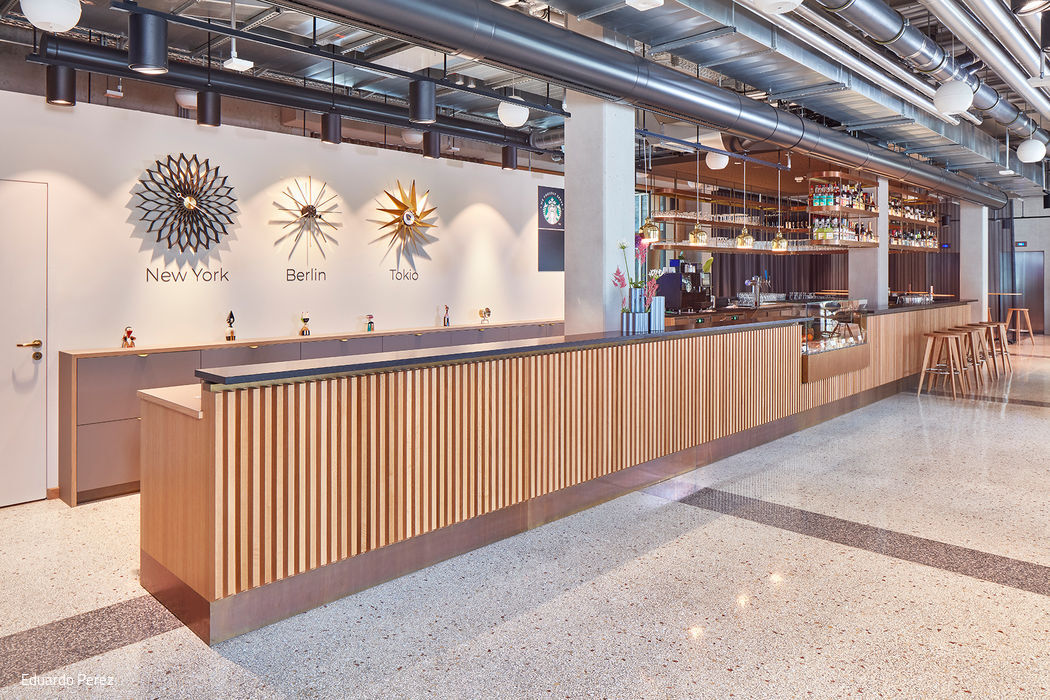
The Berlin-based Wiewiorra Studio shaped the interior design strategy. A striking golden counter, positioned at the room's heart, anchors the space. Furnishings elsewhere adopt a restrained, functional aesthetic. Wall colours draw inspiration from the original deep red discovered during restoration. The interior accommodates 70 guests comfortably; during warmer months, the beer garden welcomes an additional 250.
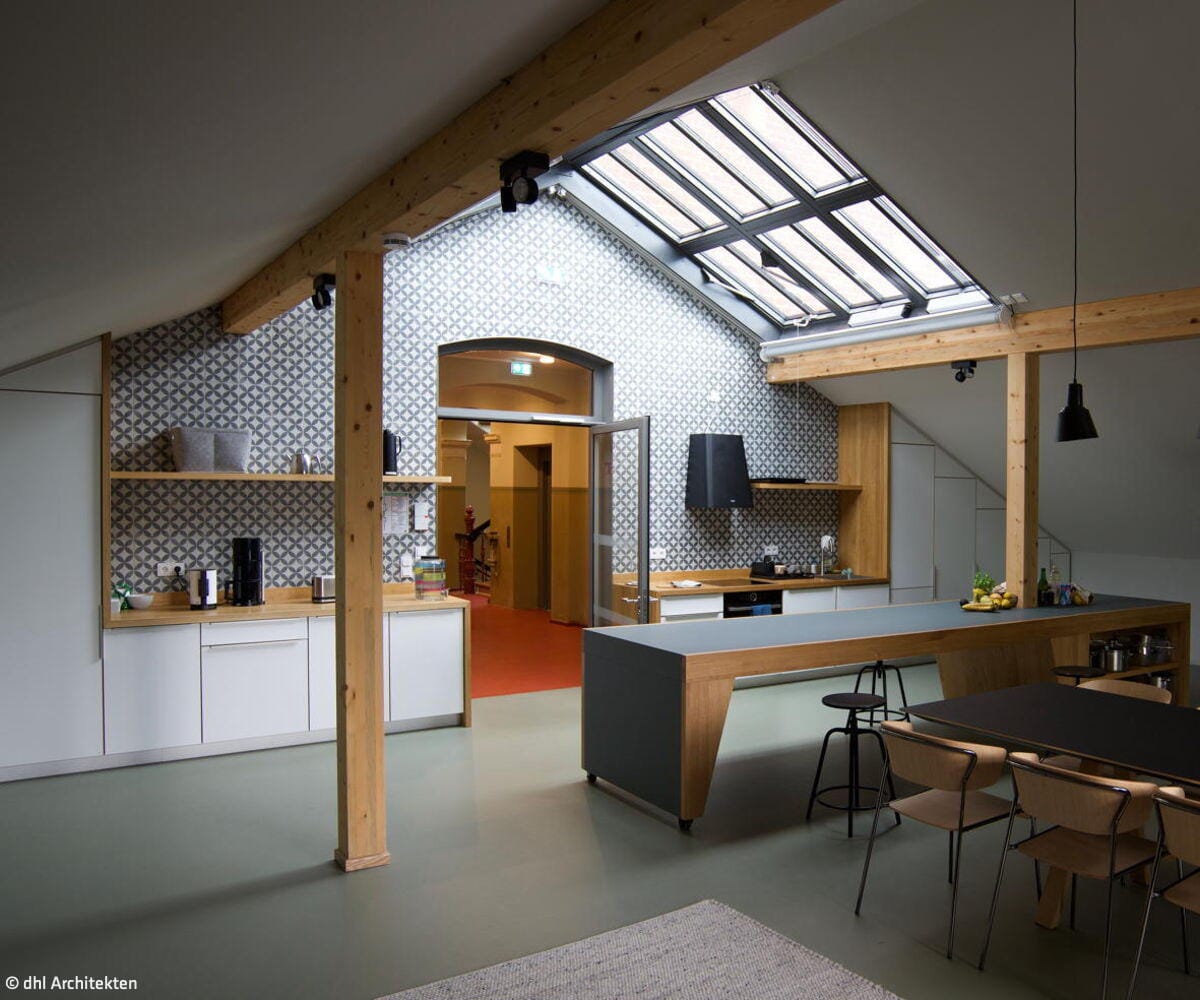
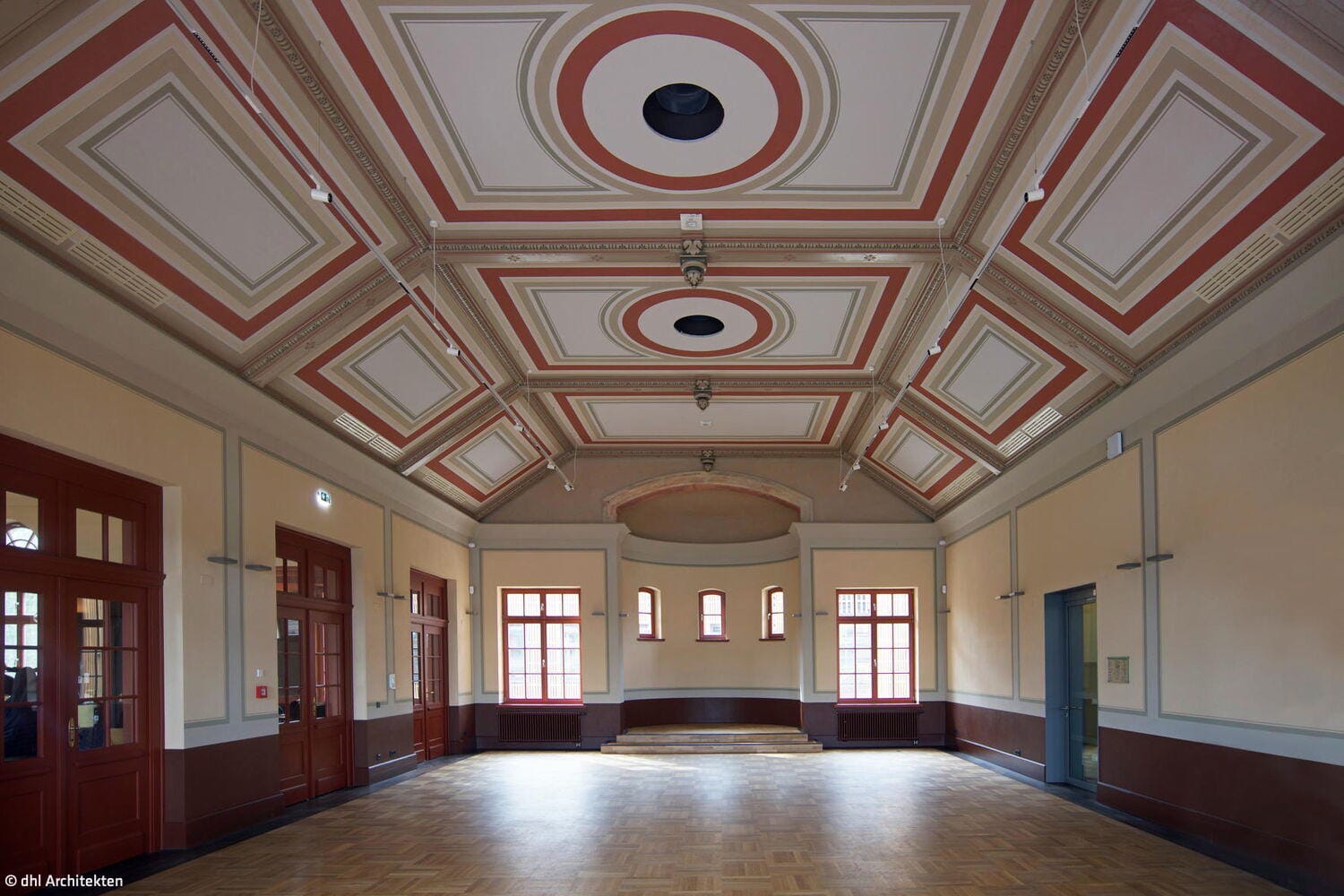
The ground floor additionally houses offices, gallery space, and a standout venue for dance and cultural events. The upper storey comprises four residences for art fellows, plus a shared studio space tucked beneath the roofline. The Eierhäuschen officially reopened its doors in February 2024. Adjacent to the site, conversion of a sprawling former warehouse is underway, destined to become an important cultural venue.
Photography:
dhl Architects
(Published in CUBE Berlin 03|25)
With Angles and Cylinder
Something Different for a Change – A Multi-Generational House Reimagined

Better than Home Office
Contrasts ignite creativity: designing a media agency with luxurious sophistication
Tall, Slender, and Elegant
A combined residence and workspace on Lake Wannsee
Eyes and Senses Learn Along
Extension of the Berlin Academy of Administration in Moabit