


Friendly Alien
A black, angular structure reveals itself to be a charming single-family home.


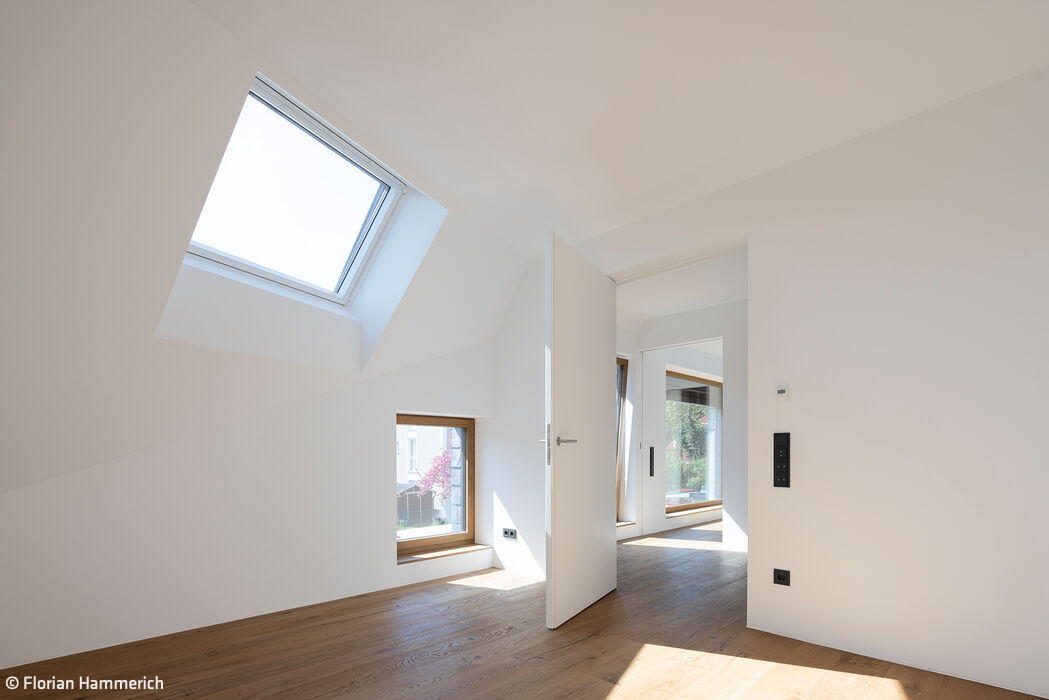


Scattered among the classic detached homes and gardens typical of 1950s–1970s Munich—built when building plots were still plentiful—a new wave of unconventional architecture is quietly transforming this northern neighborhood. The result is an increasingly diverse streetscape. Among these newcomers stands one particularly striking structure: a nearly monolithic form clad in black that unmistakably commands attention against its traditional neighbors.
The original site housed two semi-detached houses. With one half demolished, architect Rudolf Hierl faced a precise constraint: the new structure had to slot seamlessly into the gap, aligning wall-to-wall with one neighbor and garage-to-garage with the other. Rather than appearing forced, this contextual discipline actually softens the building's presence—it belongs here. Working closely with his clients, Hierl prioritized several key goals: preserving the exceptional garden entirely, eliminating pitched roofs to maximize usable floor area, and unifying the façade and roof as a single, low-maintenance skin. His solution is ingenious. Black slate tiles, applied in a subtle shingle pattern, wrap the entire exterior as one cohesive envelope. The roof itself breaks into a prismatic geometry that allows the upper floor to feature rooms without sloped ceilings—a master bedroom, two bathrooms, a dressing room, and two flexible additional spaces. Above part of the footprint, even a second upper level with a generous attic room became possible. On the ground floor, a sculptural central core organizes the space, housing the entry, staircase, guest bath, and basement access while naturally dividing the plan into kitchen and living areas. Sliding doors dissolve into the walls, giving the space flexibility to open fully or partition as needed. Floor-to-ceiling windows with integrated doors frame the garden, where a generous terrace acts as both retreat and threshold to the lawn. Every material—from natural stone to oak flooring—reflects considered quality. The home achieves KfW 40 Plus certification through heat pumps, photovoltaic panels, and solid masonry construction, balancing ecological responsibility with architectural beauty.
Photos:
Florian Hammerich
www.florianhammerich.com
(Featured in CUBE Munich 02|24)
Optimize Your Space
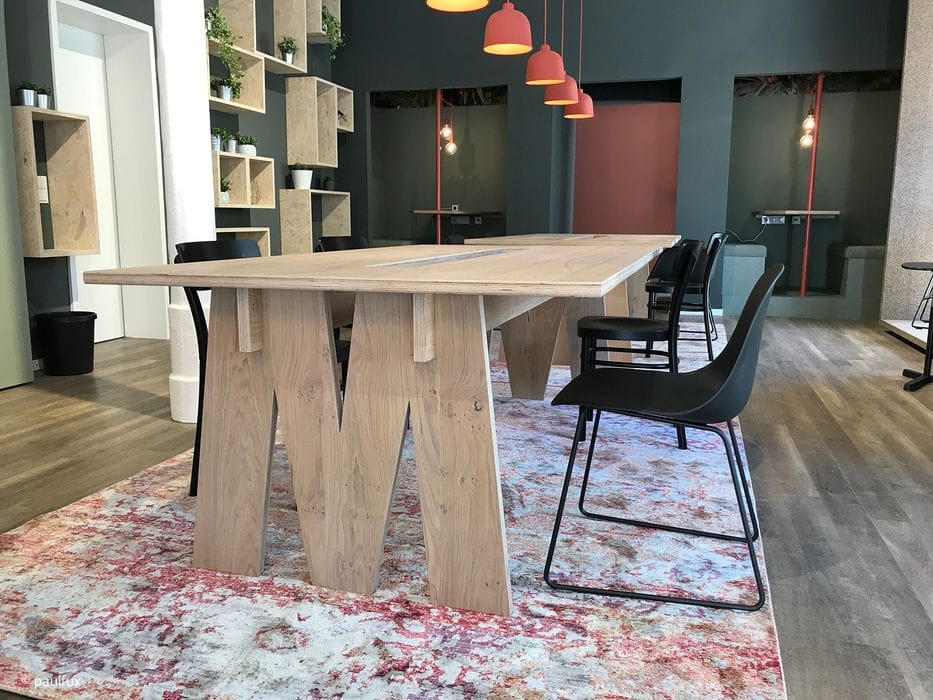
paulfux creates bespoke furniture, designs spatial solutions, and manufactures purposeful products.
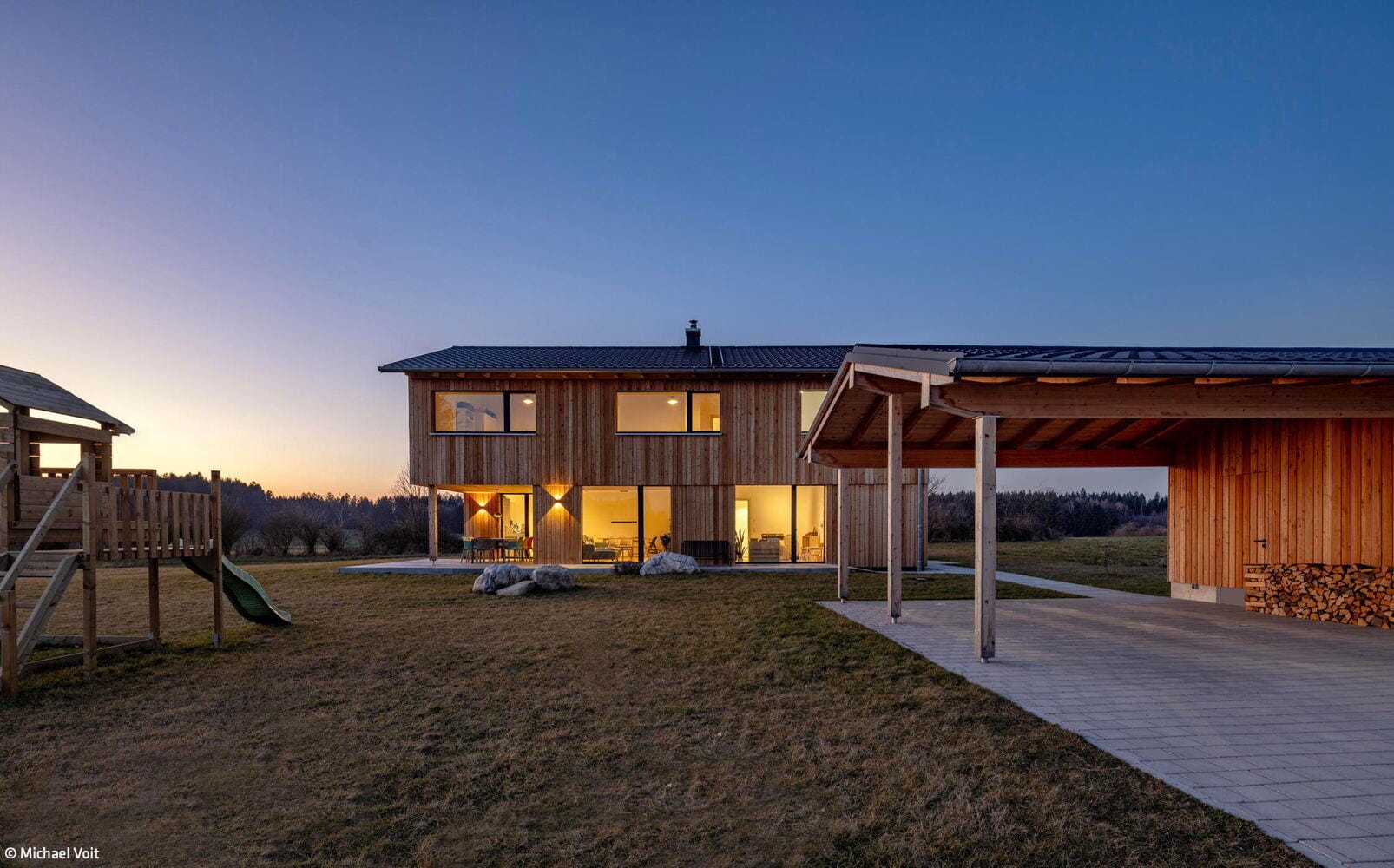
Farm 2.0
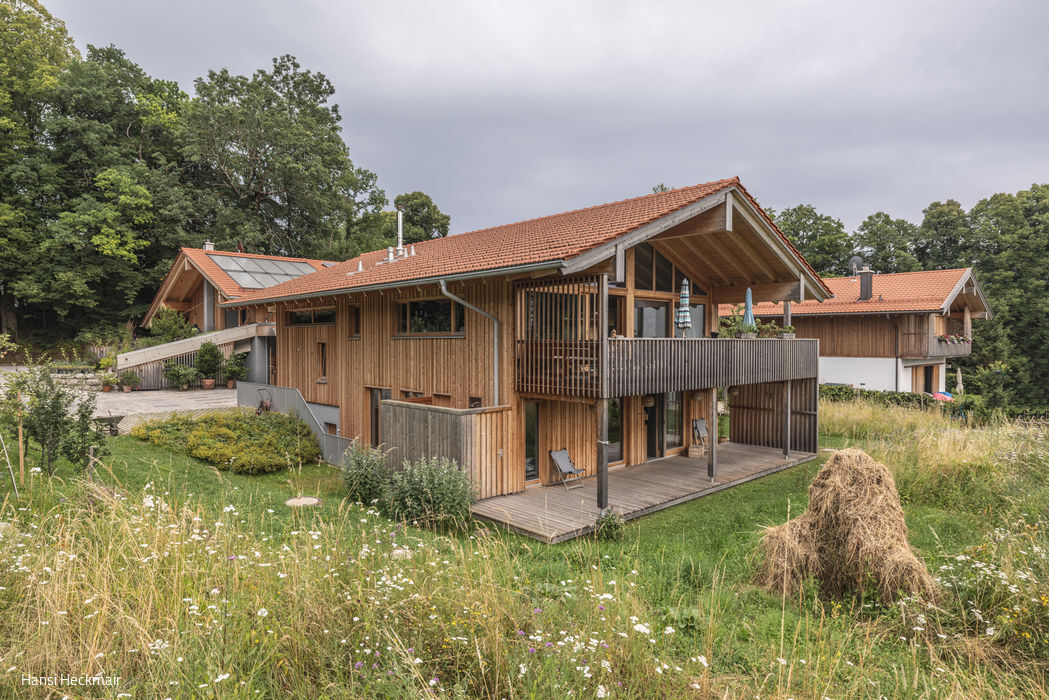
Three buildings—one ensemble—for living and working

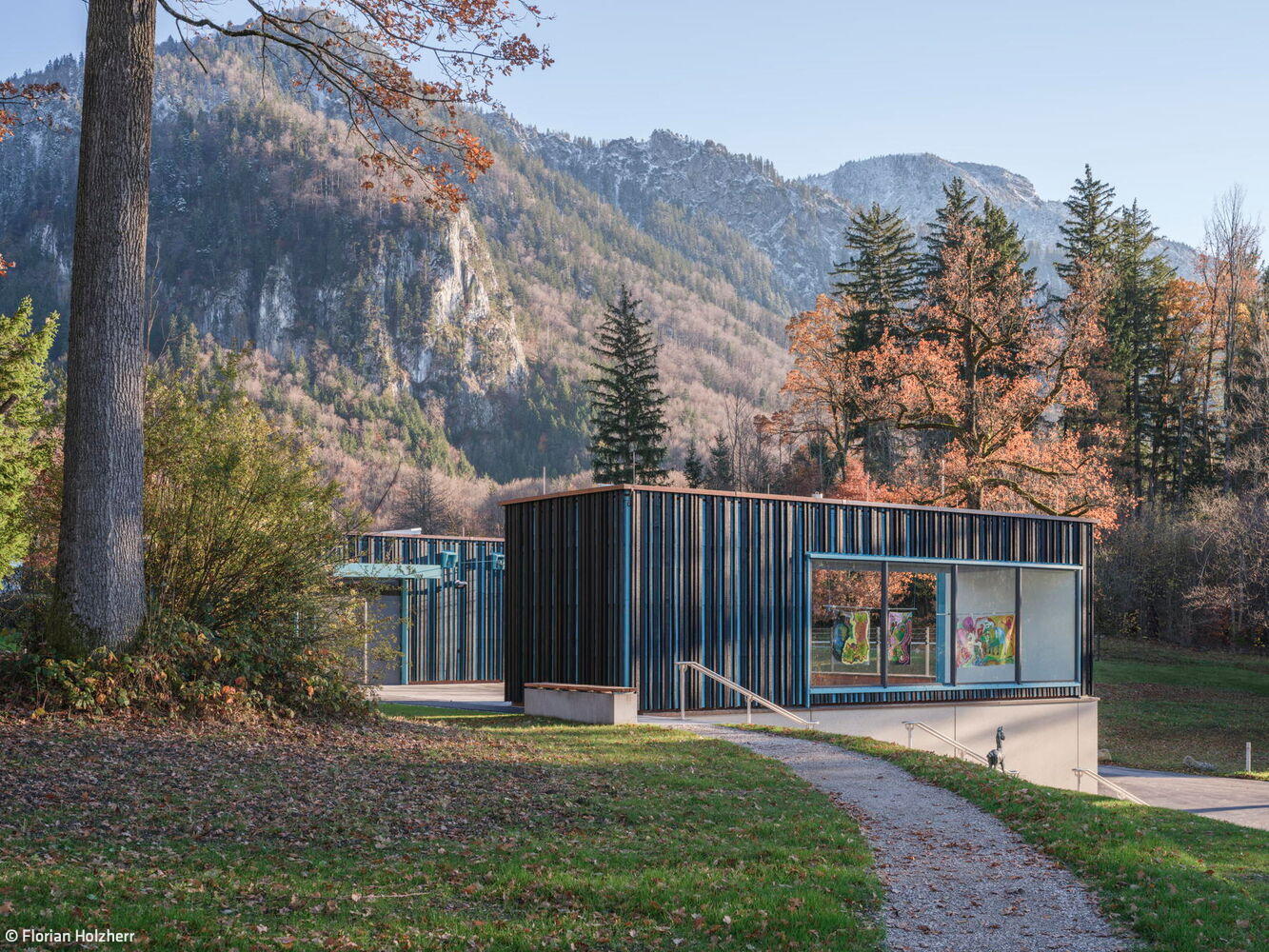
Multifunctional + Majestic
A surprisingly versatile public multi-purpose hall in Erding
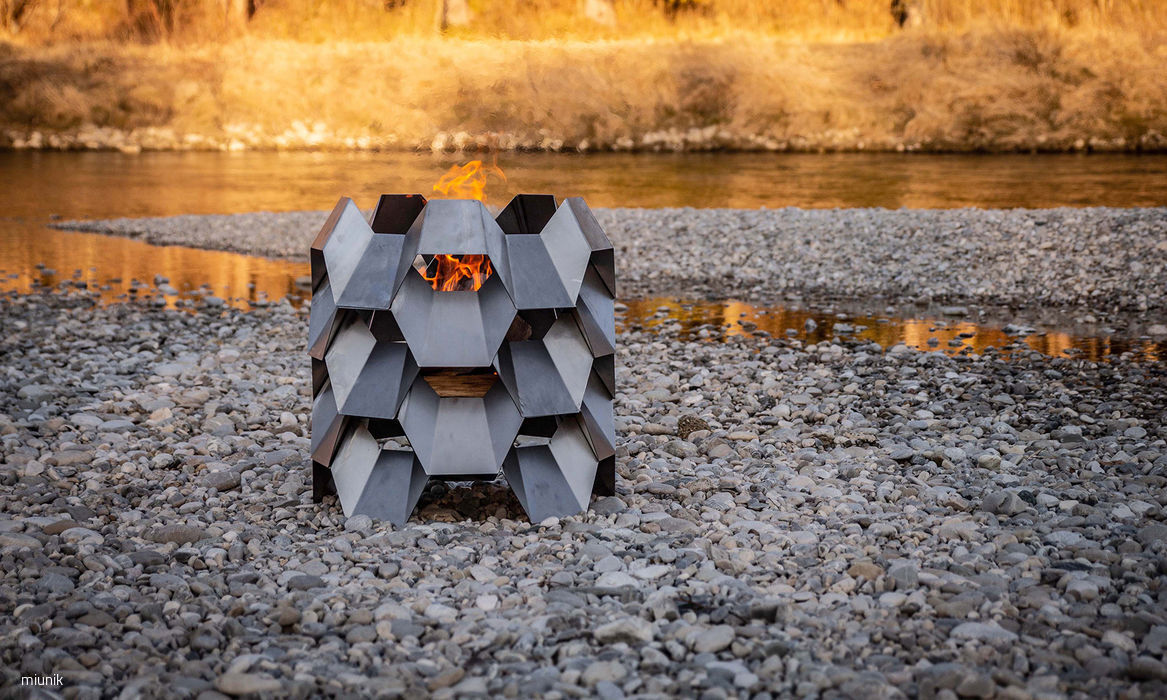
Sculptures in Glass and Light
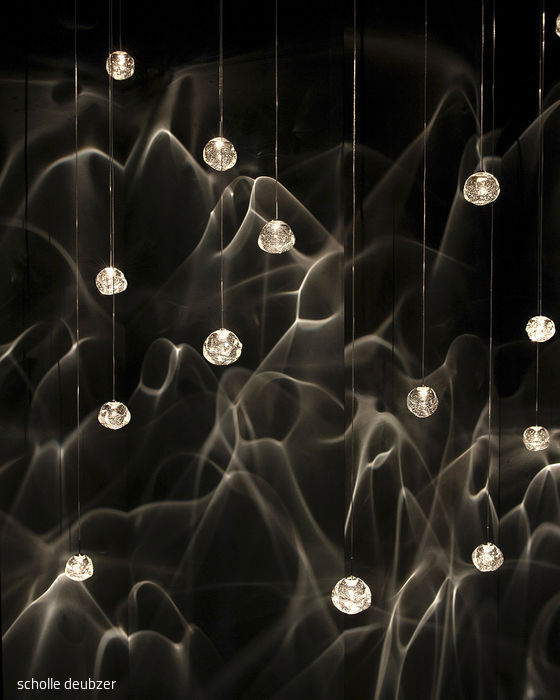
Handcrafted creations with great charisma