


A Temporary Home with School
Four Primary Schools in Modular Design – Built Fast, Designed Flexibly
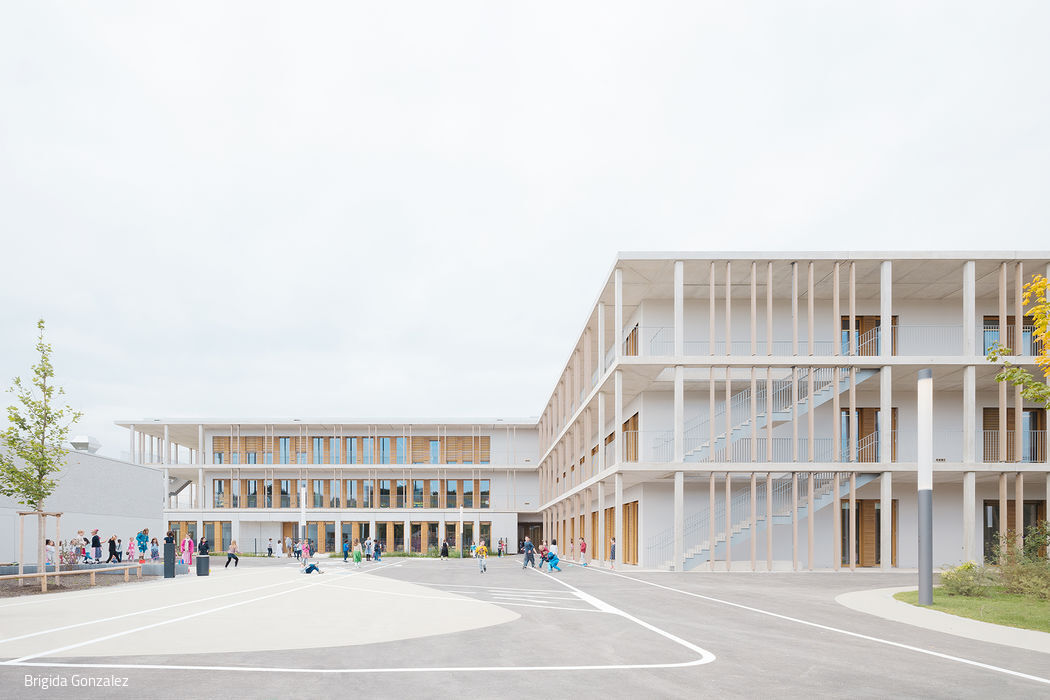



Munich's rapid growth comes with a challenge: the city is stretched to capacity, and newcomers keep arriving. The pressure extends beyond housing into public services—nurseries and schools are in short supply. Quick solutions demand buildings that go up fast using prefabricated components. Stuttgart-based Wulf Architekten developed a modular system that expands fluidly from a core structure, growing outward and upward as site conditions and structural requirements allow.
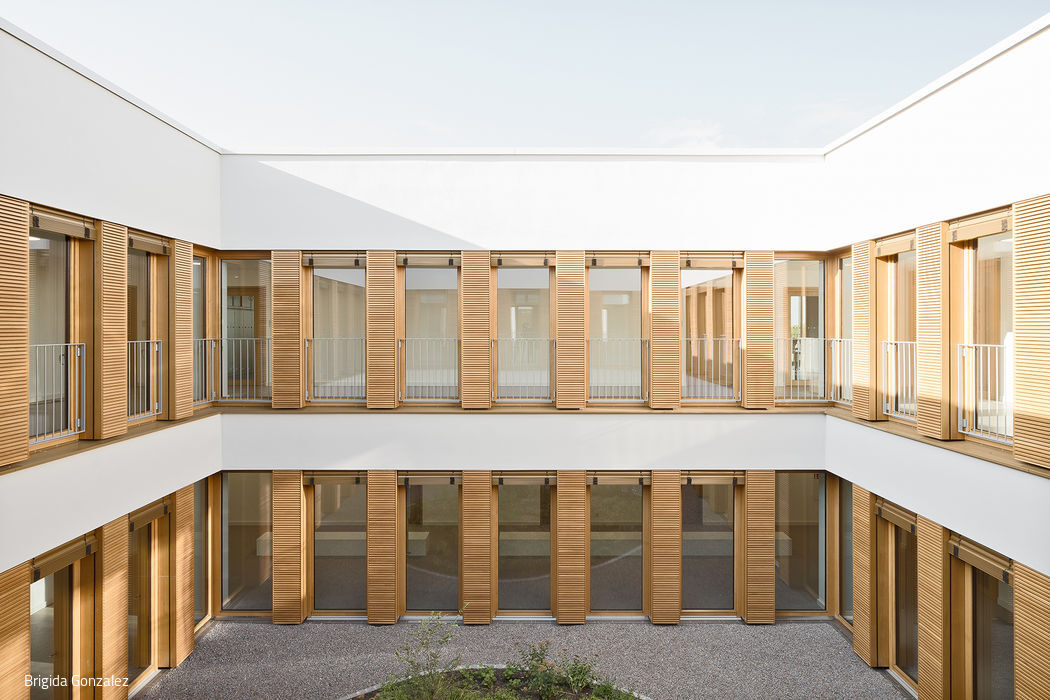
Four of these schools have been built across Munich in recent years—some repurposing former military sites like Bogenhausen's Prinz-Eugen-Kaserne or the historic Funkkaserne radio barracks in Nord-Schwabing, others on new development land in Aubing-Lochhausen-Langwied (pictured: Gustl-Bayrhammer-Straße Primary School). Each school had distinct spatial needs, but all shared the architects' core philosophy: the "learning house concept"—a blueprint for "intelligent, energy-efficient, and structurally refined learning modules." Each module houses four classrooms, two all-day care spaces, and a team room doubling as staff office, plus two learning alcoves, a multi-purpose room, sanitary facilities, a foyer, and a music room. A continuous loggia wrapping the structure provides direct outdoor access from every room—essential for fire safety. The design supports two to three stories, unified by 12 cm barrel vaults in exposed concrete, each spanning 3 meters wide and 10.5 meters long without intermediate supports.
The Munich Learning House serves grades 1–4, ages six to ten—a full-day environment where children learn, play, and thrive. The architects prioritized flexibility through variable floor plans, creating not just modular units but distinctive, livable spaces. Despite room depths reaching 7.5 meters, natural light floods work areas thanks to each module's connection to a 100-square-meter outdoor break zone. Module arrangements adapt to site requirements with ease, and schools retain complete freedom in visual design—developing their own color identity.
(Published in CUBE Munich 03|20)
With Green Roof
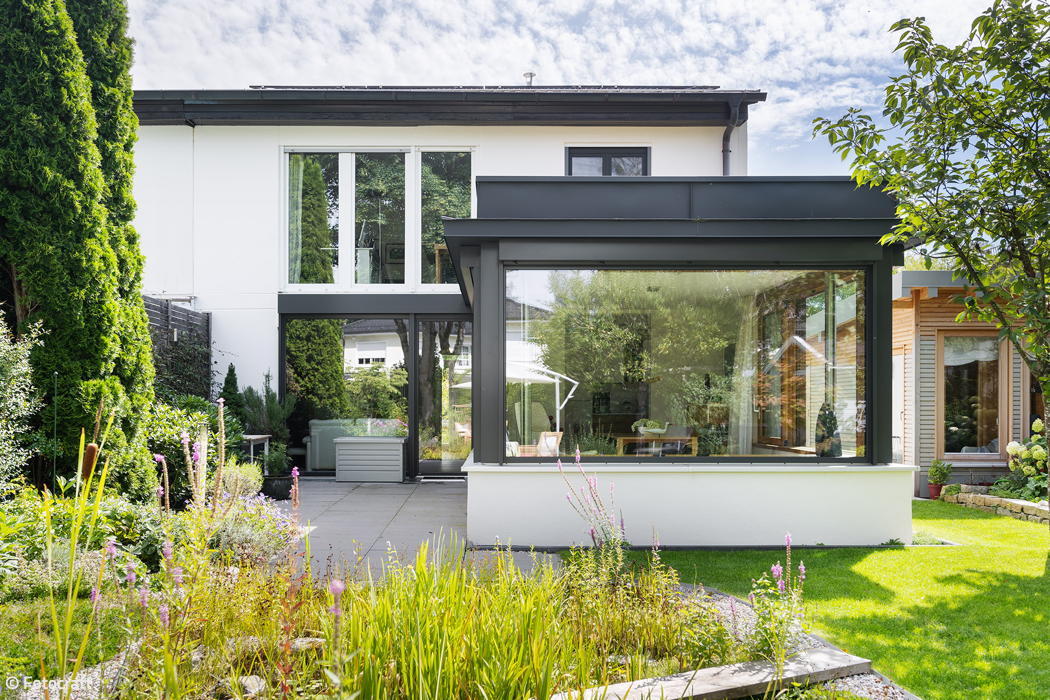
A Flat-Roof Extension That Delivers on Every Detail
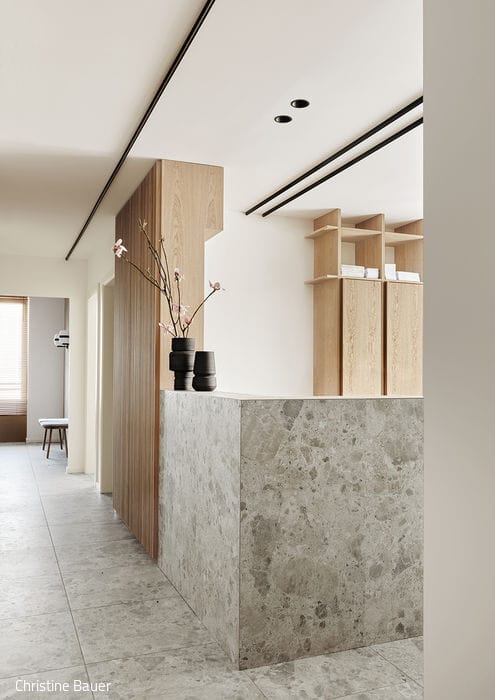
Japandi Style
A doctor's practice in Starnberg discovers its distinctive character through purist design.
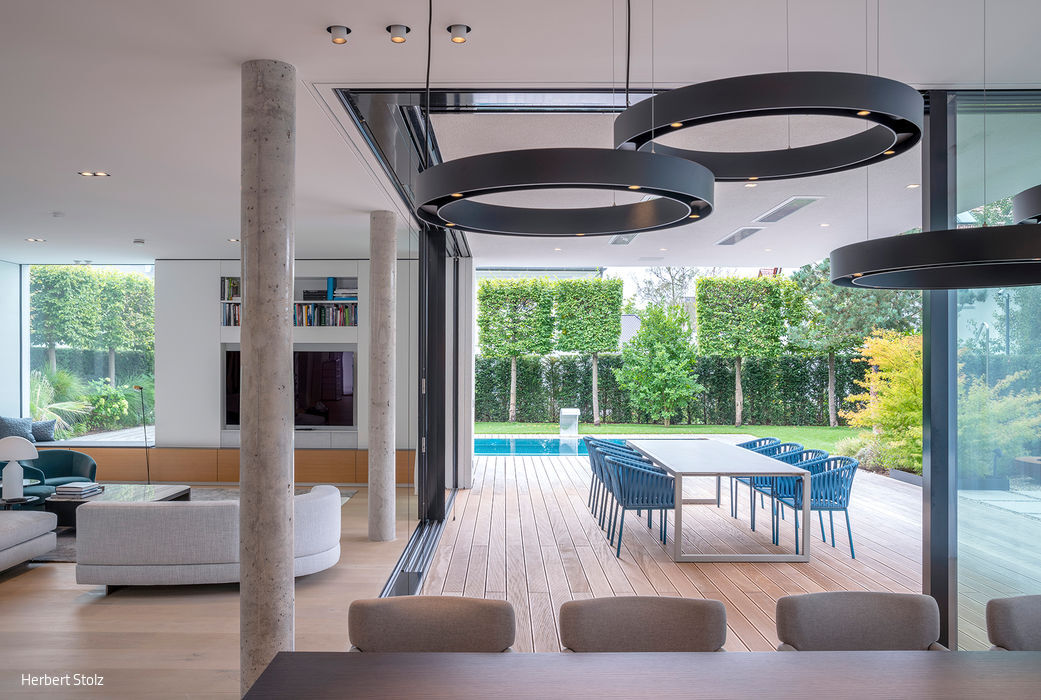
Stone Accordion
Purist Avant-Garde in the Tradition of Classical Modernism
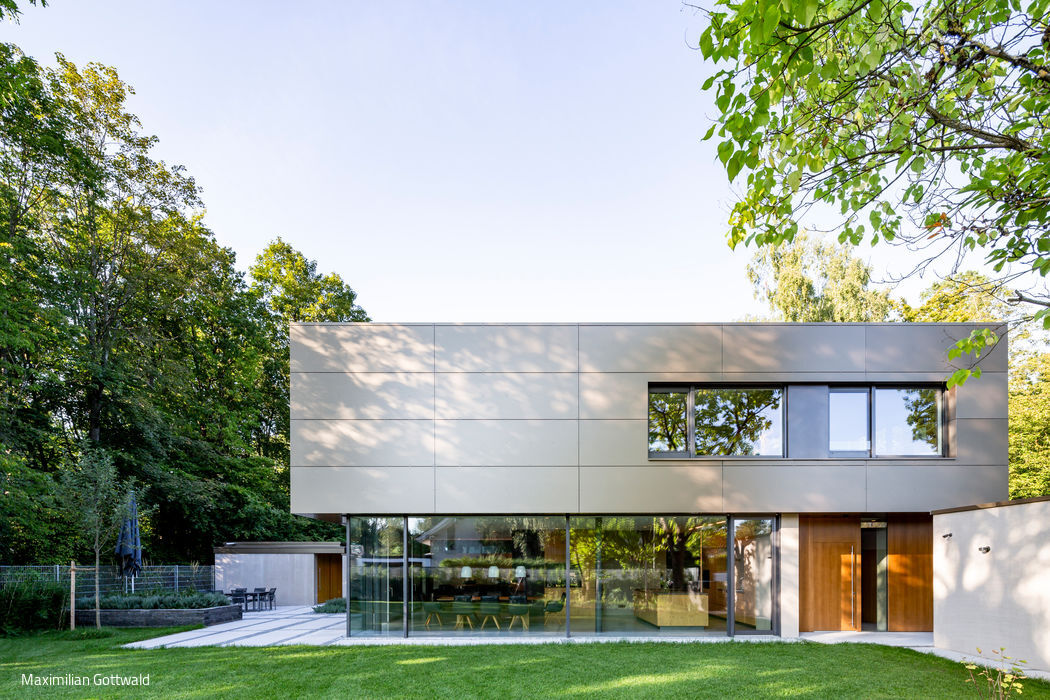
Optical Levitation
A Floating Villa of Glass, Concrete, and Steel