


New Yet Familiar
On the Expansion and Redesign of Hamburg's Green Heart
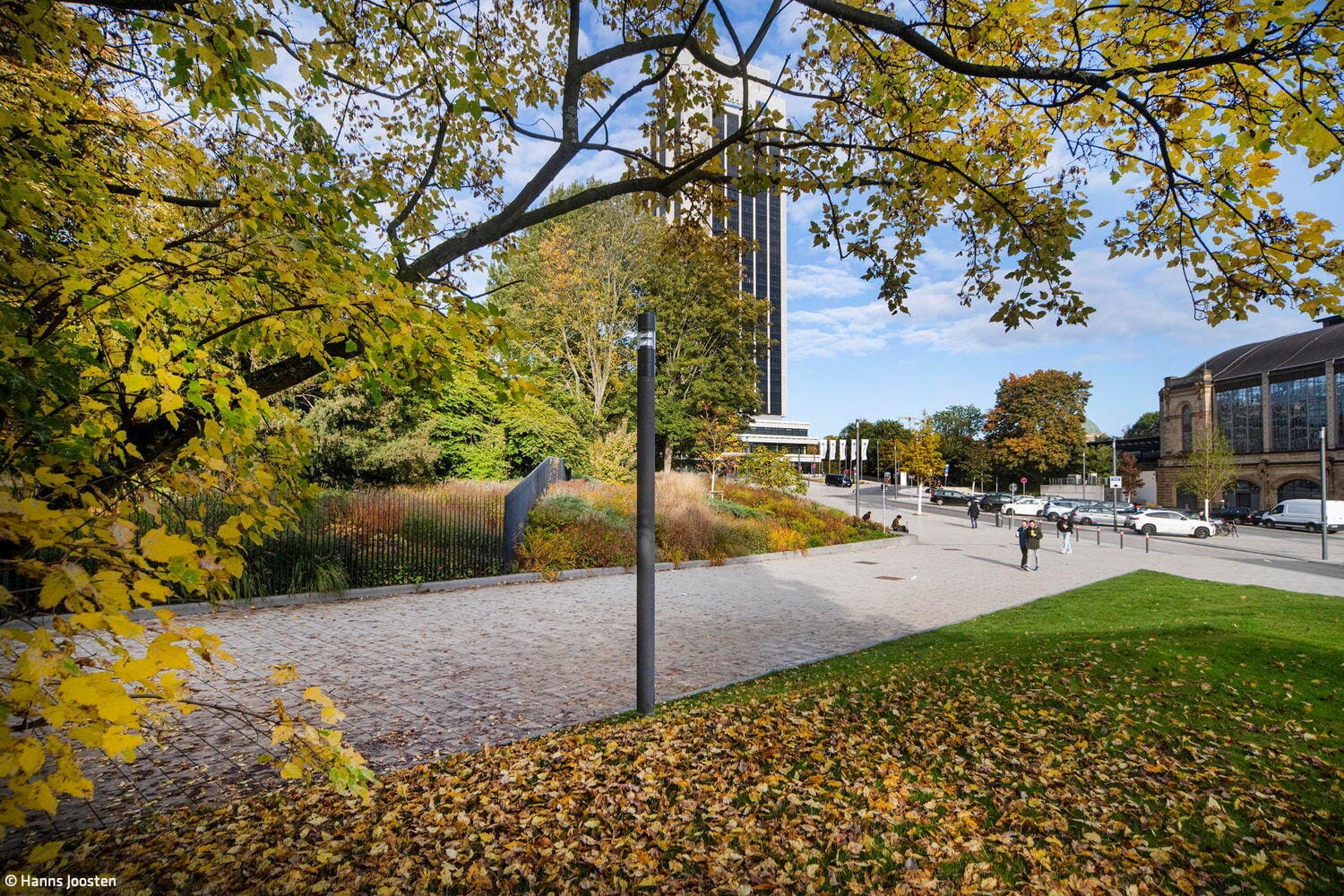
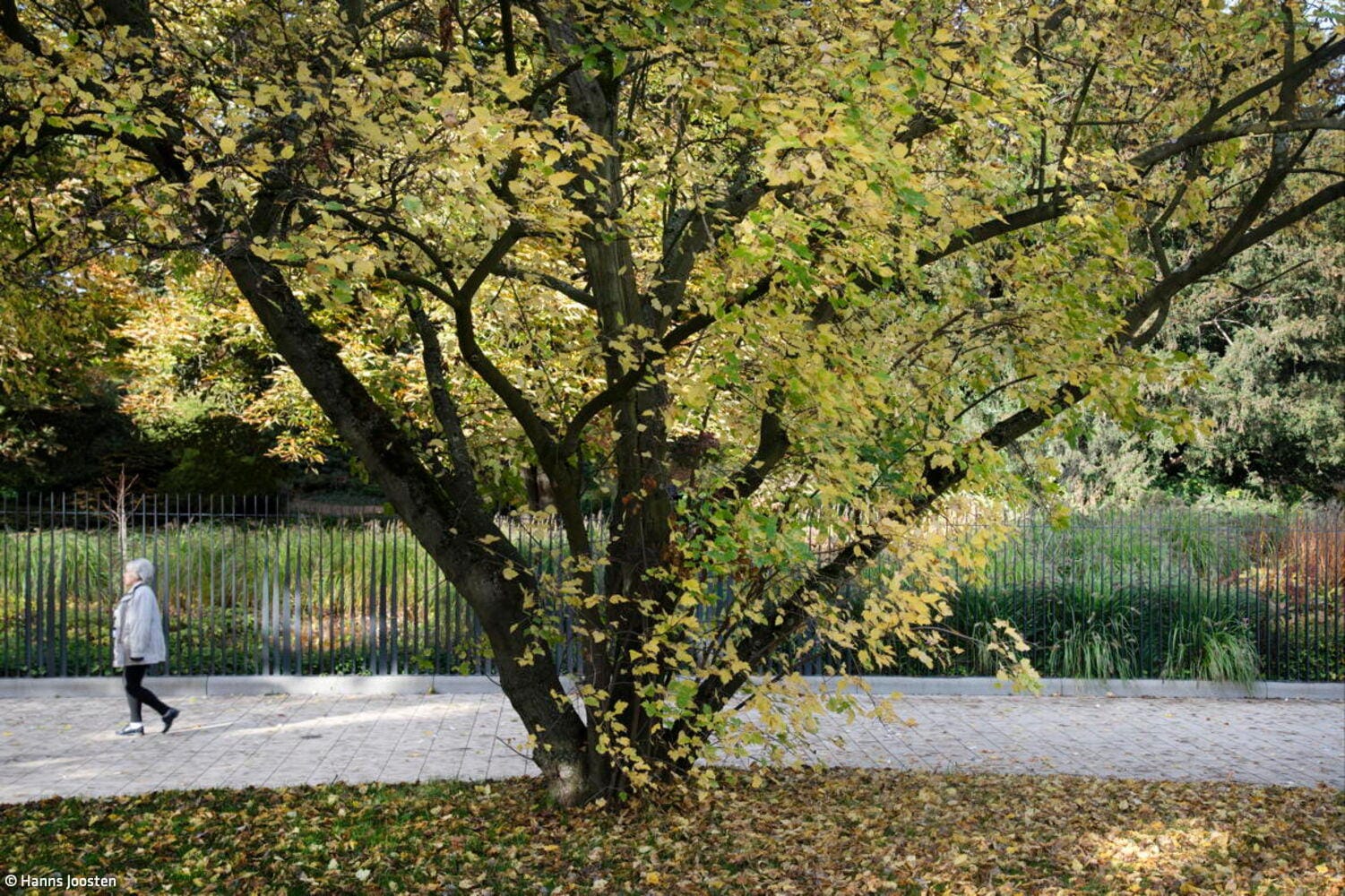
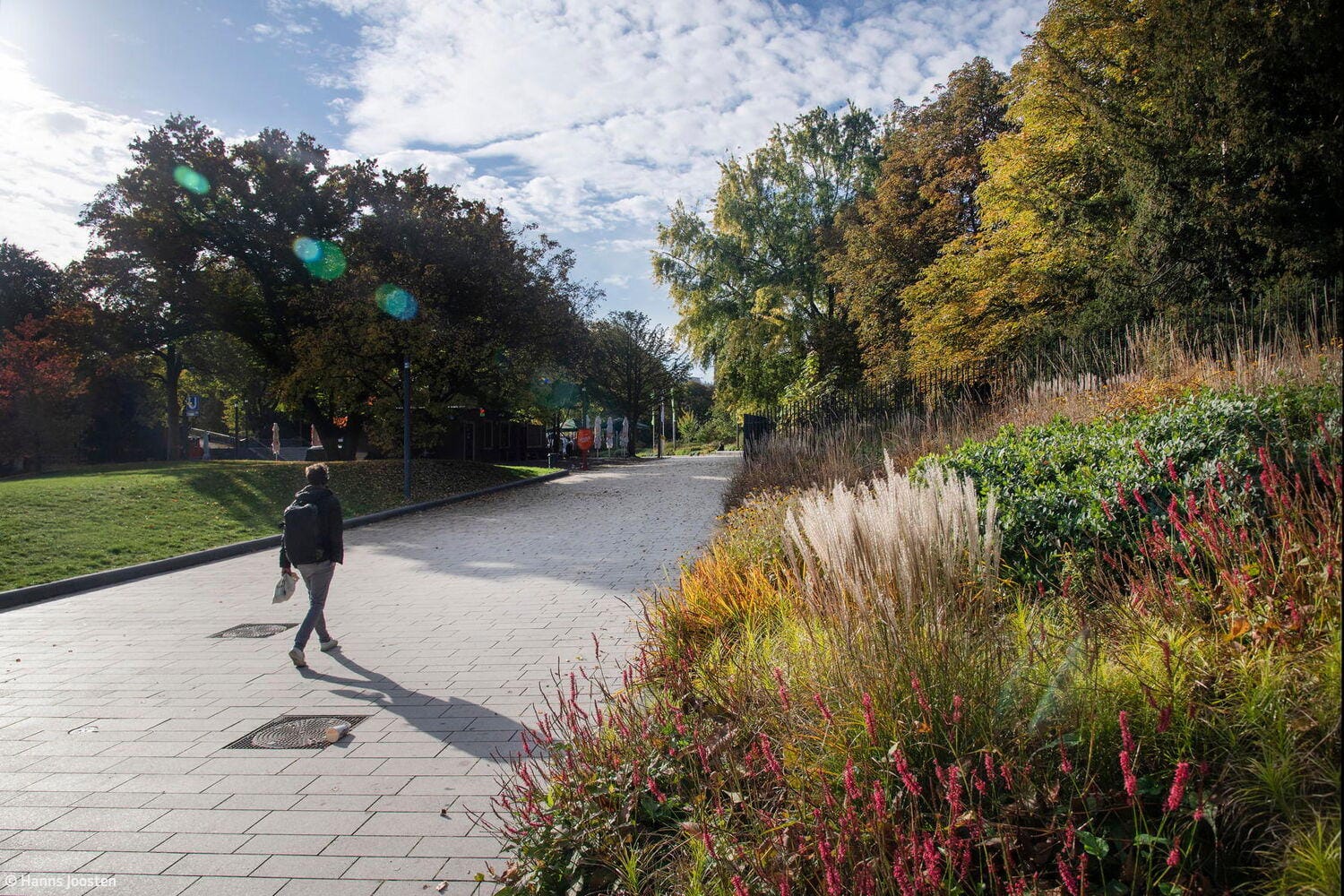
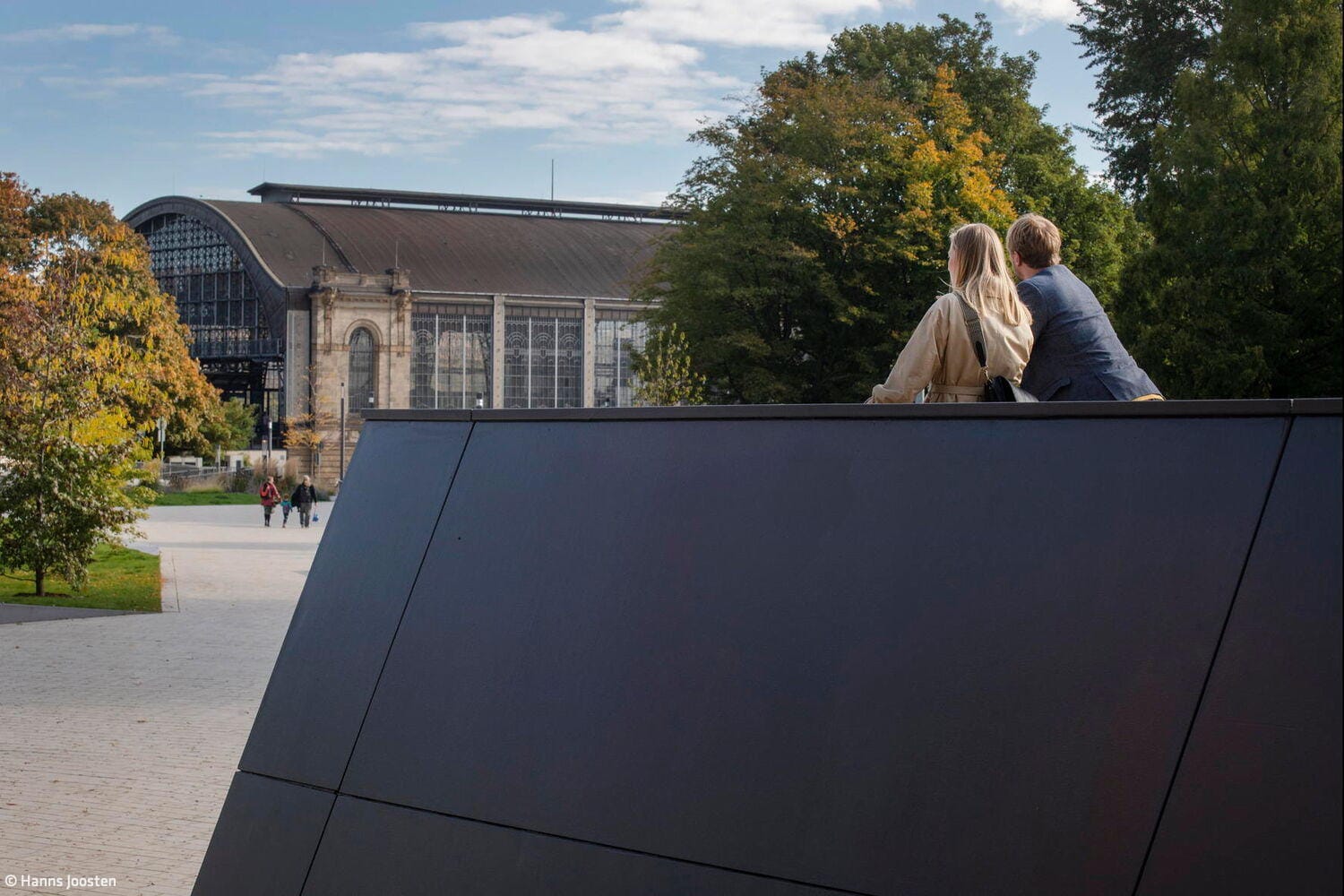
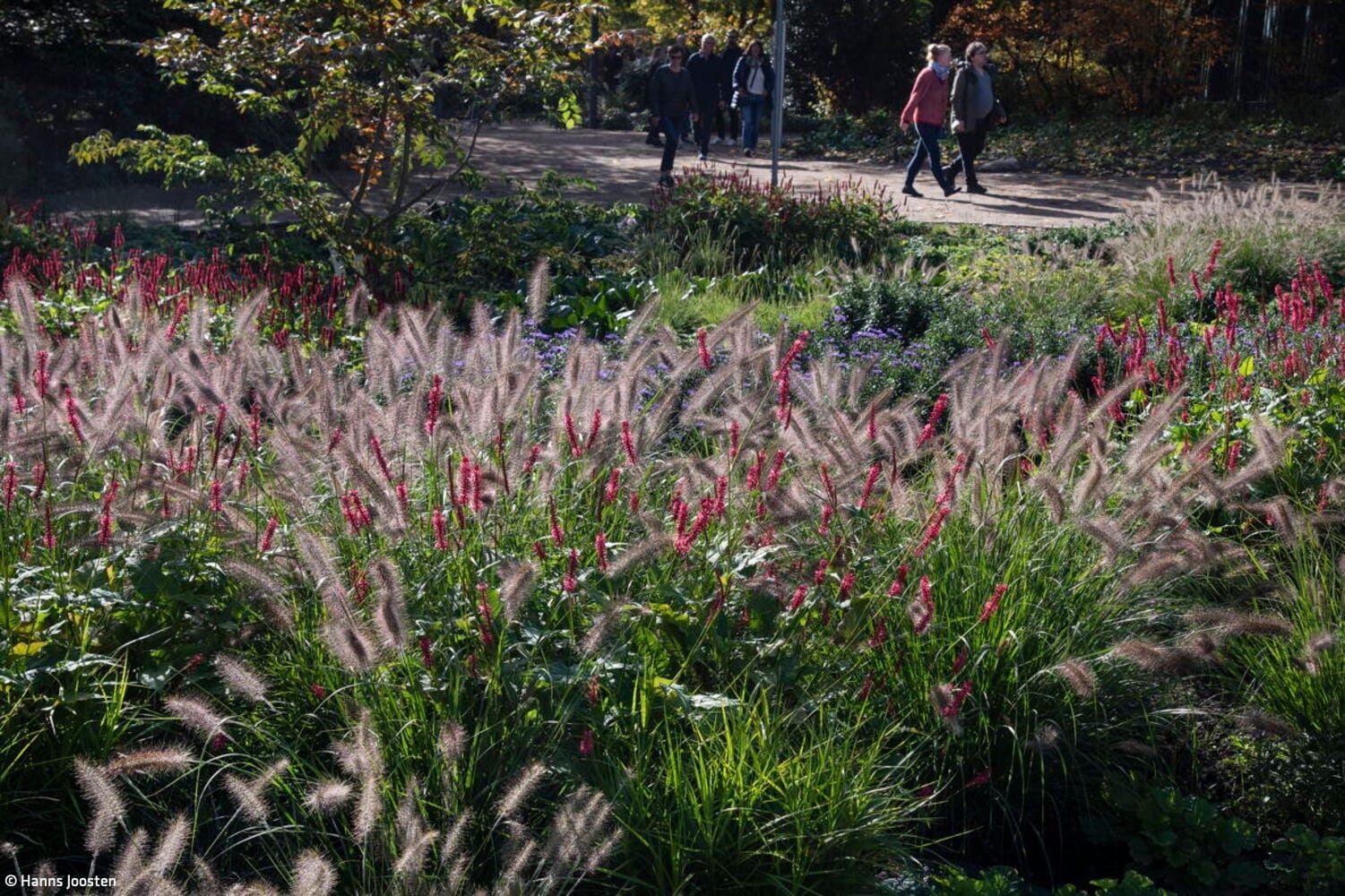
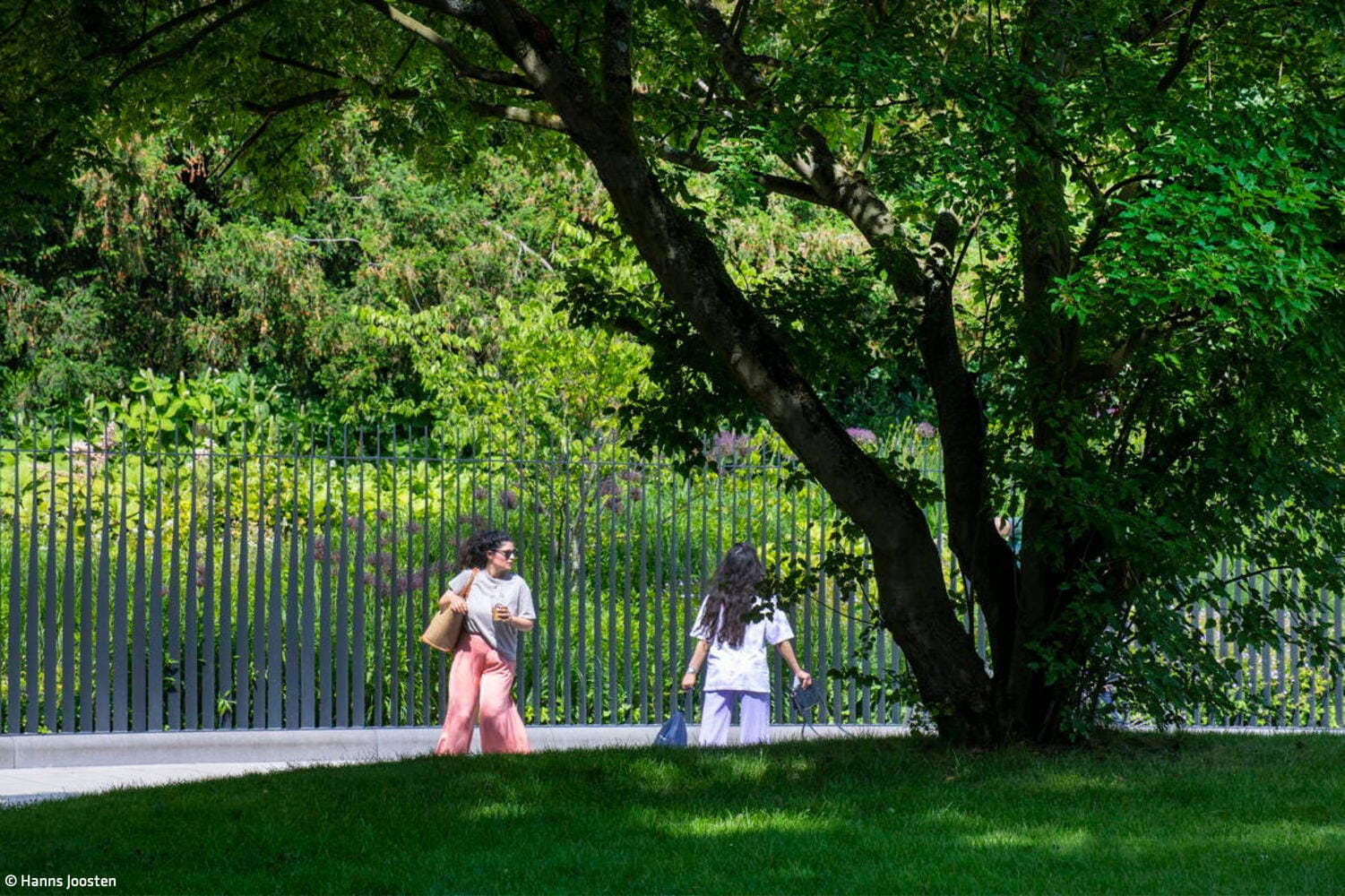
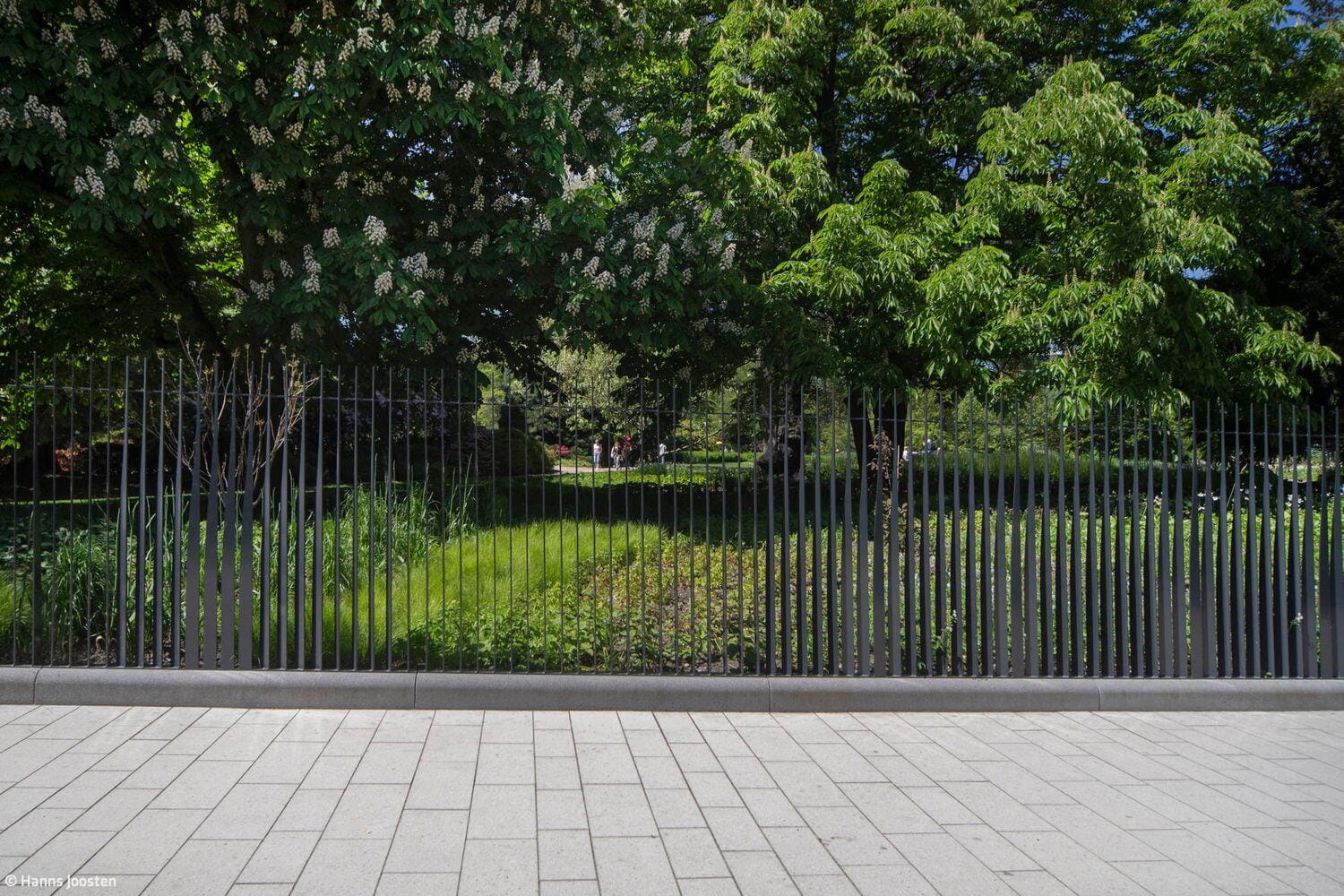
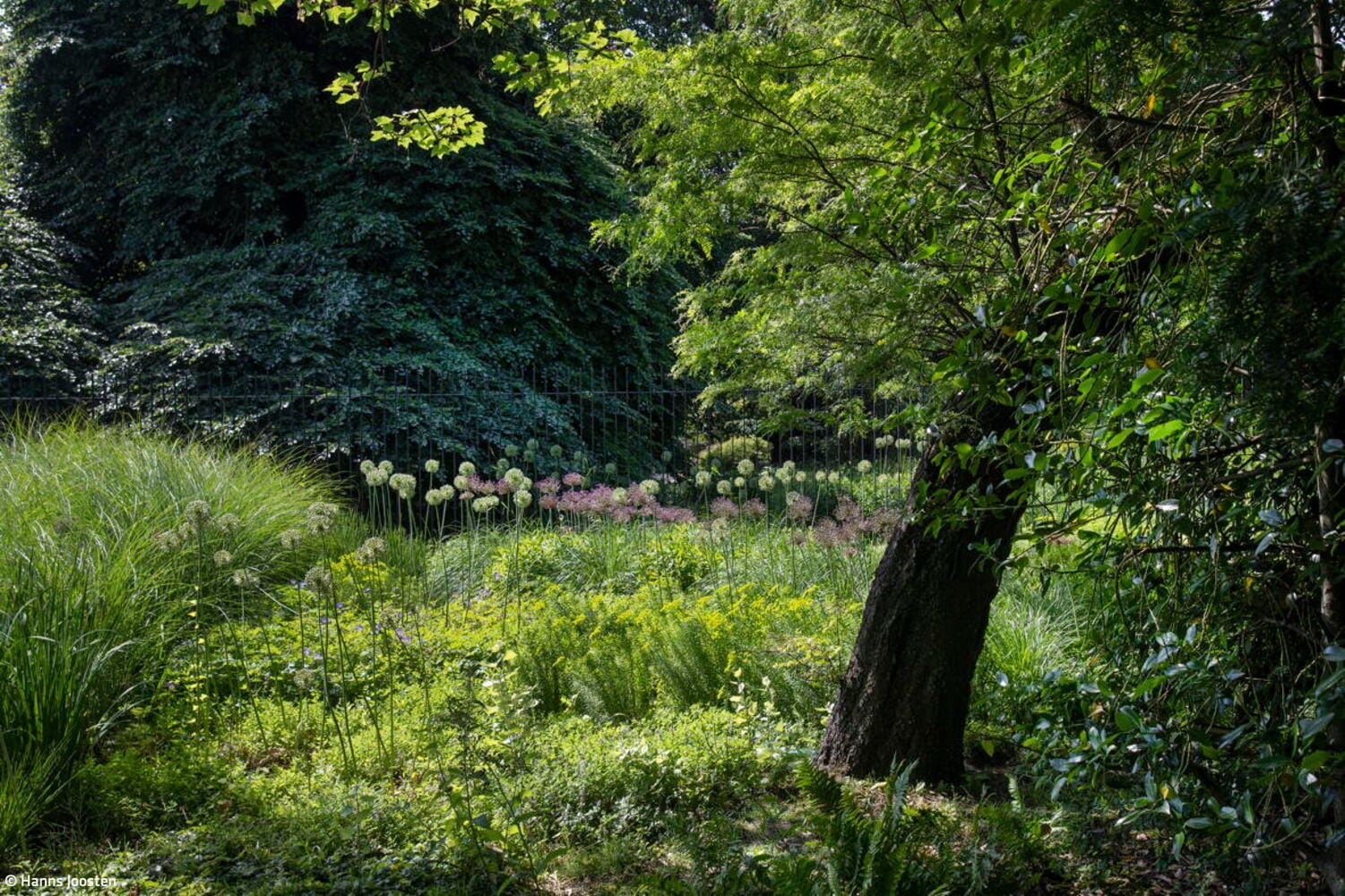
As part of the revitalization of the CCH building complex and its immediate surroundings, the city also planned a restructuring of the adjacent space along Marseiller Straße. This created a unique opportunity: the Planten un Blomen park section could be expanded, and the Dag-Hammarskjöld-Platz could be redesigned as a representative space between the CCH, hotel, Dammtor train station, and the historic park. The removal of the concrete trough that had contained the four-lane Marseiller Straße was intended to create a connecting axis between Dag-Hammarskjöld-Platz, the CCH forecourt, the fairgrounds entrance, and the Bucerius Law School. A competition for this project was held in 2015, which was won by the Berlin-based landscape architecture firm POLA.
The landscape architects tackled this complex challenge with great sensitivity and elegance. Their thoughtful approach to the heritage-protected garden artworks "Planten un Blomen" and "Alter Botanischer Garten," their forward-thinking further development, and their integration into Hamburg's historically significant urban design context resulted in a public open space of exceptional quality. The six-meter-high retaining wall opposite the train station was removed, opening up clear sightlines to the park. To ensure barrier-free access, the old pedestrian bridge—which once spanned the height difference between the station entrance and the ramparts—was demolished. The path now leads directly and accessibly from the station portal along an intensively planted showcase window directly to the Alter Botanischer Garten. The distinctive boundary fence, which presents itself as open or closed depending on the viewing angle, choreographs views into and out of a sequence of islands planted alternately with lush flowering perennials, grasses, and turf areas, as well as new trees and undulating perennial plantings.
Where the dark concrete trough of the four-lane Marseiller Straße once cut through the park, an esplanade for strolling emerged—a succession of bright, inviting plantings and plazas, complemented by a park balcony with views across the redesigned Dag-Hammarskjöld-Platz, the new, brightly paved forecourt to the Alter Botanischer Garten. The formerly dark and austere stone atmosphere transforms through sunny, green terraces into a space of light, creating a carefully calibrated prelude to the new park entrances and the Marseiller Esplanade. The newly created sequence of different plazas and green spaces, combined with the orchestration of new sightlines, unifies the individual sections of the park into a harmonious ensemble for the first time. This project was honored with the German Landscape Architecture Award 2025 in the "Plant Design" category.
Photos:
Hanns Joosten
www.hannsjoosten.de
(Published in CUBE Hamburg 01|26)
A smart solution
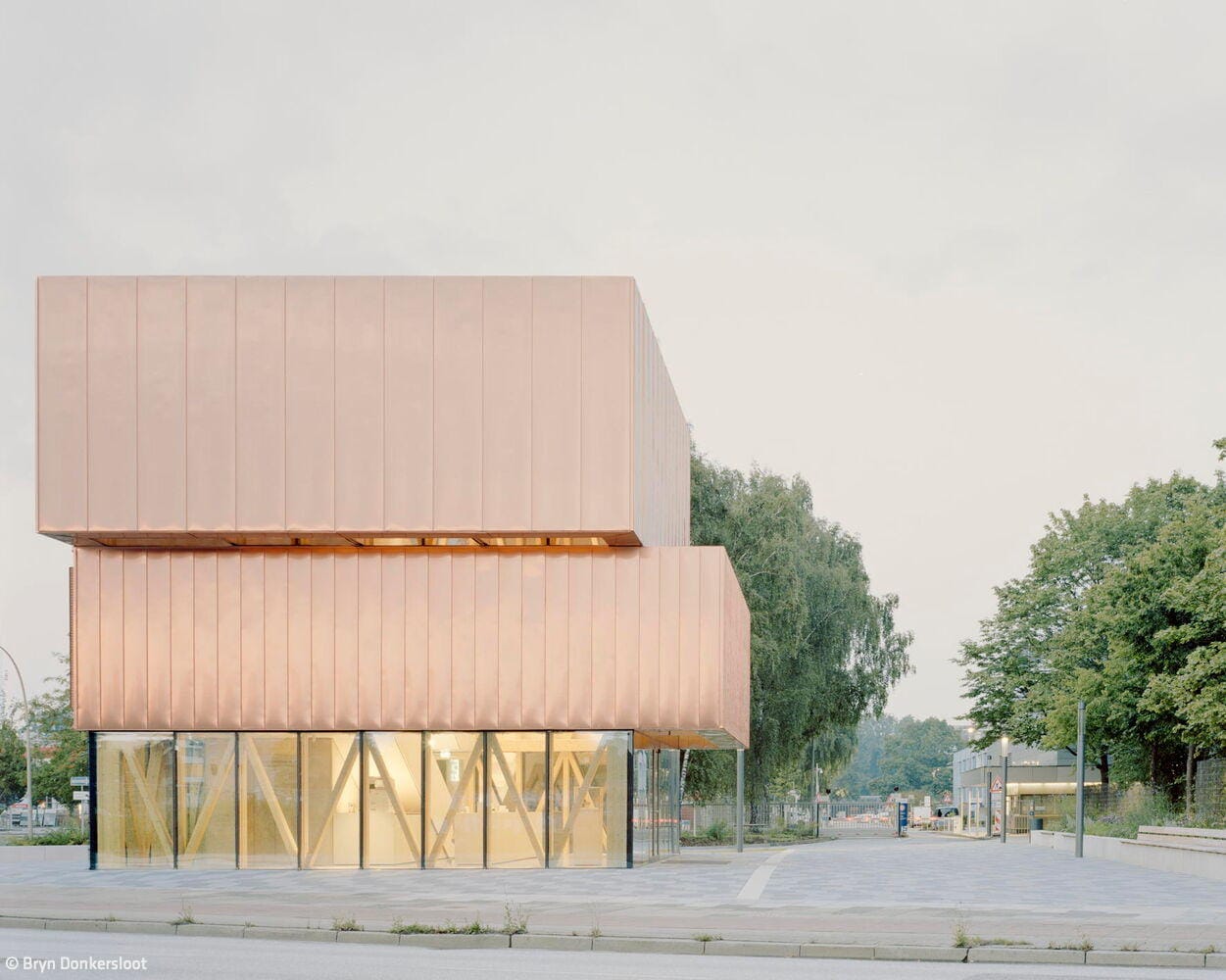
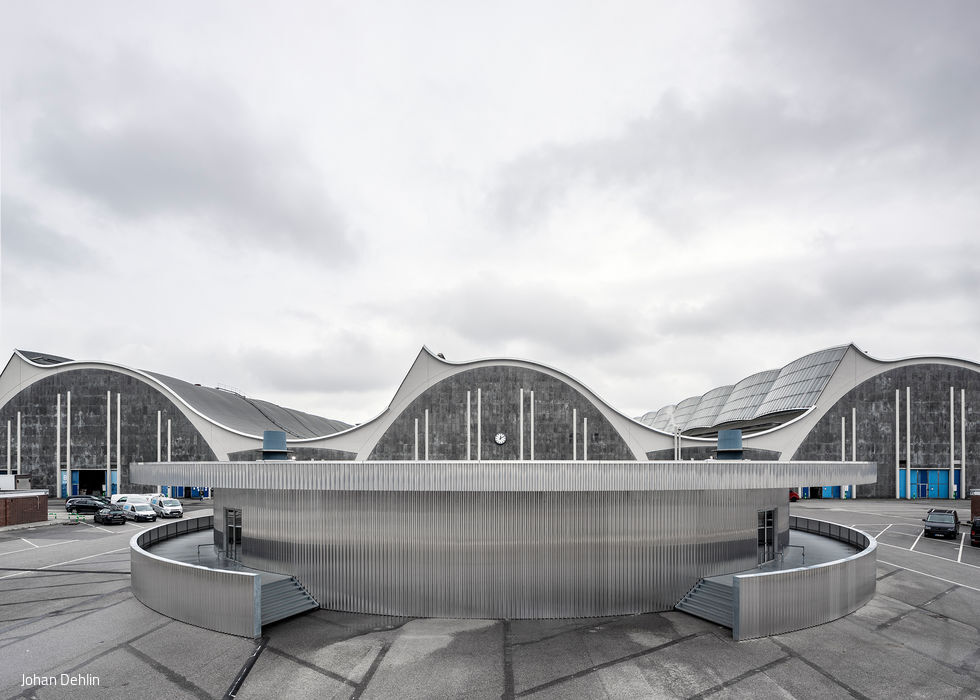
The pavilion for the Großmarkt Theatre: sustainable, flexible, and efficient.
Dream home realized
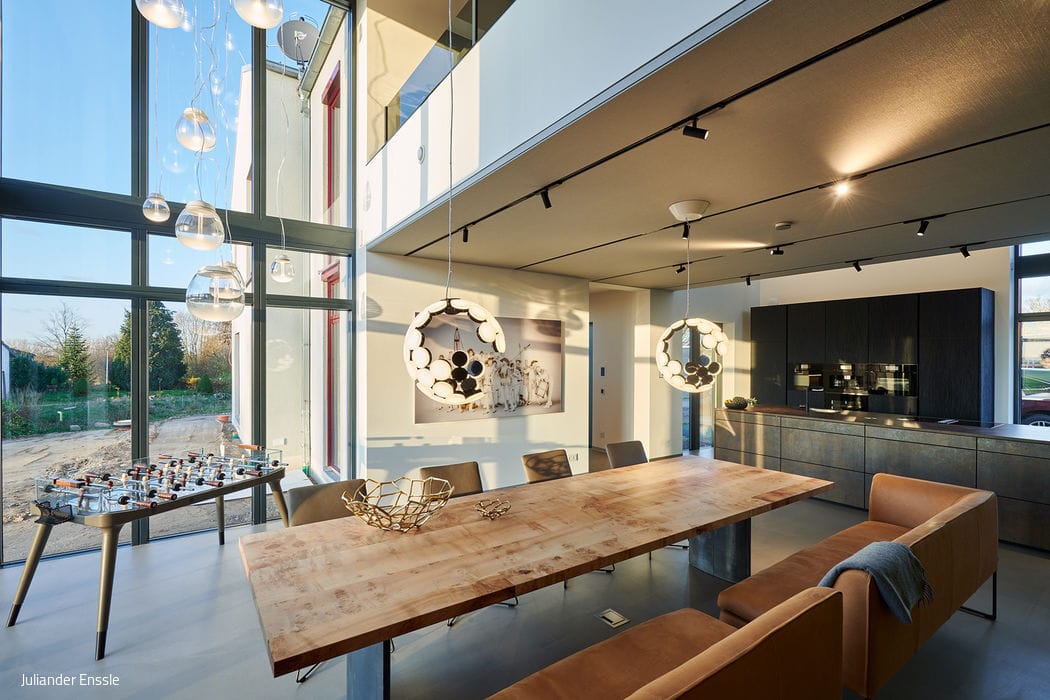
Complete Peace of Mind: A Package That Delighted the Client
Reclaimed Paradise
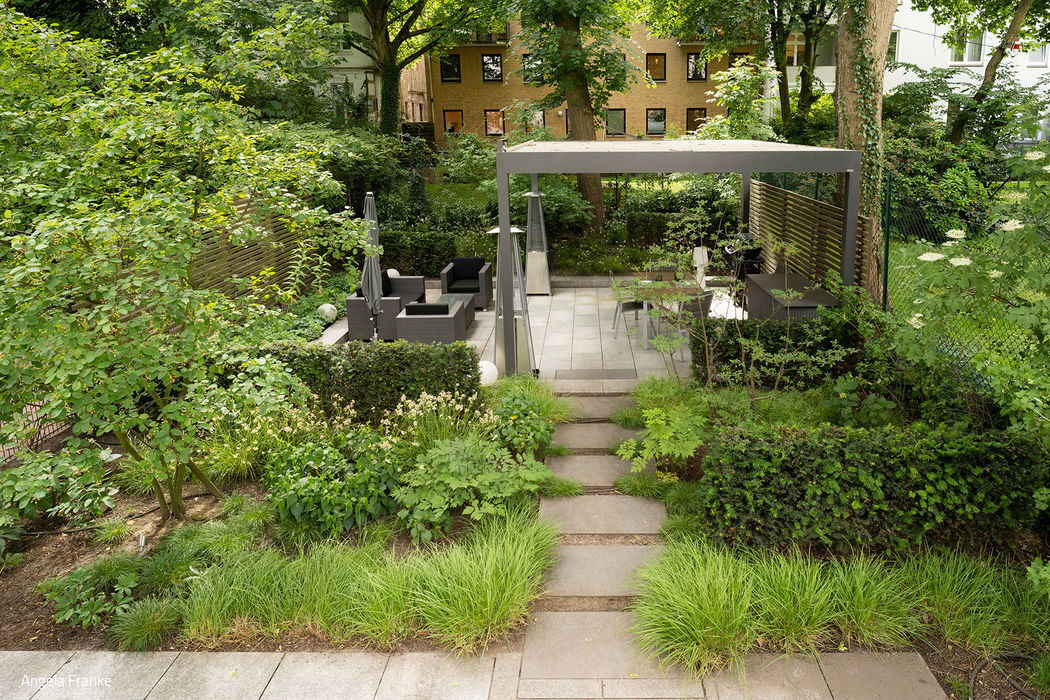
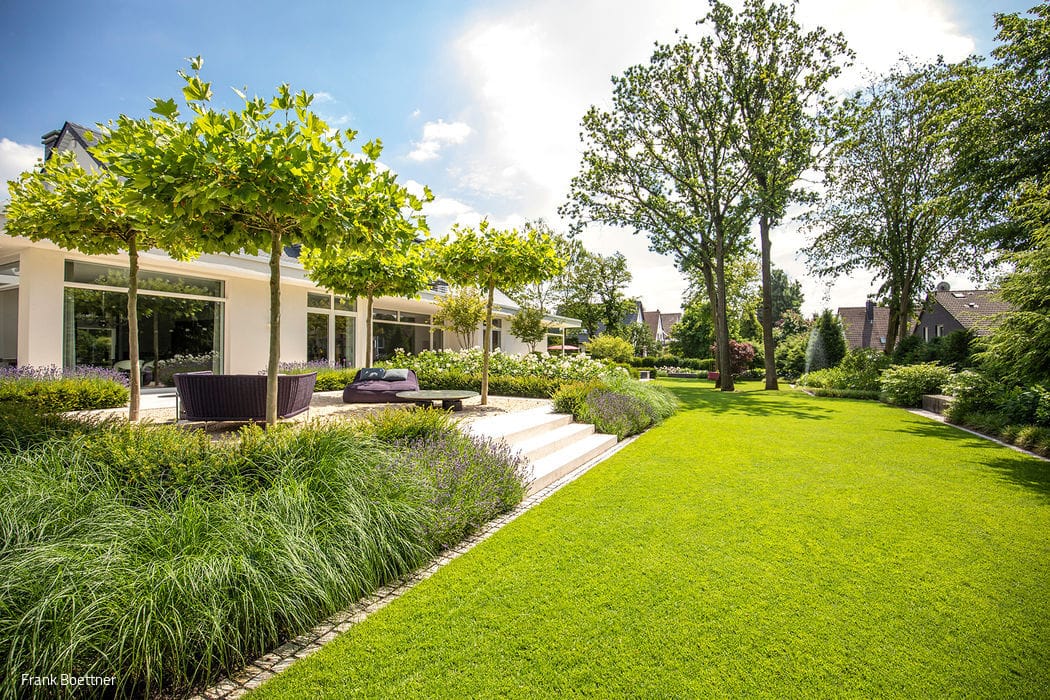
From Mundane Lawns to a Vibrant Family Haven
Luminous Elegance
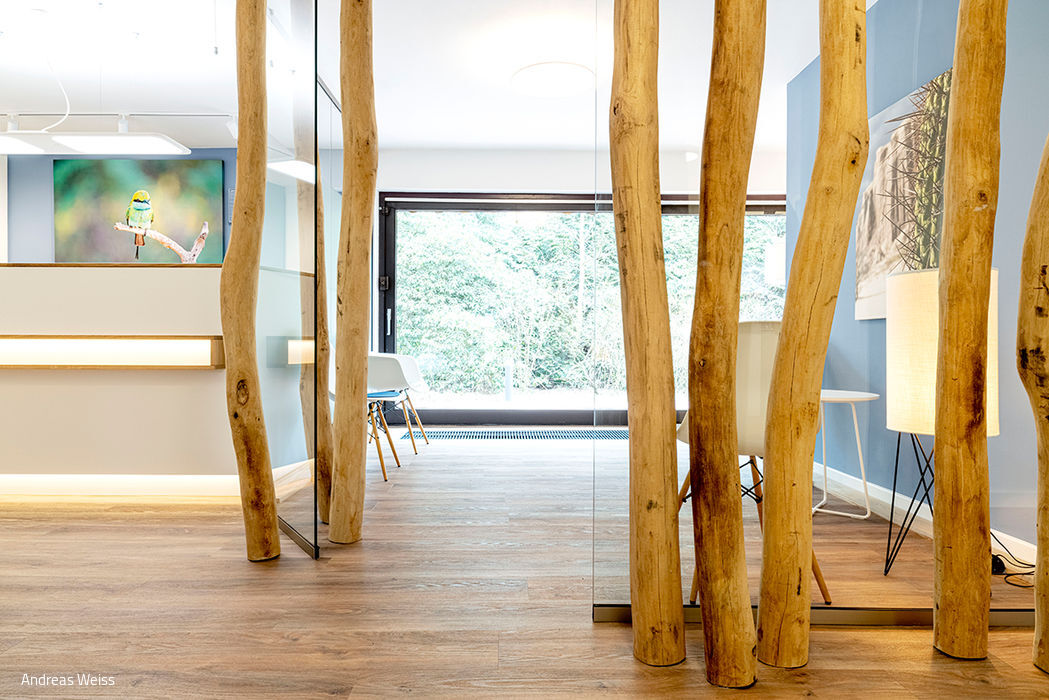
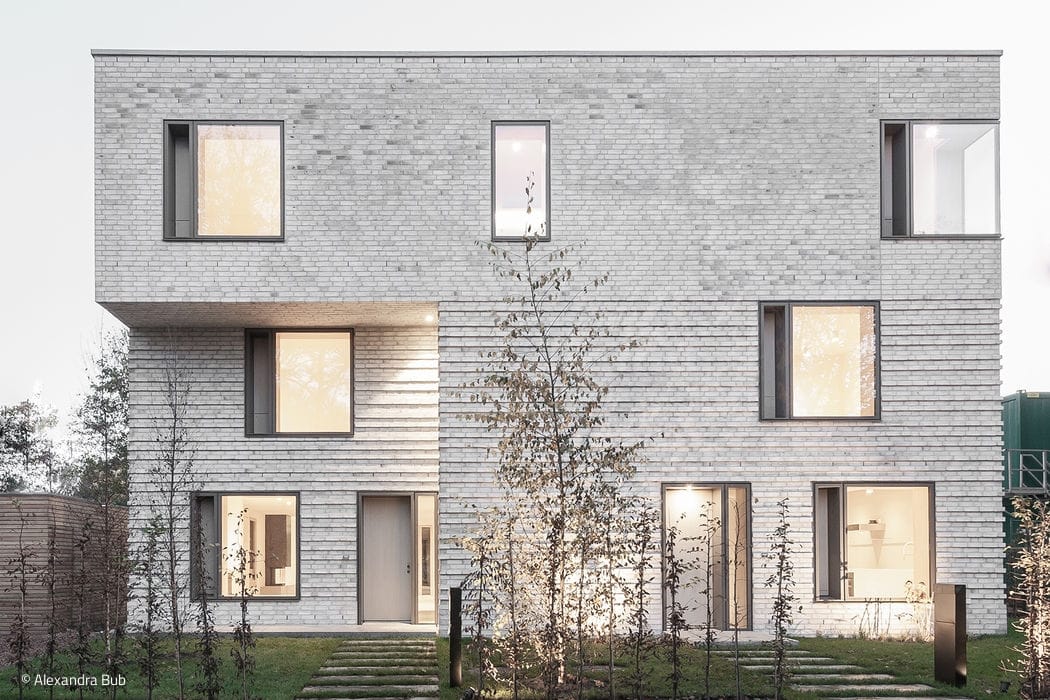
A purist structure built from natural, robust materials—largely left in their raw, unfinished state.