


Living in White
A humble extension transforms into a serene single-residence with Japanese-inspired design
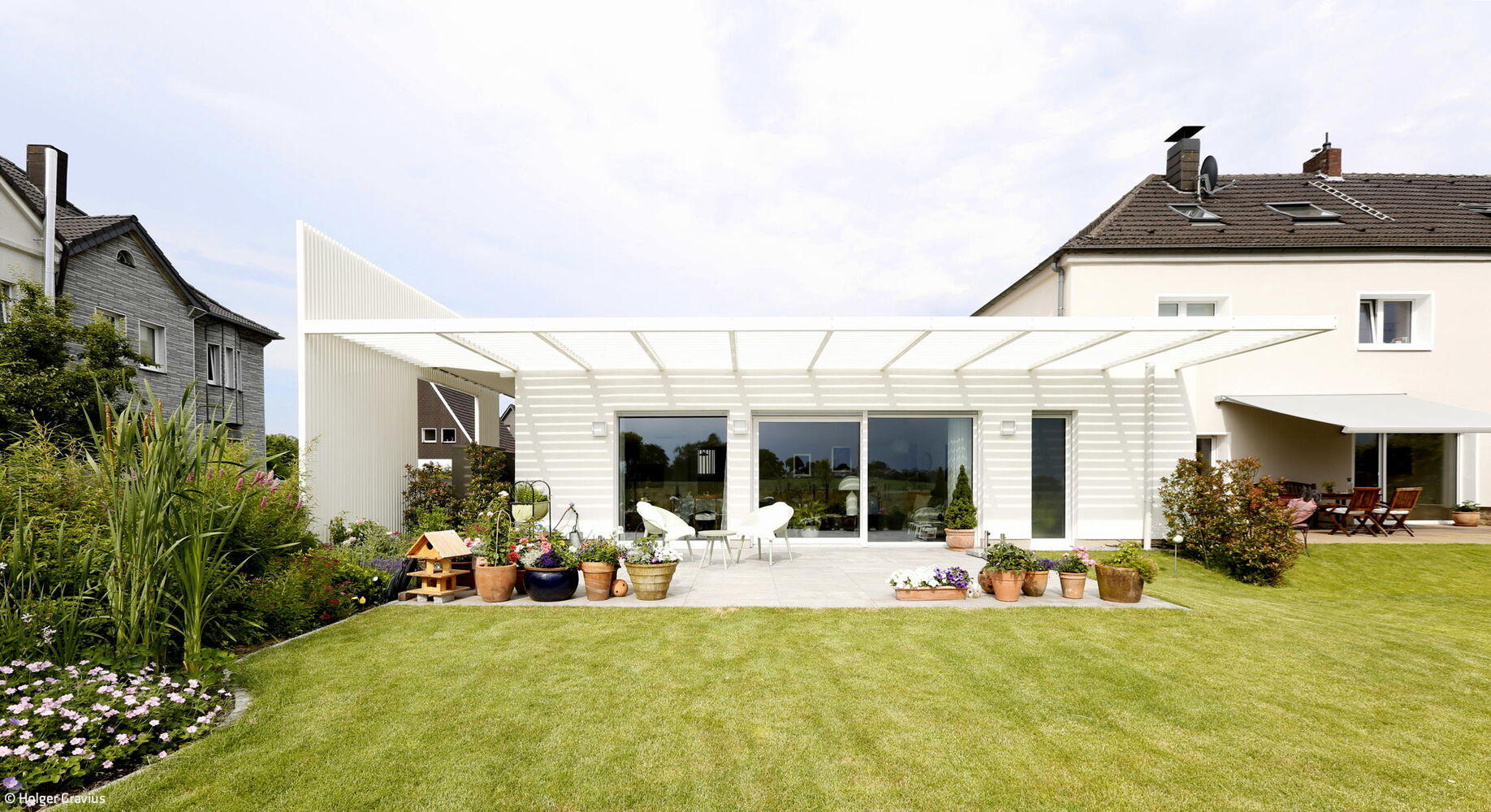
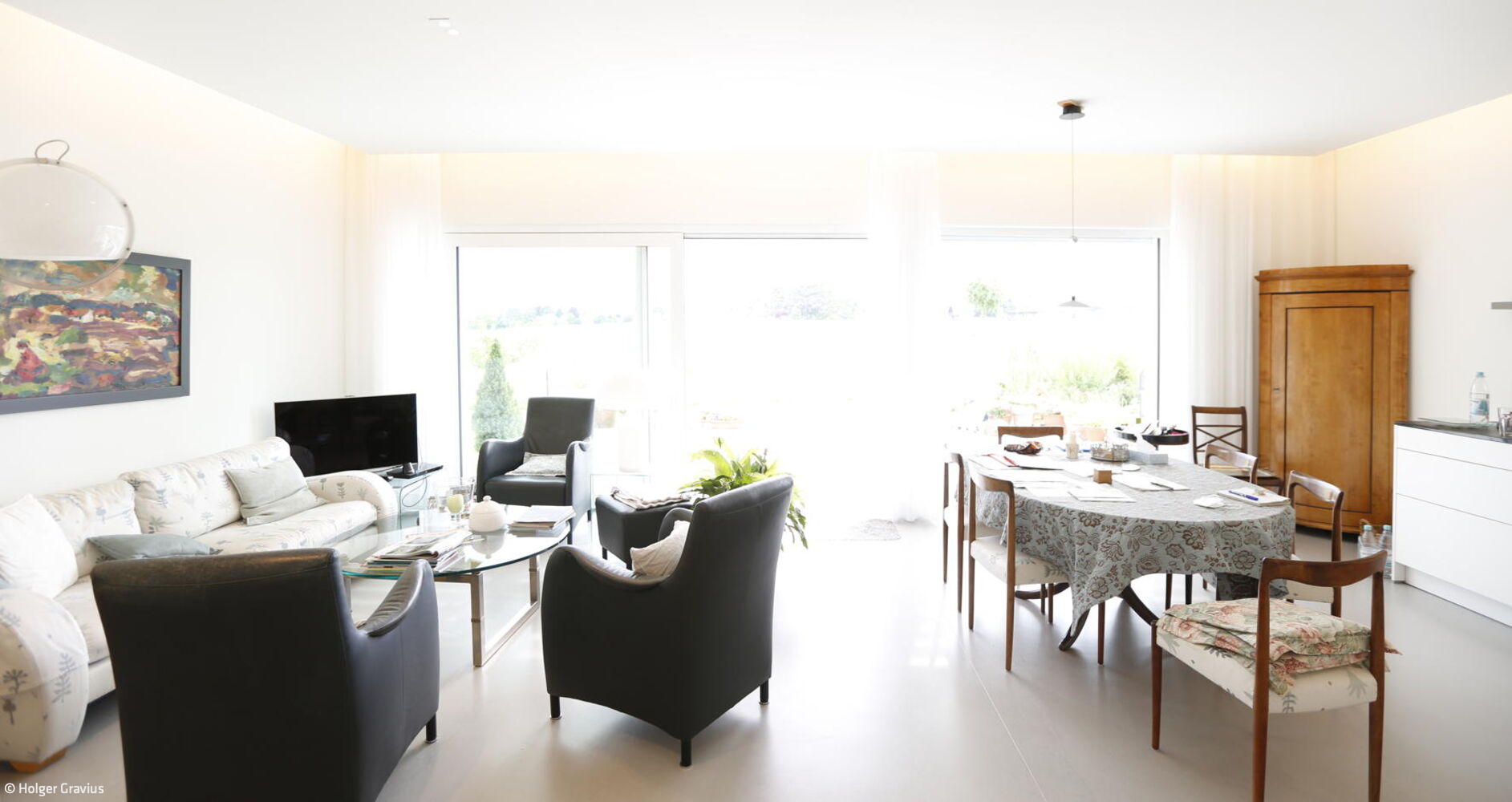
Architect Holger Gravius's firm name—KenChiku Architektur + Design—speaks volumes about his deep engagement with Japanese building culture. His designs embody the core principles of simplicity and minimalism central to Japanese architecture, reflecting the contemplative essence of Zen while making it tangible and sensory. The "White House" project exemplifies this philosophy, where light and slatted screens emerge as defining elements throughout.
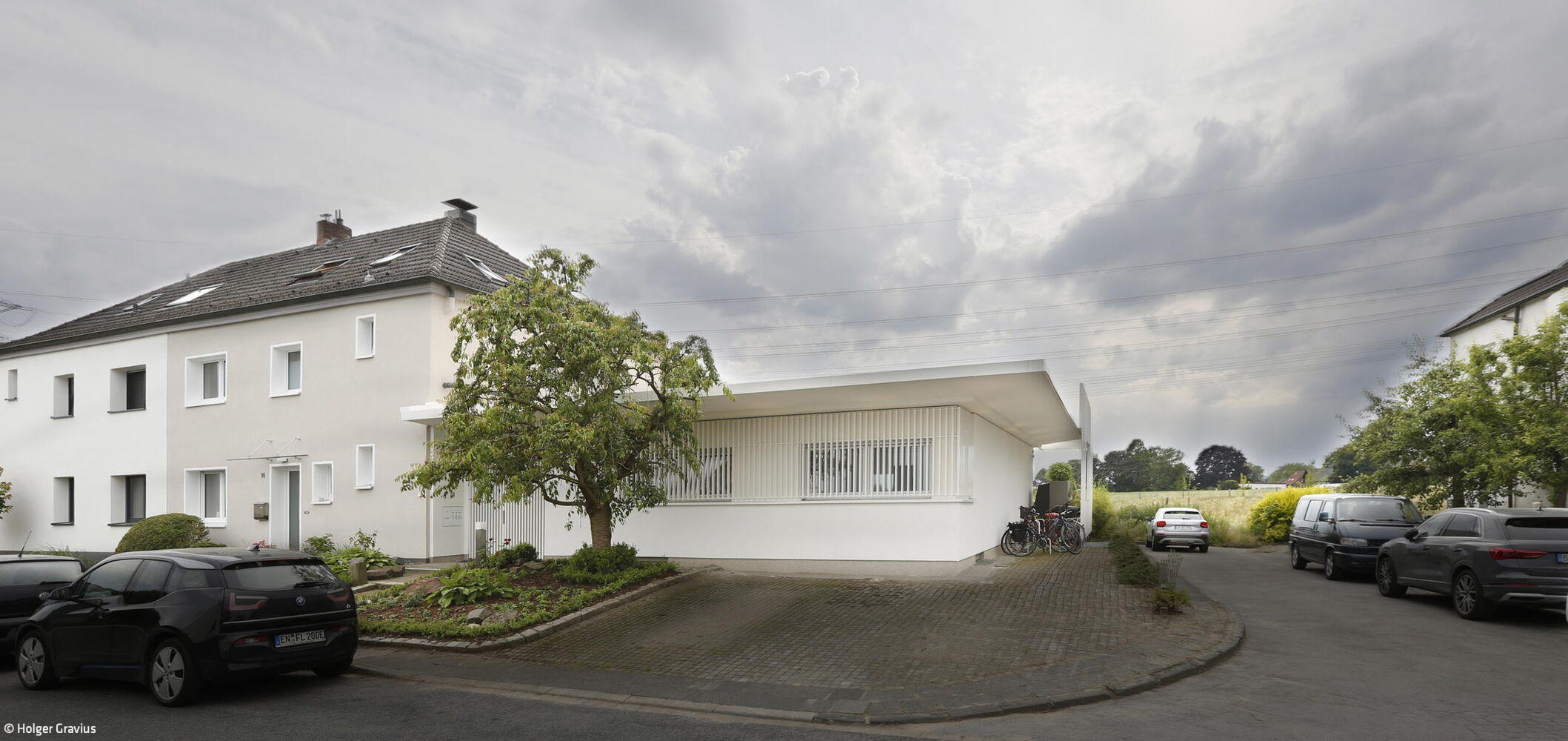
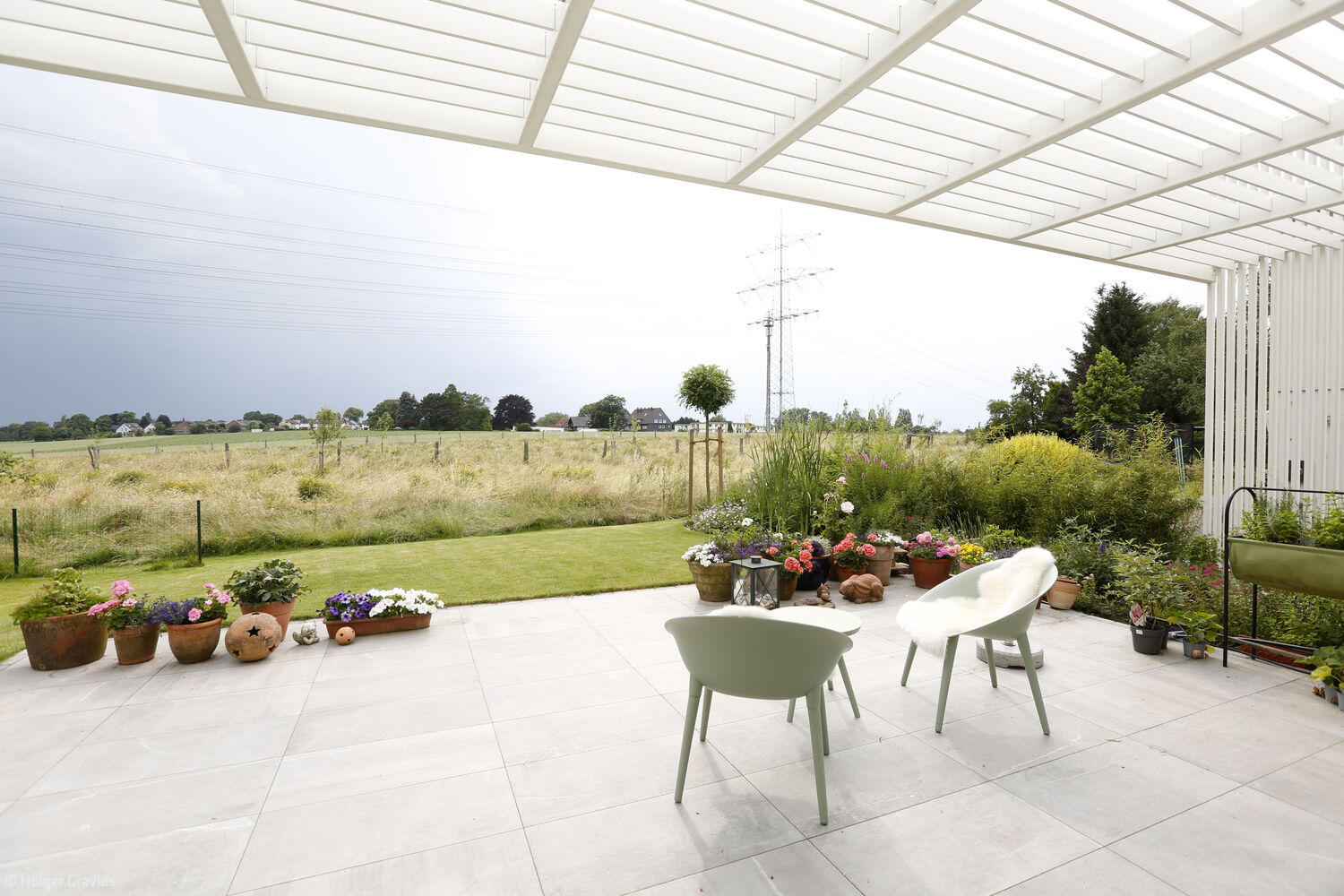
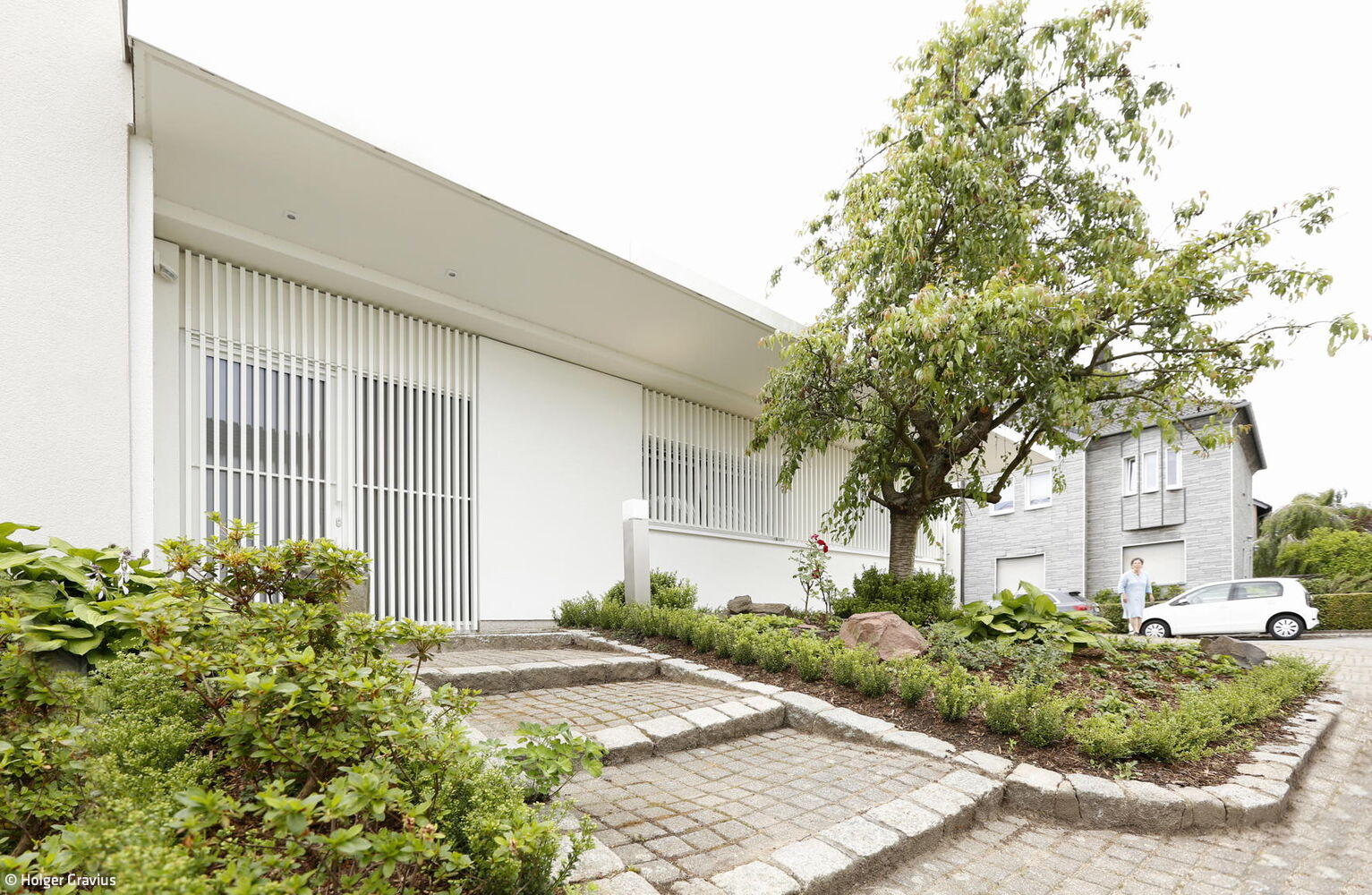
Revitalizing an existing structure presents both an exciting challenge and rewarding opportunity. This project centered on transforming a dark, single-story flat-roofed annex into something entirely new. The goal was to establish it as an architecturally independent structure, separate from the neighboring house, while introducing subtle barrier-free improvements. Situated on a 377 m² corner plot in a diverse residential neighborhood of primarily single and two-family homes, the basement-level extension has been completely reimagined. Gone is the gloom—replaced by radiant white surfaces and facade slats that dance with light. Facing west, the garden (cleared of an old shed and overgrowth) now opens to sweeping views of meadows and fields. The front entrance and approach remain virtually untouched, where an old cherry tree blooms each spring. Sakura—the Japanese word for cherry blossoms—symbolizes not merely transience but renewal. This tree, present long before the renovation, has become the perfect emblem for the extension's evolution into a luminous, sophisticated single-residence that marries modern design with elegant simplicity.
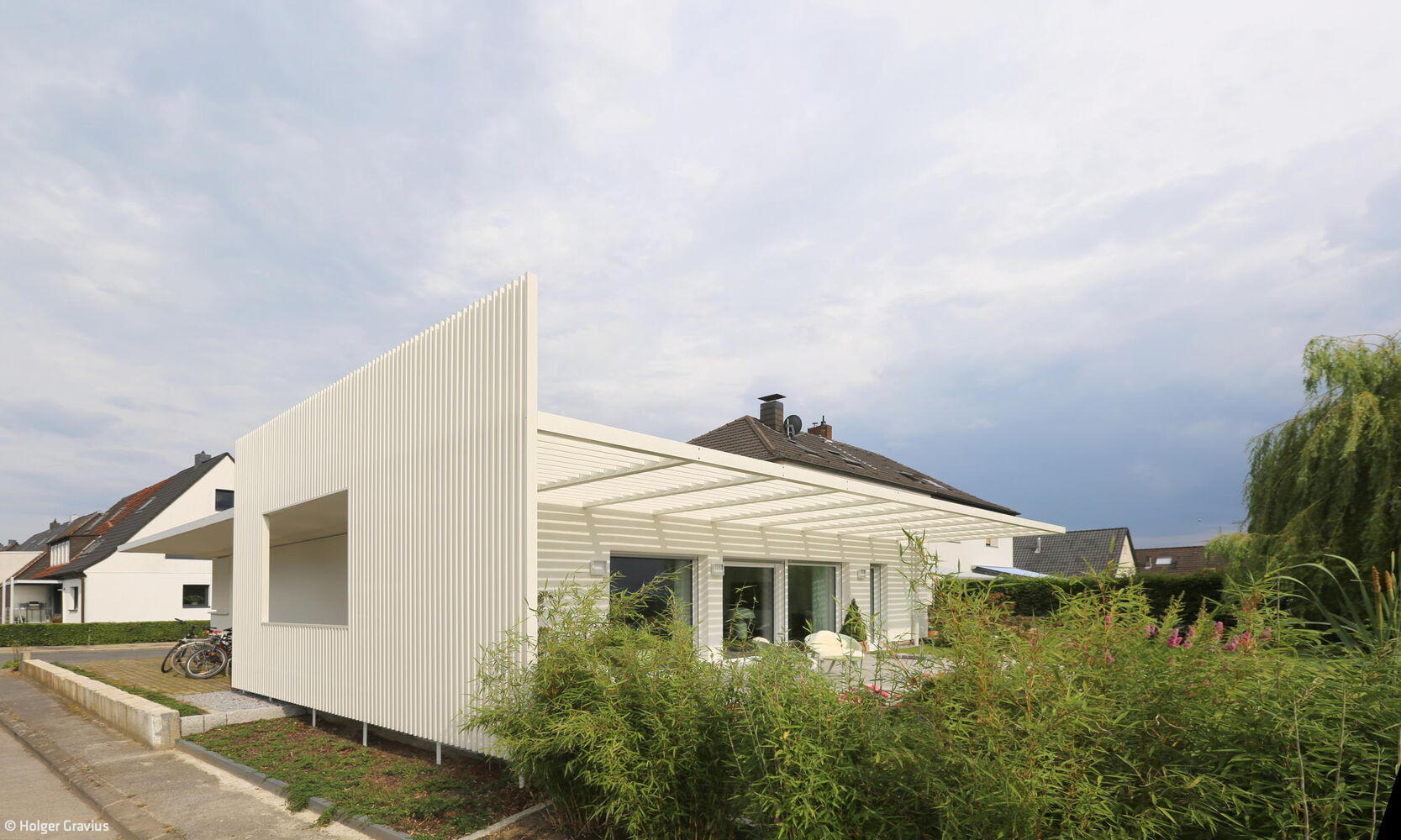
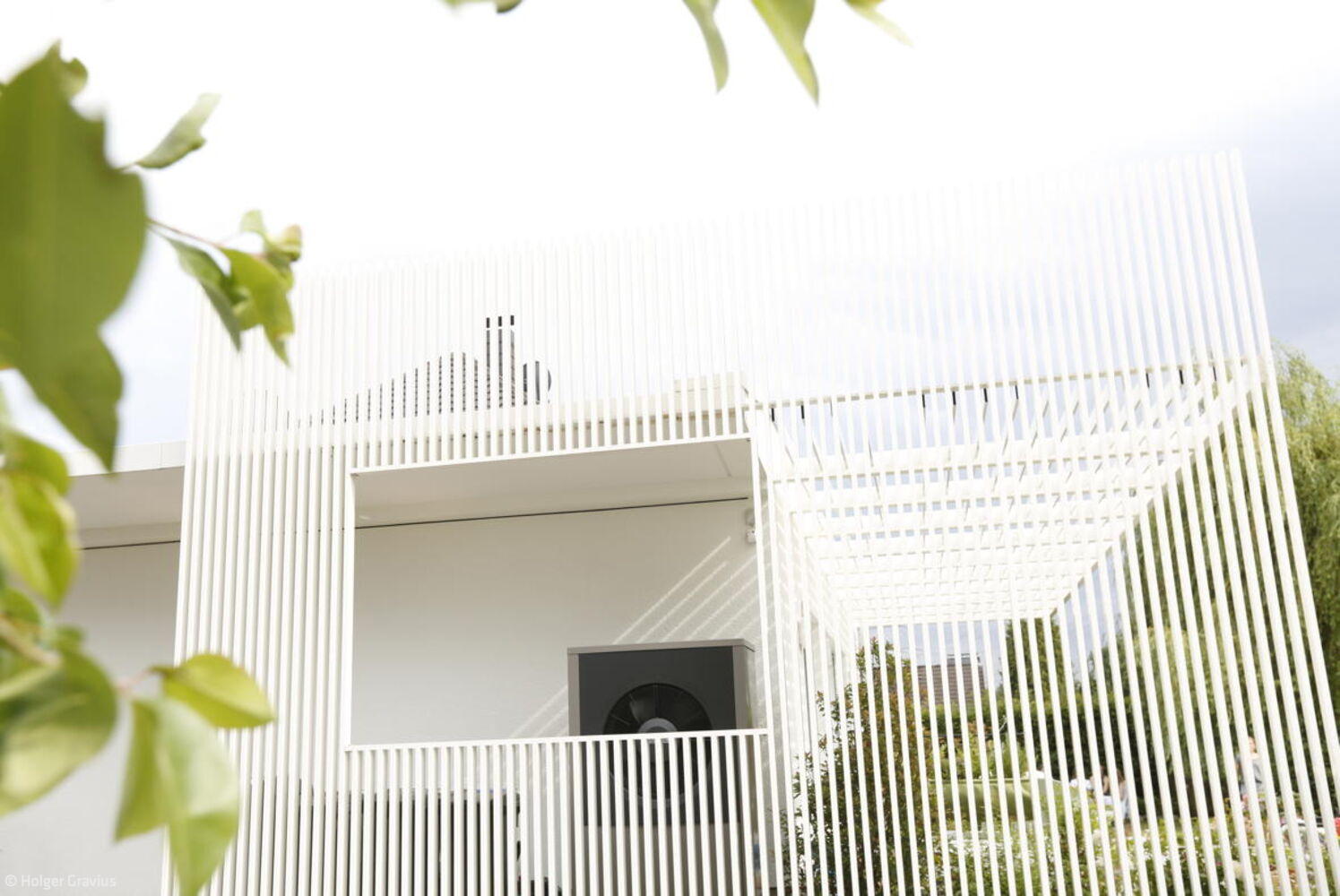
The first priority was waterproofing the leaky basement, now home to mechanical systems and storage. The basement staircase was repositioned at the entrance for practical reasons, with no landing required to maintain accessibility. The façade received thermal insulation and a fine plaster finish. A subtle shadow line now delineates the original structure from the delicate, cantilevered flat roof—a detail that protects both the entry and façade while being beautifully lit from below at night. On the north side, privacy screening was needed without making the house feel fortress-like. The solution: a slatted wall system, with optimal proportions tested through full-scale models developed collaboratively with the client. The aluminium slats begin at the front door, run consistently past the street-facing windows, and continue in varied arrangements along the northern and western elevations. Horizontal slats extend across the entire terrace, casting cool shadows over the glass façade and outdoor spaces while their interplay of light and shadow evokes a distinctly Mediterranean atmosphere.
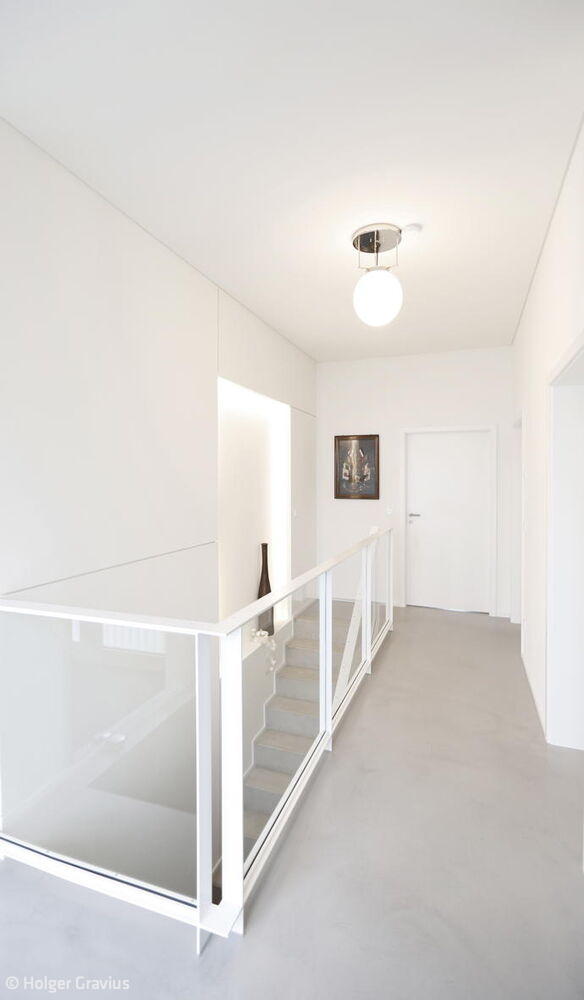
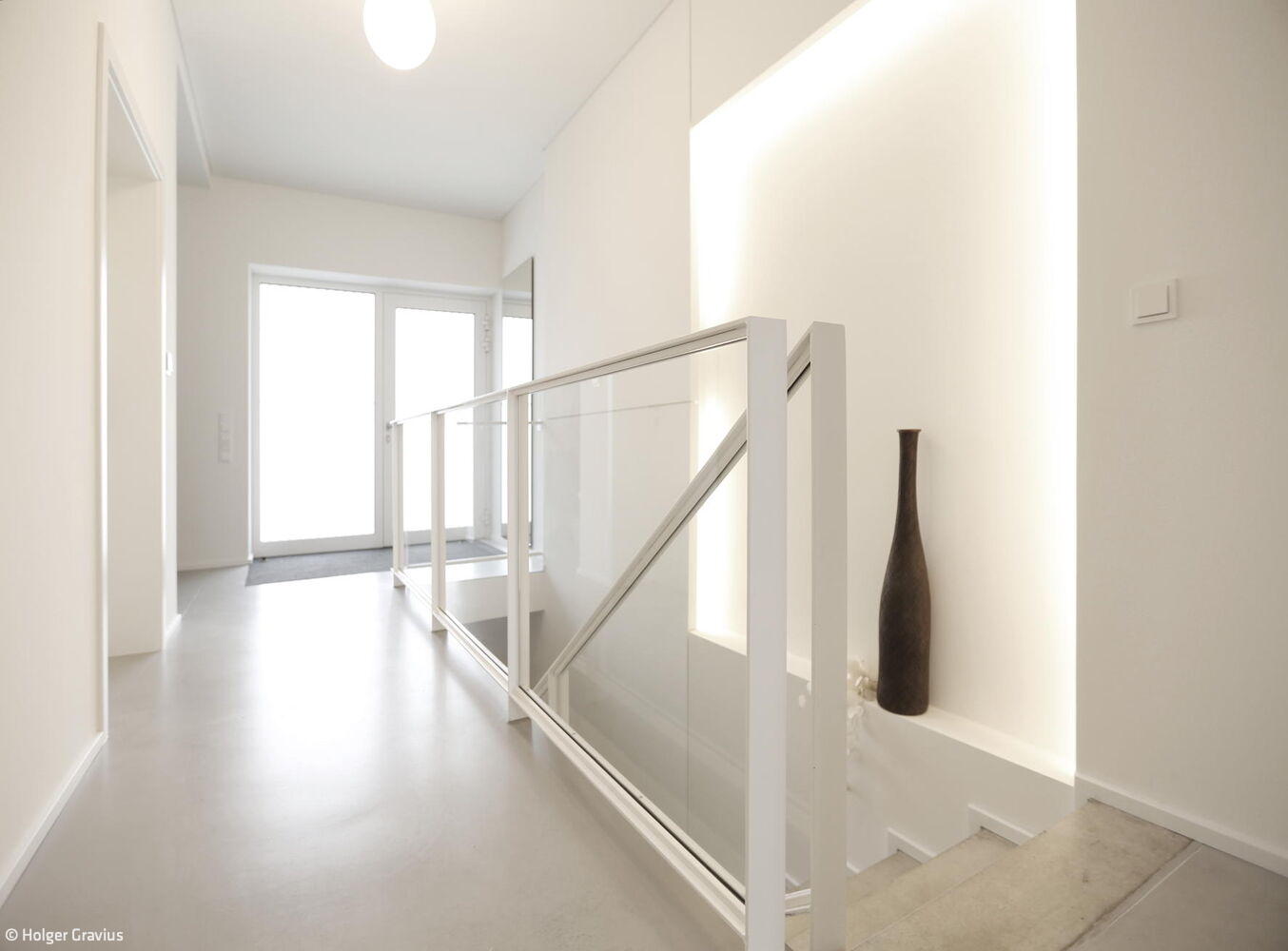
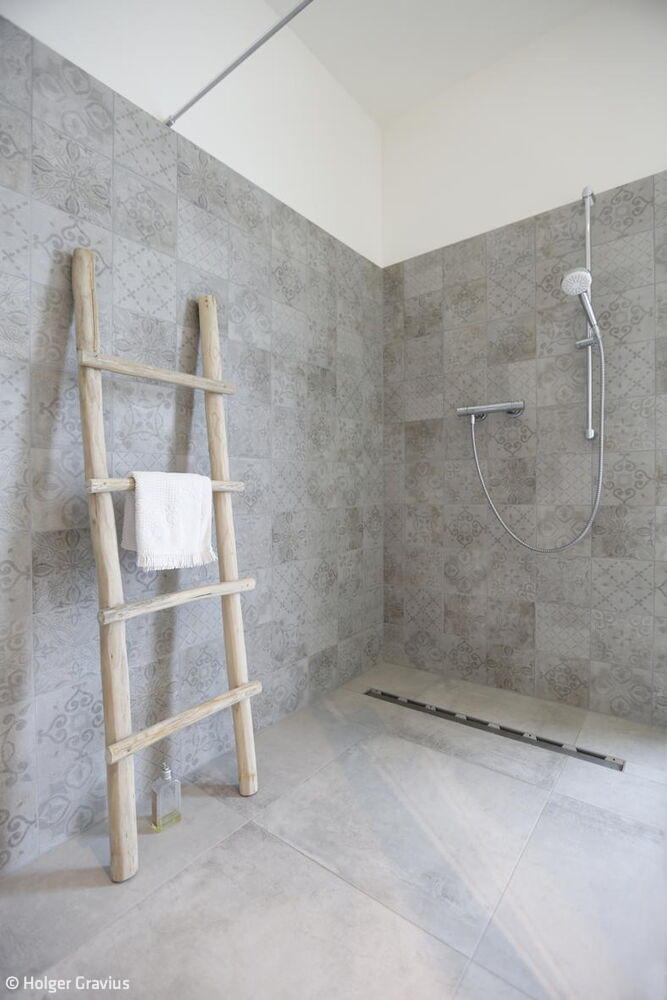
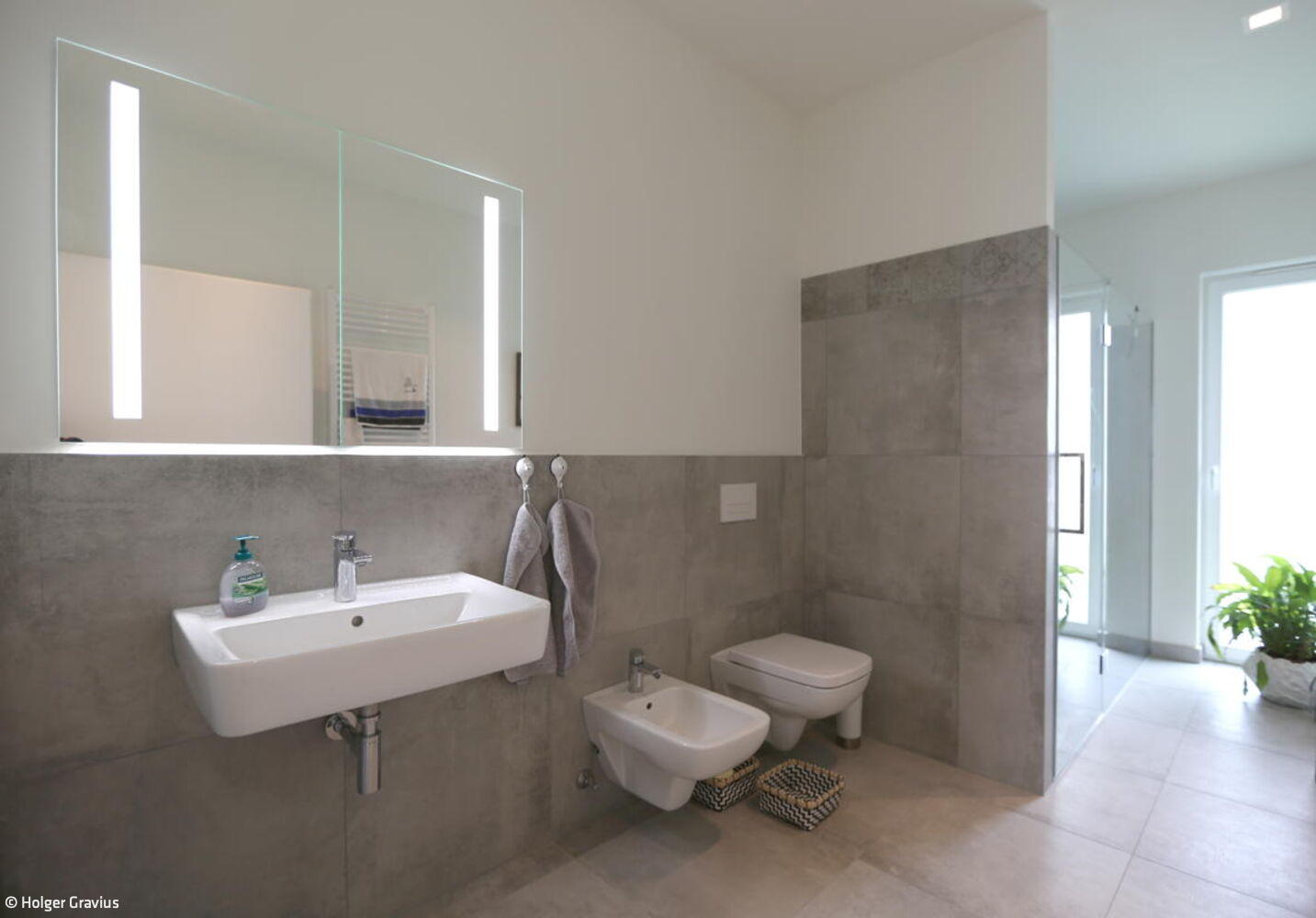
The name "White House" is earned in every detail. Beyond the white façade and slatted screens, the plastic windows, fixtures, lighting, and house number are all coordinated in this palette. All flooring employs a trowel-applied finish in Zen grey; the bathroom features floor and wall tiles in the same tone, some with subtle patterning. The showstopper is the light wall in the foyer. "This is the first time we've implemented a vertical light cove frame on a single wall," Gravius explains with evident pride. "Combined with artistic plasterboard panelling—fine horizontal and vertical shadow gaps creating a gridded effect—it's become a small work of art in its own right."
Photography:
Holger Gravius
(Published in CUBE Ruhrgebiet 02|25)
Premium Outdoor Living
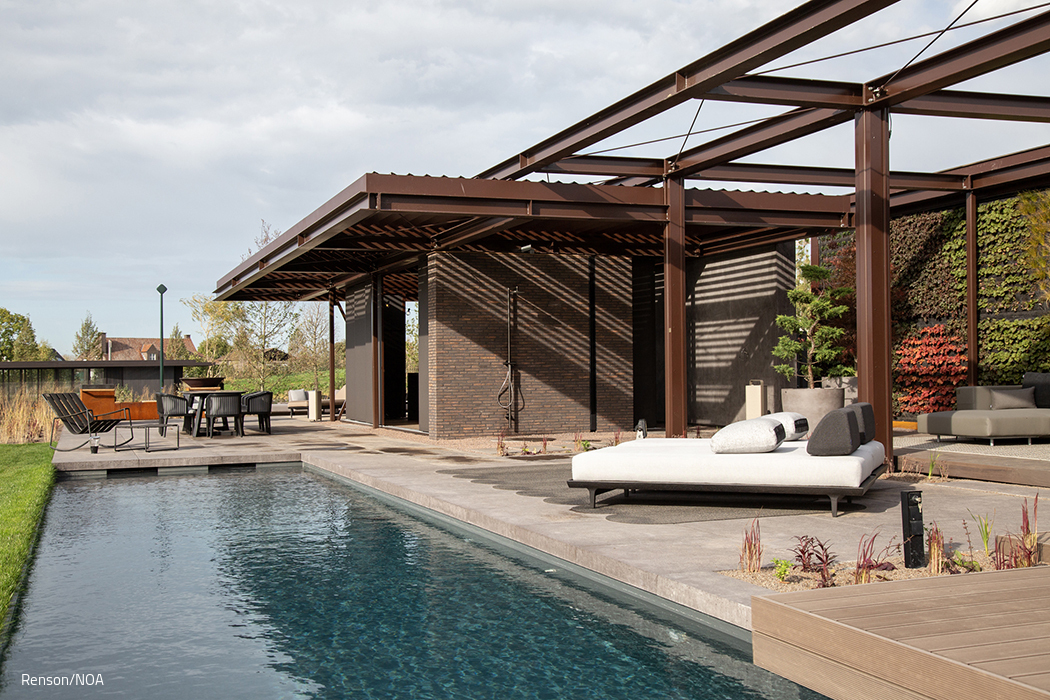
The NOA Outdoor Living inspiration park unites 30 premium brands across 12 model gardens.
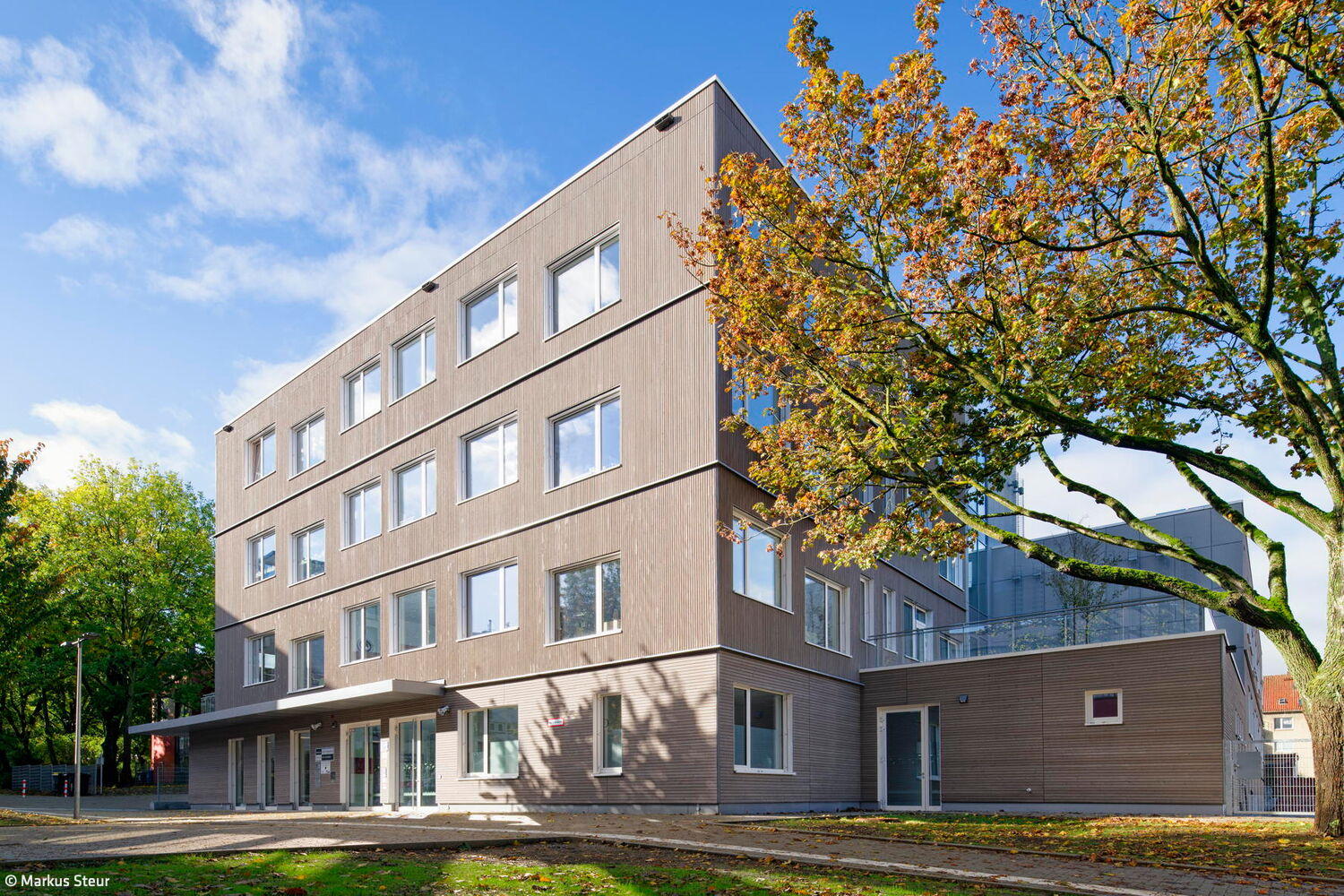
Learning, nature, community
At Berswordt-Europa Primary School in Dortmund, architecture and pedagogy are one.
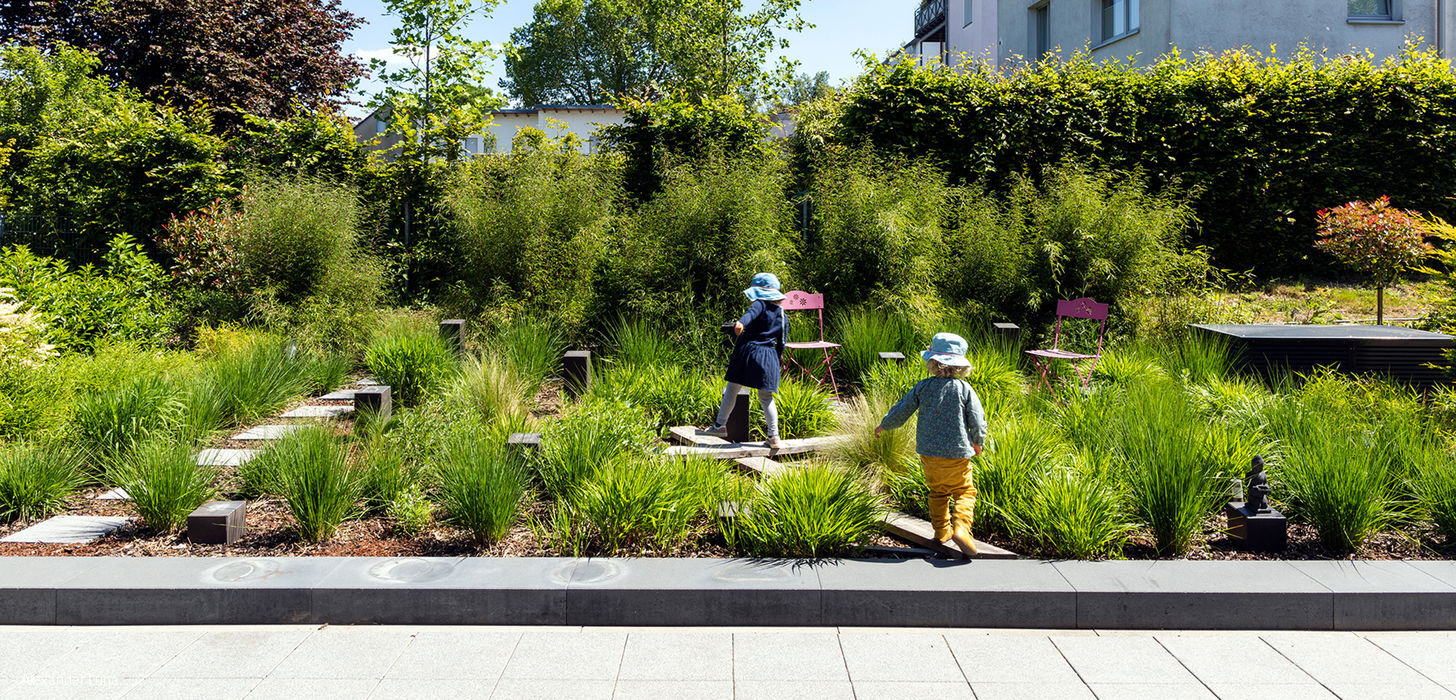
Small Garden, Big Impact
Bochum's newest garden masterpiece: meditative in spirit, artistic in expression.
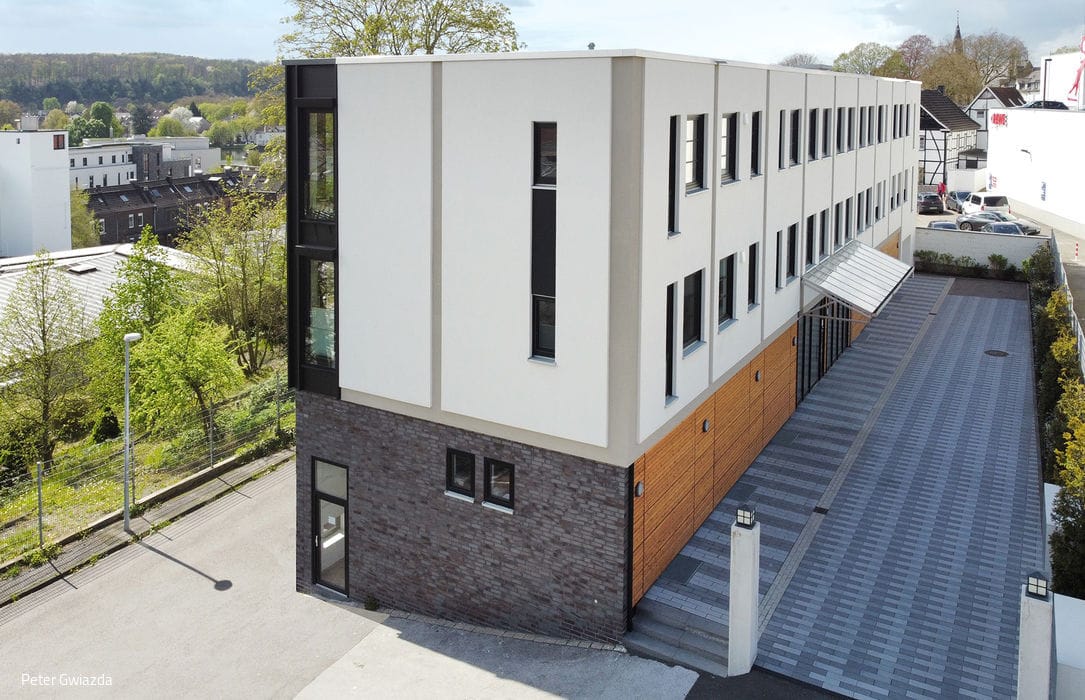
Creating Prime Living Space
From Commercial Building to Residential Living—Essen's Industrial Reinvention