


An Inviting Portal
A Residential and Commercial Building That Honors the Zeil's Historic Legacy
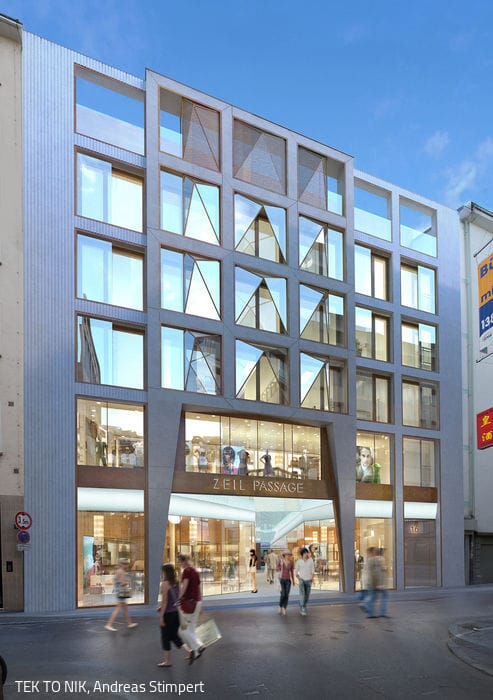
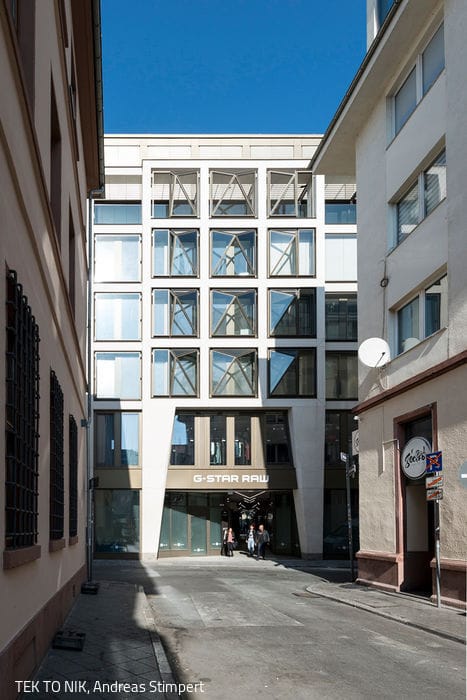
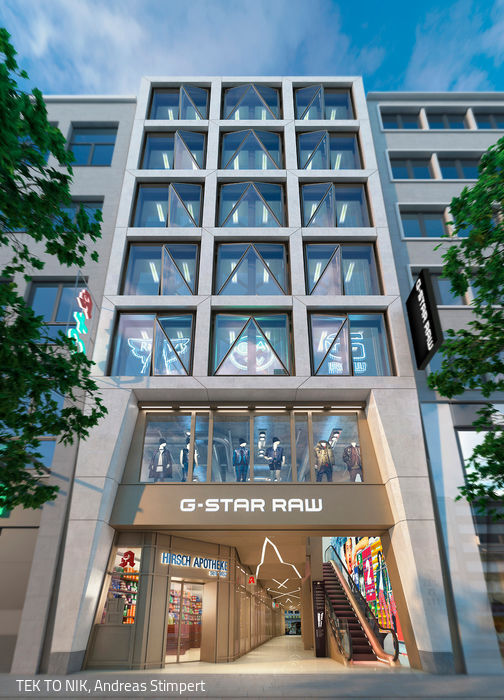
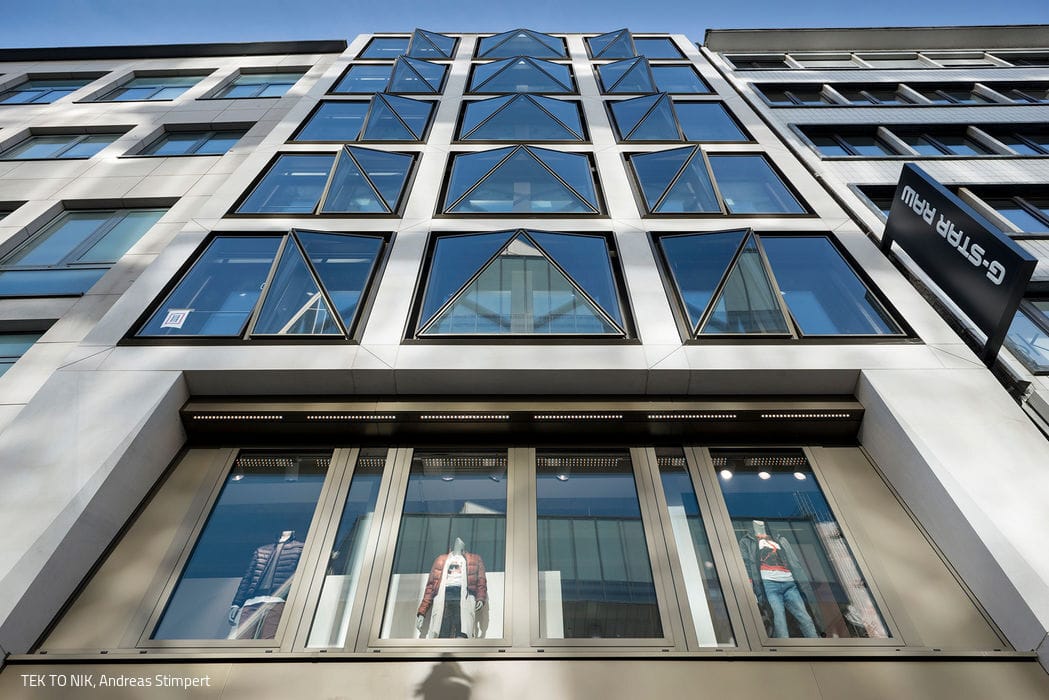
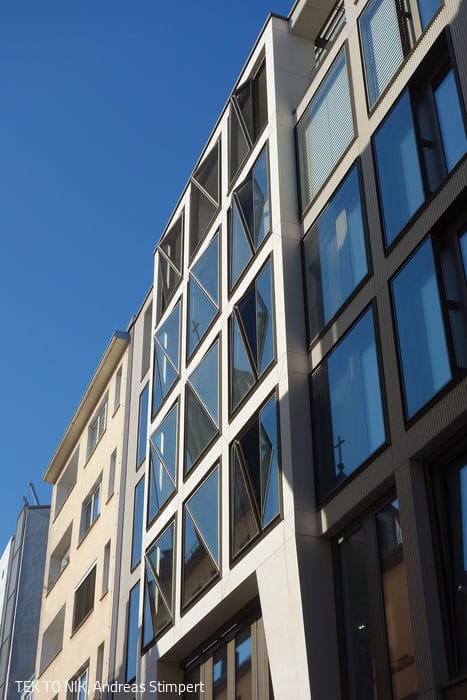
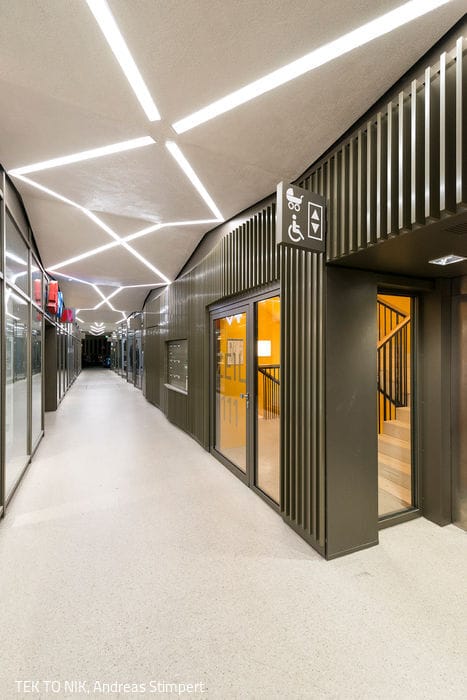
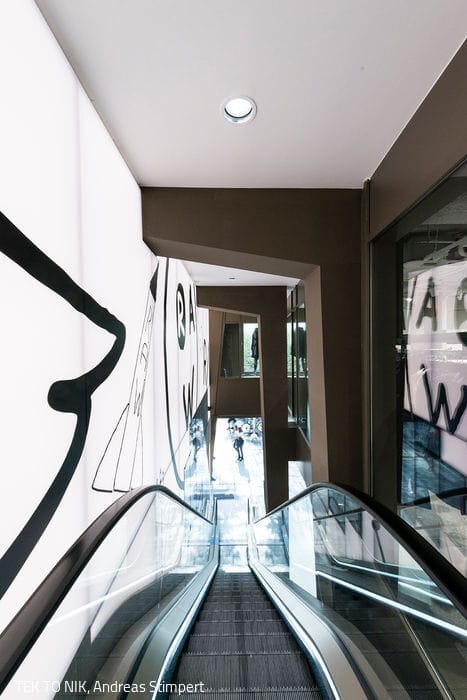
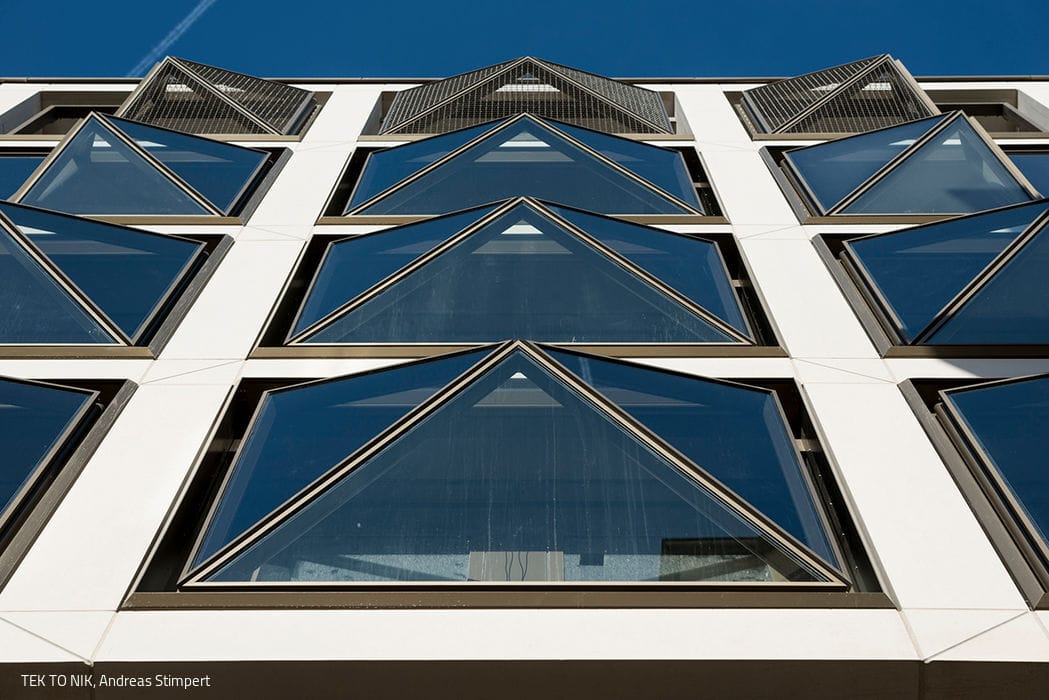
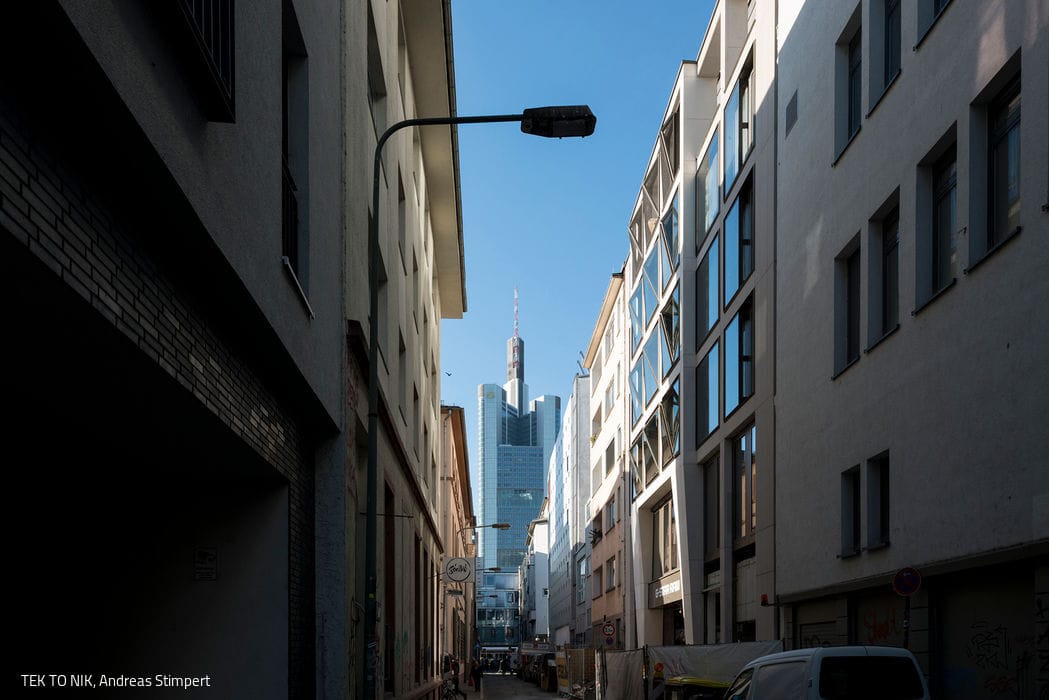
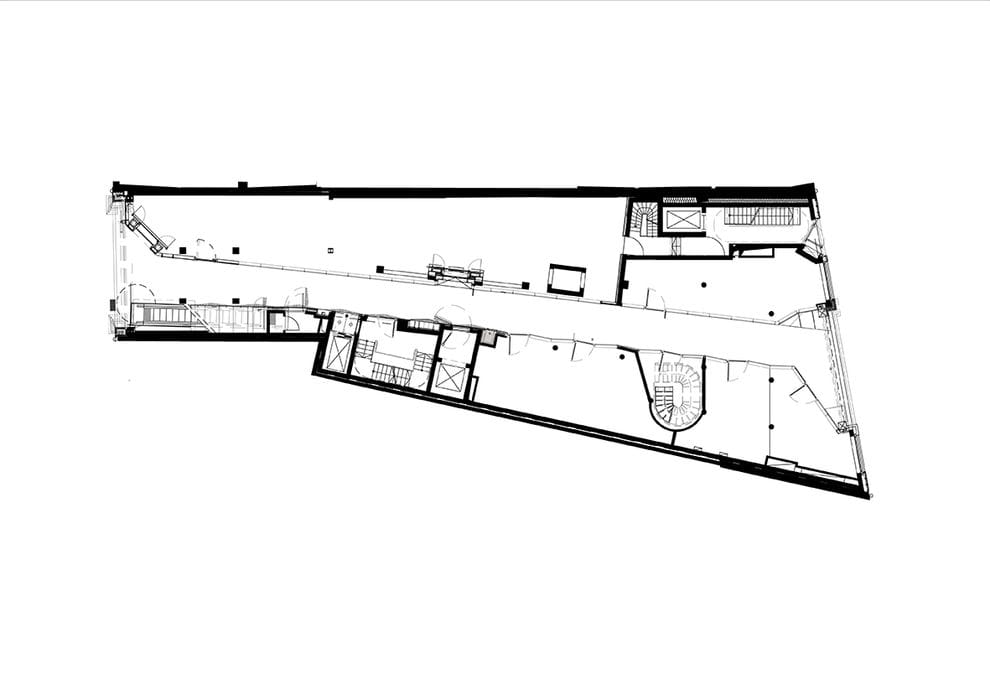
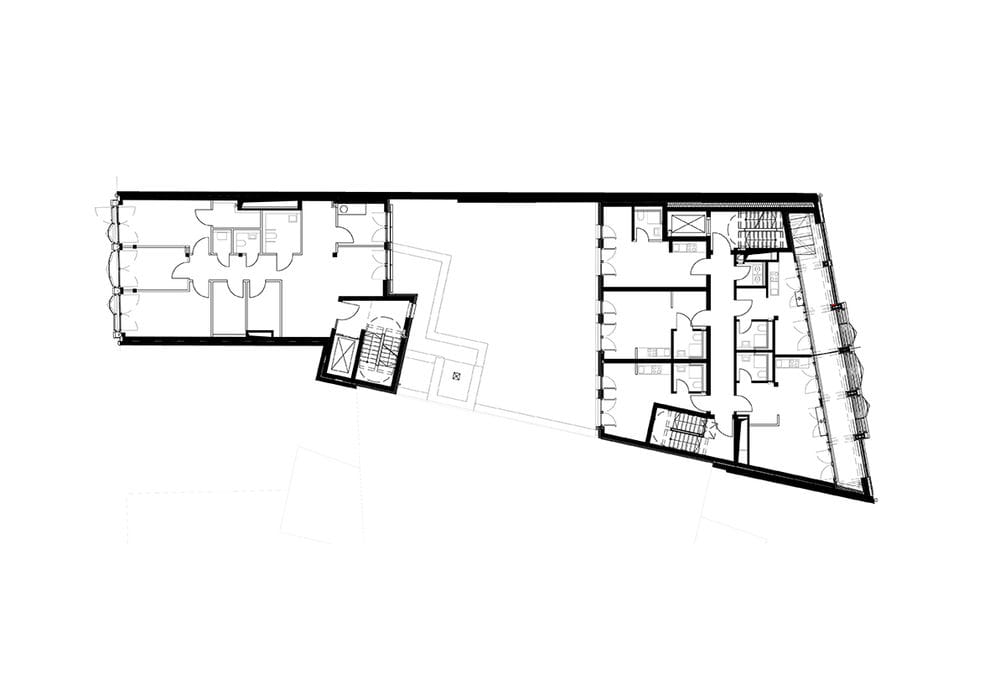
One of Germany's most beloved shopping streets, the Zeil was transformed into a permanent pedestrian zone fifty years ago. Since then, it has continuously reinvented itself—buildings have been razed, façades modernized, and new chapters written. The residential and commercial building at Zeil 111 is one such chapter, seamlessly integrated into the street's narrative as if it had always belonged there.
The building's refined, solid natural stone façade—a structural marvel—endows it with timeless presence. Ten-tonne portal stones hewn from Portuguese sandstone frame the passage's eight-meter entrances. Their edges, deliberately fractured and cut at irregular 45-degree angles, evoke the gravitas of a gatehouse, tapering sharply above and below to communicate unmistakable substance and permanence.
To enhance commercial vibrancy and flow, Tek To Nik Architects conceived the passage entrance as an imposing two-story portal. With façades addressing both Zeil and Holzgraben, the architects orchestrated a dialogue between the sculptural depth of the stone blocks and the passage's spatial recession—a strategy that yields distinctly different design expressions on each side. On the Zeil elevation, prismatically projecting impact screens crown the five upper floors, echoing the portal motif through striking contrast. These steeply angled glass surfaces accomplish dual purpose: they deny pigeons a foothold while dampening noise—a critical consideration for the practice spaces oriented toward the street.
At ground level on the Zeil side stands the venerable Hirsch Pharmacy, established in 1462 and the birthplace of the Fresenius pharmaceutical empire. The Else Kröner Fresenius Foundation thus became the project's developer, leading to the official renaming of the former Zeil Passage as the Else Kröner Passage on November 19, 2018. The 1960s predecessor suffered from cramped ceiling heights and uninspiring retail offerings. Its complete demolition was painstakingly orchestrated around this historic pharmacy, which remained operational throughout construction, supplied via the fire walls shared with neighboring structures.
Photography Credits:
TEK TO NIK; Andreas Stimpert
(Featured in CUBE Frankfurt 04|23)
Pure tree house living
Villa offers a peaceful lifestyle in a green natural setting
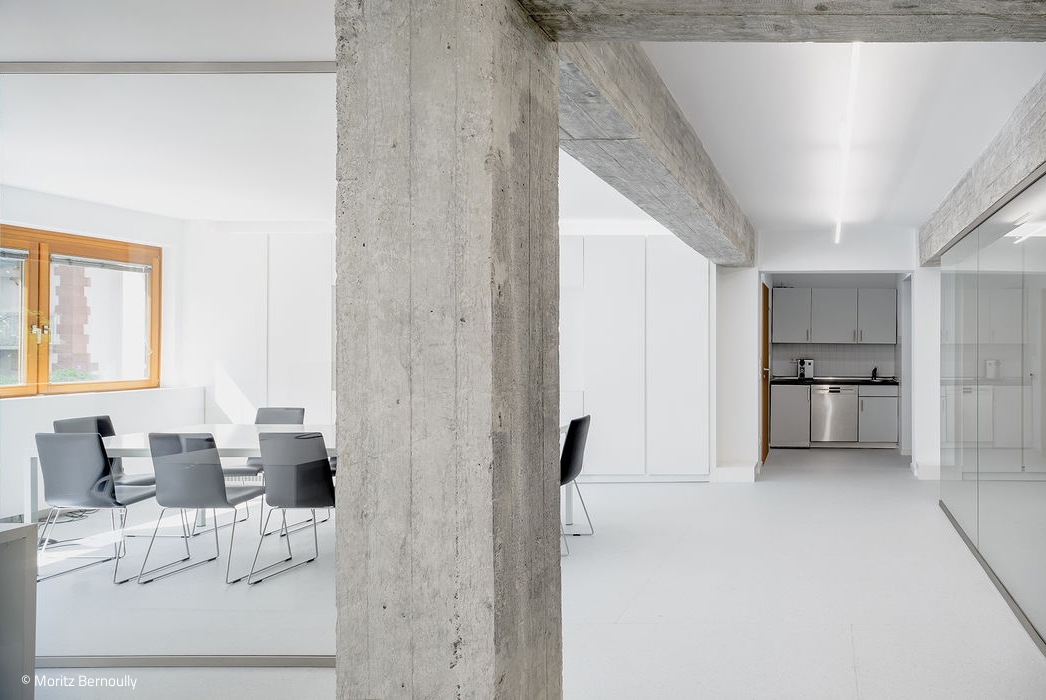
Less is More
An office atmosphere shaped by essential organization, clean surfaces, and exposed structure.

Ciao Milano
Italian elegance takes flight: new offices on upper floors bring Milan's spirit to Frankfurt
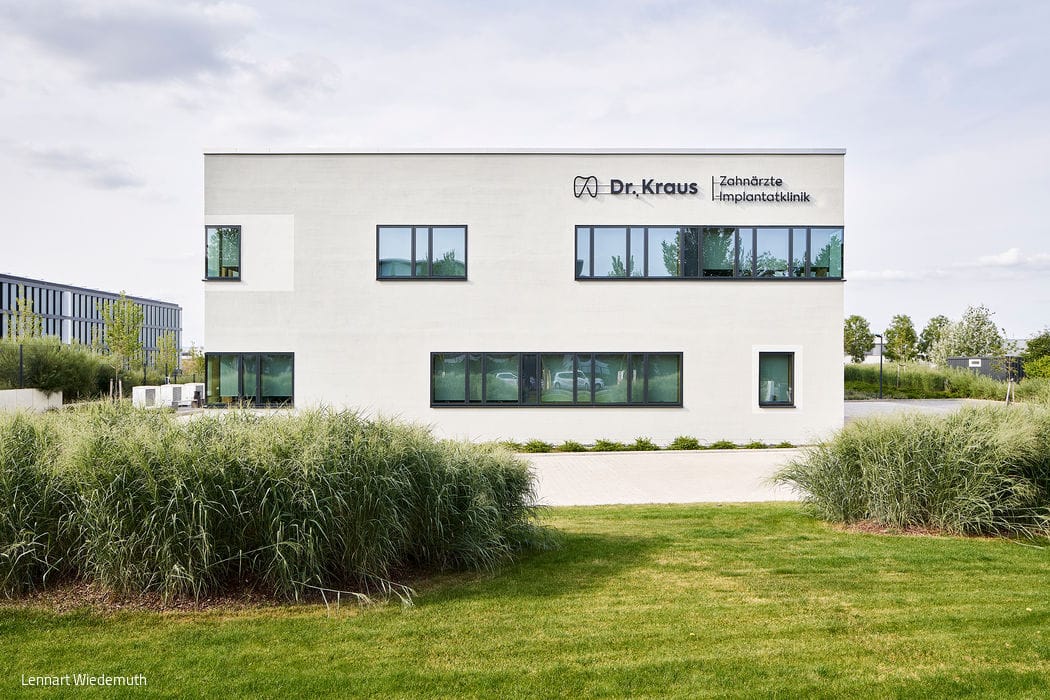
A Functional Landmark
Compact Design, Efficient Workflow: A Dental and Implant Centre Built for Shorter Distances