


Ciao Milano
Office spaces in added stories bring Italian flair to Frankfurt


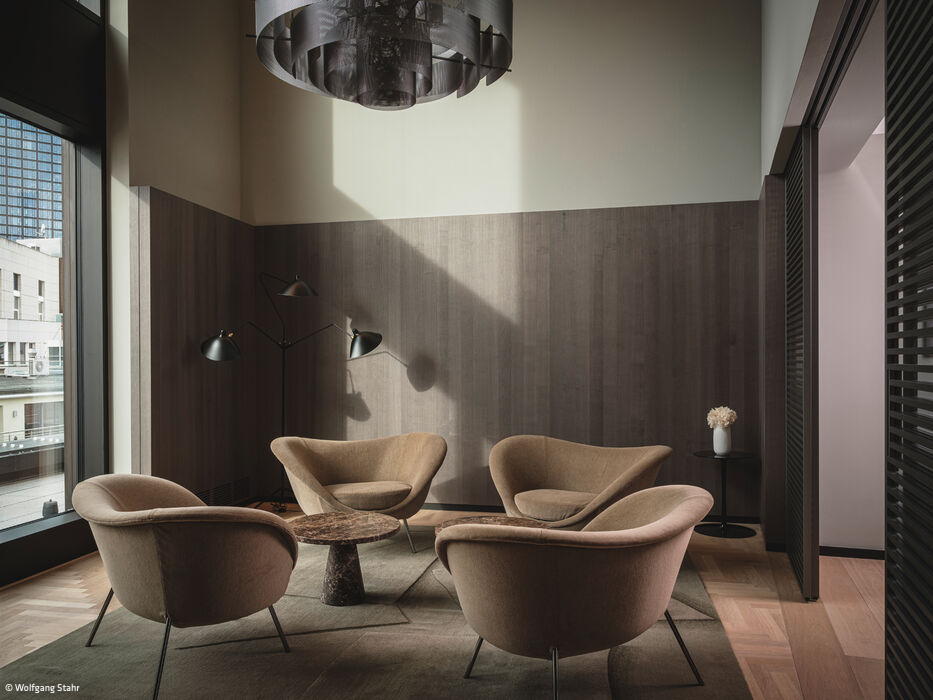


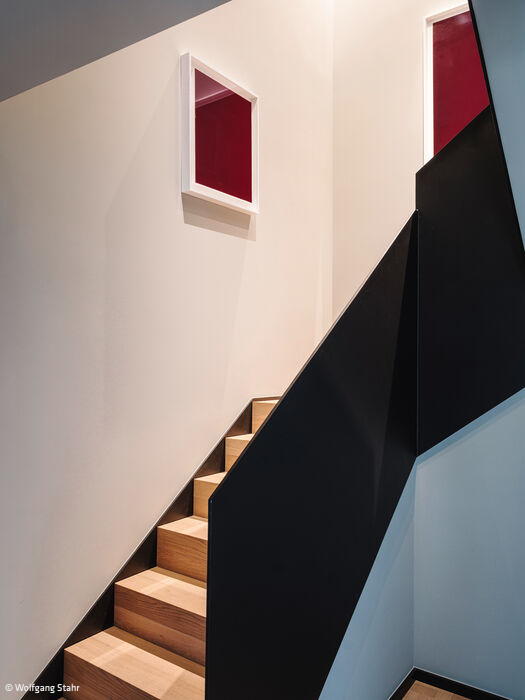

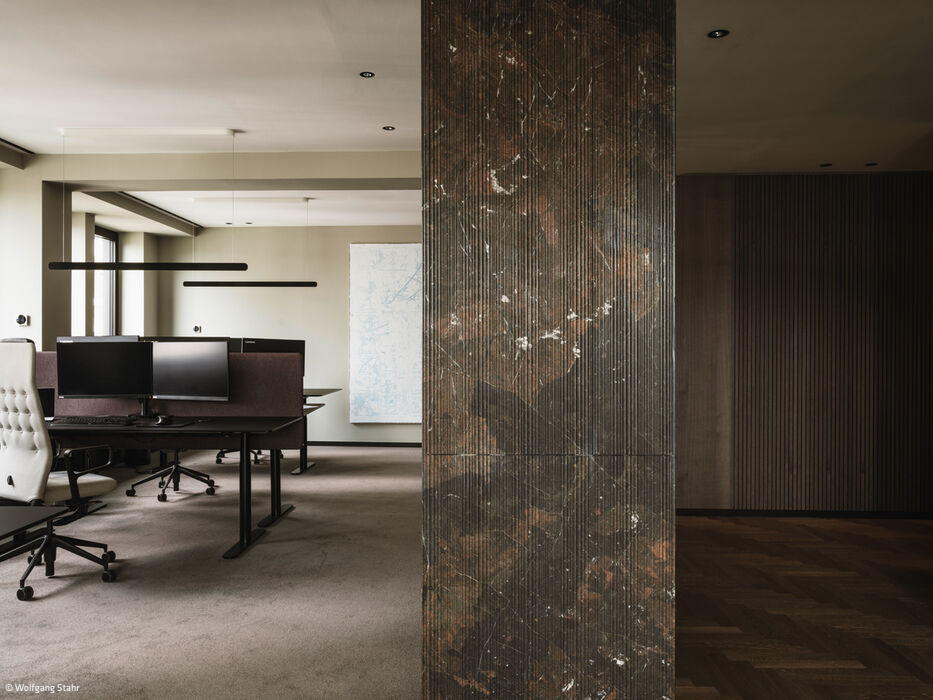
Nowhere else does artistic design sensibility shape design and furniture as profoundly as in "Bella Italia." And the design capital is Milan. The clients of this Frankfurt office—schöne räume architektur innenarchitektur—envisioned an office with a "Milanese look": stylish, elegant, and timeless. Since the office spaces occupy two added stories within an existing building, the planning phase revealed many non-orthogonal walls—characteristic of the original structure as well. To address this, the interior architects had to exercise considerable creative problem-solving in the fit-out and flooring design.
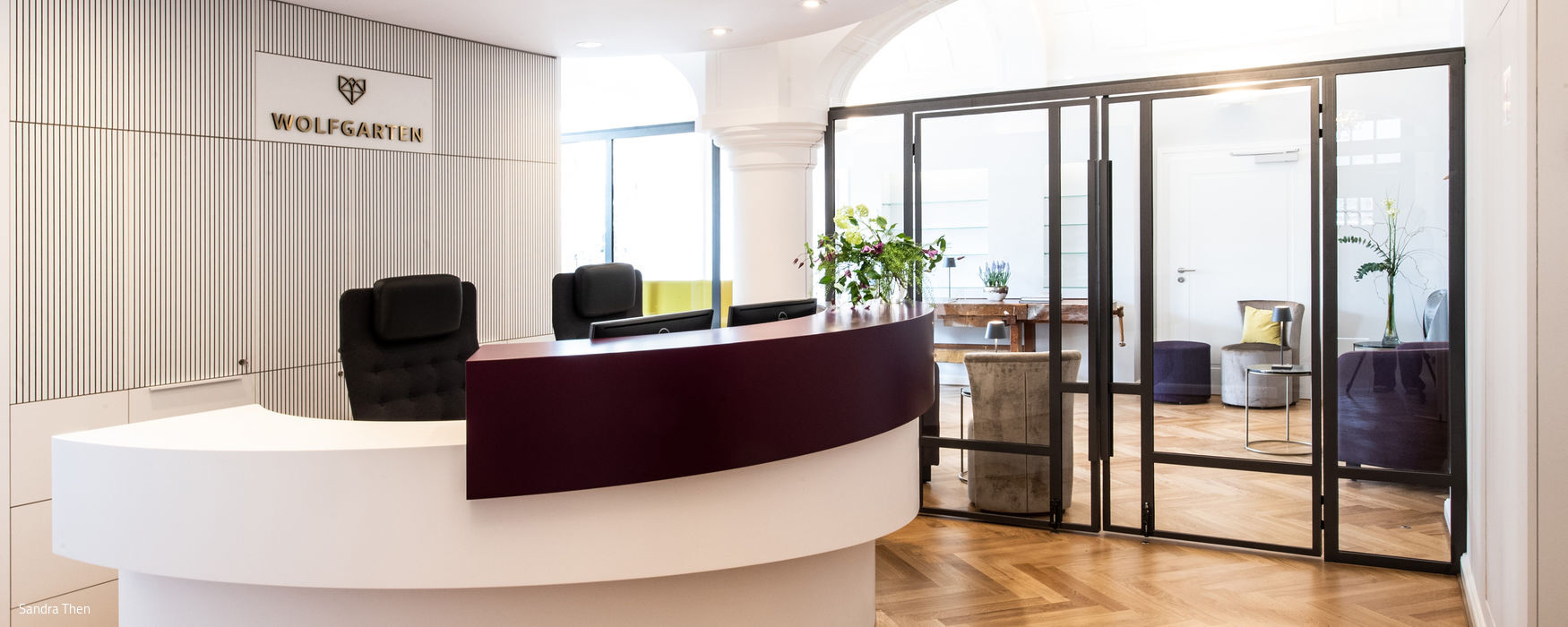
The "Milanese look" manifests itself in the new office spaces through a clear architectural language, the use of wall paneling, varied high-quality finishes and textures, and a warm color palette. Veneered and stained wooden wall panels—smooth and featuring a trim-like profile—evoke the quintessential Milanese office aesthetic. Natural materials such as Belgian blue stone with routed surfaces meet elegantly timeless materials like leather and velvet upholstery on seating furniture. A refined impression is created by classic oak flooring, its diagonal lay pattern echoing the numerous angular configurations of the rooms. The interior architects developed the floor plan according to the client's requirements: executive offices, an administrative workspace, an open office area, a lounge, and a conference room. "Next came the material and fit-out concept, where every wall elevation was drawn to clarify details such as wall connections and terminations and to establish proportions," explains Ralf Böckle's approach.
The lighting design parallels the interior architecture. Rather than uniform illumination, strategic lighting accents enhance the atmosphere, reinforcing the character of each space. From conception to completion, this slice of Milan took shape in Frankfurt over approximately nine months.
Photography:
Wolfgang Stahr
www.wolfgangstahr.de
(Published in CUBE Frankfurt 02|24)
Clear lines and colors
Marianne Steinborn creates Nordic-inspired everyday ceramics.
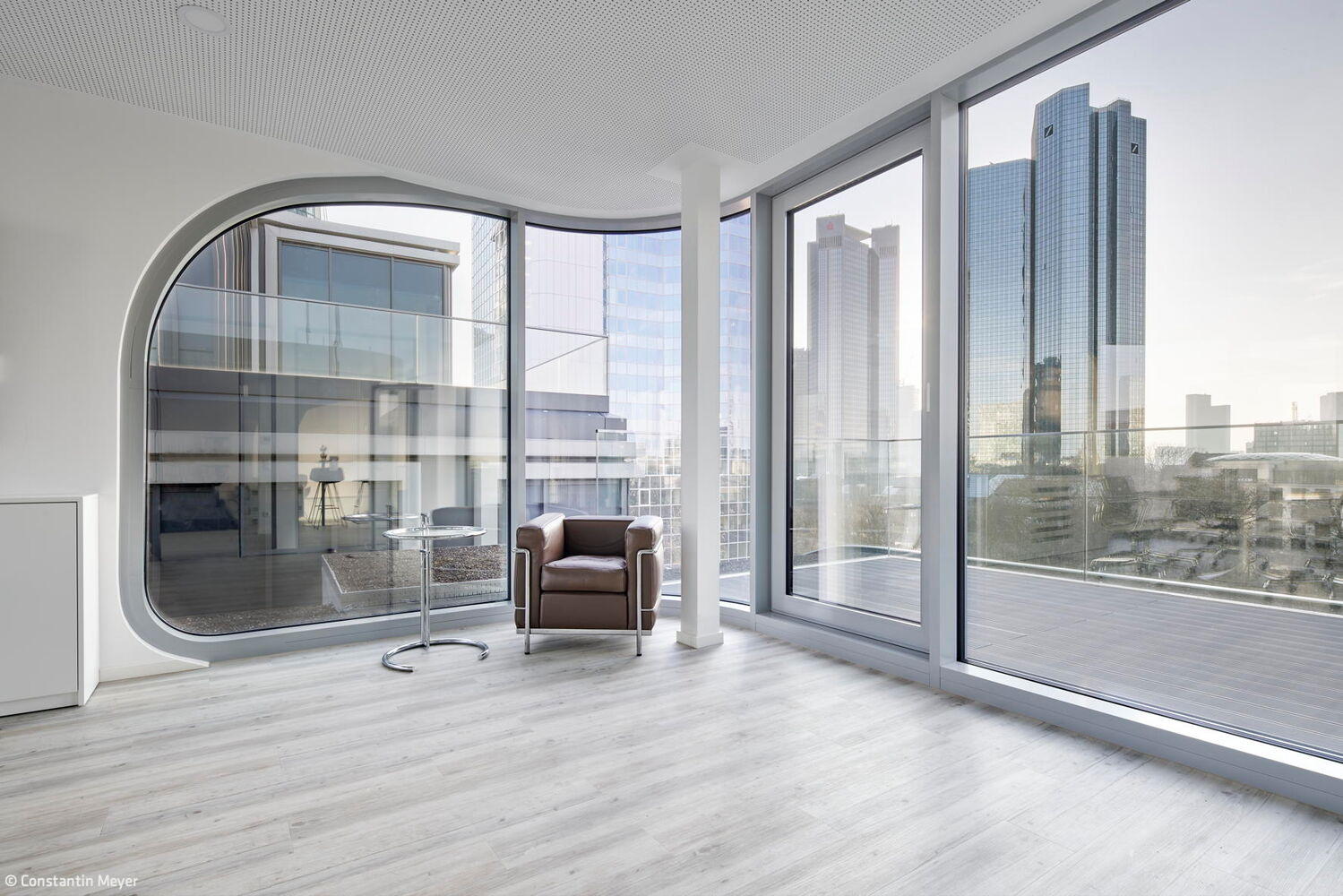
Futuristic Topping
The "unite82" office building on Neue Mainzer Straße—where timeless design meets contemporary vision.
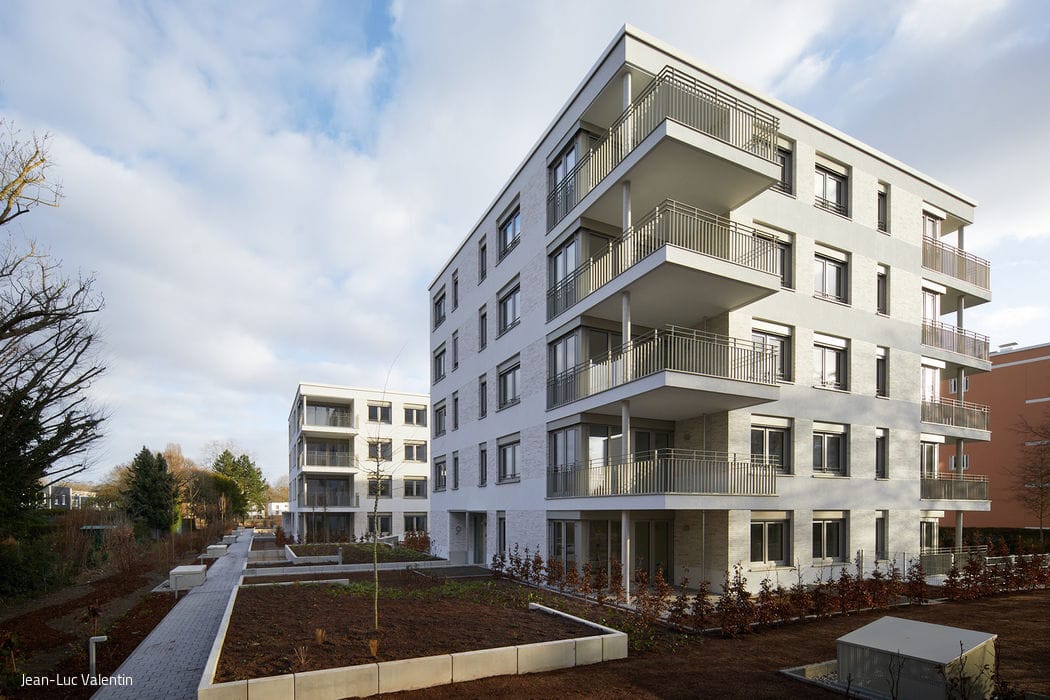
Connected & Flexible
A New Residential Community: Inclusive Living in an Exceptional Setting
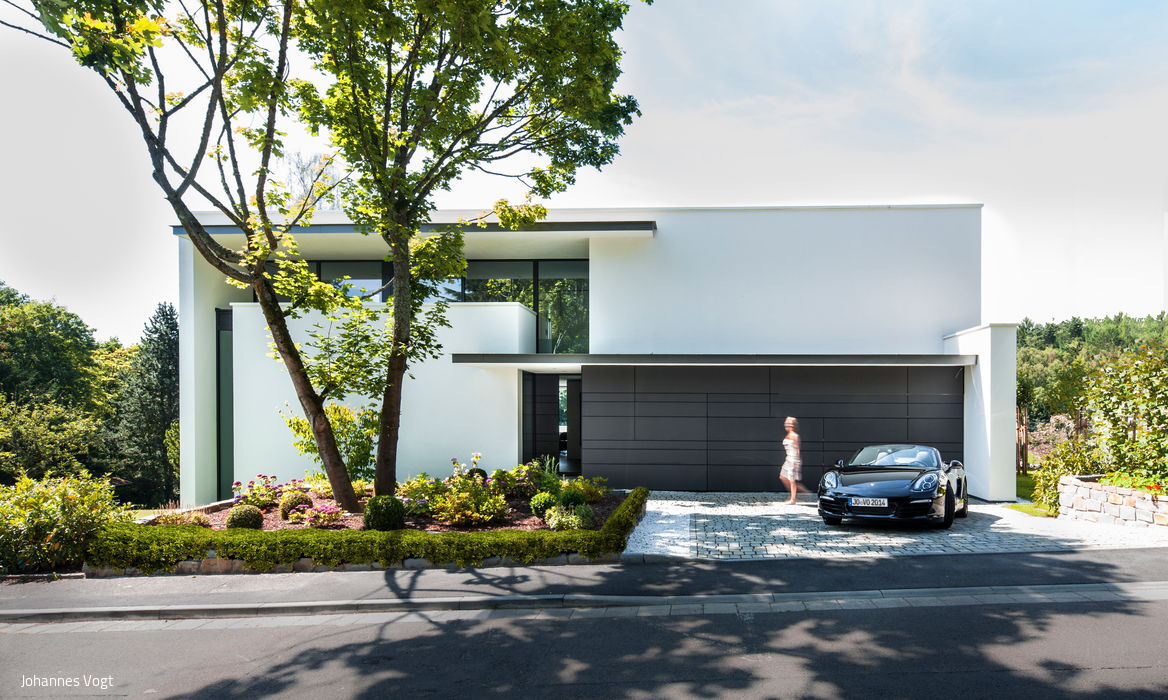
Graceful and Elegant
A Villa Balancing Openness and Privacy