


Thoughtfully Integrated
The Klinkebogen: New Construction in Unterrath
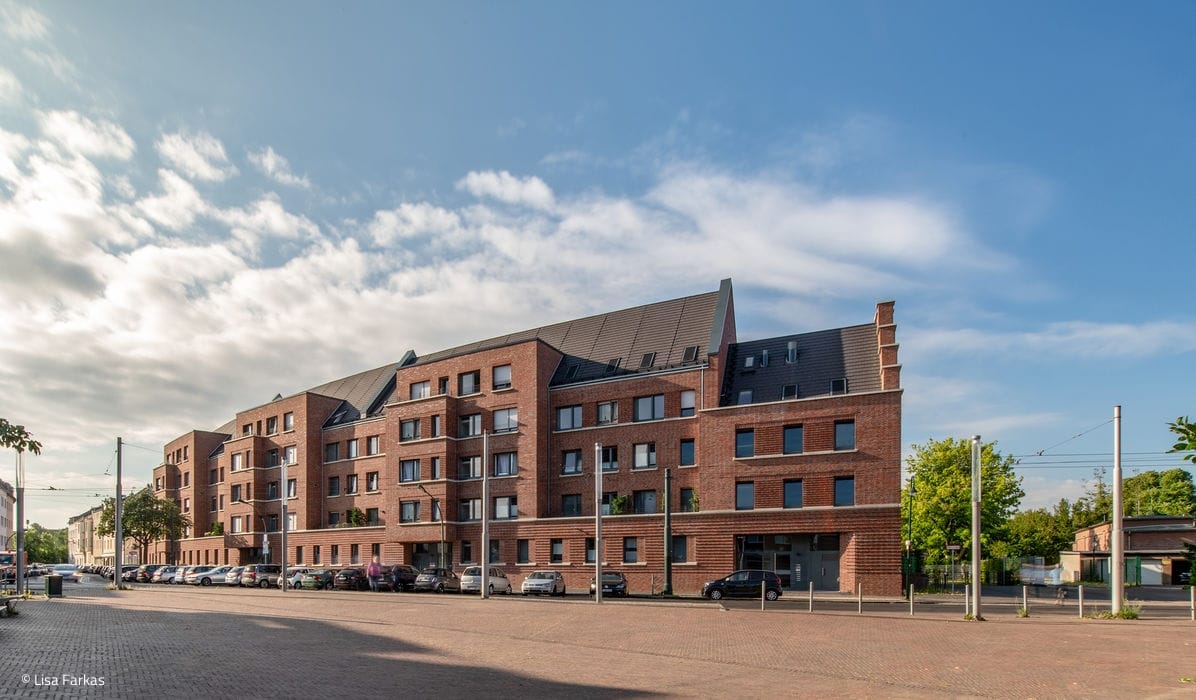


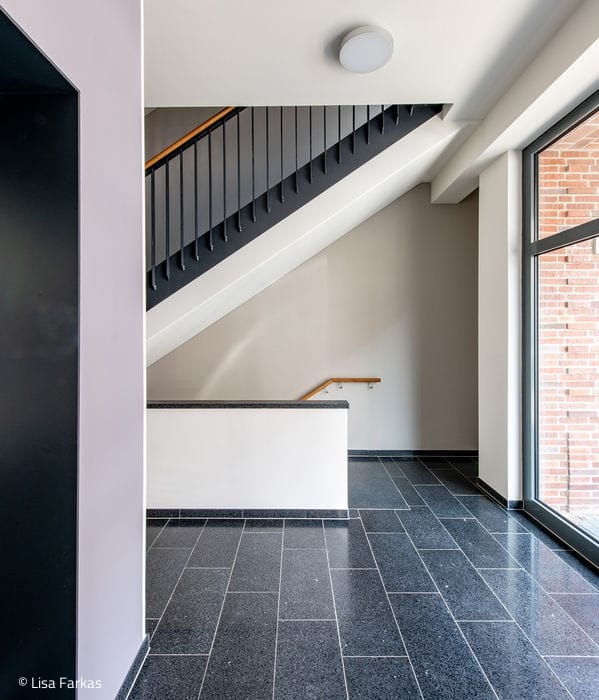
The Düsseldorf-Ost housing cooperative ranks among the city's oldest and largest cooperatives. When it resolved in 2012 to demolish its 1920s residential building on Unterrather Strasse, it had a clear vision for its replacement: instead of modest, standardized micro-apartments, the new development would offer modern one- to five-room units with loggias and terraces, designed for diverse residents. The demolition proved controversial locally—the original building, with its distinctive dark red clinker façade and dynamic roofline, had become synonymous with the neighbourhood's character. In this established district, the new construction would need to be more than just contextually sensitive; it would need to honour and evolve the original building's defining qualities.
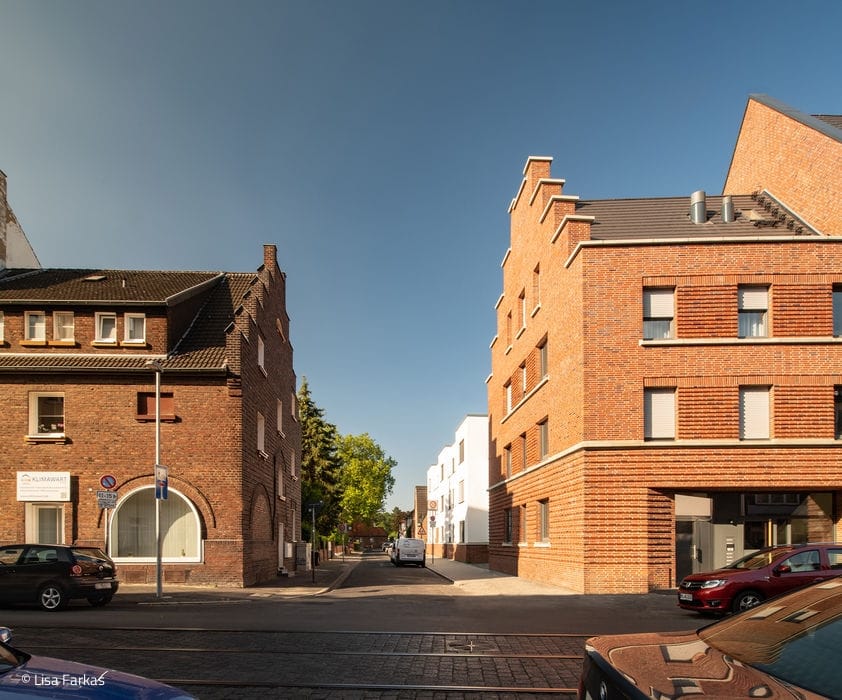
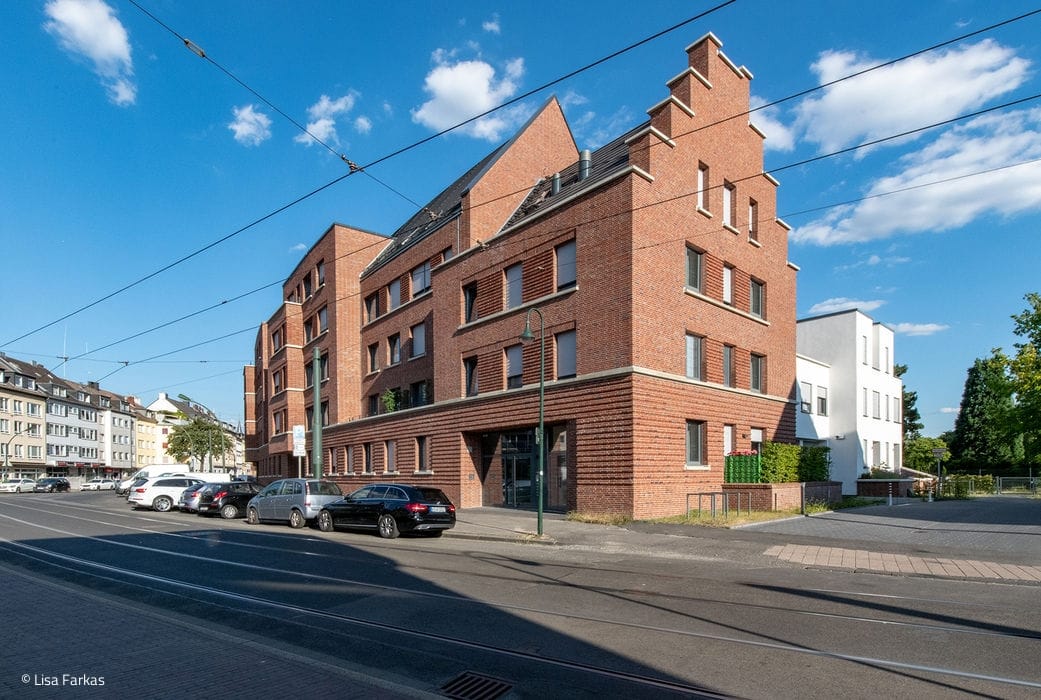
The winning design by Stefan Forster Architects responds to both the form and materiality of its predecessor, integrating seamlessly into the urban fabric like a missing puzzle piece. The curved block's architectural character has been preserved and extended southward with two recessed wings. Along Unterrather Strasse, the building shapes the street space, which broadens westward into Klinkeplatz—a modest neighbourhood square that inspired the building's alternative name, "Klinkebogen." The elongated, convex curve of the central section spans between lower end sections aligned with neighbouring rooflines and articulated with stepped gables, marking the transition from the dense urban character of Unterrather Strasse to the more village-like side streets beyond.
The façade's visual richness emerges from both the varying heights and a dynamic interplay of projecting and recessed elements—bay windows and loggias creating sculptural depth. This sculptural language continues in fine details: staggered clinker courses, accent layers above the windows, and continuous cornices. The south-facing side wings, finished in light plaster, reference the white rear elevation of the original building and connect to the main structure via a narrow clinker base. The ensemble's U-shaped footprint encloses a sheltered courtyard, generously planted and inviting.
Photography Credits:
Lisa Farkas
www.lisafarkas.de
(Published in CUBE Düsseldorf 02|20)


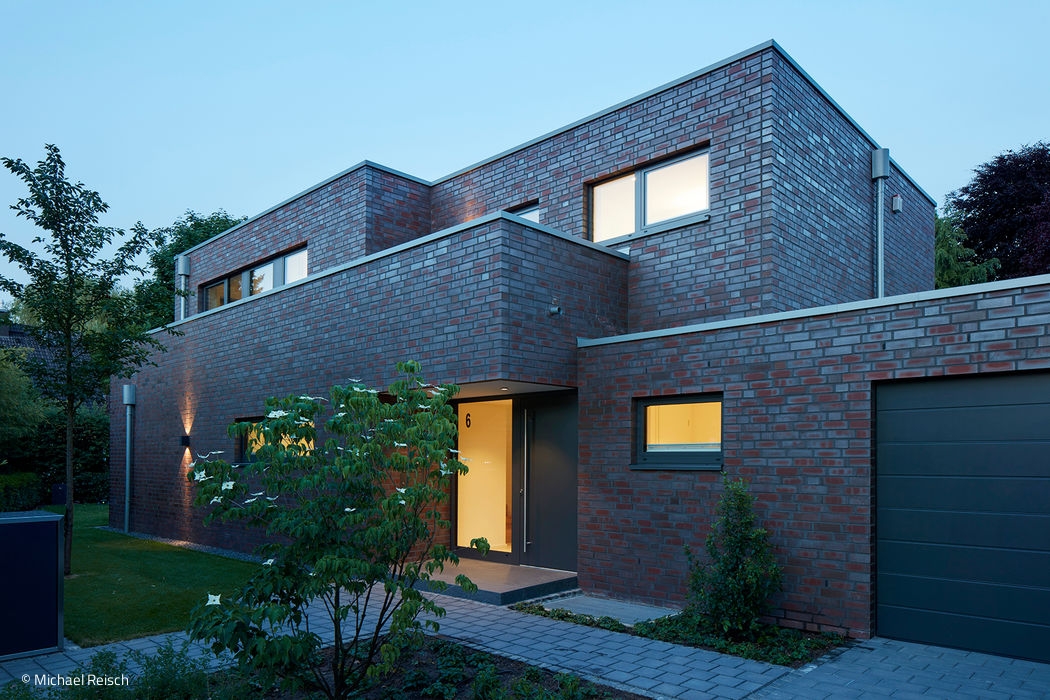
Dynamic Play of Cubes
A single-family home in Angermund: how sculptural façade design transforms regulatory constraints into architectural excellence.
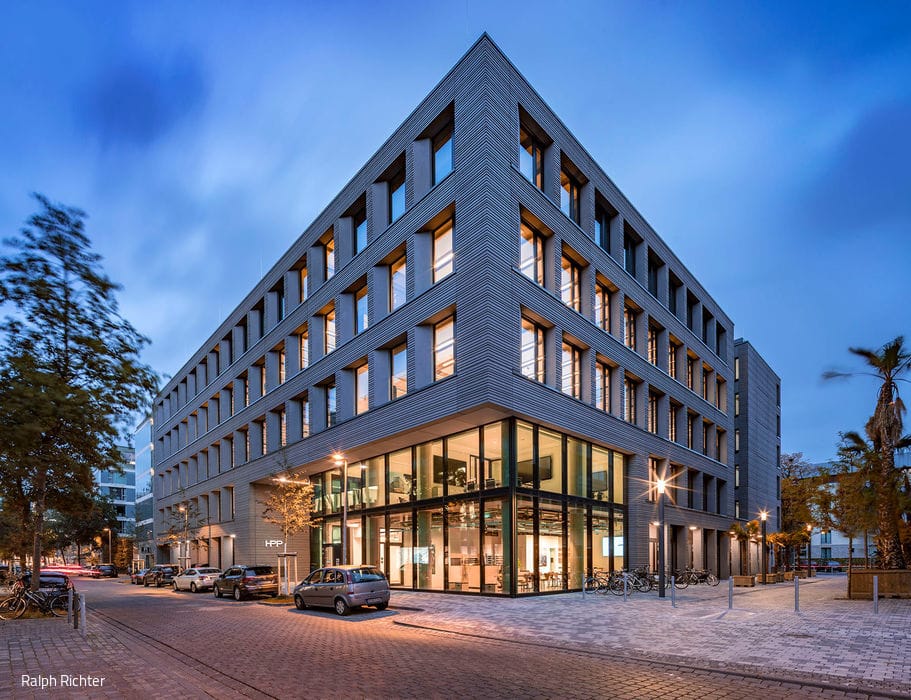
Open and Generous
HPP's New Headquarters in the Media Harbour: Designing Spaces for Agile, Creative Work
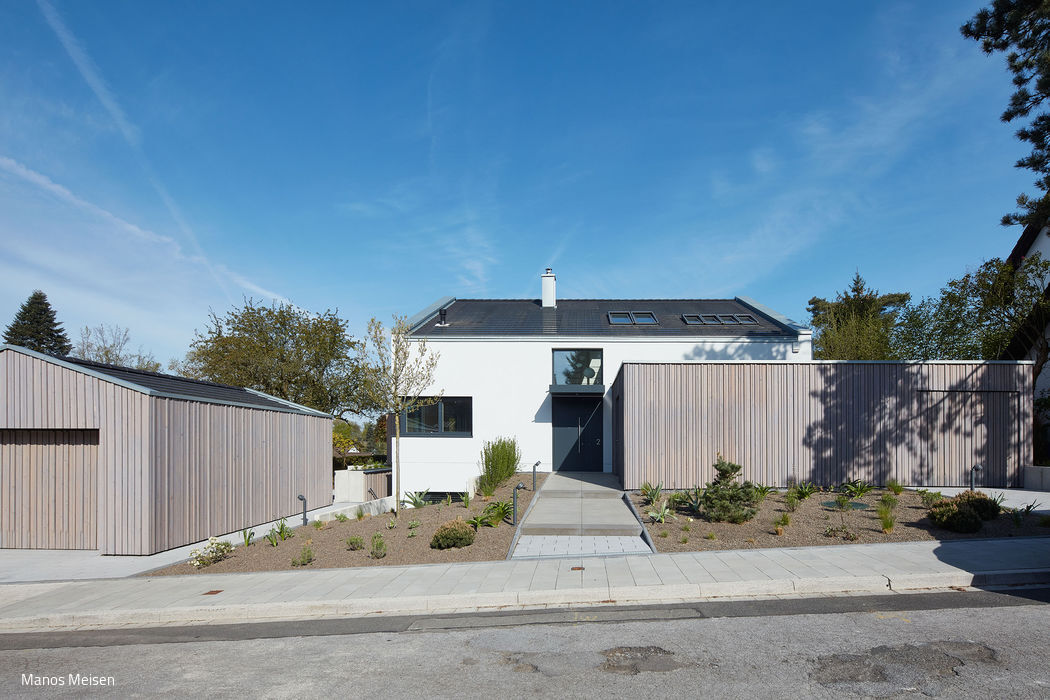
Sustainably Integrated
A home built around cyclists: bicycle station, in-roof solar, and indoor heat pump
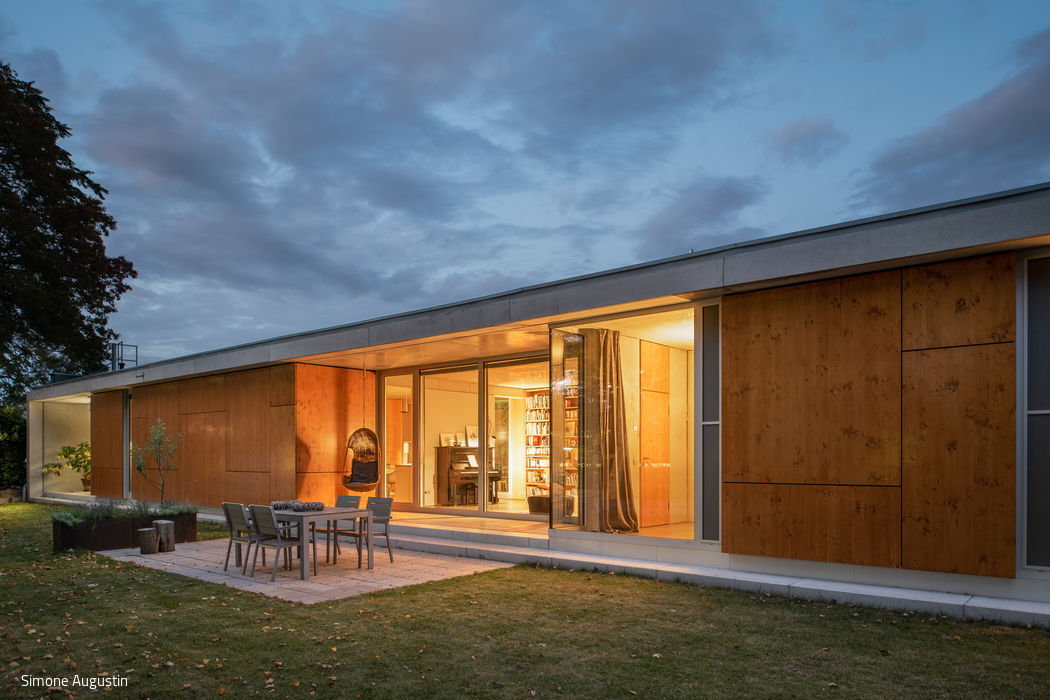
Sustainably Flexible
A Residential and Studio House That Thrives on Adaptable Space