


A Living Testament to History
The Former Granary: Still a Working Space
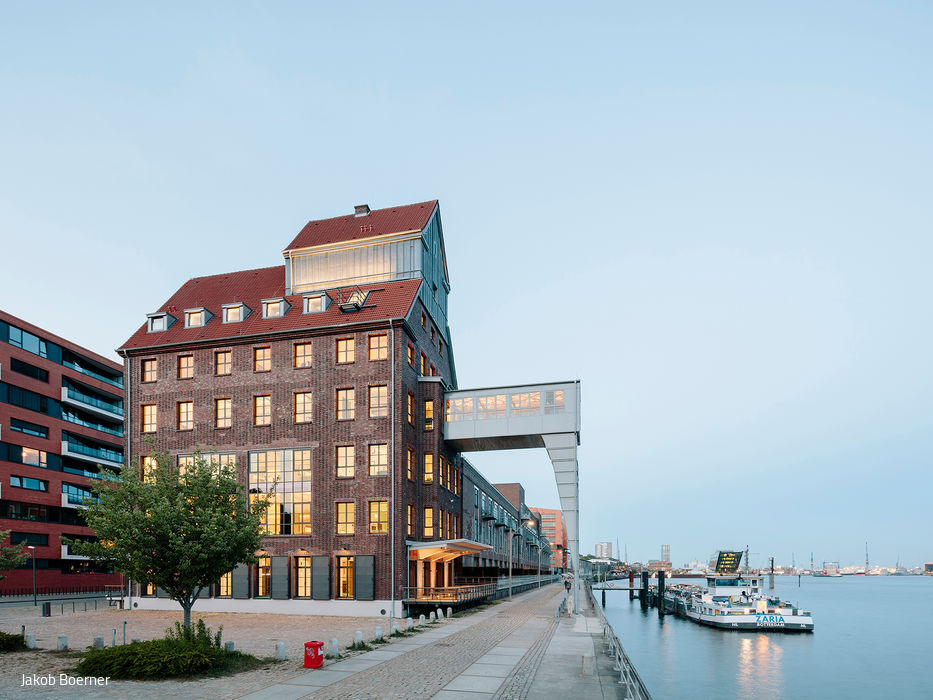


Along Große Elbstraße, several buildings stand as monuments to Altona's remarkable port expansion beginning in 1830—first under Danish rule, then Prussian, before becoming part of Hamburg in 1937. The harbor stretched from the fish market to Neumühlen, defined by two primary commodities: fish and grain. The landscape was shaped by large fish-processing facilities, mills, malt houses, and various grain storage warehouses. Few structures survived World War II, but those that did have been meticulously restored and repurposed as part of the "Perlenkette" (pearl necklace) initiative.
The granary with its loading bridge belongs to this same narrative. Built in 1937 directly on the Elbe's ship-navigable waters and adjacent to the Altona Quay Warehouse D (1924), it earned protected monument status in 2013 as a key witness to Altona's industrial heritage. Prior modifications—new window openings and floor plates replacing the original silo cells—had altered its character, yet its historic form remained intact: the distinctive gablet roof, dormers, and roof structure, along with the imposing loading bridge.The current renovation by SEHW Architects honors this legacy through thoughtful intervention. Slender steel window frames and carefully designed openings reveal the building's essential industrial character. The former cargo bridge—once used by harbor rail to deliver grain and now extending over the promenade—has been transformed into a conference room with panoramic views. The clinker facade, scarred by wartime damage and past modifications, has been sensitively restored to preserve its historical patina. The most ambitious challenge was flood protection: the entire basement ceiling was removed to install a "white tank"—a waterproof reinforced concrete shell—requiring extensive temporary bracing and foundation reinforcement with pilings to counteract buoyancy. Flood gates, ingeniously designed as floor-mounted flaps with counterweights, integrate seamlessly into the terrace.Throughout, the interior presents a unified design language: integrated furnishings, continuous raw steel stair balustrades ascending through all floors, and exposed concrete surfaces in dialogue with minimalist white fixtures. The result is a harmonious composition—history, materiality, and contemporary design woven into one cohesive whole.
Photography Credits:
Jakob Börner
www.jakobboerner.com
(Published in CUBE Hamburg 02|23)

From Desk to Dinner
Clean lines and timeless design – bags made in Hamburg

The good life
House and pool pavilion—designed precisely for family life.
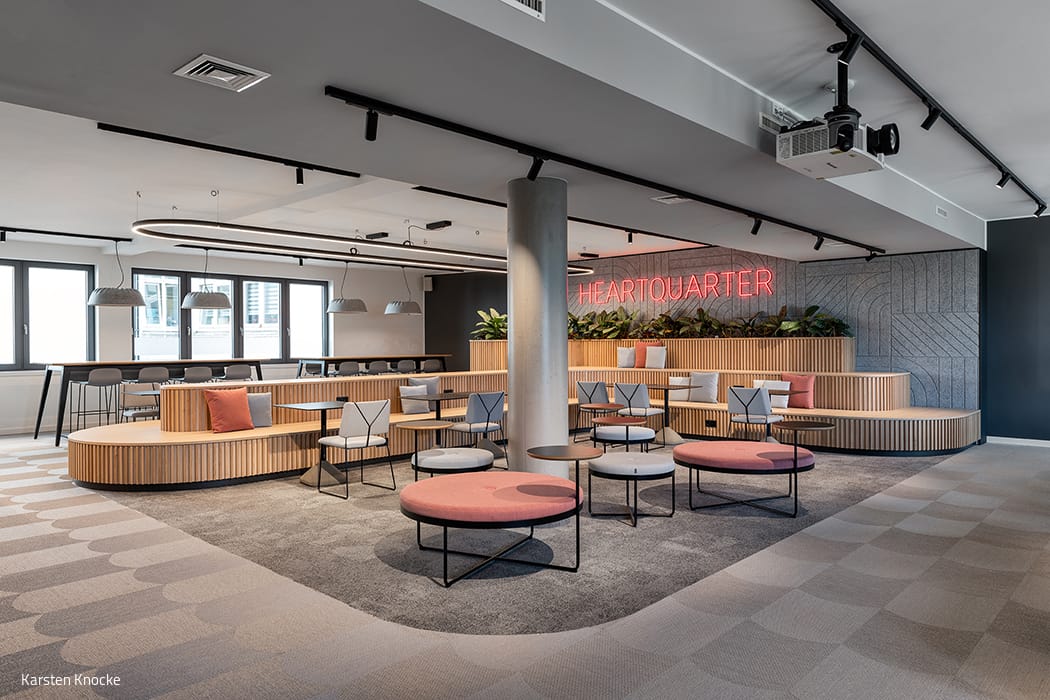
A New Headquarters
Reimagined spaces for New Work culture: creating an inspiring workplace
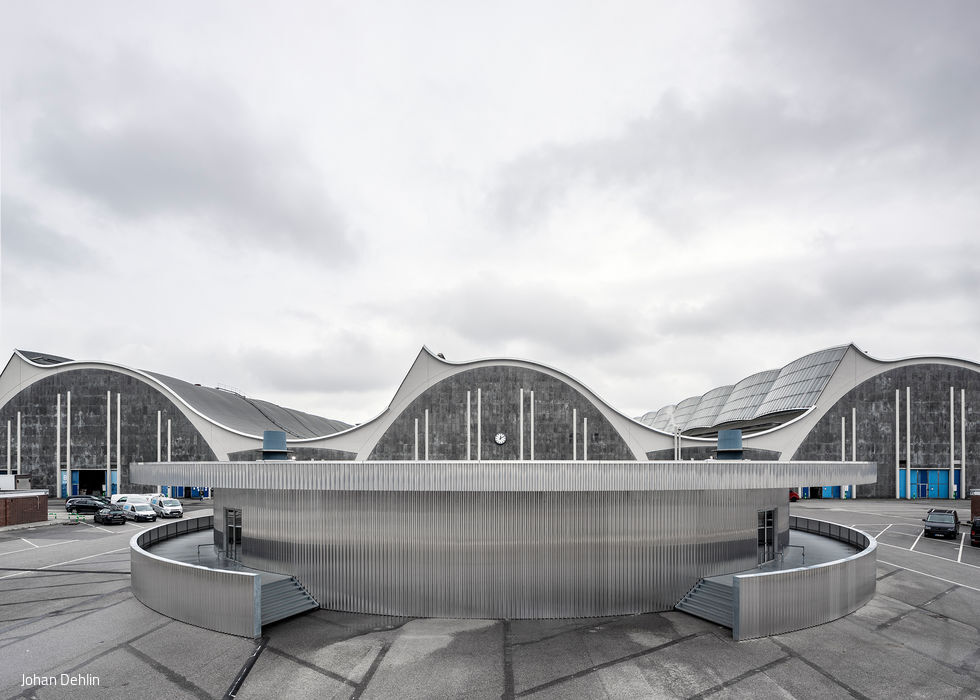
A smart solution
The pavilion for the Großmarkt Theatre: sustainable, flexible, and efficient.