


Space for Body Art
Reimagining an exceptional tattoo studio within a 1970s structure


What began as a simple question about optimal lighting for an established tattoo studio's new premises evolved into a comprehensive design vision. Architect, interior designer, and lighting specialist Raffaele Maier of rmg • studio took the helm, coordinating all disciplines. After the initial assessment, the vision was clear: this studio would break decisively from the mainstream aesthetic that defines so many others.
The project team's deep roots in street art, graffiti, and contemporary art culture called for an unmistakably urban yet refined aesthetic. The space needed to feel welcoming without losing its edge—simultaneously approachable and authentically raw. Equally critical was creating dedicated workspaces for the studio's resident artists and rotating guest collaborators, while the reception area demanded a compelling showcase for the studio's streetwear and apparel offerings. The guiding metaphor became the fineline tattoo itself: those impossibly delicate black strokes etched into skin. Maier translated this concept into raw concrete planes and stark black-and-white geometric volumes that sculpt and define the space. The lighting design, vital to any tattoo studio's function, echoes this fineline language through LED lines that serve dual purposes—each precisely aligned with individual workstations while simultaneously dancing freely across open areas. Both luminous intensity and color rendering index (CRI) were meticulously calibrated to provide the optimal working environment for tattooing. Strategic spotlights amplify the gallery-quality street art installed throughout the walls. Oak inlays introduce warmth as a foil to the raw concrete, enriched by striking works from Karlsruhe's street art community. The original late-1970s structure presented few obstacles. The renovation proceeded smoothly, largely by maintaining existing infrastructure while resolving specifics directly on-site. The significant challenge lay in preparation: walls, ceilings, and floors were stripped to raw concrete—employing dry ice cleaning where necessary—to expose the authentic canvas beneath. Solid walls received protective sealing; lightweight framed walls were finished and painted. From conception to completion: just two months.
Photography:
Nikolay Kazakov
www.kazakov.de
(Published in CUBE Stuttgart 03|24)


Witnesses to Time
Historic home awakens: heritage preservation meets contemporary design in striking roof renovation
Out of the box
A Multifaceted Sanctuary for Creative Thinking
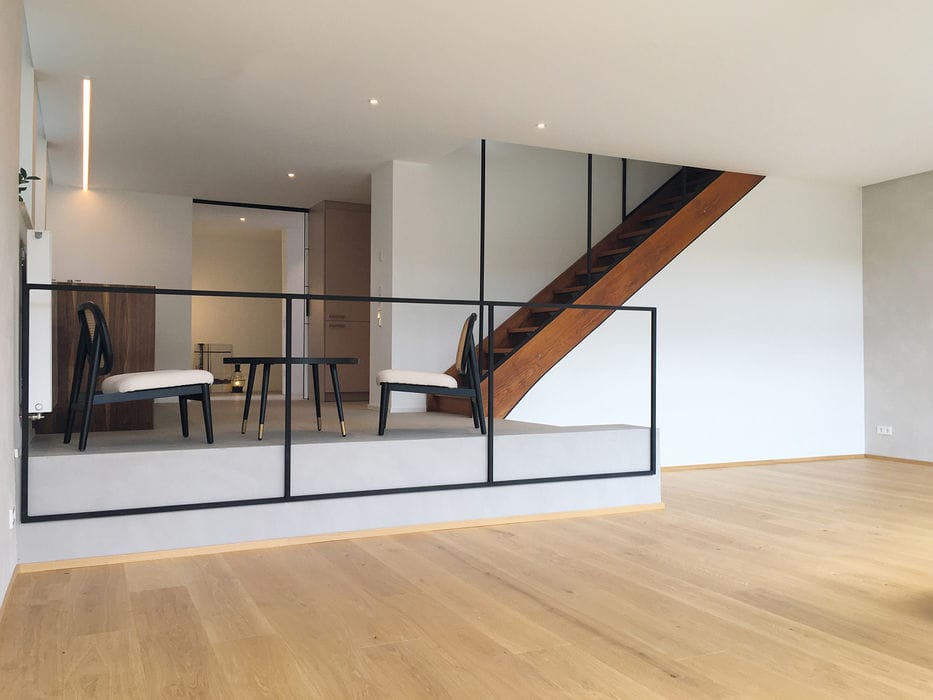
Fresh ideas for a cherished home
A Courageous Redesign Reveals Unexpected Spatial Possibilities
Designing with Purpose
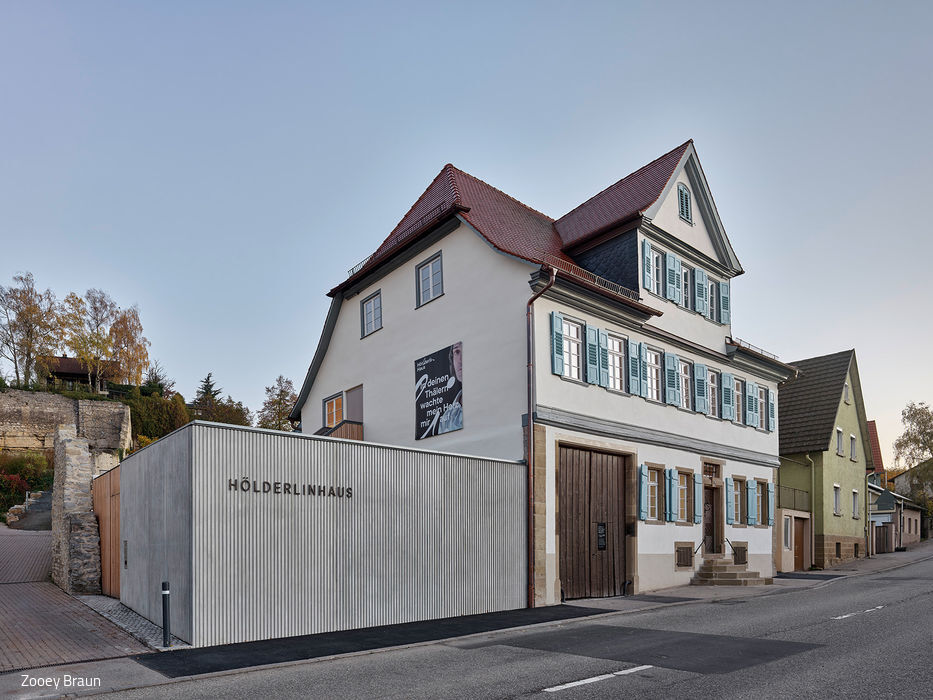
Hölderlin's Listed Residence: Restored, Expanded, and Reimagined as an Exhibition Space