


The Future of School Building
A bold reimagining of compact, six-story square architecture, where circulation and spatial organization connect efficiently across minimal distances.
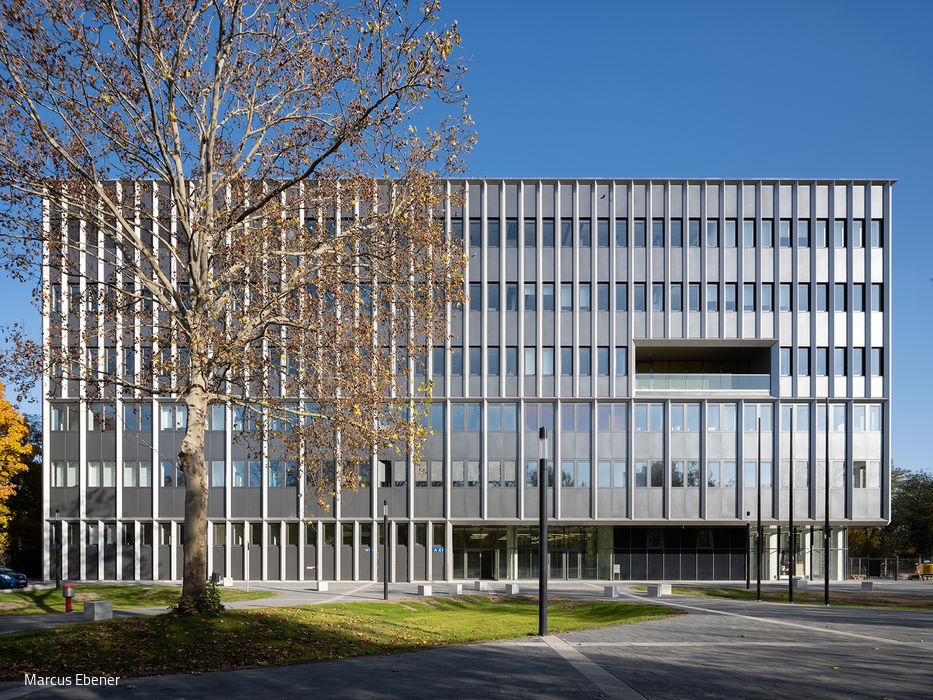




Zwischen Neukölln und Rudow, genauer zwischen Lipschitzallee und Efeuweg, liegt einer der größten Schulneubauten Berlins der letzten 20 Jahre: das Lise-Meitner-Oberstufenzentrum mit einer Bruttogrundfläche von 20.000 m² für circa 1.100 Schülerinnen und Schüler. Nicht irgendein Gymnasium also, sondern eine hoch spezialisierte Fachschule nur für die Oberstufen der Fächer Biologie, Chemie und Physik. Namentlich ist sie der Kernphysikerin Lise Meitner gewidmet wie schon ihr Vorgängerbau auf demselben Areal.
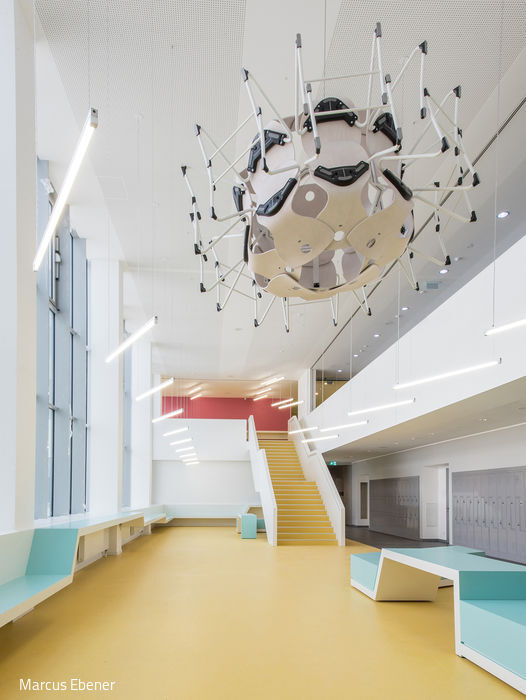
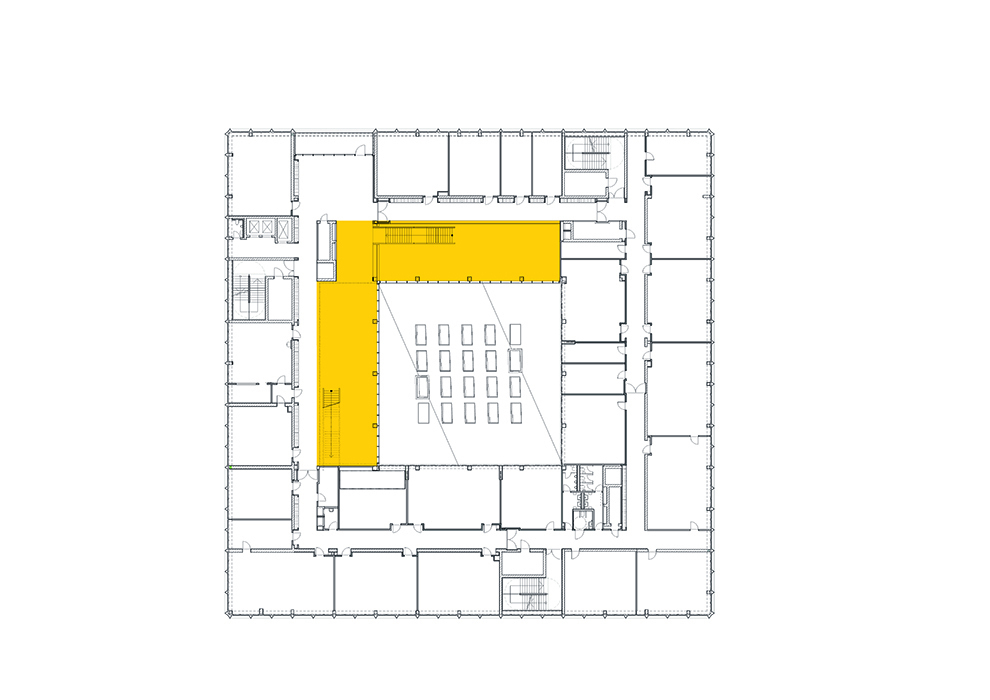
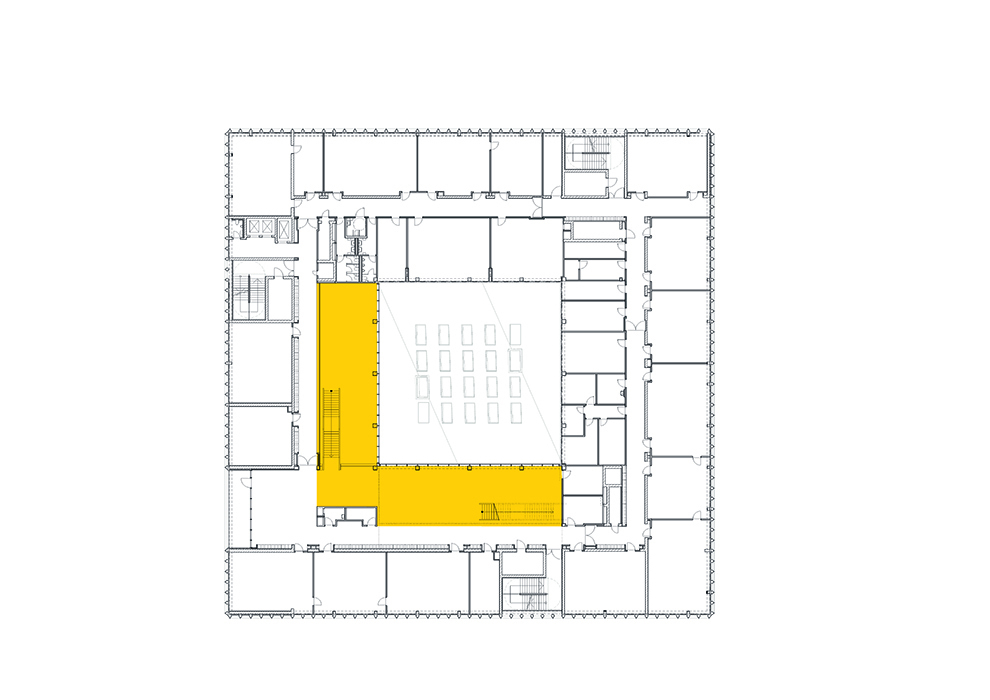
Unter den namenhaften Architekturbüros, die am Wettbewerb beteiligt waren, errang das vergleichsweise kleine, aber unter anderem auf Schulbauten spezialisierte Berliner Büro NAK – Numrich, Albrecht, Klumpp – den 1. Preis. Das Urteil der Juroren fiel eindeutig zugunsten dieses Entwurfs aus, weil hier zukunftsweisende Wege für Bildungsstätten aufgezeigt werden, die nicht eine immer wieder gleiche Reproduktion des Schulbau-Repertoires aufweisen. Also keine Aneinanderreihung von Flachbauten, die weder platzsparend noch logistisch gut erschlossen sind, sondern ein mutig begangener neuer Ansatz eines kompakten, sechsgeschossigen, quadratischen Gebäudes, in dem die Durchwegungen und die Raumaufteilungen auf kurzen Wegen effizient erschlossen sind. Die großzügige Treppenskulptur zieht sich, einer „promenade architecturale“ gleich, aufwärts bis in das 6. Obergeschoss. Die breite Treppe, die im Erdgeschoss noch als Veranstaltungsort und Begegnungsfläche vielfältige Kommunikationsmöglichkeiten bietet, mündet im 1. Obergeschoss in ein zweigeschossiges Atrium, einen Luftraum, in dem sich eine Freitreppe zum nächsten Geschoss befindet. Dieser Luftraum wiederholt sich in den oberen Geschossen, jeweils um 90 Grad gedreht.
Neben Unterrichts- und Aufenthaltsräumen gibt es im 4. bis 6. Obergeschoss Laborräume auf neuestem technischen Niveau und sogar Experimentierflächen im Freien auf dem Dachplateau. Sowohl durch die schmalen hohen Fenster als auch durch die senkrecht verlaufenden Lisenen wirkt die Fassade schlank und fast filigran. In jeder Himmelsrichtung gibt es dort, wo die Treppe ankommt, eine Loggia. Das Konzept der Oberstufenzentren, die Praxis und Theorie zu verbinden, ist nicht neu, aber das Besondere an diesem Gebäude ist, wie die Architektur die aktuelle Entwicklung im wissenschaftlichen Unterricht räumlich umsetzt: Anders als im alten Gebäude wurde hier bewusst entschieden, die Verbindungen zwischen den Wissenschaften Physik, Chemie und Biologie zu betonen. Der durchgehende Kommunikationsraum verbindet die Fachbereiche der verschiedenen Etagen und bietet zentrale Plätze für Austausch und informelles Lernen.
(Published in CUBE Berlin 02|20)

Shift in Values
Conversion of a single-family home into a residential complex as a statement for sustainable construction
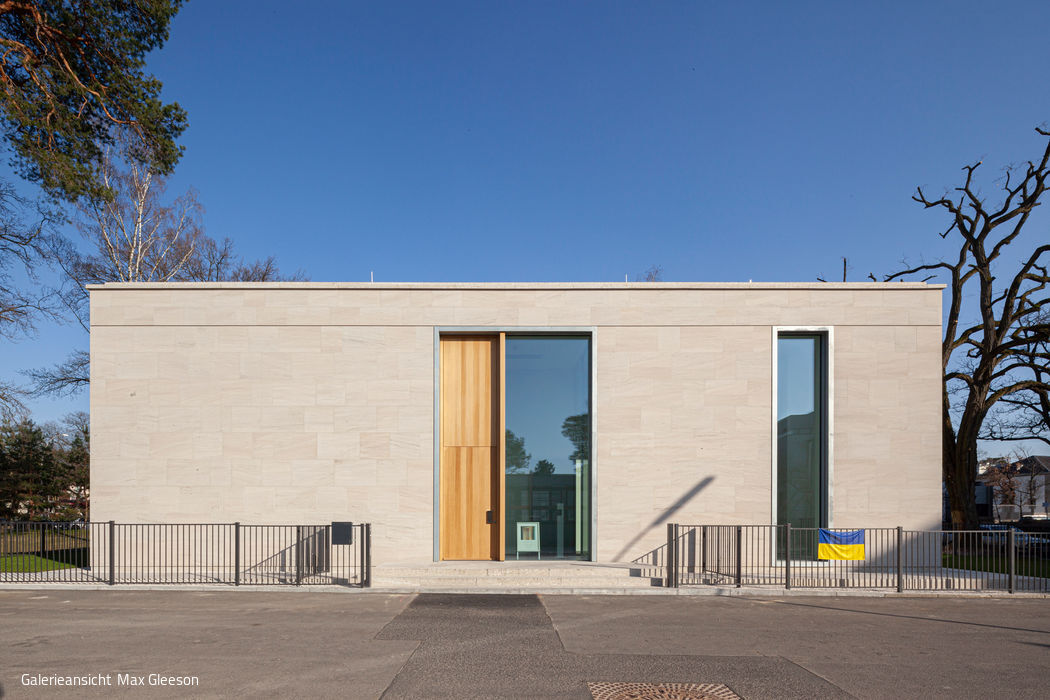
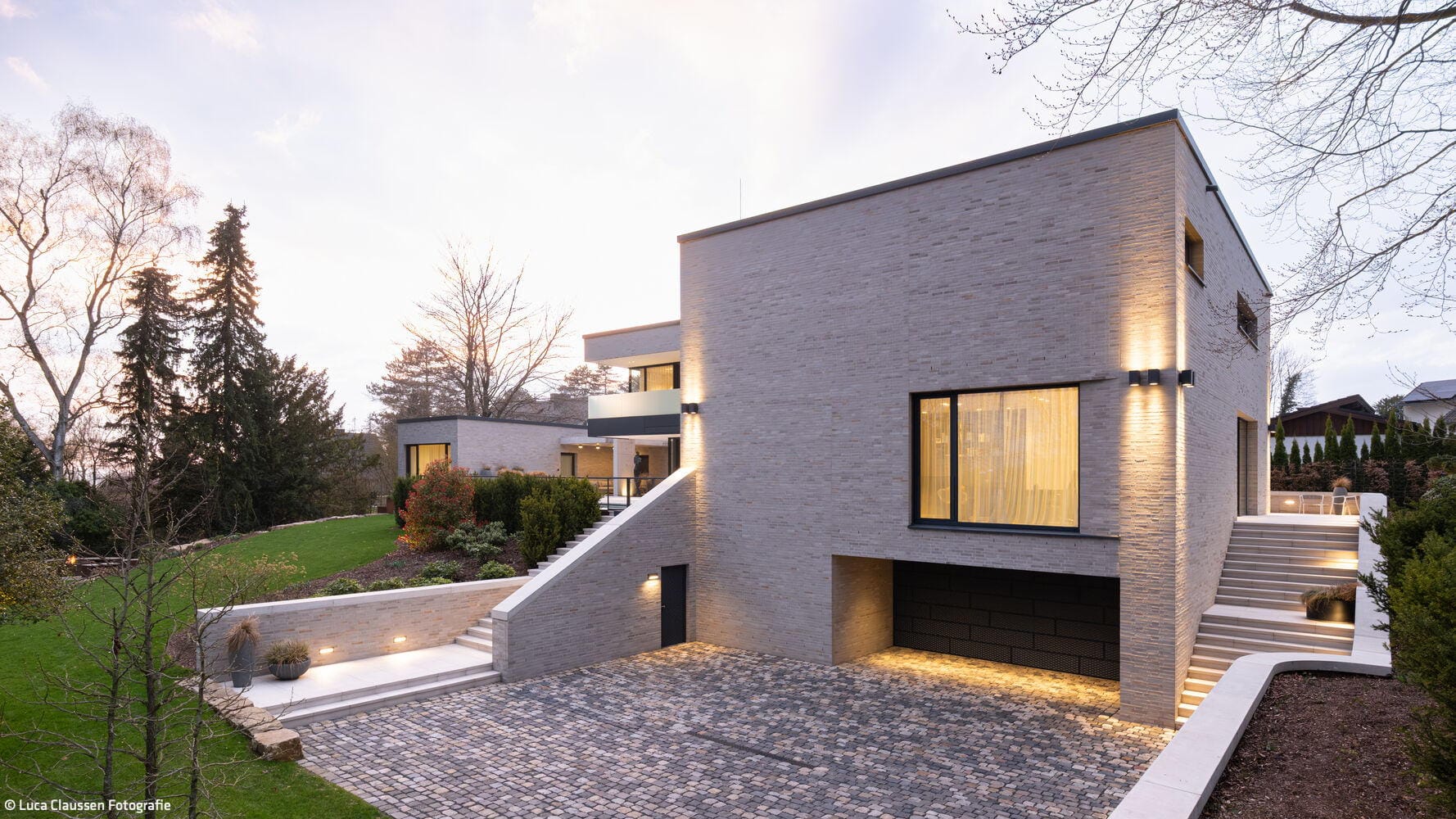
Composition with Nature and Light
The Bastian Gallery in Dahlem: An Architectural Gem
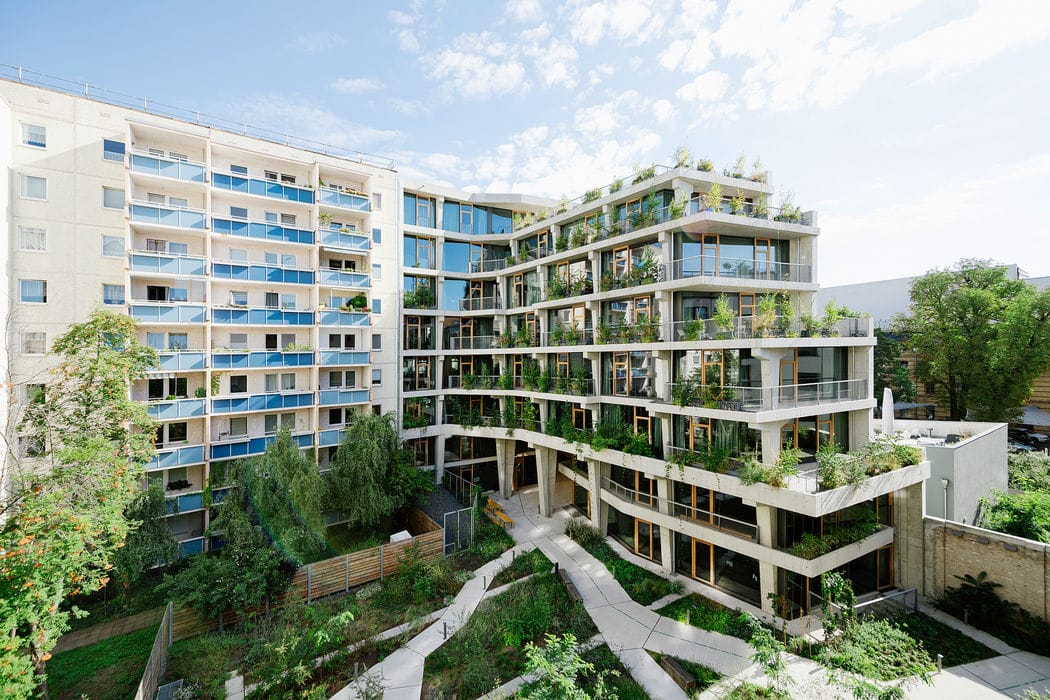
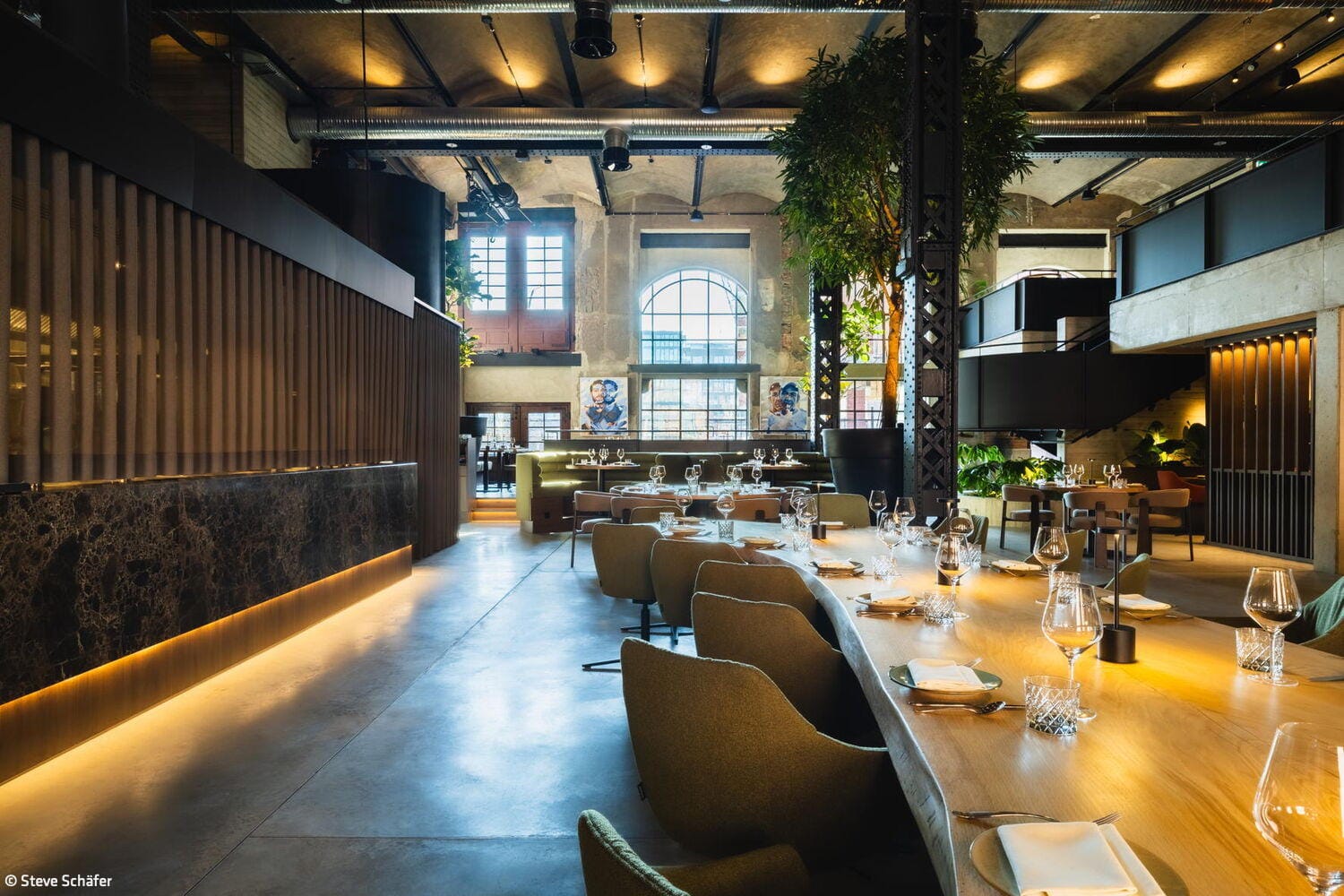
Green Building
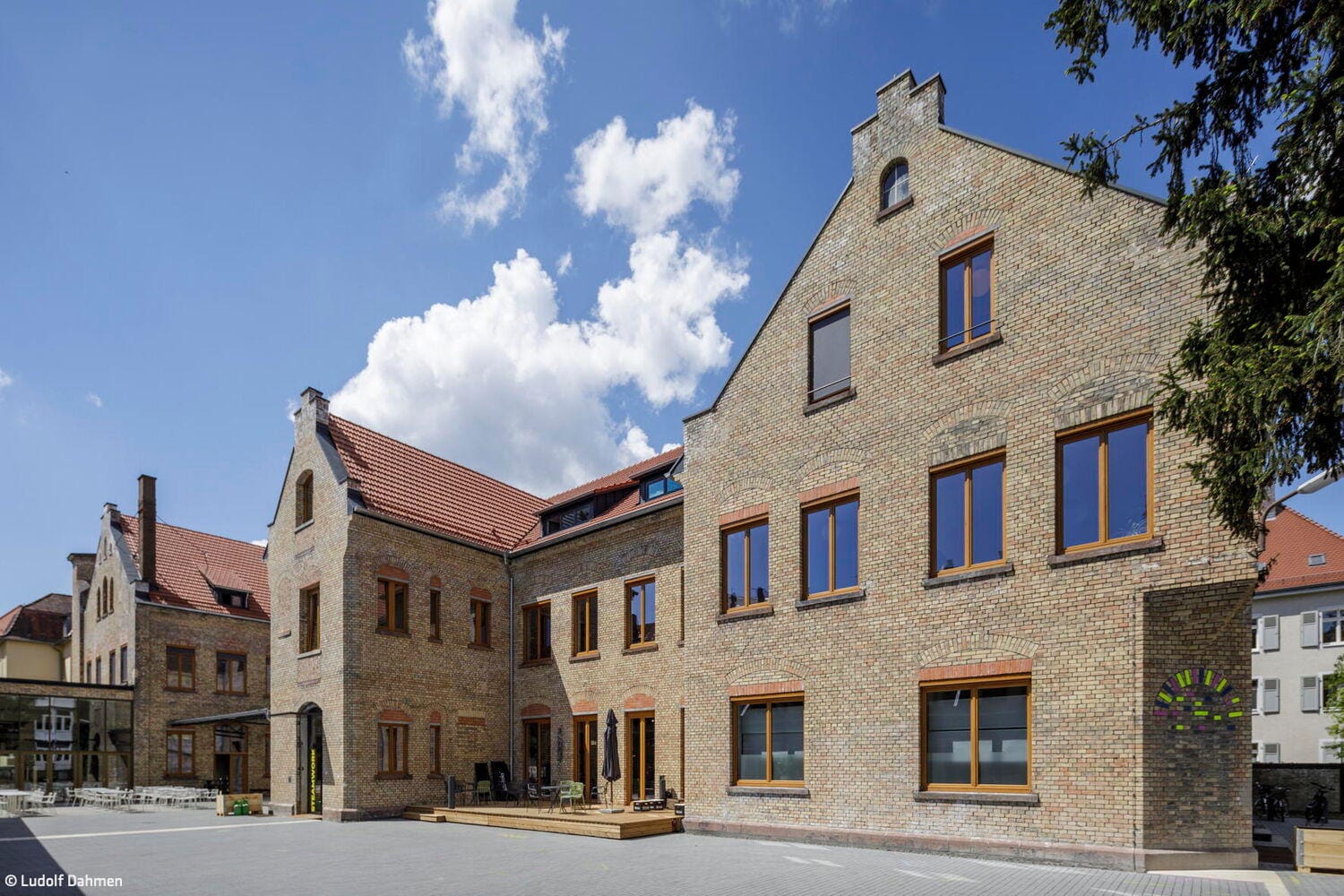
Where Historic Architecture Meets Contemporary Design: A Green Workplace Oasis
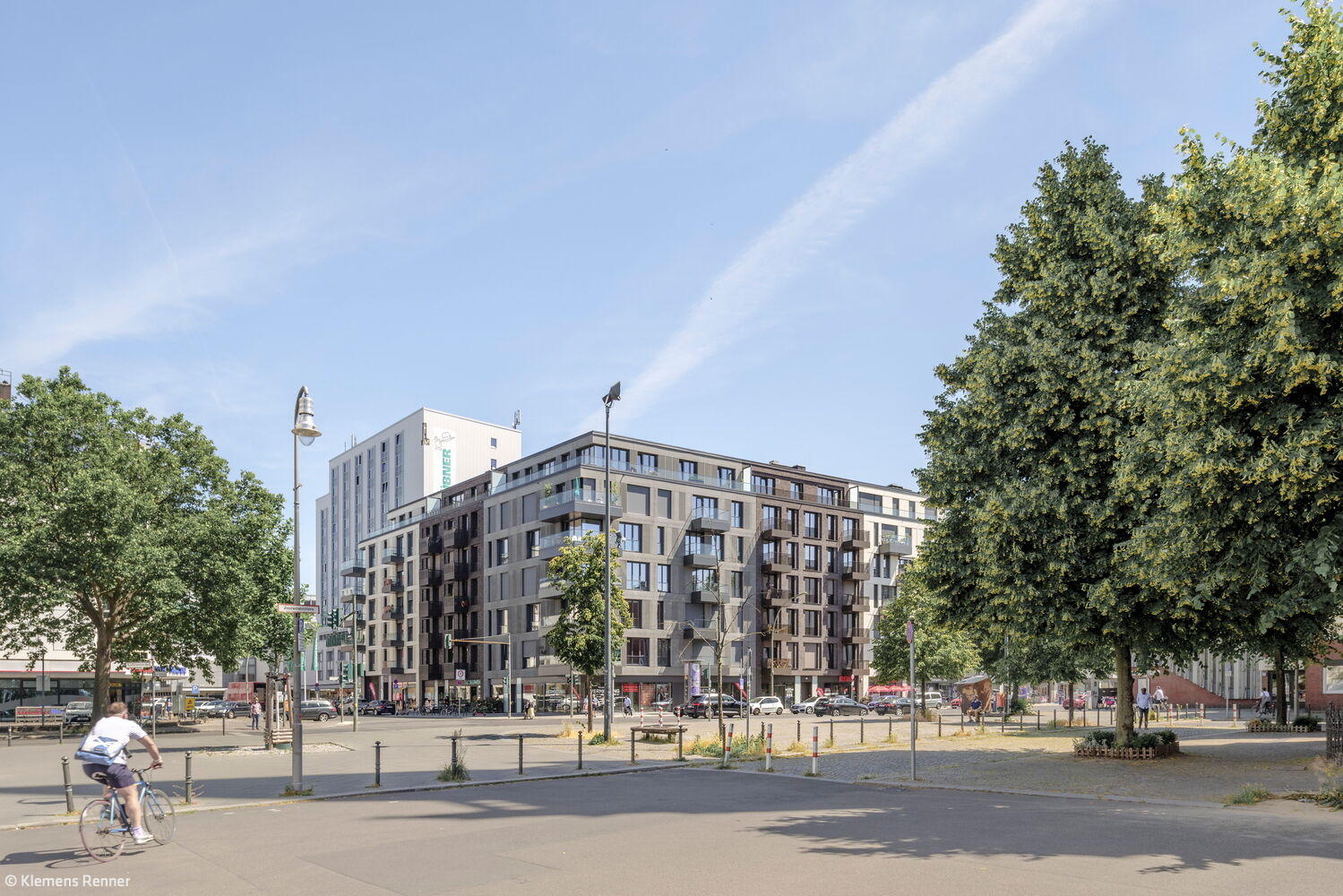
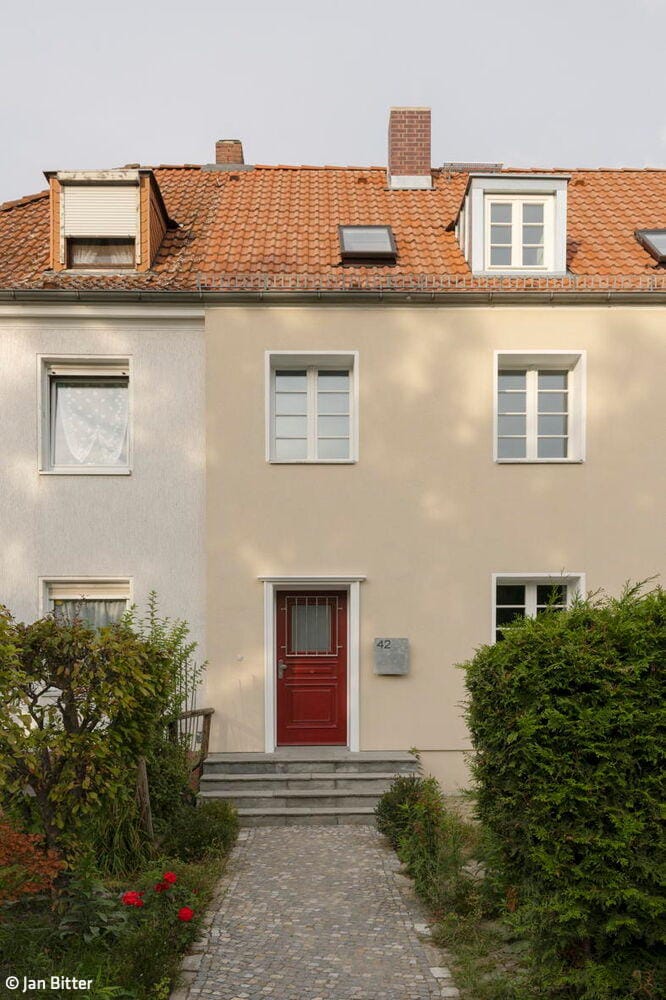
Small-Town Living in the Big City
Schoenegarten: A Housing Project That Excels Through Thoughtful Design