


An Oasis at the Crossroads
A Hotel Built for Business—Where Conferences, Trade Fairs, and Presentations Are Just Steps Away
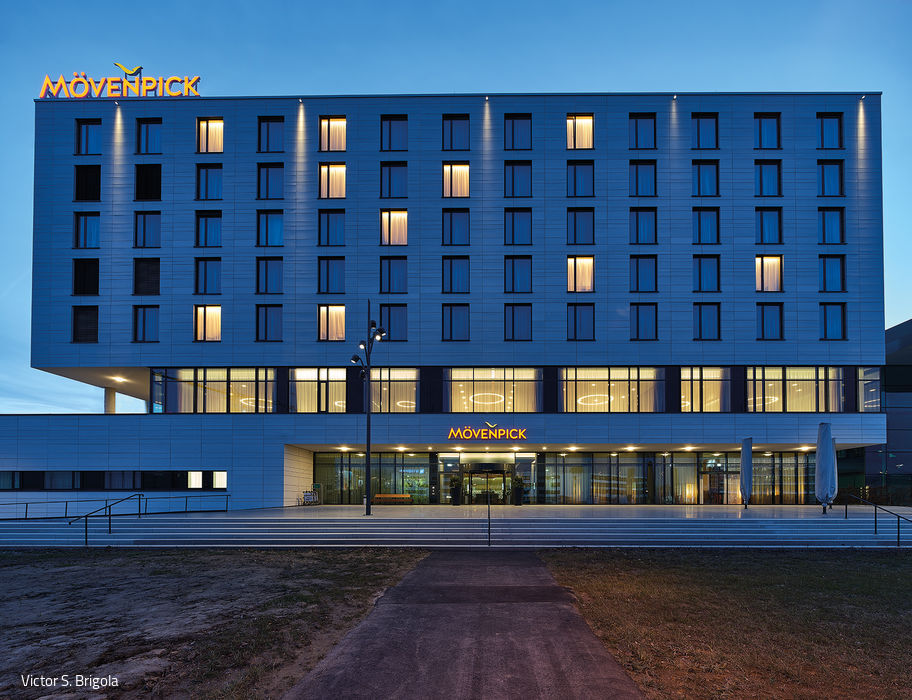
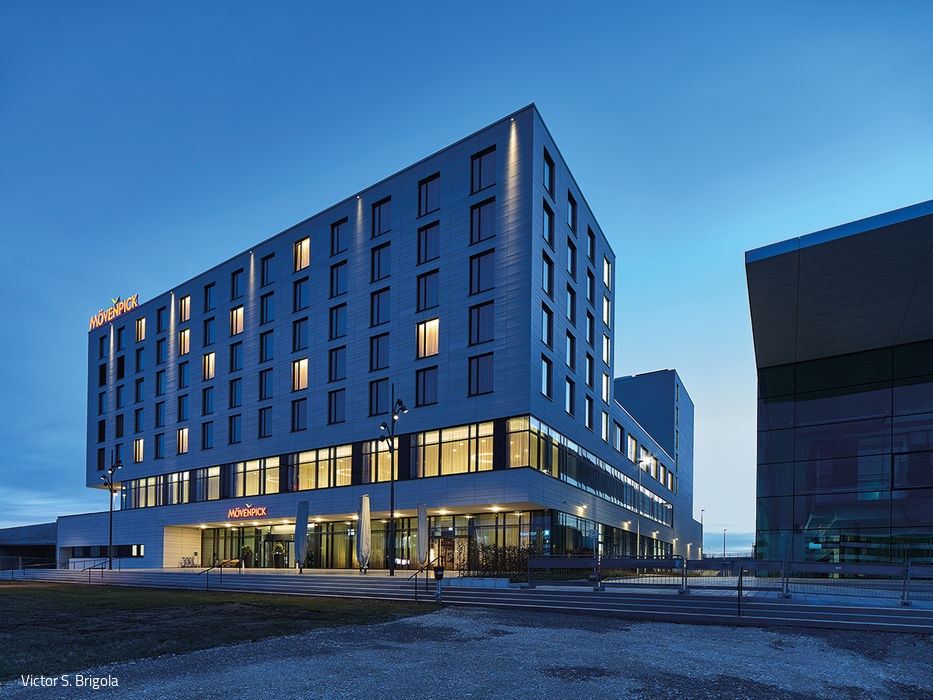
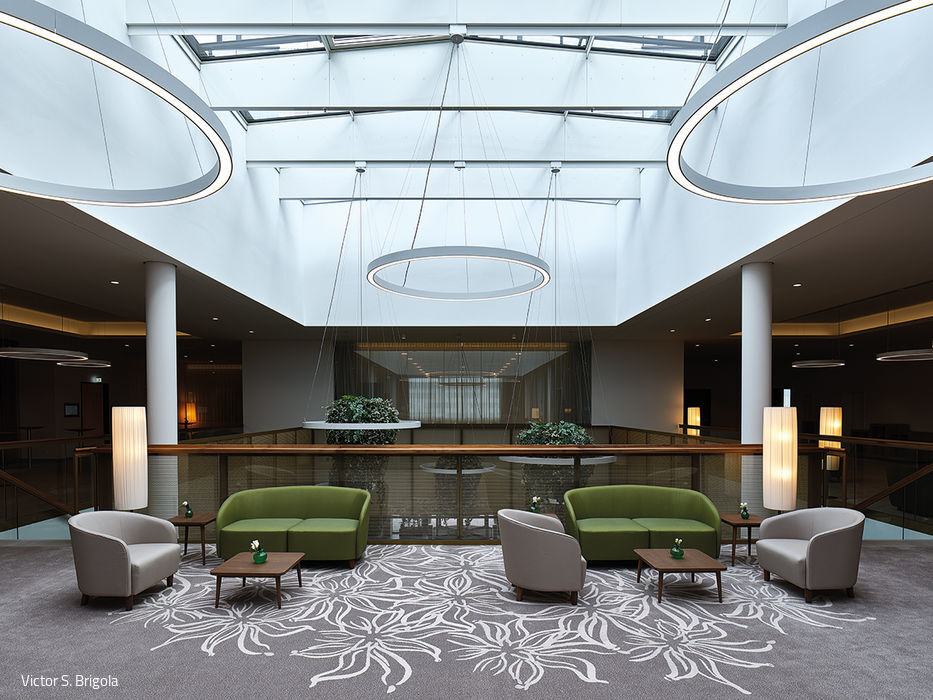
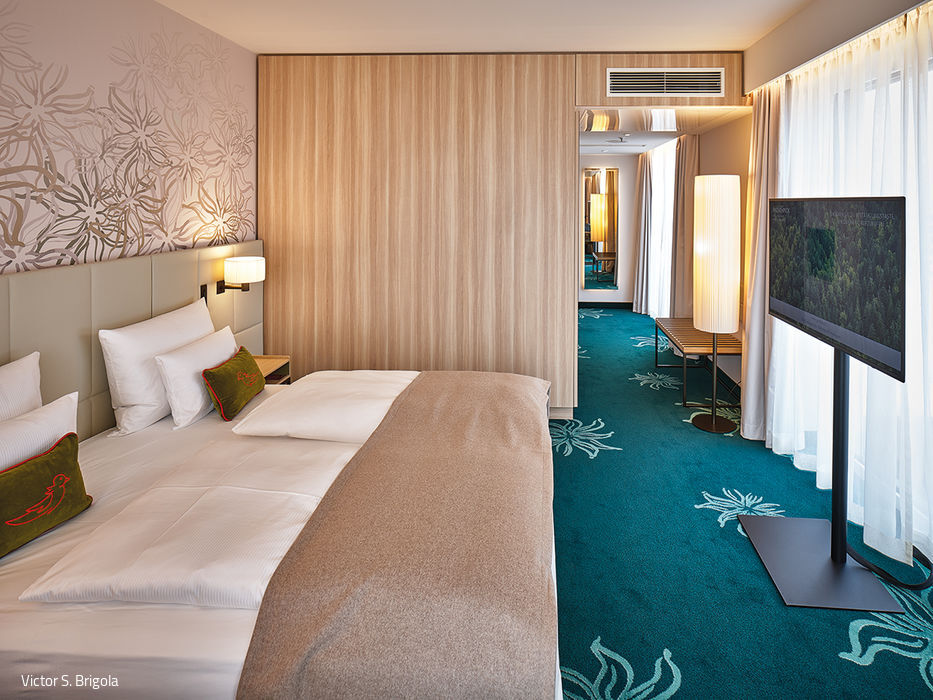
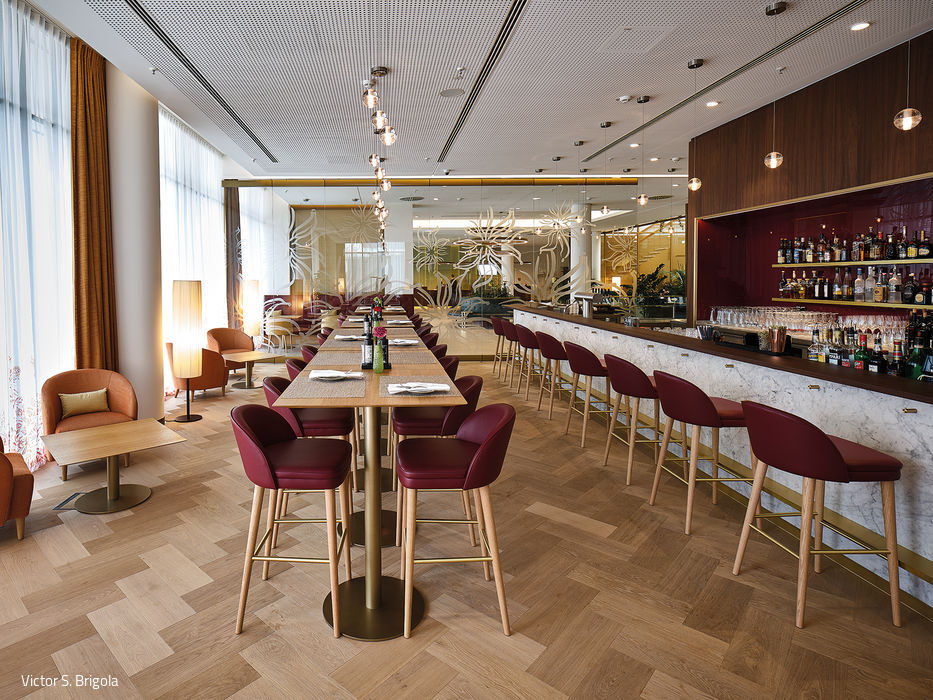
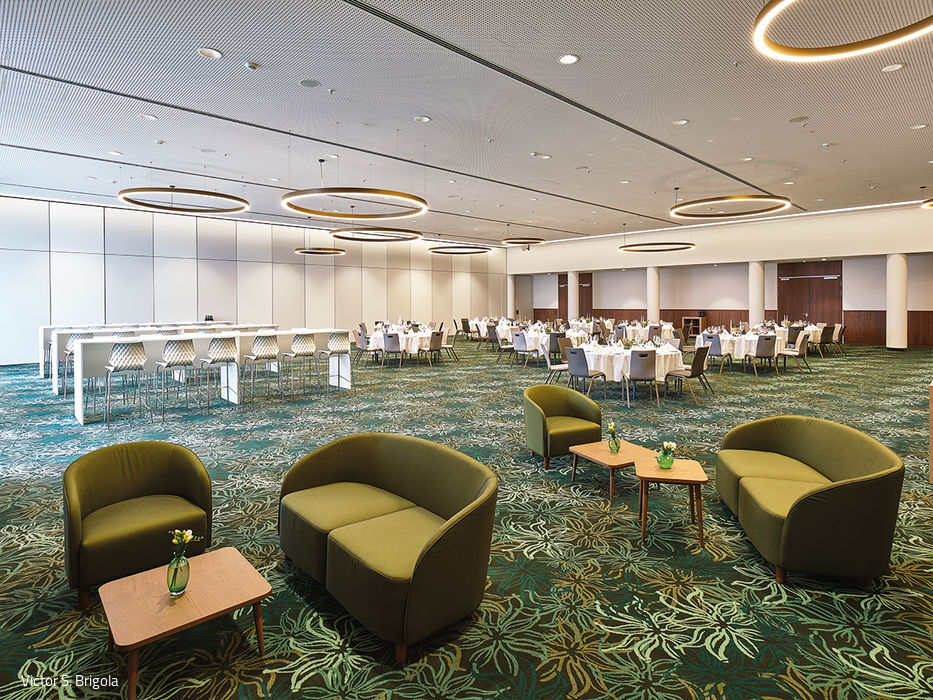
In the desert, an oasis needs little more than a spring, a few trees, and a settlement—a sanctuary offering weary travellers safe refuge and respite. The concept translates beautifully beyond geography. Any space promising peace and restoration can serve this purpose—including a thoughtfully designed hotel. Consider the Mövenpick Hotel at Stuttgart Airport, designed by Ulm-based architects Mühlich, Fink & Partner for Stinag Stuttgart Invest and constructed by Wolff & Müller. Situated amid the constant energy of a busy transportation hub, this trade fair and congress hotel offers something precious: a tranquil retreat where business travellers and exhibition visitors can unwind—all without sacrificing the convenience of proximity to everything they need.
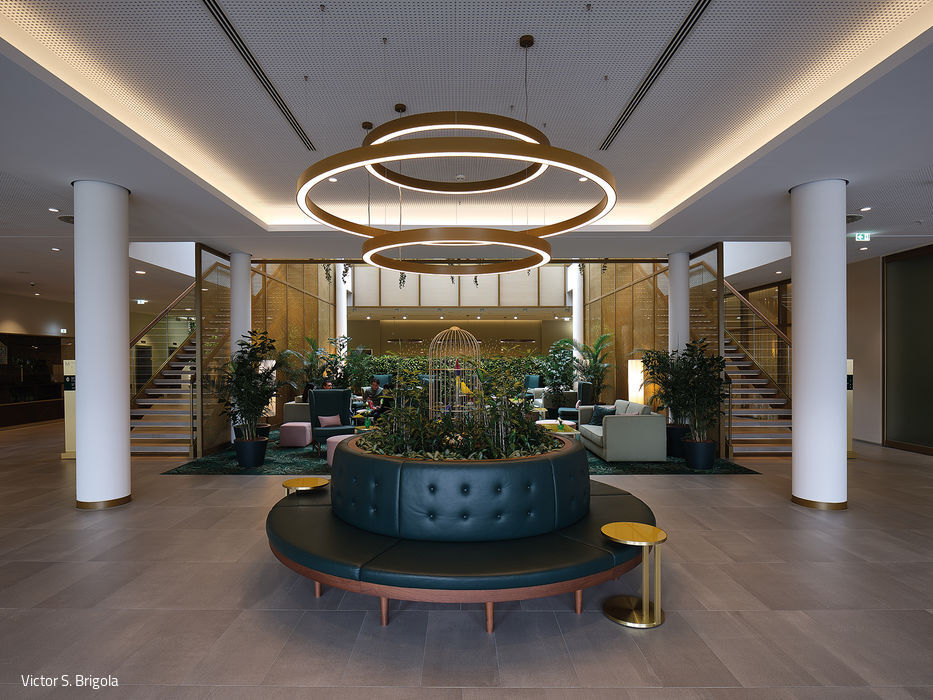
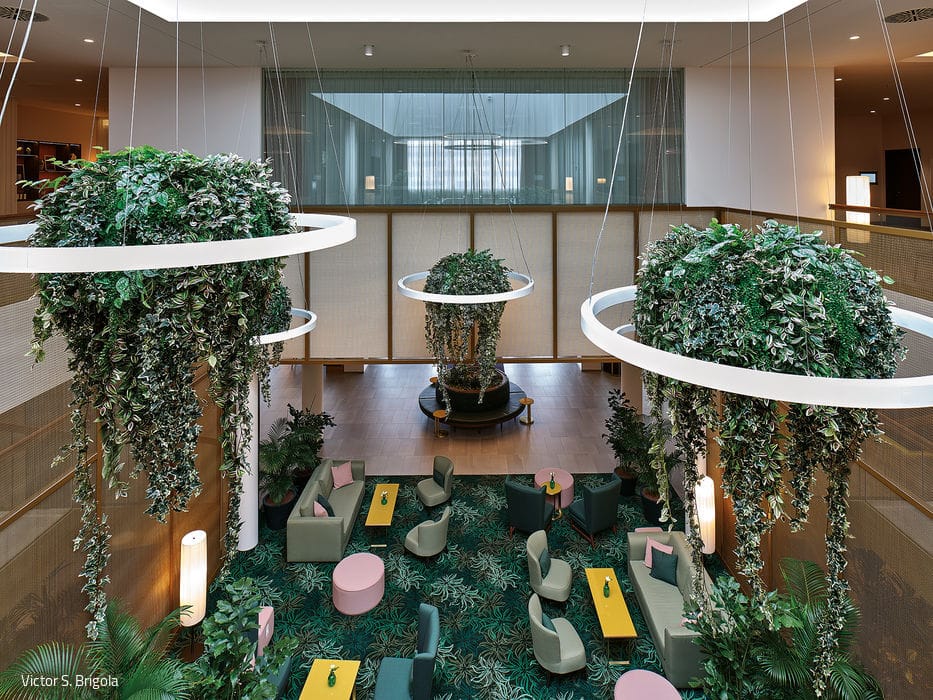
No matter how guests arrive, the final steps are effortless. The new ICE rail station sits directly before the hotel's cleanly articulated façade; a pedestrian tunnel connects seamlessly to the airport terminal; and the S-Bahn light rail—running directly from Stuttgart's city centre to the Fildern exhibition grounds—has been architecturally woven into the building itself. Two hundred parking spaces complete the picture. Yet regardless of arrival method, stepping through these doors means entering another world entirely—one of genuine calm. The four-star hotel's atrium-style lobby immediately invites you to pause and settle in. Natural motifs and a carefully curated palette of greens and earth tones appear throughout, paired with refined materials for a quietly sophisticated effect. Milan-based designer Matteo Thun crafted this serene interior concept. Floral patterns grace the 262 rooms and suites, as well as the breathtaking 735 m² ballroom flooded with natural light. This ballroom anchors the entire 1,500 m² conference and banquet complex, which includes seven fully equipped meeting rooms featuring cutting-edge technology.
Beyond engaging interior design and seamless connectivity, the hotel offers dedicated spaces for genuine restoration. The in-house fitness and wellness centre—complete with a sun terrace overlooking the exhibition grounds—stands out as a prime example. And to ensure that demanding business days are properly nourished, a 250 m² bar and restaurant deliver culinary excellence. The space has earned such a strong reputation that visitors from the surrounding region now make the journey specifically to dine here.
www.mfp-ulm.de
www.stinag-ag.de
Photography Credits:
Victor S. Brigola
www.victorbrigola.com
(Featured in CUBE Stuttgart 03|20)


Material Symbiosis
Living and Working Beneath a Single Roof in the Countryside
Spatial Versatility and Function
A Custom-Built New Work Environment for a Technology Agency
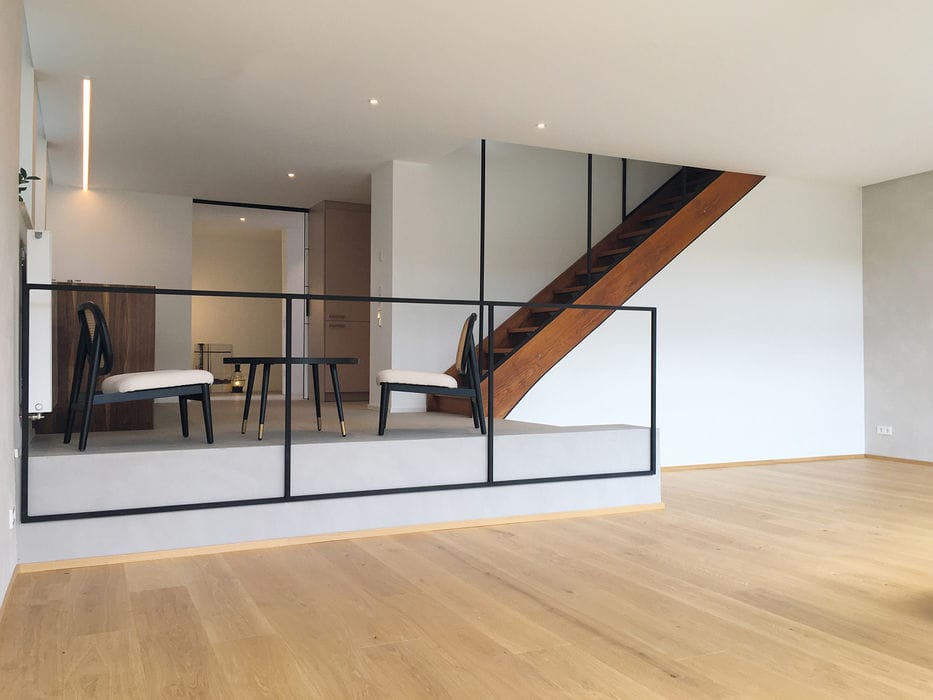
Fresh ideas for a cherished home
A Courageous Redesign Reveals Unexpected Spatial Possibilities
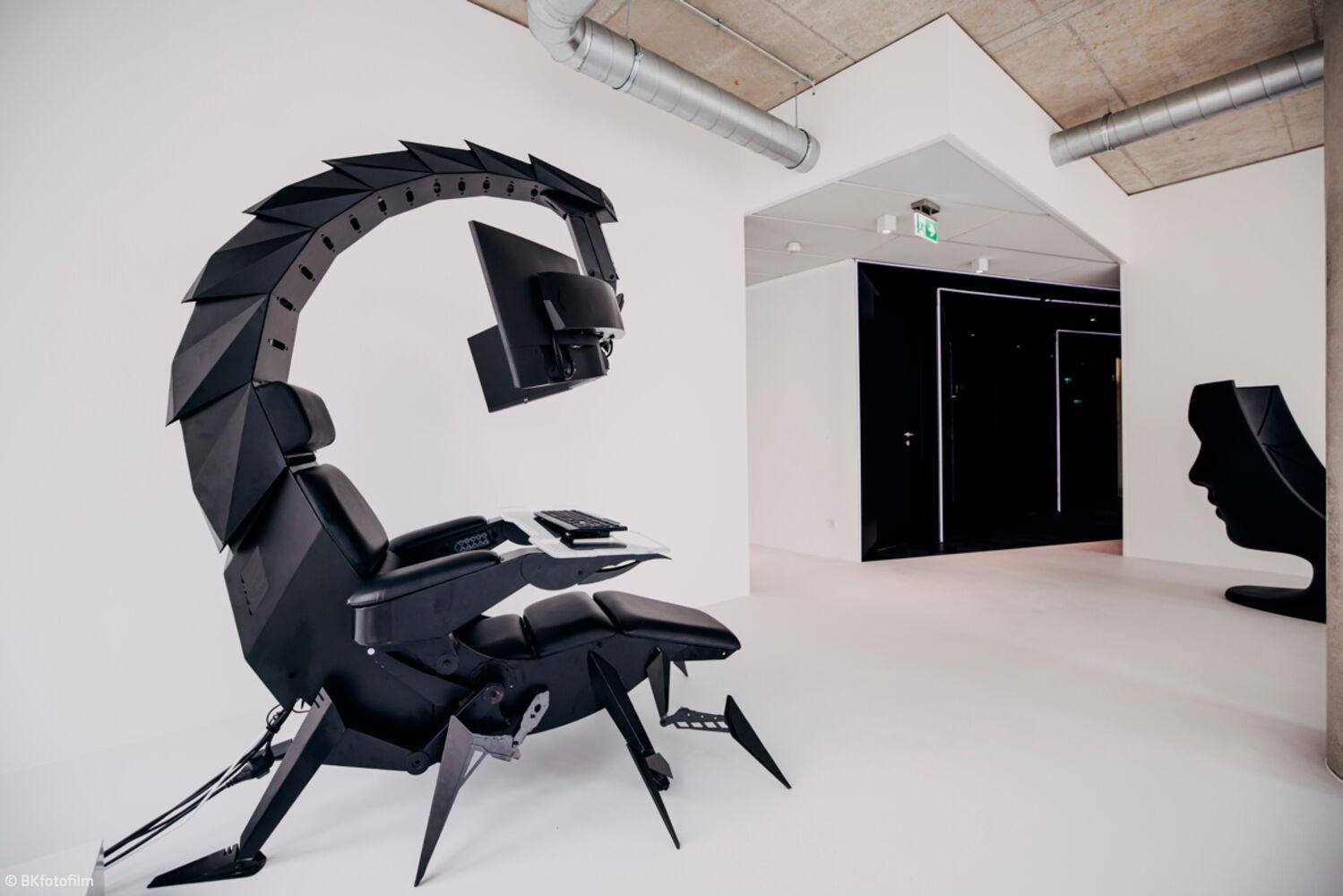
Enigmatic Ambiance
Corporate headquarters that translates the work of professional hackers into spatial design