


Where Classic Meets Modern
A Family Home That Maximizes Its Roofscape Potential


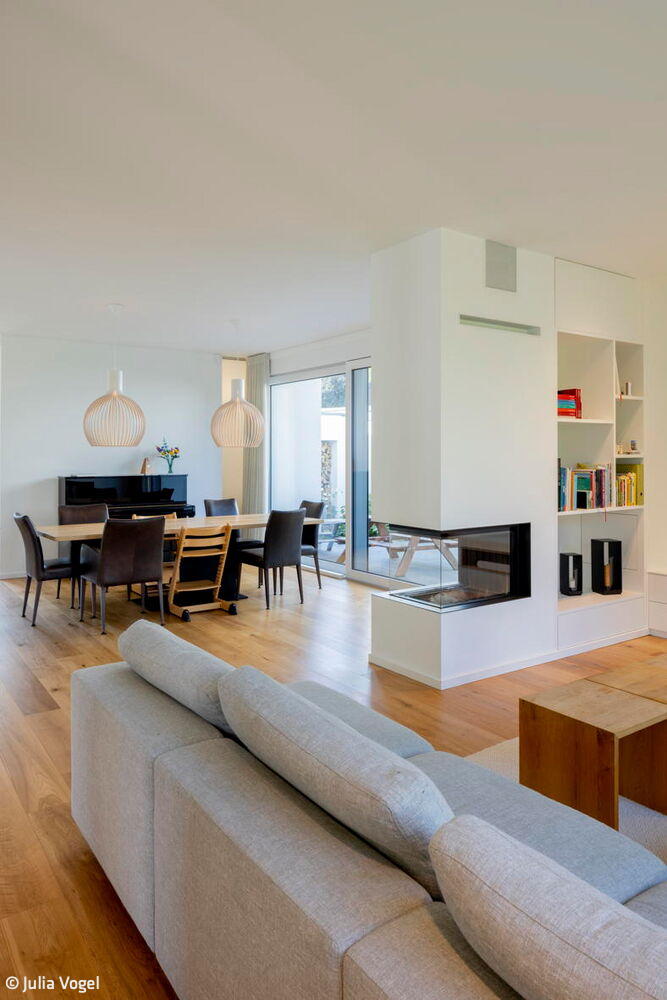


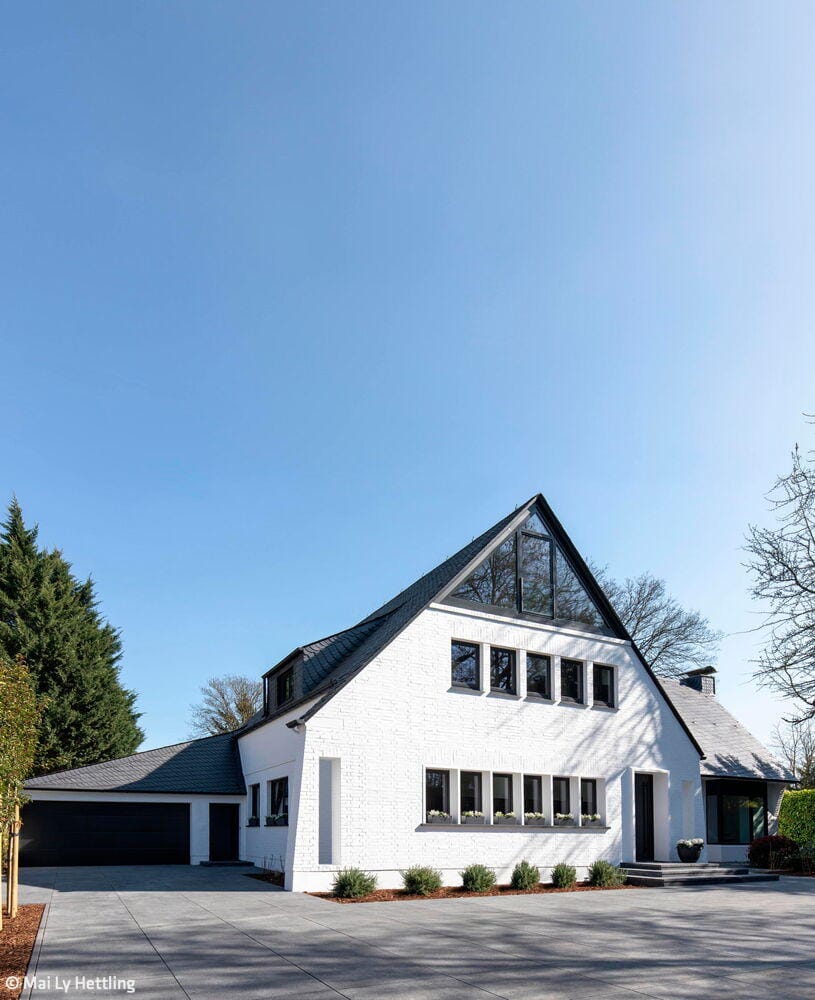
The owners acquired a plot in Meerbusch lined with semi-detached and detached homes, where an aging cottage stood. Ricardo Ferreira Architekten initially proposed a flat-roof design with a guest apartment in the basement—only to have it rejected by building authorities on regulatory grounds. The owners challenged the decision and pursued legal action, ultimately winning their case. Rather than let years of litigation stall the project, the Meerbusch firm developed a parallel design—one that secured approval and was built. This revised scheme elegantly marries the neighborhood's classic gabled roof tradition with striking contemporary sculptural forms.
Oriented toward the driveway along the eaves, the building steps back to create an intimate forecourt, working in concert with a garage that defines the property boundary. This recession subtly pulls back the entrance while simultaneously framing views into the street-facing stairwell upon entry. The gable-inspired entrance façade emerges as a sculptural gesture—a bold, cube-shaped volume cantilevers dramatically over the connector between garage and residence, functioning as a monumental dormer that shelters the entry zone. Above, a south-facing roof terrace crowns the flat-roofed volume, accessed from the attic and shielded from street view by a parapet. To accommodate the spatial demands within this pitched-roof design, the architects enlarged and heightened the overall form. The ground floor houses a discreetly positioned cloakroom and guest WC, separated from the entry sequence. A dramatic vertical window band in the stairwell floods the interior with natural light, drawing illumination deep into the basement levels. The open floor plan flows seamlessly across the ground level, with the kitchen, dining, and living spaces opening generously onto northern and western terraces through expansive floor-to-ceiling sliding glass walls. The fireplace anchors spatial zones throughout. A study on the ground floor preserves the flexibility to convert this level into a compact single-bedroom apartment in the future.
Upstairs, two children's rooms share a bathroom, while the parents' suite—with bedroom, dressing room, and ensuite—is deliberately separated. This wing opens onto a north-facing loggia, carved into the roofline and brought alive by generous windows. A compact staircase ascends from the hall to the attic, now home to a play and fitness zone, with its own south-facing loggia overlooking the street. Even the fully excavated basement maintains strong visual connection to daylight: the guest apartment with shower room draws abundant natural light through ground-level apertures. The interior architecture and lighting design reflect the architects' restrained aesthetic—solid oak floors and large-format tiles in the bathrooms complement white plaster walls and custom joinery by skilled craftspeople. Mechanical systems include an air-source heat pump powered by rooftop solar panels, plus a thermal storage tank for domestic hot water. Smart home automation orchestrates all systems seamlessly.
Photography:
Julia Vogel
www.juliavogelfotografie.de
(Published in CUBE Düsseldorf 01|25)

Family Sanctuary with Vision
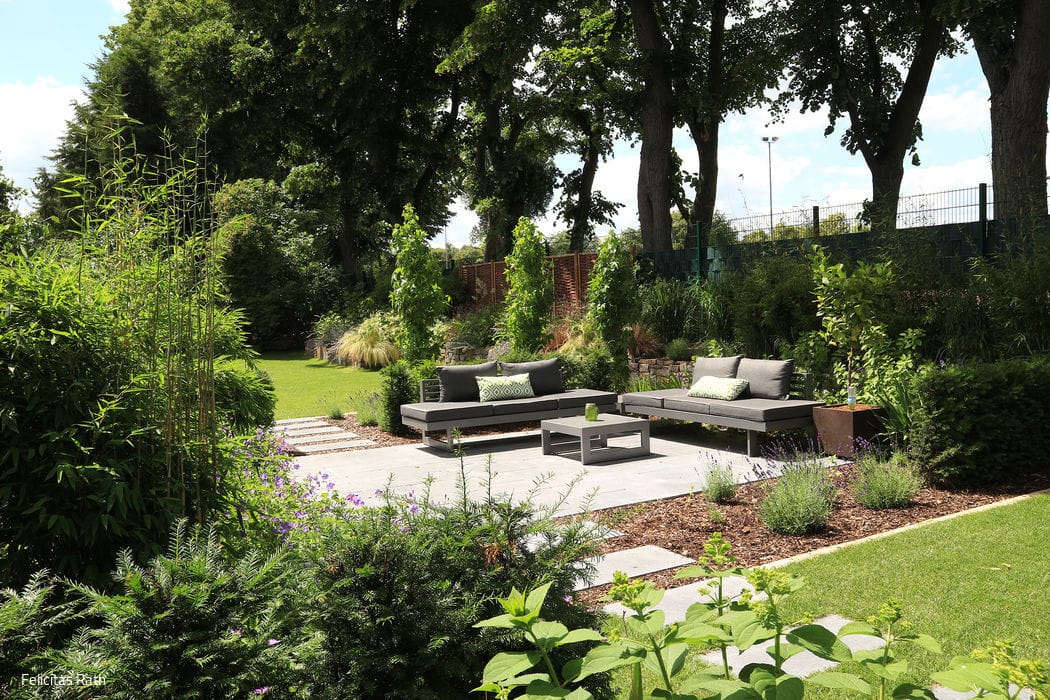
A Newly Designed City Garden: Where Versatility Takes Center Stage
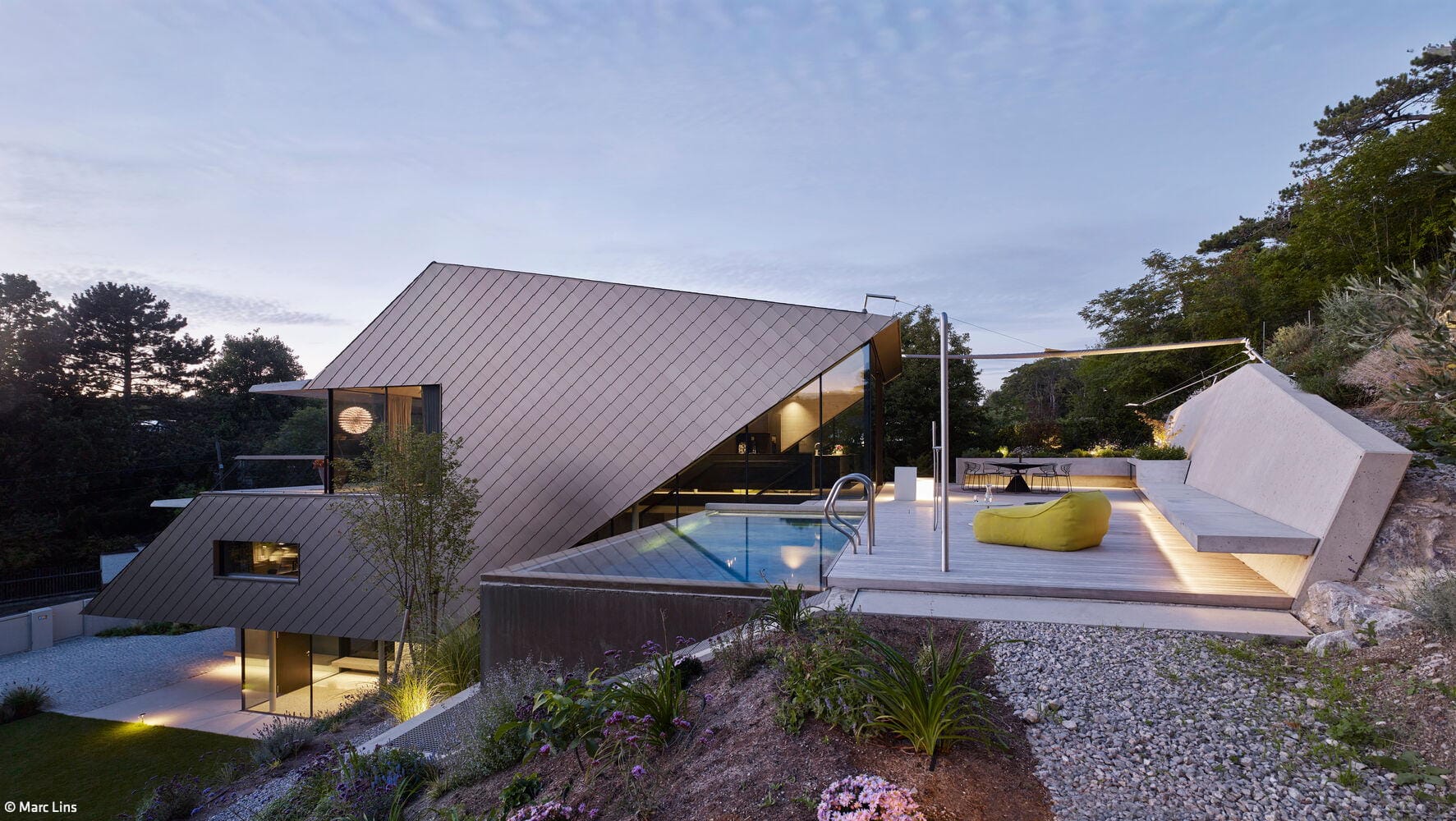
Between Sky and Slope
Where Light, Space, and Nature Converge into a Sensory Experience

Where Heritage Meets Innovation
Modern Interior Design for Office Spaces in a Historic Soap Factory
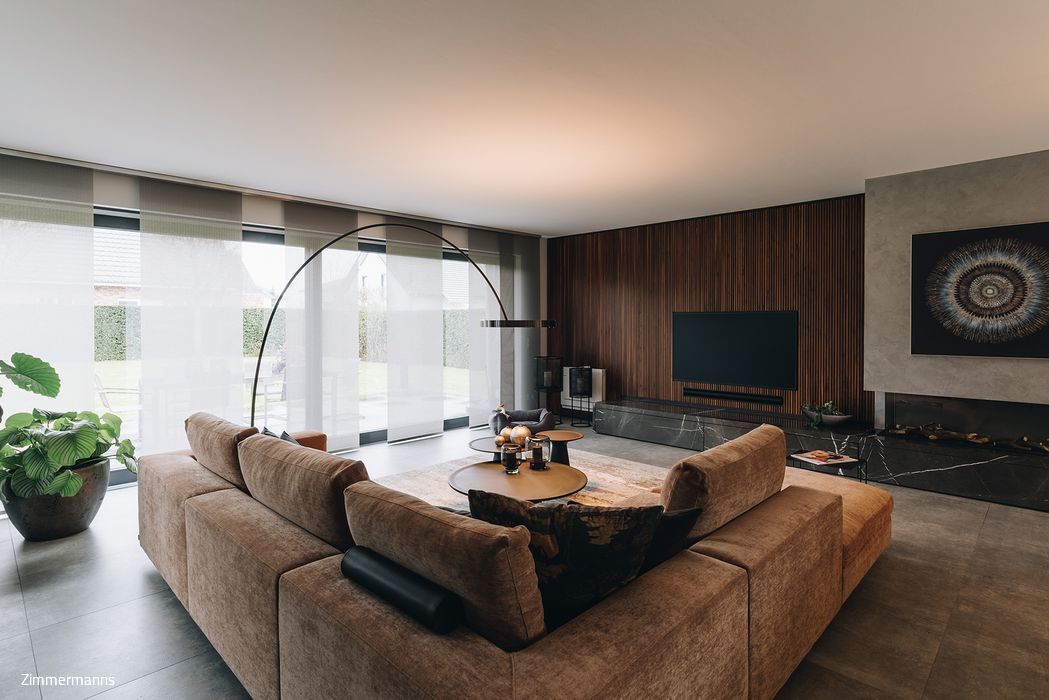
Element of Surprise
The designers proposed enriching the open-plan spaces with warm accent tones and natural materials.