


Monolithic Block Statement
The new LVR administration building in Deutz showcases a refined exposed concrete façade with delicate articulation.
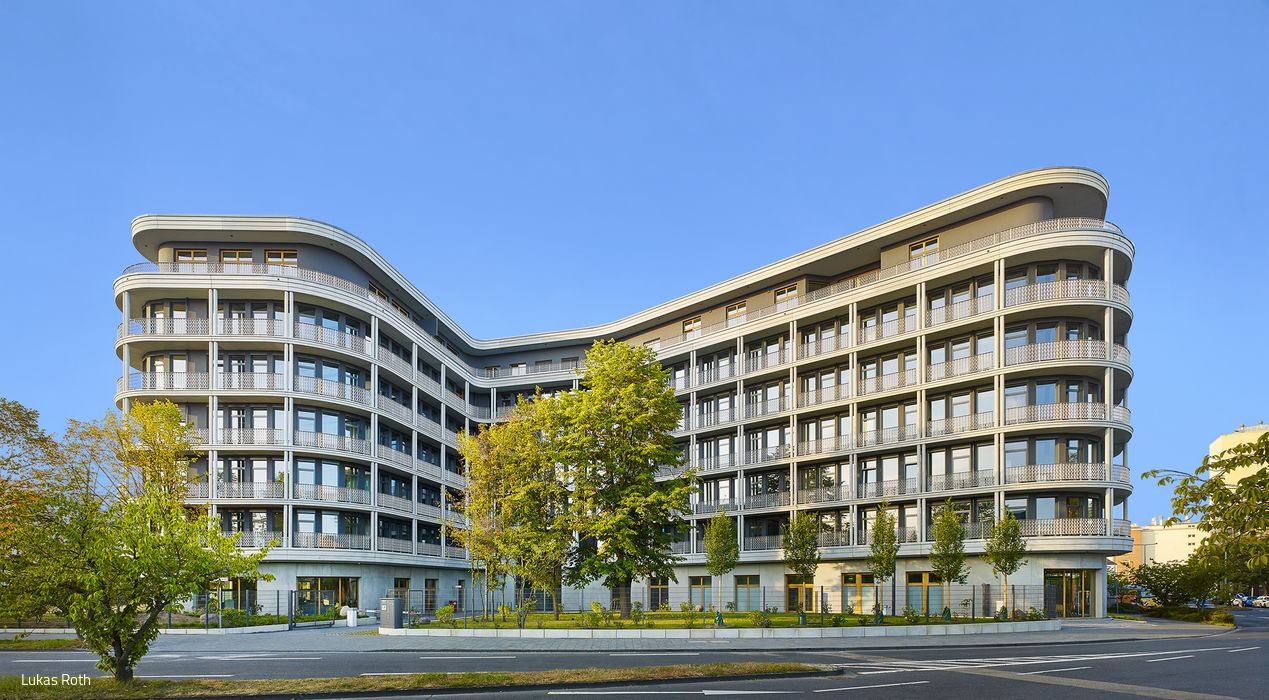


Deutz Harbour is experiencing a sweeping transformation. Once defined by heavy industry, the district is now evolving into a vibrant mixed-use neighbourhood. Simonstraße showcases one of its pioneering projects: Format Architektur, a Cologne-based firm, designed and executed this six-storey office building for the Regional Association (Landschaftsverband) on behalf of Lucks Immobilien. The building incorporates an underground car park, reception area, and staff restaurant.
The commercial district surrounding Deutz Harbour reflects considerable urban diversity—with some sections defined by traditional perimeter blocks and others punctuated by sculptural high-rise structures. The site's building footprint was constrained by a designated green space in the development plan. The architects responded by shaping the building in an L-form, allowing the green space to remain while establishing street-facing façades on both the north and south sides. The building's curved edges echo the surrounding street geometry, creating a bridge between conventional perimeter development and contemporary open-plan urbanism. The retained green space becomes an inviting forecourt that anchors the building's presence in the district. The boldly articulated façade—with its distinctive horizontal loggias—fulfils the client's vision: every office workspace opens directly to the outside through floor-to-ceiling, manually operable windows, enabling natural ventilation throughout. Rising from a solid monolithic base, a refined loggia structure in exposed concrete creates visual lightness. This is further enhanced by the dark anthracite finish of the thermally insulated exterior walls, which accentuates the delicate interplay of vertical and horizontal concrete elements. The cantilevered roof of the upper storey echoes the building's structural logic while screening the rooftop mechanical equipment from street view.
The expansive two-storey foyer anchors a monolithic reception desk at its centre, with a welcoming seating area and café opposite—a shared space for staff and visitors alike. Designed by UKW Innenarchitekten, the foyer interior harmonises the raw honesty of exposed concrete with warm oak slats in the ceiling and sculptural glass cylinders by Konstantin Grcic.
Photography Credits:
Lukas Roth
www.lukas-roth.de
(Published in CUBE Cologne Bonn, 04|21)


At the Heart of Ehrenfeld
A former industrial site transforms into an open, verdant residential neighbourhood.
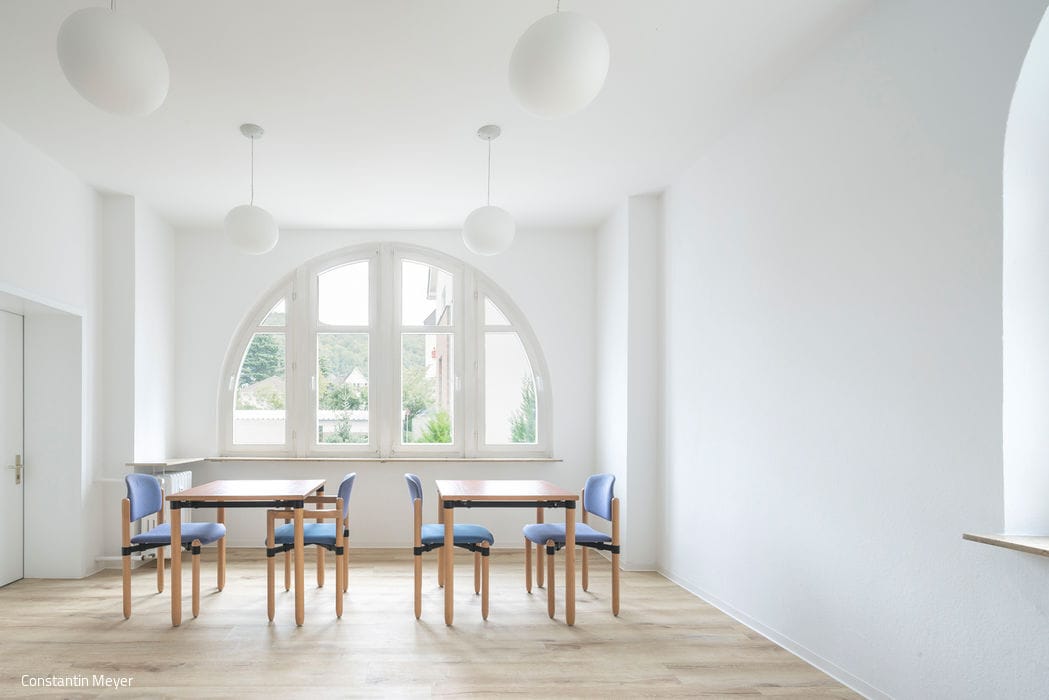
Timeless elegance
Sensitive renovation of a historic villa, preserving its original character
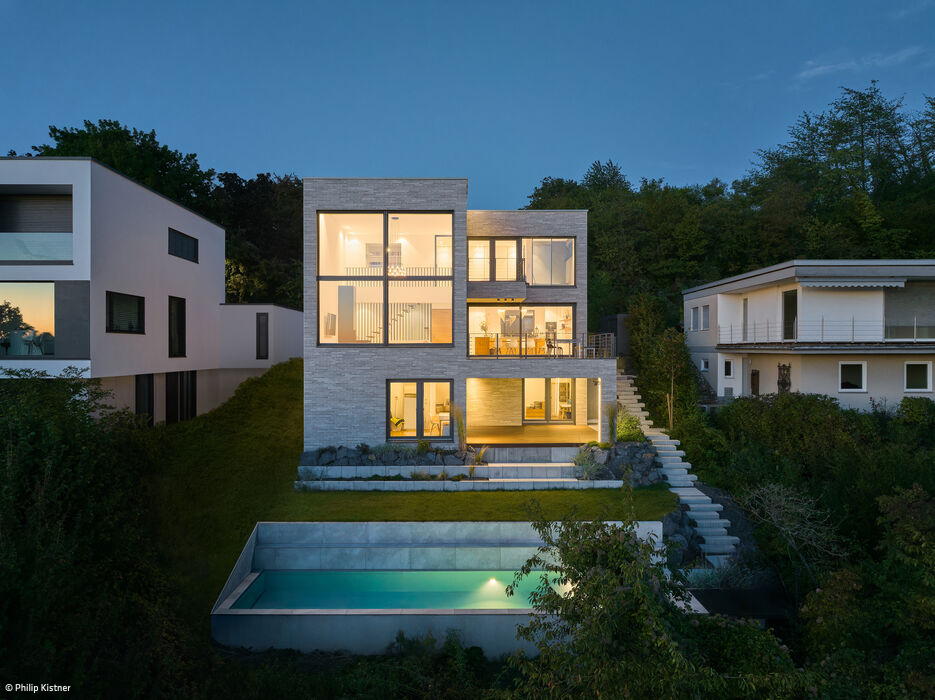
Suspended Monolith
A hillside cube that frames a spectacular valley outlook

Dynamic and Radiant
The "Club '78" at Rheinenergiestadion delivers a truly distinctive event experience.