


Perfected Beauty
A Living Testament to Timelessness
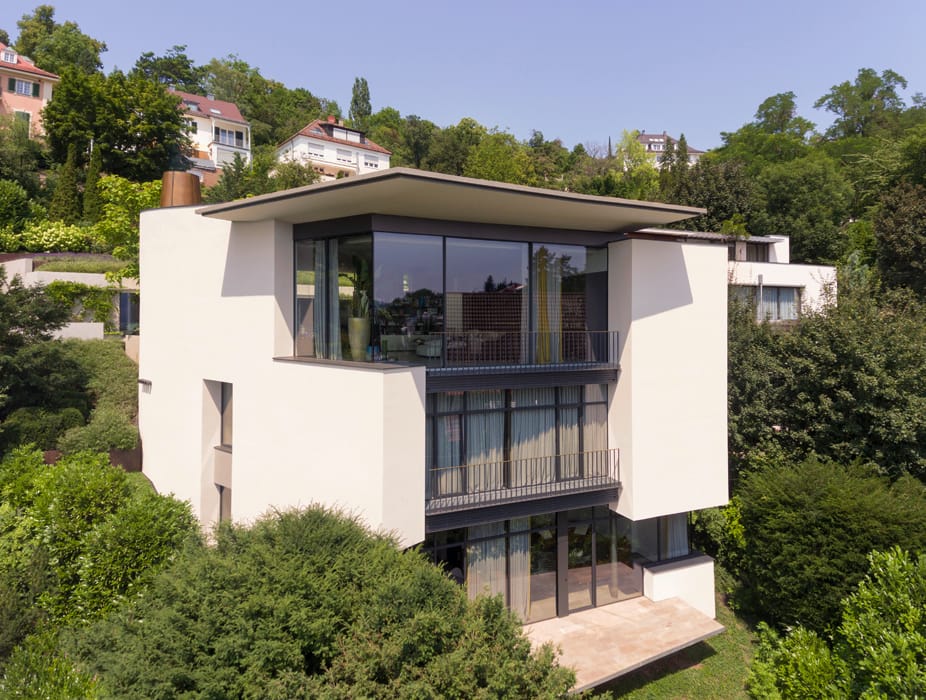
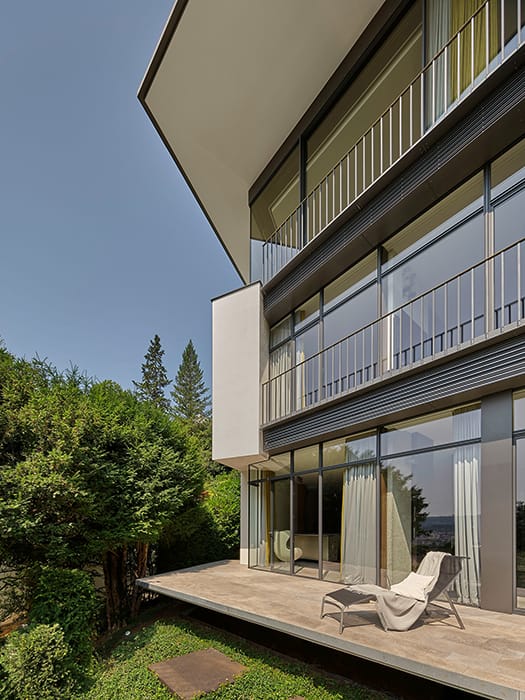
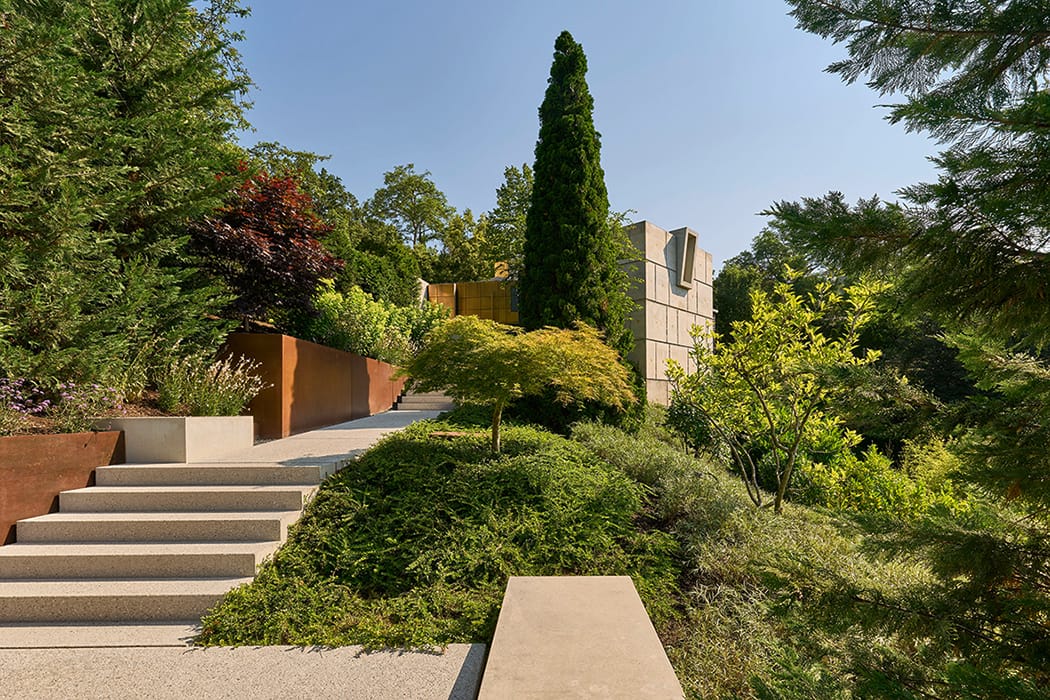
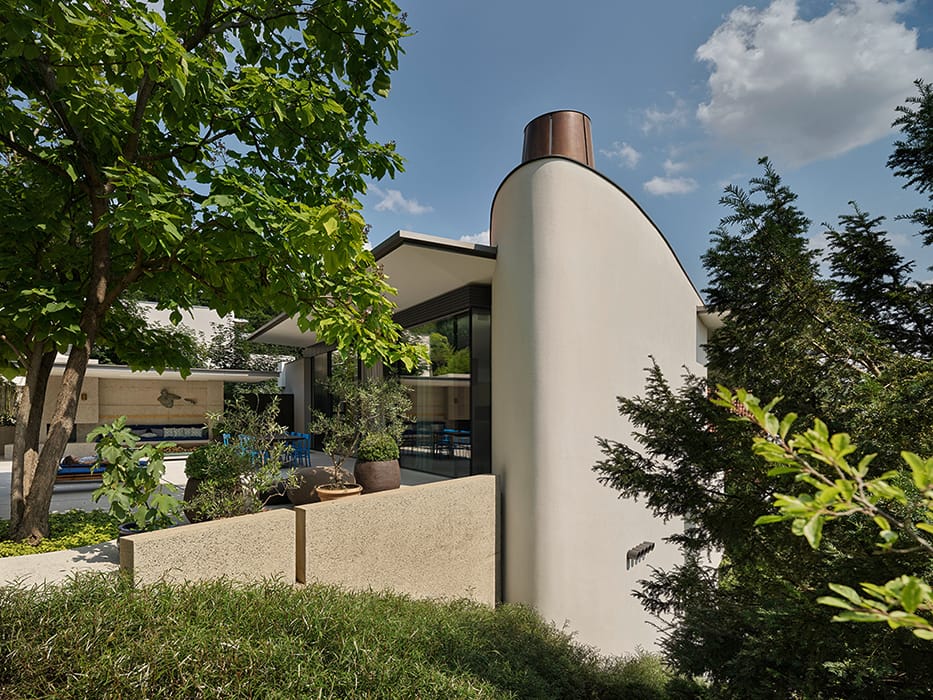
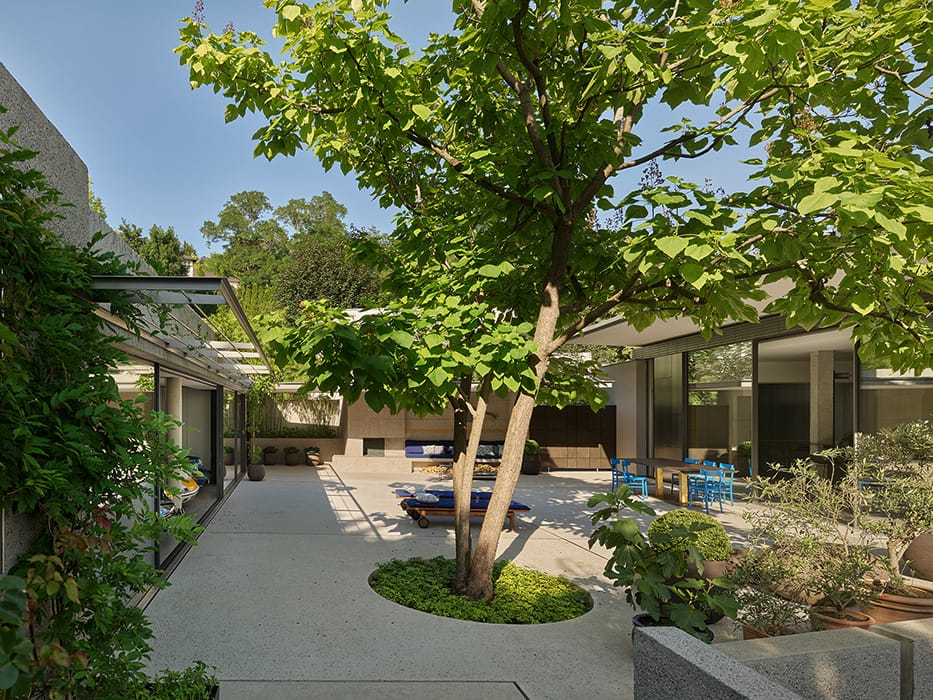
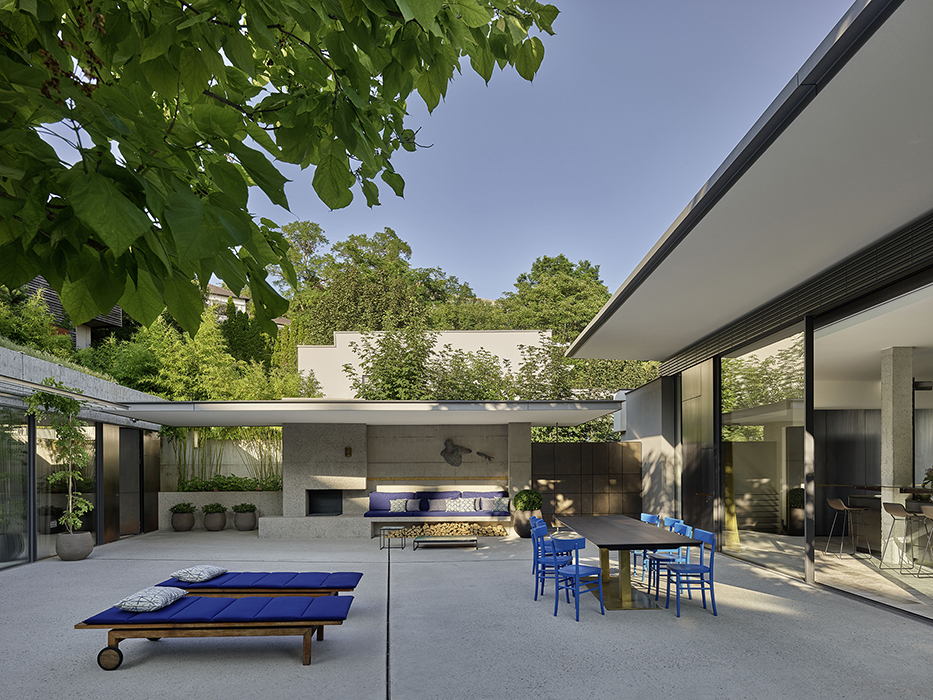
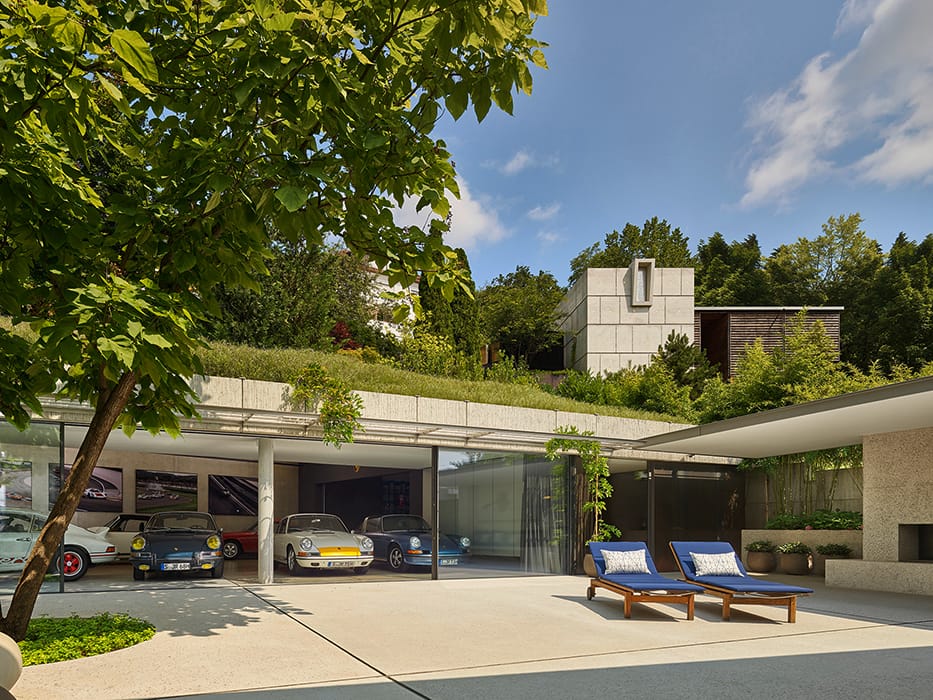
Beauty, perfection, and sensory delight – the very qualities that make historic Porsches captivating to the owner of Rudolph House in Stuttgart also define Alexander Brenner's architectural vision. It's hardly surprising, then, that this passionate car collector and one of today's most acclaimed architects have joined forces once more. The result? A timeless masterpiece where living is effortlessly elegant.
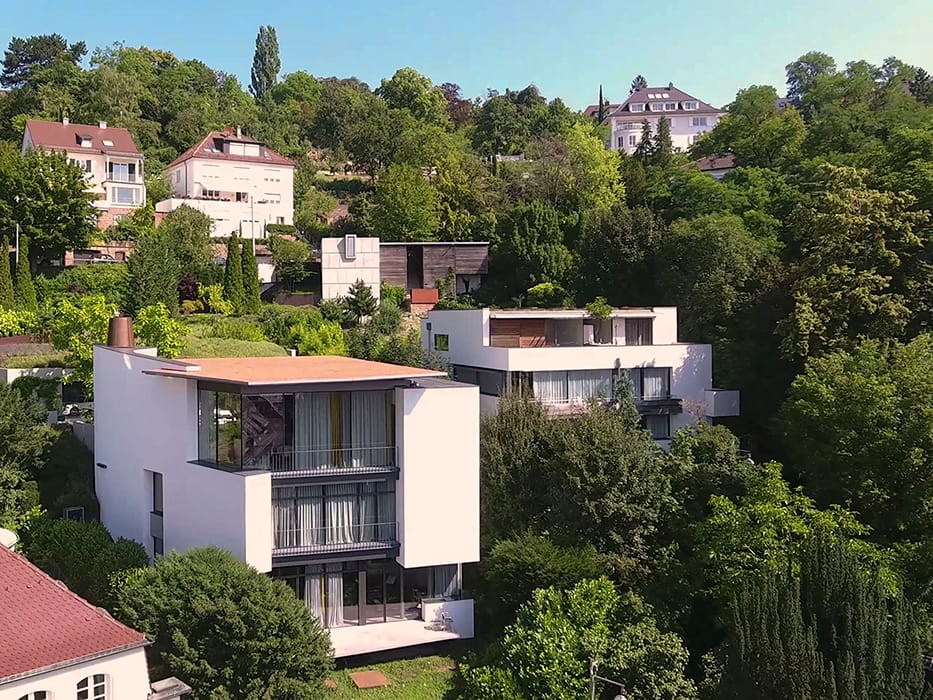
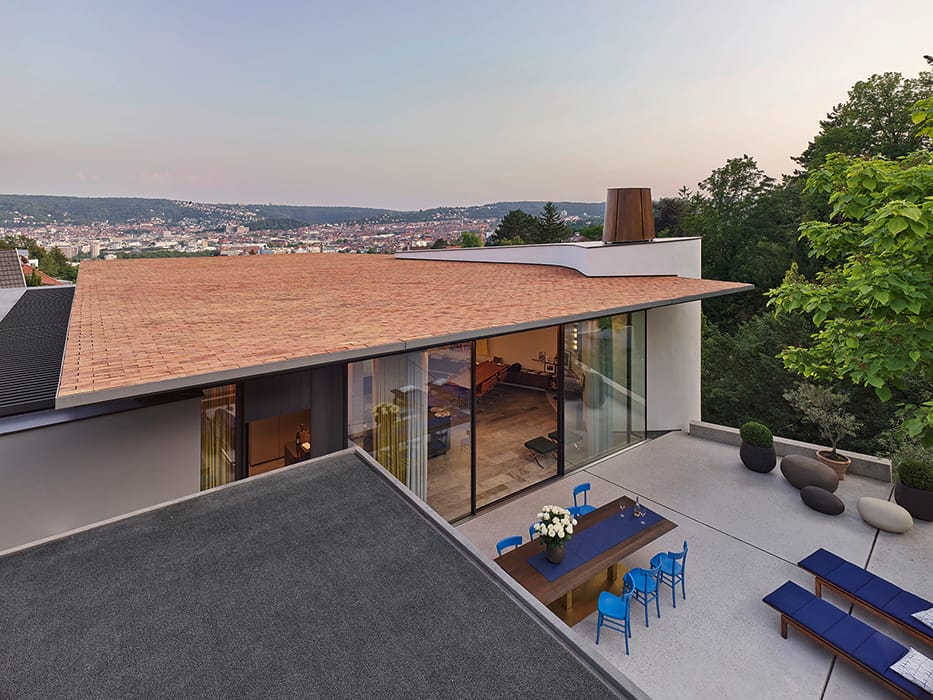
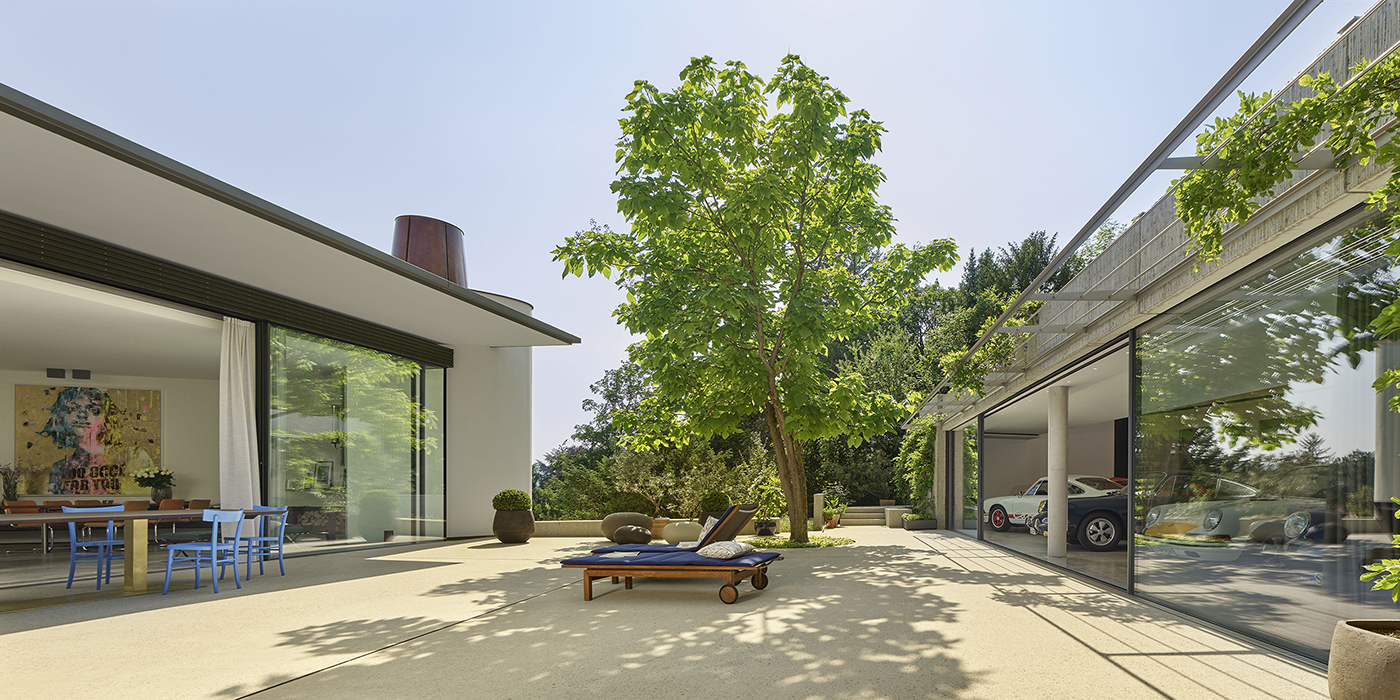
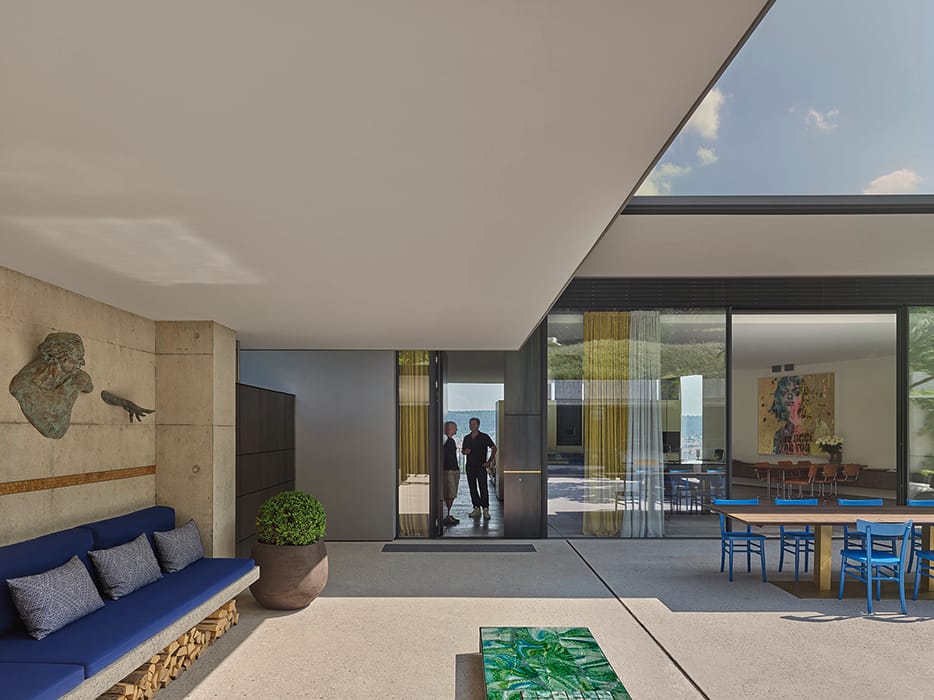
From this significant Stuttgart panoramic route, two Brenner creations come into view: the Robo House on the left, completed in 1997 for the same client, and the new Rudolph House on the right. Then as now, Brenner has prioritized the roof – after all, it's the first element passersby encounter. The tile-clad roof of the new building pays homage to its owner's love of Capri and reveals not a single utilitarian installation. "It feels serene and preserves the vista," Brenner explains. "Great architecture should offer something meaningful to everyone who experiences it." Two distinct routes lead to the residence: a monolithic exposed concrete structure at the street's end accommodates vehicular access, its grid-textured formwork and golden closure cones creating a graphic plasticity characteristic of Brenner's work. On foot, a brass gate descends to the central piazza – a tranquil haven, or lively social space, perched above the city. One edge of this outdoor room is defined by the garage's glass facade, which otherwise vanishes into the hillside beneath verdant landscaping, providing the perfect showcase for the owner's classic car collection. To the south, a loft-like living space flows directly onto the courtyard through floor-to-ceiling glazing, framing an expansive panoramic view of Stuttgart beyond.
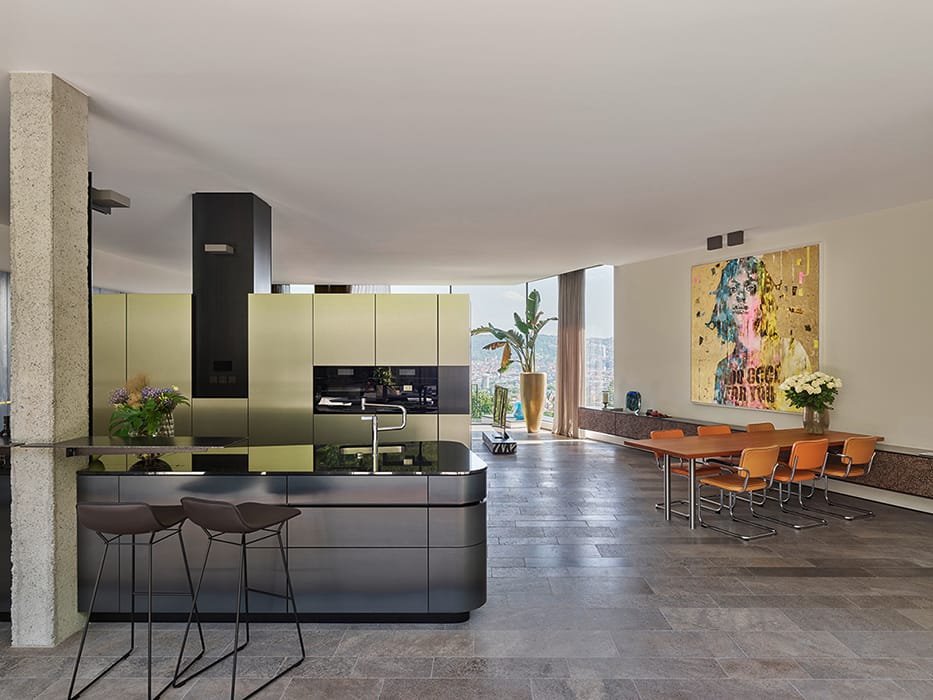
Brenner's holistic philosophy – honoring both thoughtful design and meticulous craftsmanship – permeates every corner of the villa. Form, surface, space, body, and materials achieve perfect unity: "We aspire daily to design and execute with equal care." For Brenner, good design is inseparable from function. A striking example: the central cubic volume that divides the generous living area, serving as both kitchen backdrop and library wall. Yet Brenner himself recognizes a subtle evolution in this latest work – toward a more gracious, life-affirming architecture. The gently curved kitchen island exemplifies this shift, encouraging fluid movement around its perimeter. Crafted from raw steel, like the long utility wall behind it, it reflects his commitment to substantial, time-honored materials that age beautifully. Mass-produced industrial products have no place here – visible or hidden. Exterior walls achieve optimal energy performance through thoughtful dimensioning; the building envelope is designed to eliminate the need for synthetic insulation. Private bedrooms and bathrooms occupy the floor below, while an open studio space one level deeper serves as workspace, retreat, or guest quarters.
For Alexander Brenner, architecture and art are inseparable. Yet: "A single nuance can be the difference between something transcendent and something forgettable." This conviction drives his meticulous attention to detail. He's choreographed both the illuminated gallery wall for a monumental painting in the living area and the sculptural placement of an outdoor artwork on the piazza. Beneath the delicately cantilevered roof of the exterior fireplace, a work hovers above golden Italian marble – a tribute to architect Carlo Alberto Scarpa. Striking are the vivid blue wooden chairs scattered across the piazza. The owner commissioned them in Italy. Does this perfectionist see them as a jarring element? "Yes, but I welcome it," he smiles. "We needn't always defer to expensive design icons." Ultimately, it is the calibrated interplay of every element that achieves perfect beauty. Not unlike a Porsche.
Photography Credits:
Zooey Braun
www.zooeybraun.de
(Published in CUBE Stuttgart 04|22)
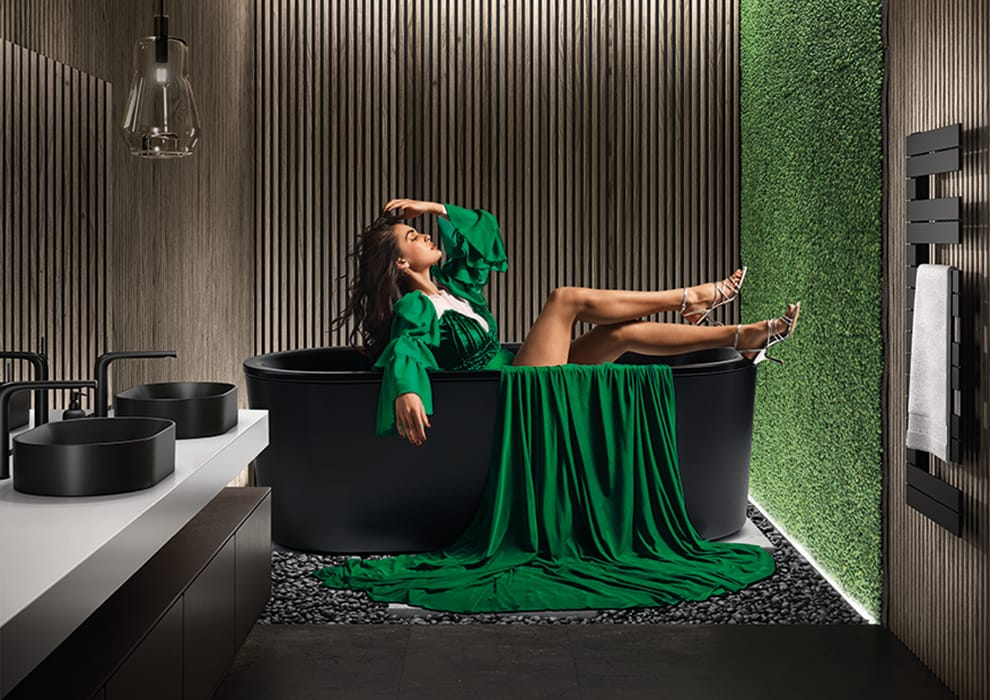
Express your individual style
Your Bathroom, Not Just a Bathroom—REISSER AG's New Campaign
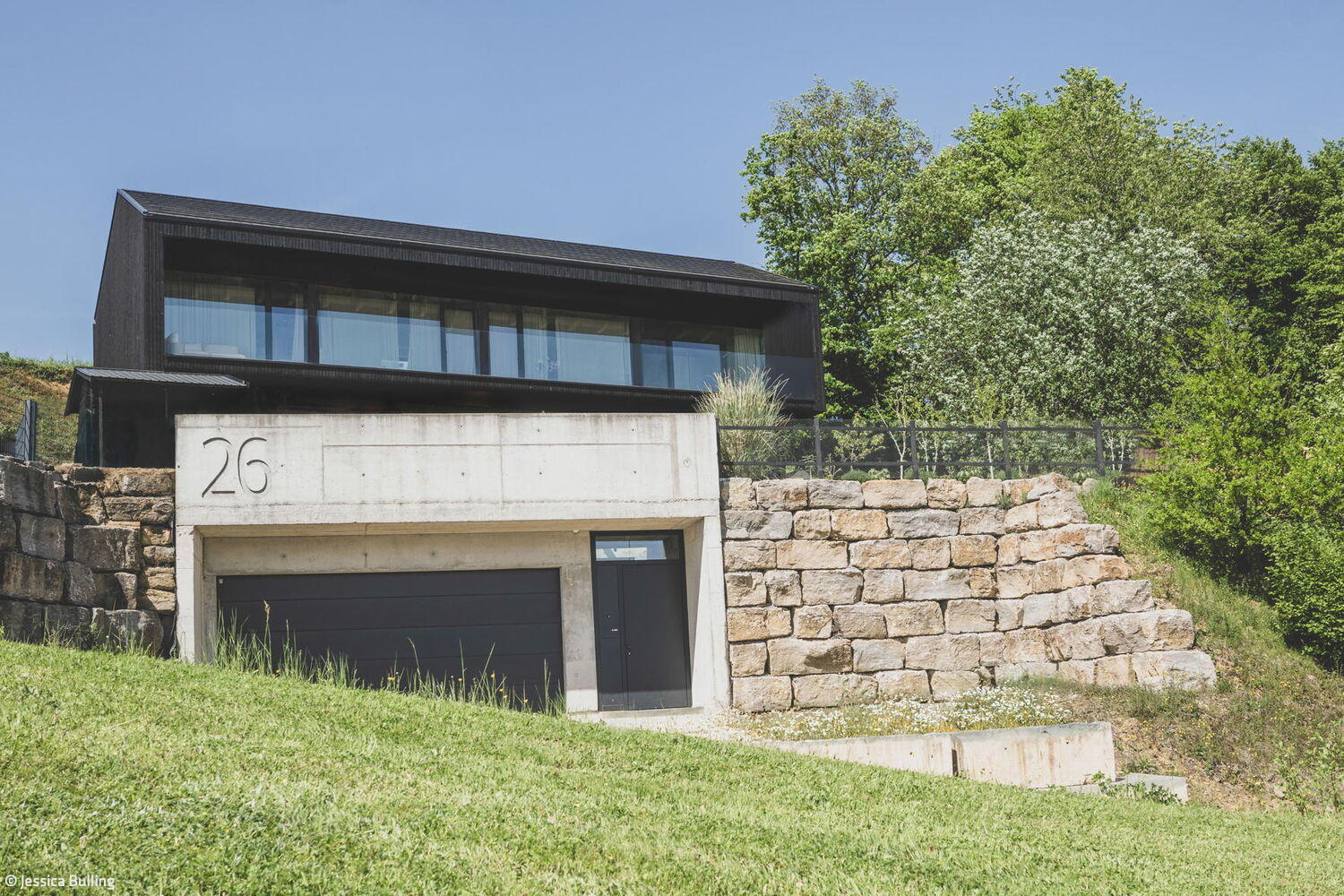
Playing with Black and White
A steep site shaped by thoughtful design—where clarity meets the landscape
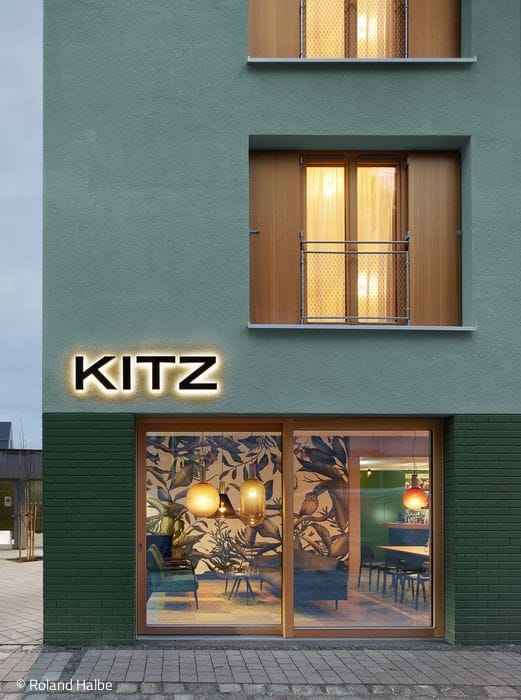
Large Residential Community
A distinctive new hotel in Metzingen explores forest and fawn as its central design narrative.
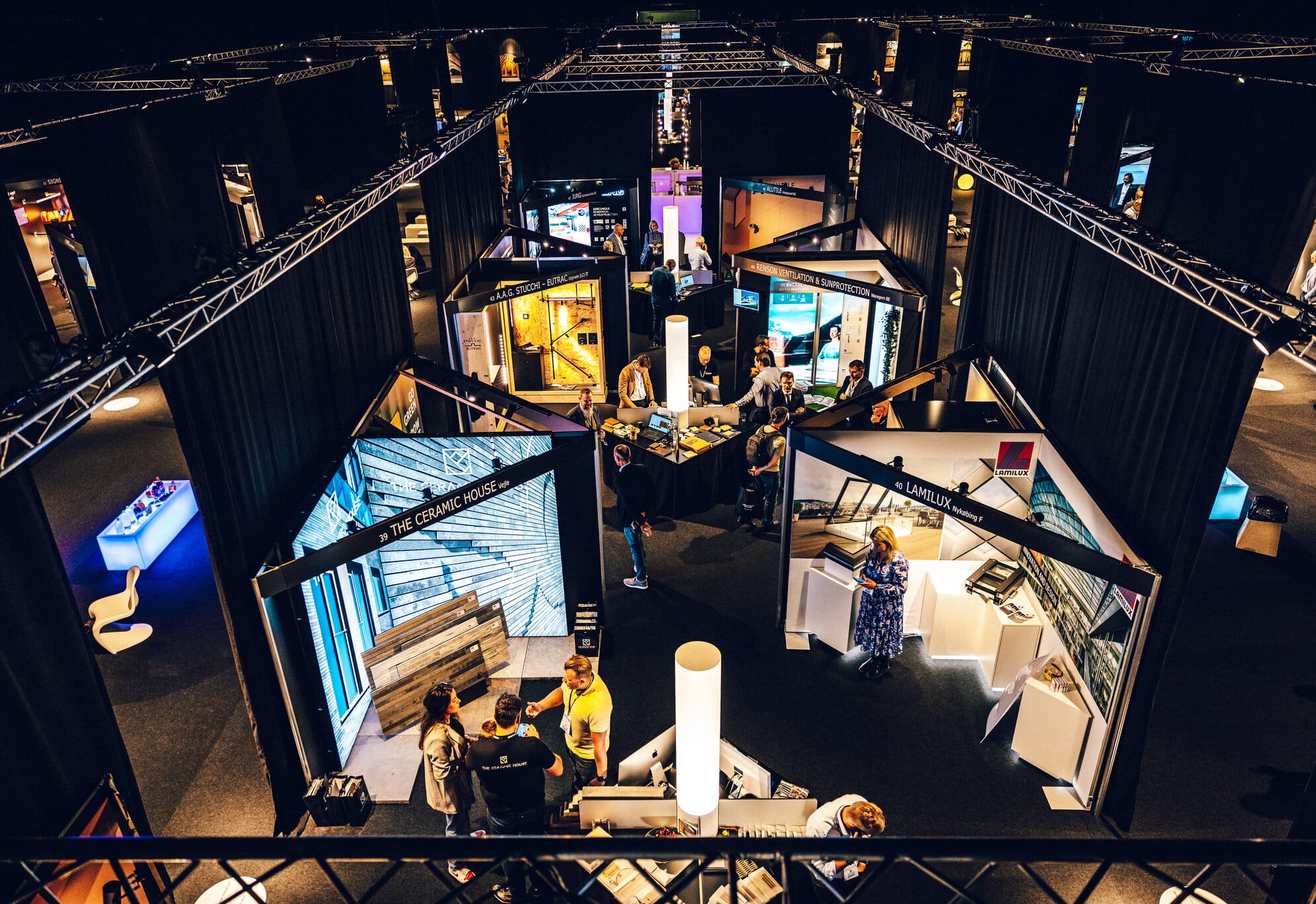
Stuttgart's premier architecture showcase
Mark your calendar: October 25th & 26th