


Experience and Enjoyment
A thoughtfully redesigned staff canteen that invites you to stay
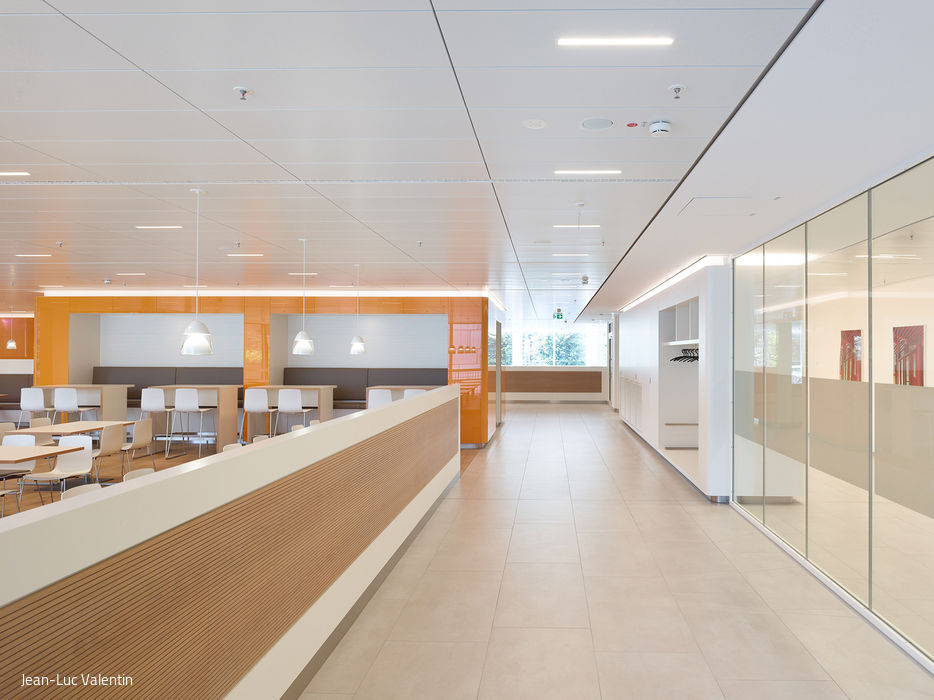
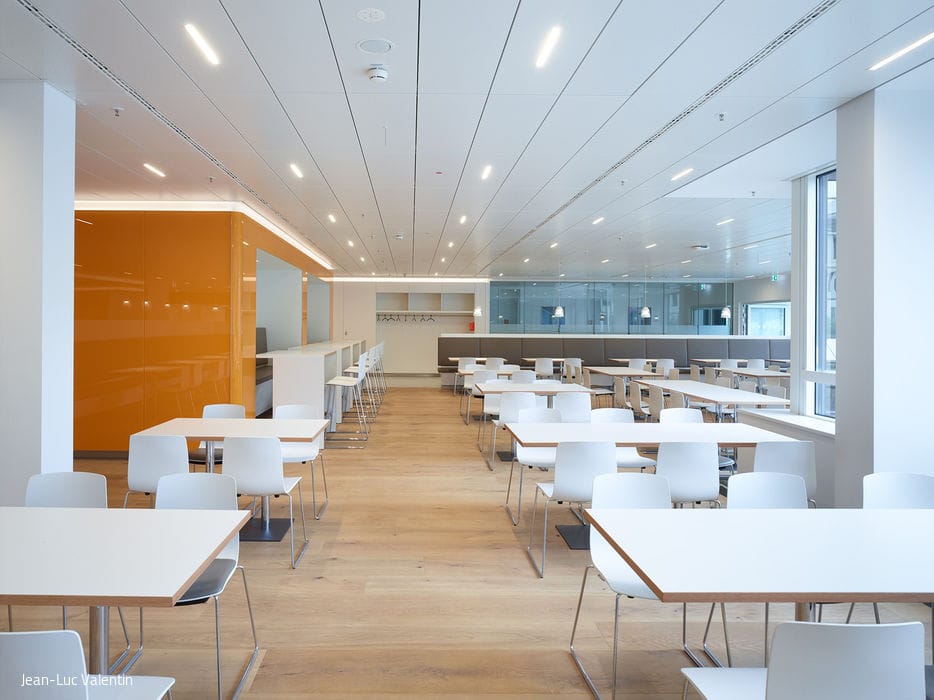
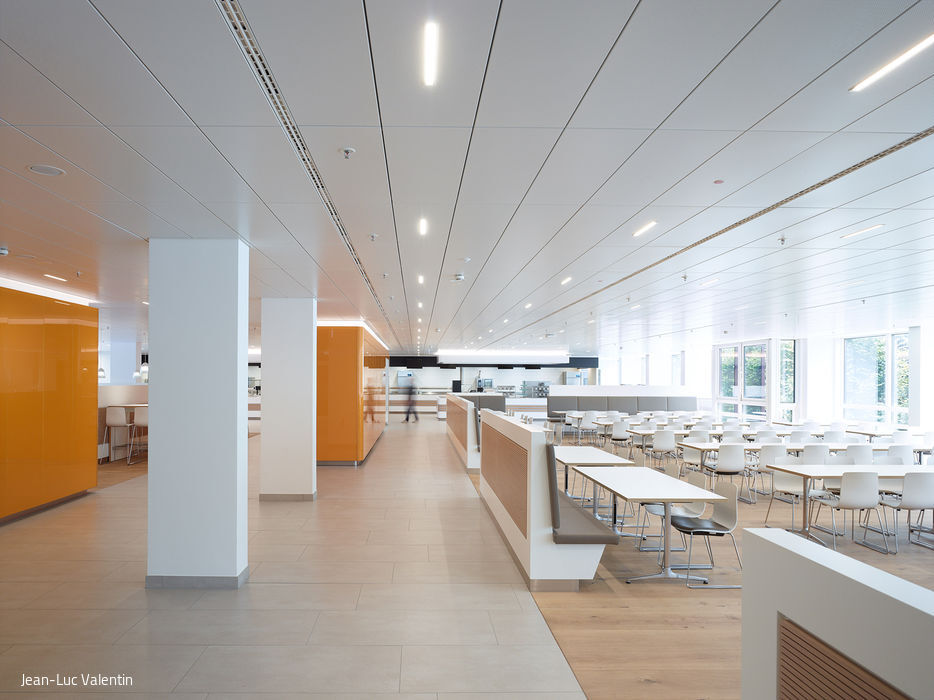
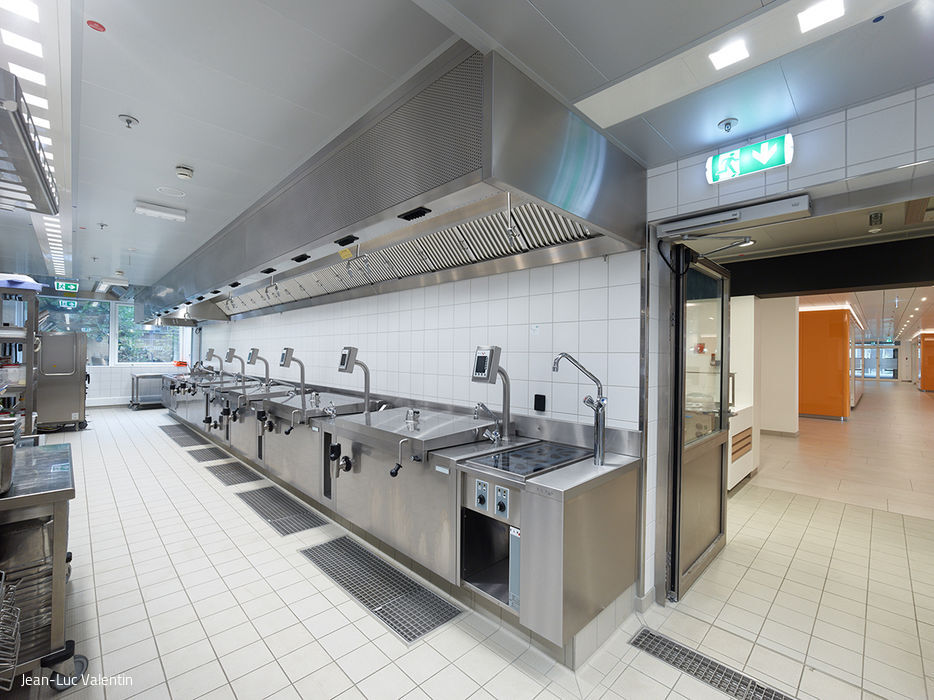
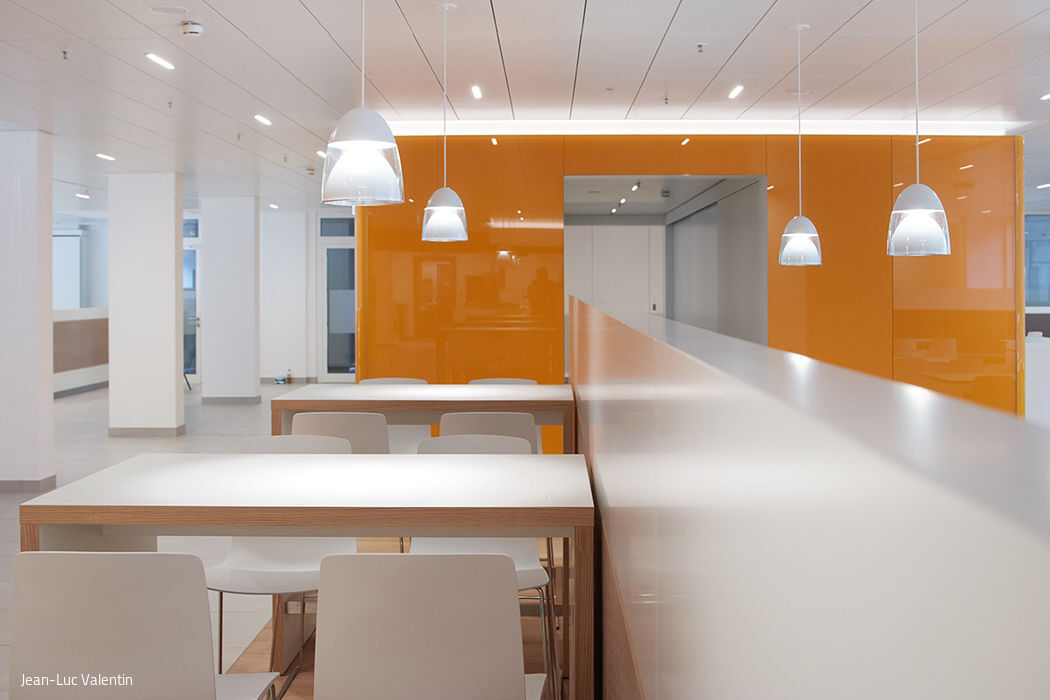
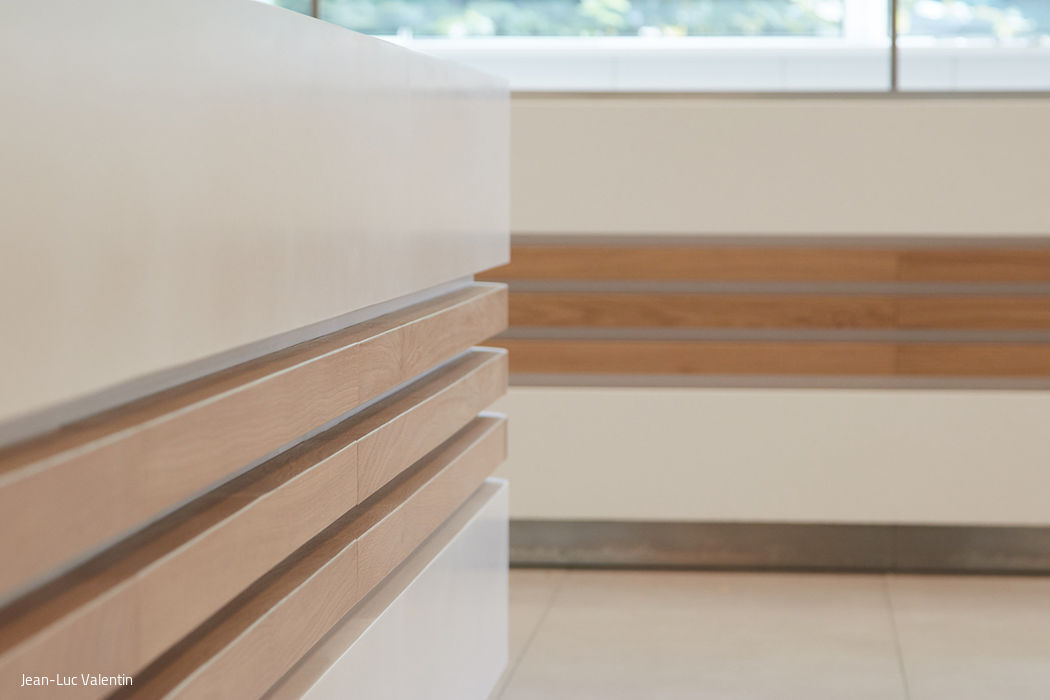
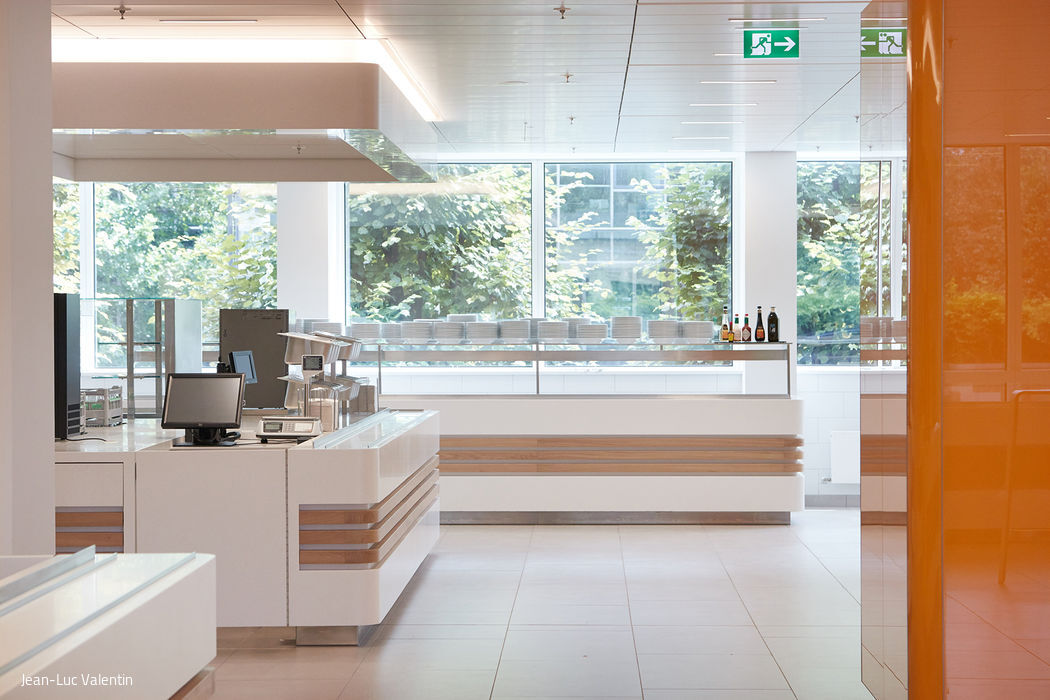
Well-being was central to architects Theiss's vision when redesigning the DZ Bank canteen. The design team successfully balanced multiple objectives in a single space. The design and material concept creates a bright, welcoming atmosphere—enhanced by warm, residential materials in the dining area—while maintaining the functional demands of the food service zone. Rather than isolating different functional areas, the designers orchestrated the flow of movement to preserve the canteen's coherence, allowing visitors to experience distinct spatial perspectives throughout. This was achieved by carefully reorganizing how people move through each functional area.
A central corridor—the spine of the layout—guides visitors from the main entrance past the serving islands and front cooking station, creating a natural flow. Trays are available at the start of the service route, where digital displays showcase the day's offerings. Guests collect their main course at the counter, then move along the service islands to select sides, salads, desserts, and beverages. "We developed a unified design language for both the dining and service areas," explains Alexander Theiss. "Our approach centers on a restrained material palette whose quality emerges through carefully considered accents." A central axis divides the seating area into northern and southern sections, each offering distinct dining experiences. The southern zone features standard-height tables aligned with the façade, while the north alternates between high-top and conventional tables. The south also accommodates a flexible event space—requested by the client—that can accommodate approximately 170 people when loose furnishings are cleared. The acoustics, lighting, media infrastructure, and climate control are all engineered to support this dual functionality.
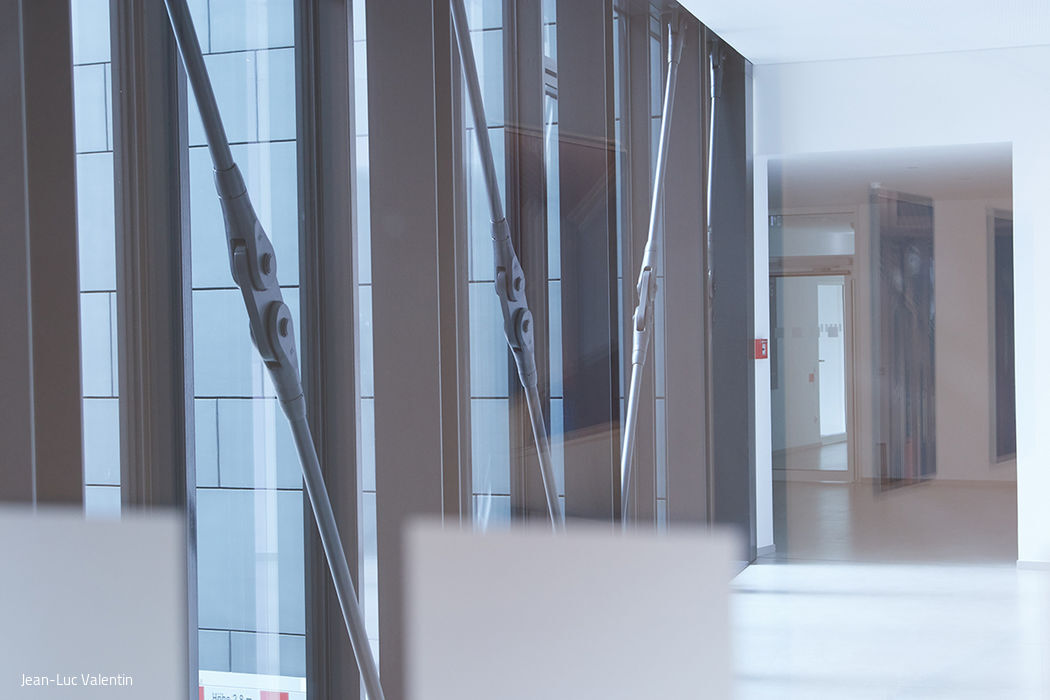
The carefully arranged seating, varied floor materials, and layered lighting define each zone, allowing guests to grasp the full spatial generosity and functional complexity the moment they enter. Floor-to-ceiling glazing amplifies this transparency, creating a visual connection that extends from the inner courtyard on Erlenstraße through to Mainzer Landstraße. The corridor wall echoes this glazing strategy: "This creates a continuous sense of openness and visual intrigue, paired with genuine warmth and comfort."
Photography Credits:
Jean-Luc Valentin
www.foto-valentin.de
(Published in CUBE Frankfurt 02|20)

Above Wiesbaden's Rooftops
Timber-frame extension creates premium living spaces
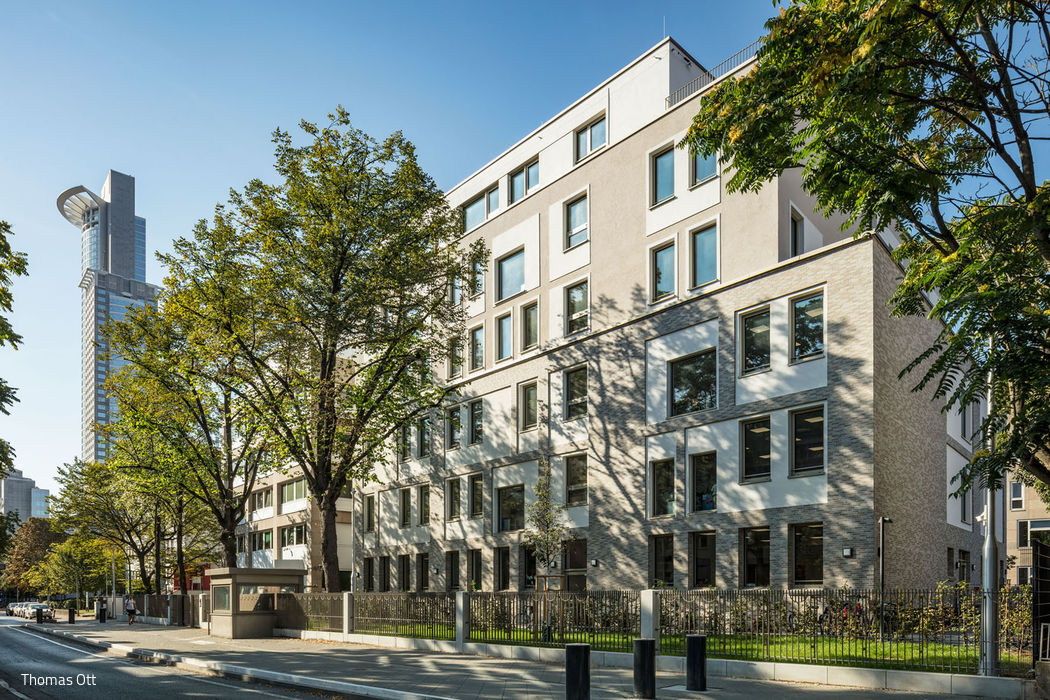
Confident and Sensitive
School Extension in Westend: Integrating Architecture with Place

Permanent Rather Than Temporary
Sample area becomes a living working environment

A Space for New Perspectives
Office Design That Unlocks Flexibility and Collaboration