


Precisely positioned
A single-family home unfolds with distinctive spatial qualities between two concrete walls, ascending the hillside
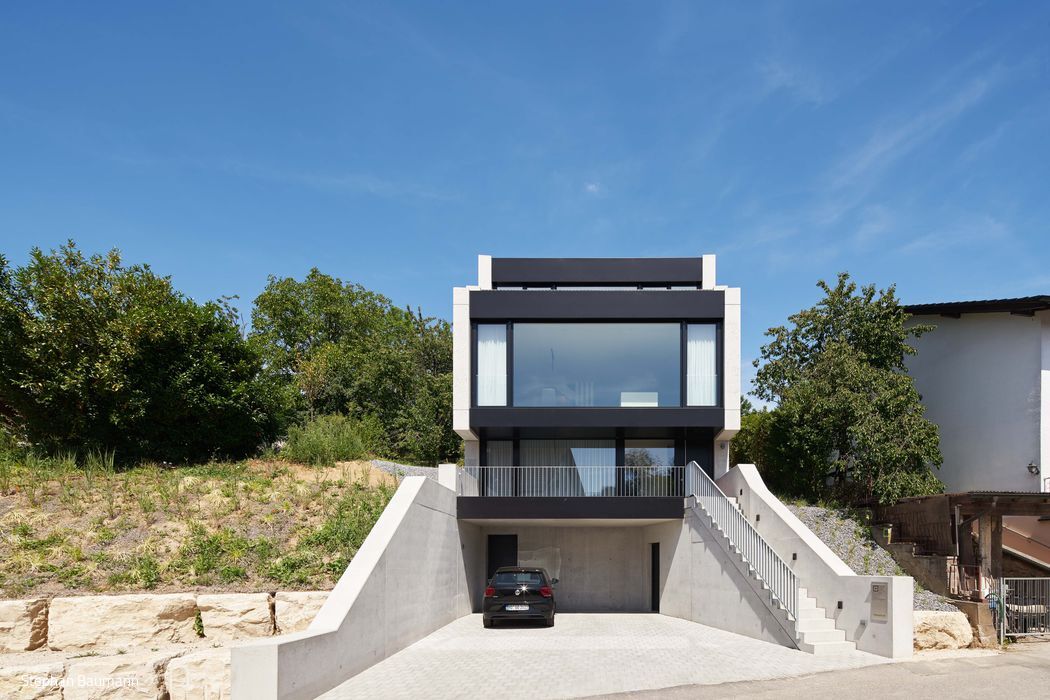
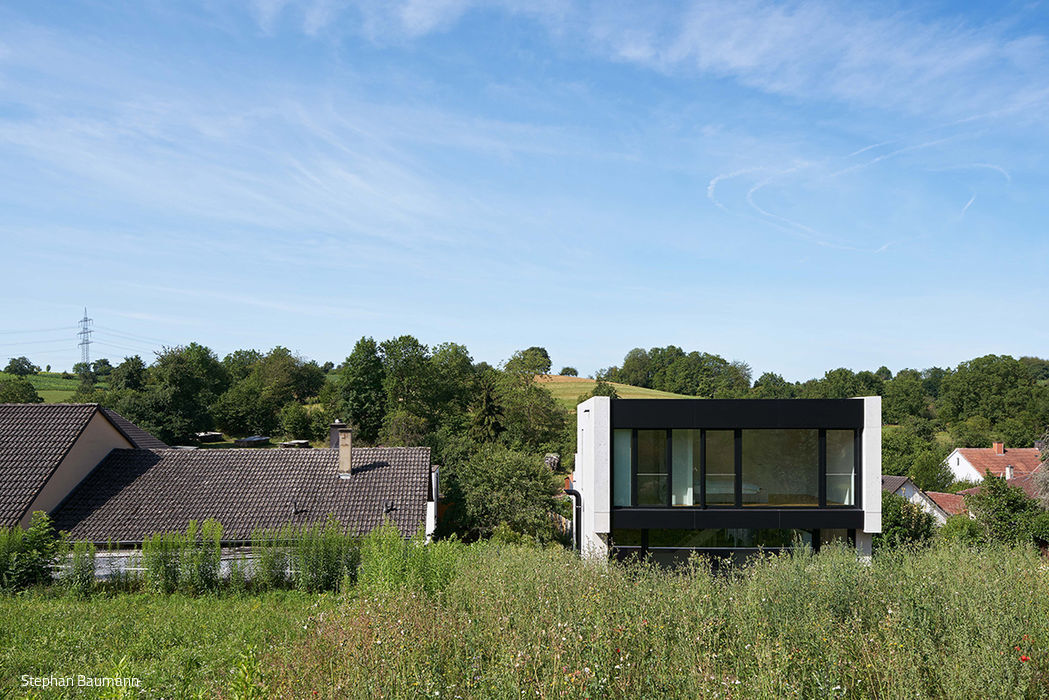
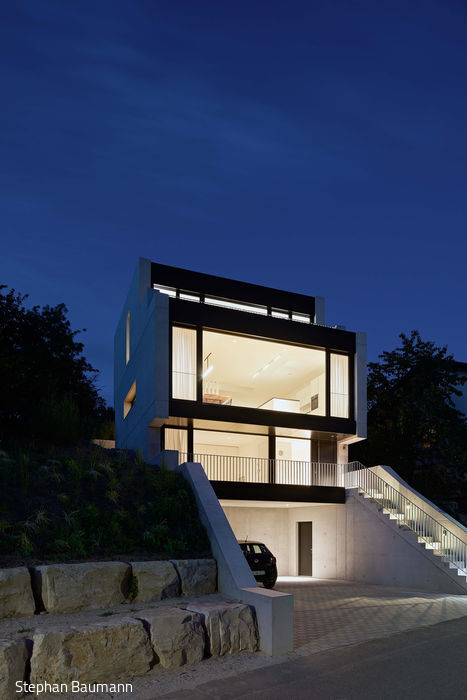
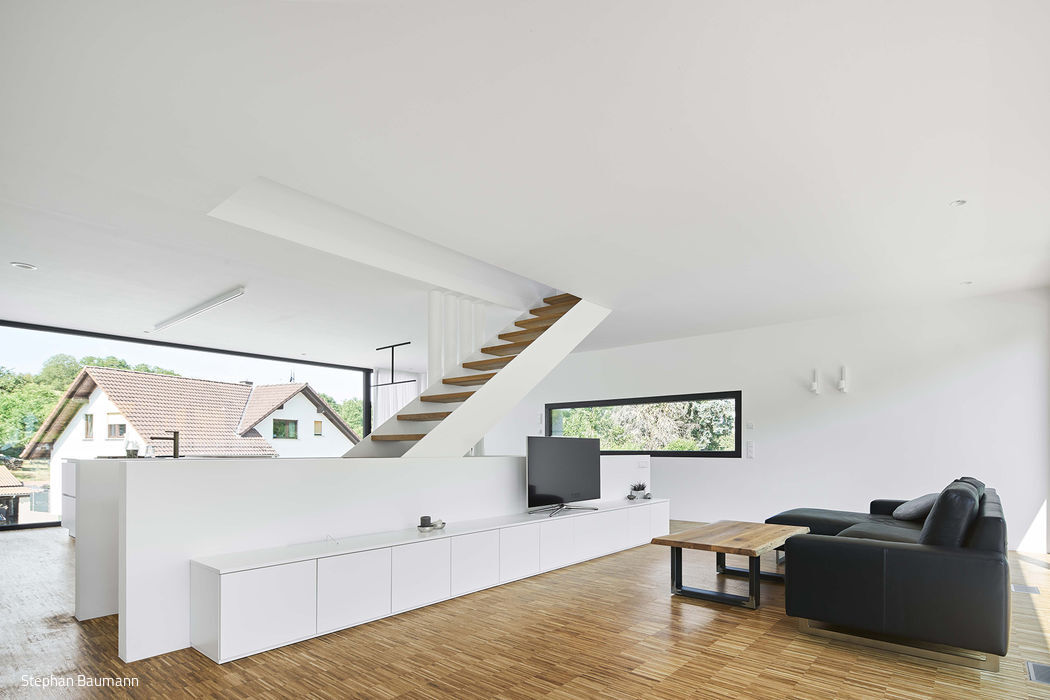
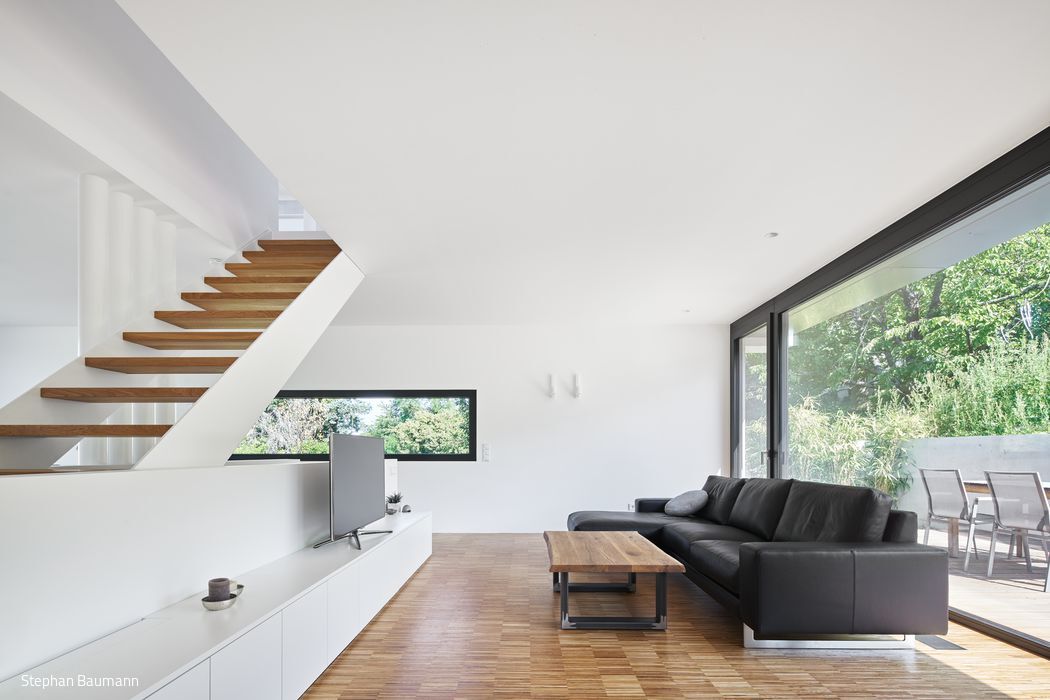
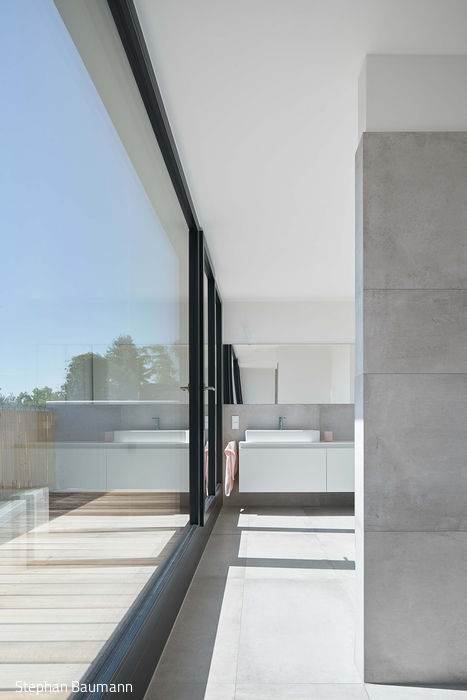
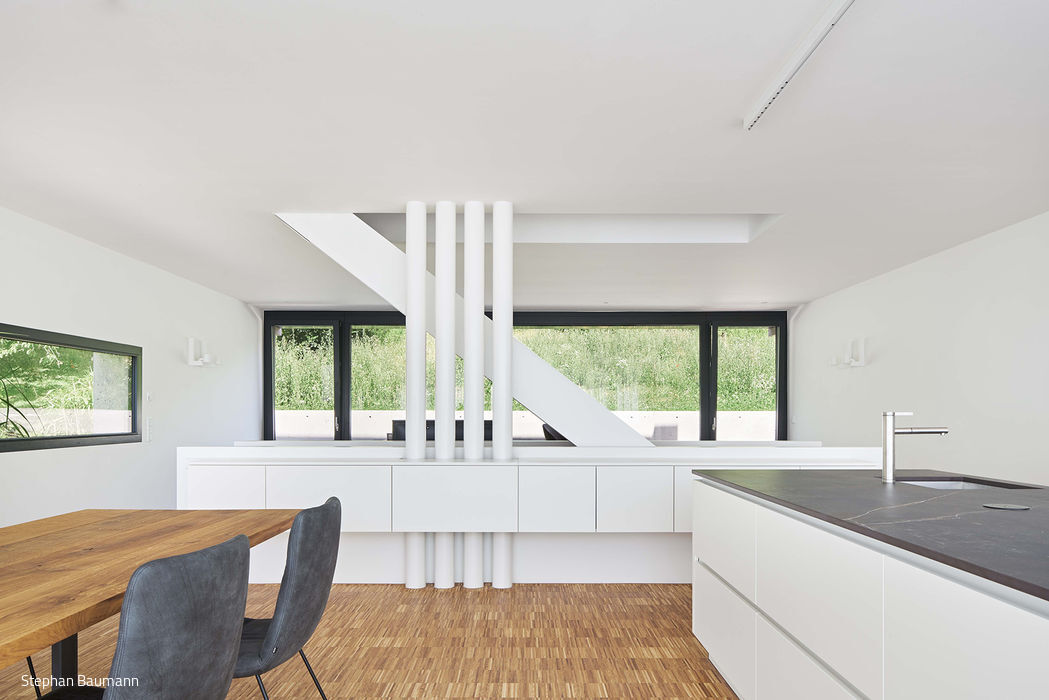
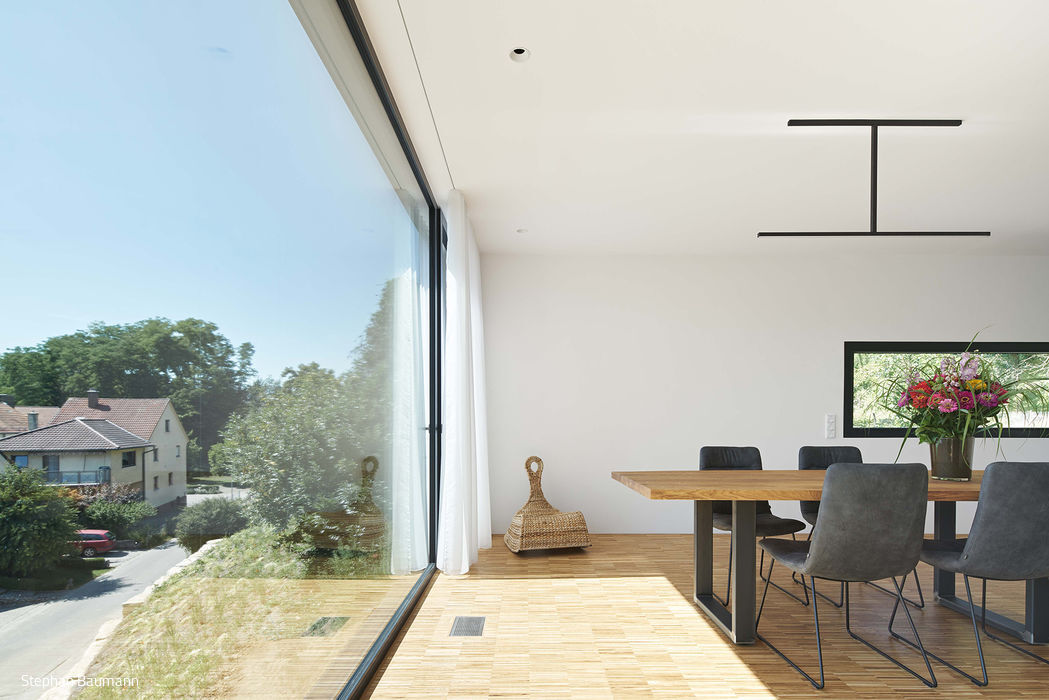
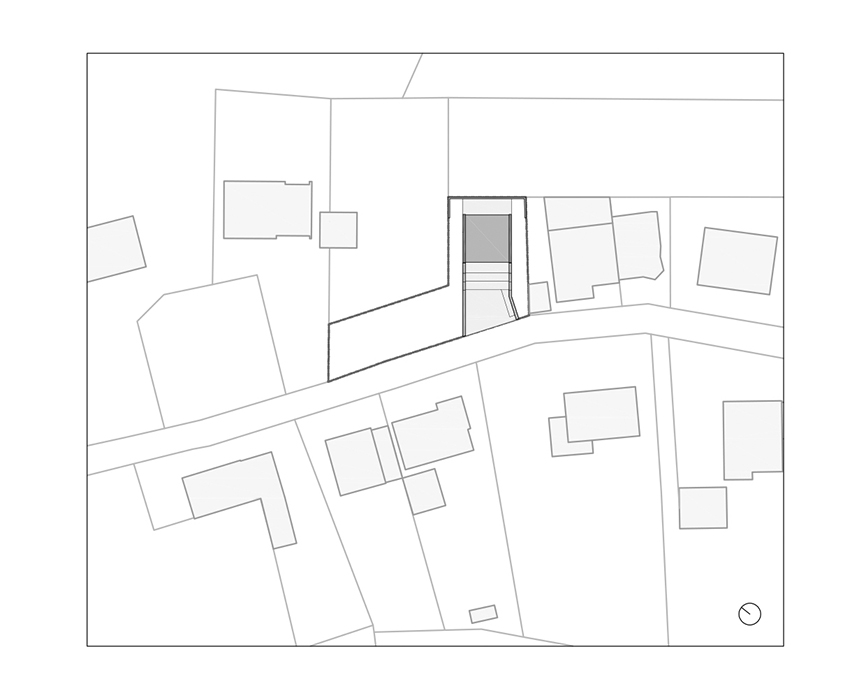
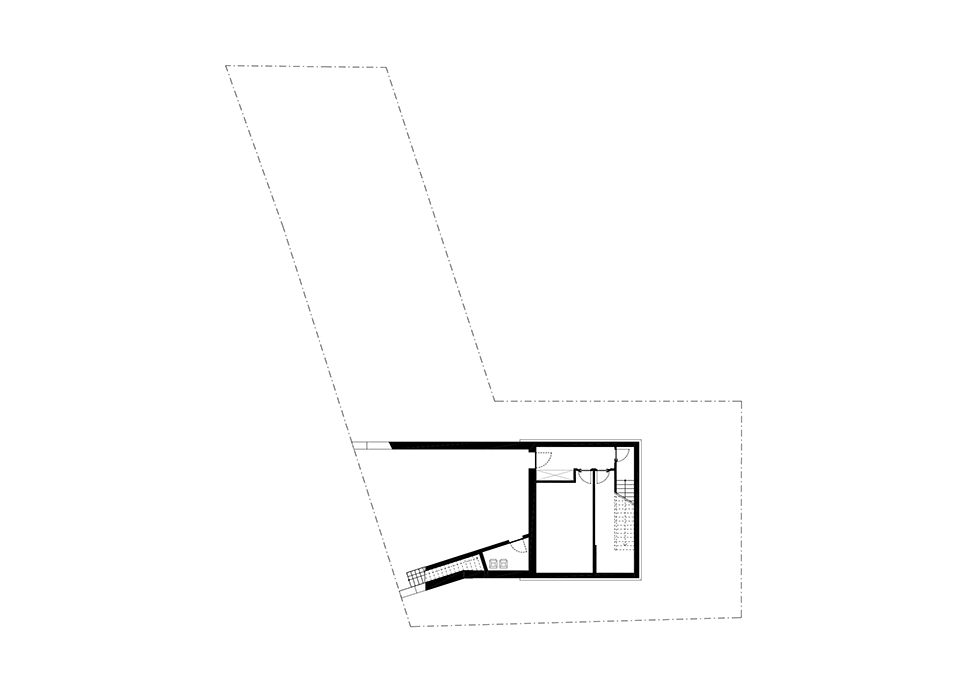
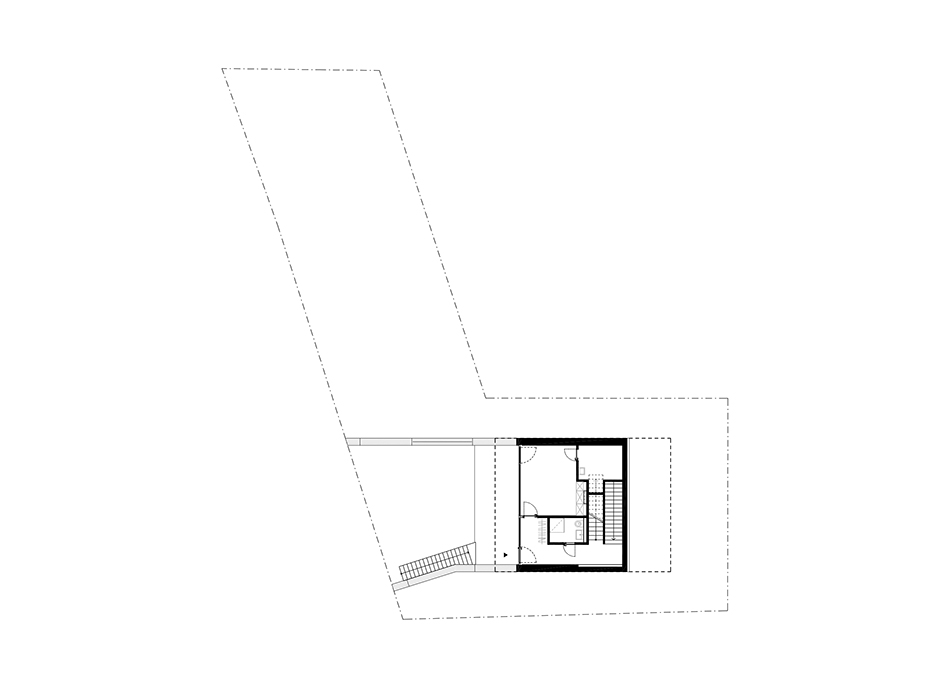
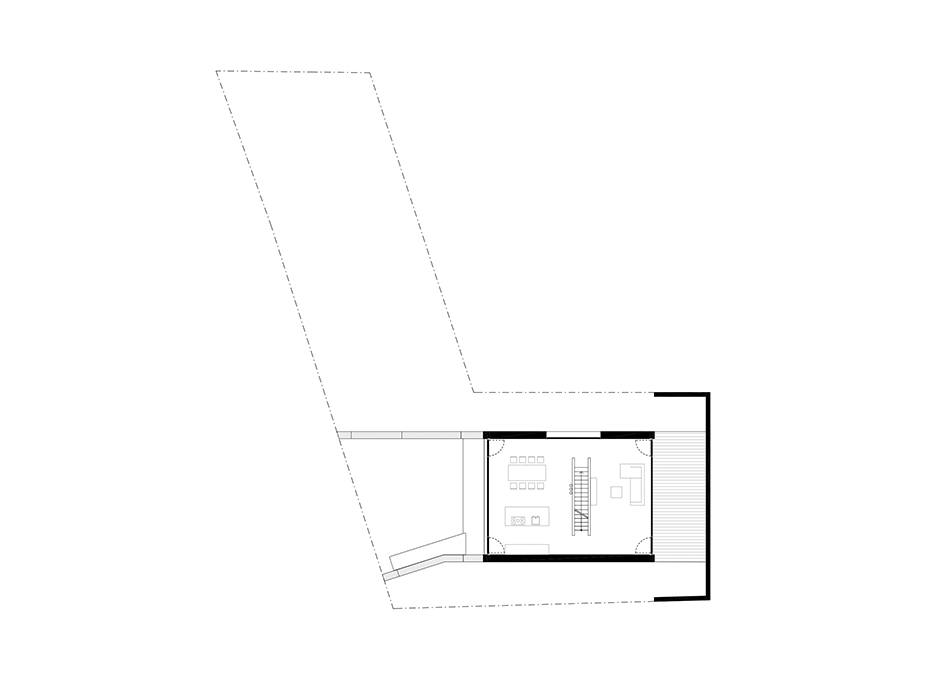
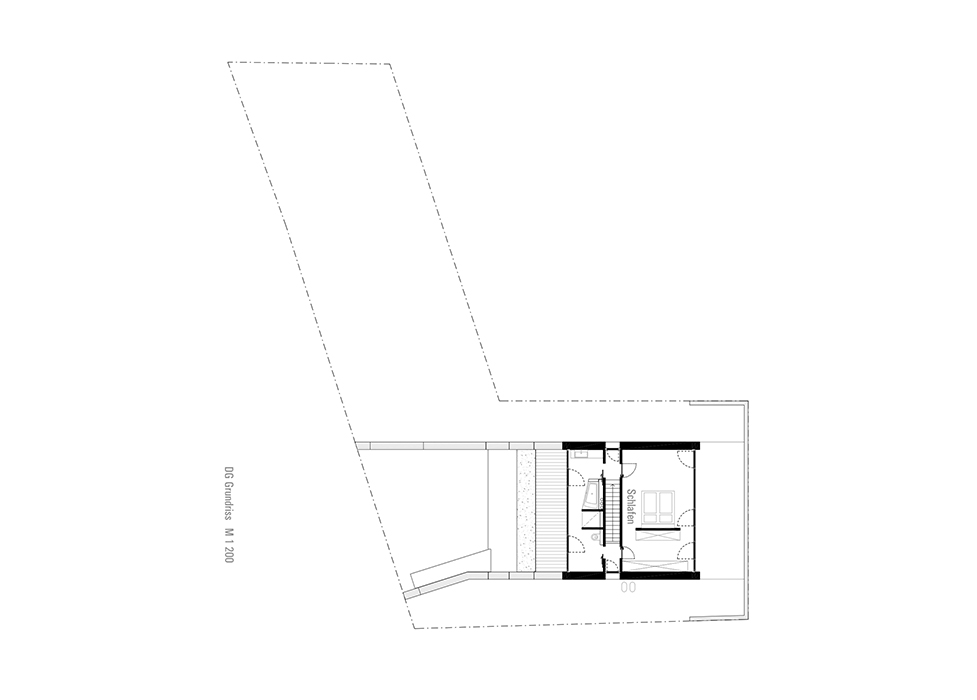
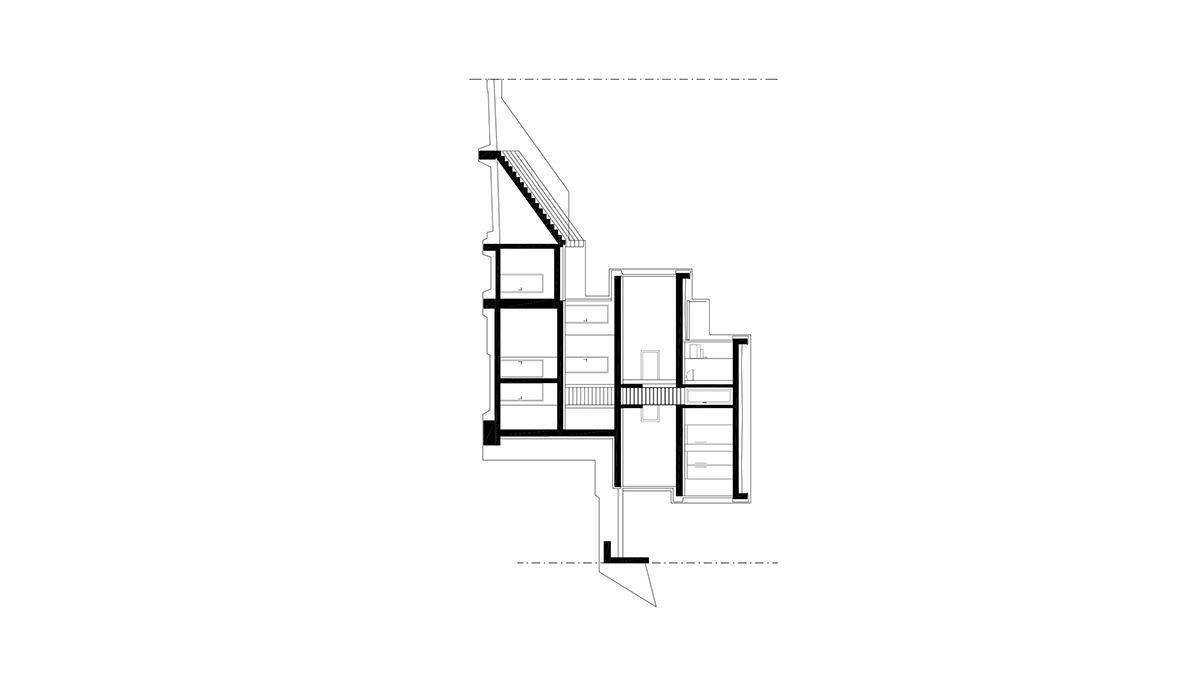
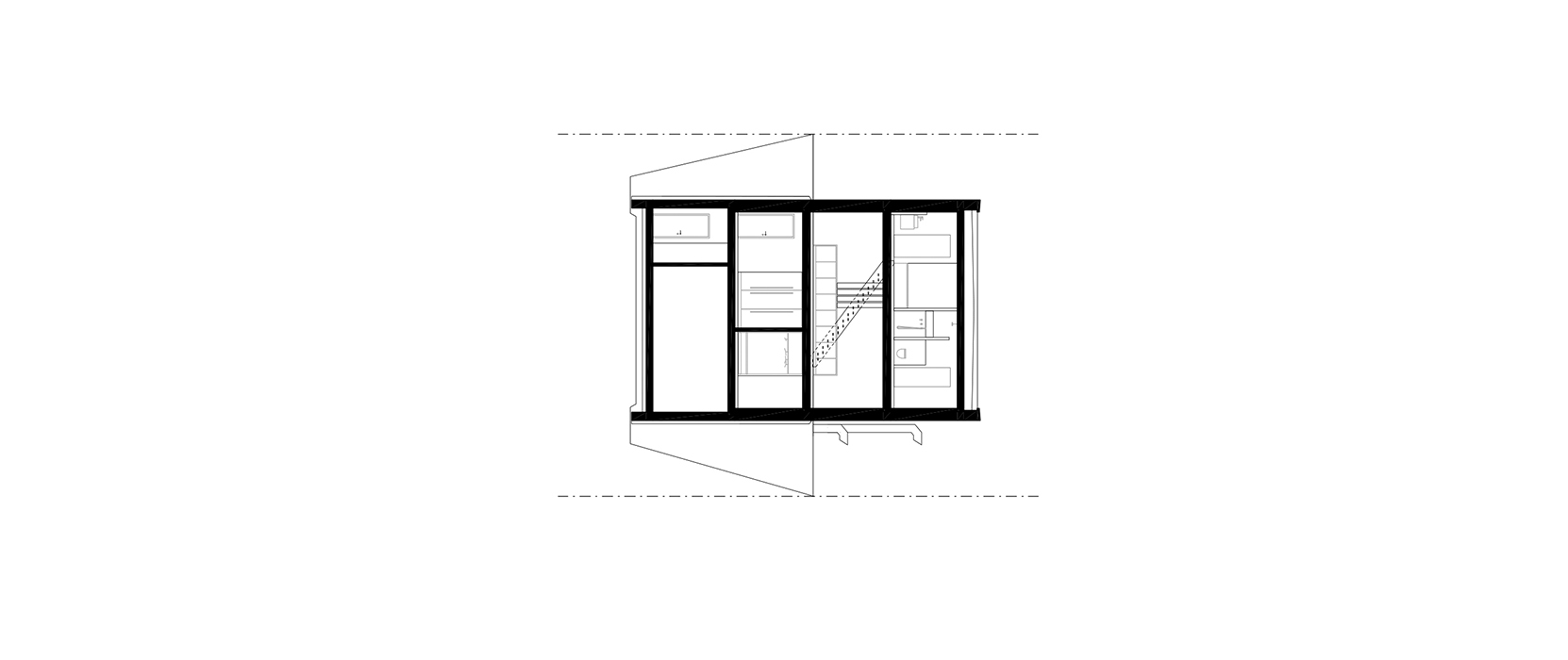
Faced with a steeply sloped plot that seemed nearly unbuildable and a desire to create a family home, the clients turned to architect Thomas Fabrinsky. The L-shaped lot, dramatic topography, tight building constraints, and a narrow public road skirting the property edge presented formidable design challenges. Rather than retreat, the planning team embraced the task, developing a compelling architectural concept that responds thoughtfully to the 503 m² site and extracts its full potential.
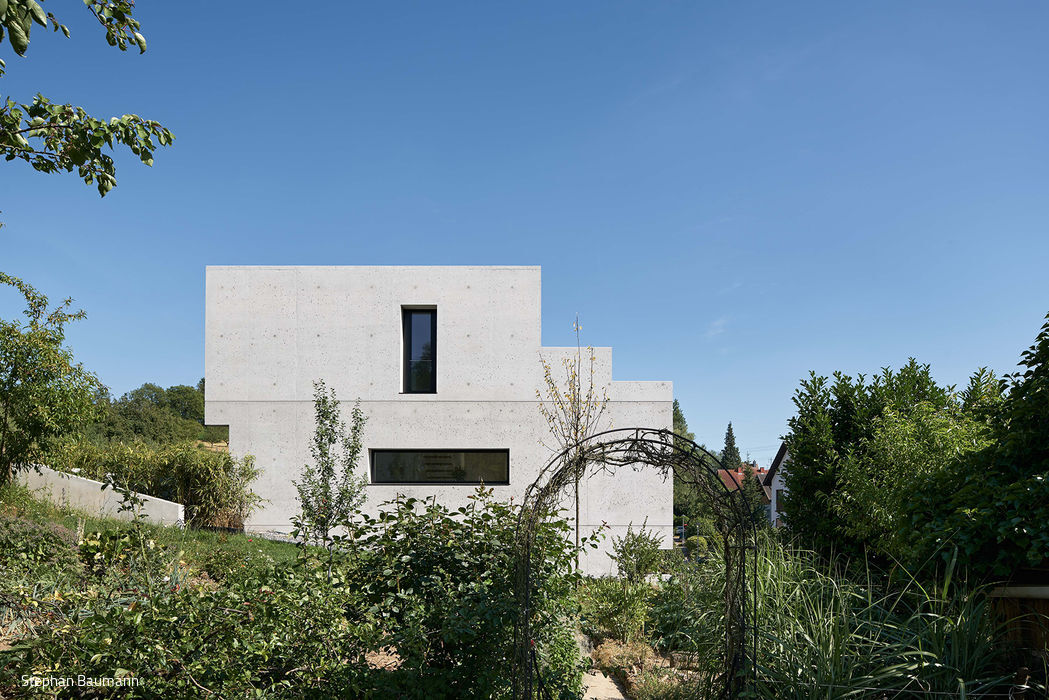
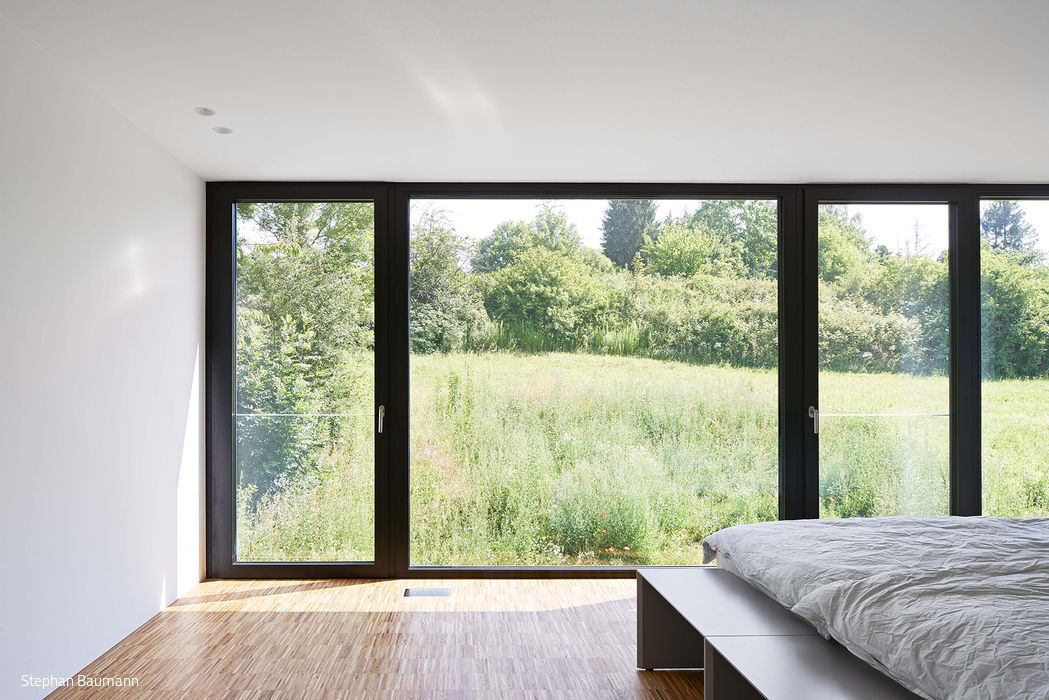
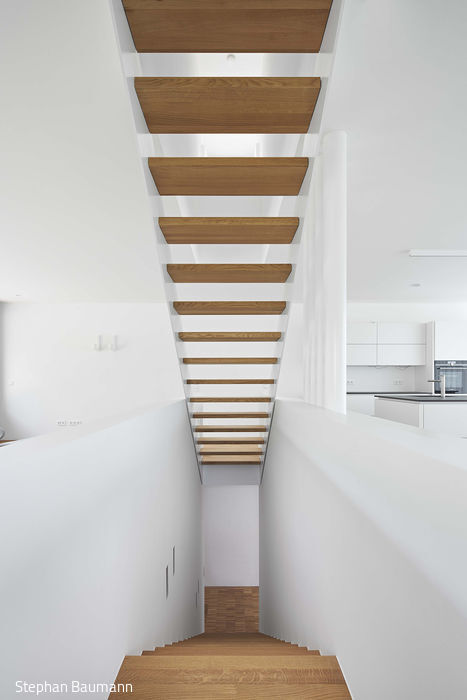
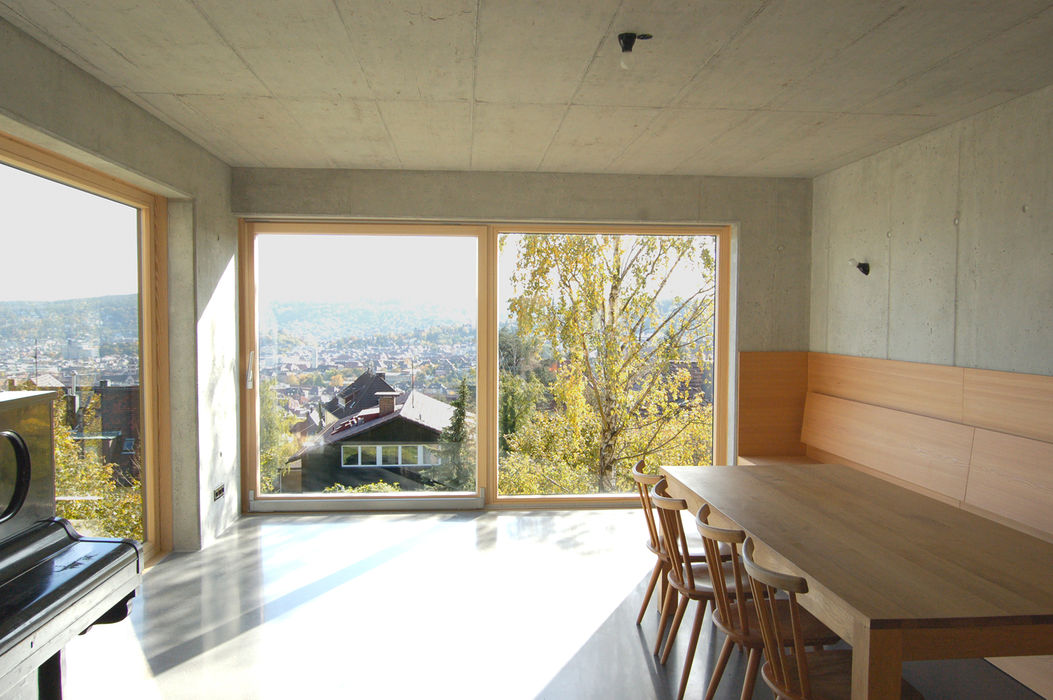
The design centers on two concrete walls that cut through the slope, framing living spaces on either side. These robust, exposed concrete planes allow the landscape to assert itself, with the grade change visibly inscribed in the architecture. The lower floors step progressively into the hillside, minimizing excavation. Service areas occupy the uphill side of the ground and first floors, while primary living spaces face the valley. At the second floor—where the kitchen, dining, and living areas converge—the structure rises above the slope, allowing passage from one side to the other with direct ground-level access on the uphill side. Here, interior walls dissolve, fully realizing the spatial concept between the two concrete slabs. A slender, transparent steel staircase bisects the space, creating rhythm and flow. An intimate terrace tucks into the uphill facade, while a panoramic window frames sweeping views toward the valley. The third floor contains a bedroom suite and private roof terrace, looking out across fields and fruit orchards. Total living area across all three floors: 159 m².
Lightweight concrete walls proved essential to realizing this vision. The material marries concrete's inherent qualities—robustness, durability, weather resistance, and tactile warmth—with critical performance requirements: thermal insulation and thermal mass, combined with structural strength and load-bearing capacity. Achieving this demanding balance demanded meticulous planning and exemplary execution by a specialized, highly trained construction team.
Living space: 159 m²
Plot size: 503 m²
Construction period: 2017–2019
Construction method: Reinforced concrete, lightweight concrete walls
Energy concept: Combined heat and power plant, air-water heat pump
Architecture: Thomas Fabrinsky
Project planning + execution: bauwerk bauunternehmung gmbh
Structural engineering: Ingenieurbüro Bruder und van den Bergh
Photography Credits:
Stephan Baumann
www.studiobaumann.com
(Published in CUBE Stuttgart 03|21)

Craftsmanship Meets Design
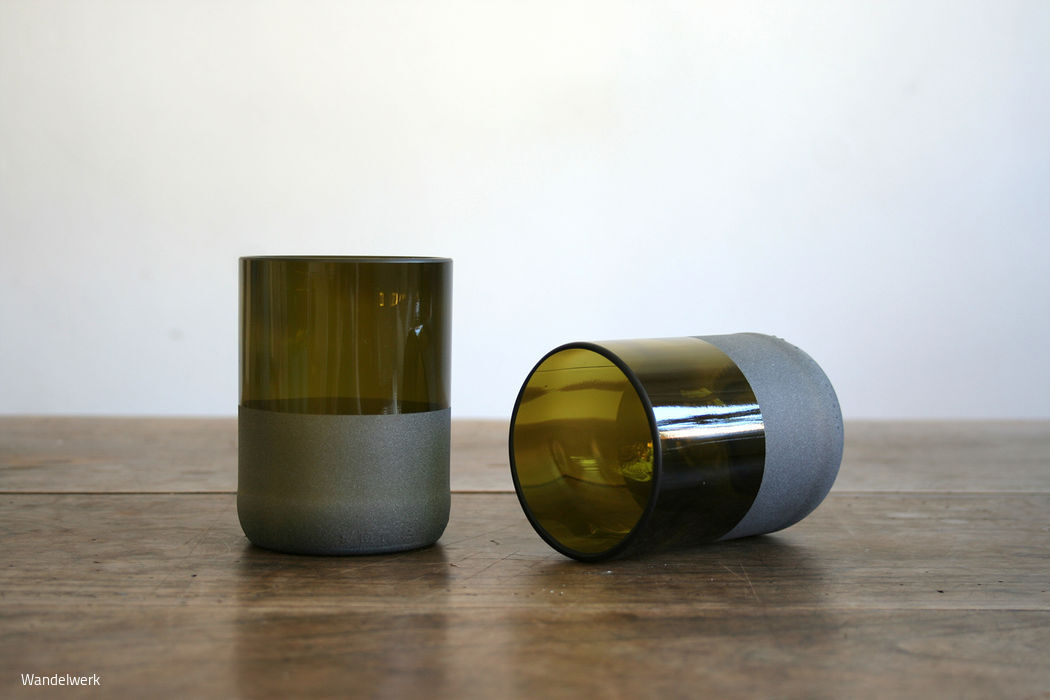
Markus Schäfer Transforms the Discarded Into the Extraordinary
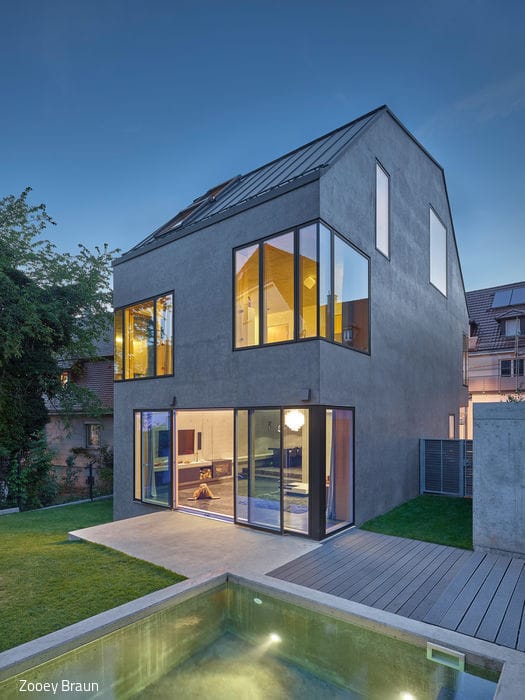
Spacious Living on a Compact Footprint
A monolithic building envelope featuring softened corners that frame carefully curated sightlines and choreograph an evolving interplay of light throughout the day.

Bags with a Story
Clea Günther and Tanja Stetter give discarded sails a second life
Classically Modern
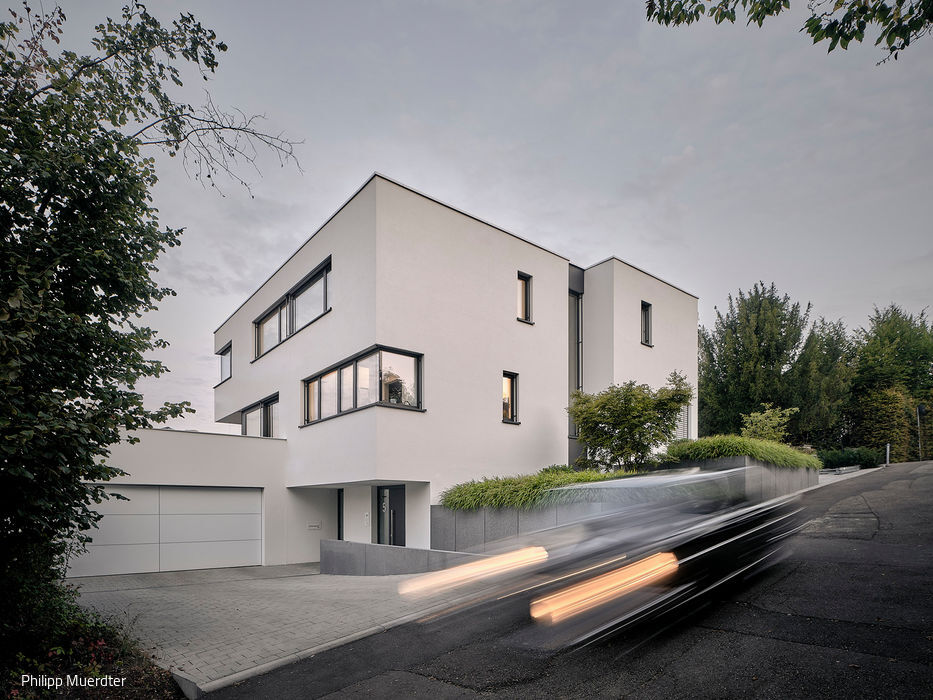
A Sculptural Home with Distinct Realms for Parents and Children