


Flexible, Connected, and Always in Action
A fragmented 1990s office layout transforms into a modern, open-plan workspace.
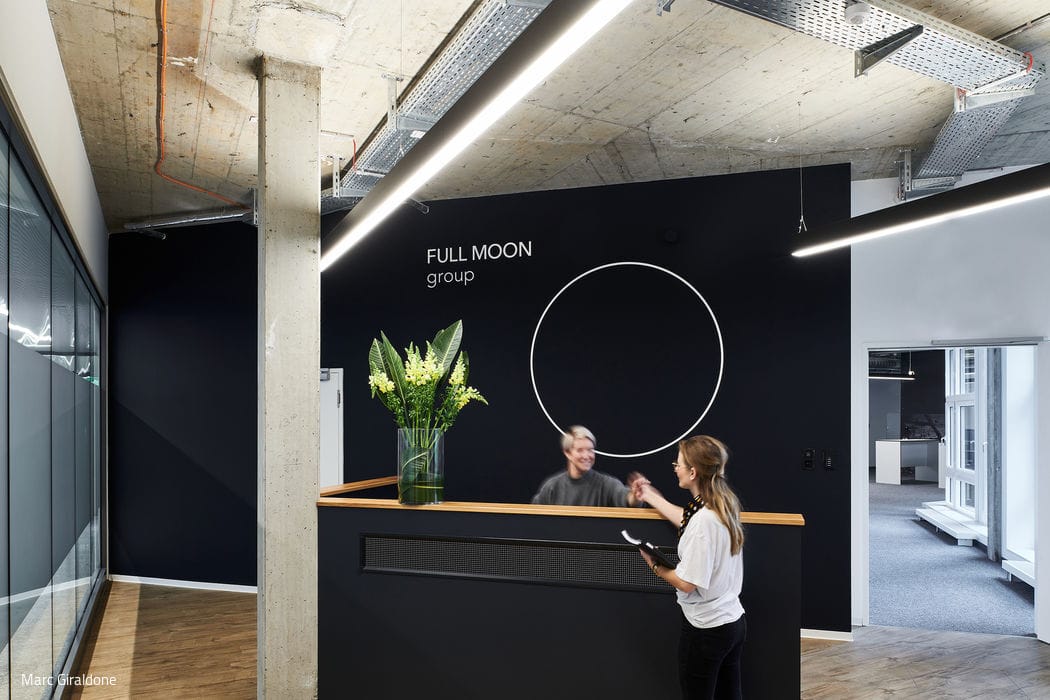
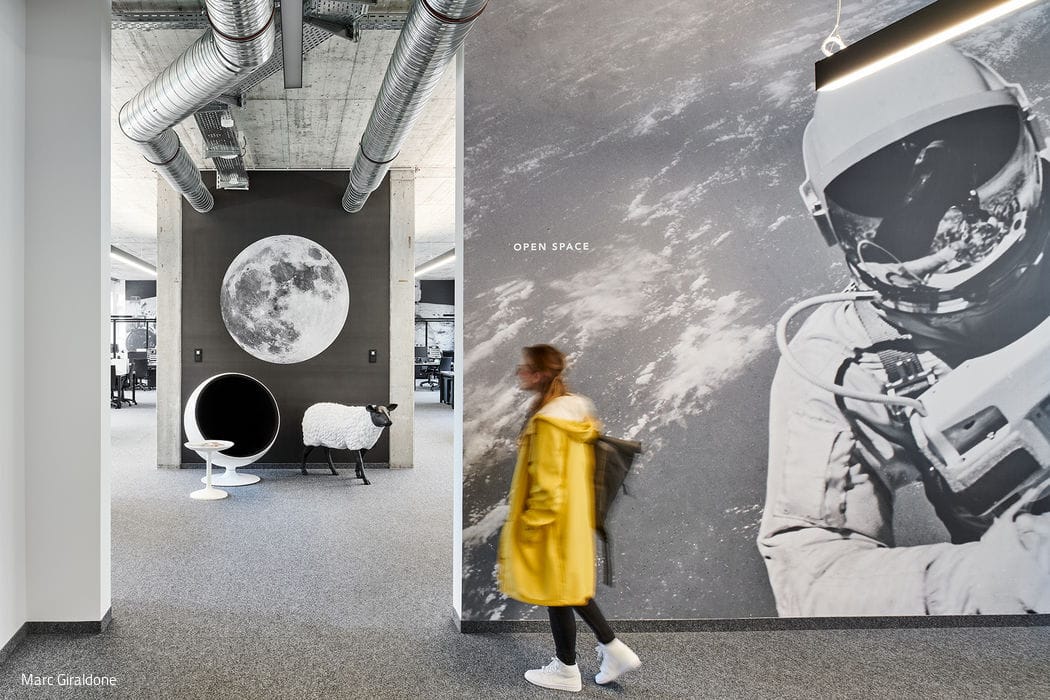
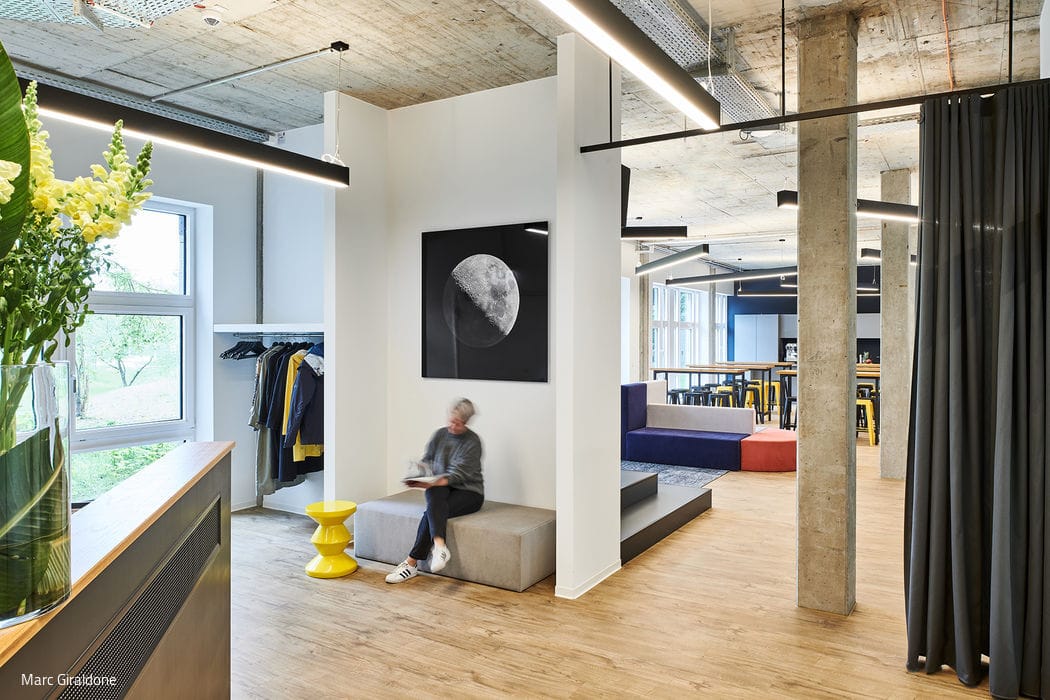
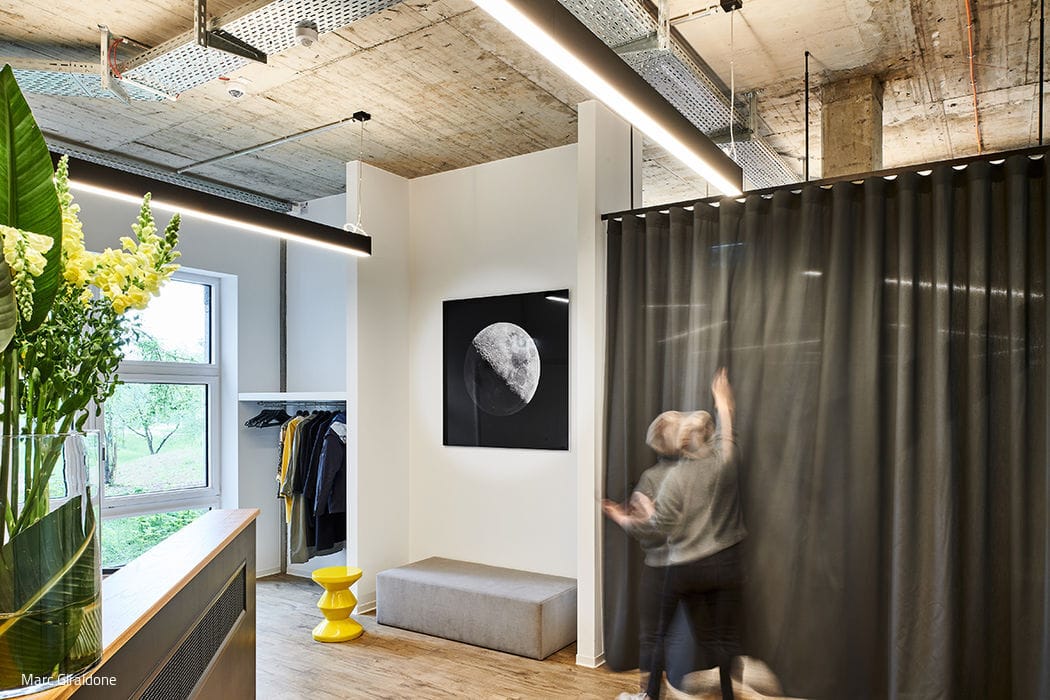
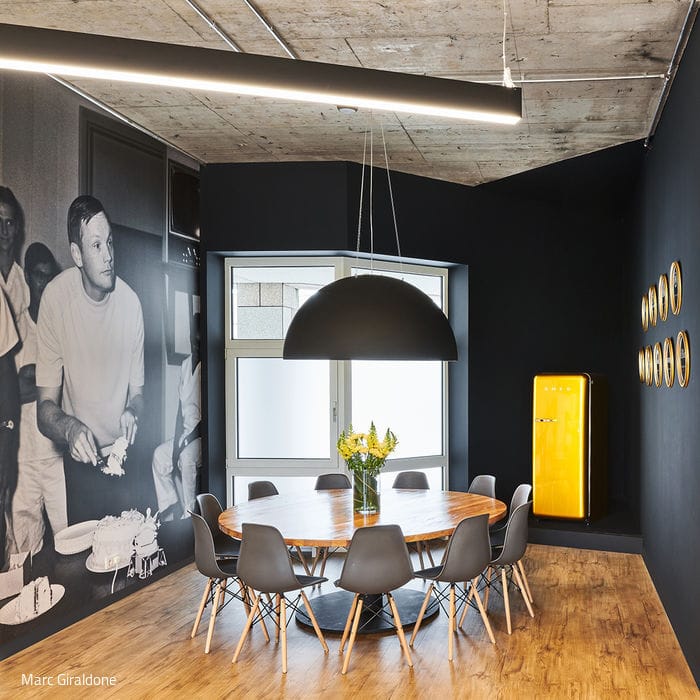
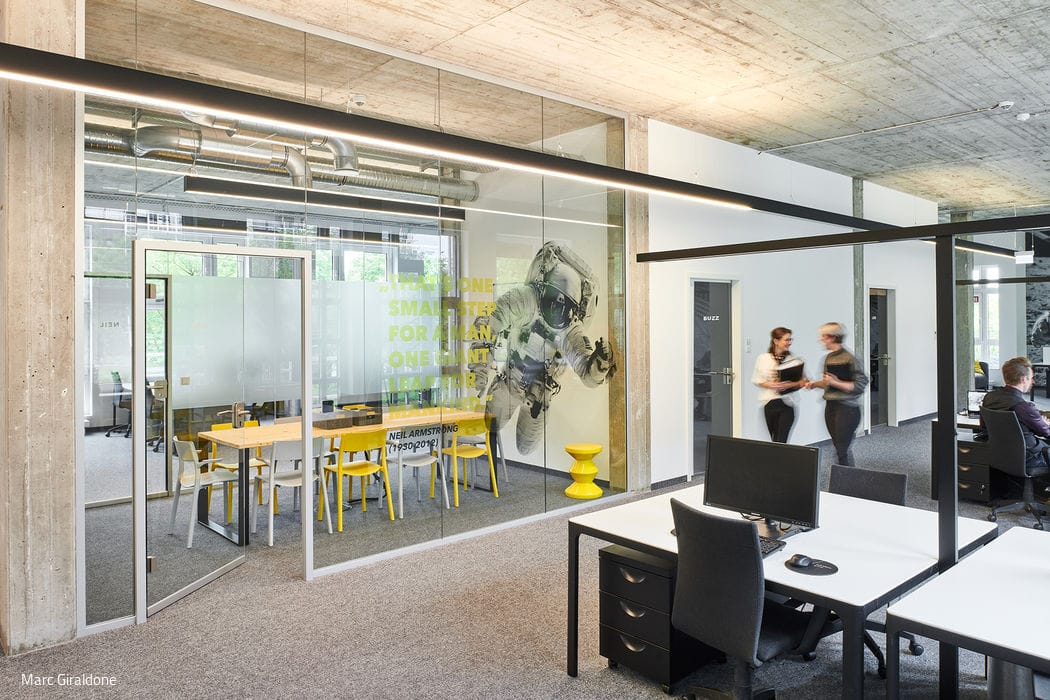
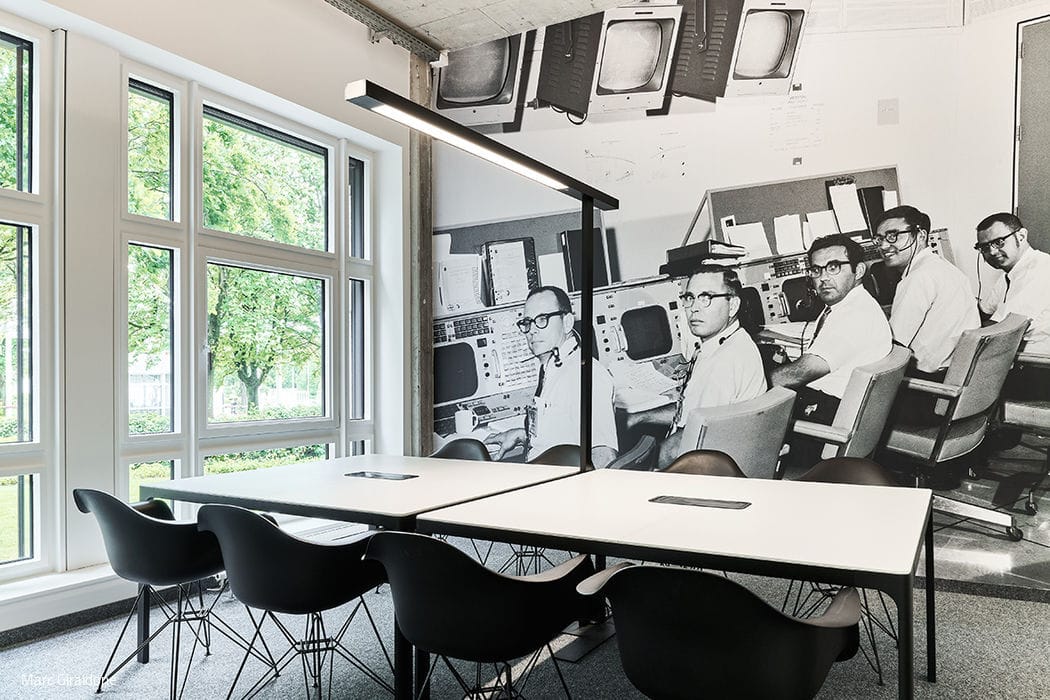
Since 2019, the Full Moon Group's 13-building complex—spanning approximately 76,000 m² of office space—has evolved beyond a corporate headquarters. When restructuring began, one 1990s office building underwent a complete renovation. Interior designer Sandra Scalici was brought in to craft a contemporary design that would embody the company's identity and meet the distinctive needs of an event and communications agency. The vision was compelling: create a modern office with generous work zones that mirrors the future of work and the company's philosophy—"flexible, networked and always in action," as Tim Höchel, managing director of Full Moon Group, describes it. The design needed to serve dual purposes: fostering collaboration and knowledge-sharing among interdisciplinary teams, while providing individual spaces for focused, creative work. The sophisticated office layout adapts fluidly to special occasions and events. It blends variable-sized meeting rooms with flexible open-plan work areas that can be reconfigured on demand. The lounge serves multiple functions—lunch space, event venue, presentation area, co-working hub, and operational nerve center. To realize this vision, Studio Scalici designed modular furniture systems that shift and adapt to the team's evolving needs.
The renovation stripped the building to its essence—exposing the raw concrete structure. Unnecessary wall openings were sealed; surfaces were finished. Yet the concrete ceiling, MEP systems, and columns remained deliberately visible, defining the space's character. Construction sketches still adorn the pillars—a raw, casual honesty. Nothing is hidden here; that's the room's fundamental message. The spatial layout choreographs the rhythmic grid of supports: drywall and glass panels inserted between pillars create subtle visual connections while forming enclosed meeting rooms of varying scales. Bold, oversized photographic prints add thematic character and reinforce the agency's creative spirit, balancing the industrial aesthetic. The result is a masterclass in adaptive reuse: the Full Moon Group's new headquarters transforms outdated office architecture—with its long, dim corridors and compartmentalized cells—into a vibrant, open-plan environment. The "Moon Base" spans 3,000 m² across three levels, combining the group's own operations with co-working spaces and leased office suites.
Photography Credits:
Marc Gilardone
www.gilardone.de
(Featured in CUBE Stuttgart 03|22)
Historic fabric reimagined with character
Reimagining a Basement: From Storage to Inspired Workspace
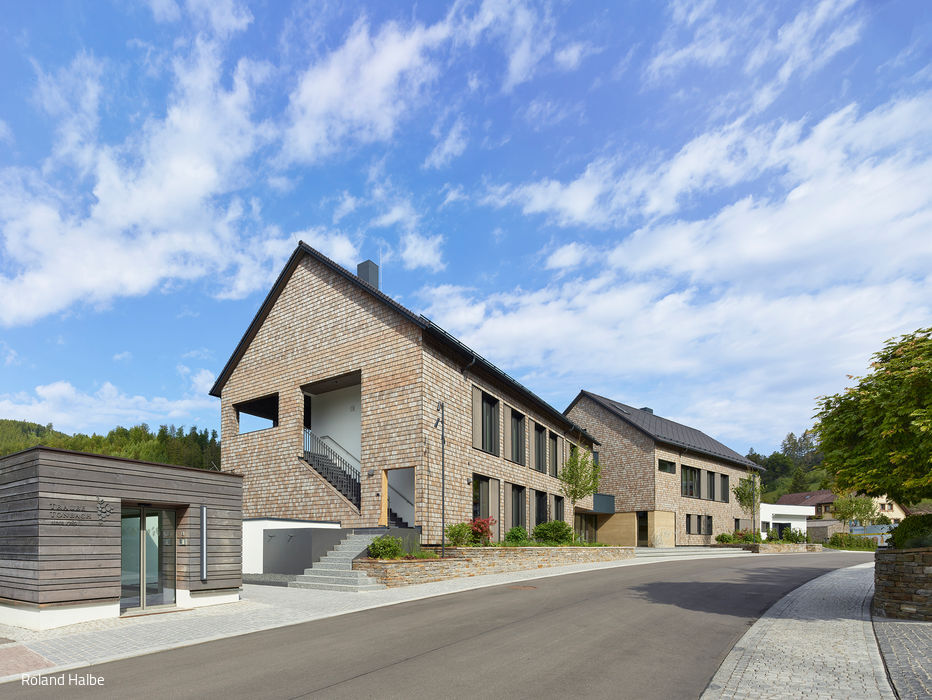
Continue the Story
Three-building restaurant ensemble—drawing on the timeless language of Black Forest architecture
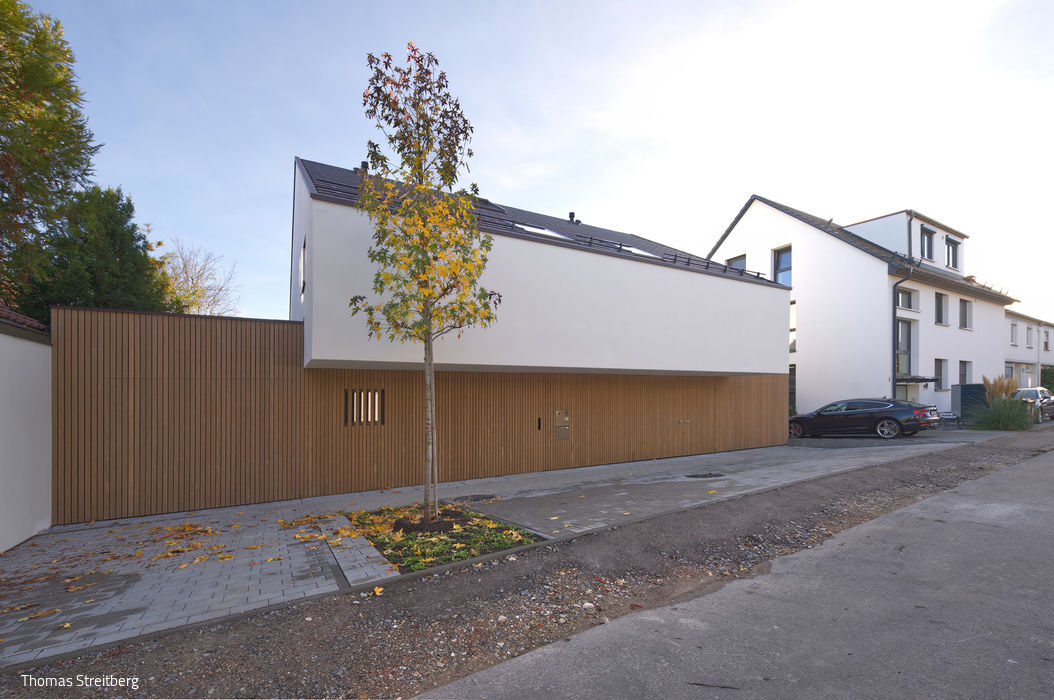
Less is More
A timeless family home built on quality over quantity
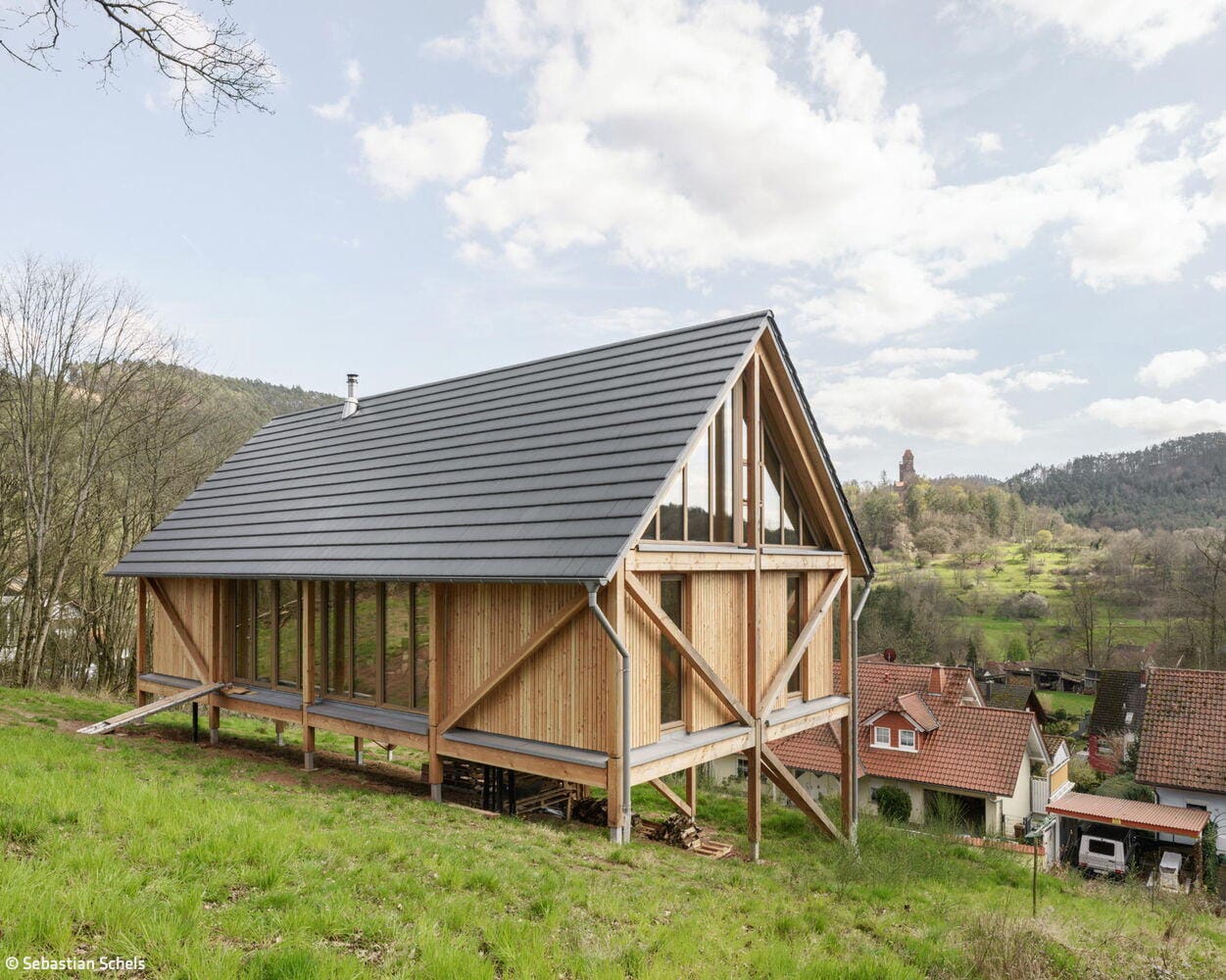
A Simple Answer
Reversible timber house thoughtfully responds to topography and climate change