


Sculptural Dialogue
A single-family home designed for privacy, with sweeping views across the landscape
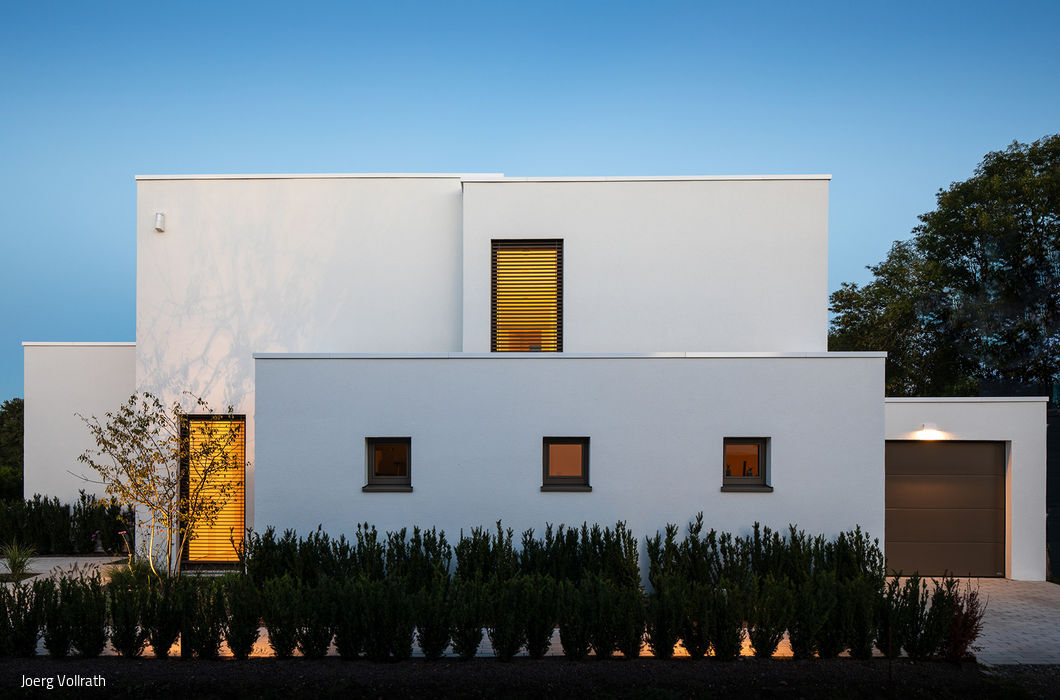


In a new residential development within a rural setting, the clients envisioned a contemporary, architecturally striking family home—one that would offer generous space for four residents while framing views toward the adjacent forest and expansive meadows. Schlering Architektur of Marl responded with a thoughtfully composed arrangement of cubic volumes that achieves a striking sculptural presence while introducing deliberate spatial zoning throughout the design.
The three building volumes are strategically positioned and punctuated with carefully placed openings: the street-facing elevation remains restrained and composed, while the garden side reveals itself openly to the landscape beyond. The result is a duality that runs through both interior and exterior—expansive sightlines in one direction, intimate sanctuary in another. Offset cubic forms and varying heights choreograph a dynamic play of light and shadow across the white rendered façade, allowing the building to transform throughout the day. Architectural purity prevails: no visible downpipes interrupt the façade's clean lines, a disciplined restraint that sharpens the building's visual identity. A solitary tree anchors the open approach court, from which a paved pathway leads to the entrance. Inside, the front door reveals an entrance hall soaring over five meters—a dramatic threshold moment. The ground floor's open layout centers on the dining and living areas, with two east-facing terraces that extend the living space through full-height wood and aluminium sliding systems. An open gallery spans an air void, connecting ground to upper floor via a striking staircase of raw exposed concrete. The upper level steps back substantially to the north, cradling bedrooms, children's rooms, and two bathrooms beneath a generous roof terrace that gazes across the garden and surrounding countryside. Built-in cabinetry and all exterior installations were custom-designed by the architects. Climate control is managed by an air-to-water heat pump system.
Photography:
Jörg Vollrath
(Published in CUBE 01|24)
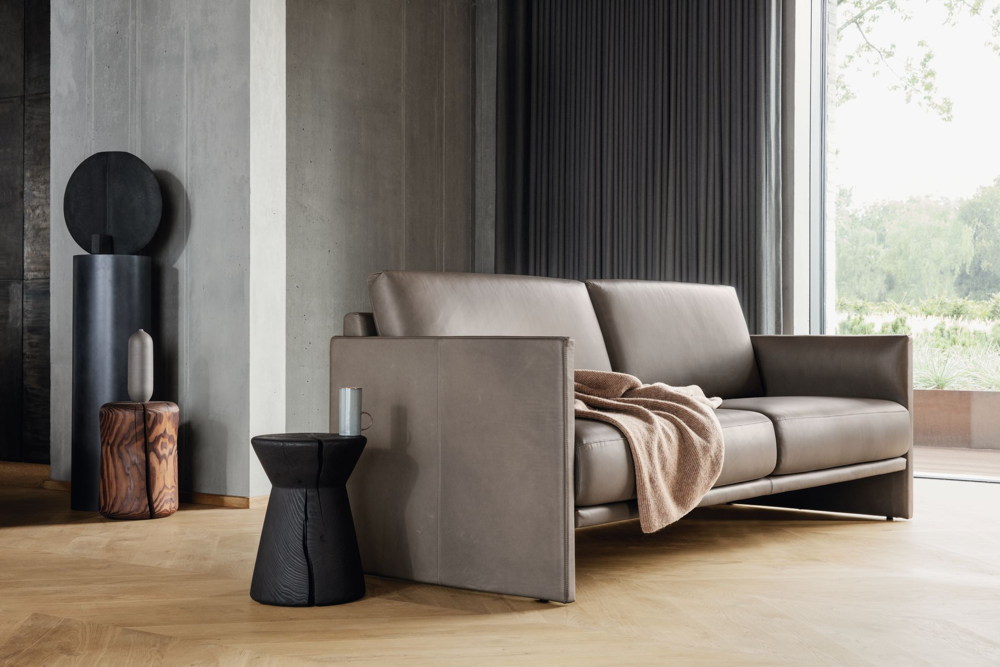
Rolf Benz Cara
Rolf Benz Cara. Cara reveals character.
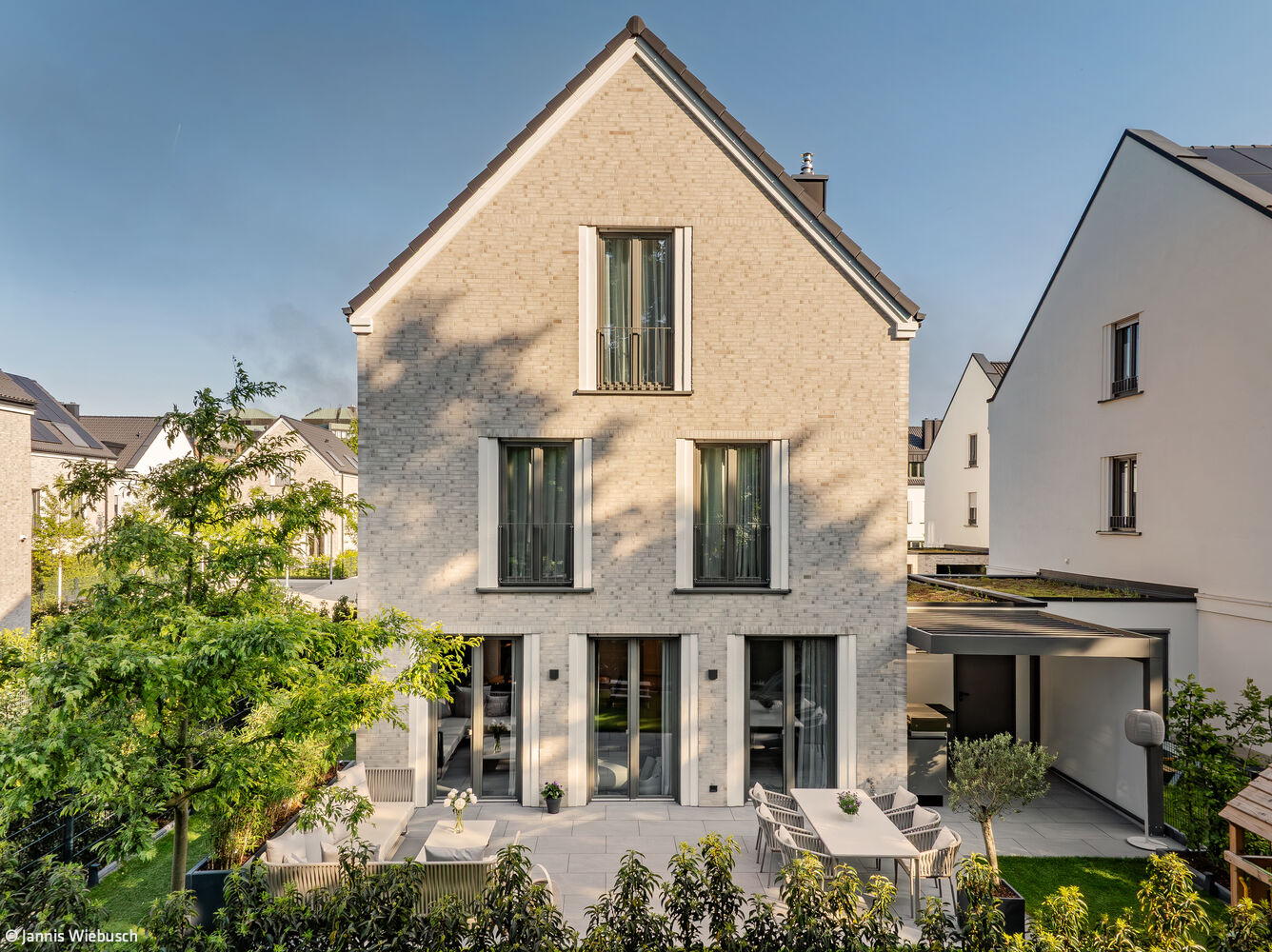
Reimagining new construction
A Bespoke Home Takes Shape in Düsseltal – Transforming a Standard New Build into Something Entirely Personal
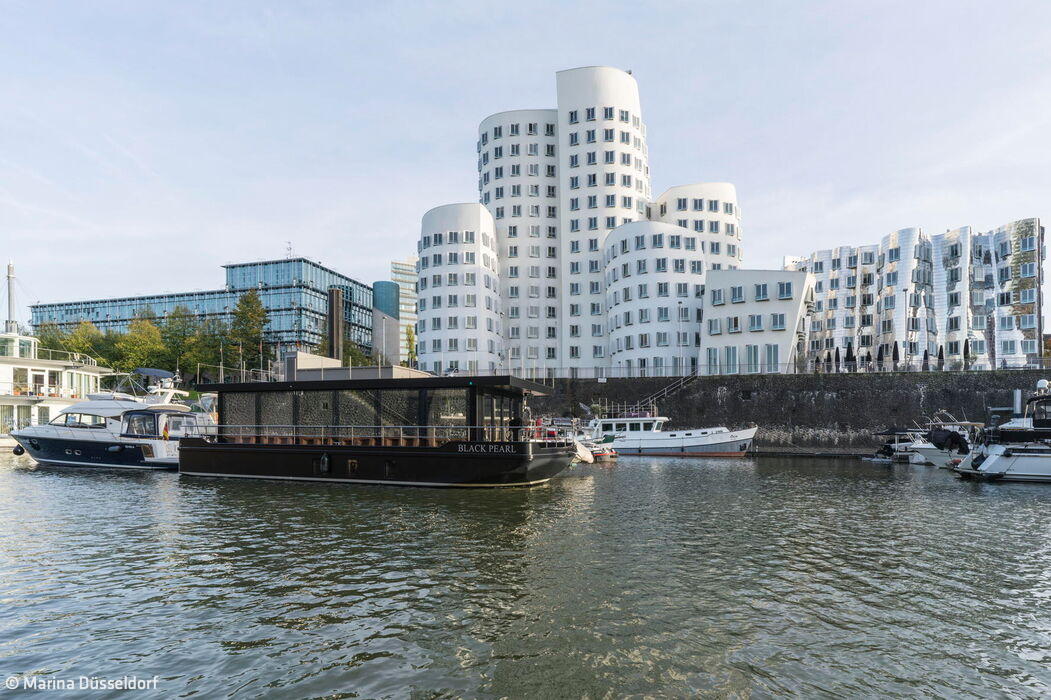
Setting sail for a different life
The pandemic gave us working from home. Before that came New Work. Now, perhaps, New Living?
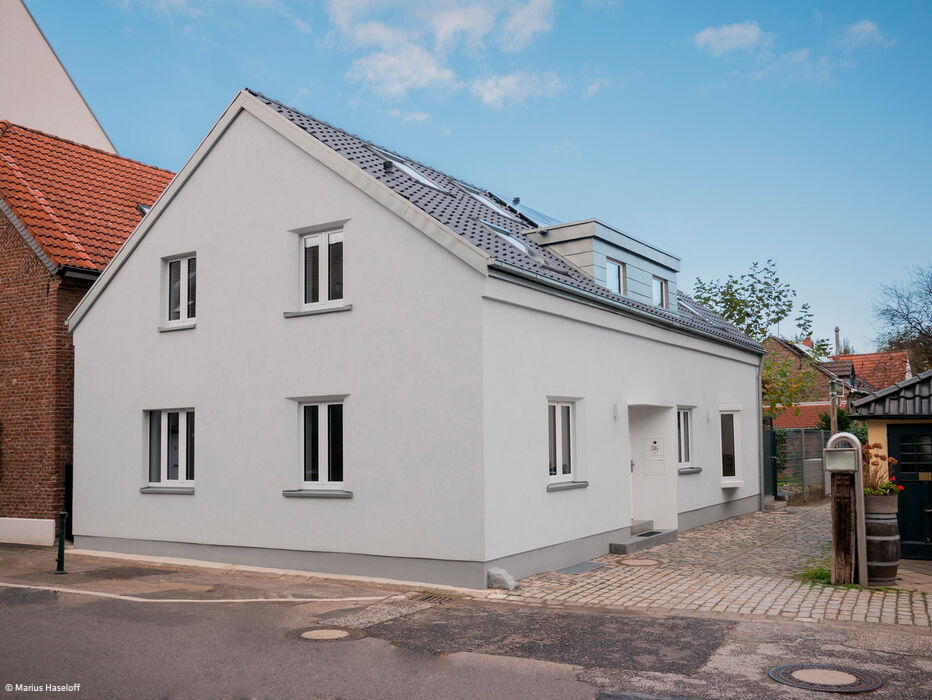
Restored Farmhouse
Historic heritage in Niederkassel interpreted for today, preserved with care