


Science on Display
A key milestone in Science City's development in Bahrenfeld


By 2040, Bahrenfeld's research district will transform into Science City Hamburg, centered around DESY (Deutsches Elektronen-Synchrotron). The master plan calls for diverse research and office facilities, approximately 2,500 residential units, and expansive open spaces, parks, and recreation areas. The iconic ring geometry of the DESY particle accelerator will evolve into a verdant ring boulevard. On both sides of Luruper Chaussee, two densely developed urban clusters—Science City West and Science City East—are taking shape. Looking ahead, the University of Hamburg plans to consolidate its natural science faculties at this location.
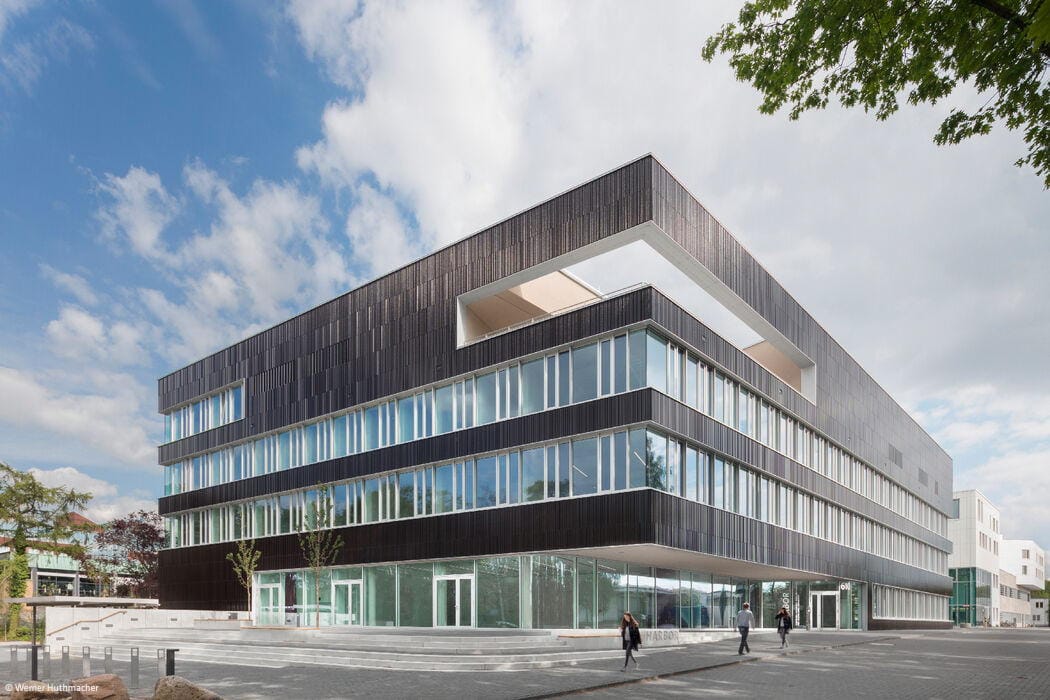
As one of Science City West's pioneering structures, Nickl & Partner Architects has completed the research facility for the Hamburg Advanced Research Centre for Bioorganic Chemistry—HARBOR for short. Strategically positioned at a vital intersection within the development area, the building establishes critical infrastructure at the University of Hamburg's Faculty of Mathematics, Informatics and Natural Sciences for ultrafast time-resolved experiments on molecular biological systems. Here, an international team of approximately 120 scientists specializing in nanophysics, chemistry, and structural biology will pioneer techniques for visualizing and controlling molecular processes using light.
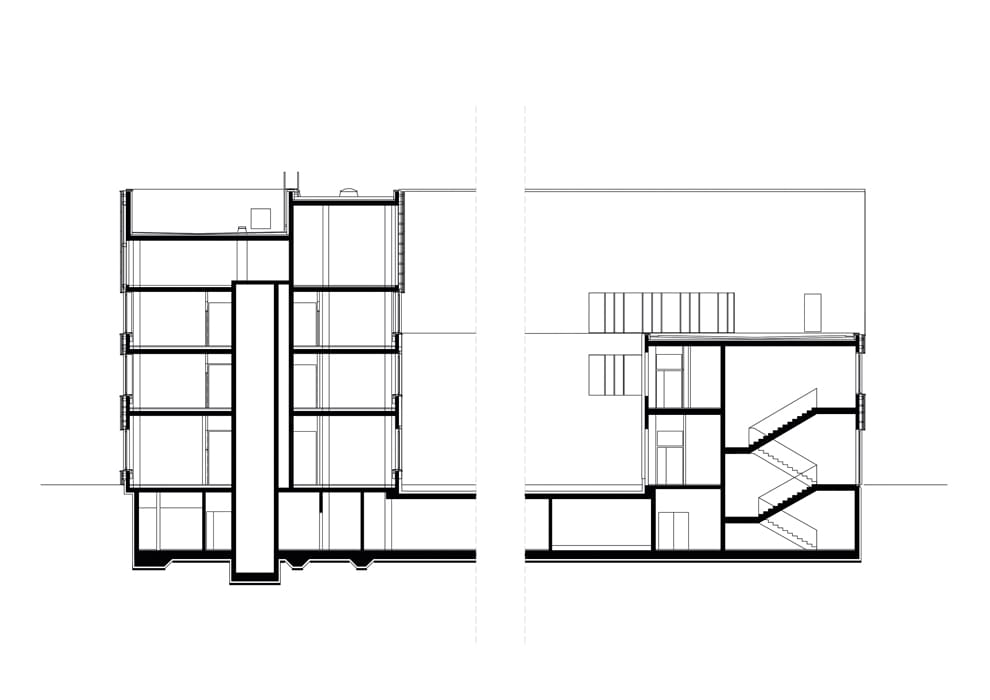
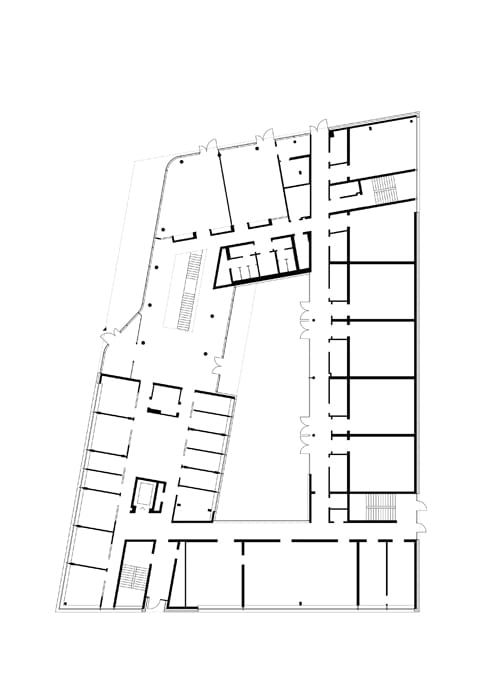
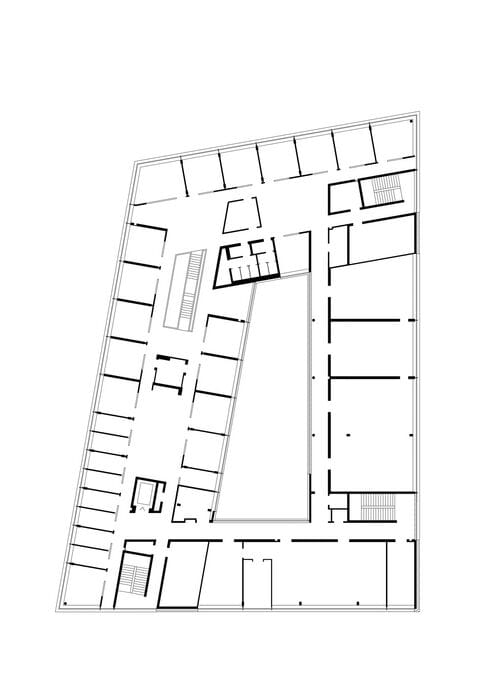
The program is dominated by windowless laboratories and technical spaces. To reconcile this with the directive for openness and transparency, the architects conceived the building volume as two interlocking L-forms enclosing a central courtyard. Office and meeting spaces occupy three floors along the square-facing façade. The second wing consolidates all laboratory functions: collaborative, visible work and discussion on the outside; concentrated measurement and research within. A glazed ground-floor foyer offers sightlines across the courtyard into the research zones. Equally transparent, a prominent corner-positioned conference and seminar room serves as the building's showcase. A refined open staircase ascends from the foyer through office levels to a roof terrace—a semi-public realm overlooking the ring boulevard. The extruded ceramic façade is a particularly thoughtful design choice. Its fine-grained vertical structure reads as a unified surface from afar, while animating the expansive opaque surfaces of the physics labs and technical zones upon closer inspection. Rust-toned glazes lend visual depth and shimmering complexity. Against this backdrop, elongated window bands emerge as crisp, luminous interruptions. The cut-away roof terrace crowns the composition with an emphatic gesture toward the square.
Photography:
Werner Huthmacher
huthmacher-data.de
(Published in CUBE Hamburg 02|24)
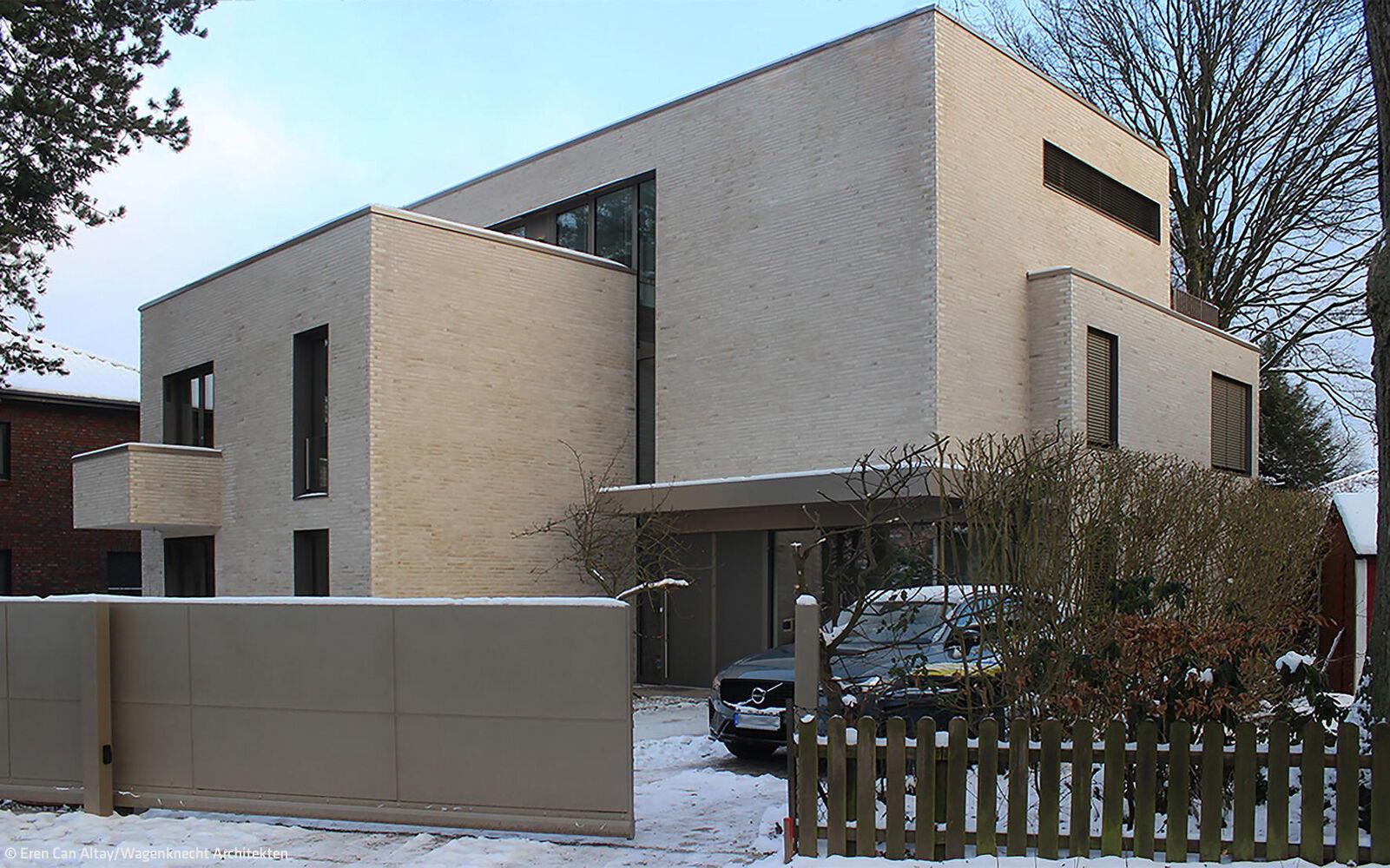
More substance than appearance
Three Apartments, One Building, Three Separate Entrances
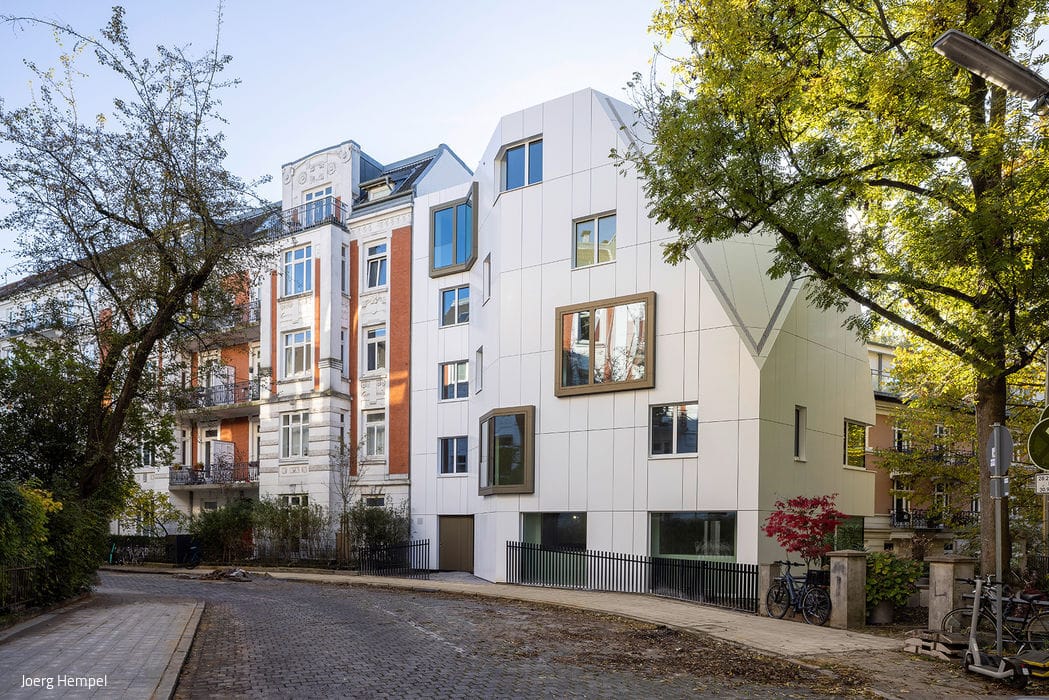
Sculptural elegance in white
A striking landmark that honors the historic fabric of the Grindelviertel.
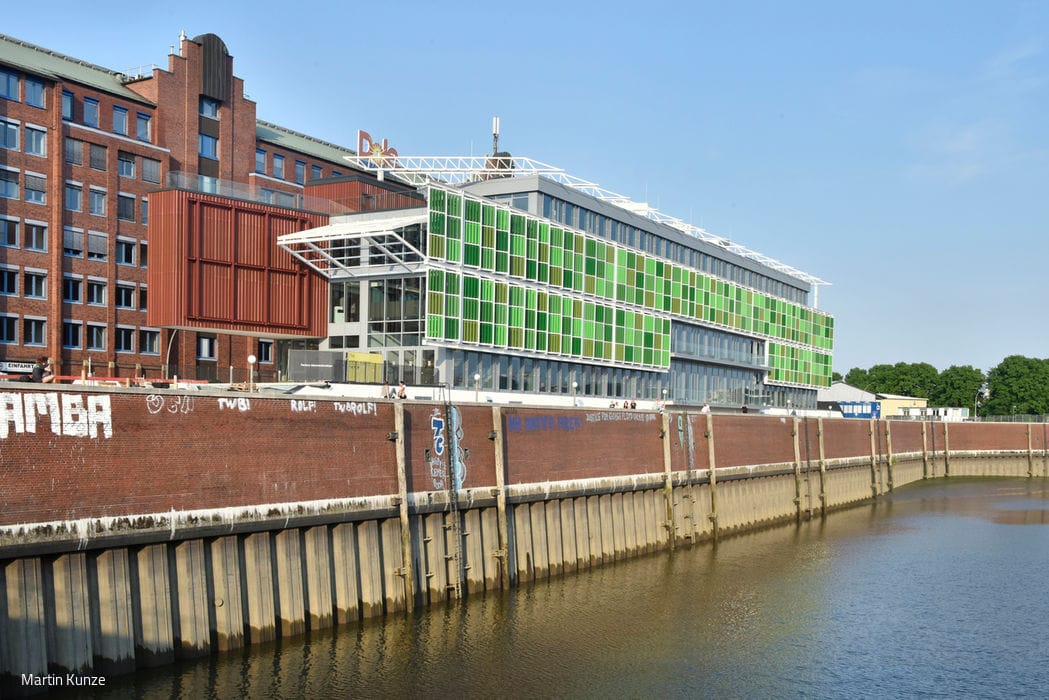
Distinctive and Inspiring
The Hammerbrooklyn Digital Pavilion serves as a hub for networked collaboration and research.
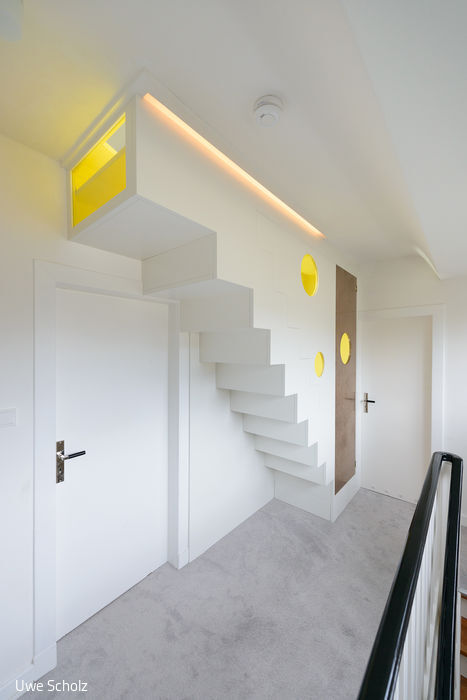
Verizontal
Finding the right amount of space in the right place—through thoughtful, strategic reorganization of existing floor plans.