


Unique and inspiring
The Hammerbrooklyn Digital Pavilion is designed for networked working and research.
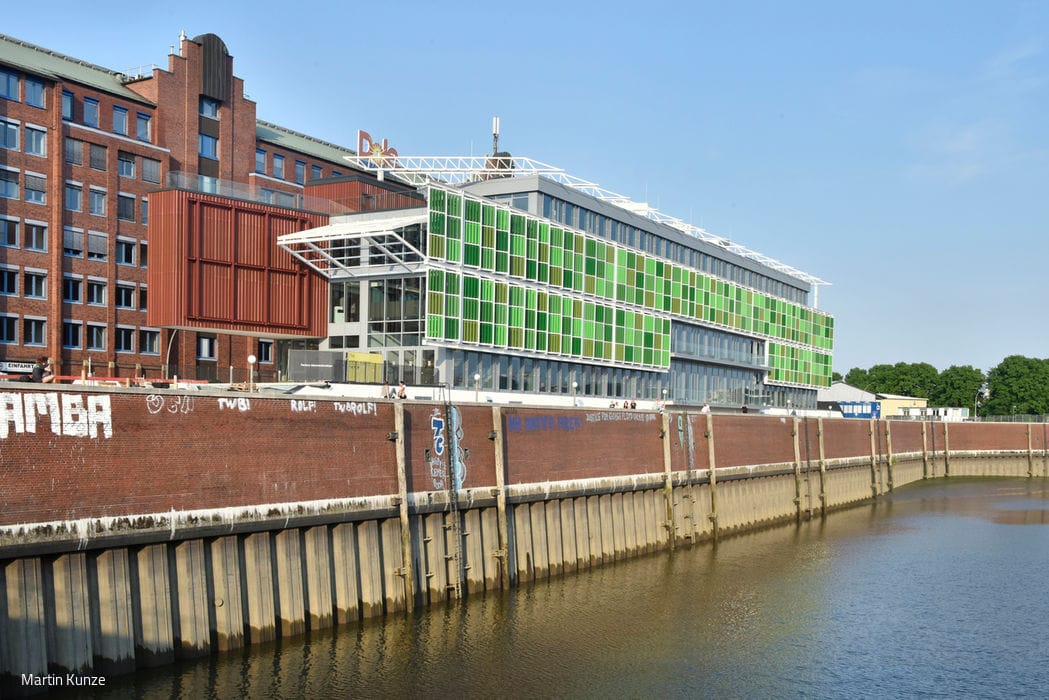
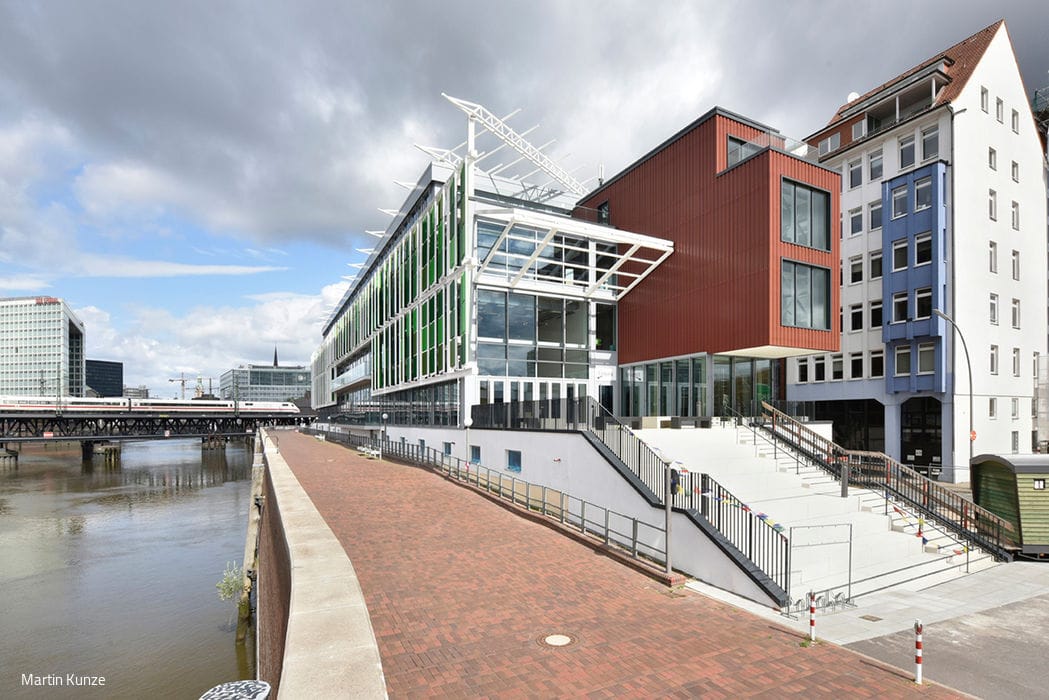
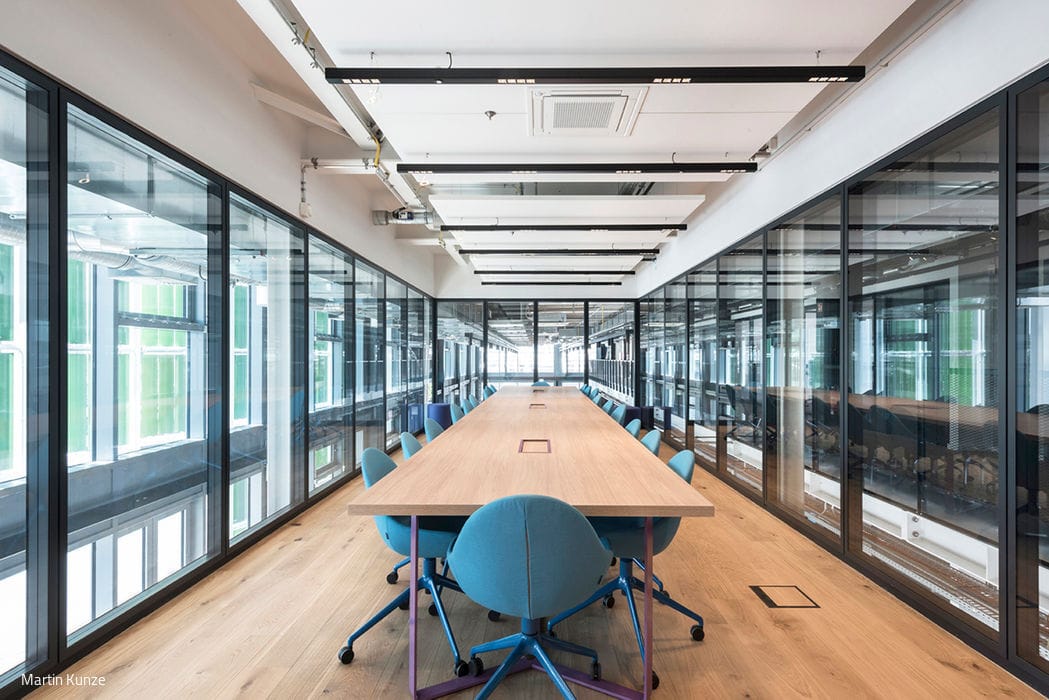
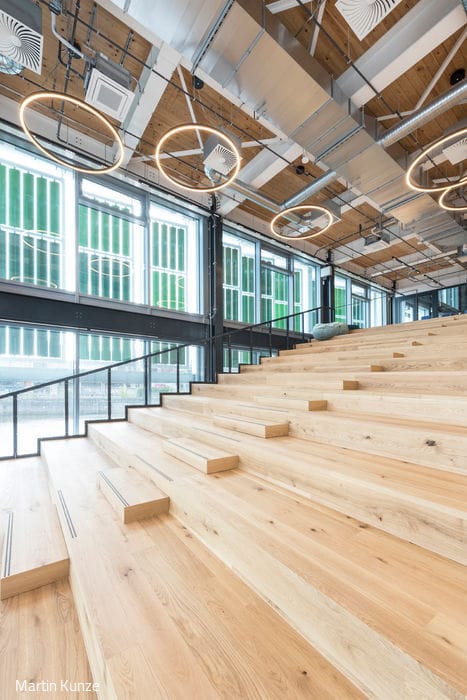
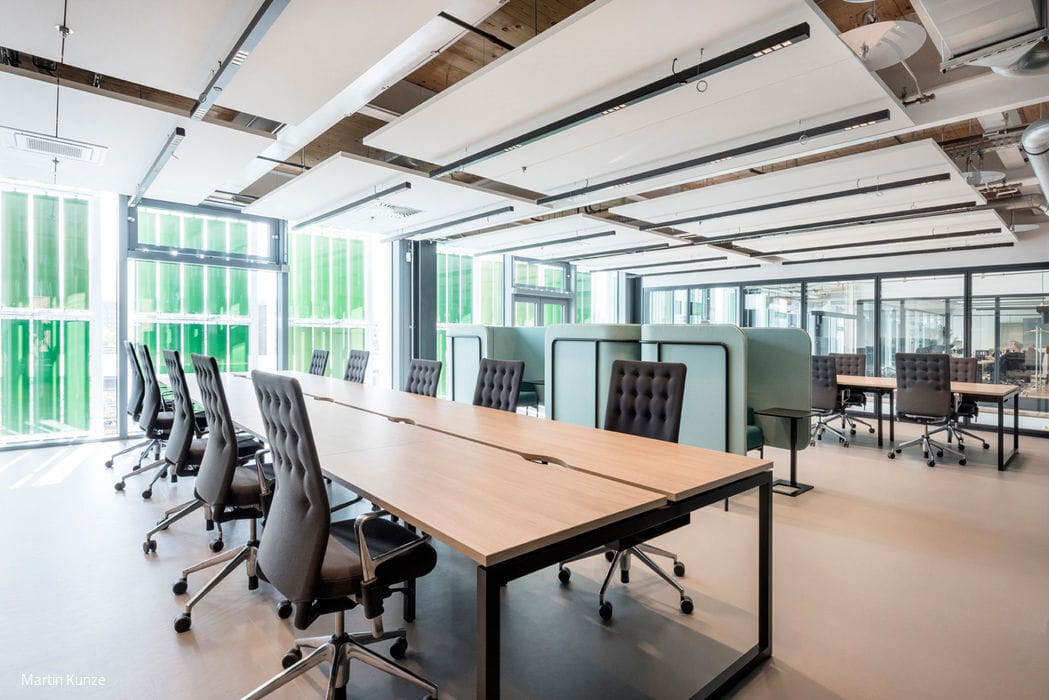
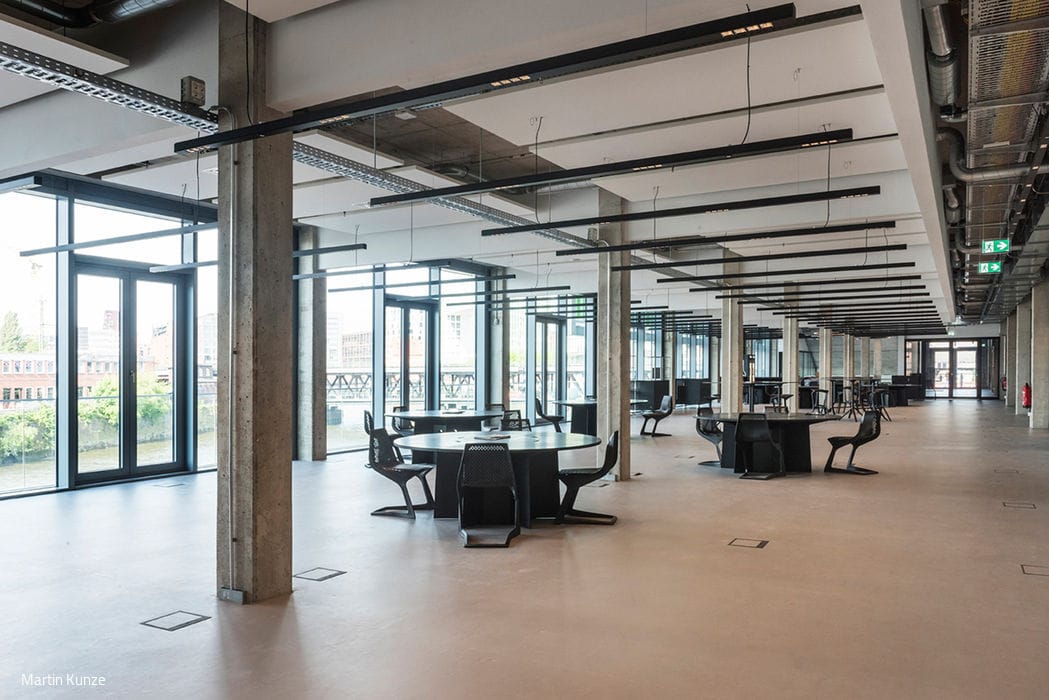
The Digital Pavilion building, which opened at the beginning of May, is the first building block in the newly emerging Hammerbrooklyn DigitalCampus, a project by the City of Hamburg for the digital transformation of society and the economy. Along the Oberhafen, between the Deichtorhallen and the wholesale market area, urban society, established companies from all sectors, organisations and start-ups from all over the world will have access to a 2-hectare infrastructure for exchange and research, as well as for the development and testing of future models for the topics of cities, economy, mobility, work and living, trade and production. Two further buildings will follow by 2027.
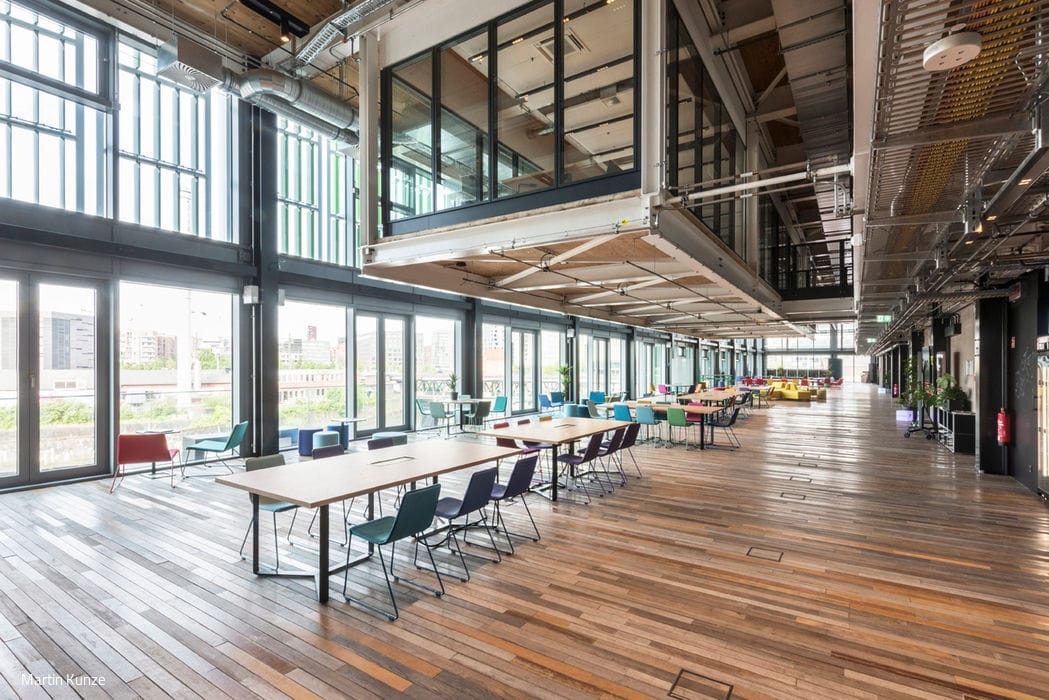
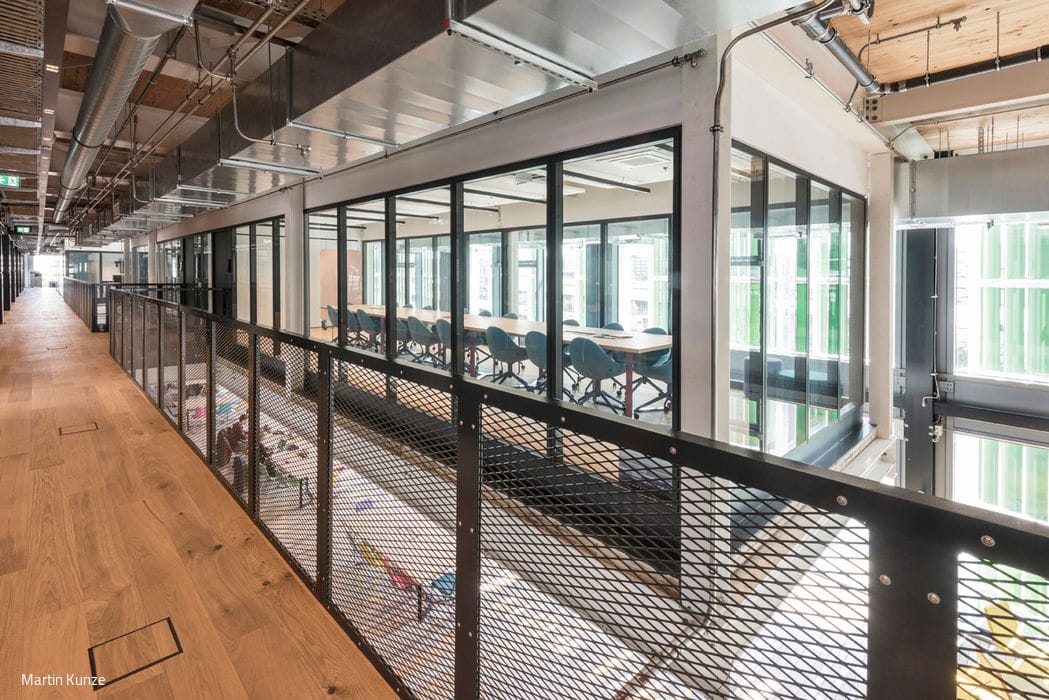
The reuse of the USA's Expo pavilion in Milan 2015 here in Hamburg is sustainable. The building, designed by New York architect James Biber, had to be adapted to German building regulations. The Hamburg-based firm Spine Architects made spatial modifications to the interior for the new uses, upgraded the thermal envelope, constructed the lower two levels in solid, fire-resistant reinforced concrete on deep foundations, and ensured escape routes via three new reinforced concrete staircases. The original steel supporting structure was retained for the upper three floors, adapted to local climatic conditions in terms of building physics, and supplemented by a gallery-like steel structure for the central "suspended" Townhall, which can be used flexibly. The stiffening cross-laminated timber ceilings (X-Lam) were also largely reused. The wood from the Coney Island Boardwalk, which was partially destroyed by Hurricane Katrina, was refurbished and laid as flooring in the town hall. The ground floor is at the same level as the city dyke. The northern section contains all the necessary staircases and lifts, as well as meeting and ancillary rooms on the upper four floors. The co-working areas, an auditorium and exhibition spaces are located on the water side. The basement floor in the south-eastern area houses retail space, podcast and YouTube studios, and creative labs. The first floor, with individually designed office space, is accessed via the front of the building. The publicly accessible auditorium for 192 visitors extends over two floors with a terrace and a bistro accessible from the outside on the south-eastern side. The third floor and attic house smaller office and meeting units as well as additional open-plan areas. The campus entrance, designed by WES LandschaftsArchitektur in the style of a garden, creates a green lounge area for employees and visitors.
www.spine-architects.com
www.hammerbrooklyn.hamburg
Photography Credits:
Martin Kunze
(Published in CUBE Hamburg 04|21)
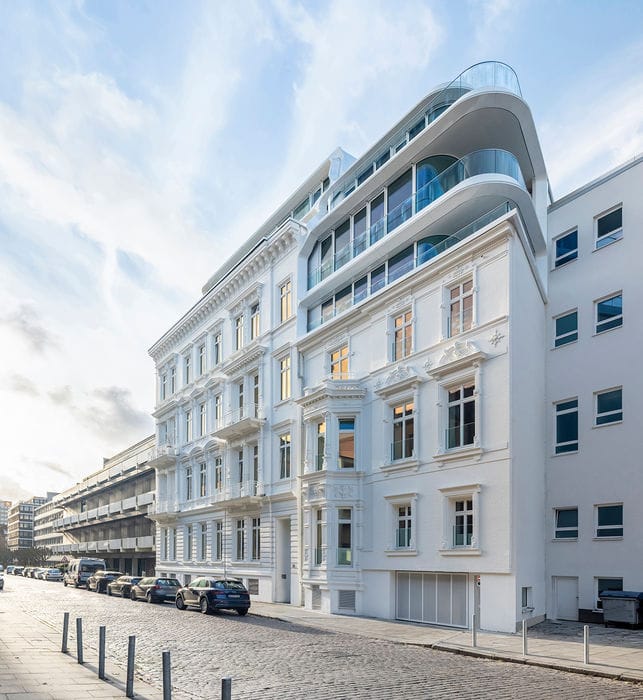
Facade Preserved
Thoughtful Densification: Preserving Character, Creating Homes
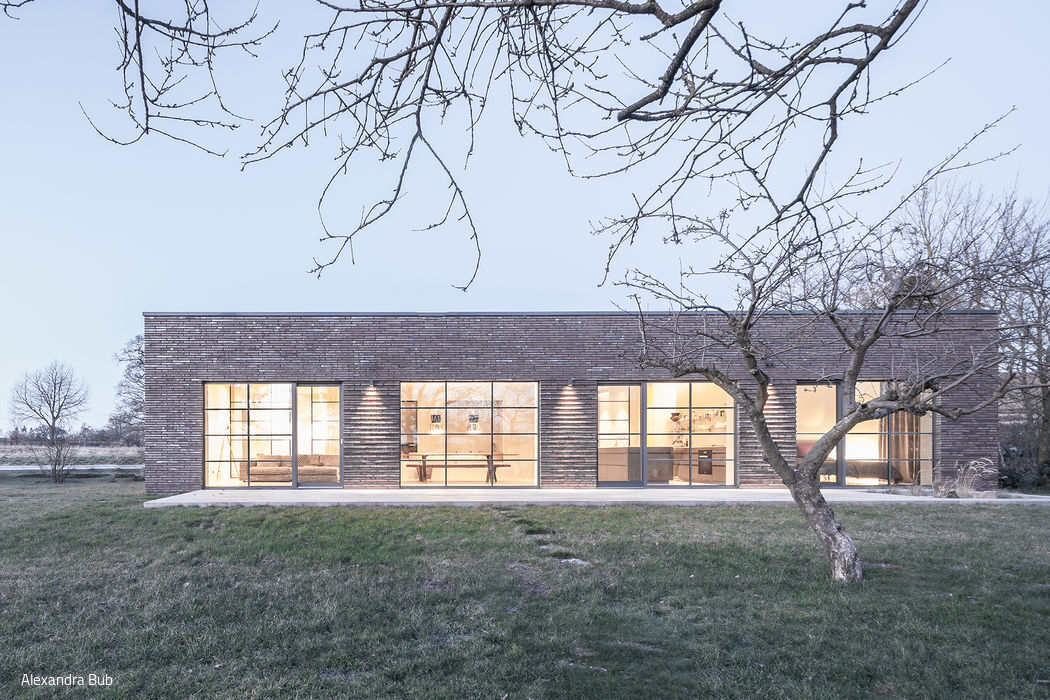
Landscape in Focus
A Bungalow Sanctuary in Nature's Paradise
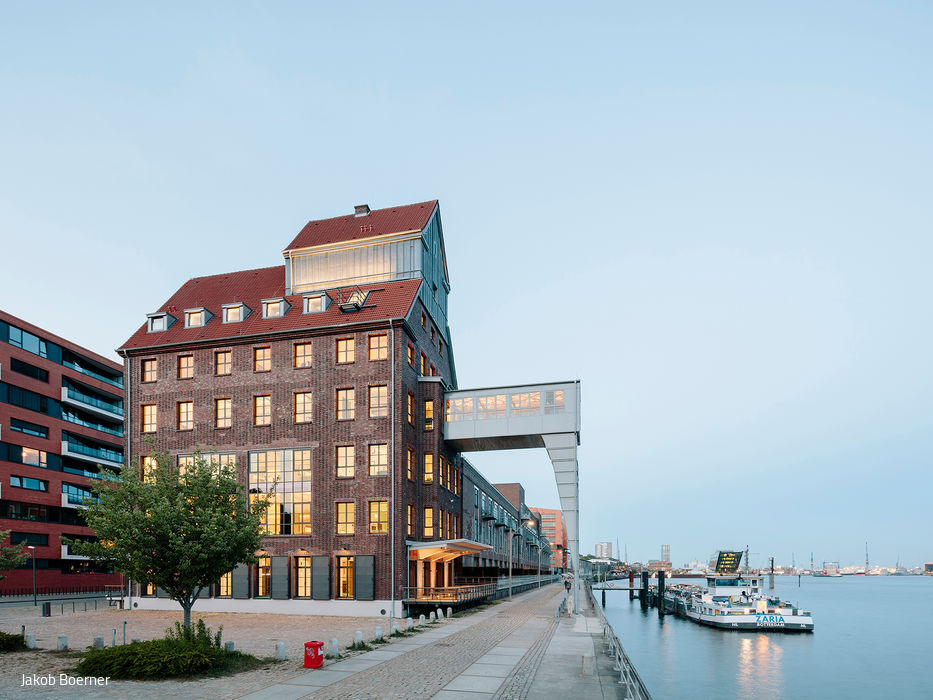
Living Testament to an Era
The Former Granary: A Living Workplace
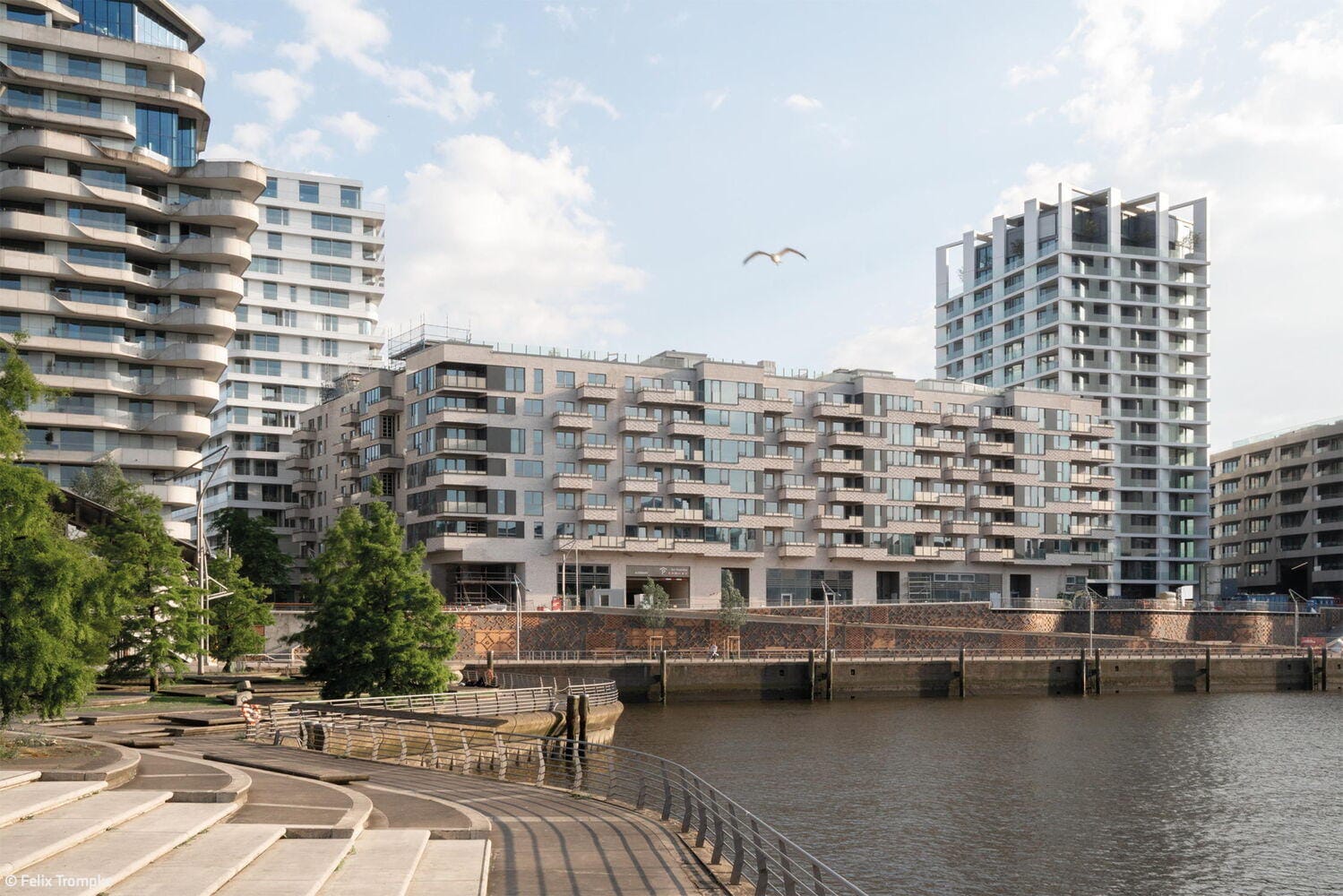
Ein lebendiges Haus
In allerbester Lage am Strandkai entstanden 113 Genossenschaftswohnungen