


A Project Bathed in Light
Santiago Calatrava discusses Düsseldorf's "Calatrava Boulevard" and his vision as architect and artist
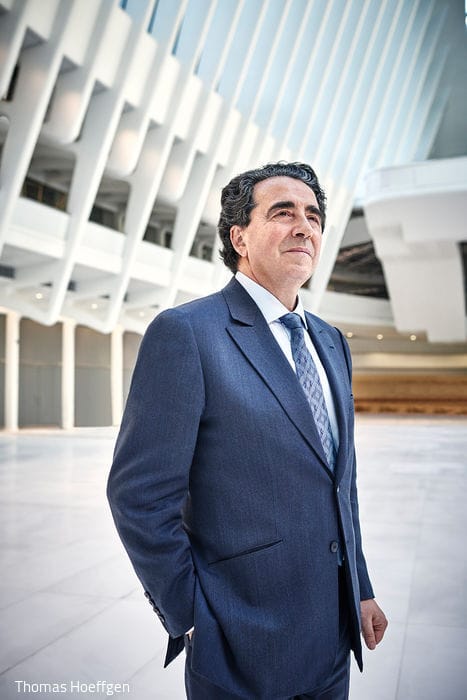
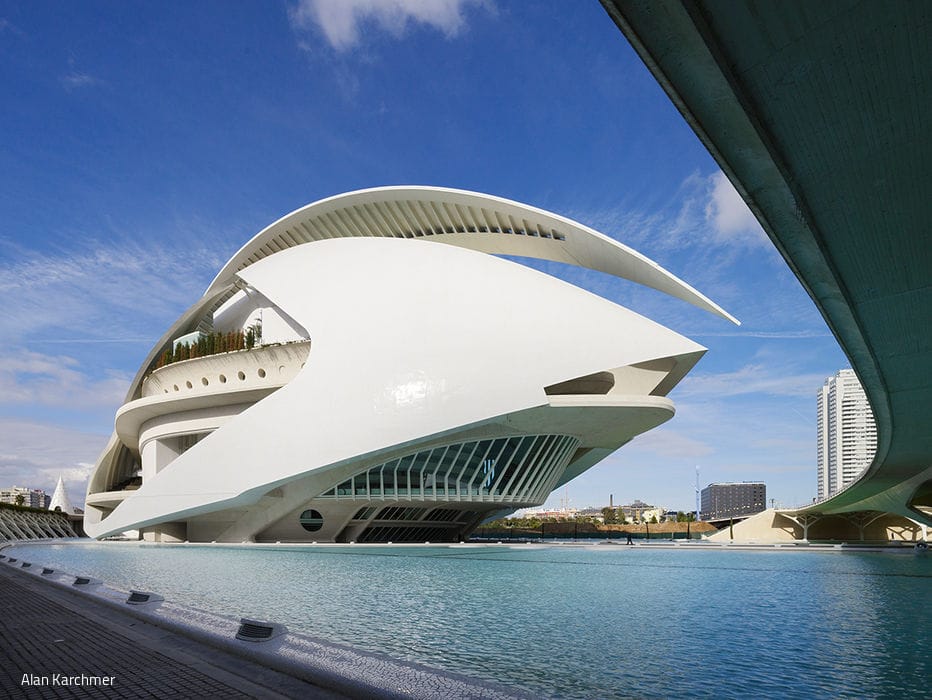
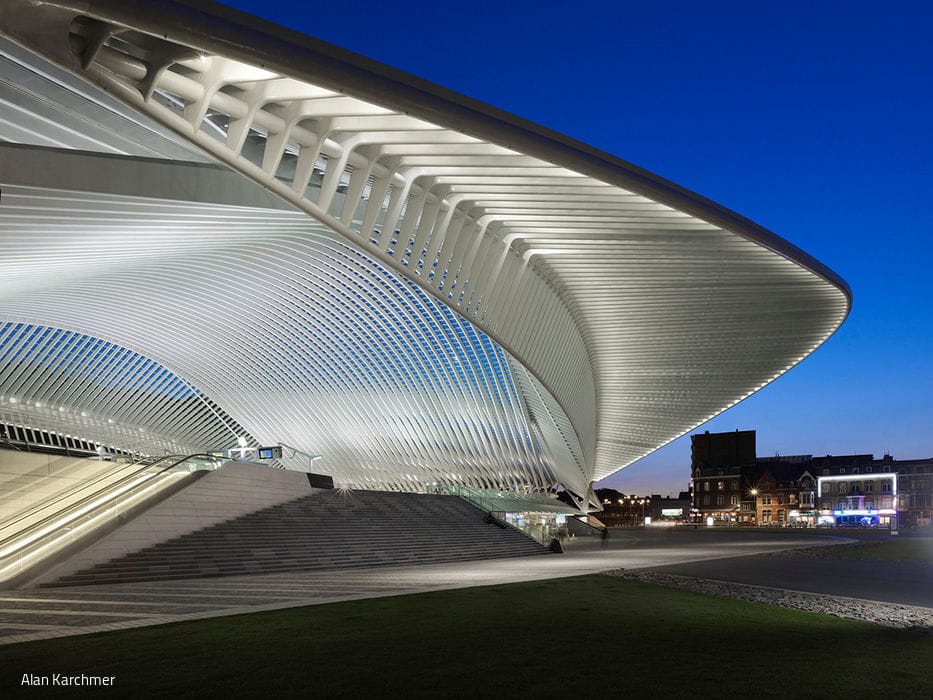
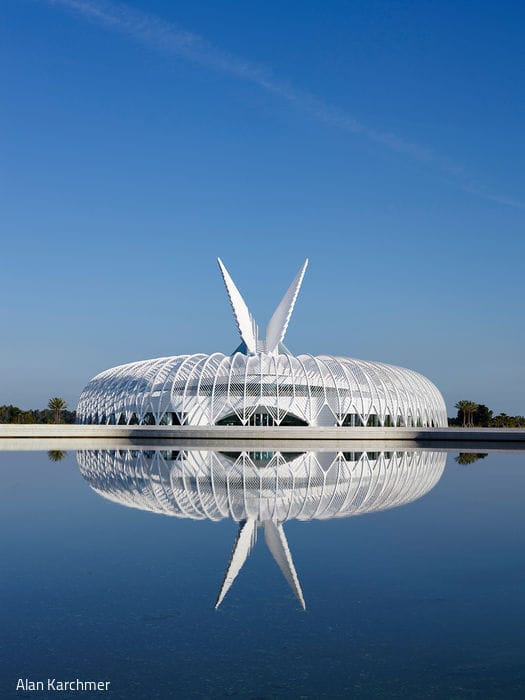
CUBE: Welcome to Zurich, Mr. Calatrava! Throughout your career, you've worked as both architect and artist—designing buildings while also creating sculptures and drawings. How do these disciplines inform each other? Or are sculpture and architecture, ultimately, one unified vision for you?
Santiago Calatrava: From the moment I began my studies, I've understood architecture as an art form. Drawing has been central to my life since childhood, and I studied at an art school for some time. Throughout my career, I've maintained my own small studio—my "L'Atelier de la recherche patiente," as Le Corbusier called it. There, forms naturally emerged: drawings and studies exploring nature—animals, plants, and the human condition. Looking back, I see a true symbiosis between these activities, each enriching and complementing the other.
After completing your architecture degree in Valencia, you went on to study civil engineering at ETH Zurich. Did you feel architecture alone wasn't enough?
During my architecture studies, I spent considerable time studying buildings—particularly Gothic cathedrals and nineteenth-century bridges. These weren't merely of academic interest; I experienced them as authentic works of art. I realized, with all humility, that I could only grasp part of what made them extraordinary. I needed deeper knowledge of construction, materials, engineering principles, and science. That's what drew me to ETH Zurich's civil engineering program. When I arrived, I spoke French and English reasonably well, but German was a challenge. After completing my degree, I pursued a postgraduate diploma in urban planning, and eventually wrote my doctoral thesis.
Art, architecture, engineering, urban planning – a remarkable breadth of interests. Yet you ultimately focused your doctoral research on folded structures and their specific challenges.
I became increasingly drawn to mechanical and mathematical principles. Though I wrote my doctoral thesis in ETH's architecture department, it was really about topology and geometry—three-dimensional forms that can transform and generate structure. That fascinated me deeply. But I must add this: I was extraordinarily privileged to be a student for nearly fifteen years. Those universities, institutions, and professors gave me an invaluable gift. That time as a student continues to shape who I am today.
Could you have imagined then that this fascination with dynamic structures would define your entire career?
Why did I always draw? For my dissertation, I found an image in a Walt Disney book called "The Living Desert." In the background, the sky darkens, and a cactus opens to reveal a beautiful flower. I wrote beneath it: "Natura, Mater e Magistra"—Nature, Mother and Teacher. This phrase has stayed with me throughout my life. Nature has been the foundation of my work. I've been captivated by the mathematical and mechanical principles underlying creation—as Einstein said, "God does not play dice." I believe the world operates according to fundamental principles: mathematical, mechanical, ordered. Understanding these principles, and designing buildings that embody them with integrity, remains my greatest source of inspiration and professional fulfillment.
Some of your buildings seem to capture movement suspended in a single moment. How central is dynamism to your architectural language?
As a civil engineer, you learn immediately that force equals mass times acceleration. So from the very start, dynamics infuse statics. Everything in nature is in constant motion—the sun and stars move, mountains themselves shift over centuries despite their apparent permanence. We inhabit a world of perpetual change, and we change with it. Not simply through aging, but because movement is fundamental to our being. We open our eyes, move our lips, gesture with our hands. Movement is essential to human experience. Architecture isn't a static monument; it's something we move through and around, just as light and shadow migrate across it throughout the day. Dynamism is inherent to how we actually experience architecture.
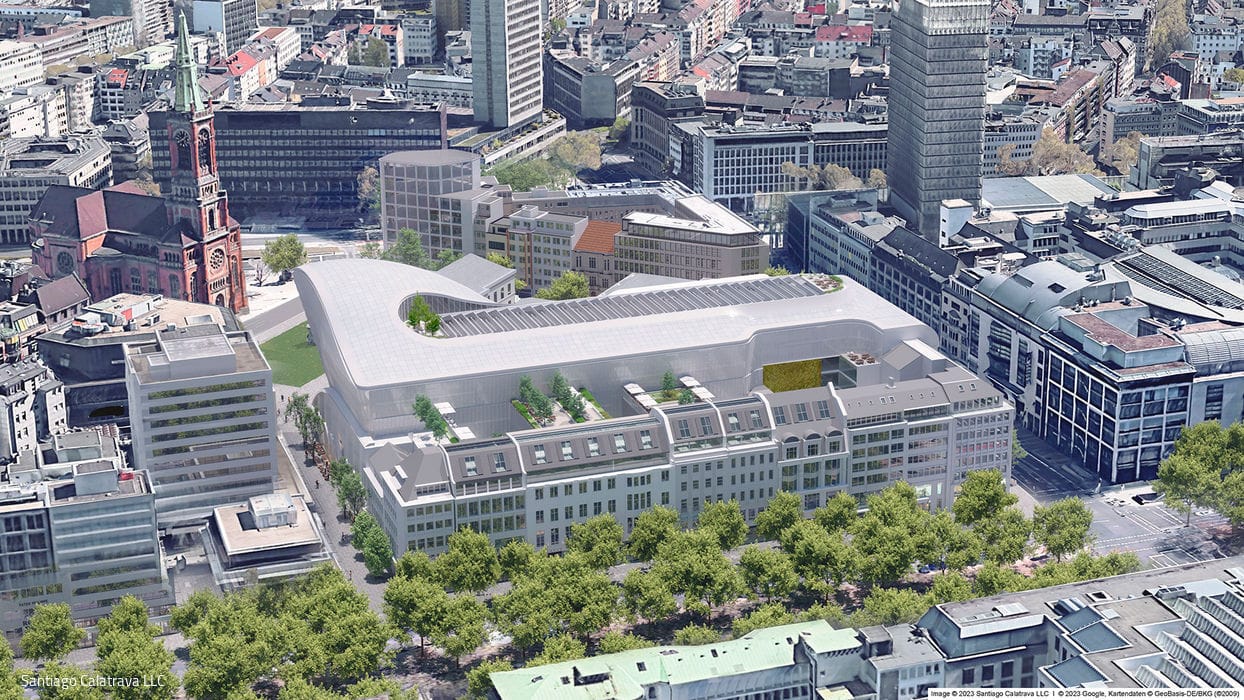
The "Calatrava Boulevard" in Düsseldorf is a prime example where this interplay comes alive—a luxury shopping destination on Düsseldorf's renowned Kö. What drew you to this particular vision?
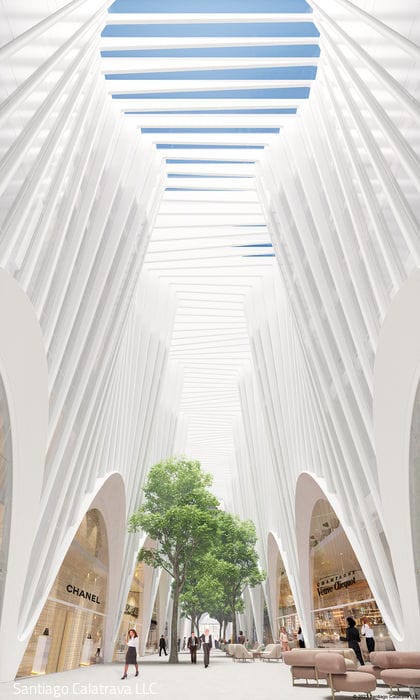
Over four decades as an architect, I've primarily built for the public realm—train stations, museums, bridges—working with public clients, many through competition. This Düsseldorf project is distinctive: a private commission (the Centrum Group) in a magnificent city. You called it a luxury experience. I'd emphasize that "luxury" derives from "lux," the Latin word for light. And what is architecture but the dialogue between light and space? Light renders architecture weightless, ephemeral. Importantly, the boulevard itself remains fundamentally public—accessible from multiple directions, inviting people to linger. It will be a project flooded with light. The term "luxury" is apt, and it serves a greater purpose: this is urban architecture, reshaping the city itself.
Since this is also an urban planning initiative, the sculptural drama we associate with your architecture takes on a more restrained role here.
Three moments matter profoundly here. First, the project as experienced from the Kö—for me, it's like Venice's Grand Canal, a defining element of the city's character. Second, there's essential urban healing at the terminus of Königsstraße near Martin-Luther-Platz, particularly around the Justice Ministry. That area has languished unchanged since the postwar era—it's simply undefined space. By defining the block edge, we allow the Ministry and St. John's Church to emerge as architectural jewels. The boulevard itself plays a sculptural role: vertical lines extend to the roof, forming expansive, dynamic arches suffused with daylight. Inside, trees echo those lining the Kö and Königsstraße, creating a refined aesthetic that speaks the language of the twenty-first century.
Düsseldorf will feature a moving element as well – how will you engineer the retractable glass roof along the boulevard?
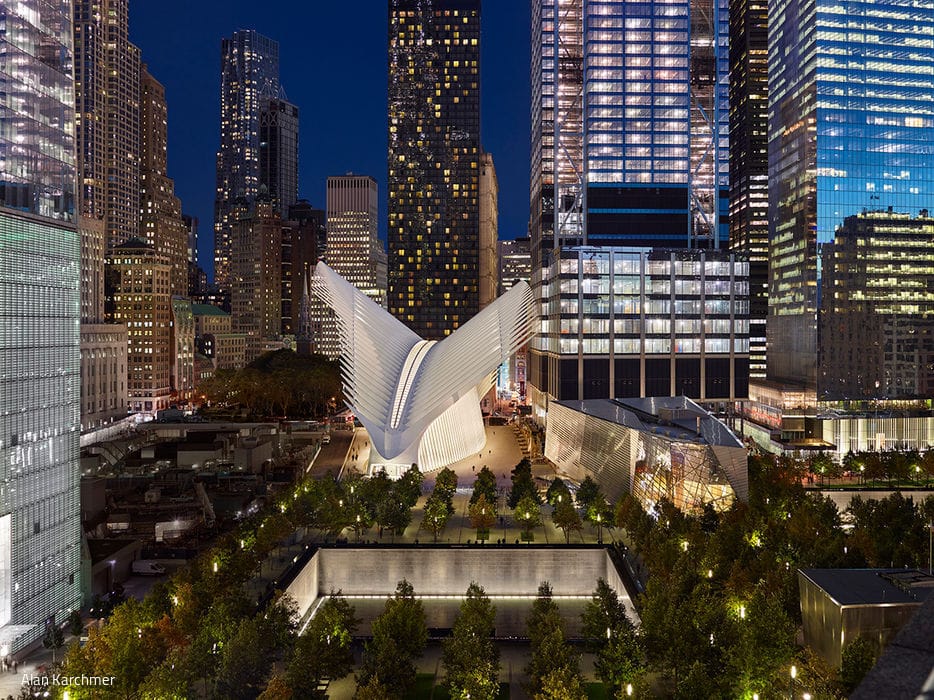
City regulations precisely dictate when interior space legally qualifies as exterior—roughly half the footprint must open to sky. We're using operable panels that open and close seasonally. Years ago, I designed the subway station at Ground Zero in New York. We separated the building so morning sun creates a shaft of light across the center floor. On September 11th at 10:28 a.m., that light stripe crosses the exact center—the moment the second tower collapsed. From structural necessity, we created meaning. That's a principle I hold dear: the building and its deeper purpose become one. That's what we strive for in every project.
Mr. Calatrava, thank you for your time and insights.
Interview by Paul Andreas.
Photography:
Alan Karchmer
www.alankarchmer.com
Thomas Hoeffgen
www.thomashoeffgen.com
Santiago Calatrava LLC
(Published in CUBE Düsseldorf 01|23)
Compact yet striking
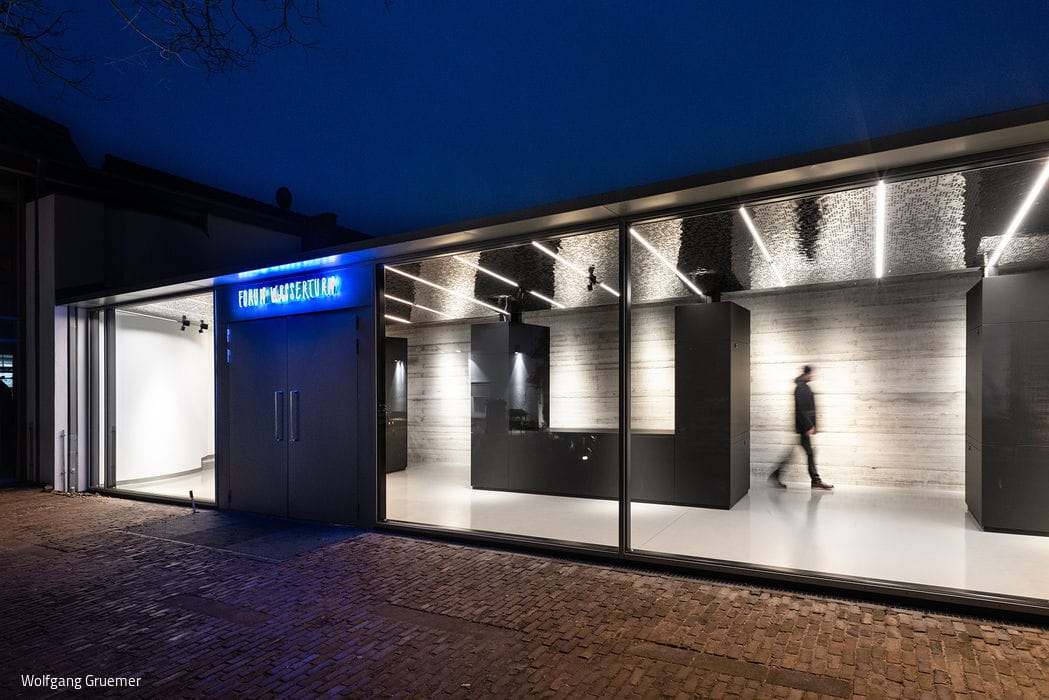
A striking new foyer extends Forum Wasserturm's reach and appeal
A surprising transformation
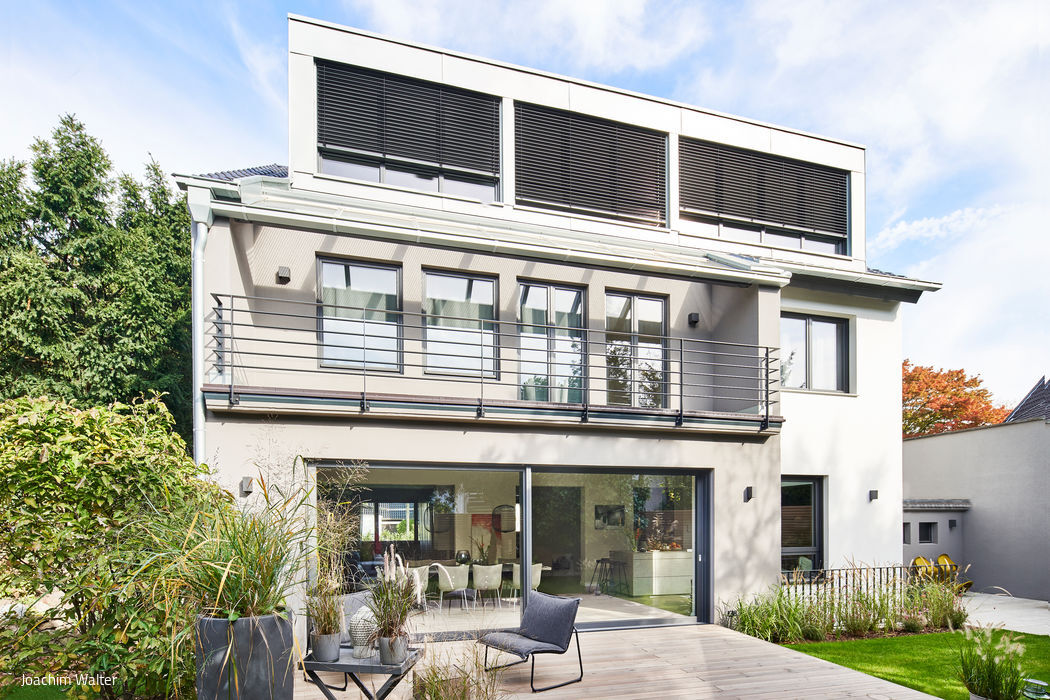
A Gerresheim Home Renewed from Within

Flexible and Connected
Medical Research Centre I fuels interdisciplinary collaboration at the University Hospital

Hospitality in Mint Green
The "Dauser im Hafen" brings the brand to life through local references and artisanal craftsmanship.