


Welcome in Mint Green
"Dauser im Hafen" brings the brand to life with authentic local character and crafted details

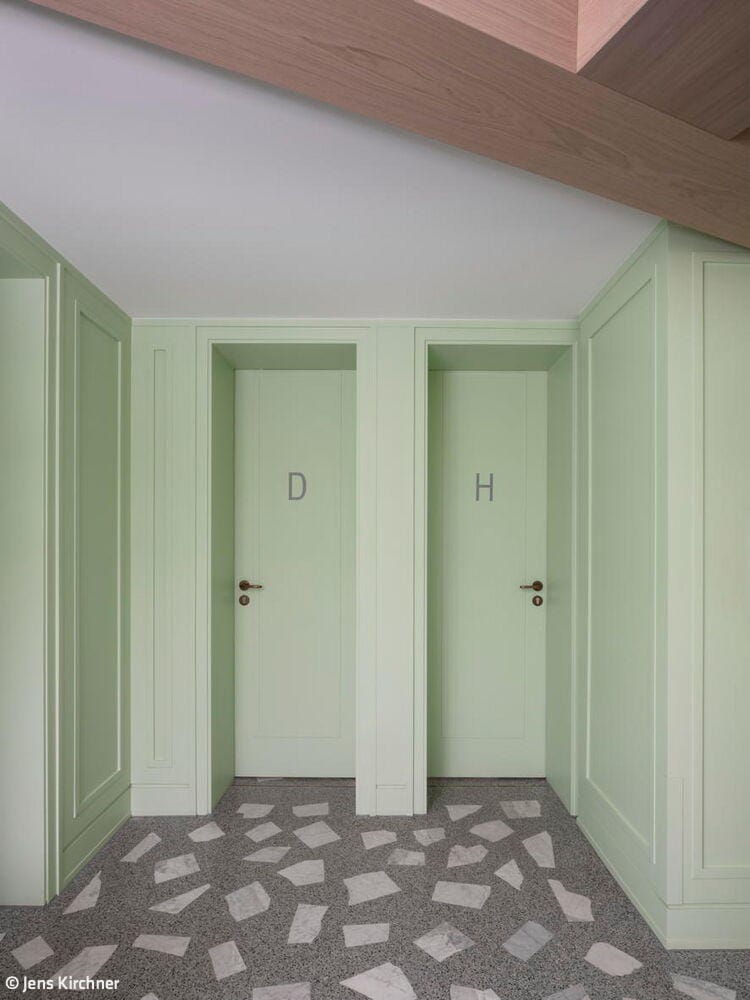
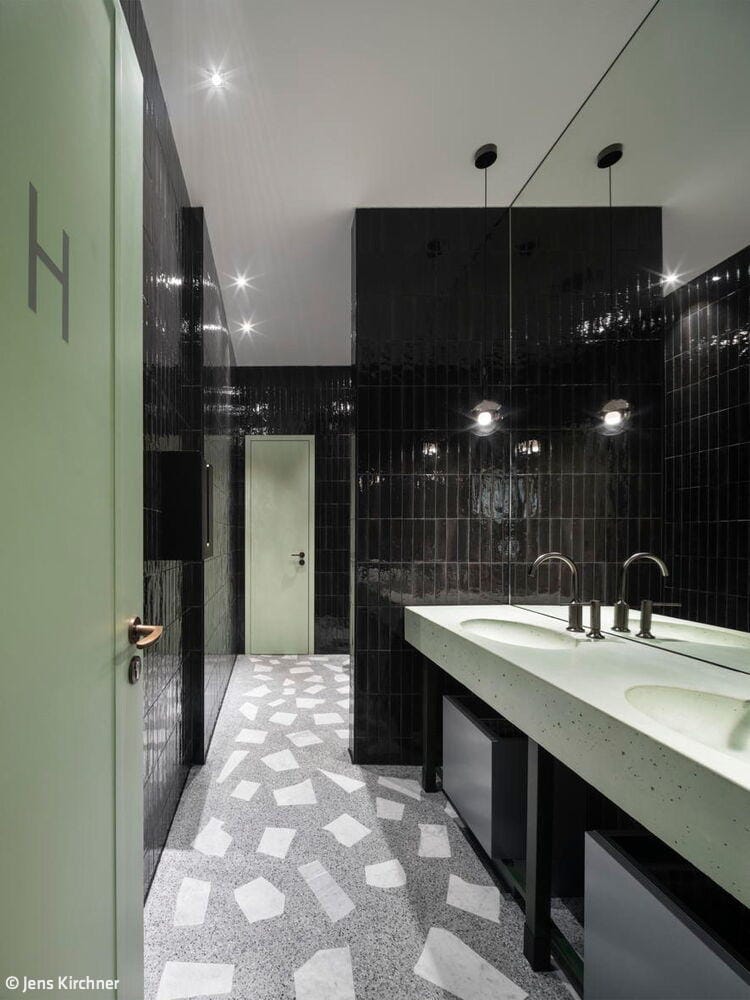
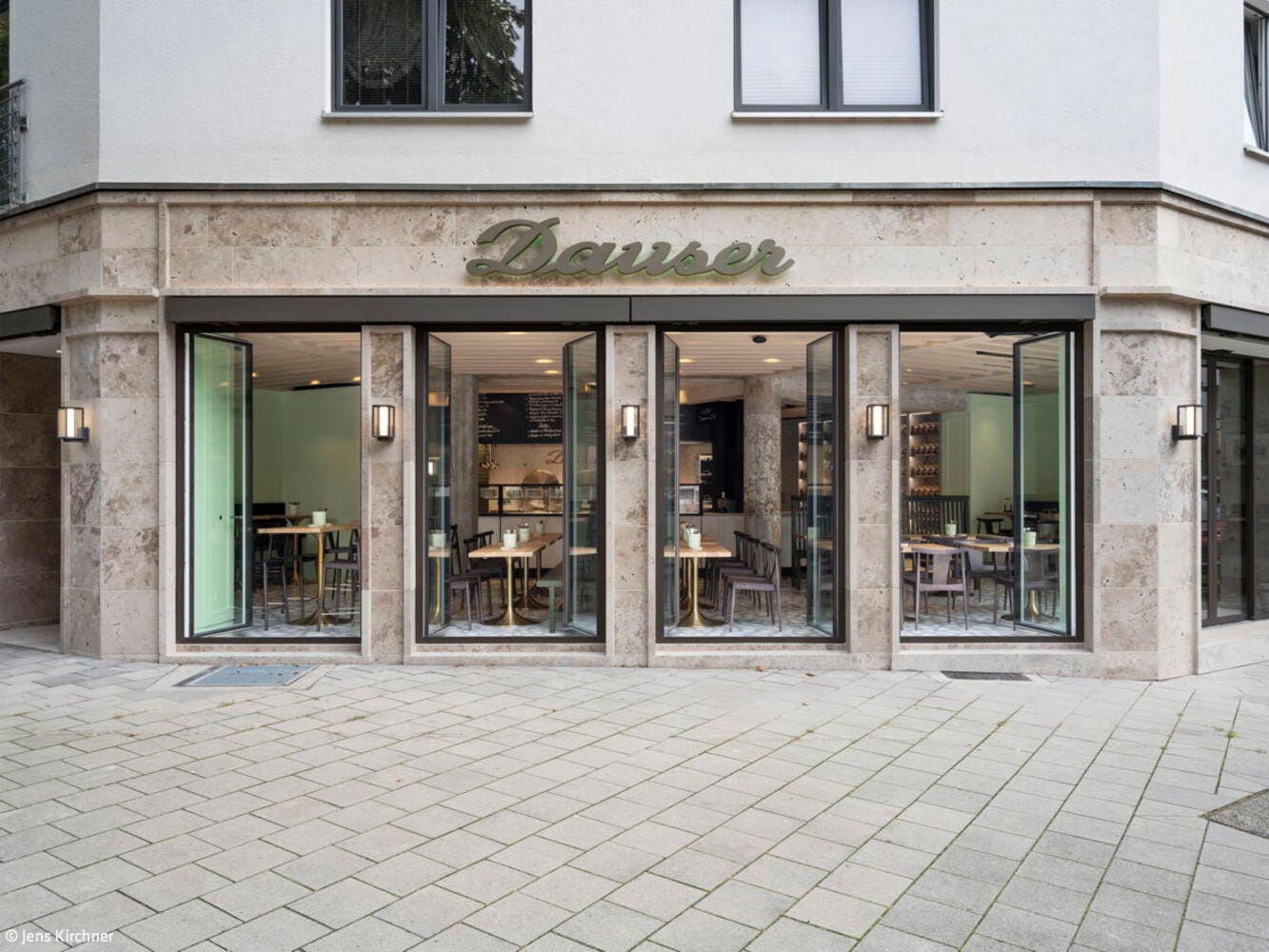
The story began at the harbor in 1947 – and nearly 80 years later, it continues: the storied butchery and restaurant Dauser has opened its third location on Hammer Straße. Designed and realized by Geiselhart Architects from Düsseldorf, "Dauser im Hafen" masterfully weaves together brand identity with a strong sense of place and traditional craftsmanship.
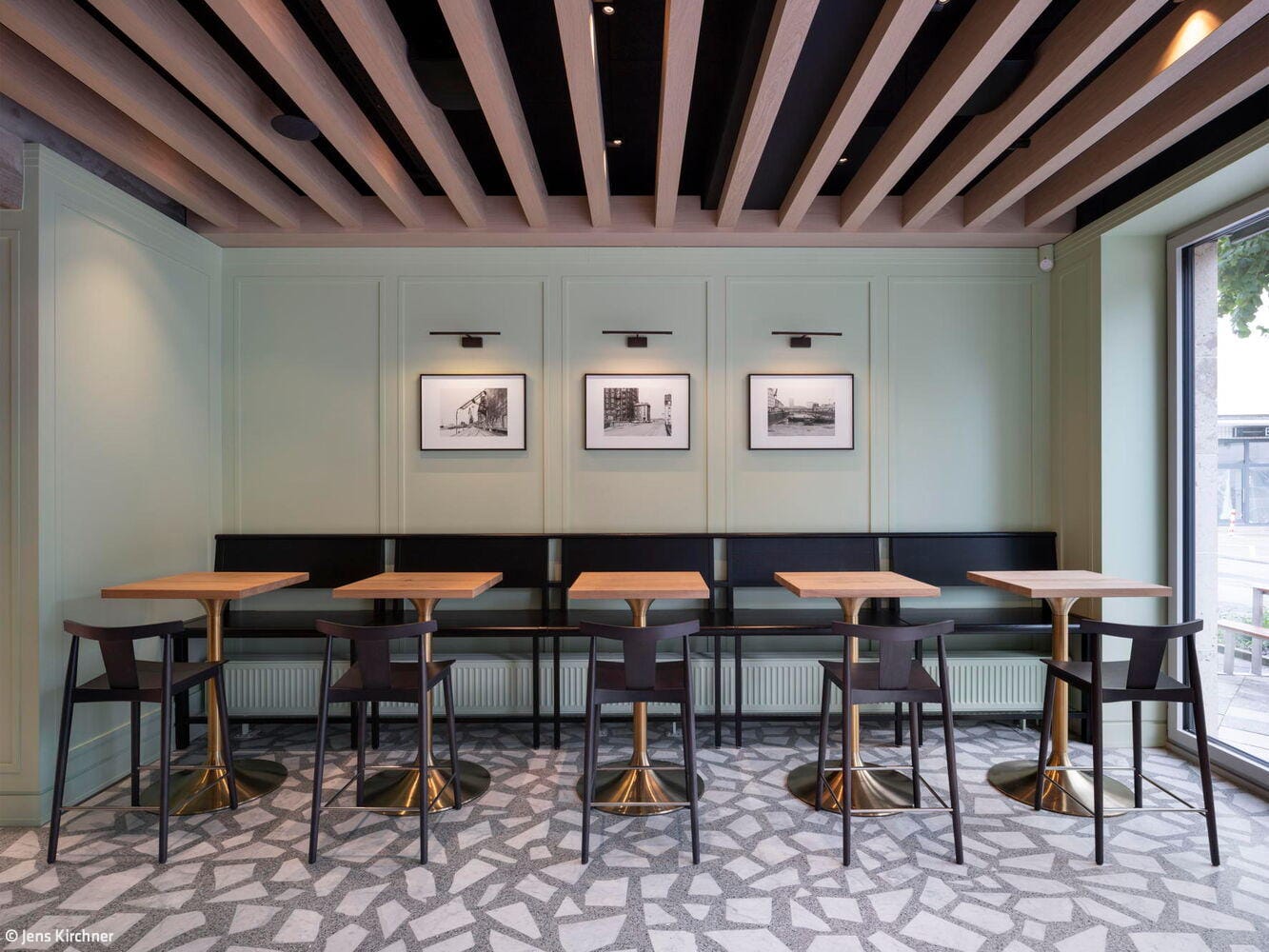
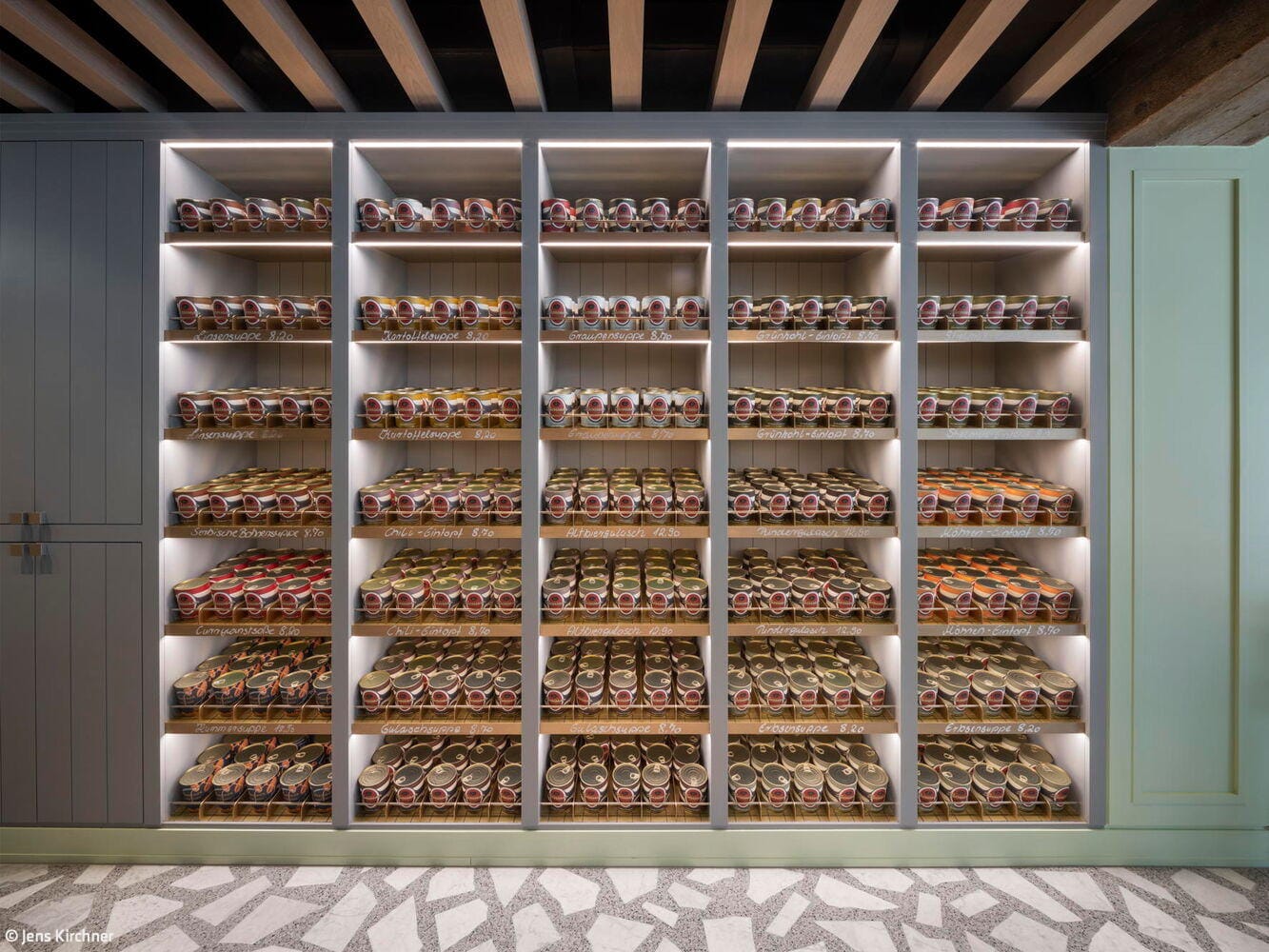
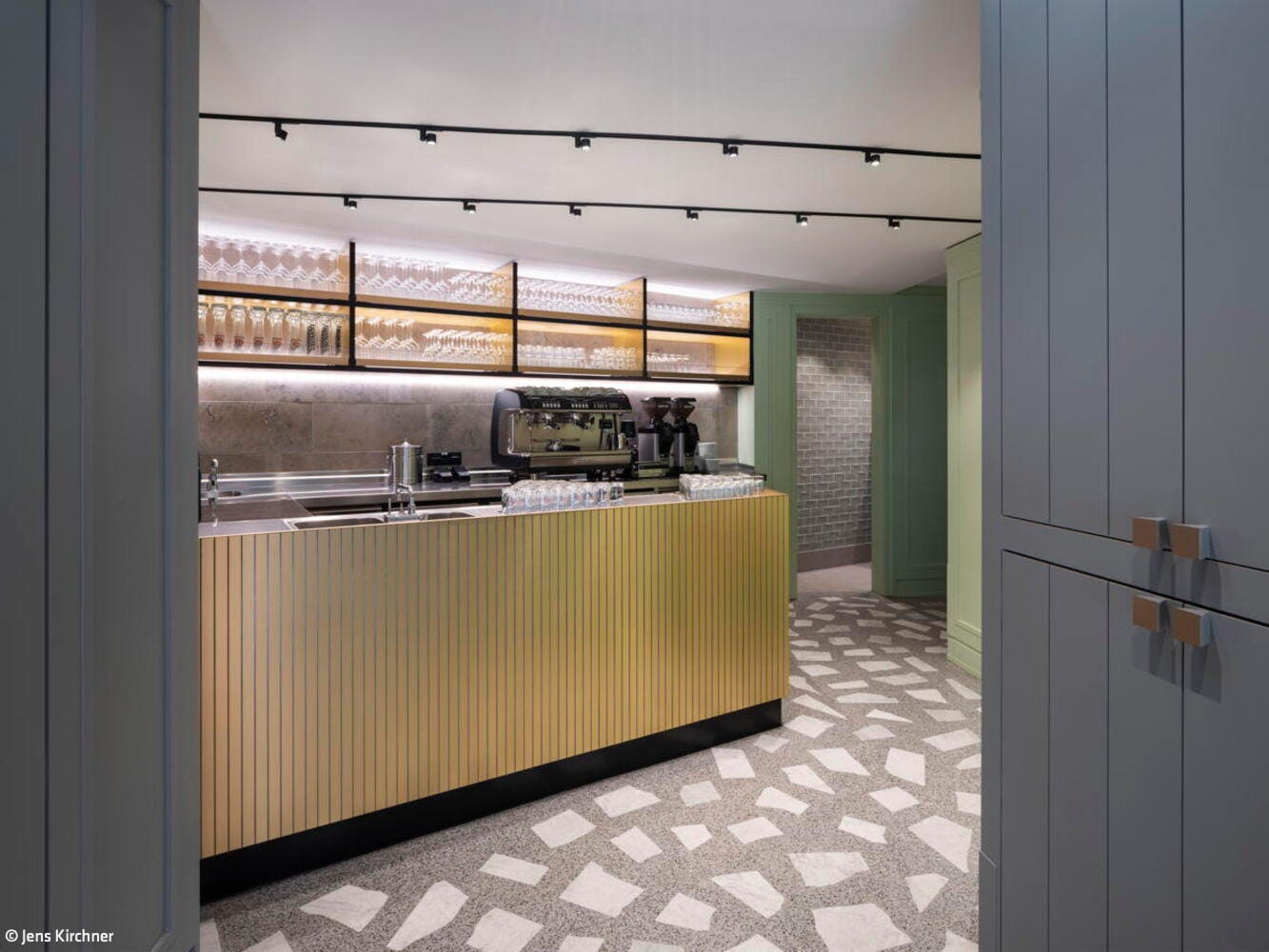
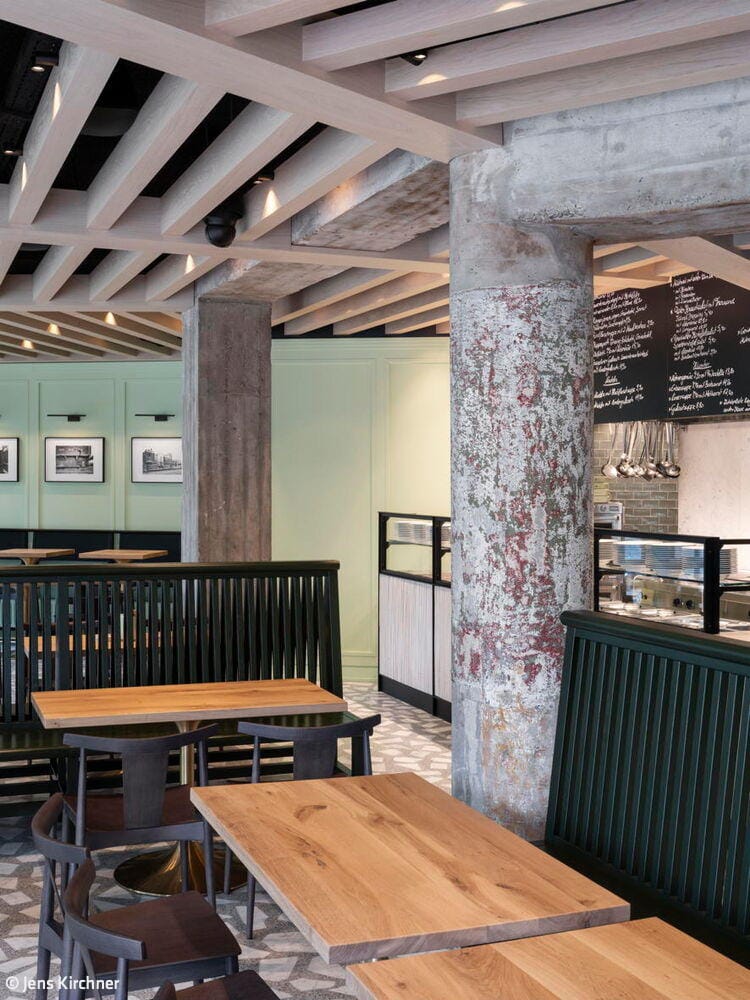
The architect and client first connected through a restaurant that opened several years ago in Düsseldorf's Carlstadt district: Grande Étoile, renowned for its handcrafted Art Deco interiors and immersive brand experience, was created by Jürgen Geiselhart and remains a favorite haunt of owner and managing director Christian Dauser. "I want exactly that," he said – a clear vision that would guide the project. The ground-floor retail space in a 1950s residential building had long housed the popular "Robert's Bistro," but had served dining establishments for decades even before that. Still, the renovation required full compliance with current fire and sound protection codes. The ventilation system and open service counter presented particular challenges: constrained ceiling heights prevented conventional ductwork installation, forcing the architects to run ventilation through custom reinforced concrete shafts buried up to two meters deep in the ground. The design's signature element is Dauser's distinctive house color – a soft mint tone that, paired with carefully selected materials and details, creates a compelling fusion of industrial loft aesthetics, elegant 1950s style, and a modern take on traditional brewery warmth. Like all Dauser locations, the open dining area flows seamlessly around the service counter, dining zones, and display shelves stocked with the company's signature canned goods. True to the building's postwar era, the floor features a flawlessly installed terrazzo surface embedded with large white marble fragments – so durable it withstands rolling carts. Light-stained oak beams reinterpret the rustic brewery ceiling for contemporary tastes while allowing the concealed black technical ceiling—housing ventilation, lighting, and speakers—to fade gracefully into the background. This combines with traditional coffered wall panels, also finished in mint, creating visual continuity. The canned goods display was custom-built from low-friction brass laminate, enabling goods to automatically advance forward as inventory moves. The service counter, anchored by black steel frames and relief concrete panels, creates a visual dialogue with the dark window frames of the newly designed travertine façade – lending the storefront polish both inside and out.
Photos:
Jens Kirchner
www.jens-kirchner.com
(Published in CUBE Düsseldorf 04|25)


Minimally Invasive
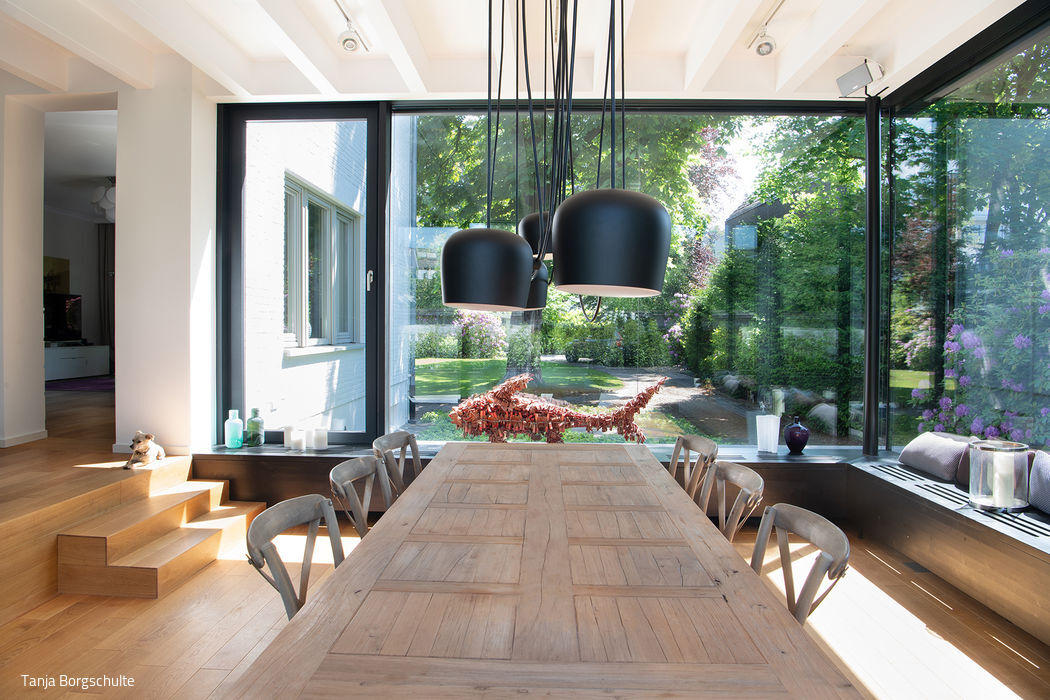
A Meerbusch home finds new life through thoughtful, understated additions
Community as guiding principle
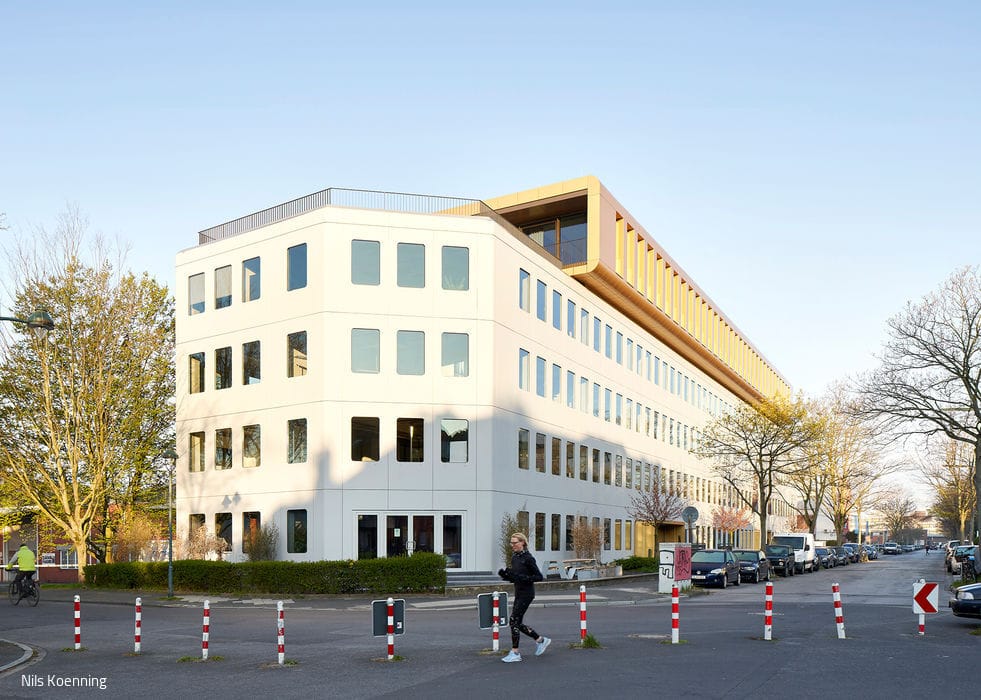
New Work and Community Spirit: A Striking Office Transformation in Heerdt
Layered monolith
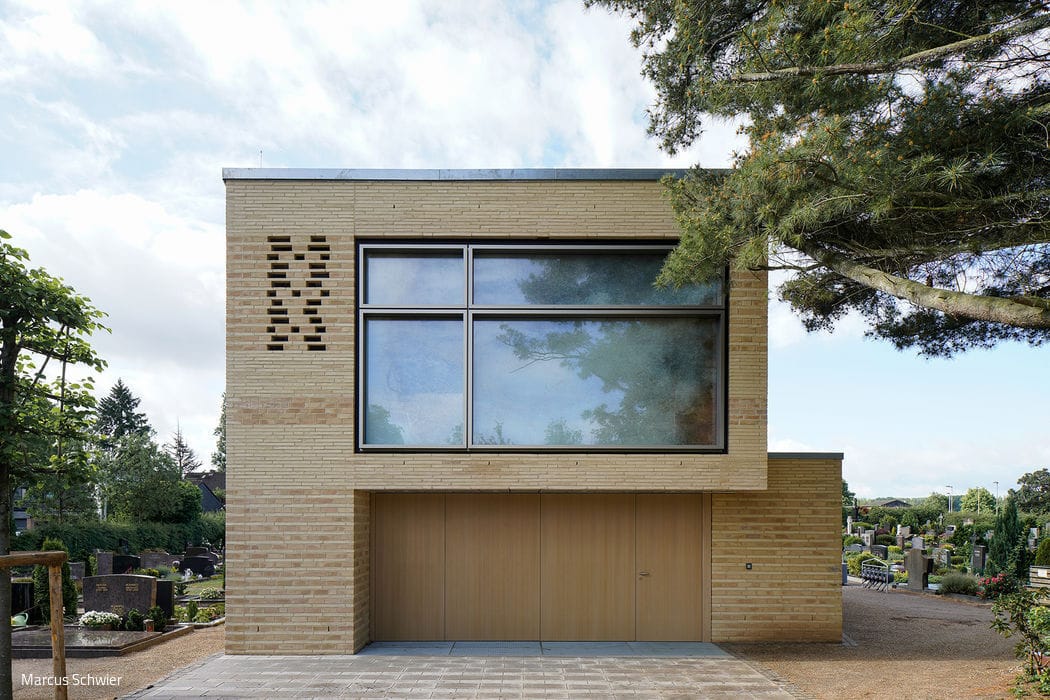
A Cemetery Chapel in Monheim: Crafting a Powerful Space for Remembrance
Maintenance with External Access
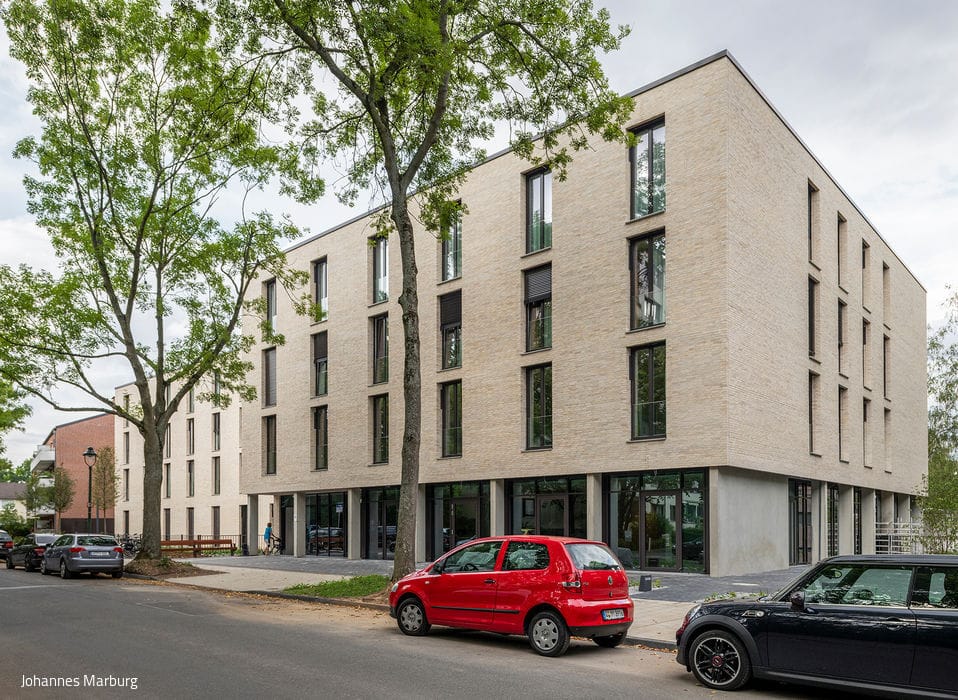
The Tersteegen House of the Diakonie in Golzheim has been given a compact new building.