


Connected by Design
Medical Research Centre I: Fostering Interdisciplinary Collaboration at University Hospital Düsseldorf


The campus of Düsseldorf University Hospital (UKD) is predominantly densely developed. Only in the area of the Medical-Neurological-Radiological Clinic is there still a continuous green space, which is currently being developed for research centers. As the first building block in the northern area of the development site, the architects BDA RDS Partner from Hattingen have designed the new Interdisciplinary Research Center for Wet Research. The new building complex consolidates 14 clinics and institutes with their laboratory facilities, all subject to the special safety requirements of the Genetic Engineering Act.
Oriented in an east-west direction, the new building is accessed on foot via two traffic axes. Along the northern access corridor, designated for general pedestrian traffic without access controls, all office, seminar, meeting, and lounge areas are arranged. The laboratory spaces, by contrast, are accessed via a southern circulation axis. Both traffic routes converge in three additional building sections, conceived as a triadic arrangement, which house further laboratory facilities along with associated office workstations. Between these sections, two green courtyards open up, providing natural daylight and enabling ventilation and air exchange. Supply and disposal are primarily handled through connections to the UKD's underground tunnel system for automated material transport (AWT). Rather than creating isolated departmental areas, the building is distinguished by distributing the 14 institutes across floors in a way that creates optimal conditions for interdisciplinary collaboration. Over the long term, the design remains flexible to accommodate changing laboratory uses. In the basement, the so-called "Core Facilities" are grouped around the western courtyard: in these laboratory spaces, costly laboratory equipment is operated efficiently through shared use by all institutes. The grid underlying the floor plan is also characteristic of the uniformly designed office and laboratory facades: the ventilated facade of white exposed concrete elements and basalt-gray window systems in post-and-beam construction withframeless Structural Glazing aesthetic aligns with the UKD's overarching design standards. To provide adequate shading, an external solar protection system featuring a textile, translucent screen has been integrated into the facade. Fully glazed facade sections, both on the north and south elevations, further articulate the building mass—including the fully glazed main entrance, which stands out in striking contrast with its exposed concrete frame.
Photos:
Architects BDA RDS Partner
(Published in CUBE Düsseldorf 03|24)

Circular Materials Revolution
"The Cradle" in the Media Harbour represents a landmark project in circular construction.
Sustainable and Minimal
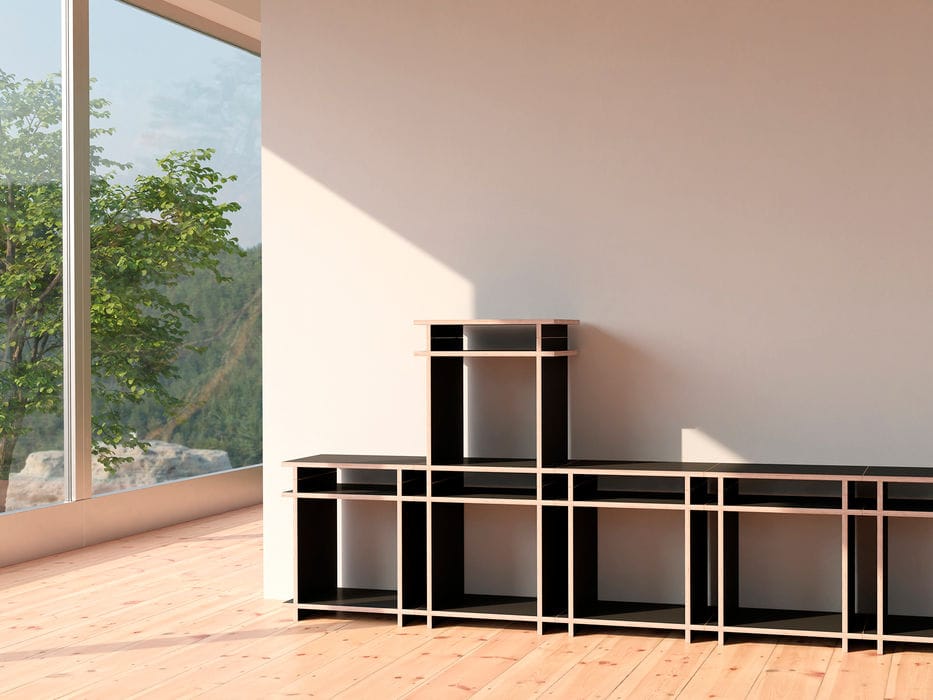
"Less is Future"—this principle shapes every aspect of KIYO's design and production.
Traditional Living Reimagined
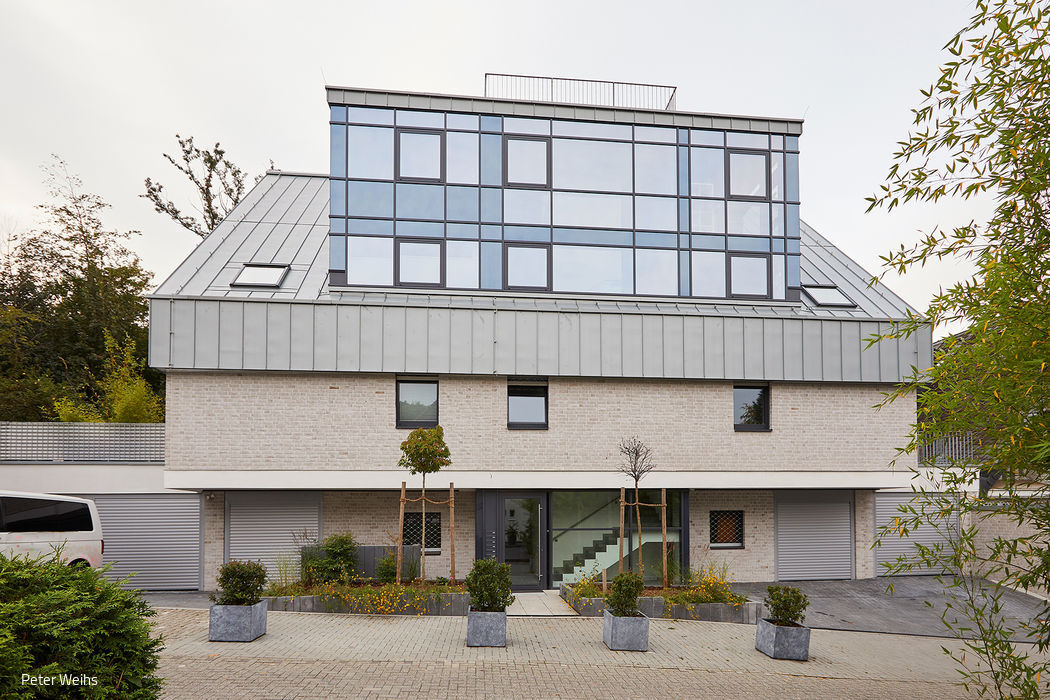
From Two-Family Villa to Multi-Generational Home
Smooth Pebble
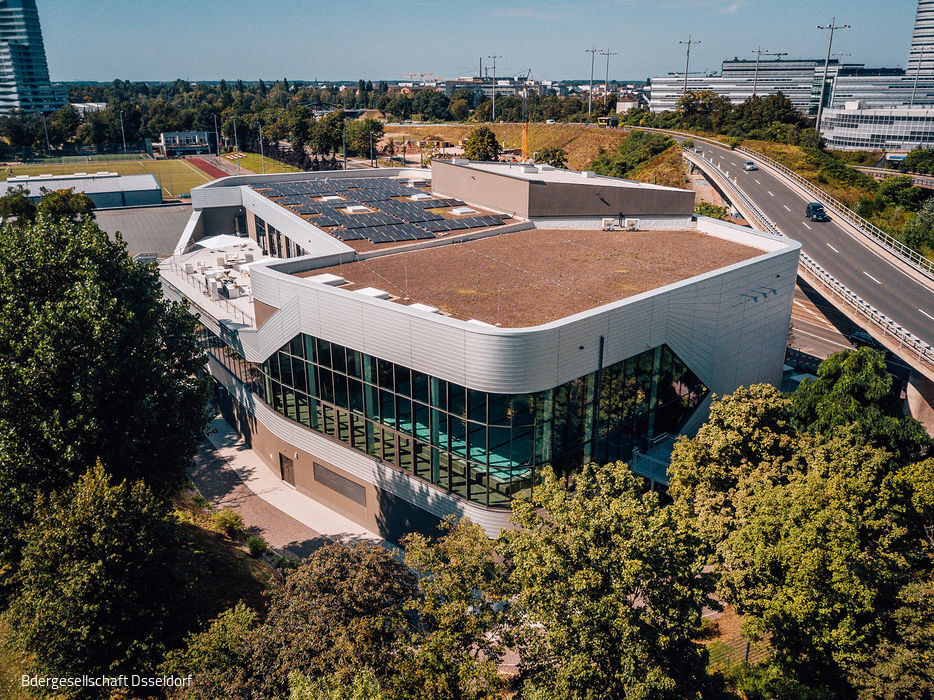
The new indoor swimming pool "Rheinblick 741" in Heerdt merges aquatic recreation with civic and cultural functions.