


The Circular Material Revolution
"The Cradle" in the Media Harbour stands as a beacon for circular construction

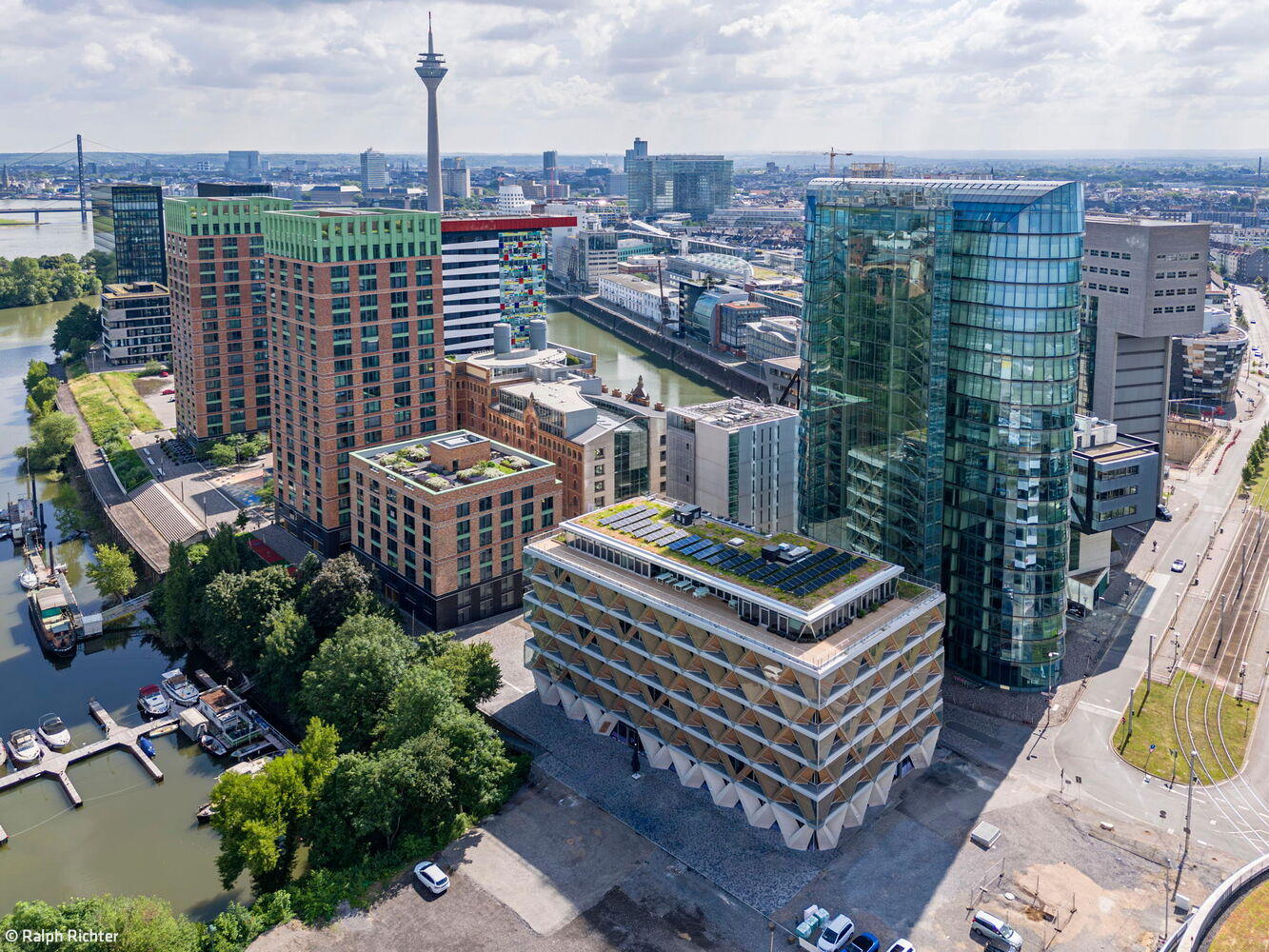


Challenging architectural convention and charting a new course – that's the vision behind "The Cradle," a striking new office building on the edge of Düsseldorf's Media Harbour. A collaborative team of HPP Architects, developer Interboden, and specialist consultants has brought a pioneering circular construction project to life—one that breaks ground without relying on established precedents.
The office building was erected on what was then the last waterfront plot on Speditionsstraße in Düsseldorf's MediaHarbor. Today, the structure stands out for its exceptionally high material health standards and inspiring spaces for tenants and visitors alike. The façade's material composition—wood, glass, and concrete—combined with distinctive V-shaped columns that frame views of the surrounding landscape and create recurring opportunities for visual breaks, lends the interior an impressive atmosphere. Moreover, thanks to wood's filtering and regulating properties, as well as the floor-height "Green Walls," occupants benefit from outstanding indoor air quality, which can be particularly health-promoting for those with asthma or allergies. The ground floor houses publicly accessible areas—such as coworking spaces operated by an office solutions provider and the "Hato" restaurant, which features a terrace oriented toward the water. Circular building is premised on the idea that resources are not discarded as waste, but rather all materials used are reintegrated into new cycles. Following the so-called Cradle-to-Cradle® principle, "The Cradle" functions as a material repository: every material incorporated in the building was evaluated for material health, freedom from harmful substances, and future disassembly capability. Additionally, the diamond-patterned wooden façade was developed contextually on site, and integrally incorporates structure, solar shading, and loggias into its design. It simultaneously serves as a symbolic expression of circularity, as the modular V-shaped larch wood columns follow the "Design for Disassembly" concept. In total, 2,150 m³ of wood from certified sustainable European forestry—predominantly German sources—was used in the construction. As a renewable material, wood replaces environmentally harmful concrete wherever possible, sequesters carbon, and thereby improves the building's carbon footprint. The Circularity Passport®—a planning and documentation tool for calculating circularity potential—provides insight into this: compared to standard buildings, "The Cradle" achieved a 56 percent improvement in material health and a 50 percent reduction in carbon footprint.
Photos:
Ralph Richter
www.gurkenland.de
(Published in CUBE Düsseldorf 04|24)
Products with Character
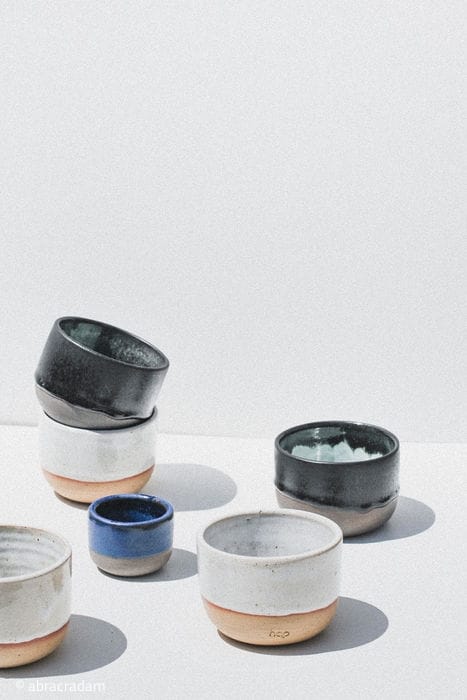
In her designs, Hoffmann deliberately contrasts smooth surfaces with raw, textured ones.
Asymmetrically contoured
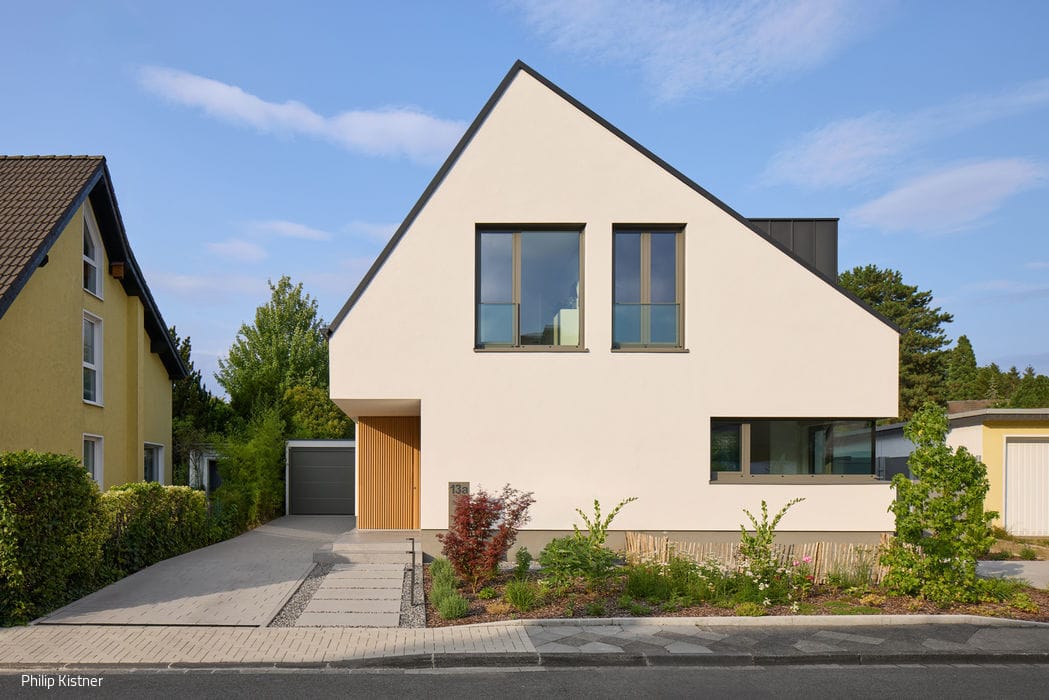
A gabled house in Ratingen that adapts to your family's needs
From Community Center to Neighborhood Hub
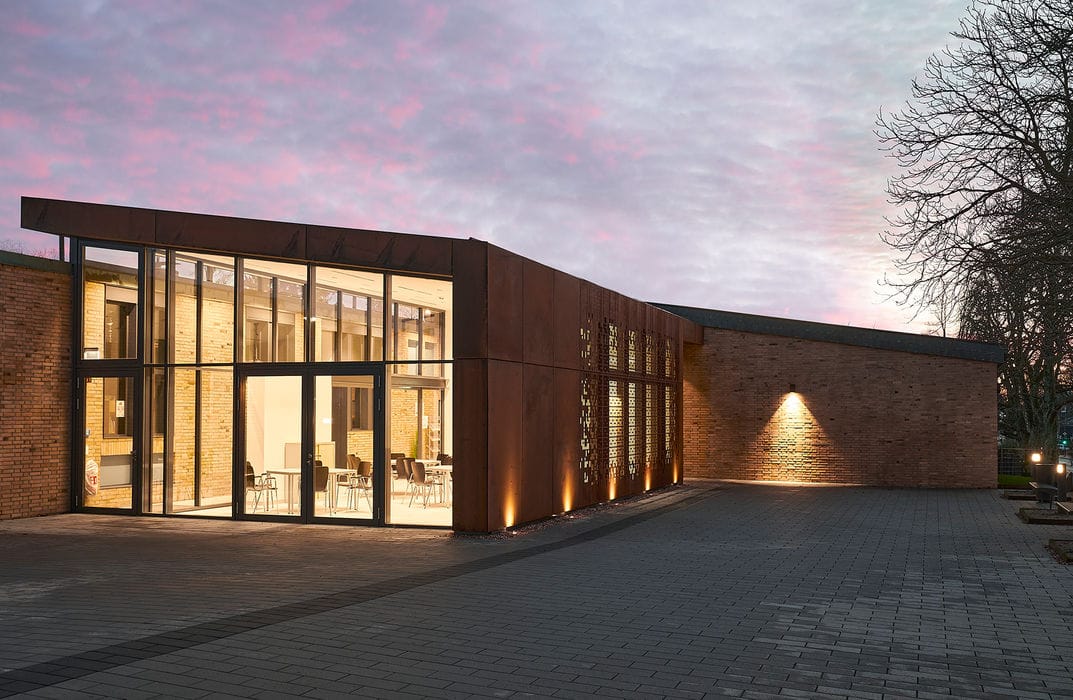
A Community Centre Reimagined: Extension and Renovation

Clean Lines and Elegance
Tanja Branisavljevic creates contemporary ceramics