


Building for the Future
A single-family home prototype that answers the climate challenge
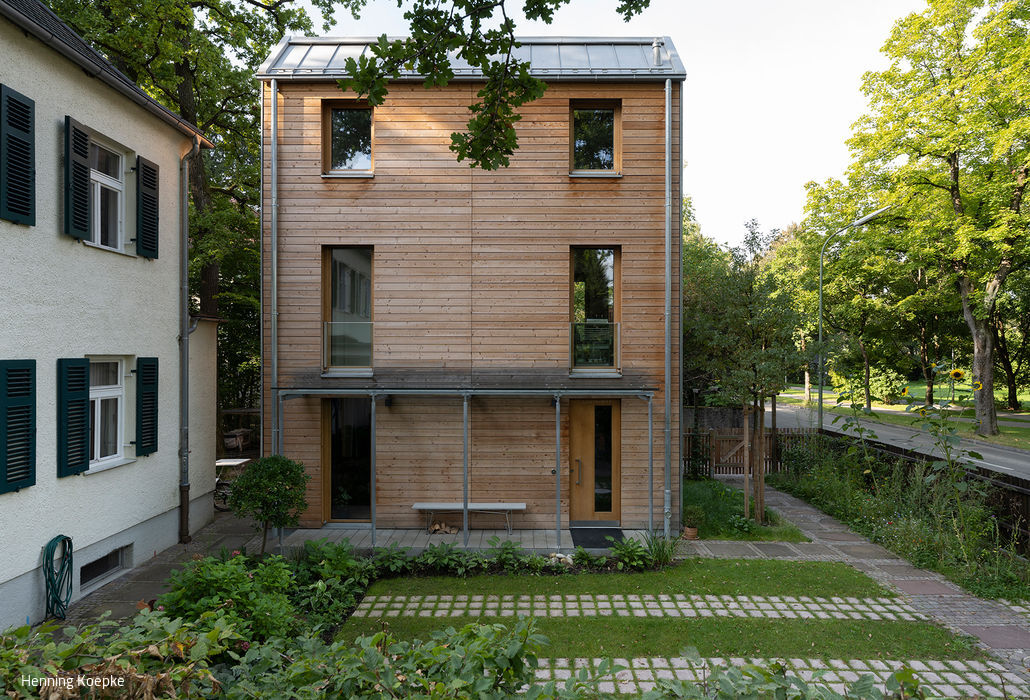


This project explores the future of construction—resource-conscious, climate-neutral, and genuinely sustainable. RSV (Richarz Schulz Verem) Architects from Gröbenzell are committed to embodying these principles in their designs. For a new residential project in Pasing, the firm applied all these criteria from the ground up. A couple commissioned an addition—essentially a companion building—to replace the garage that originally stood on their property. They wanted it to serve as a model for sustainable building practices. Within the allowable building footprint sits a modest three-story timber house that belies the sophisticated thinking behind every decision. The design emerged directly from the core requirements: minimize sealed land. At just 38 m² footprint yet 88 m² of living space, the house accommodates three residents with remarkable efficiency. Eliminating the basement was a conscious choice—it reduces concrete consumption, a material-intensive building product. The entire ground floor can be separated and operated as independent housing, allowing the structure to adapt fluidly to life's different chapters: starting a family, expanding, downsizing, or accommodating care needs. The first floor contains the living and kitchen areas. The second floor serves as bedroom and workspace. The ground floor includes a fully accessible bathroom and additional room. A rooftop terrace on the new garage provides private outdoor connection. Floor-to-ceiling windows positioned opposite one another maximize natural light, cross-ventilation, and views to the landscape. The result: a generous sense of space and visual connection to the outside, despite the compact footprint.
The timber structure enabled optimization of both the façade's thermal performance and spatial efficiency, allowing the living area to be maximized within a small footprint. Compact form, superior insulation of walls, floor, windows, and roof, combined with controlled ventilation featuring heat recovery, dramatically reduce thermal losses and heating demand. Non-toxic, recyclable materials formed another pillar of the sustainable strategy. The house was designed for renewable energy generation from the outset. Photovoltaic panels installed on the asymmetrical shallow pitched roof—nearly a monopitch design—generate approximately 30 percent of total energy needs. These integrated systems enable the house to achieve KfW Efficiency House 40+ certification. Every component listed represents a key principle in sustainable building design.
www.richarz-schulz-verem-architekten.de
Photography Credits:
Henning Köpke
www.henningkoepke.de
(Published in CUBE Munich 01|23)



Wooden House at Obsthain
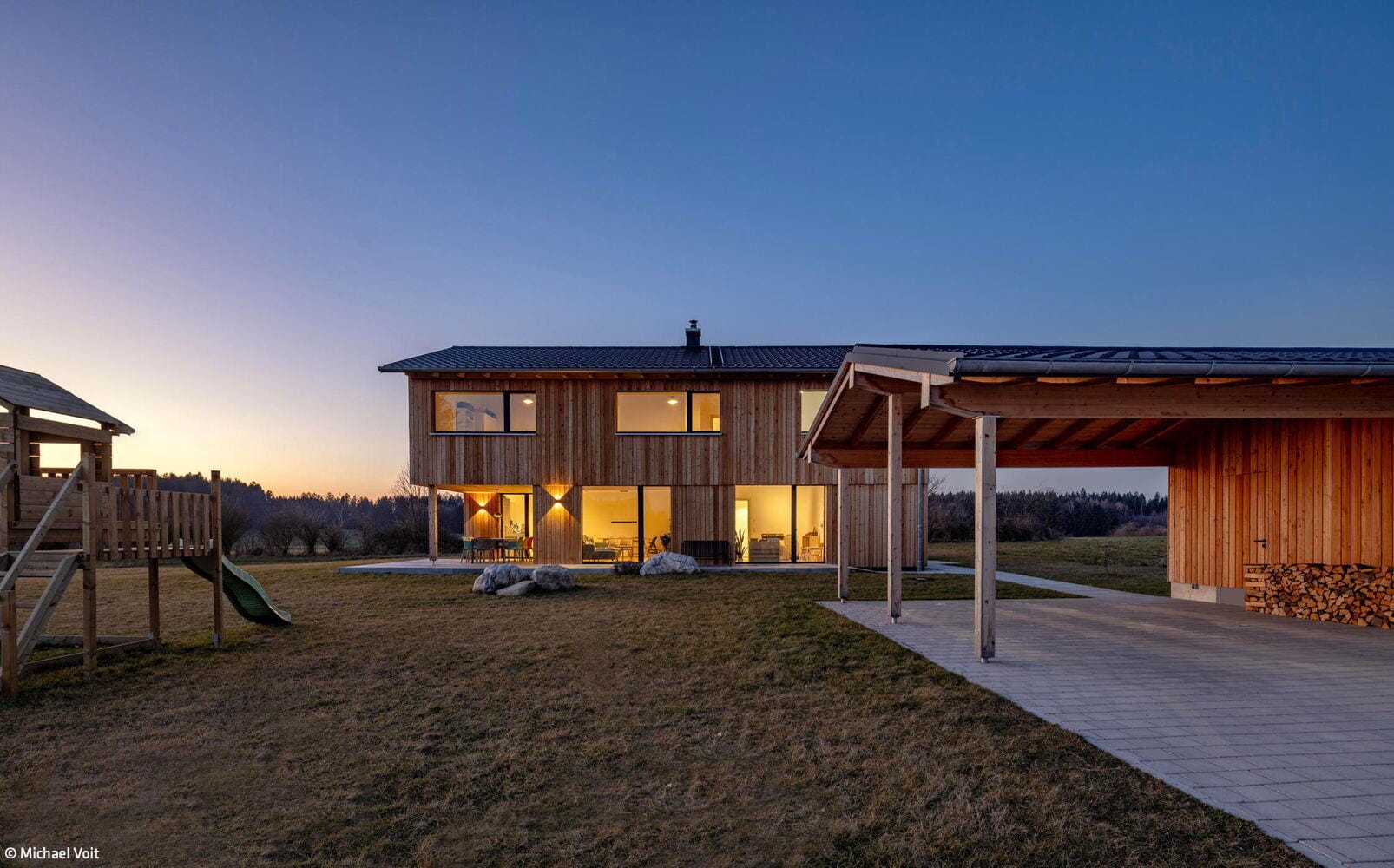
Two complementary structures in dialogue with the landscape
Design Meets Craftsmanship
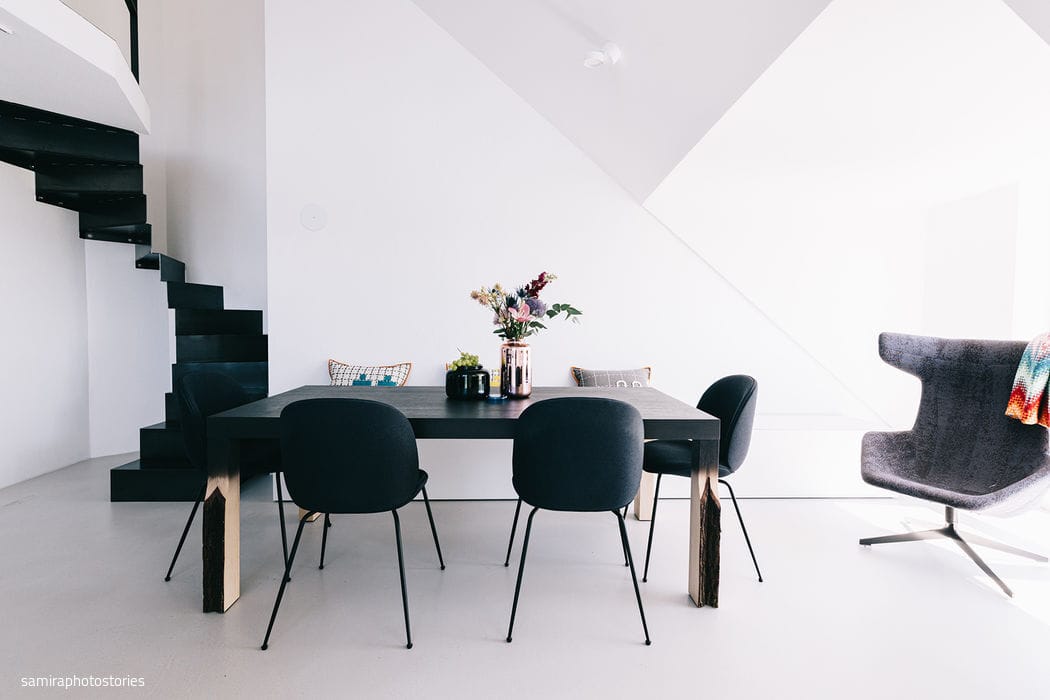
A Gilching penthouse that impresses with clean lines and distinctive details

Lakeside Housing Ensemble
Hybrid Timber and Concrete Residential Development in Utting am Ammersee
Ménage à trois
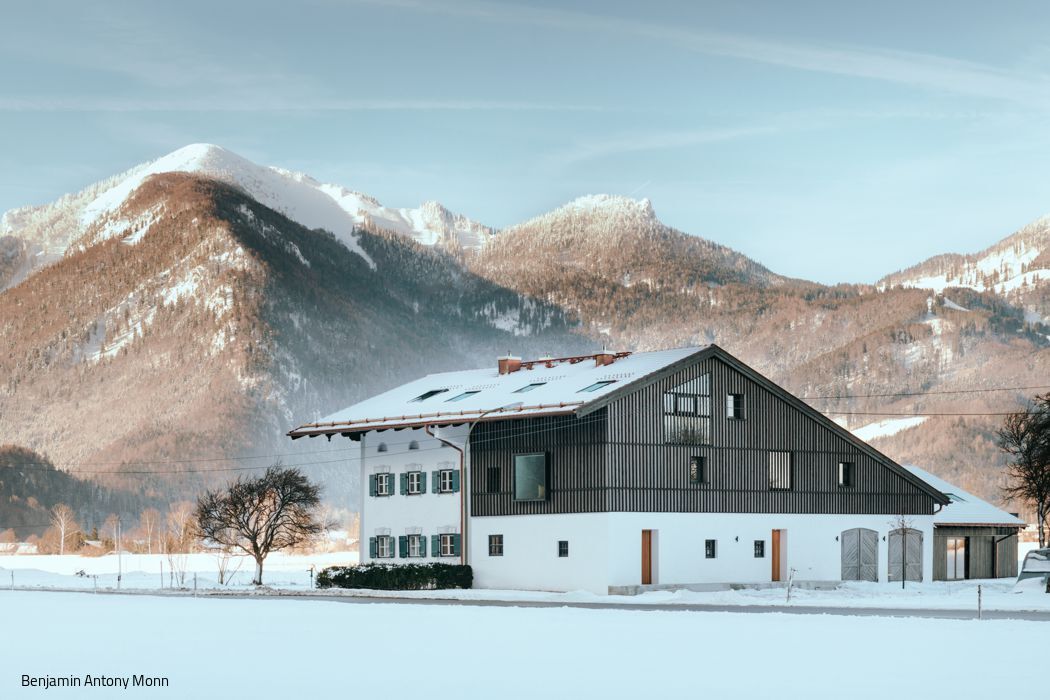
One Farm, Three Homes: A Farmstead Reimagined