


The Little Black
A retreat at the forest's edge, surrounded by abundant garden
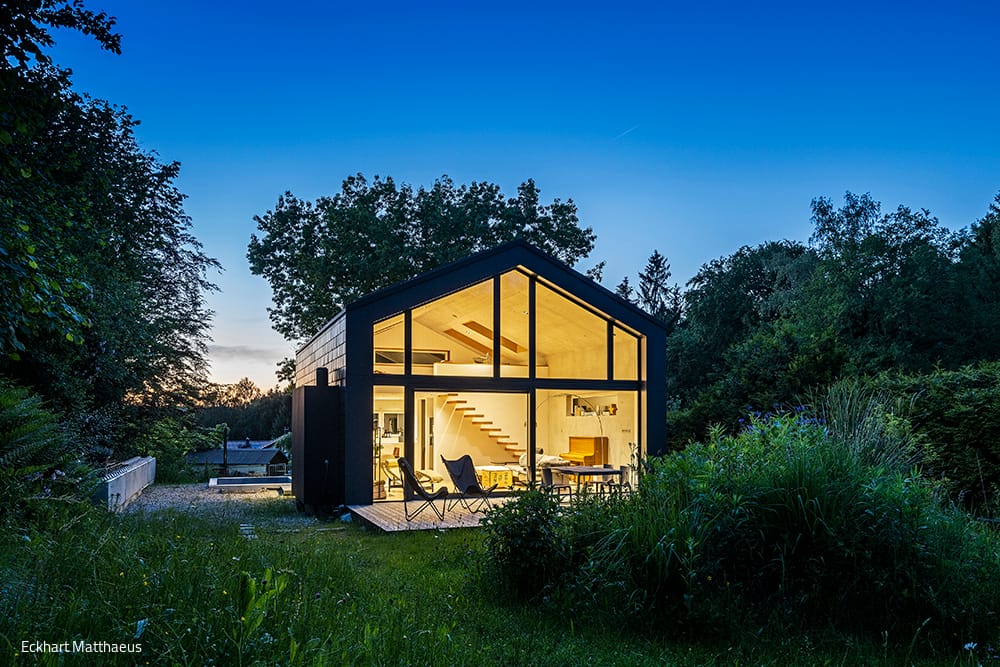
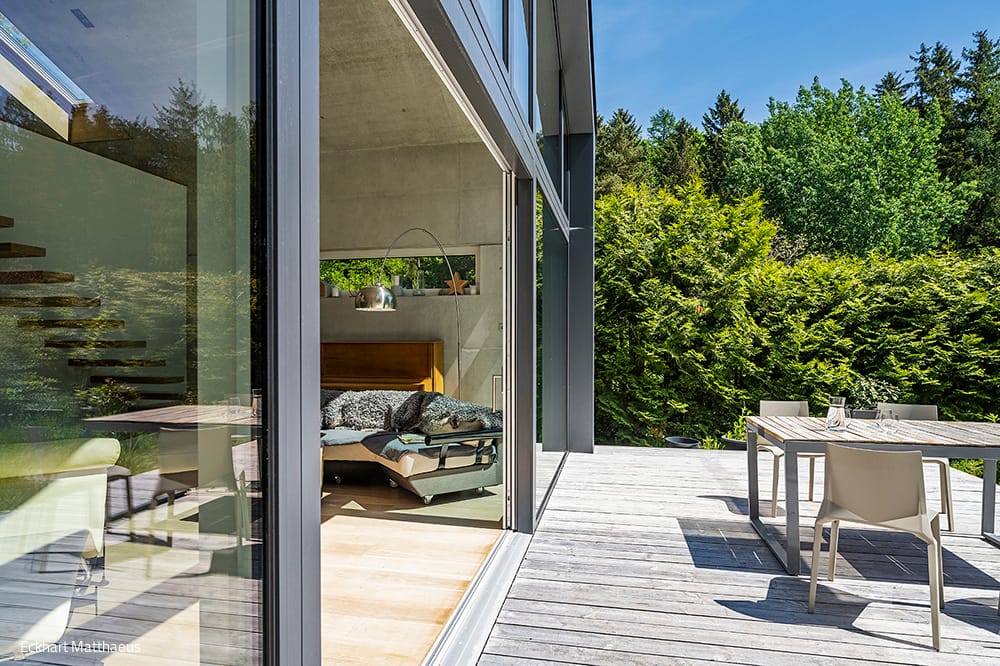
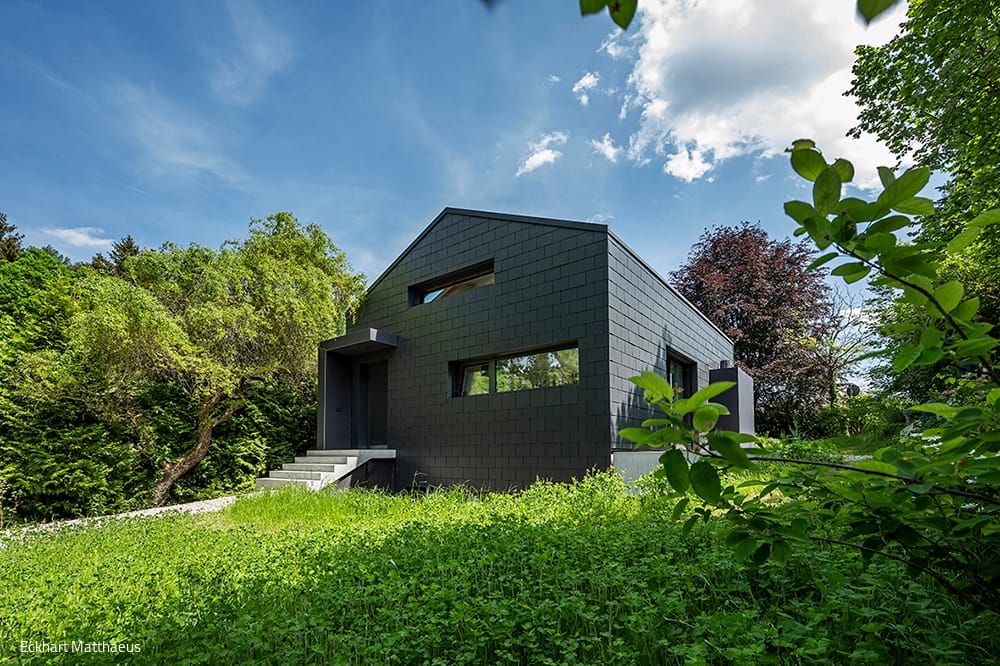
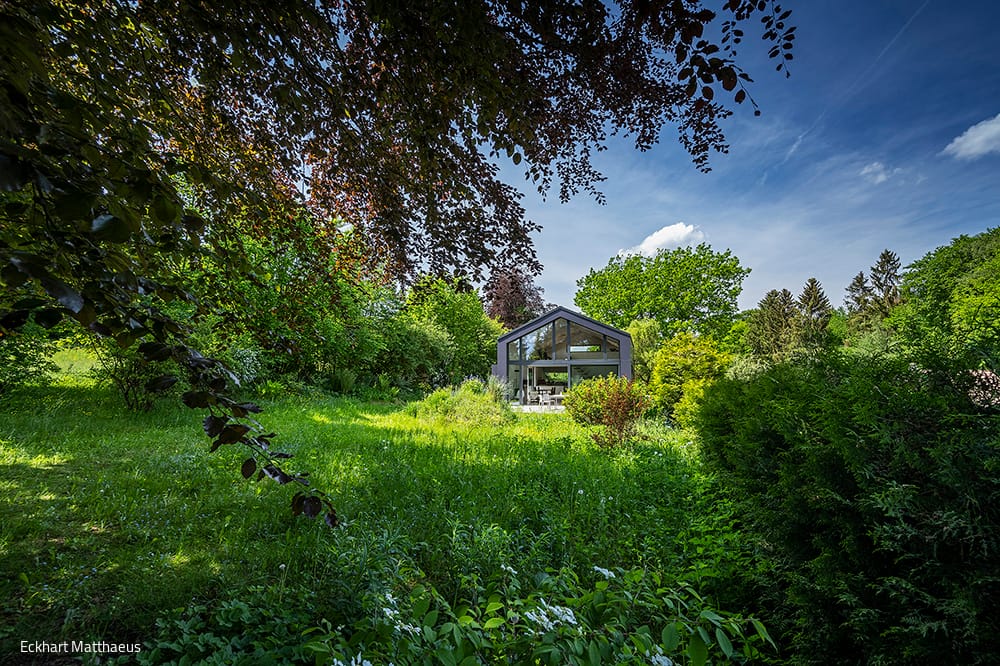
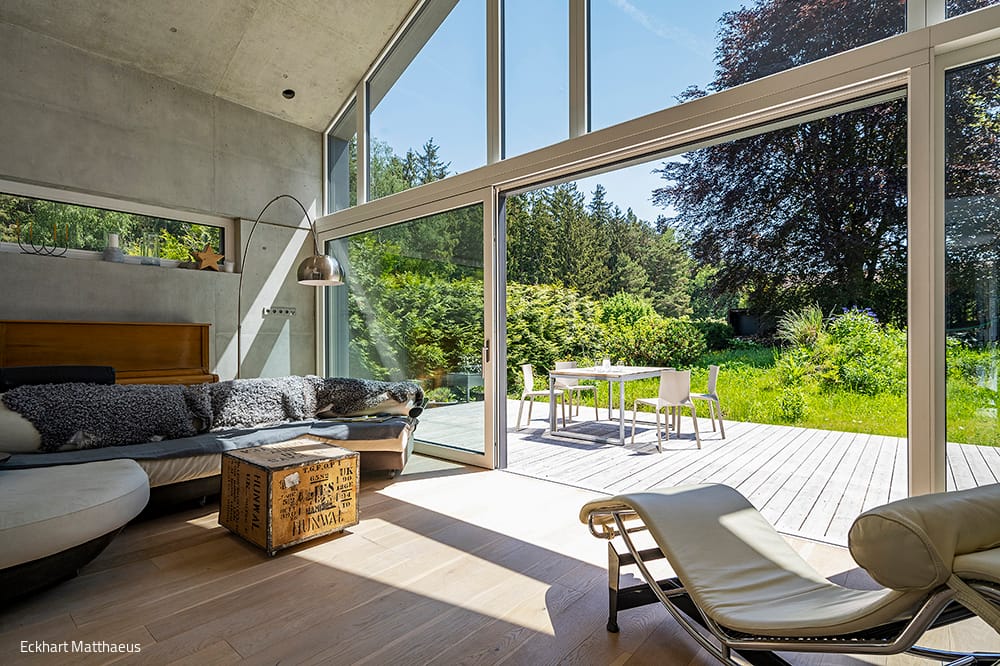
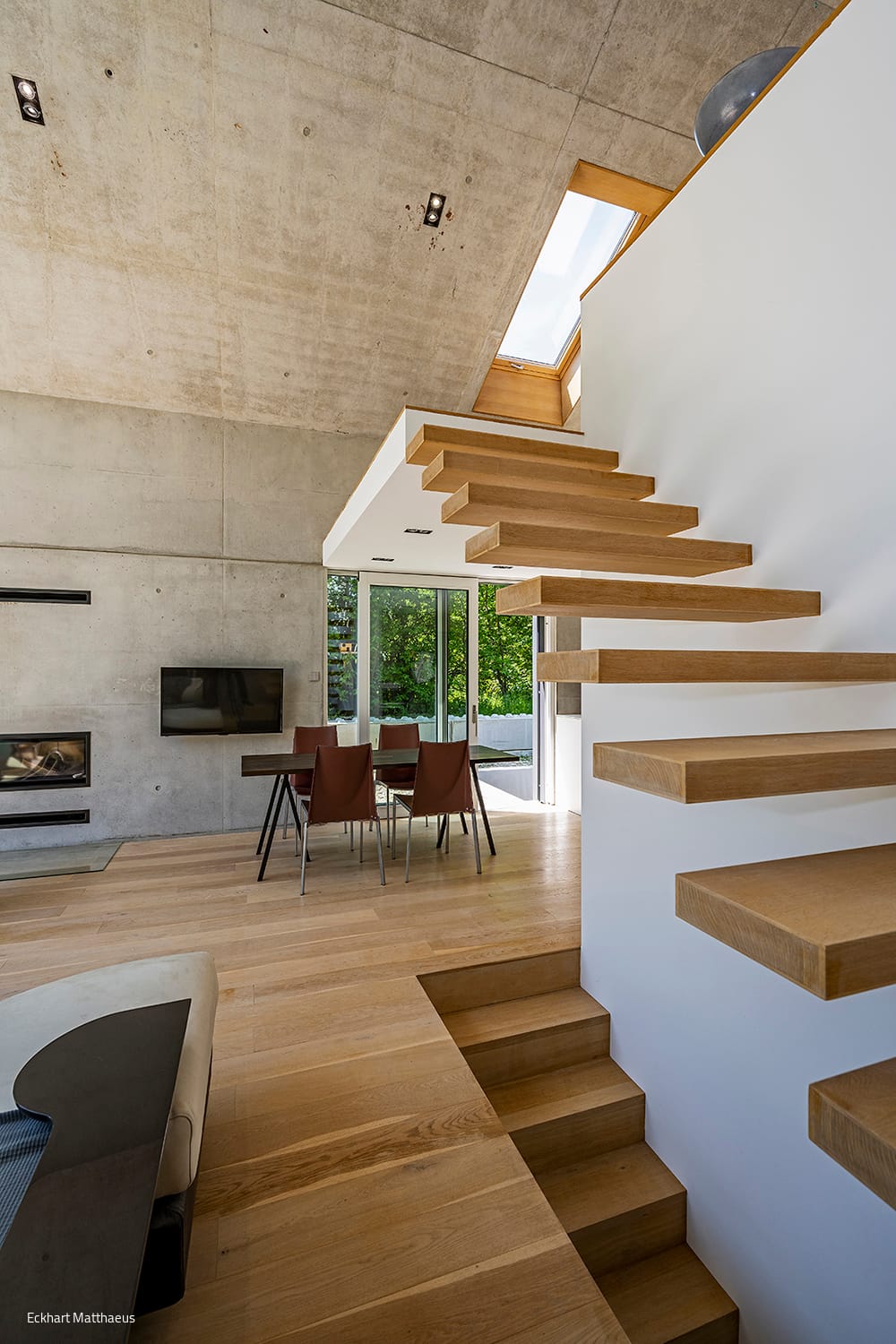
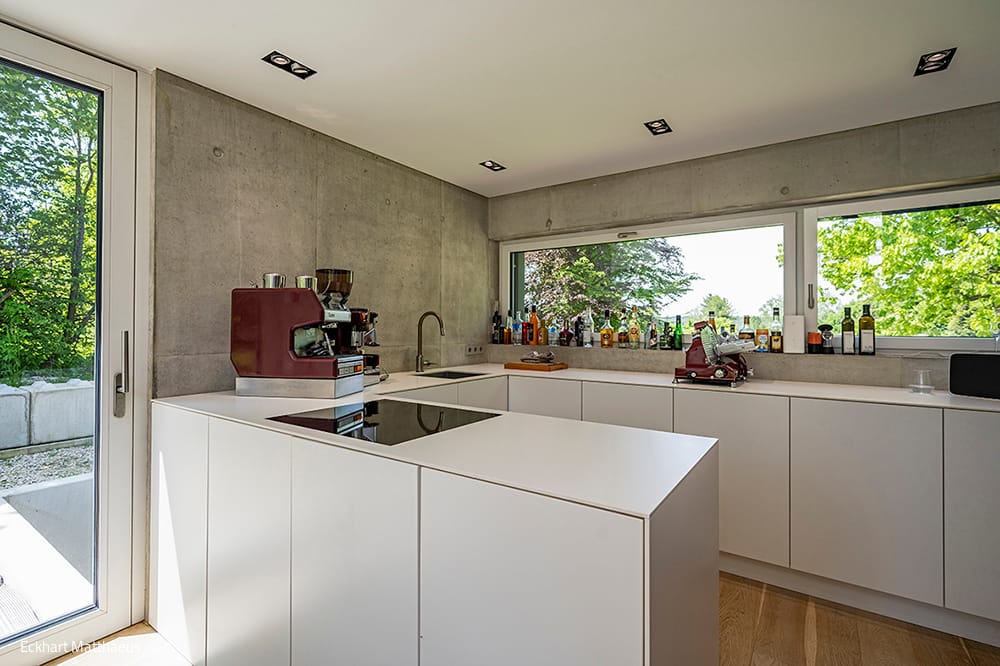
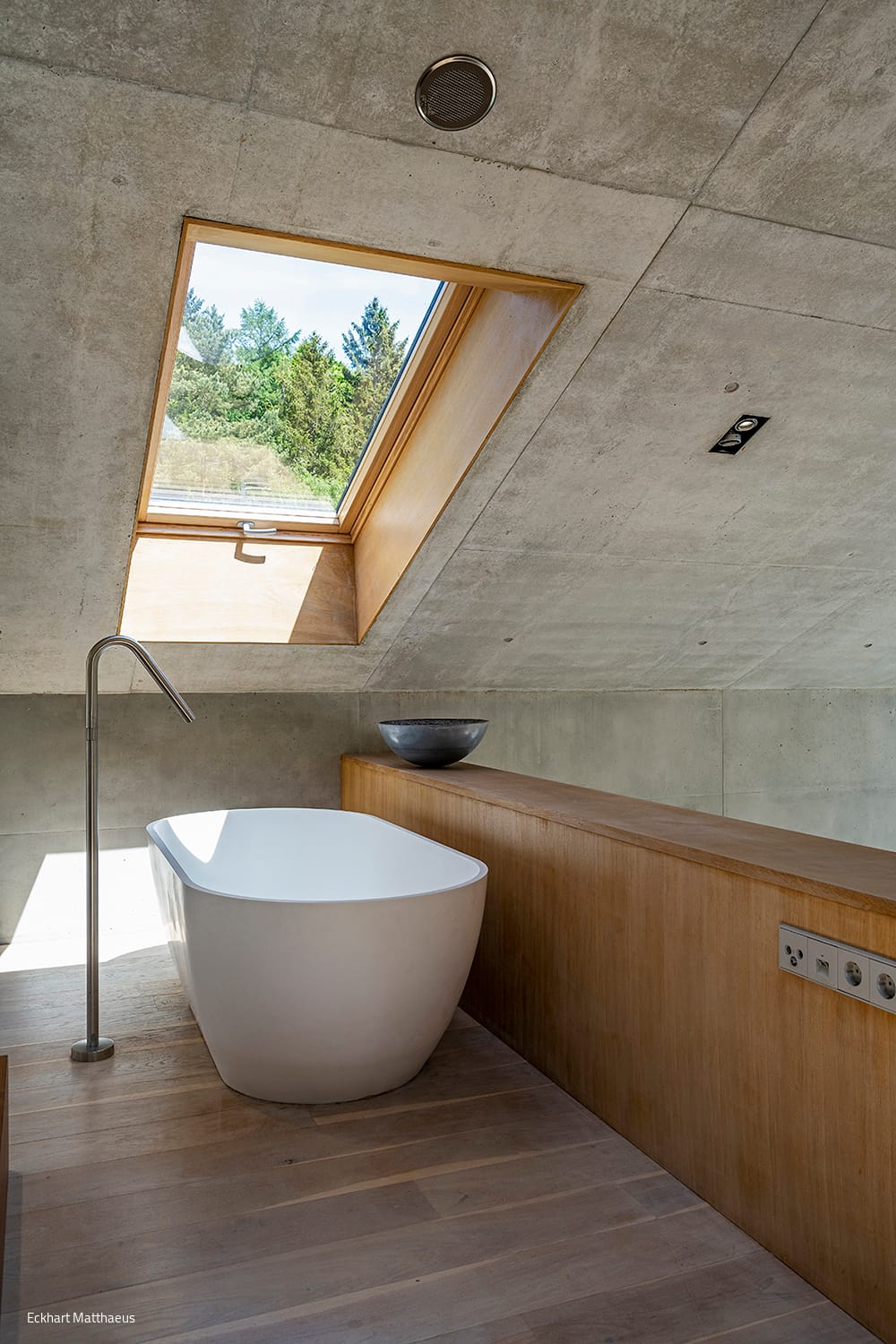
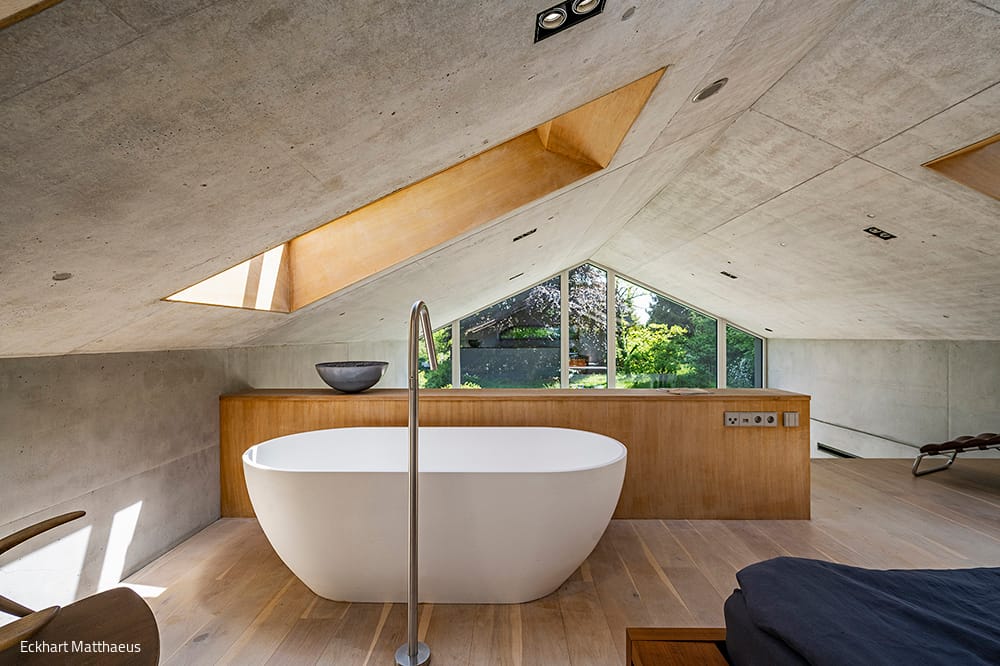
Bauen Architekten anders, wenn sie für sich selbst ein Haus planen? Wahrscheinlich schon, denn endlich können sie ungehindert ihren eigenen Vorlieben nachgehen. Aber auch sie können nicht einfach drauflosbauen, wenn erstmal ein Grundstück erworben ist. Die vielen Vorgaben, die zu beachten sind, stellen Bauherren und Planer oft vor große Herausforderungen – wie bei diesem Beispiel der Architekten Niebler und Thormann aus Donauwörth. Ein wunderbares Grundstück in der Nähe von Augsburg in Waldrandlage, knapp 1.000 m² groß, sollte mit einem relativ kleinen Haus mit gut 100 m² Wohnfläche bebaut werden. Die Auflagen waren umfangreich: Im Bebauungsplan war festgelegt, dass die Grundfläche des Hauses nicht mehr als 68 m² sowie die Neigung des Satteldachs lediglich 25 Grad betragen durfte. Auch die Firstrichtung war vorgegeben. Zudem ließ das schmale, langgezogene Grundstück in leichter Hanglage nur eine mittige Bebauung zu. Aus all diesen Bedingungen entwickelte die Architektin ihr Traumhaus, das sie liebevoll das „kleine Schwarze“ nennt. Letztendlich stellten sich all die Einschränkungen sogar als Vorteil heraus. „Es entstand ein großzügiges Wohnhaus auf kleinstem Raum, das die Vorzüge des Einfamilienhauses mit Garten und die überschaubare Größe einer Eigentumswohnung miteinander verbindet“, schildert Kirsten Thormann das Projekt. Eine komplette Glasfassade zur Gartenseite hin erweitert den Wohnraum in die Natur. So entsteht der Eindruck eines wesentlich größeren Wohnraumes im Erdgeschoss, was durch den offenen Grundriss noch verstärkt wird. Hier liegen Küche, Essplatz und der Wohnbereich. Über eine offene Treppe an der Wand gelangt man auf die Galerie mit Schlafzimmer und Badewanne. In enger Abstimmung mit den Handwerkern und dem Tragwerksplaner wurden Grundrisse besprochen, Einbauten passgenau angefertigt und Materialien ausgewählt. Auf Türen wurde weitgehend verzichtet und stattdessen mit raumhohen Schiebeelementen gearbeitet. Sie fungieren im Untergeschoss gleichzeitig als räumliche Trennung zur Treppe, bedienen aber auch die in Bad und Gästezimmer eingeplanten Einbauschränke. Auf allen drei Ebenen gibt es Eichenparkett. Die Vorliebe für Ortbeton und die statische Anforderung für den stützenfreien Glasgiebel bestimmten die Betongrundkonstruktion des gesamten Hauses. Alle Außenwände und auch die um 25 Grad geneigten Dachflächen wurden als Sichtbeton vor Ort betoniert. Um das kleine Haus auch von außen in seiner archetypischen Form sichtbar zu machen, wurden Dachflächen als auch Fassaden durchgehend flächenbündig mit einer schwarzblauen Eternit-Doppeldeckung verkleidet. Geheizt wird im Winter mit einer Pelletanlage und für zusätzliches Warmwasser sorgen bei schönem Wetter 16 m² Solarkollektoren auf dem Dach.
Photography Credits:
Eckhart Matthäus
www.em-foto.de
(Published in CUBE Munich 02|22)


Will Future Mobility Concepts Change Parking Requirements in Development Projects?
Interview with Marian von Mitschke-Collande

Villa with Timeless Appeal
Exposed Concrete: Design and Atmosphere
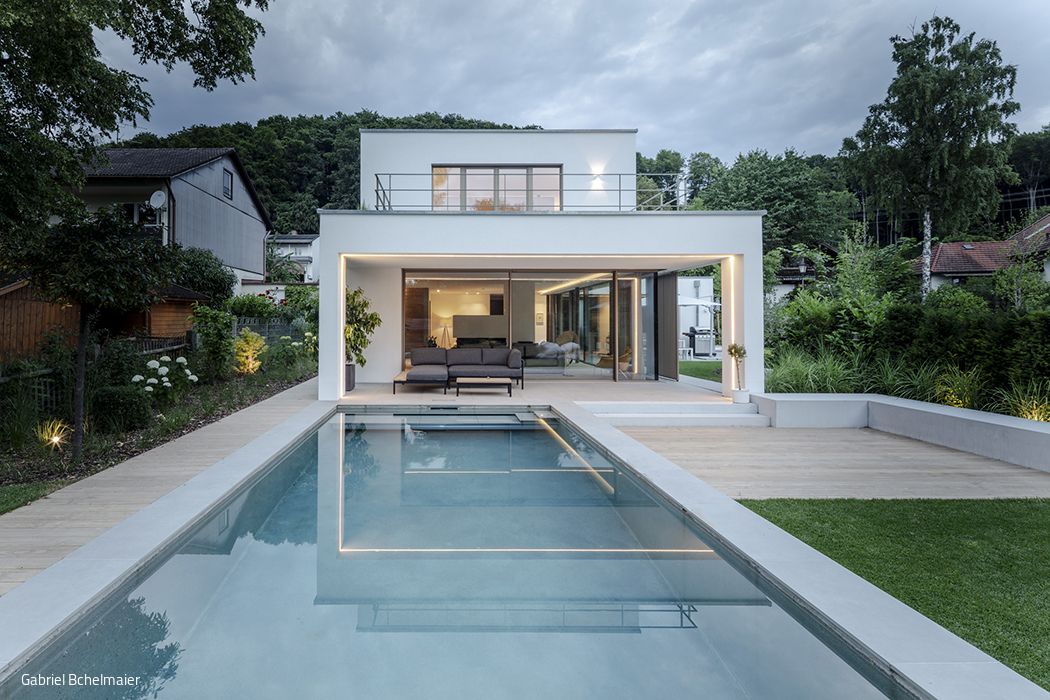
Still Life in Green, Blue and White
Making the Most of a Polygonal Site
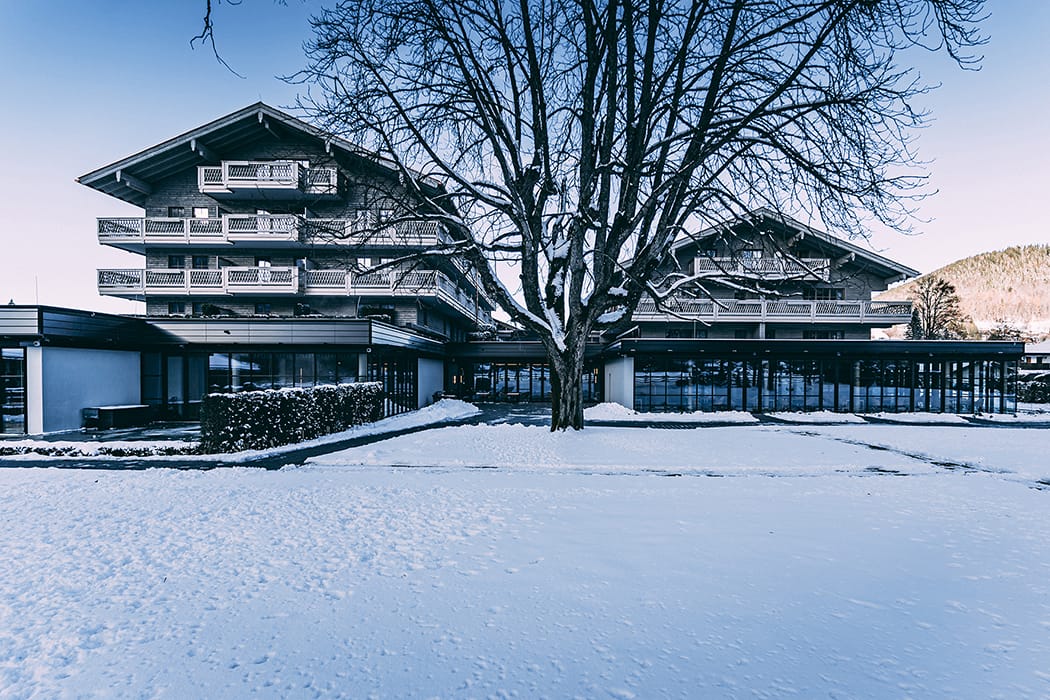
Nature-Inspired and Luxurious
A 5-star lakeside retreat reimagined for the modern era