


Reduced Monolith
A residential home in Mönchengladbach captivates with its minimalist design
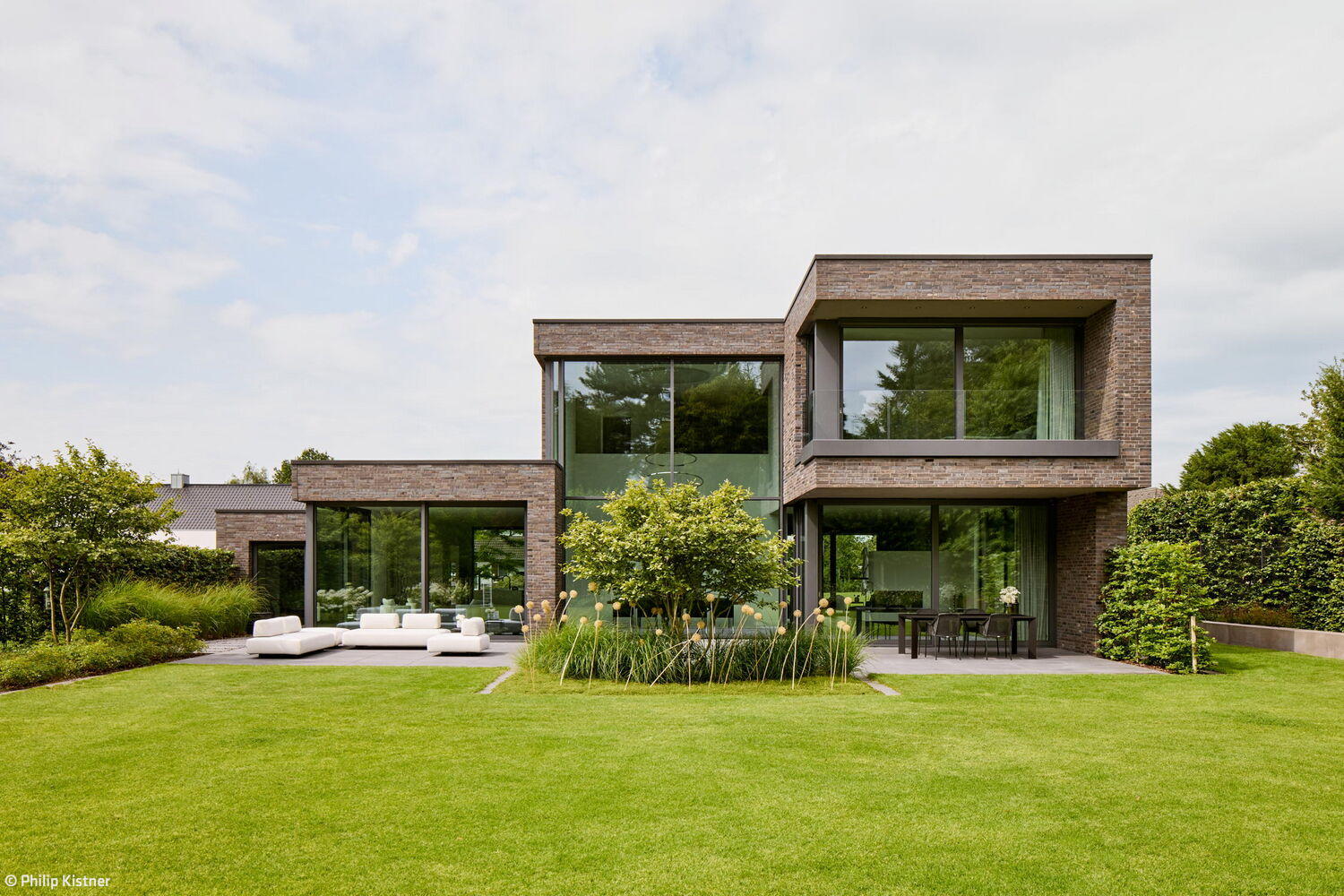

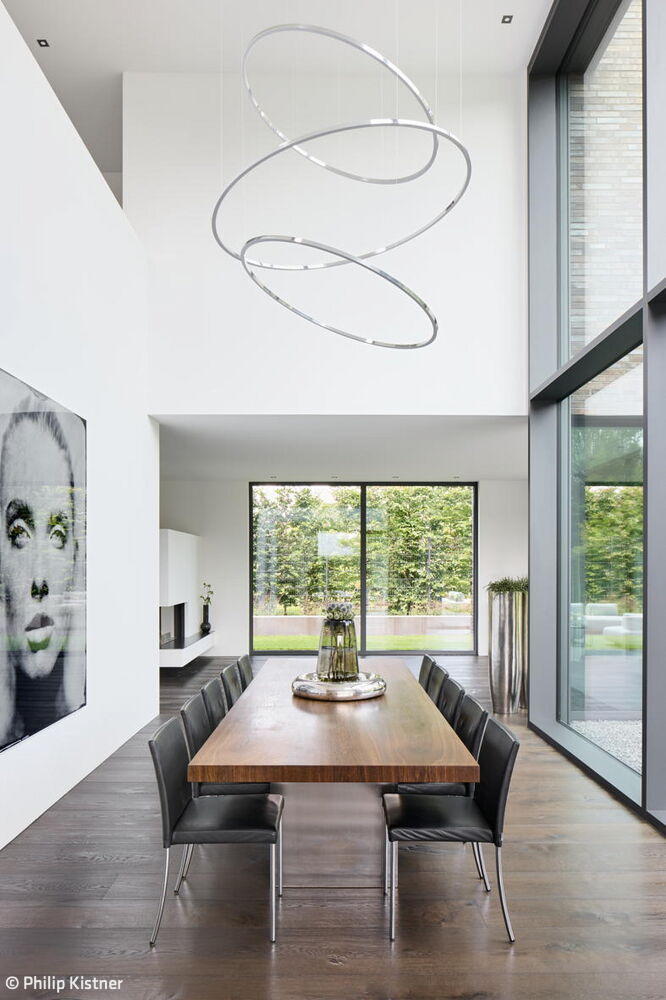
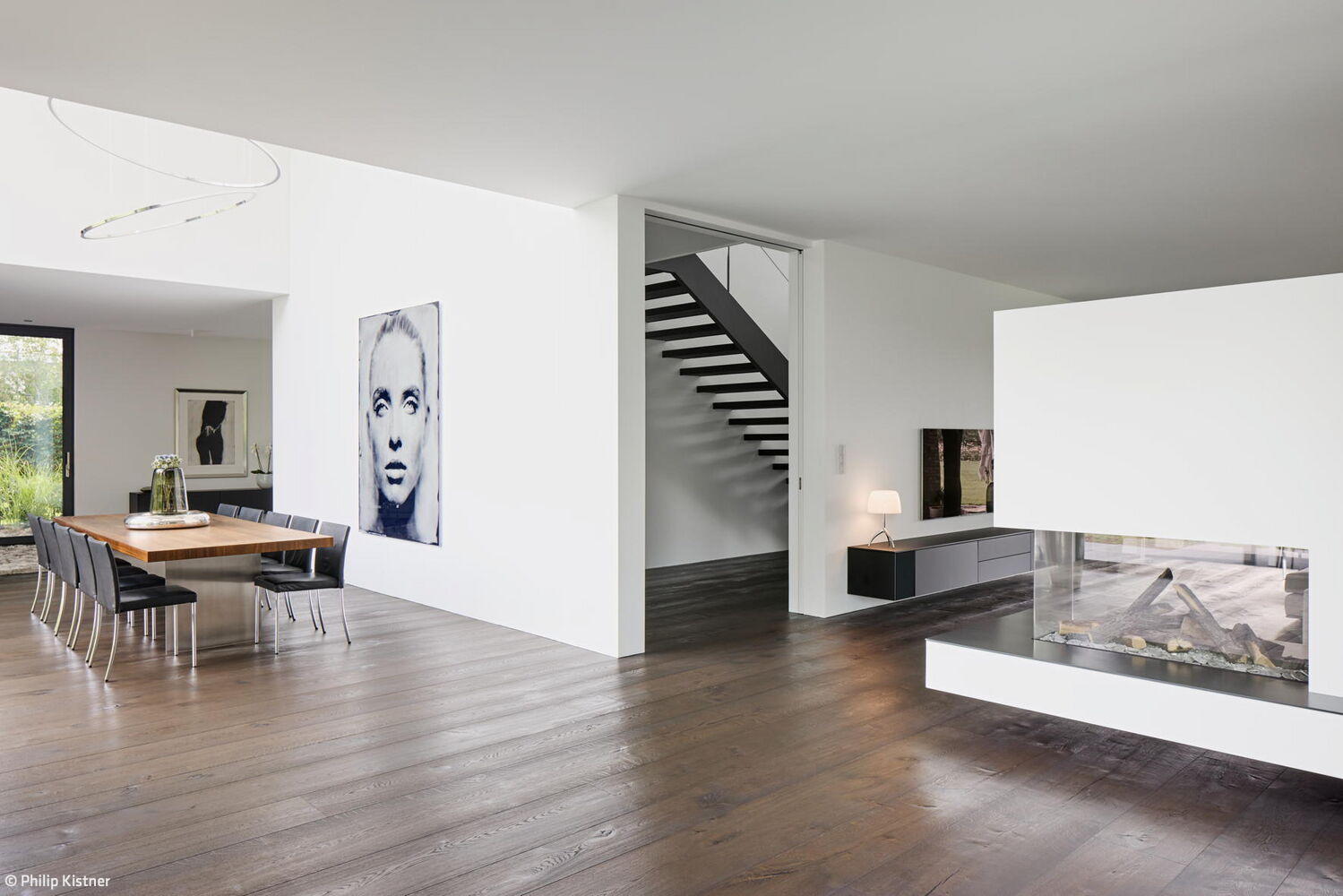
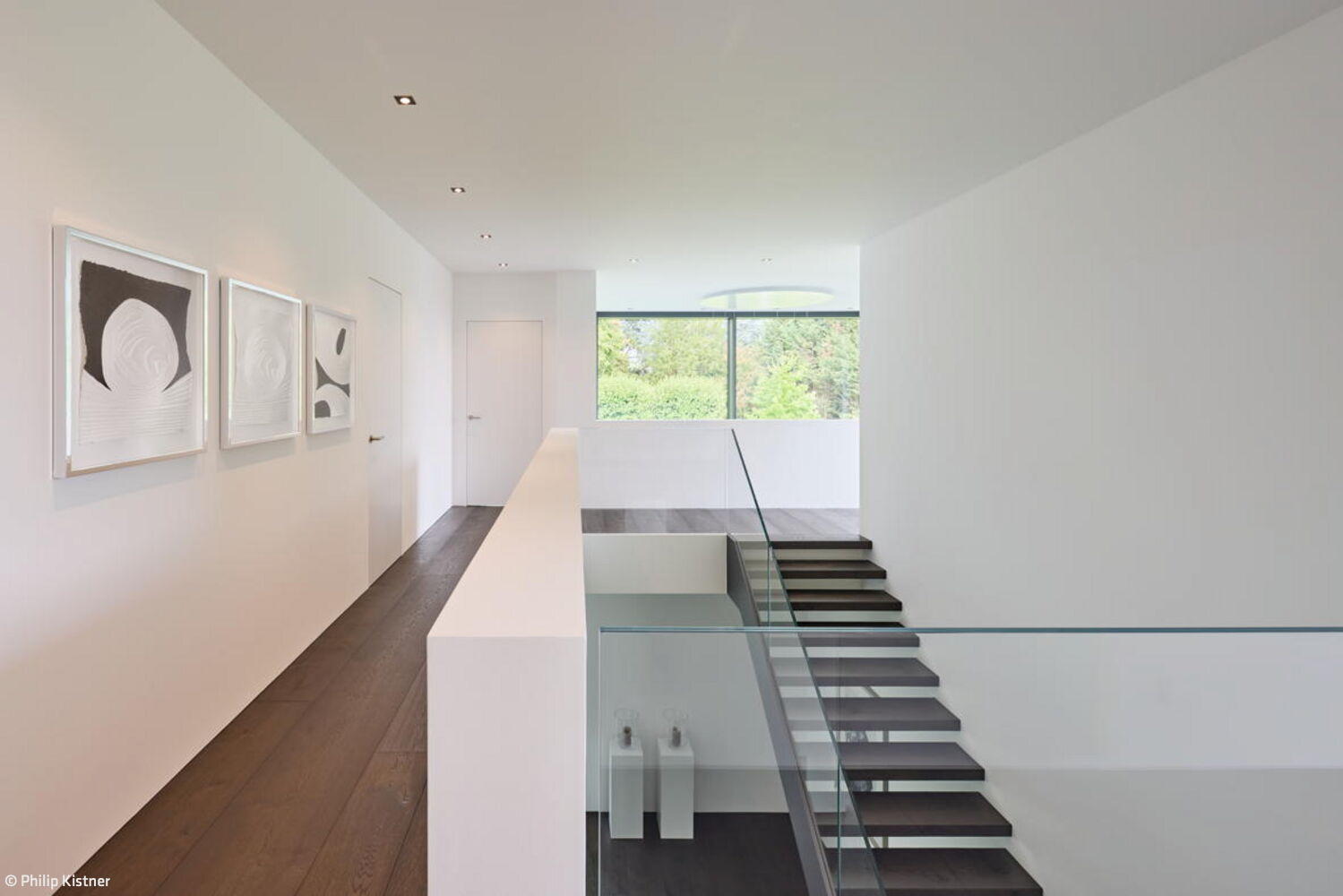
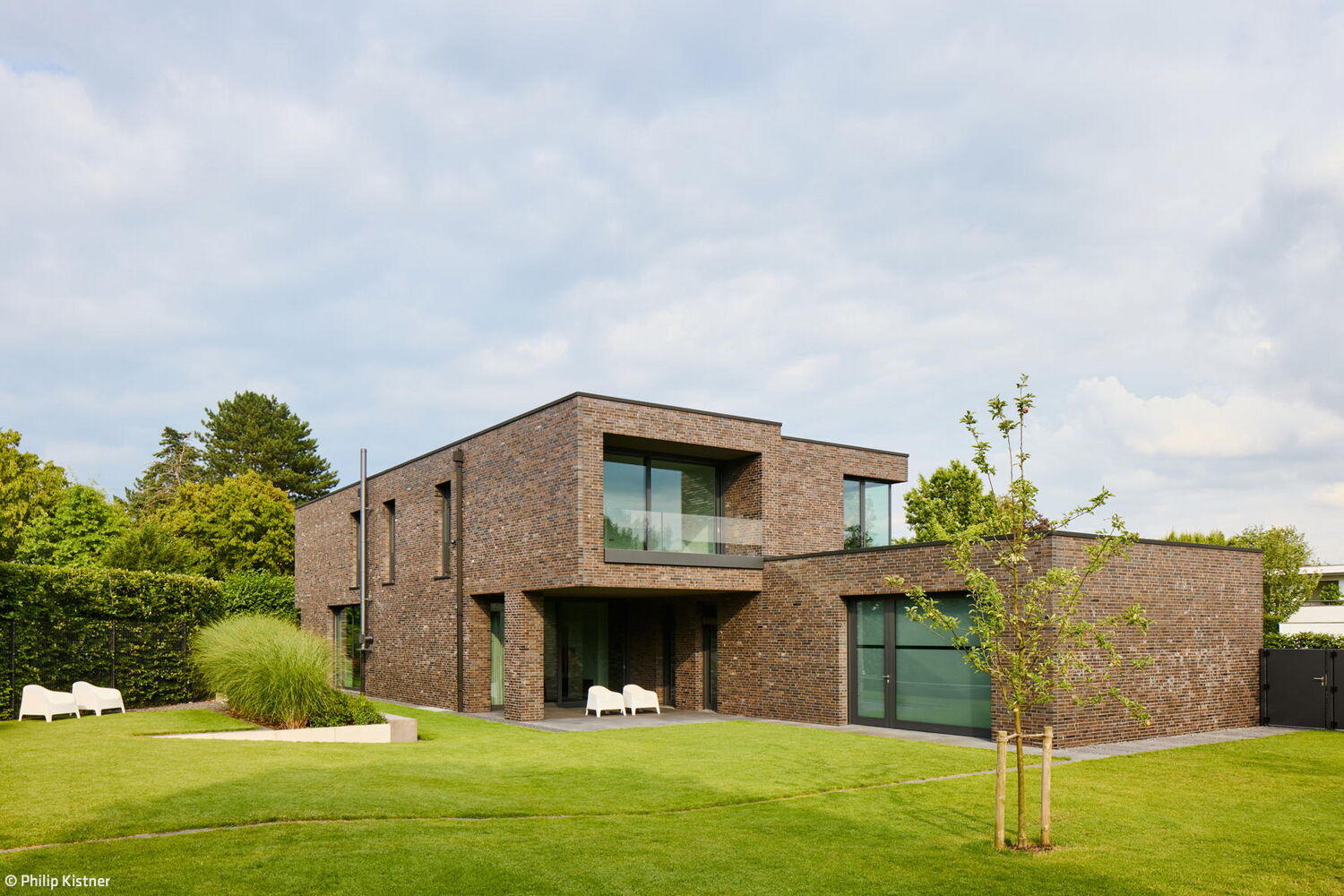
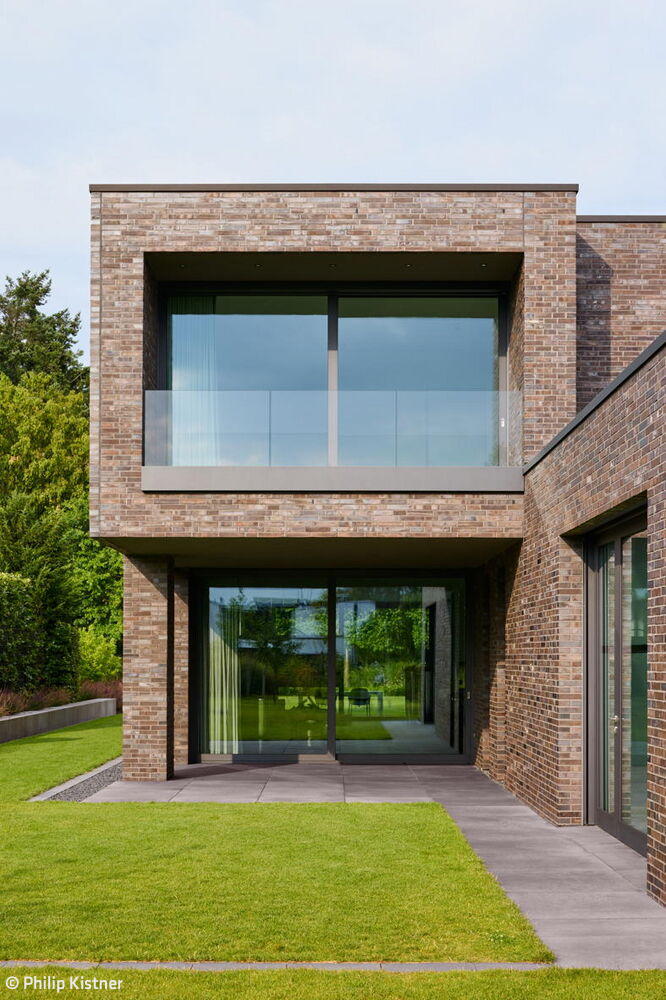
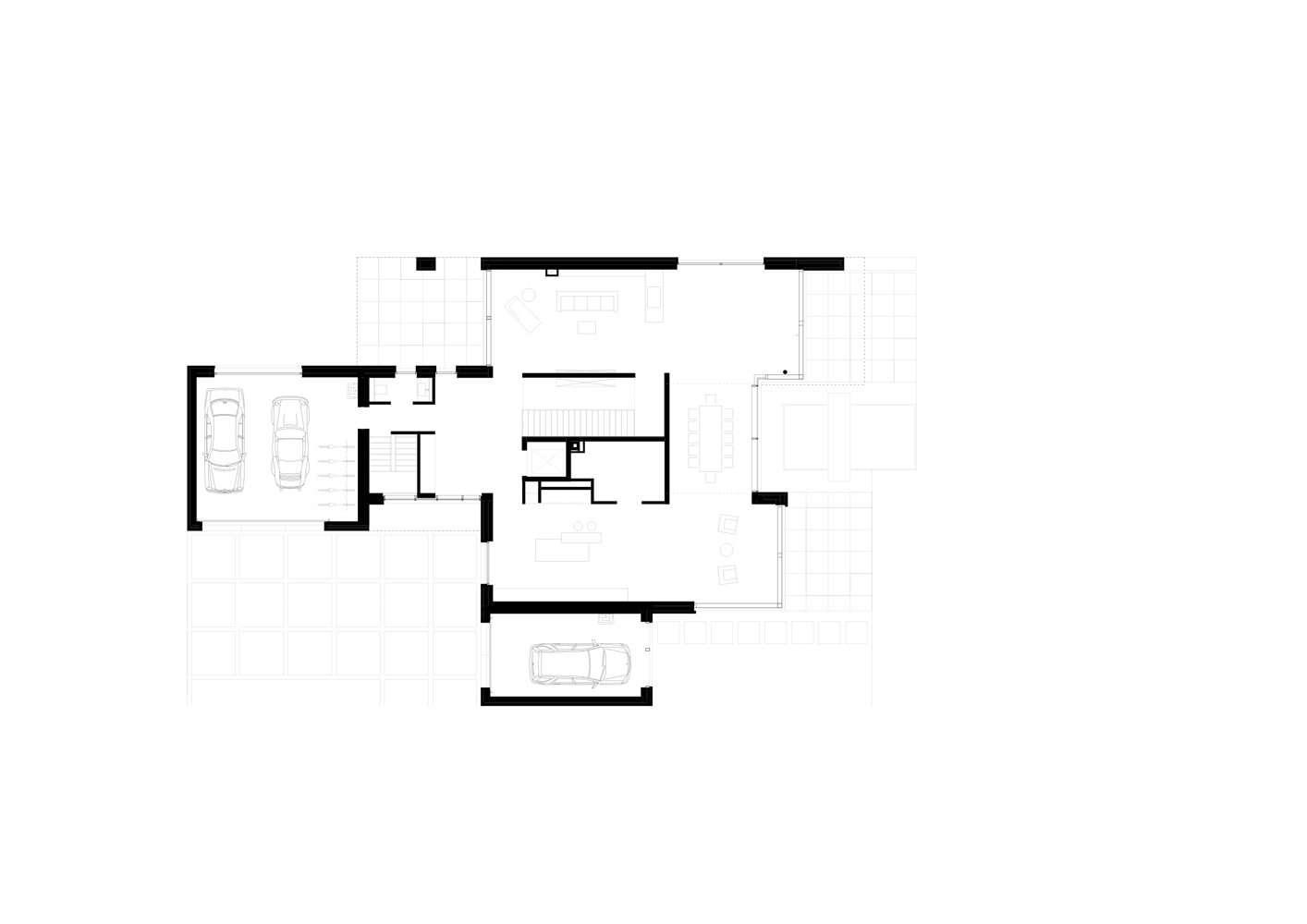
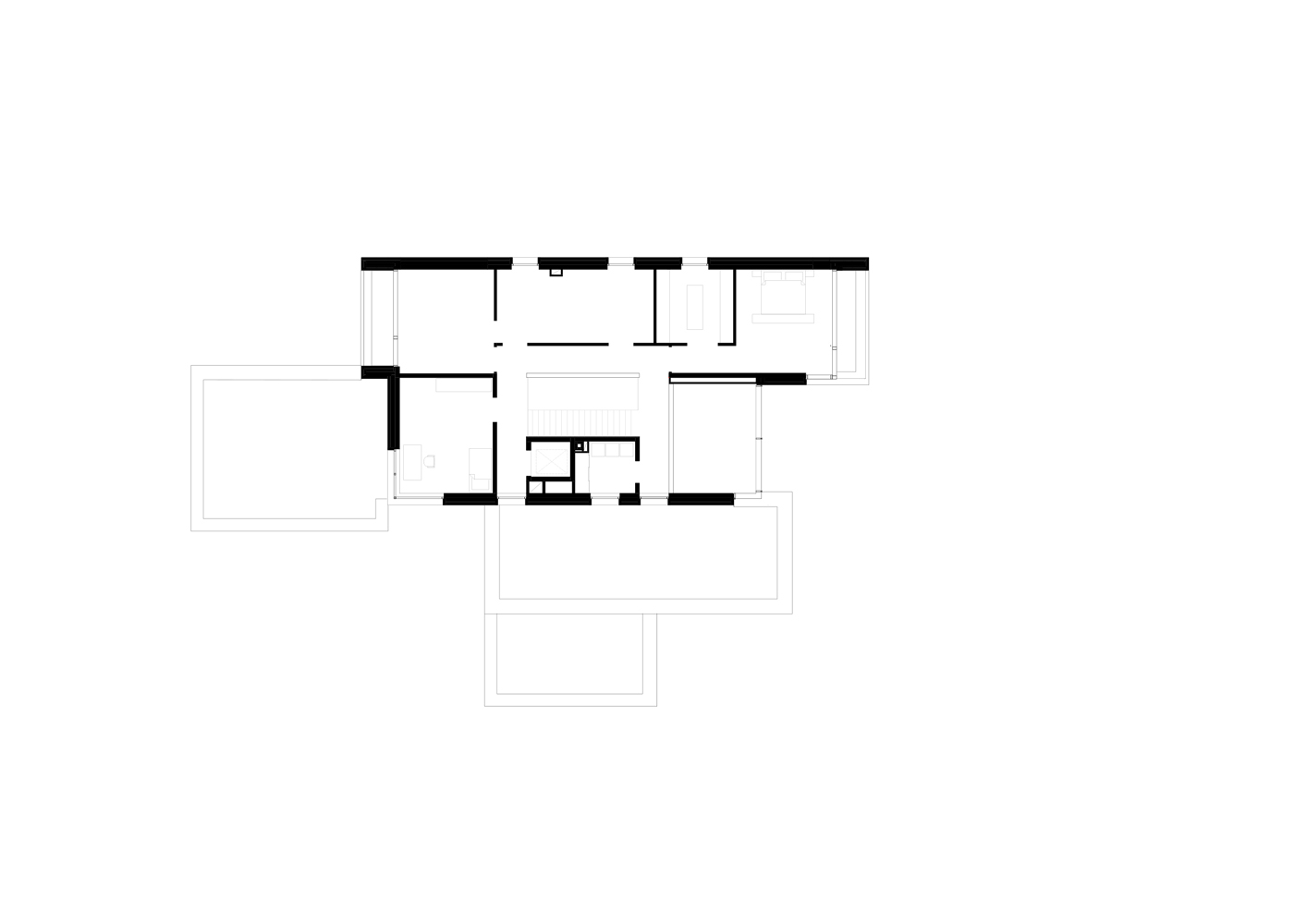
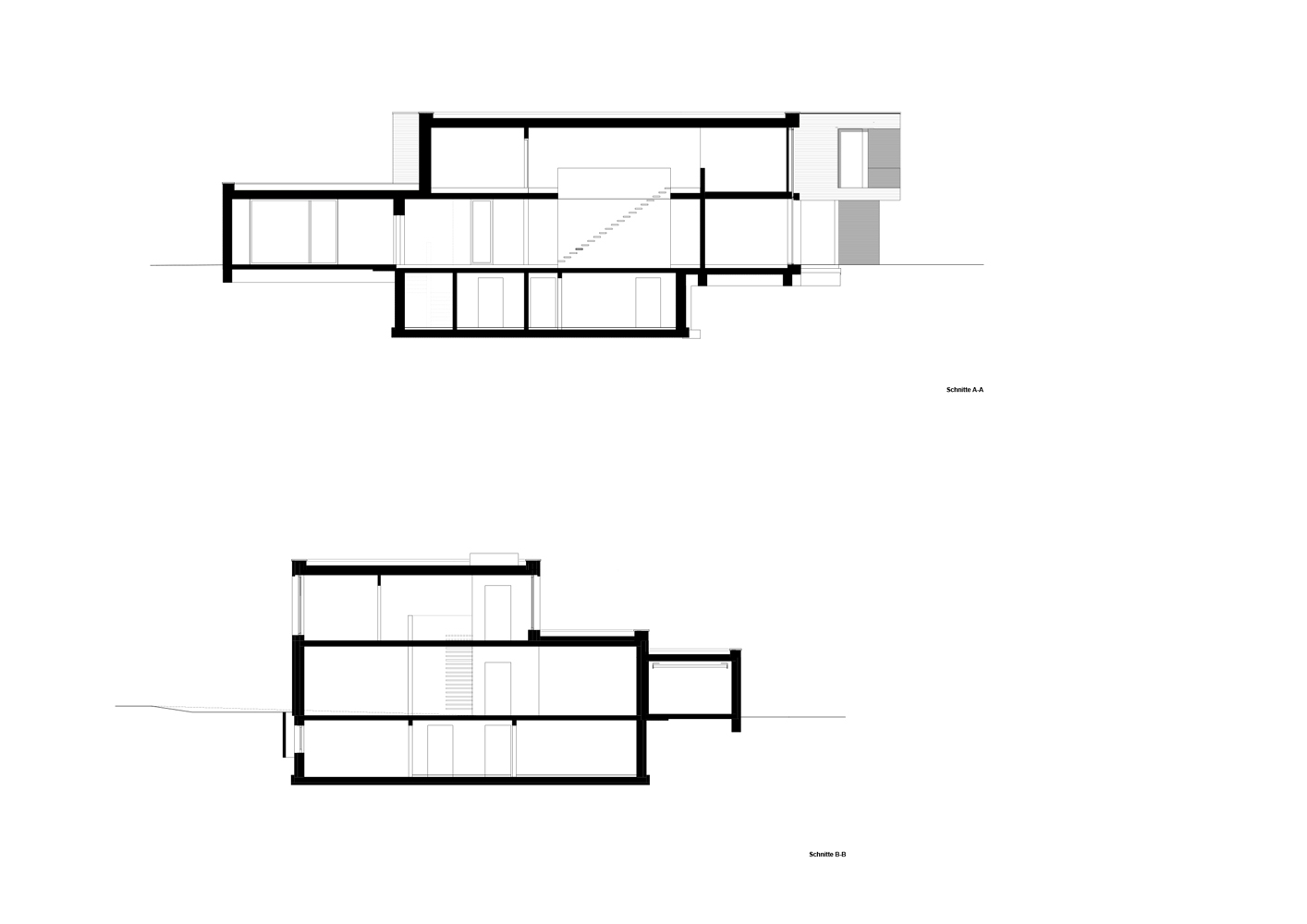
Situated in a mature single-family neighborhood, this generously proportioned plot borders the access road on its southern edge. Mönchengladbach-based practice Schrammen Architekten drew on Bauhaus principles to create a design for the client family: distinct functional zones reflect the home's daily rhythms, enabling optimal use of every square meter. Crisp geometries, fluid transitions between interior and exterior, and a restrained material palette establish a design language that is both refined and thoroughly contemporary. The building's composition hinges on an almost-square cubic form. Flanked by a side-mounted double garage and a detached single garage, the structure creates a recessed approach sequence that pulls away from the street. The ground floor unfolds into three distinctly zoned functional areas: the sequence begins with a generous entrance foyer—complete with coat storage, guest powder room, and two separate stairwells descending to the basement and ascending to the private upper floors. To the north, an expansive living zone centers on a freestanding fireplace; to the south, the kitchen and pantry occupy distinct territories. Between these spaces flows a generous dining area, crowned by a soaring two-story void. This dramatic vertical cavity is animated by an imposing two-story window with mullioned glazing that frames the garden vista. The three functional zones are deliberately staggered relative to each other, weaving intense spatial connections to the outdoor realm—including the upper floor, where portions of the master suite cantilever over the terrace to create a sheltered external living space. This rigorous design philosophy extends seamlessly into material selection: the entire masonry employs carefully laid solid brick with no visual breaks or offsets. The aluminum window frames pare their profiles to the essential minimum, embodying the minimalist maxim of "less is more." This honest, understated aesthetic manifests equally in the monolithic brick facade and interior spaces, where white plaster walls and dark oak flooring reinforce the design's functional clarity. Sustainability emerged as a defining principle: the project deliberately specifies separable, recyclable materials throughout, while renewable energy systems substantially reduce operational energy demand.
Photography:
Philip Kistner
www.philipkistner.com
(Published in CUBE Düsseldorf 04|24)


Grafental Meets White City
The result is a richly textured urban fabric—one where each building possesses its own distinctive presence.
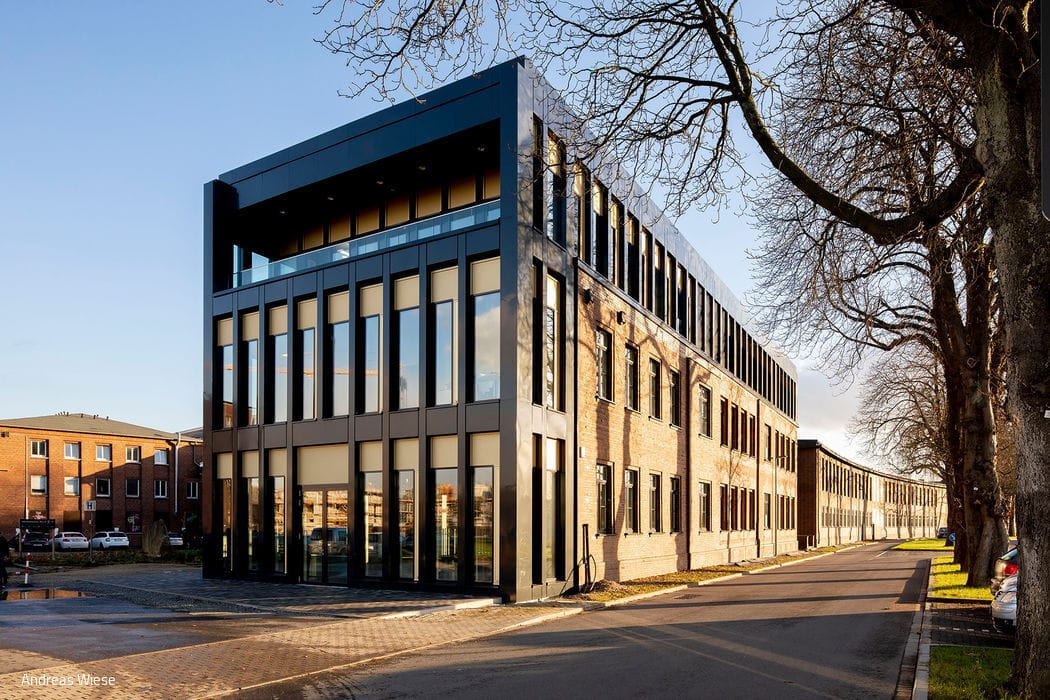
Contemporary Architecture in Historic Context
A Historic Administrative Building Transformed into Modern Office Lofts
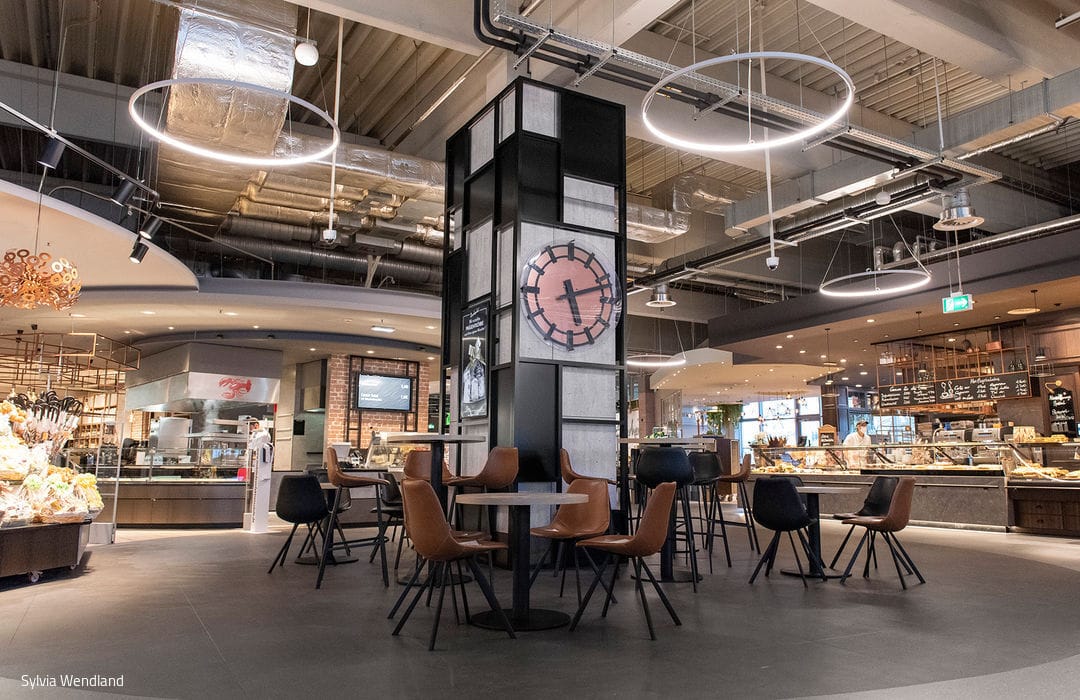
Reimagining the supermarket
Sustainability was the primary driver behind the Zurheide food market's comprehensive renovation and redesign.
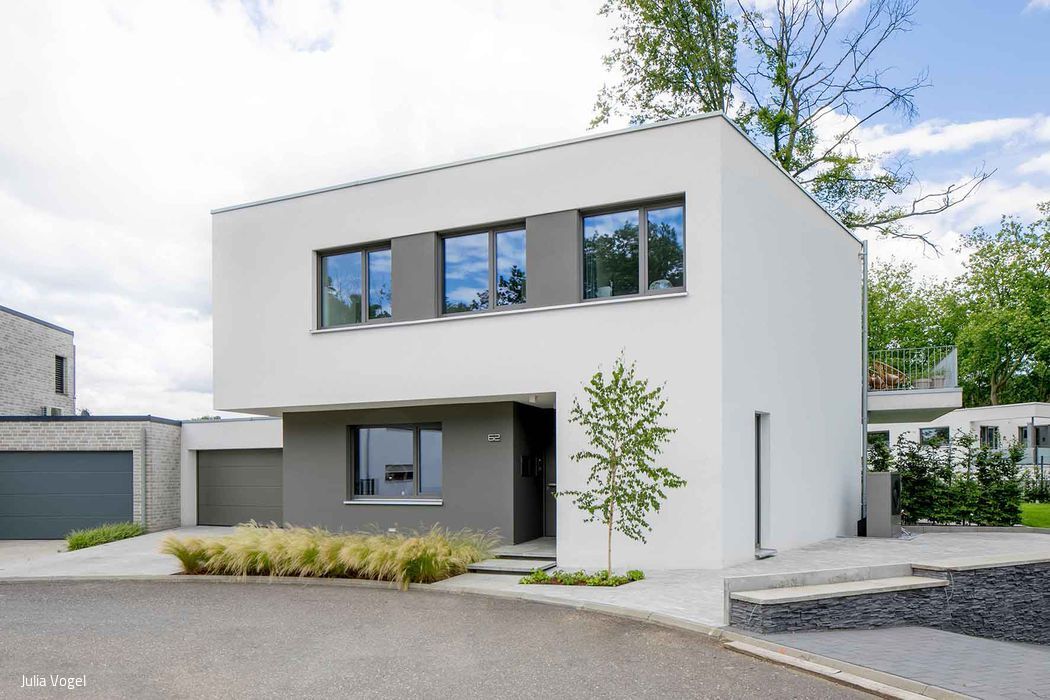
Two stories become one
A two-family house that reads like a single-family home – from every angle.