


Pioneer of New Building
Anna Heringer builds internationally with clay and other long-forgotten building materials
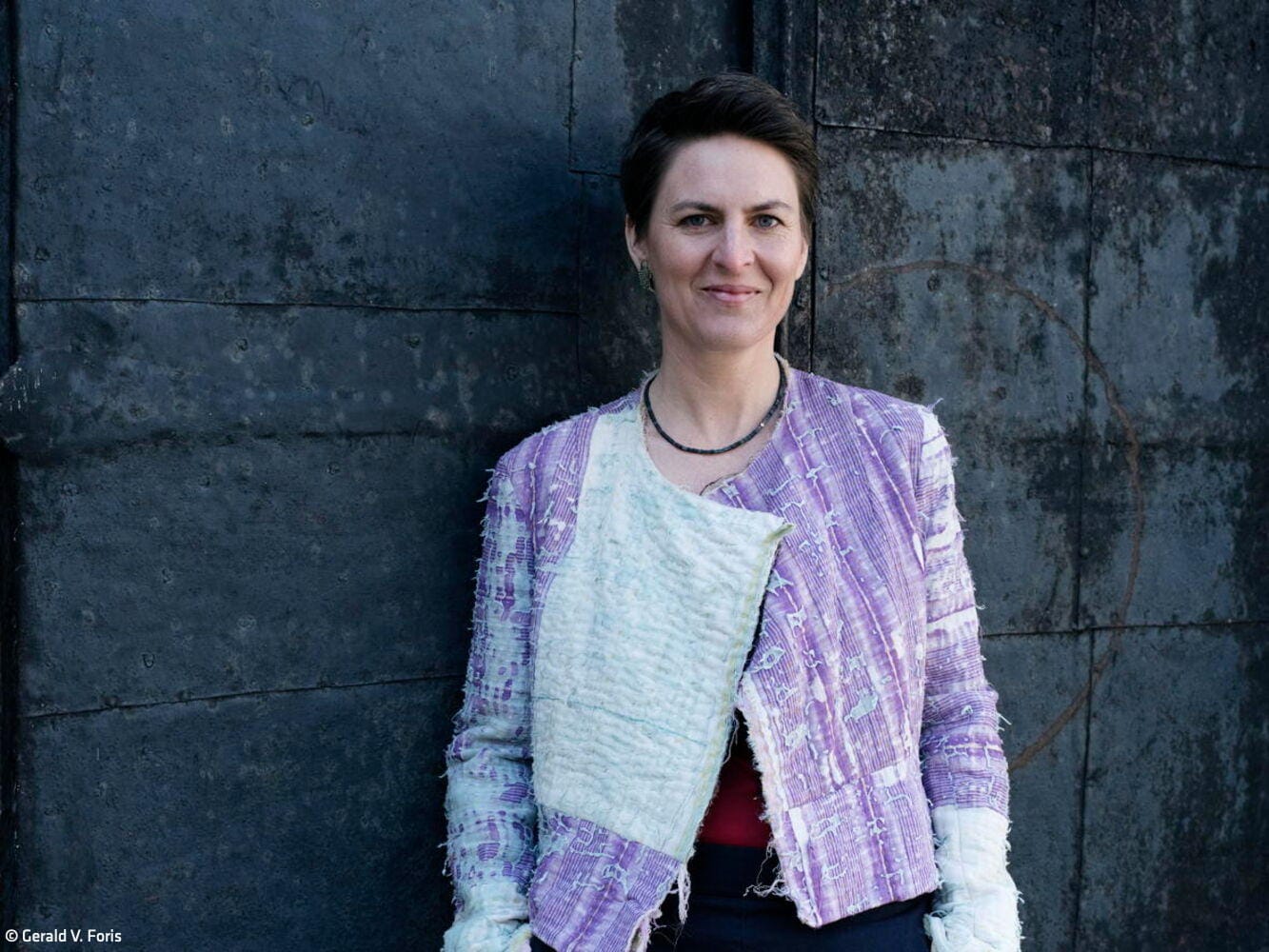
You're working to revive clay as a building material that has fallen out of favor—not just in the Global South, but here in Europe too. Does it really belong here?
Anna Heringer: Clay is actually a European material—we simply forgot about it. It was genuinely widespread throughout Germany; we're most aware of it in timber-frame buildings. Anything that's locally available belongs here. There are clay buildings in every climate zone and for every purpose. We've just suppressed this knowledge because clay still carries the stigma of being a "poor man's material." There was a famous clay builder in France who said: "Build with clay, it's fireproof, affordable, burglary-proof, healthy, and you can render it to look like a stone house." The material was marketed as valuable, and then it was hidden or made to look like a stone imitation or a brick building. That's unfortunate, of course. These days—especially with Martin Rauch—clay is being used in its full aesthetic potential. That's something new. Precisely because we spend so much time indoors, what we build with becomes increasingly important. I believe and hope that awareness will grow here as well.
Was Martin Rauch, one of Austria's clay pioneers, a role model for you, or did you discover each other only after you'd already begun developing your own projects?
I was a student at Martin Rauch's workshop in Linz and attended a clay building seminar. He was clearly both a role model and a mentor for me. He advised me on my first project, the Meti School in Bangladesh, and on subsequent buildings—and eventually we started developing projects together.
Beyond clay, do you also experiment with other materials?
Yes. Clay handles compression well, but it has very limited tensile strength. That means when I'm in Bangladesh, bamboo becomes my partner—here it's wood. There are always partnerships involved. When site conditions demand it, even a concrete slab can work. But I prefer working with natural materials whenever possible.
You're referring to your first major building project in Germany, the Campus St. Michael in Traunstein, where you had to work partly with concrete.
I would have preferred to build the entire structure in rammed earth, but that wasn't feasible everywhere. It's challenging with our German building codes. We managed to pull ourselves up halfway, so to speak, and then ran out of strength to complete the climb. That's roughly what the building looks like now—a hybrid. But what I'm most pleased about is that we achieved community participation there as well. That's what I learned from building in the Global South: that you're not just constructing a building, but simultaneously building a community. Just like with my altar in Worms, where people participated in the construction, we deliberately created a niche at Campus St. Michael where I wanted future users to help build. It became the coffee nook—a flowing, organic form that people shaped together with rammed earth bricks and clay plaster over several weeks. This creates an entirely different relationship to the building because you know you contributed to it. When you later sit together in that corner having coffee and remember freezing in November while working on it, sharing those collective experiences—that's a completely different feeling than moving into a turnkey building. You're truly part of it. Beyond that, I'm naturally pleased that we were able to use rammed earth structurally and fully exposed to the weather in large sections of the project. That's something new for Germany as well. We have unfired earth on interior surfaces and weathered façades with the full roof load bearing down on them. It's gratifying that we could realize this.
Do you want to build more in Europe in the future, or do you prefer working in the Global South?
I prefer to build where rammed earth is needed most and where it can have the greatest impact. That's why I deliberately select projects that I know will generate significant influence. In principle, the Global South certainly lies close to my heart, because I see how extraordinarily important architecture is there. In the Global South, there's much that needs to be rectified—damage deeply shaped by colonialism. And I'd like to make my contribution to that.
Anna Heringer, thank you for this conversation.
The interview was conducted by Christina Haberlik, freelance editor, for CUBE Magazine.
Anna Heringer
Anna Heringer, born 1977, is a German architect from Laufen who studied architecture at the University of Art and Design Linz. Her thesis project was a school built from rammed earth, bamboo, and straw, which she realized in Bangladesh in 2004. Since then, she has consistently pursued the path of sustainable building and gained international recognition for her work. Heringer has received numerous awards for her practice, most recently in 2024 the Max Beckmann Prize from the City of Frankfurt am Main. She also holds the UNESCO Chair for "Rammed Earth Architecture, Building Cultures, and Sustainable Development."
Photo:
Gerald V. Foris
www.geraldvonforis.de
(Published in CUBE Munich 02|26)


Star of the South
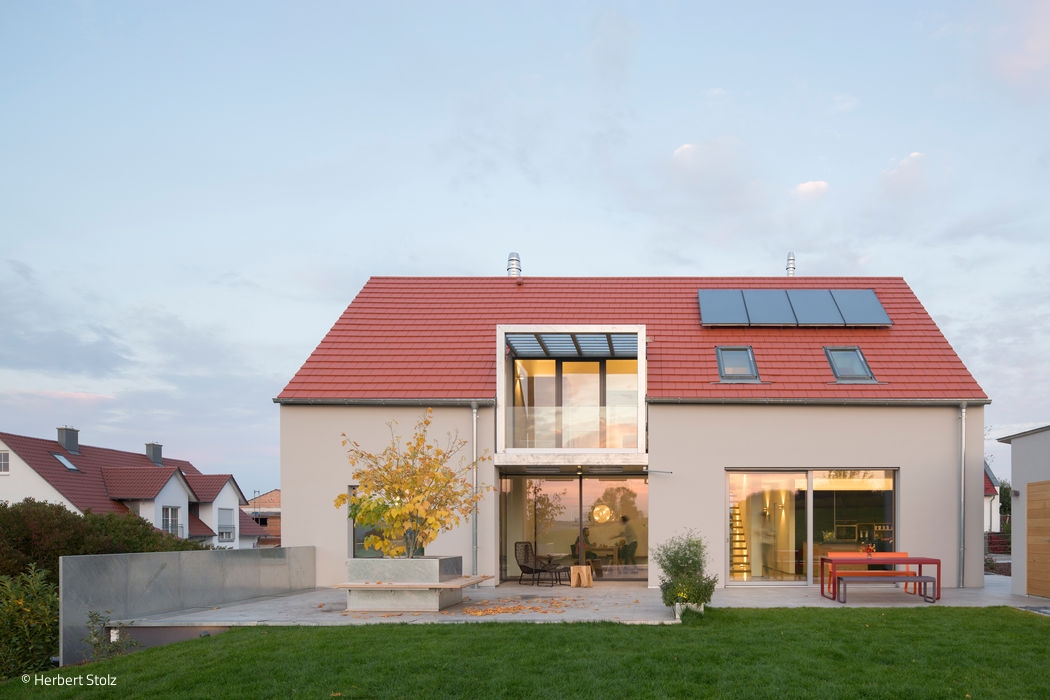
The architects have exploited the site's natural slope, allowing the house to cantilever boldly over the basement.
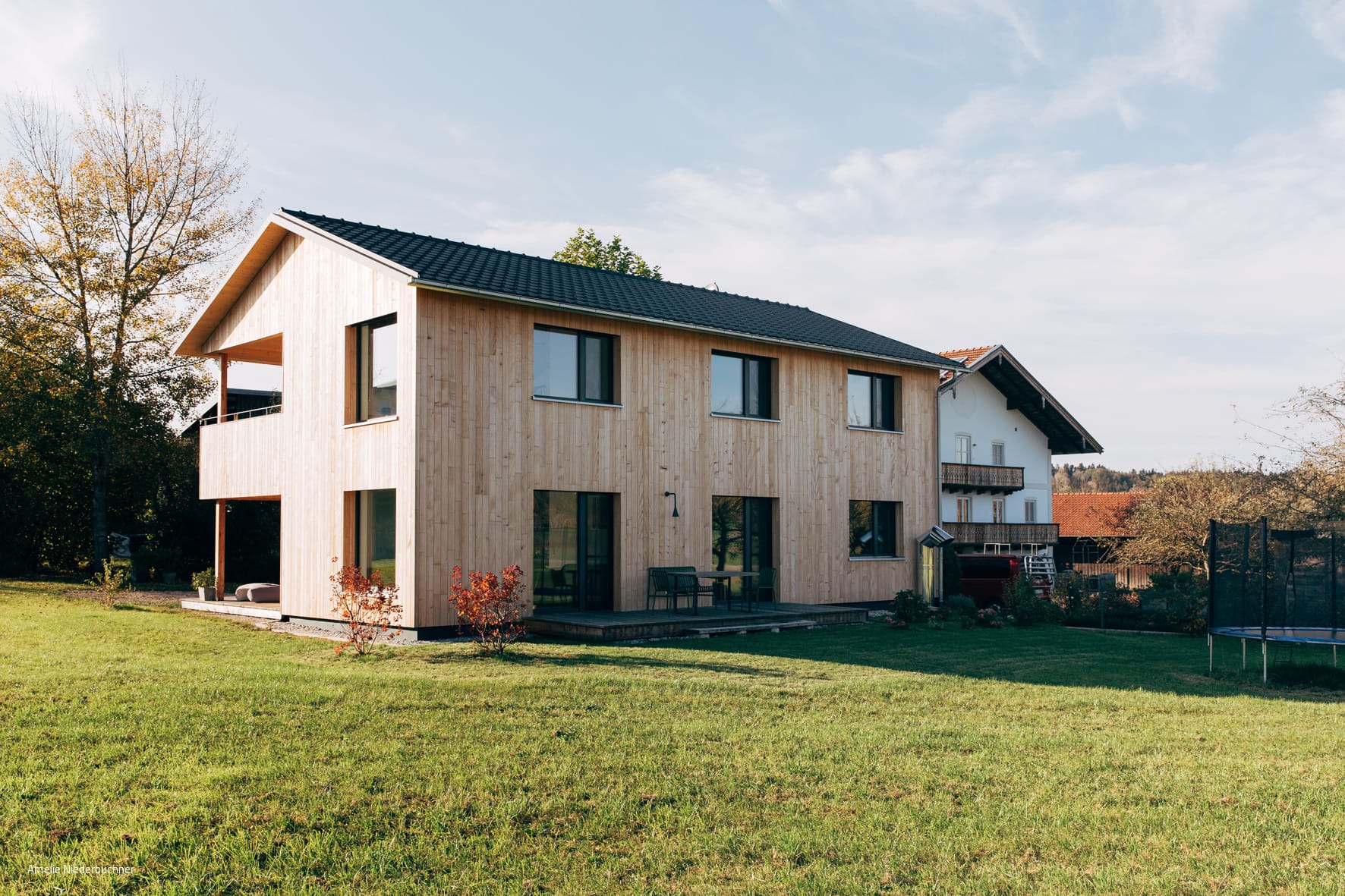
Wooden House in the Orchard
A Passive Timber Home on Lake Chiemsee Offers Wellness-Focused Holiday Living
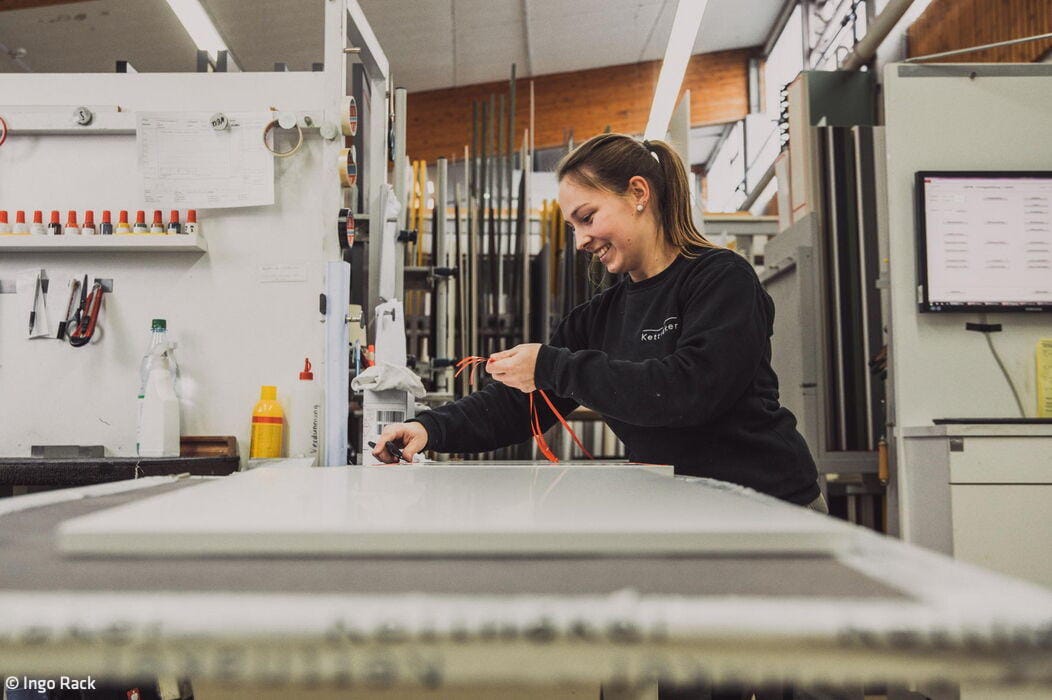
Timelessness and Quality
Swabian Innovator: Redefining Furniture Manufacturing
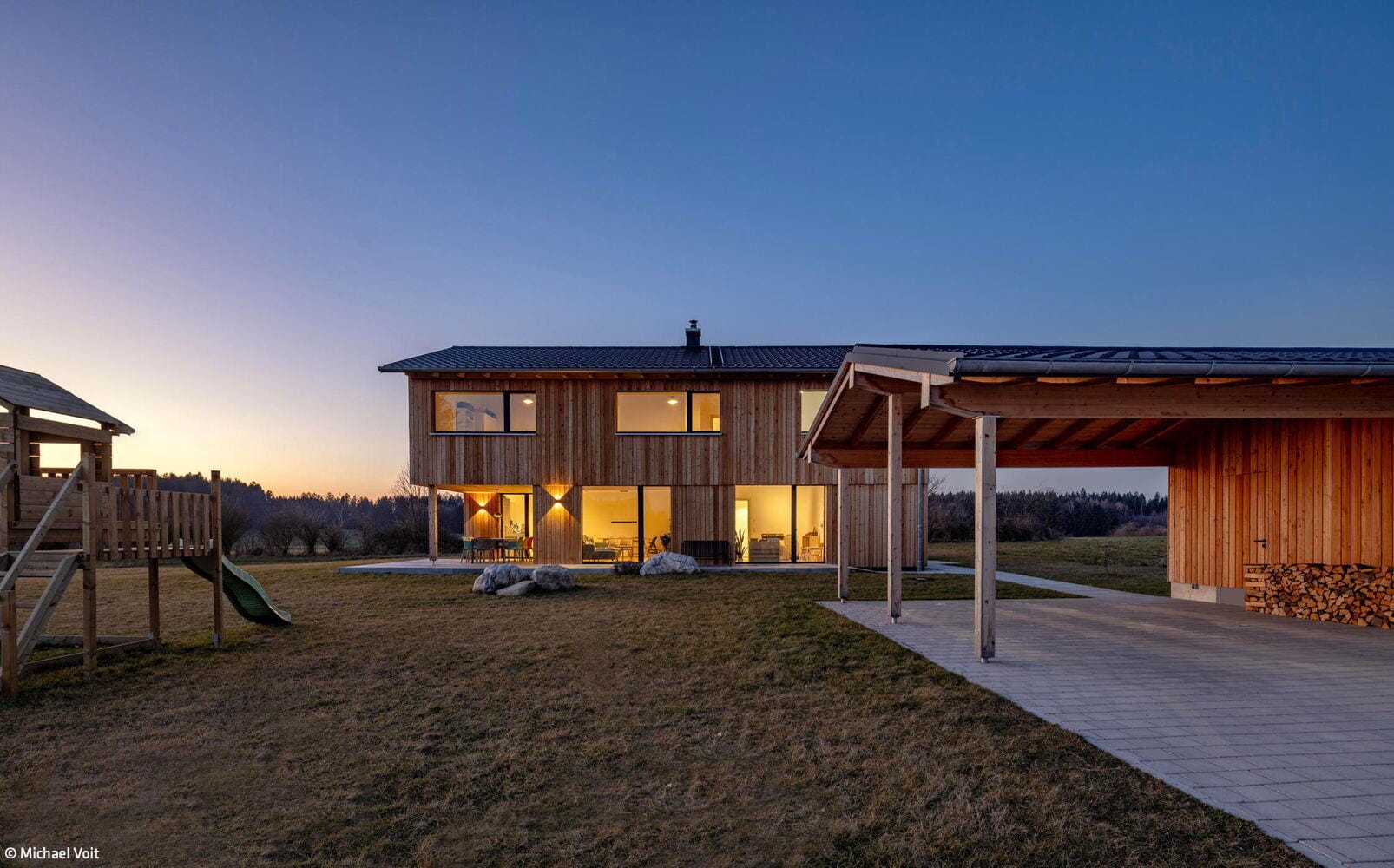
Wooden House at Obsthain
Two complementary structures in dialogue with the landscape