


Optical Illusion
Behind what appears to be two buildings lies a single structure


Like virtually every corner in Berlin, Köpenicker Straße has undergone a dramatic transformation since reunification. Once defined by industrial architecture, the neighborhood has evolved into a vibrant mixed-use district—blending commercial and residential buildings in equal measure. Layer upon layer of history lines the street's facades. Raw brick meets smooth plaster; steel frames contrast with concrete surfaces. The stretch between Heinrich-Heine-Straße and Engeldamm has become particularly sought-after, with proximity to the Spree River adding further allure to the area.
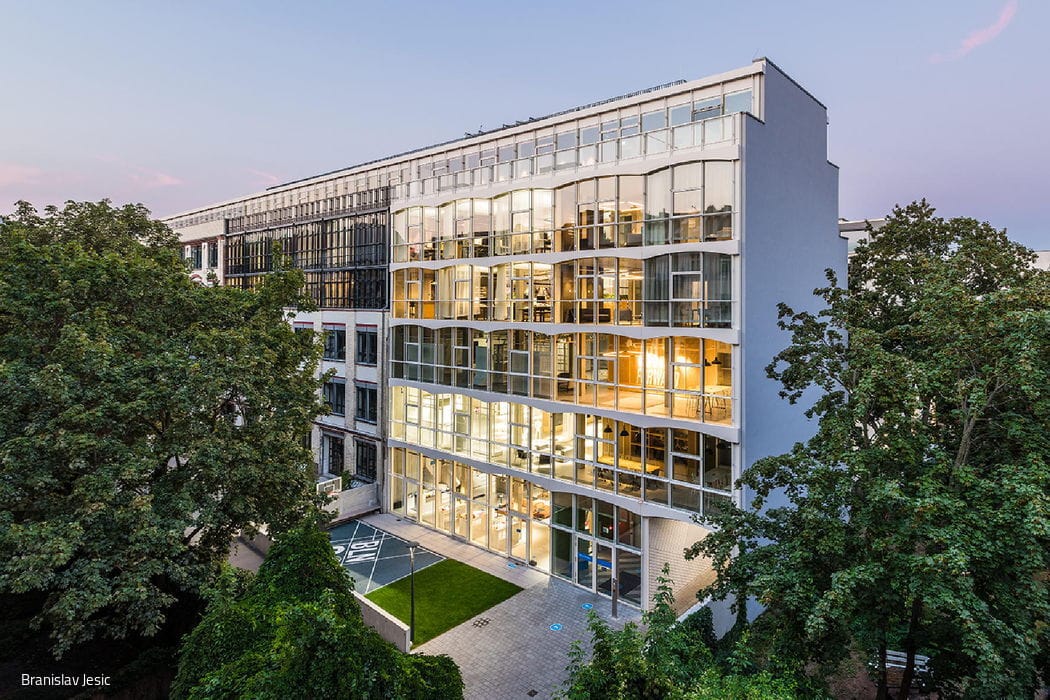
At the corner of Köpenicker Straße 48 and Wilhelmine-Gemberg-Weg, directly across from the Mediaspree business centre, architects Tchoban Voss have created "coe48"—a masterclass in visual deception. The building masquerades as two distinct structures, yet functions as one seamless whole, deliberately breaking up the visual mass of a large form. This hybrid combines flexible office and residential spaces, each with independent entrances and service cores. The northeastern residential section, a seven-storey block, features a striking entry with raw concrete surfaces on one side, punctuated by a bold pink wall housing the building's mailboxes. A neon light installation by Berlin artist Anna Nezhnaya adds luminous character to the entrance. The facade itself plays with rhythm and depth: a uniform concrete grid frame, filled with windows that shift between flush surfaces and projecting boxes or balconies that break the plane.
The ventilated office-section facade features warm sand-coloured architectural concrete embellished with sculptural, column-like reliefs. Tall, narrow windows maintain a disciplined rhythm across the surface. The uppermost level steps back as a staggered crown, revealing generous terrace spaces. Every rooftop has been planted with intensive green systems. The southwestern portion houses flexible office areas that can be reconfigured to suit evolving needs—or even repurposed as residential units if demand calls for it, adding to the neighborhood's growing housing stock.
Spanning 3,000 m² across both units with ceiling heights reaching 3.80 metres, the spaces deliver a comfortable environment for living or working. The ground floor features 137 m² of adaptable space perfect for gastronomic uses—such as a café—that would enliven the neighbourhood.
Photos:
Klemens Renner
www.klemensrenner.com
(Published in CUBE Berlin 02|25)
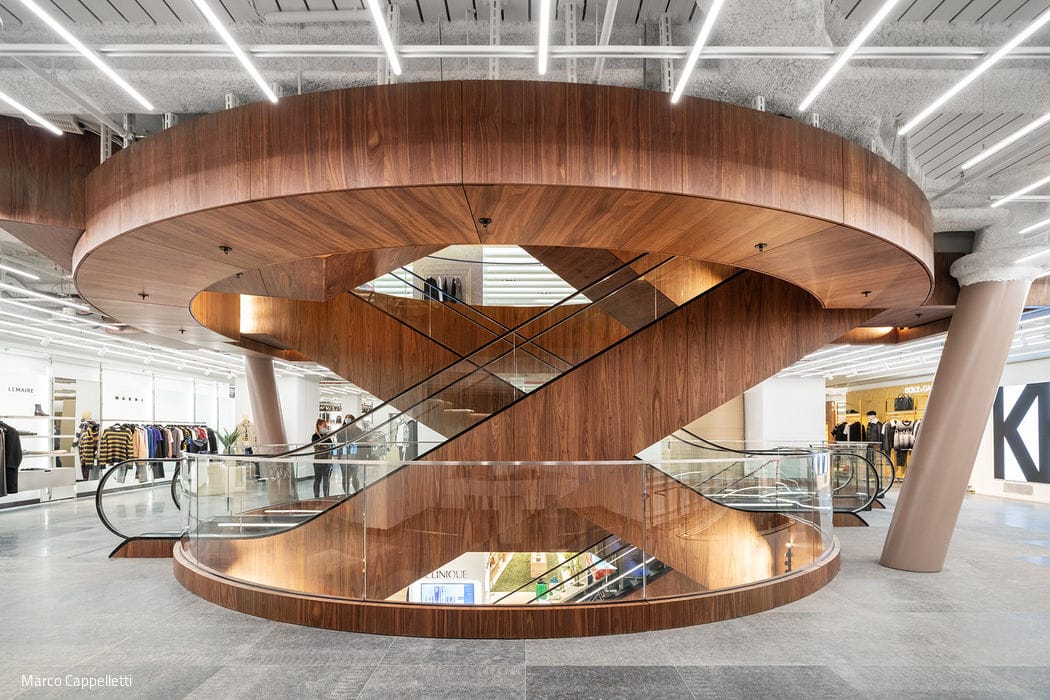
Vertigo
KaDeWe's Vertigo-Inducing Escalators Transform the Department Store
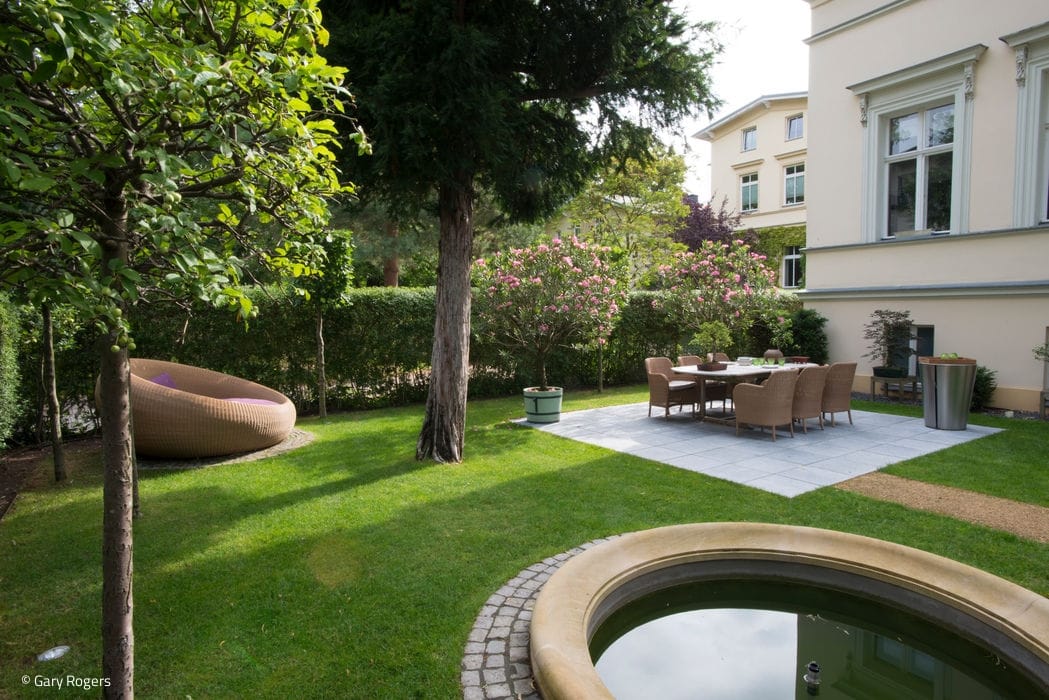
An Intimate Garden Layout
Contemporary Garden Design Meets Timeless Architecture
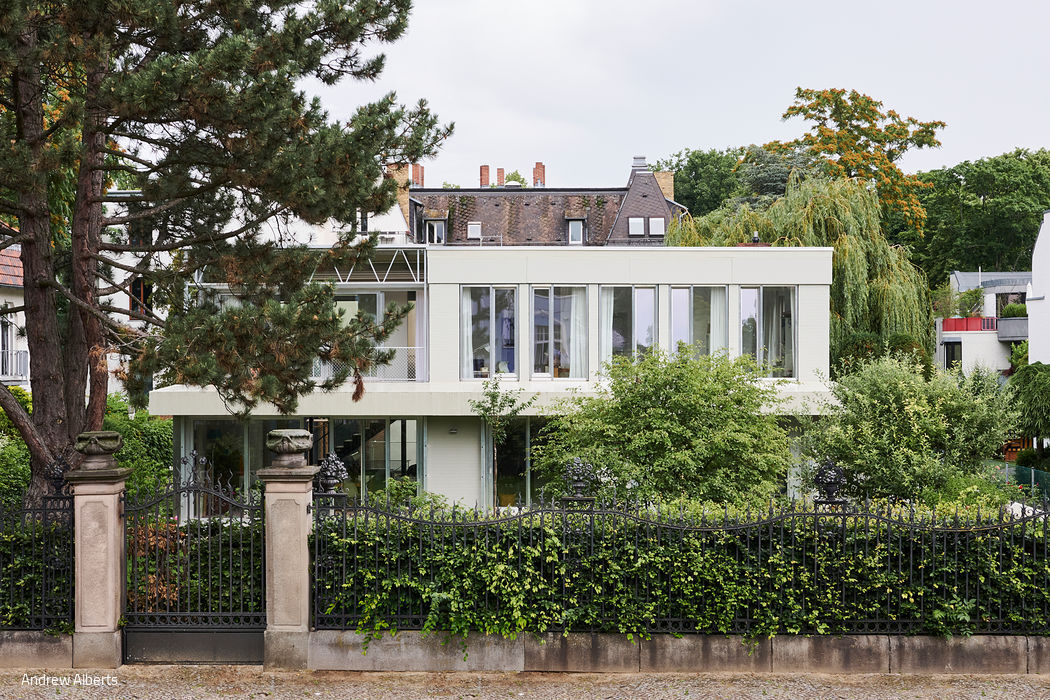
Timeless Quality
A 1960s house reimagined as a contemporary villa
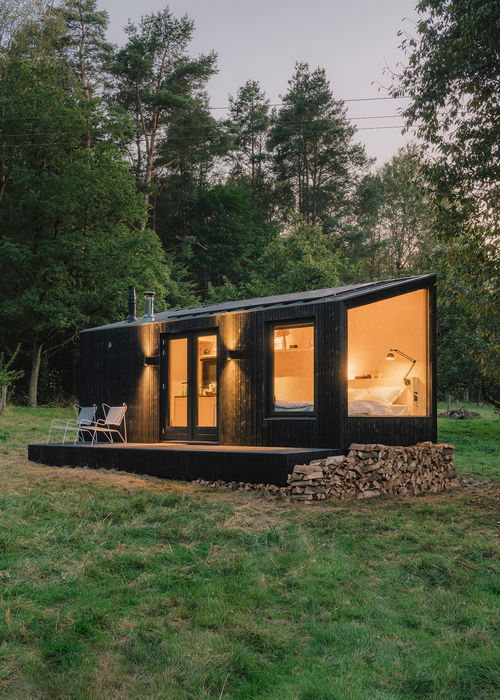
A Retreat in Nature
Shared Retreats for the Urban Weary