


A New Addition to the Ensemble
Office Spaces, Meeting Areas, and Laboratory – Rooted in History
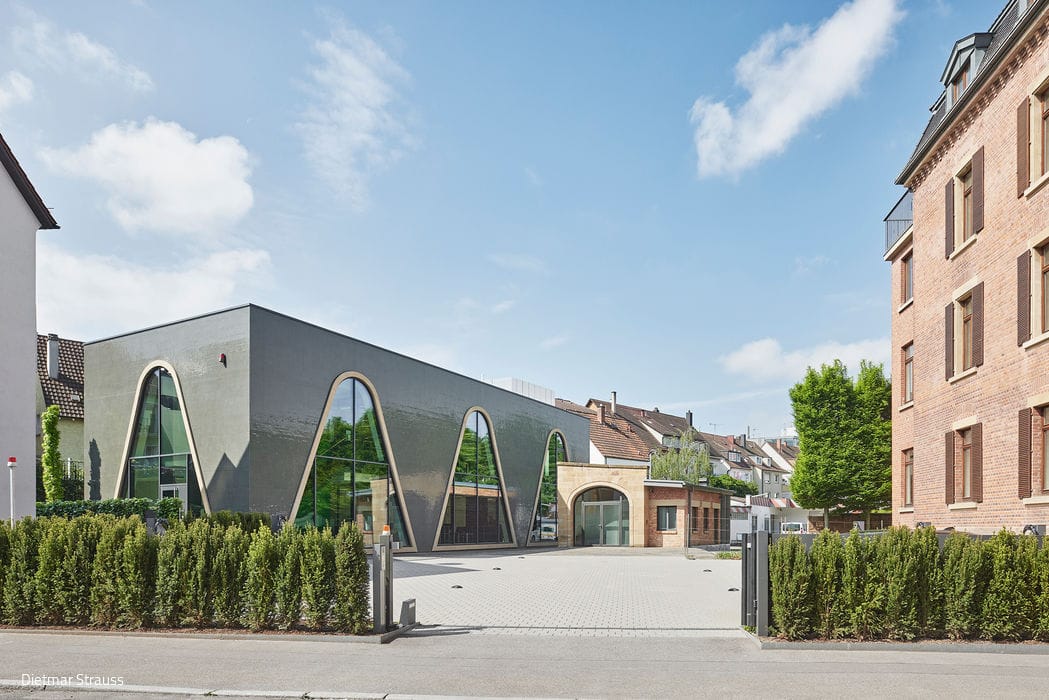
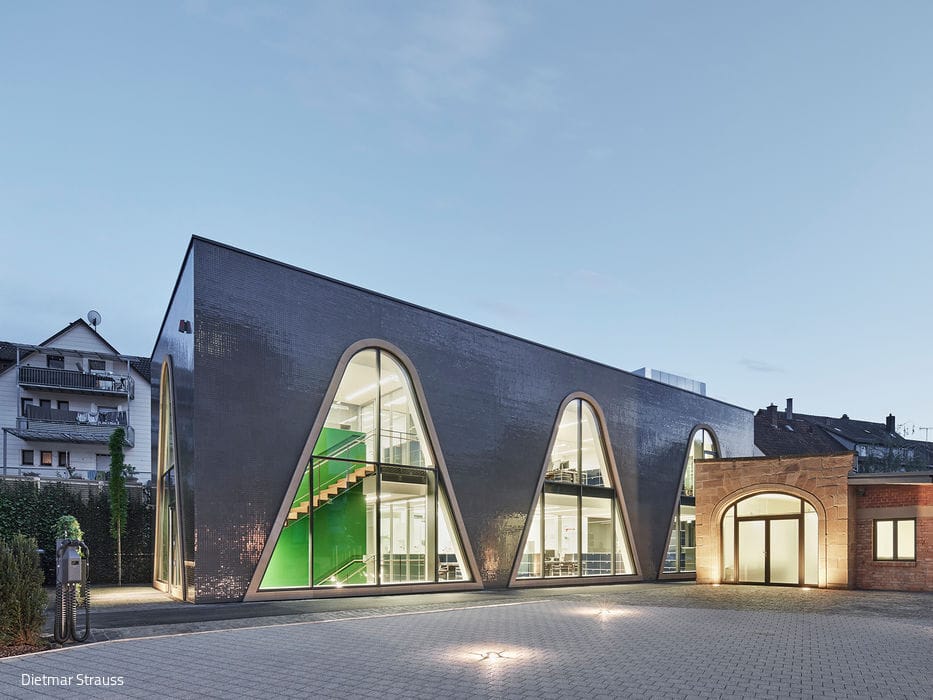
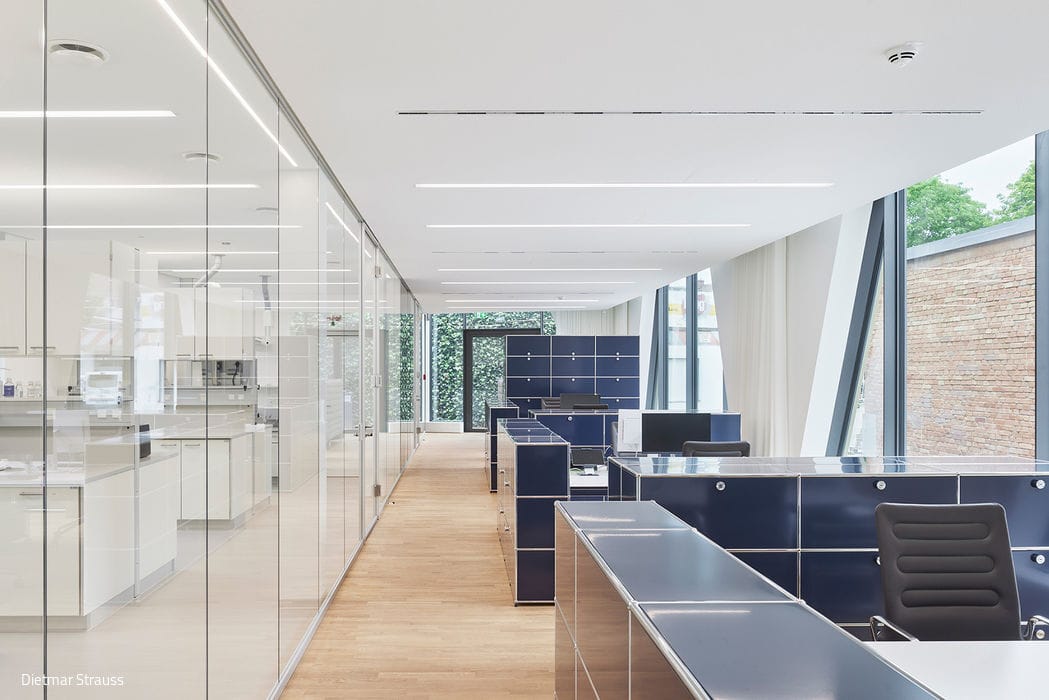
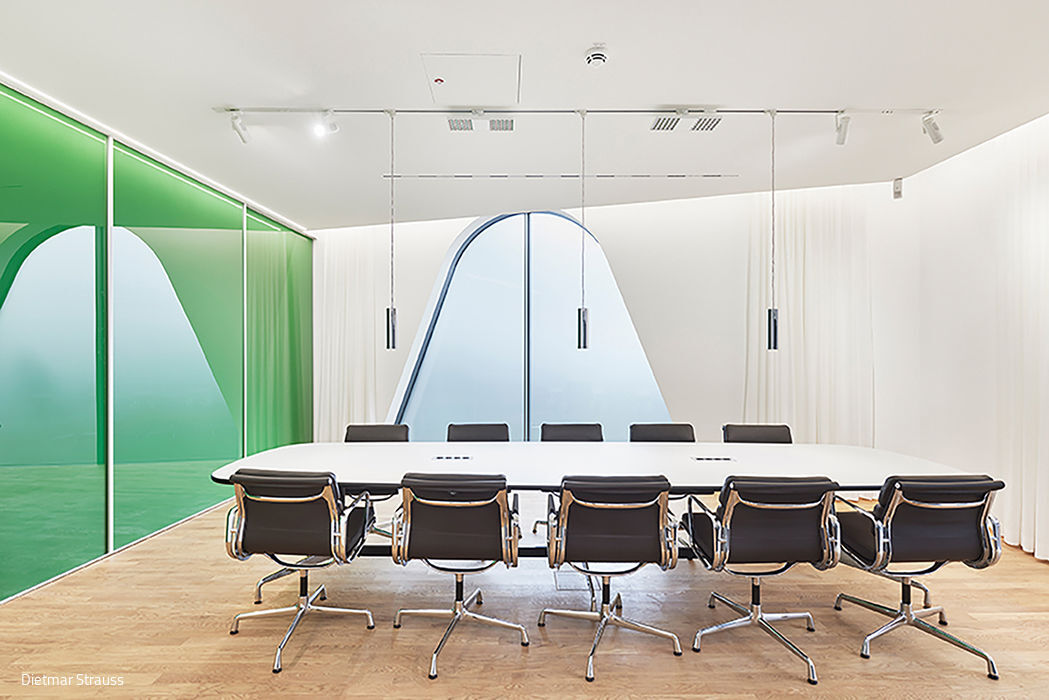
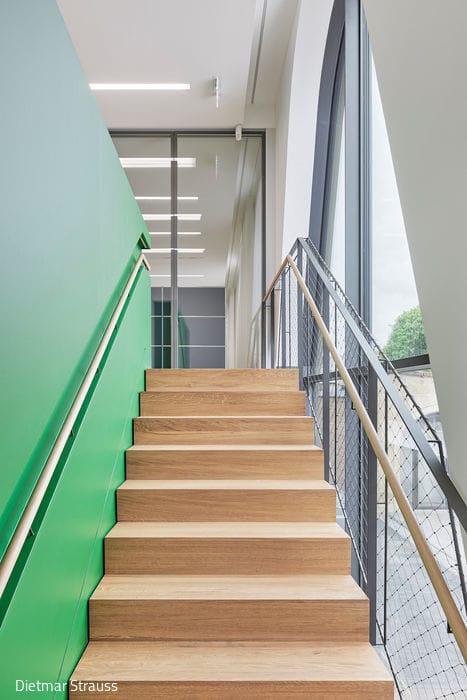
A former carpentry workshop with detached garage seemed like the ideal candidate for expansion—until structural analysis revealed otherwise. The building's foundation was compromised and its condition unsuitable for renovation. Compounding matters, the entire structure had settled significantly. Müller Architects faced a clear choice: design a new building on the site of the demolished original to accommodate the company's urgent need for expanded office space and a dedicated research and development laboratory.
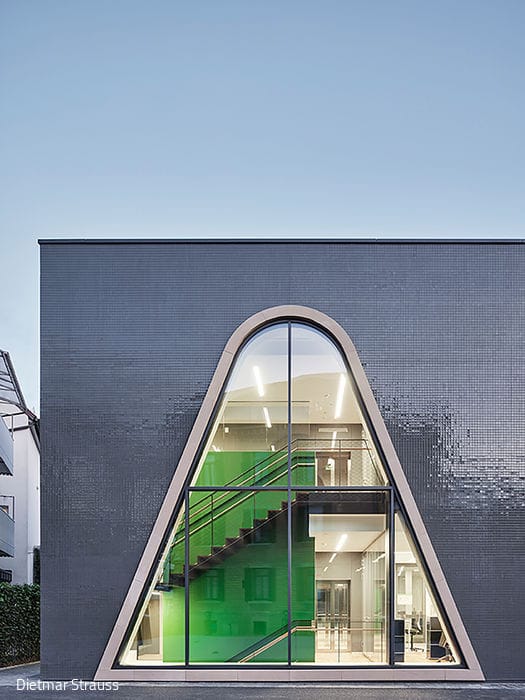
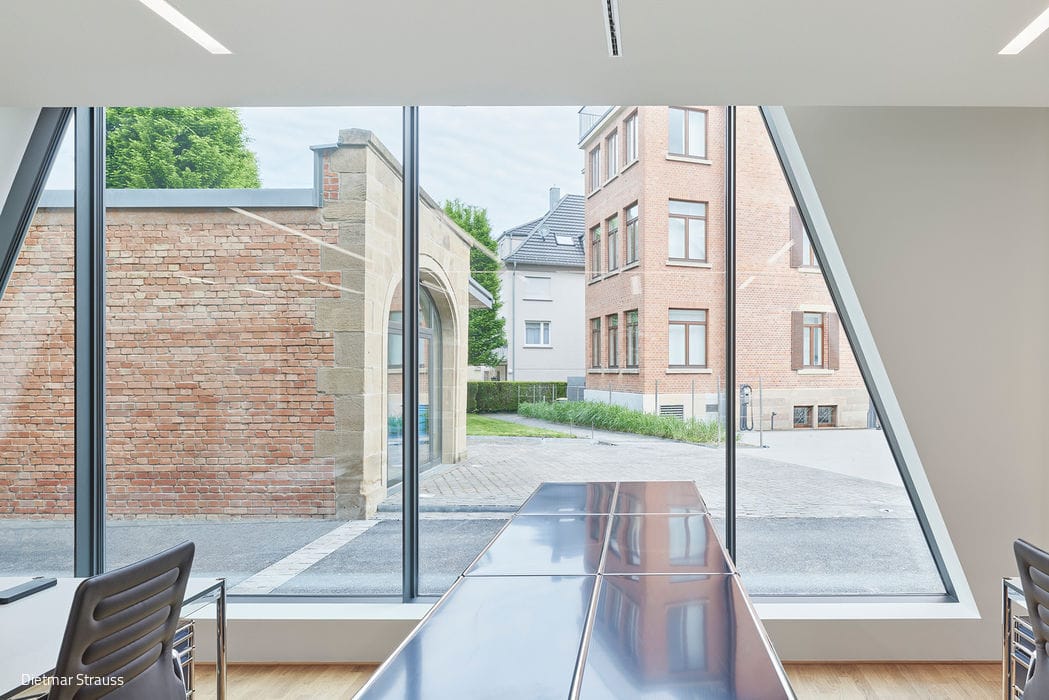
The new two-story structure with basement draws inspiration from the historic ensemble—the main building and coach house—both in material expression and formal language. Rather than simply replicate, the design reinterprets the site's architectural vocabulary: the rhythmic perforated façade, vertical linearity, and rounded window arches speak to tradition while asserting contemporary identity. A glass mosaic skin with glossy finish wraps the exterior, while sandstone frames the arched openings. The flat roof integrates photovoltaic panels and mechanical systems, their polished stainless steel cladding deliberately reflecting the landscape—rendering the technical infrastructure visually transparent. This sustainability strategy was developed in partnership with the German Sustainable Building Council (DGNB).Functionally, the ground floor divides clearly: the north side houses office workstations and a central meeting area, while the south accommodates workshop and laboratory spaces. Eight additional workstations and a meeting room occupy the upper floor—six in a shared open-plan layout, two in private executive offices. A dual staircase and lift system connect all three levels, with the emergency stairwell strategically positioned as the primary evacuation route. Secondary egress is via direct exterior access at ground level and fire brigade ladders above. The basement supports an archive, sanitary facilities, mechanical plant, and changing rooms with showers—all accessible from the coordinated entry level, which aligns seamlessly with the approach road to ensure barrier-free access. A restrained landscape design enframes three sides of the building.
Photography:
Dietmar Strauß
www.dietmar-strauss.de
(Published in CUBE Stuttgart 03|23)




Unlocking Existing Potential
From overlooked barn to extraordinary multi-level home
The sustainable villa
CUBE conversations with Alexander Brenner on his design language, building methods, and sustainable architecture
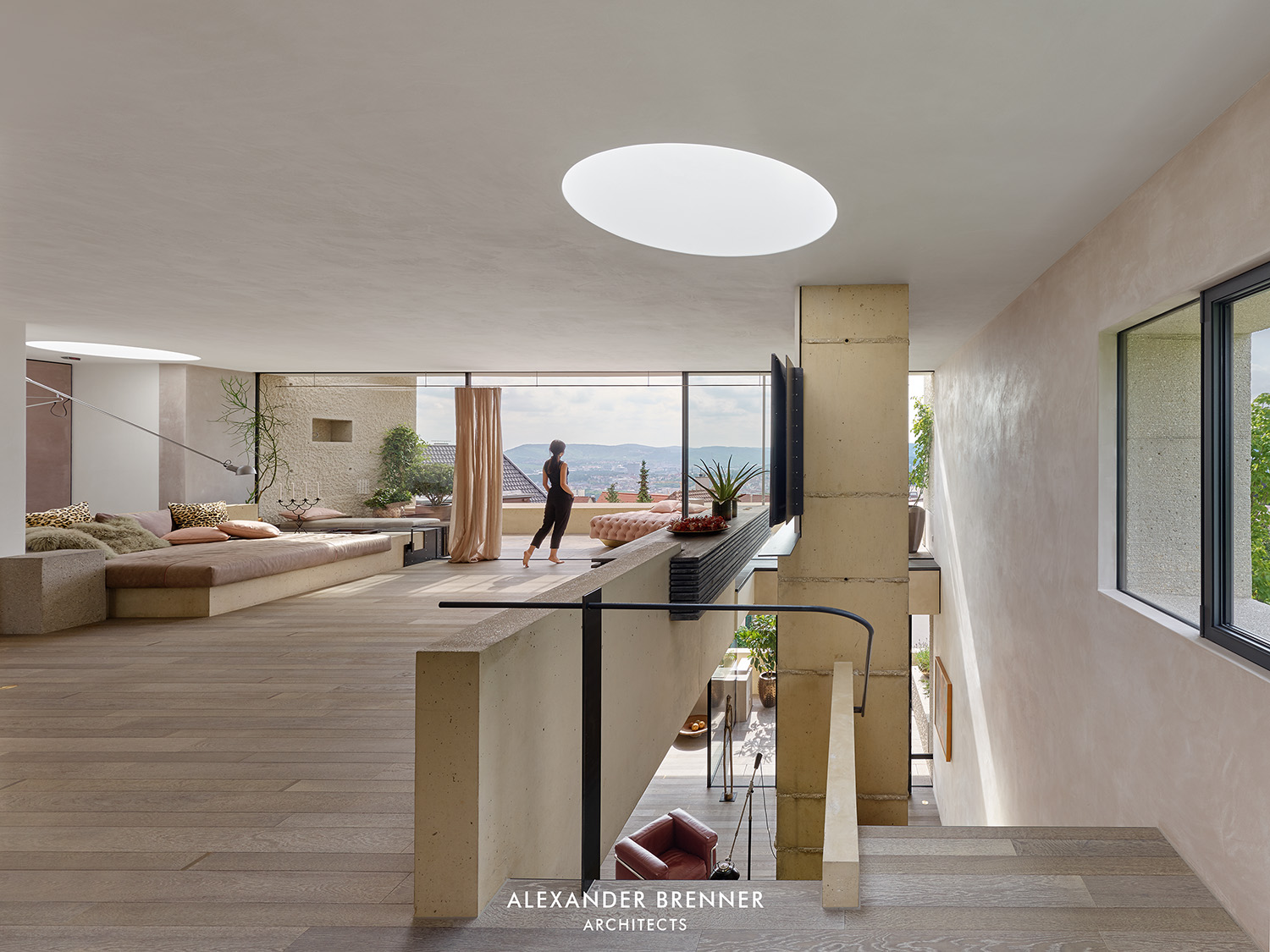
Innovation Meets Elegance
The geometric form echoes the ancient construction methods of medieval fortresses, appearing as though purposefully carved into the hillside for eternity.

Redesigned Façade Cuts Energy Costs
Construction work at the Technical College in Heilbronn has been completed