


Mr. Gatsby's Second Home
Grande Étoile d'Or Brings Glamour to Carlstadt
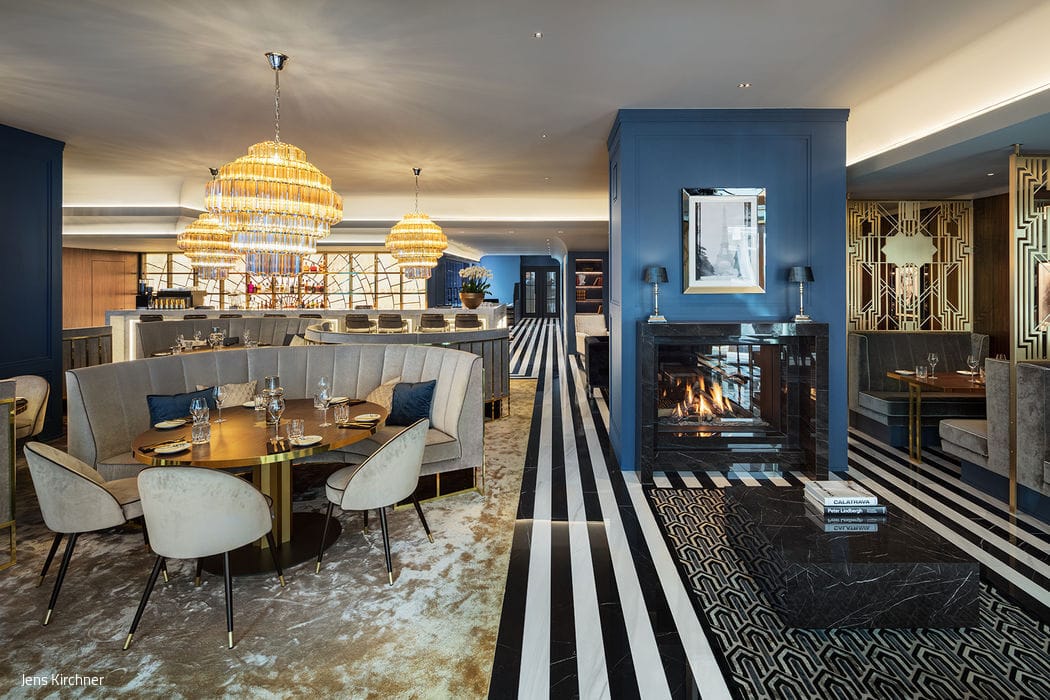
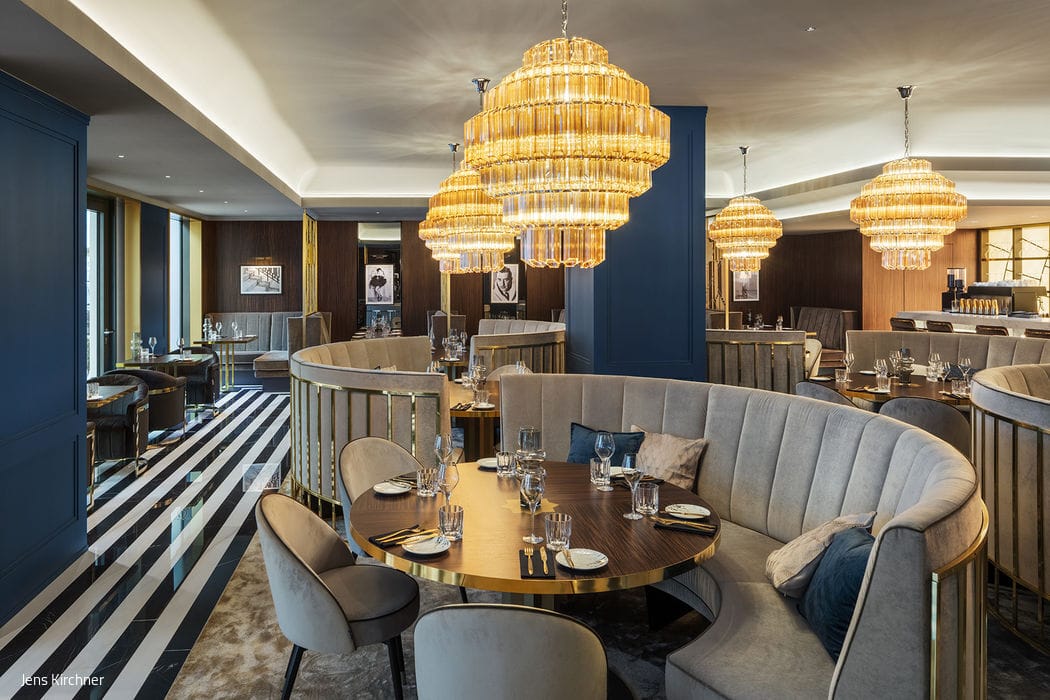
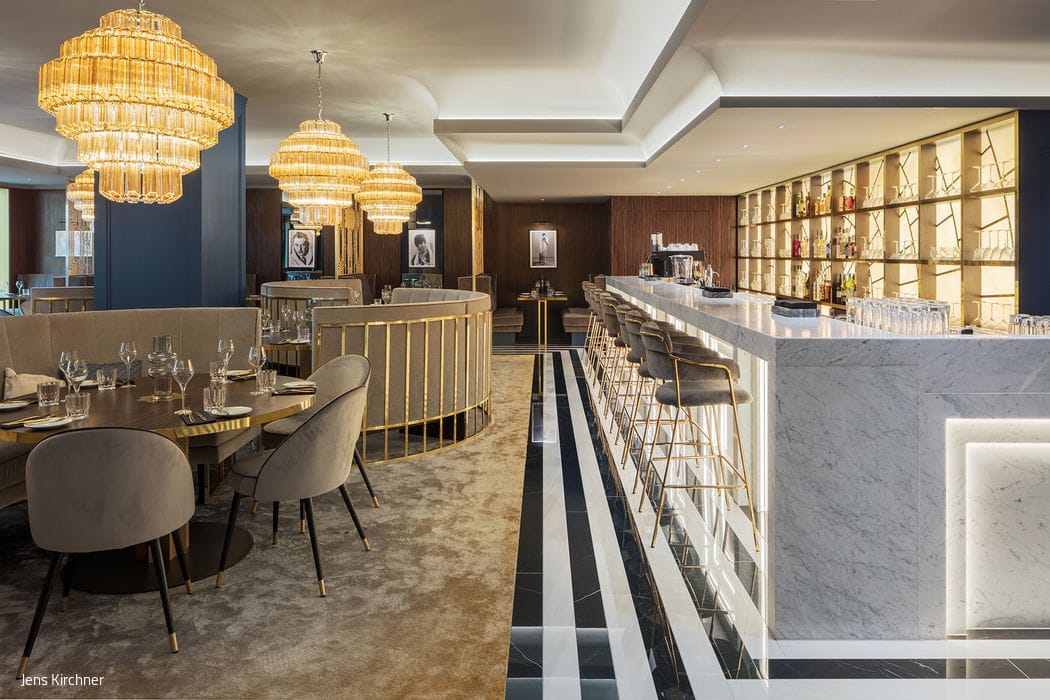
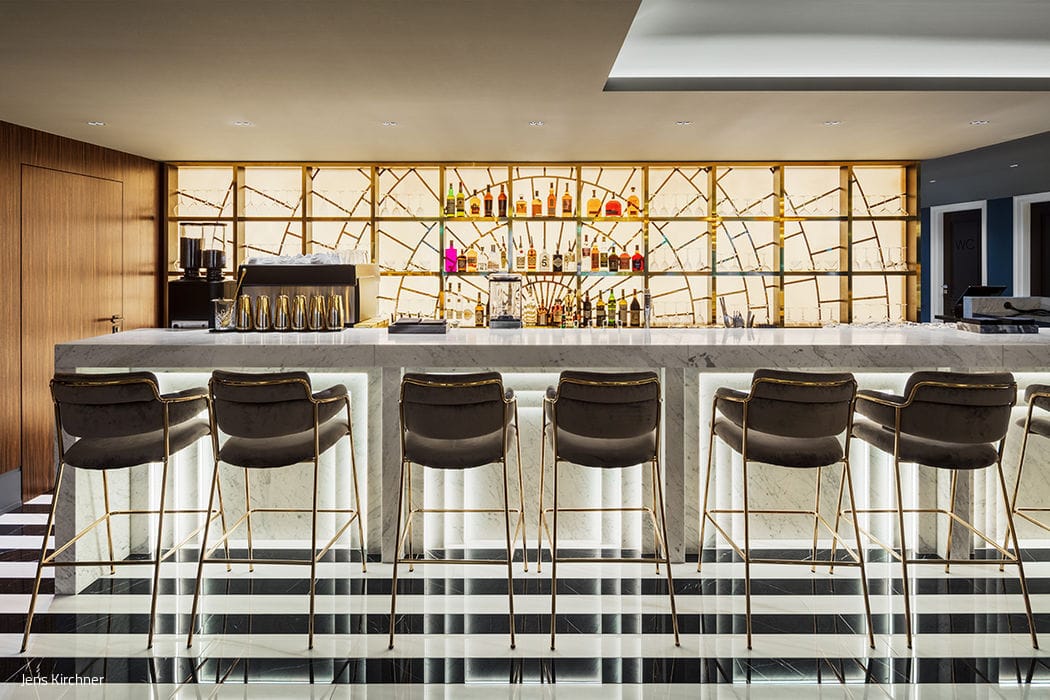
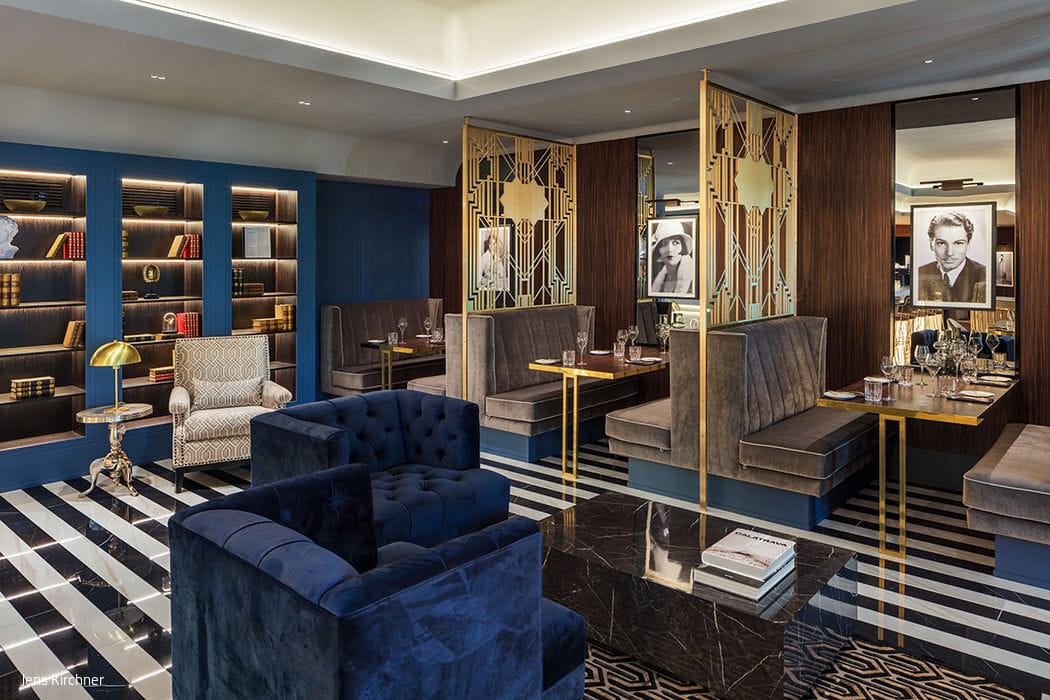
In 2017, the Grand Étoile d'Argent restaurant opened its doors in Düsseldorf's entrepreneurial heart. The name "d'Argent" – Silver Edition – was a playful nod to the restaurant's concept: upscale European cuisine served in an atmosphere of luxury, elegance, and unabashed opulence. This autumn brought not merely a second location, but its natural successor: the Golden Edition. The new restaurant, situated at the corner of Bastionstraße and Kasernenstraße near Stahlhof, elevates that ambiance to an entirely new level of refinement. The interiors were designed by Geiselhart & Musch, a Düsseldorf-based architectural practice that masterfully blends stylistic influences—from the glamorous geometry of 1920s Art Deco to the bold energy of Pop Art.
The clients had fallen in love with an Art Deco villa that Geiselhart & Musch had designed in nearby Meerbusch. That admiration became the creative brief for the restaurant: to craft nothing less than "Mr. Gatsby's second home"—a vision fed by endless Pinterest boards of stylistic inspiration. The blank canvas was a ground-floor retail shell within the newly completed Carlsquartier complex. The first obstacle was unavoidable: service pipes running the length of the ceiling to supply upper floors. Stucco ceilings and decorative coves—hallmarks of Art Deco—concealed them perfectly. Load-bearing columns vanished into custom cabinetry or were absorbed into the gas fireplace with its marble mantelpiece in the side lounge. The real puzzle came from the building systems: the kitchen's gas fireplace chimney required a 25-meter run beneath and beyond the new structure—a technical feat that demanded careful orchestration.
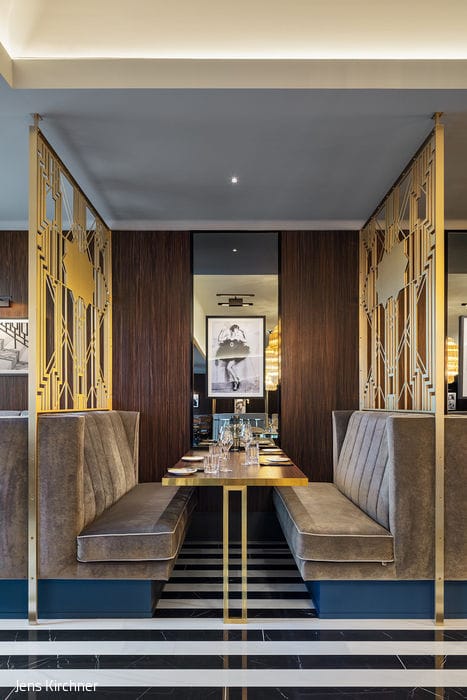
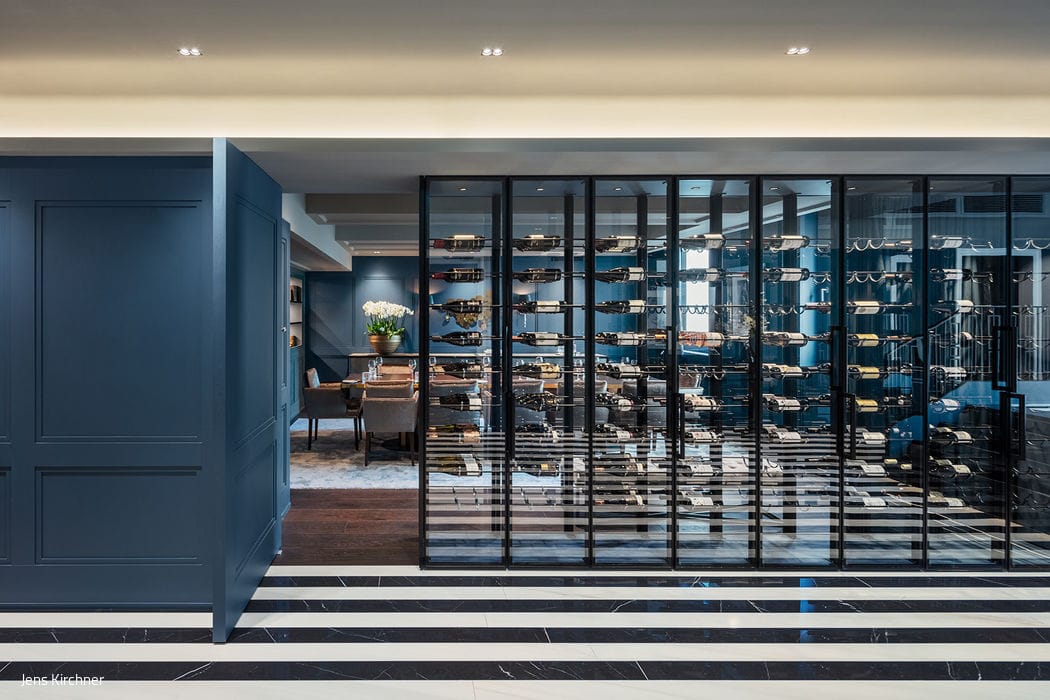
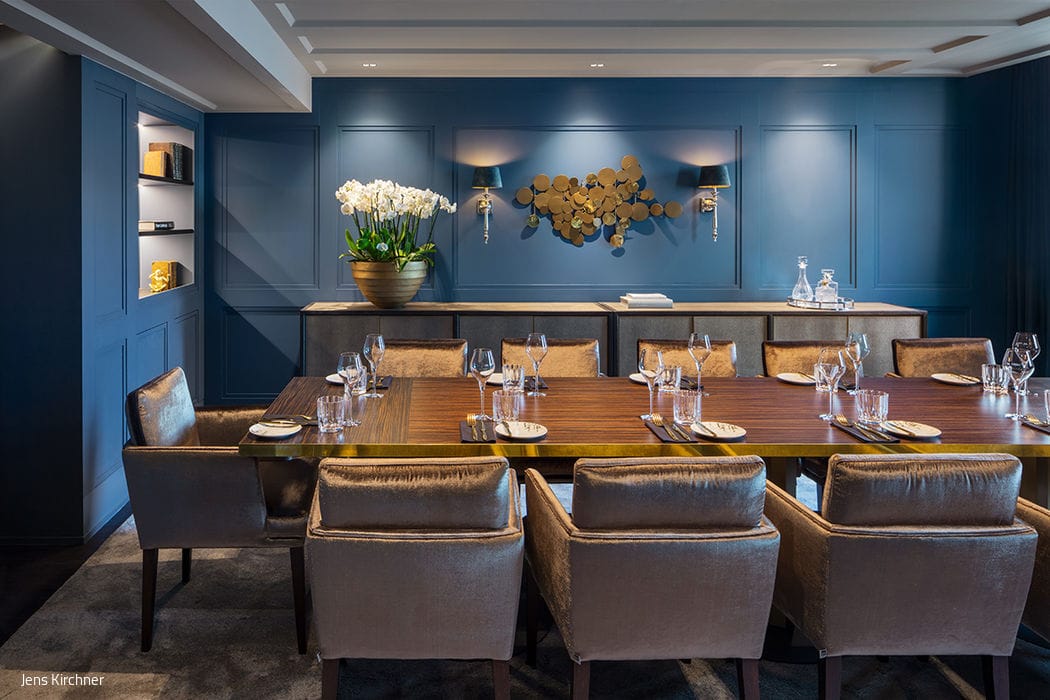
The salon-like main dining room centers on an 11-meter bar counter finished in white marble with a stylized brass sun—the Grande Étoile emblem that commands immediate attention. Beyond lies a private dining room for intimate gatherings of up to twelve guests, separated by a transparent vitrine wall housing a climate-controlled wine collection. Throughout, a sophisticated stylistic fusion emerges: coffered panels in deep petrol blue lacquer, geometric brass grilles, and Makassar wood veneers whisper 1920s glamour. Counterbalancing these are distinctly modern elements—a carpet blending gold, silver, and midnight blue; black-and-white striped marble flooring; and a backlit bar wall—all nods to the bold vocabulary of 1960s and '70s Pop Art.
Photography Credits:
Jens Kirchner
www.jens-kirchner.com
(Published in CUBE Düsseldorf 04|21)

Welcome to Vertikum
New office and commercial building presents itself as a finely drawn front building
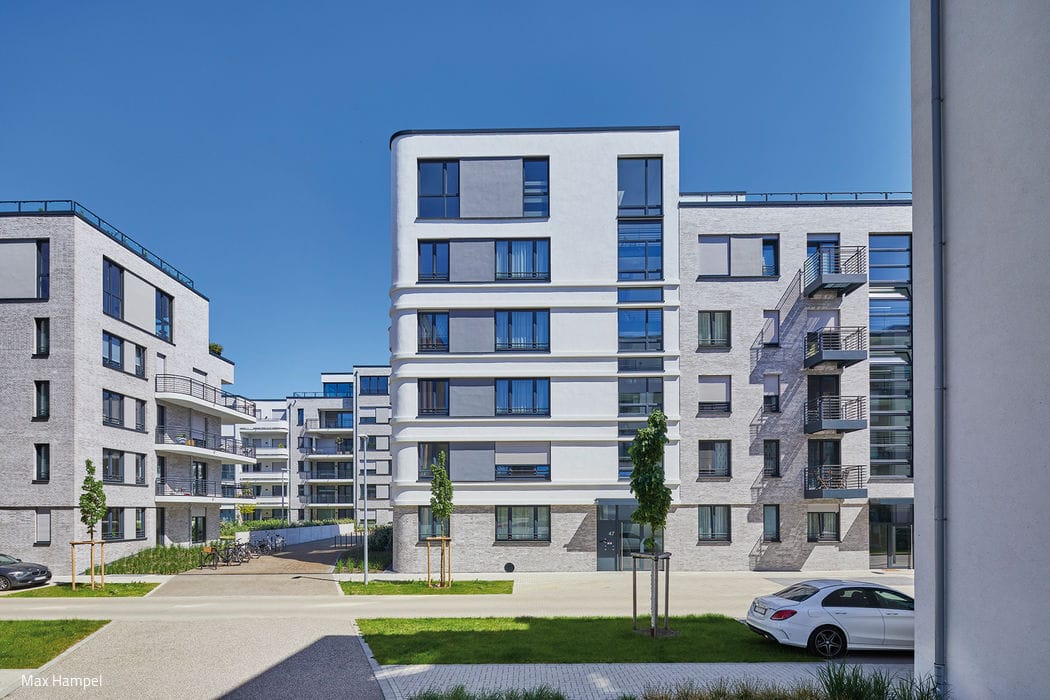
Grafental Meets White City
The result is a richly textured urban fabric—one where each building possesses its own distinctive presence.
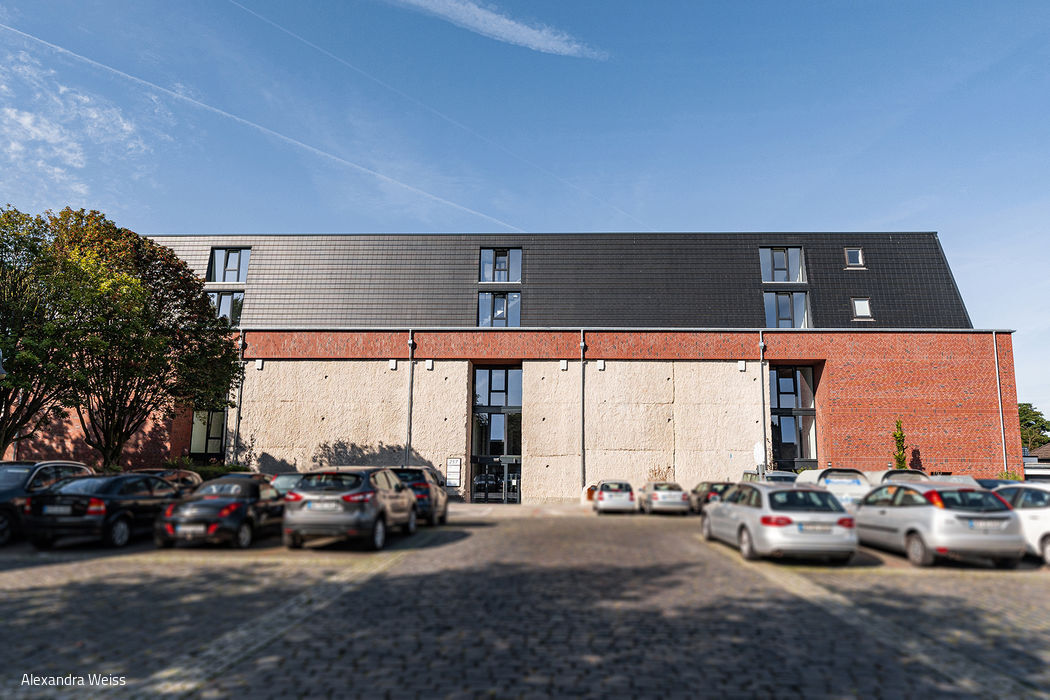
Sustainably kissed awake
The high-rise bunker reimagined as Marienhof
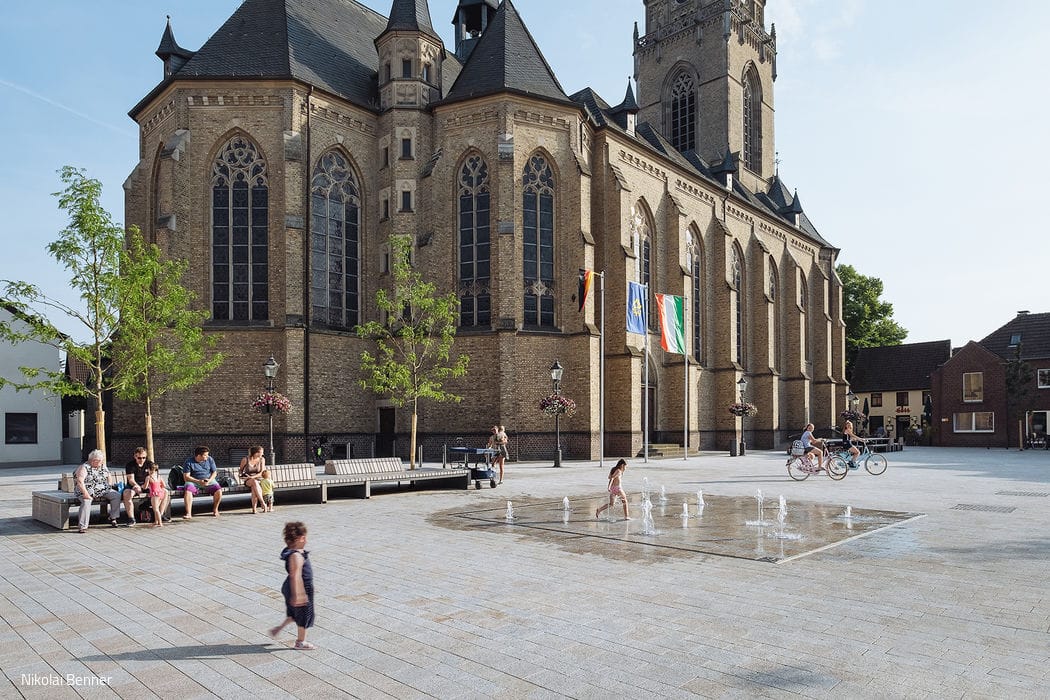
The City's Living Room
Willich's redesigned market square captivates through restraint and adaptability.