


Minimal Impact – Maximum Output
A prototype built on a holistic approach to materials, energy, and use
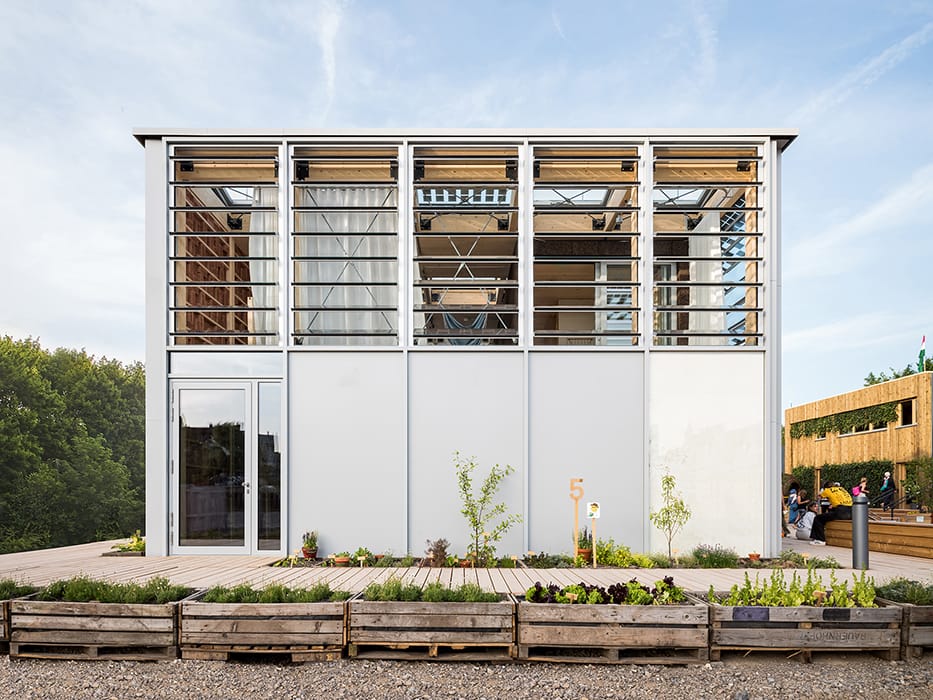
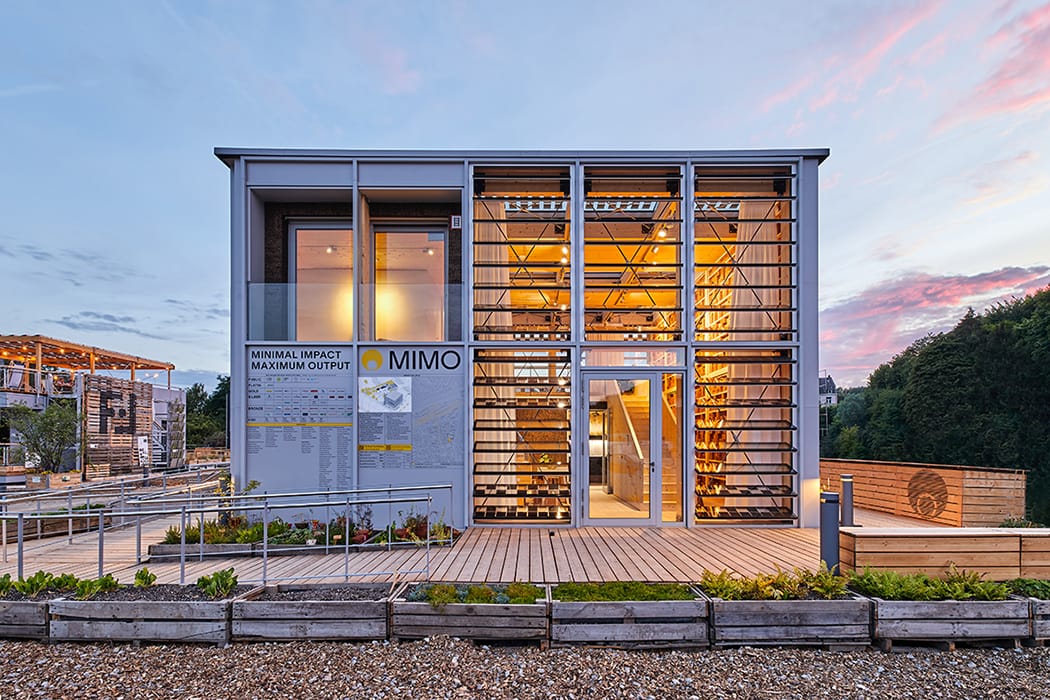
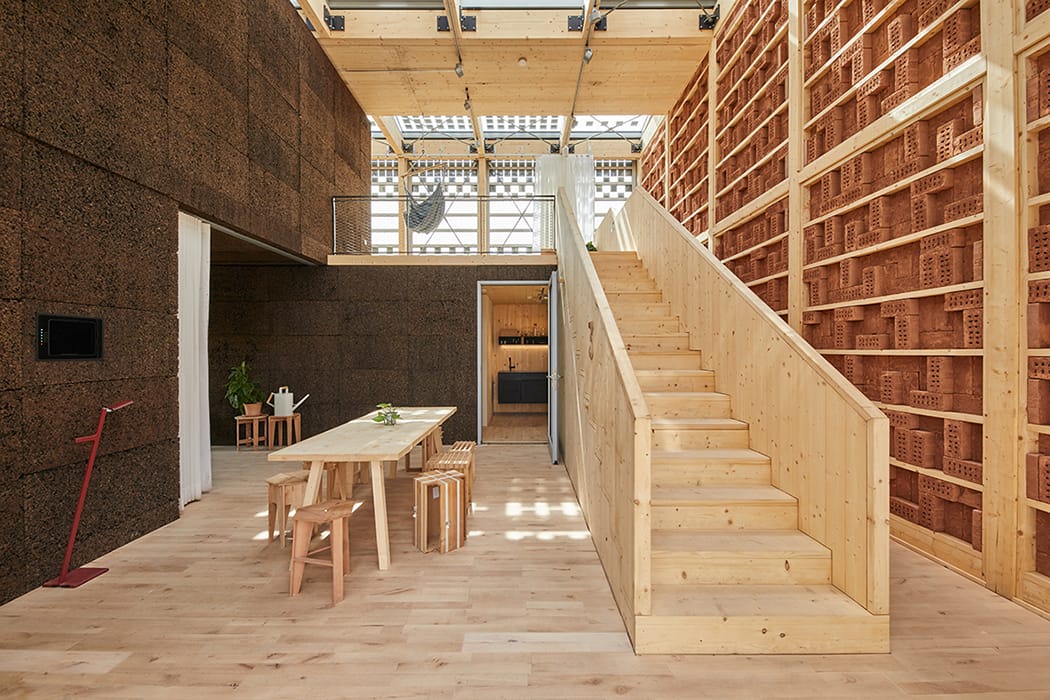
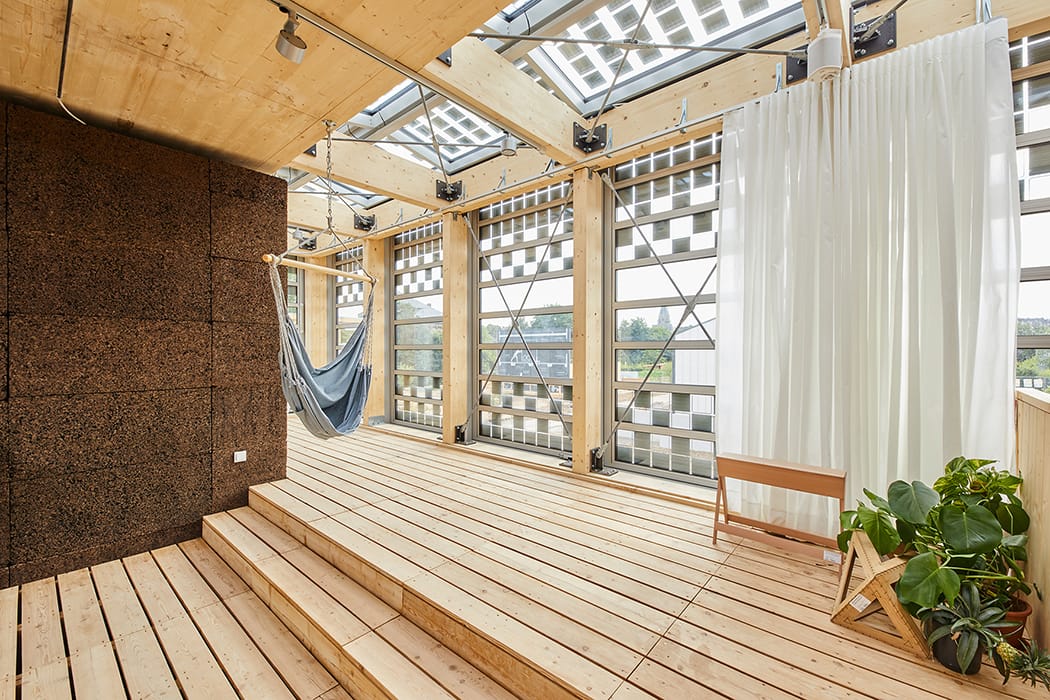
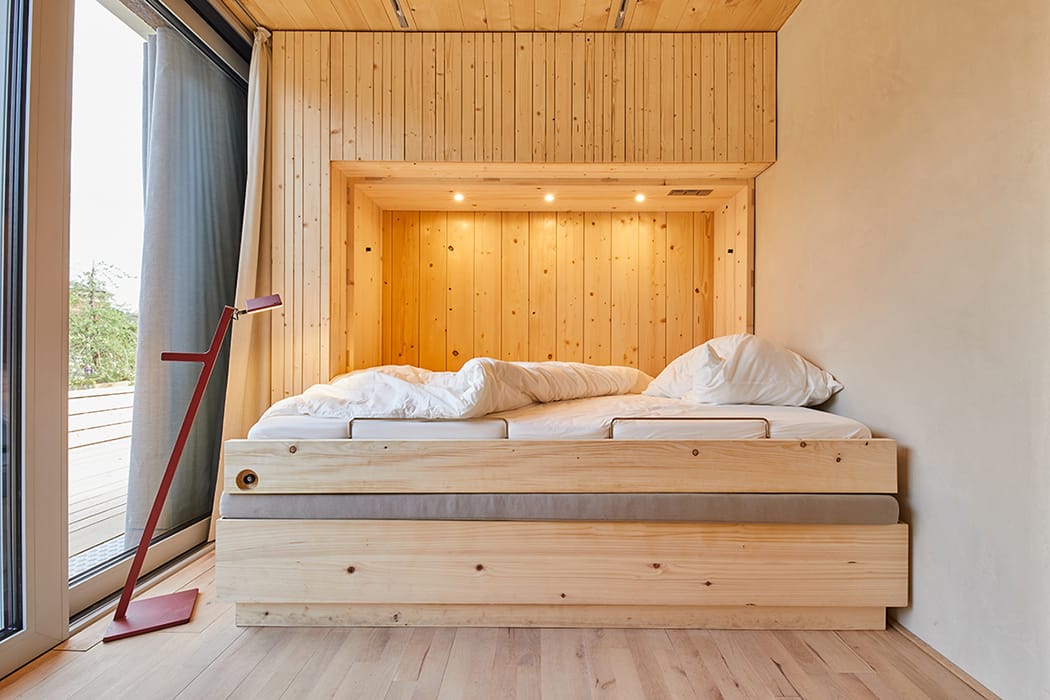
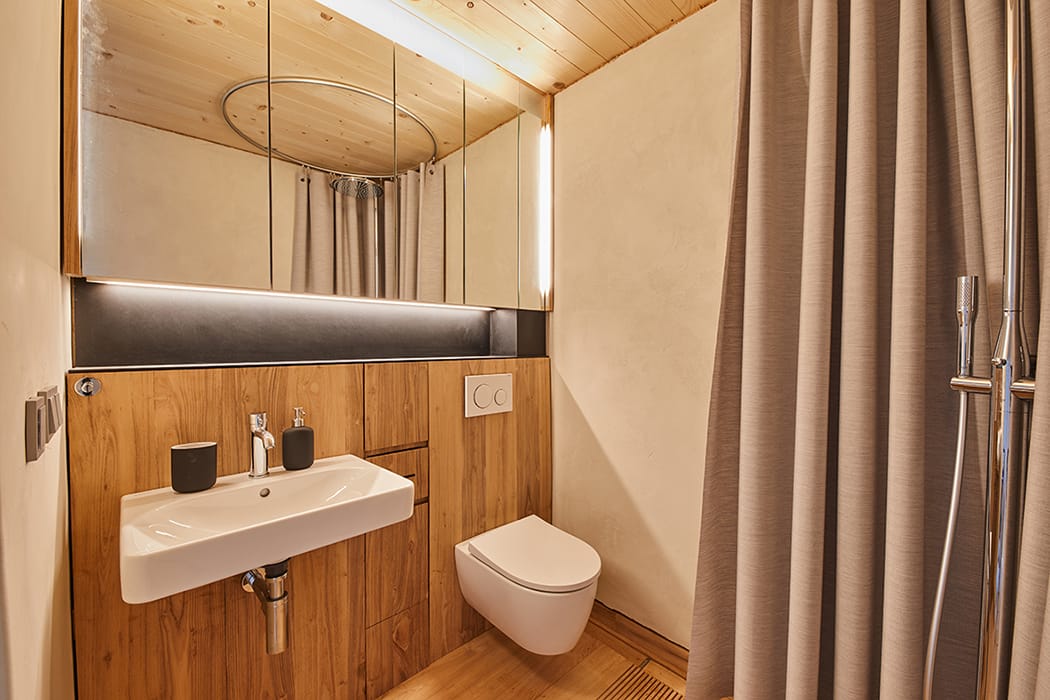
This June, Wuppertal hosted Solar Decathlon Europe—a competition where ten teams put their sustainable building and living concepts to the test. With backing from the Federal Ministry for Economic Affairs and Climate Protection (BMWK), several fully operational prototypes demonstrated forward-thinking solutions to achieving a climate-neutral building stock by 2050. Under the banner "Minimal Impact – Maximum Output" (MIMO), an interdisciplinary team of 18 professors and 70 students from Düsseldorf University of Applied Sciences designed a thoughtful renovation and vertical expansion of an old warehouse in Wuppertal Mirke—home to the well-known dance and event venue Café Ada. The project features prefabricated room modules crowned by a climate envelope, with one module serving as the demonstration unit. At its core: fostering genuine community among residents through reusable materials, energy efficiency, and sufficiency principles—combining minimal private living spaces with shared-use models.
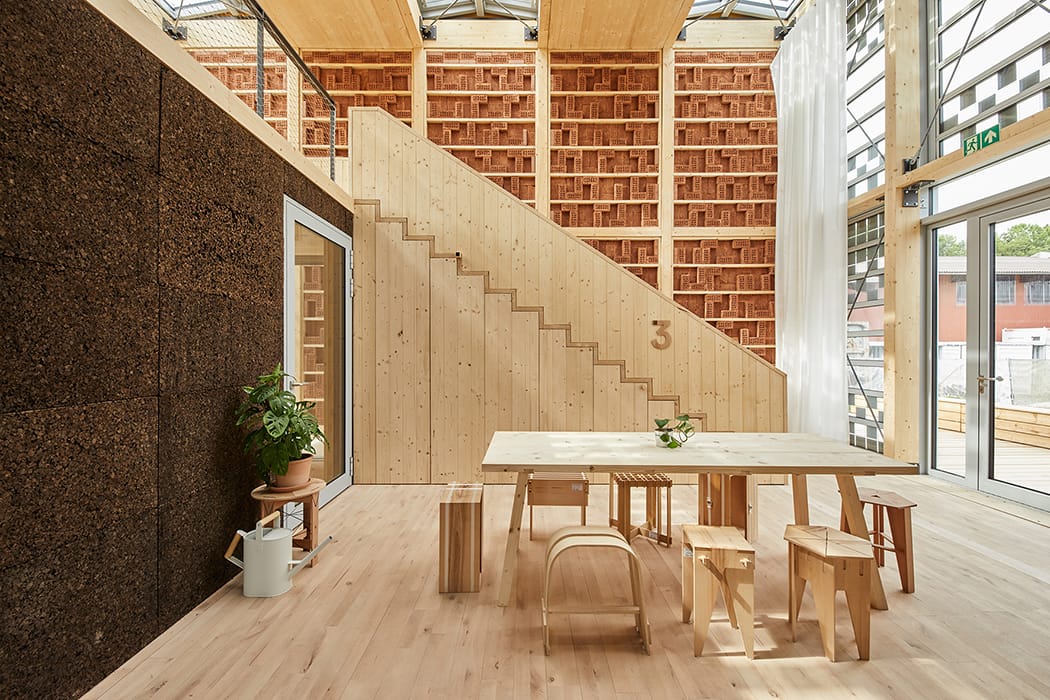
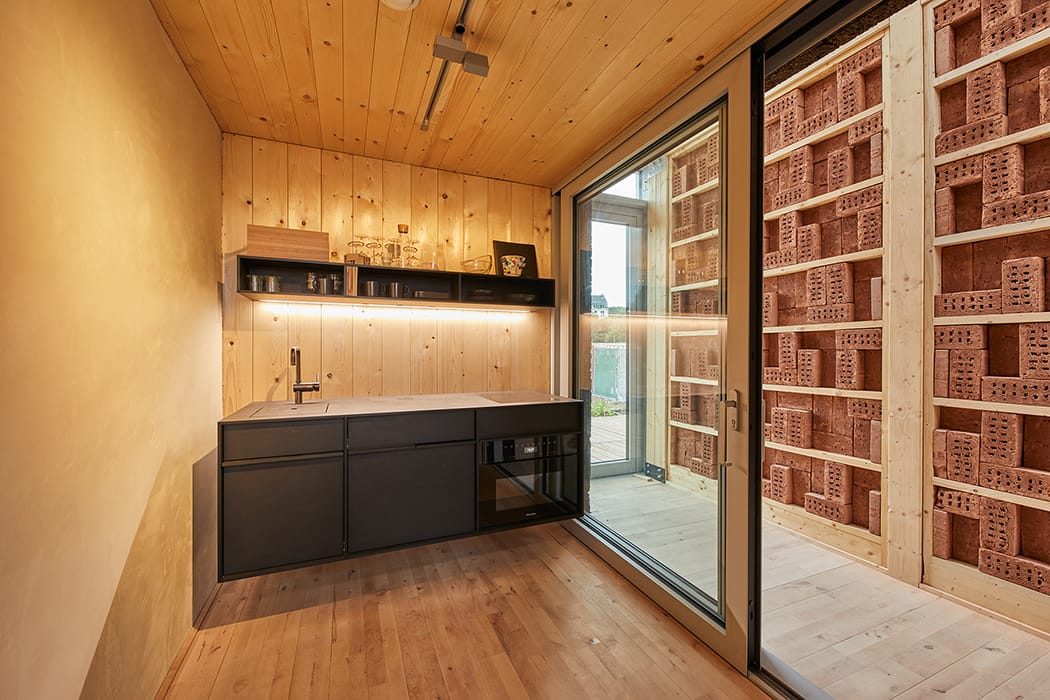
The competition's "solar envelope" requirement limited the building footprint to 10 x 10 m with a maximum height of 7 m. The MIMO team designed two compact living modules (each approximately 8 m tall) plus a technical systems module, stacked and arranged strategically within a climate envelope. Across two levels sit pared-down living units alongside shared spaces—kitchen, dining area, lounge, and integrated storage. Residents enter through a communal kitchen anchored beneath the upper-floor unit, with double-woven curtains that can acoustically separate it from the main space. In winter, this kitchen becomes a thermal hub, leveraging different heating zones to maintain a warmer microclimate. The two-story main living area floods with natural light through large windows, anchored by a sculptural staircase that serves both spatial definition and storage. Embedded photovoltaic cells in the windows generate power while providing shade. Solar gains primarily heat the space, with underfloor heating deployed only during extreme cold. Constructed from prefabricated solid-wood elements (12–18 cm thick, adhesive-free), the modules are thermally and acoustically insulated from communal zones using screwed cork boards. The north façade features clay brick for thermal mass and sound absorption, while clay plaster on clay building panels—paired with radiant wall heating—serves as heat storage and humidity regulation in wet areas.
Photography Credits:
Marvin Hillebrand
Team MIMO
(Published in CUBE Düsseldorf, Issue 04|22)
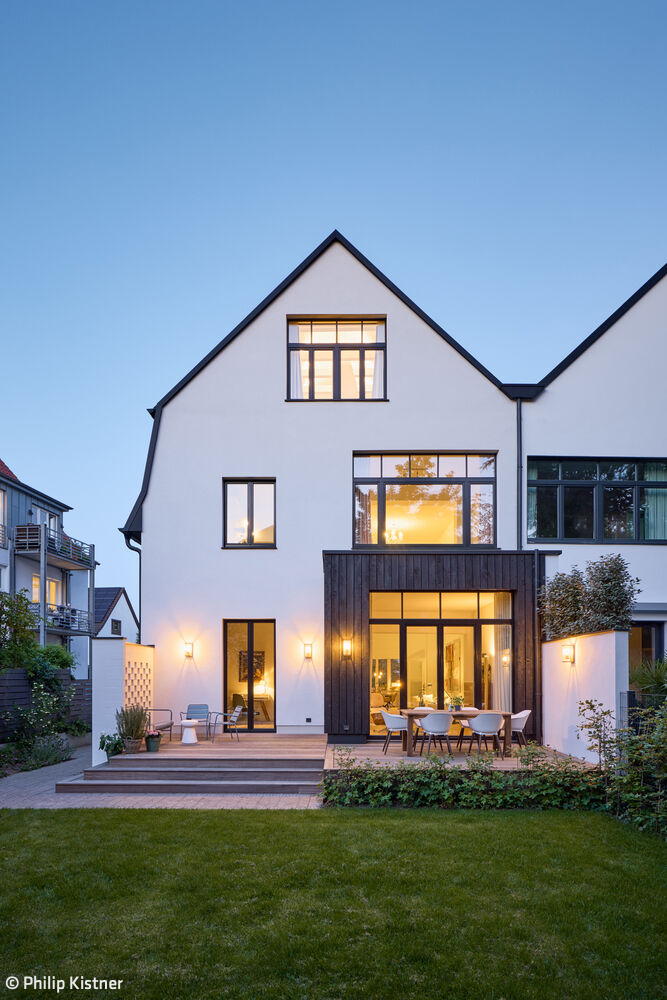
Building with Contrast
A restored semi-detached house: where architectural layers speak to one another.
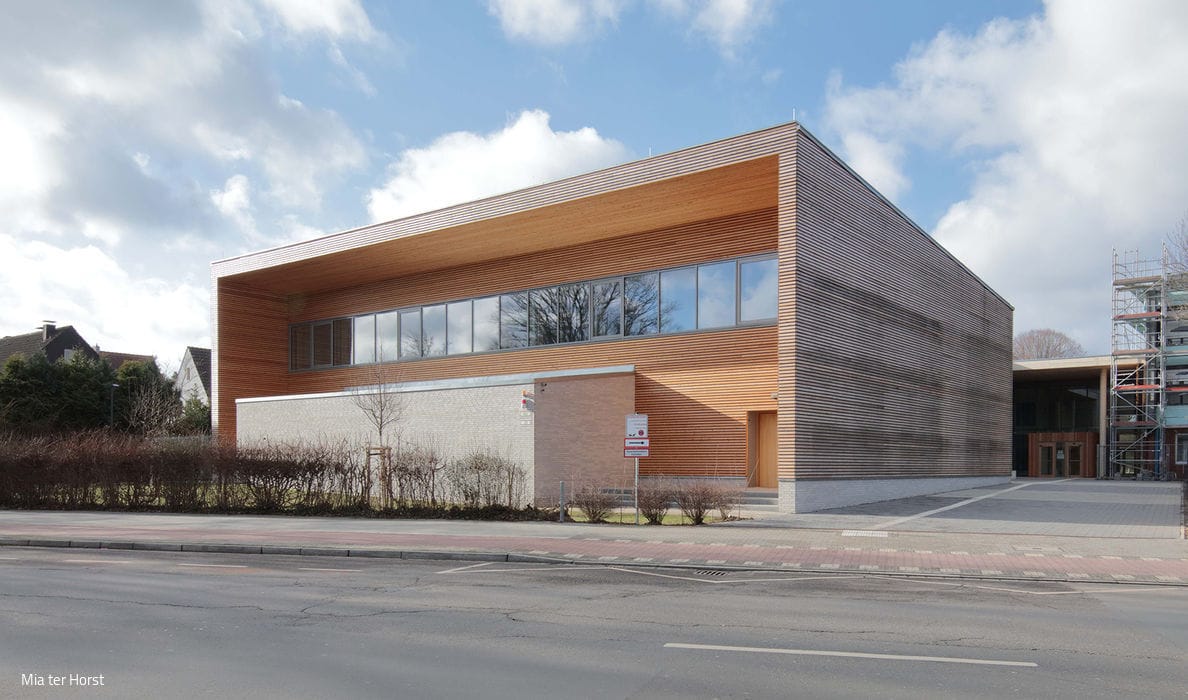
Light and Space in Harmony
The LVR Kurt Schwitters School in Gerresheim has been transformed into an architecturally unified ensemble.
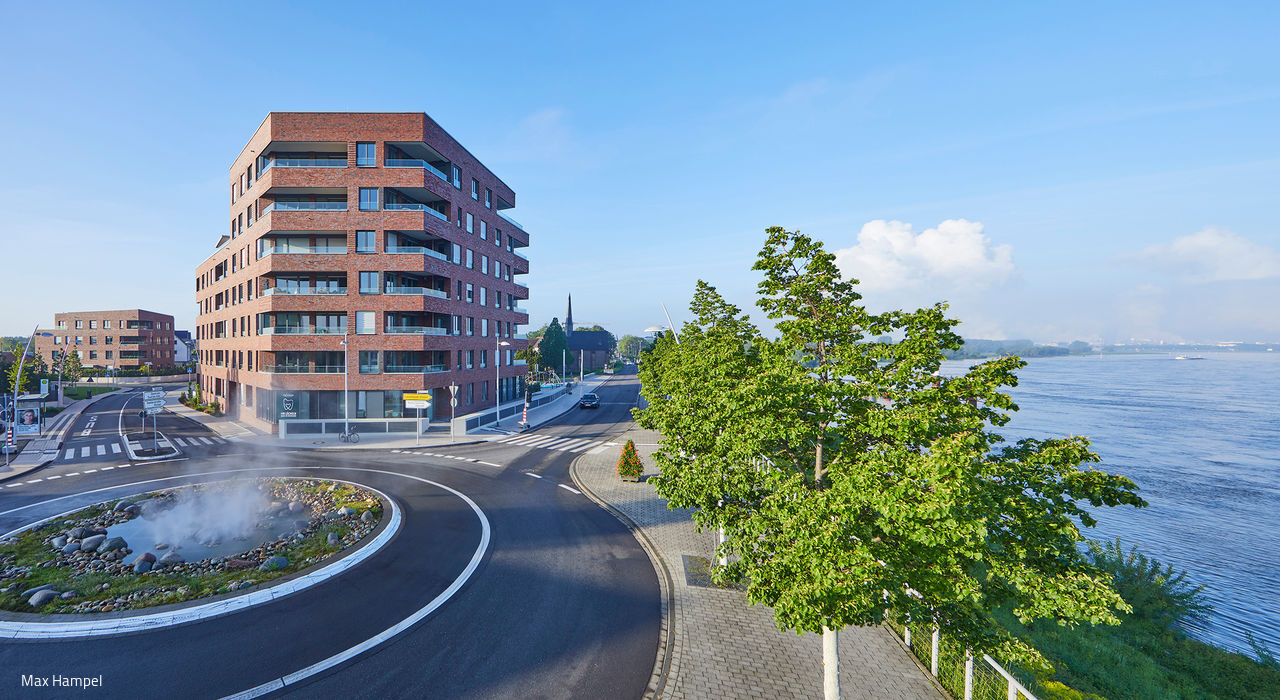
Maritime Monheim
The "Rheinkiesel" reconnect urban living with the Rhine

Sustainable Metamorphosis
The Lyght office ensemble in Golzheim revitalizes and expands a 1970s complex