


Maritime Monheim
The "Rheinkiesel" – Urban Living Meets the Rhine
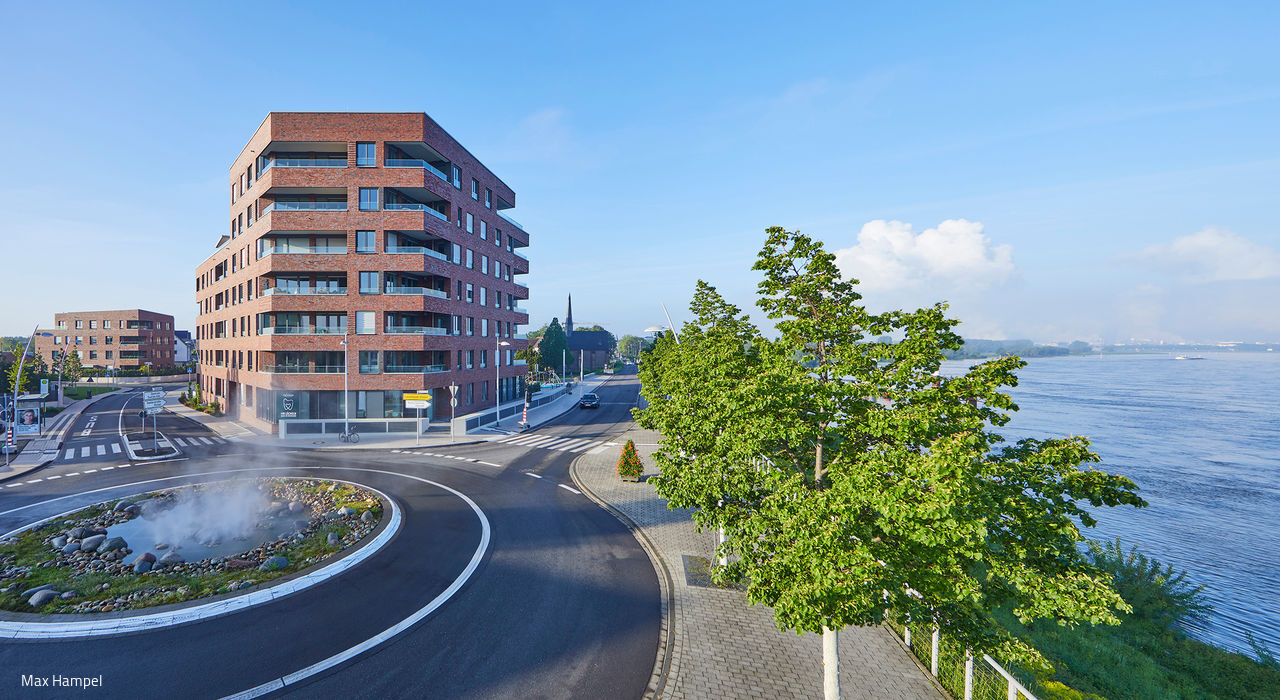

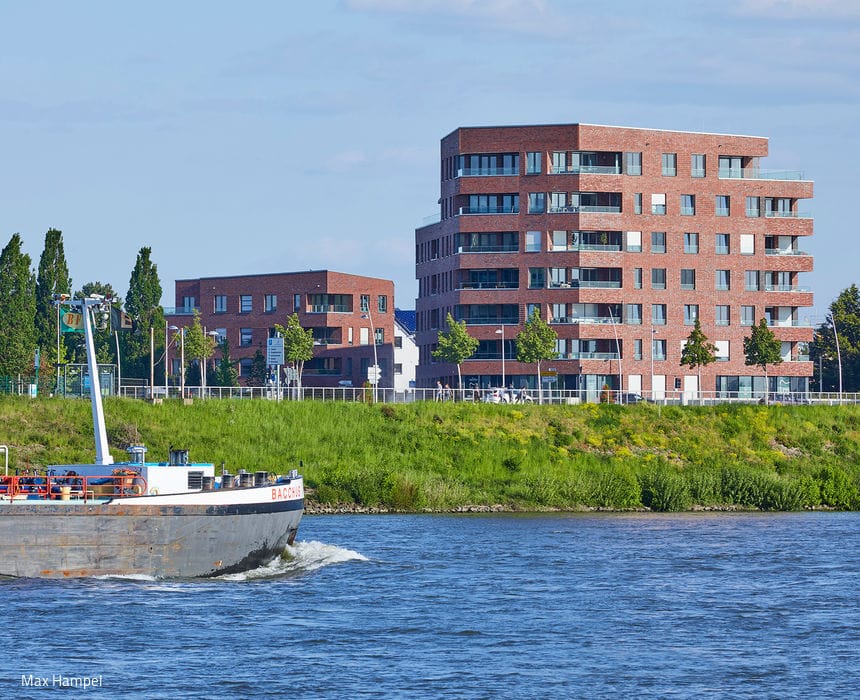


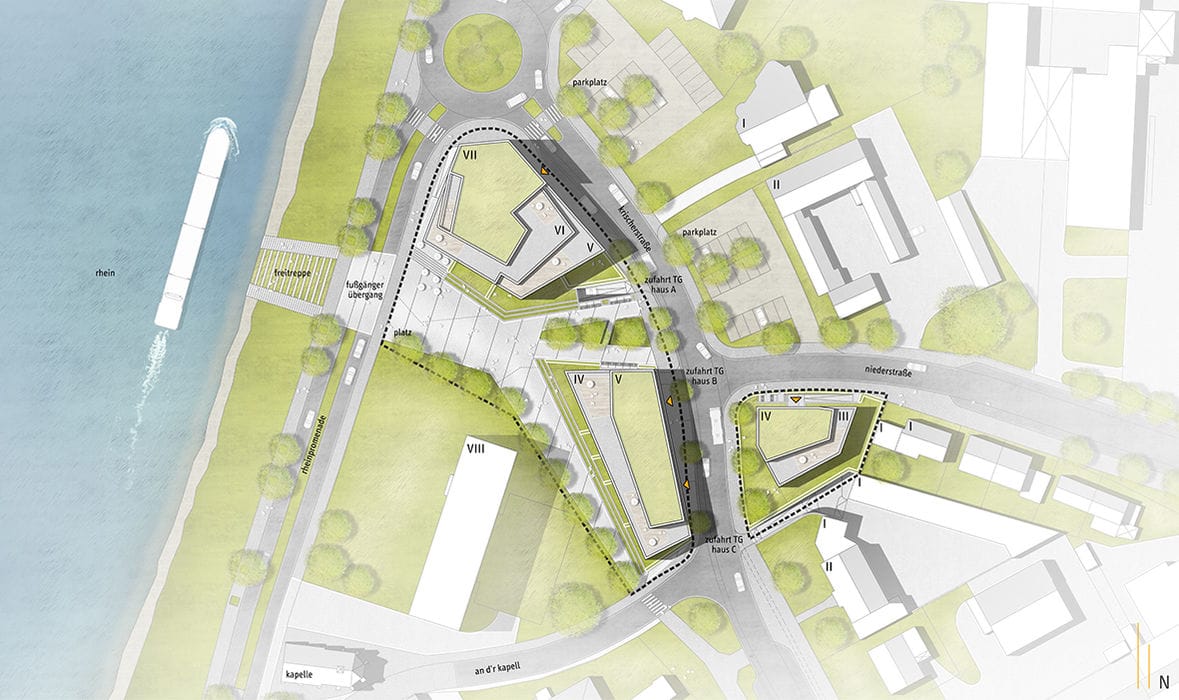
For decades, Monheim and the Rhine kept their distance. That's changing—and fast. Today, ambitious plans for a riverside promenade are reconnecting the city center with the water. At the heart of this transformation stands the "Rheinkiesel," a striking trio of structures anchoring the northern gateway to the revitalized waterfront. Designed by Düsseldorf architects Konrath und Wennemar, these three monolithic buildings rise directly from the Rhine's edge, each shaped by its unique plot to form a cohesive, visually compelling ensemble. Every unit—from thoughtfully proportioned two-room apartments to expansive penthouses—offers premium, fully accessible living with panoramic views across the new promenade and the Rhine landscape beyond.
The "Rheinkiesel" draws inspiration from three unequal pebbles tumbled by the Rhine and polished by time—a concept expressed through deliberate architectural language. Entrances, loggias, and terraces are carved as decisive incisions in the façade, emphasizing the monolithic character. Elevated ground floors and pronounced base stories anchor the compositions, while a public plaza between the riverfront buildings creates a vibrant gathering space for residents and visitors alike. Rising boldly to seven stories along the Rhine, the structures gracefully step down toward neighboring buildings, responding thoughtfully to their urban context. The warm red brick—drawn from the neighboring Shell administration building and Marienkapelle—reinforces the monolithic presence while tying the development to its historical surroundings. Windows and loggia openings form rhythmic bands, their staggered arrangement playing with light and shadow. Half-height parapets integrate seamlessly into this composition, ensuring privacy indoors while framing generous views. Beyond 70 residential units—ranging from two to four rooms, with select penthouses—three ground-floor commercial spaces activate street life. Three underground parking levels preserve traffic-free courtyards. Inspired by the layered spatial hierarchy of Alpine villages, the design connects ground-floor residences to public space through generous stepped terraces, creating a carefully calibrated progression from private to semi-public to fully public—all within an exceptionally compact footprint.
Photography Credits:
Max Hampel
www.maxhampel.com
(Published in CUBE Düsseldorf 02|22)
Presentation is Everything
A comprehensive lighting concept brings architectural character to life
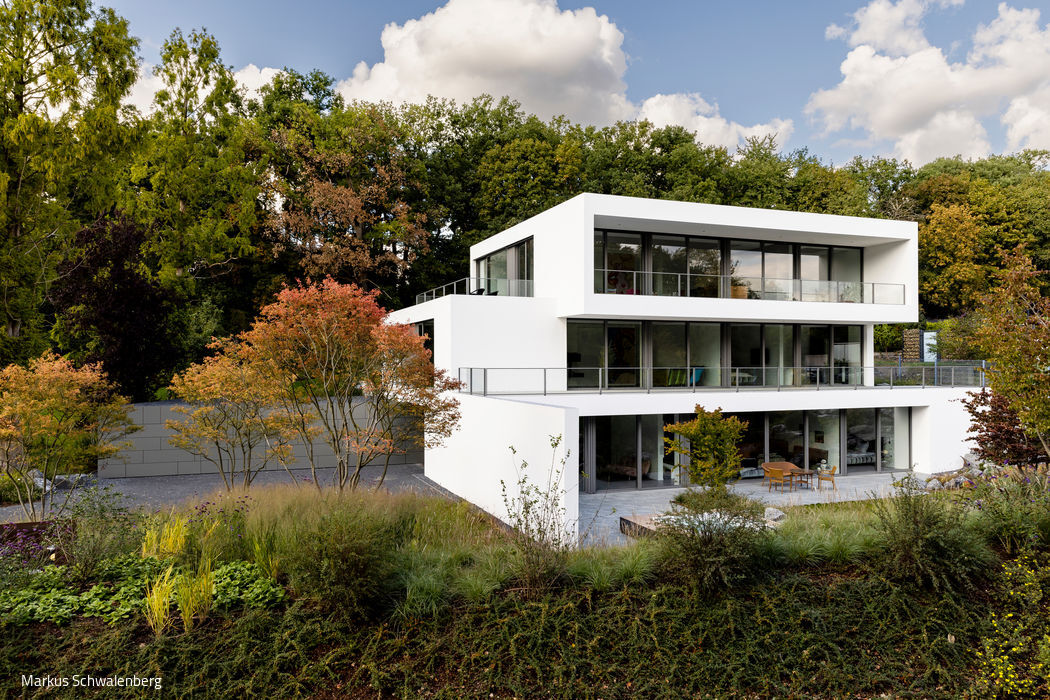
Minimalist Reduction
A contemporary villa where flowing spaces unite multiple generations
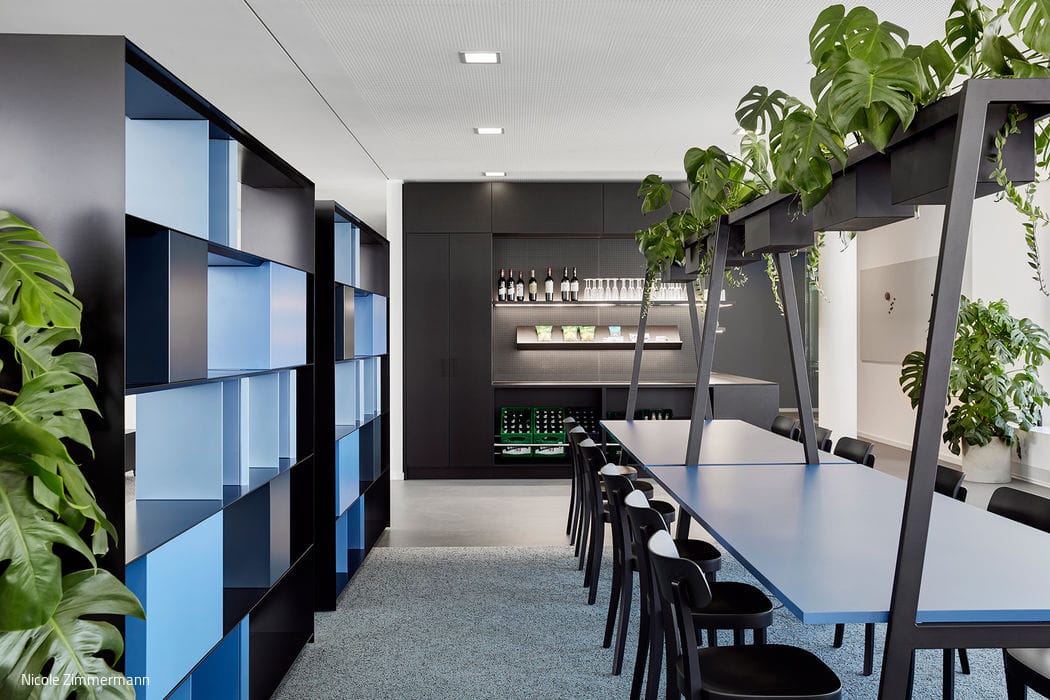
Office destination experience
Designing a collaborative workspace for an in-house company
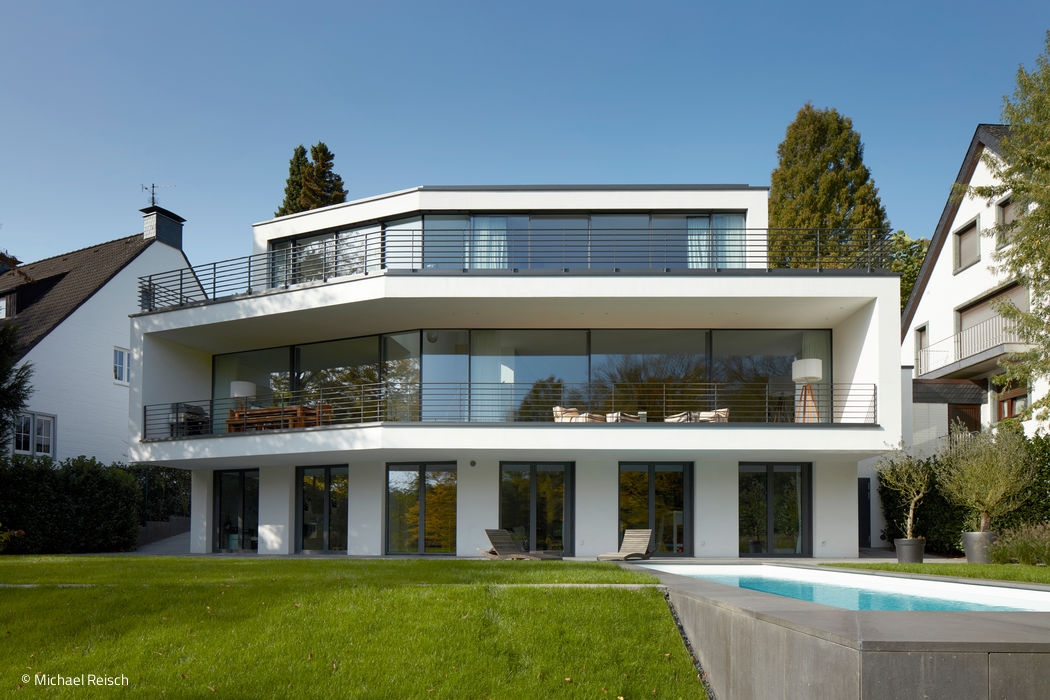
Fanned Out into the Green
A generous villa that captures hearts with flowing floor plans and unforgettable views.