


Green Workspace
Historic ruins reimagined with new construction to create a verdant workspace
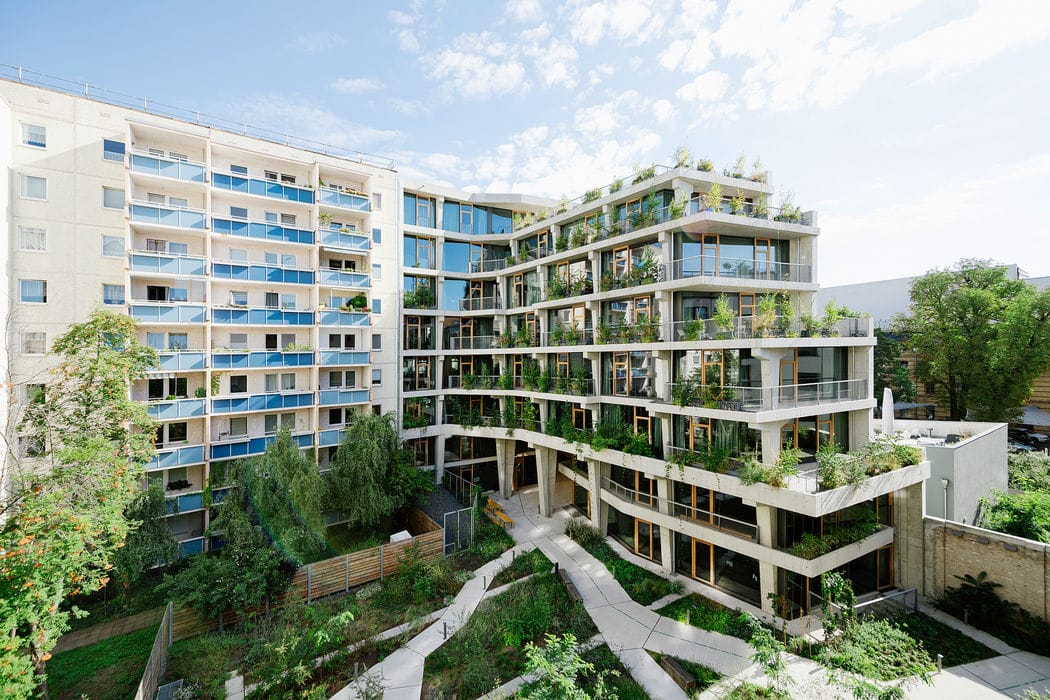
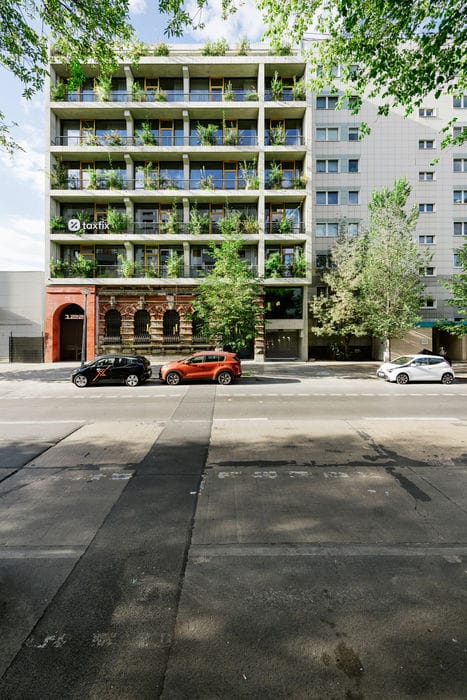
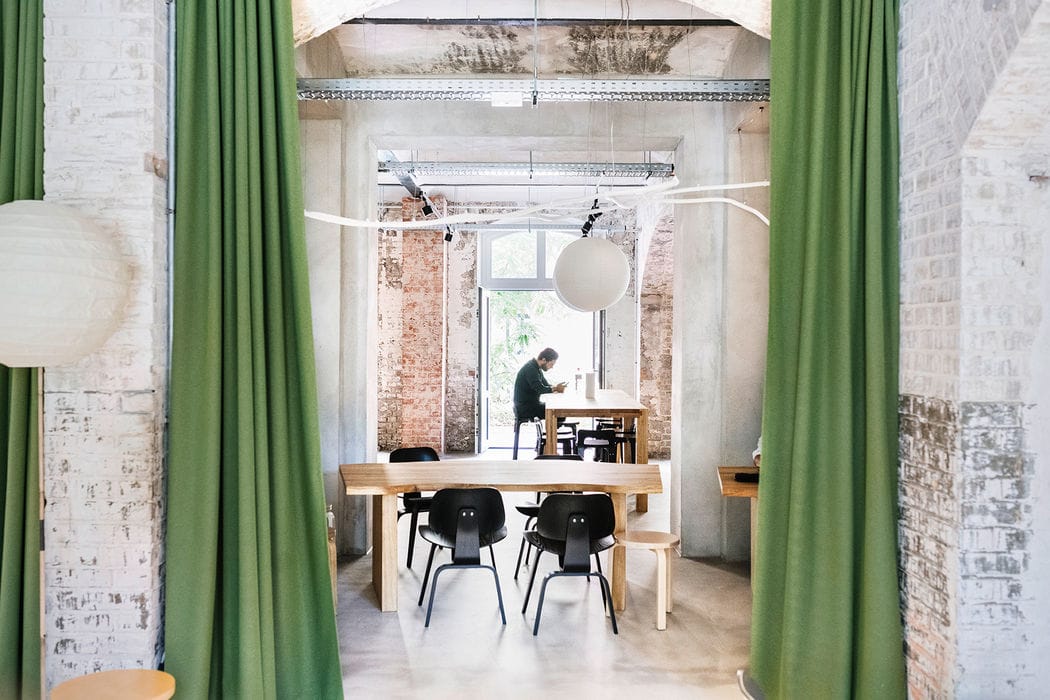
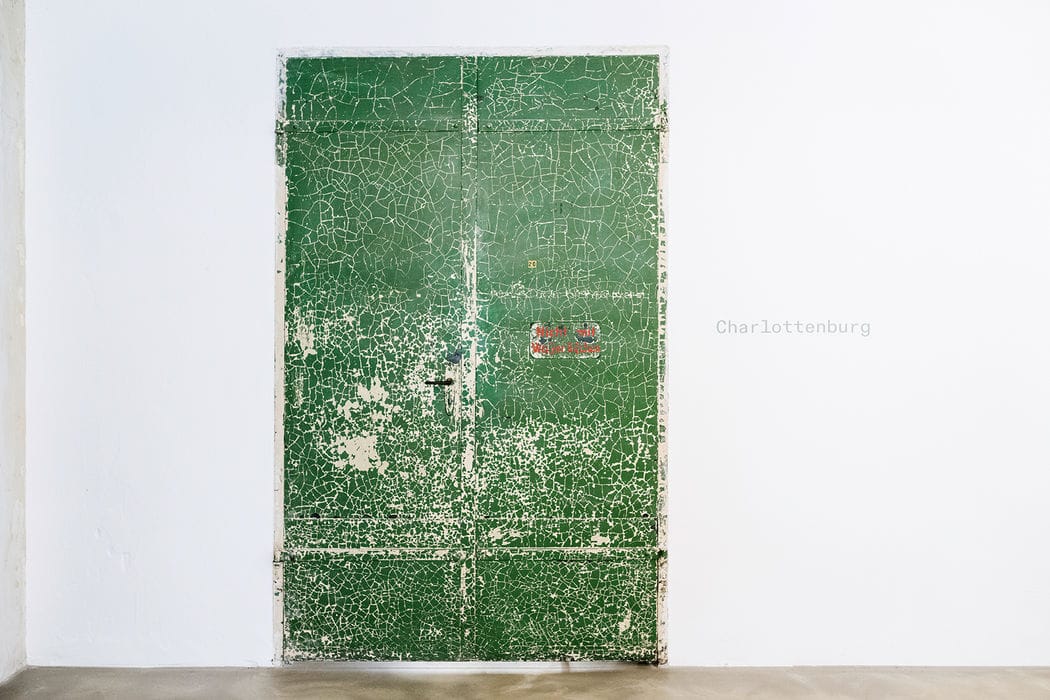
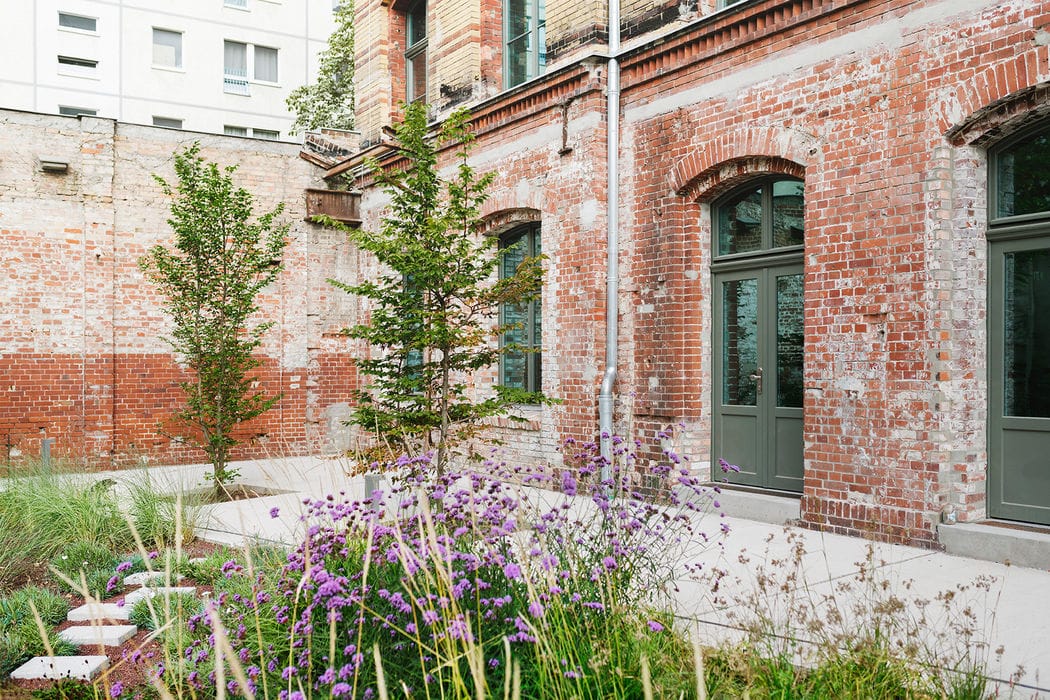
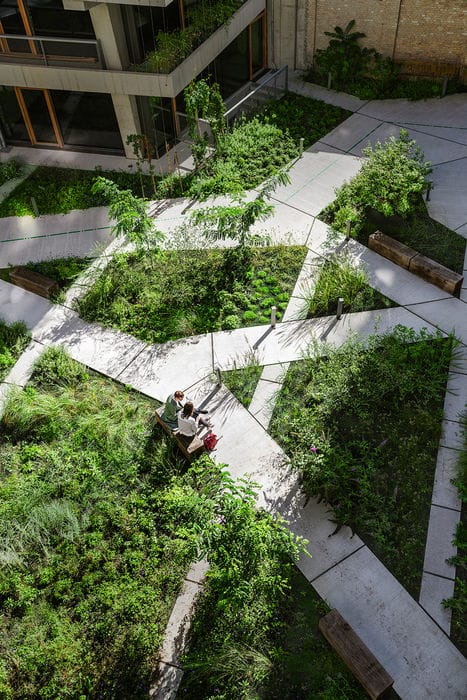
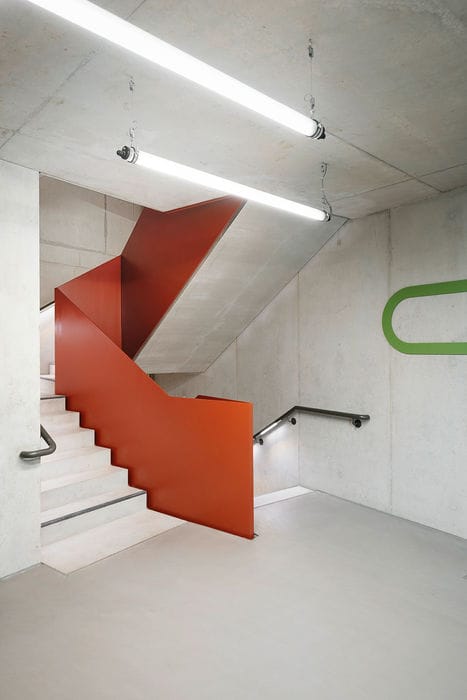
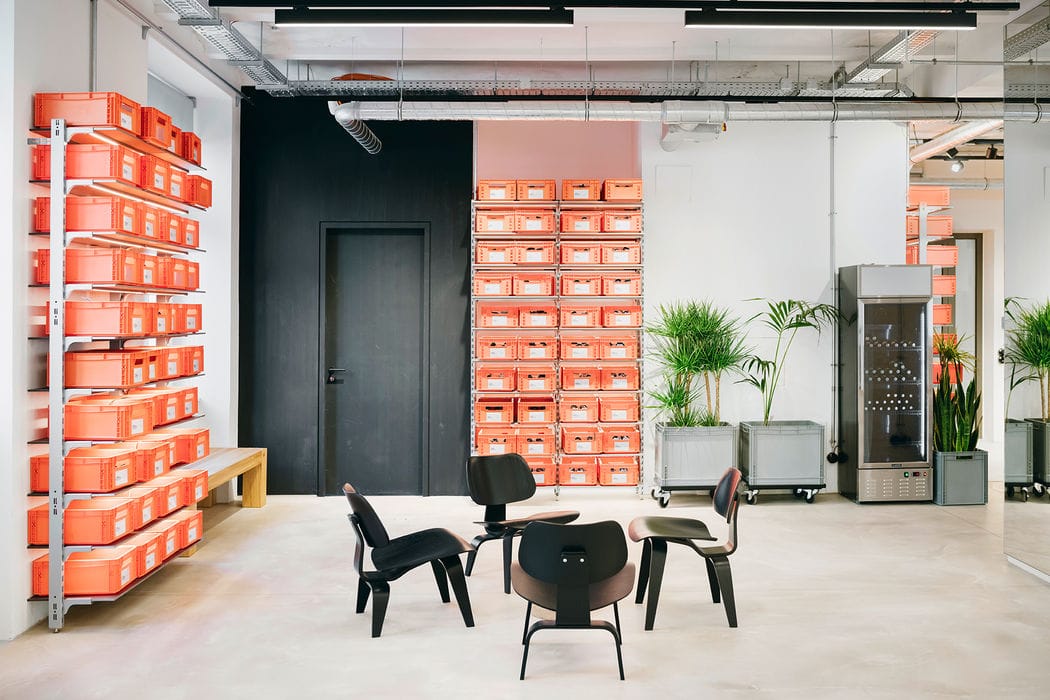
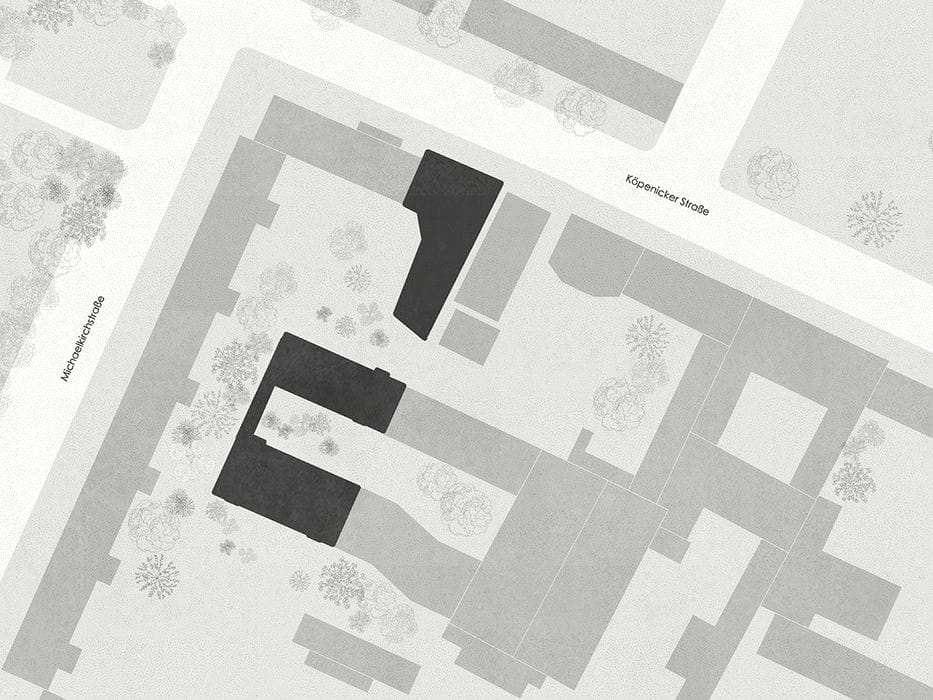
After the bombing raids of World War II decimated the post and telegraph office on Köpenicker Straße, little remained but a heritage-protected façade fragment. Remarkably, two yellow brick buildings in the rear courtyard survived relatively intact. What was once slated for residential development has been reimagined as a cutting-edge office building featuring flexible co-working spaces and traditional office leases.
The Berlin-based architectural firm &Mica; partnered with landscape architects Atelier Le Balto to design and plan the site's transformation (phases 1–5 per HOAI standards, including artistic direction). Reiter Architekten brought the vision to life (phases 6–9 per HOAI standards). Architect Andreas Michels envisioned the combined old and new structures as a ruin reclaimed by nature—a poetic notion that approaches reality, though without the fairy tale. Instead, a seven-story concrete structure appears to rest against the preserved façade remnants. Every architectural detail echoing the site's past has been preserved, with the new building thoughtfully incorporating the historic façade fragment. The front building and restored brick structures provide 11,650 m² of usable space. The pillars and brick barrel vaults of the original halls maintain their original character. One can almost imagine the telegrams that once traveled through pneumatic tubes arriving here.
The new building on Köpenicker Straße showcases raw concrete throughout, creating an industrial aesthetic. Continuous balconies along the façade and expansive floor-to-ceiling windows—set well back into the structure—flood the interior with natural light while creating the illusion of working in the open air. Michels' philosophy is clear: offices should never feel confining. Instead, they should inspire a sense of freedom and possibility.
&Mica; outlines the landscape architects' approach: "The façade greening system uses gabions—an ecological strategy pioneered in Japan and now applied in Europe for the first time." The team selected climbing plants that naturally weave through the steel mesh grilles of the balconies and parapets as they mature. Beyond their visual appeal, the vegetation provides shade, filters fine particulates, regulates indoor climate, dampens street noise, and naturally cools the building during summer months.
Geothermal technology handles all heating and cooling, with approximately 40 geothermal probes distributed throughout the garden-like grounds. Rooftop solar panels provide additional renewable energy. The firm earned recognition as Climate Protection Partner of the Year 2022 for the Telegraph project.
Photography Credits:
Sebastian Schramm
www.bueroschramm.de
Büro Schramm für Gestaltung &MICA
(Featured in CUBE Berlin 04|22)




New Highlights Historic Charm
Thoughtful Transformation of a Historic Apartment with an Art Collection
Density and distance
Two apartment buildings disguised as detached houses
Expansion for Siemensstadt
A portion of this sprawling site has been transformed into the "Techno Campus."
Light, Air and Sun for All
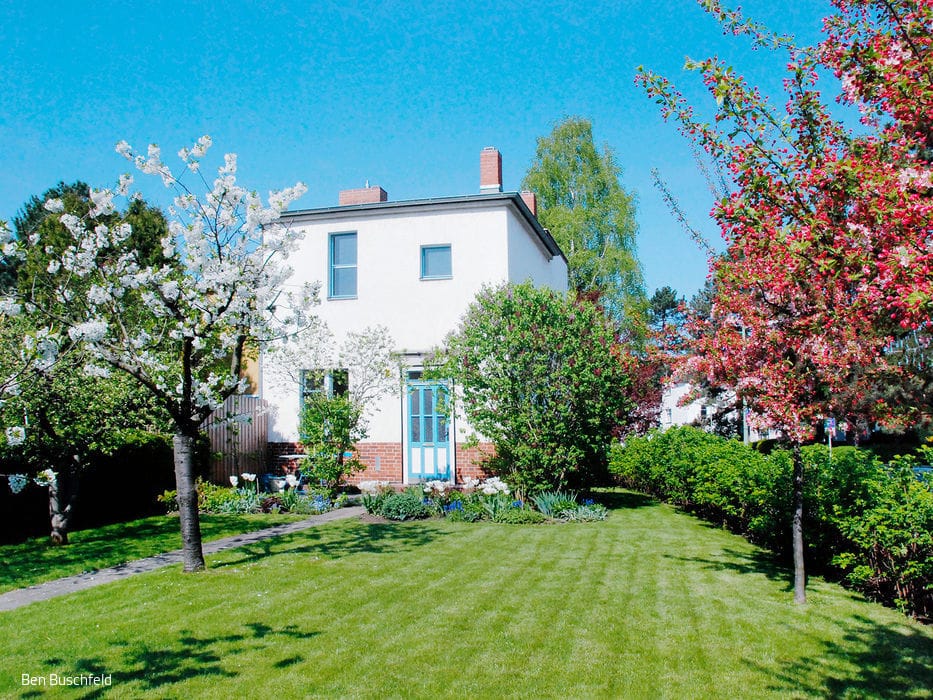
Experience an Authentic Bruno Taut Home in Britz—A Living Museum for Bauhaus Enthusiasts