


The New Brings the Old into Focus
Sensitive Transformation of a Historic Apartment with Art Collection


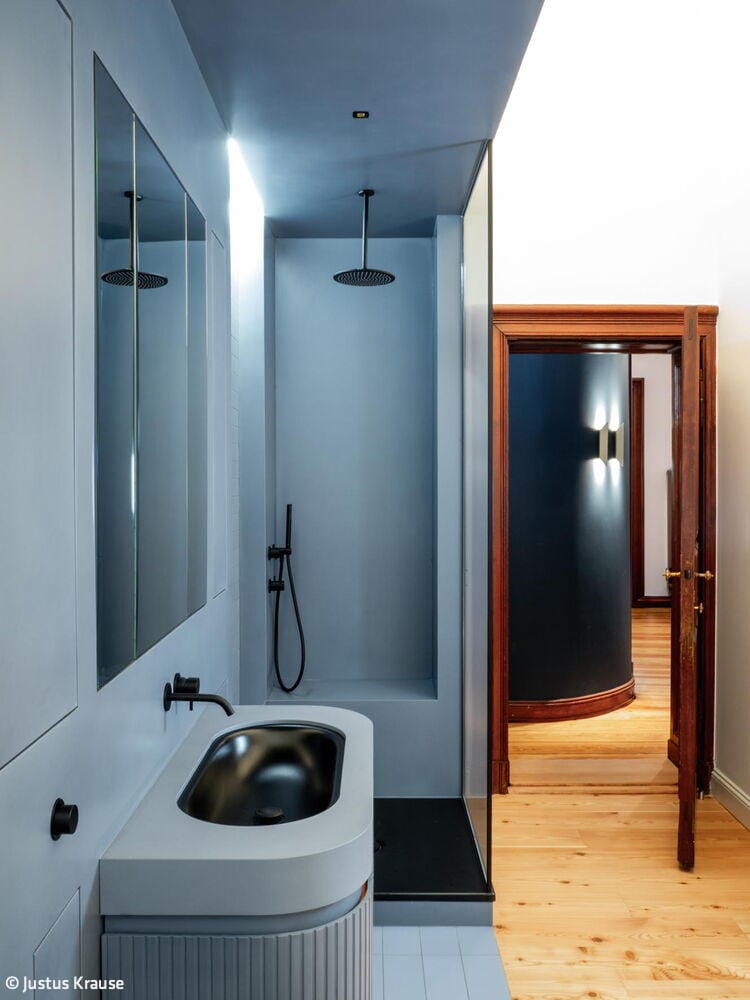

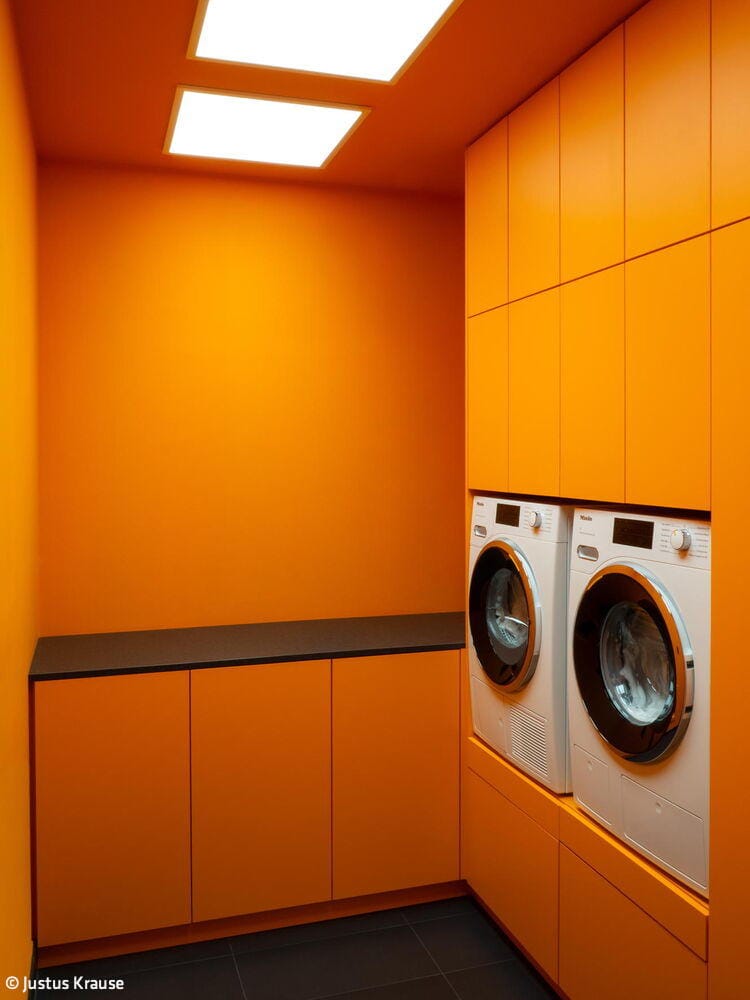


A historic apartment in Charlottenburg—home to art enthusiasts—reveals itself after thoughtful renovation as a compelling dialogue between architectural heritage and contemporary interior design. The existing structure remains palpable: proportions, doors, and surfaces have gained clarity, while new functions emerge as distinct spatial volumes—like rooms within a room—respectfully distanced from the historic envelope. Rather than imposing a new skin, a precise second layer was introduced that honors the existing fabric and, in doing so, makes it more visible.
At the heart stands a unified space for cooking, dining, and living. A generously scaled cooking island with a striking raspberry-red surface makes a bold statement—not as furniture, but as an object. Its smooth, lustrous finish captures daylight while reflecting the room's spatial qualities. It anchors everyday life and social gathering, holds the space together, and provides the perfect backdrop for the art on the walls. Sculptural and present from every angle, it simultaneously serves as work surface, bar, and meeting point: an anchor that draws daily life together and maintains spatial tension. Positioned in front of the expansive window front, an oversized seating bench echoes the island's vibrant red. These bold color accents create counterpoints to the restrained palette of the handleless, light gray kitchen cabinetry, which forms a quiet, vertical plane. Each built-in element received its own color—as character, not as wayfinding. The new volumes stand as autonomous objects within the historic frame. Mirrored surfaces enlarge spaces, shift perspectives, and bring light into play without obscuring what came before. Details remain understated: flush installations, clean edges, and discreet hardware. The result is an interior that leaves room—for material, proportion, and art. Renovation as furniture, not as cladding. Secondary spaces and technical installations form their own room-within-room bodies, lifted away from the historic envelope. Bold colors give each built-in element its own identity. Reflective surfaces liberate volumes from walls and create layered spatial relationships. A historic apartment, an art collection, a clear design vision: the existing structure was sensitively exposed, and new infrastructure introduced as a distinct layer. Wardrobes, secondary spaces, and technical systems are contained in compact built-ins, set at distance from walls and ceilings. The new barely touches the old—and thereby makes it more present.
Photography:
Justus Krause
Britta Daum
(Published in CUBE Berlin 01|26)

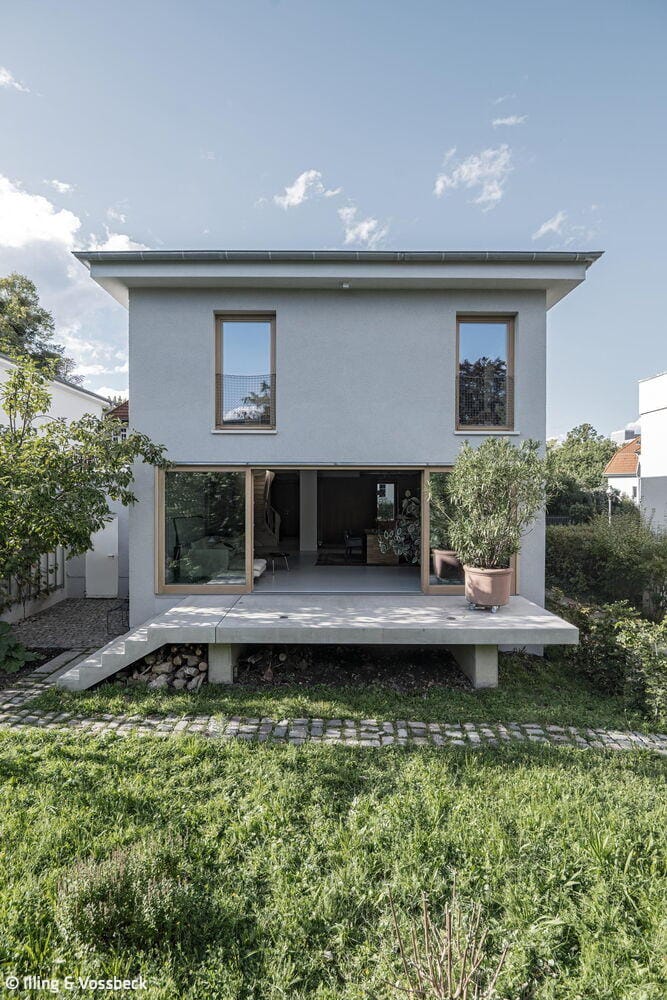
A New Chapter for an Old House
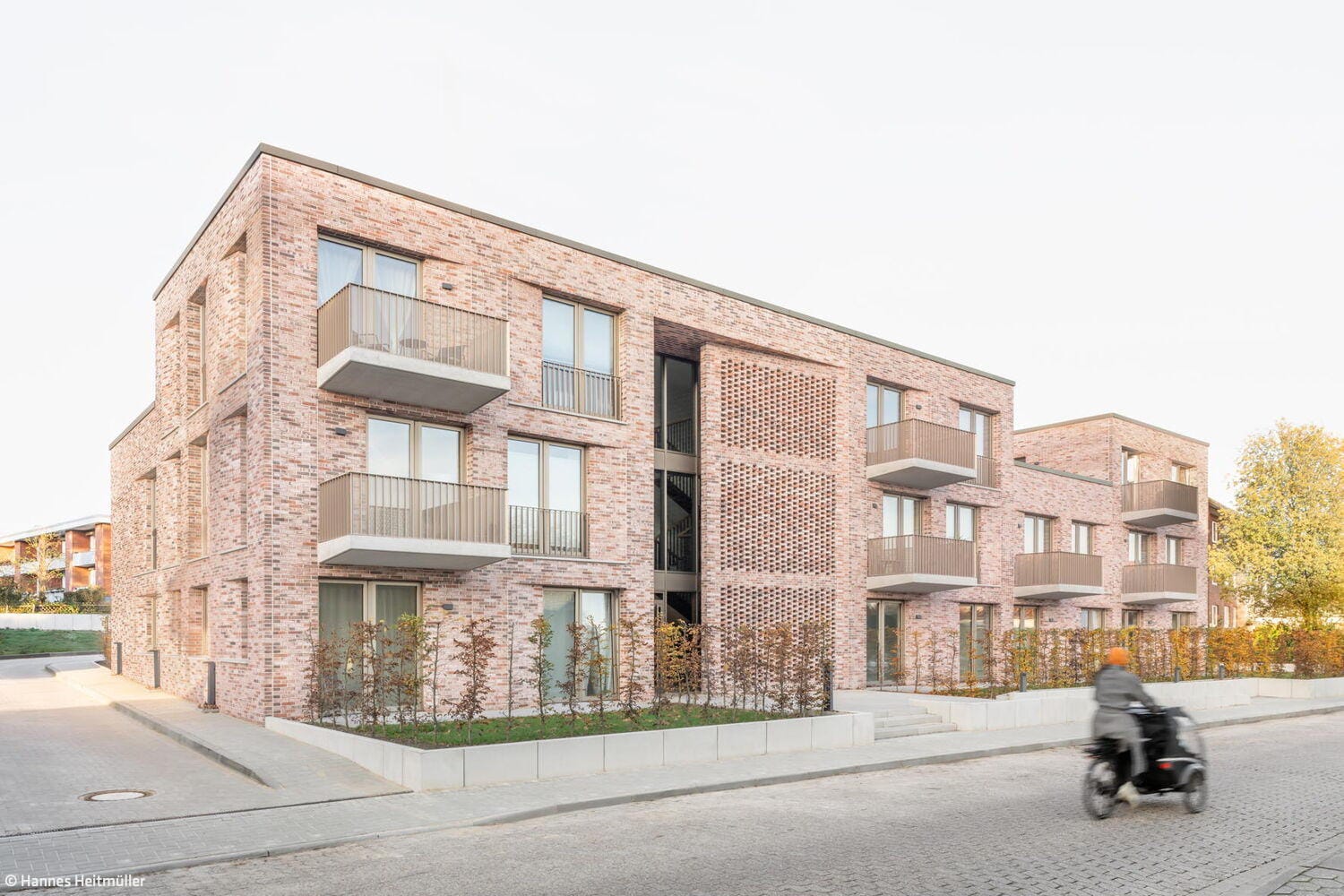
Renovation of a standard-design house 65 years after its construction
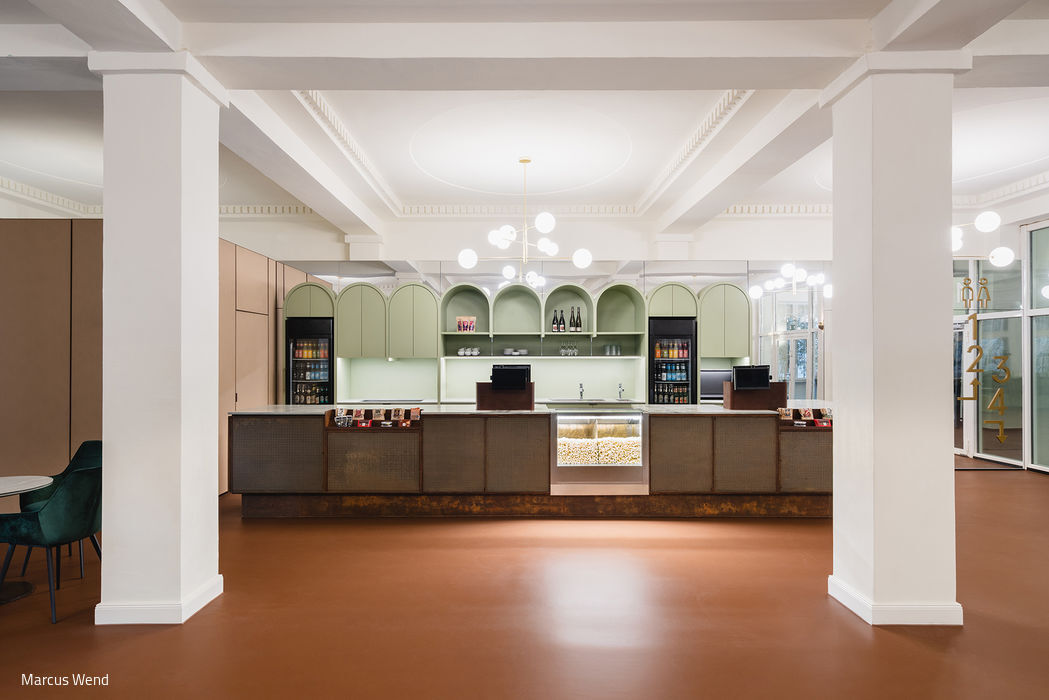
Retro Charm
A Historic Cinema Reborn in Radiant New Life

Talent Intuition Calling
Gisbert Pöppler is highly sought after for creating distinctive, memorable interiors.
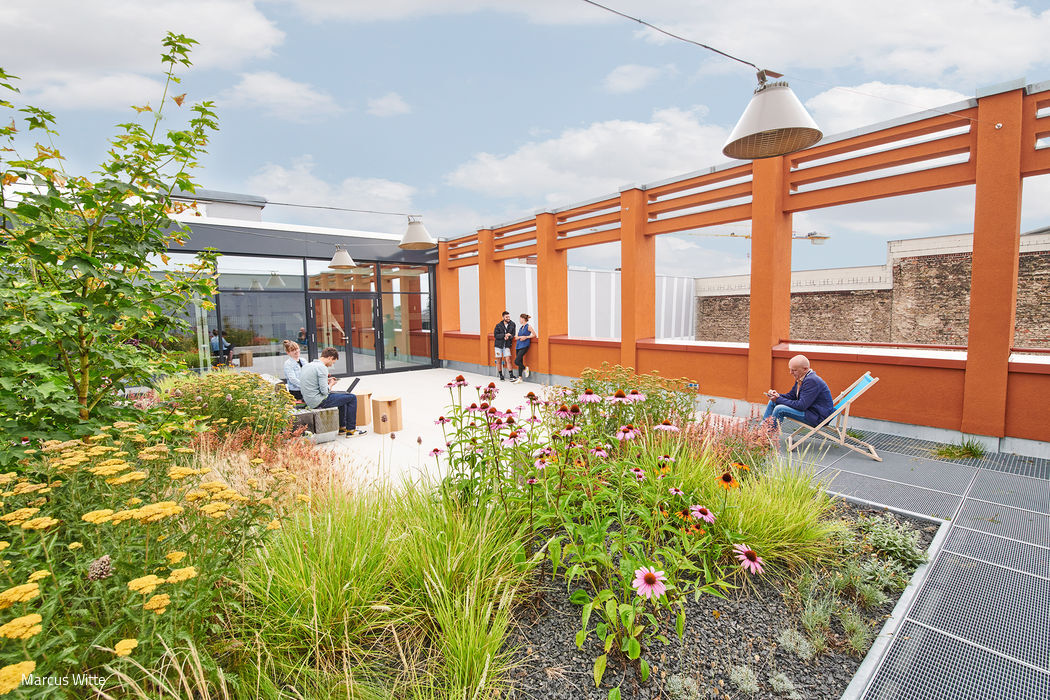
Not Just for Princesses
Sustainable Rooftop Garden: Balancing Green Space with Versatile Function