


Protective and moving
Even though the hall, with its basic dimensions of 7.70 x 7.30 metres, is clearly laid out, its form traces a long and eventful history.
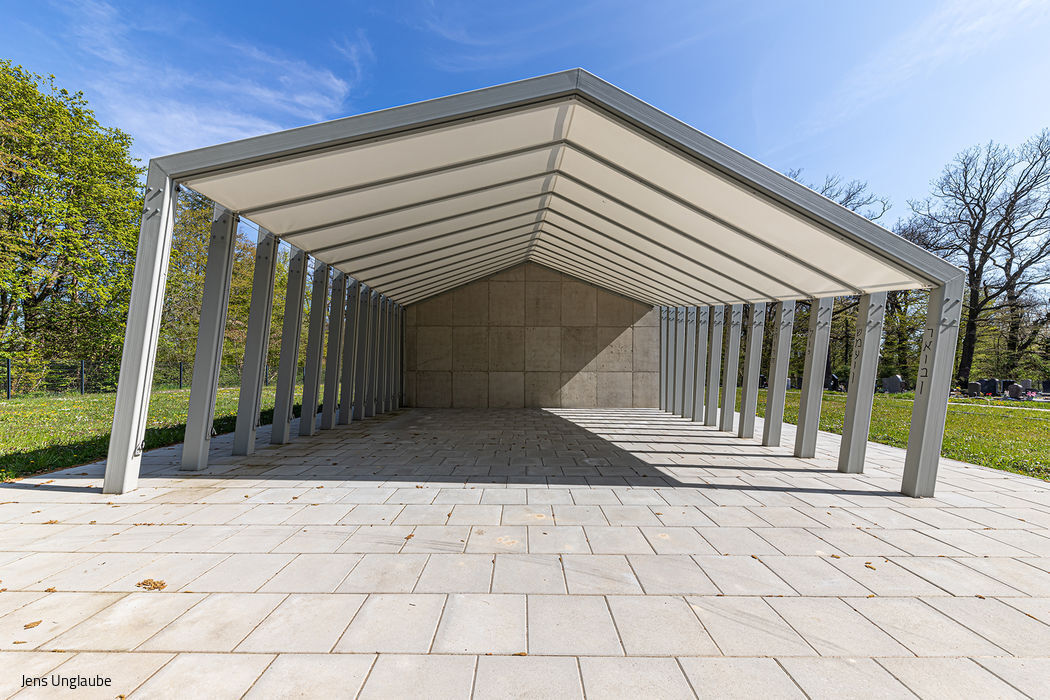


The Jewish community wanted a mourning hall on the new cemetery grounds in Bonn's Kottenforst forest. The idea was not to construct a building, but rather an open space that would offer protection from rain and provide shade. For practical reasons, the structure had to be as vandal-proof as possible, require minimal maintenance and be durable. The cemetery grounds are a large green meadow in the middle of the Kottenforst forest. The future layout of the graves has been planned so that they face southeast towards Jerusalem.
The design by the commissioned architectural firm lutz und unglaube from Bad Honnef is based on the leitmotif of the archetypal house. The solid rear wall made of rough-formed concrete echoes the shape of the house as a silhouette. The concrete surface was deliberately not finished in exposed concrete quality. The interplay of stones, cavities and concrete sections was to remain visible in order to give the wall a particularly lively and sculptural appearance. A layer of graffiti paint protects it from vandalism. The twelve adjoining steel frames adapt the classic shape of the rear wall and turn outwards from the surface at increasingly greater distances. The dynamic space created in this way becomes larger and larger towards the interior. The twelve steel frames symbolise the twelve tribes of Israel, which have been engraved in Hebrew. The roof is a prefabricated tarpaulin that has been cut to fit precisely and is clamped into hat profiles. It is translucent and lends the building a sense of lightness. The reminiscence of the tents of the Israeli people during their exodus from Egypt is no coincidence. Even though the hall, with its basic dimensions of 7.70 x 7.30 m, is clearly laid out, its forms trace a long and eventful history.
Photography Credits:
Jens' disbelief
(Published in CUBE Cologne Bonn 02|21)

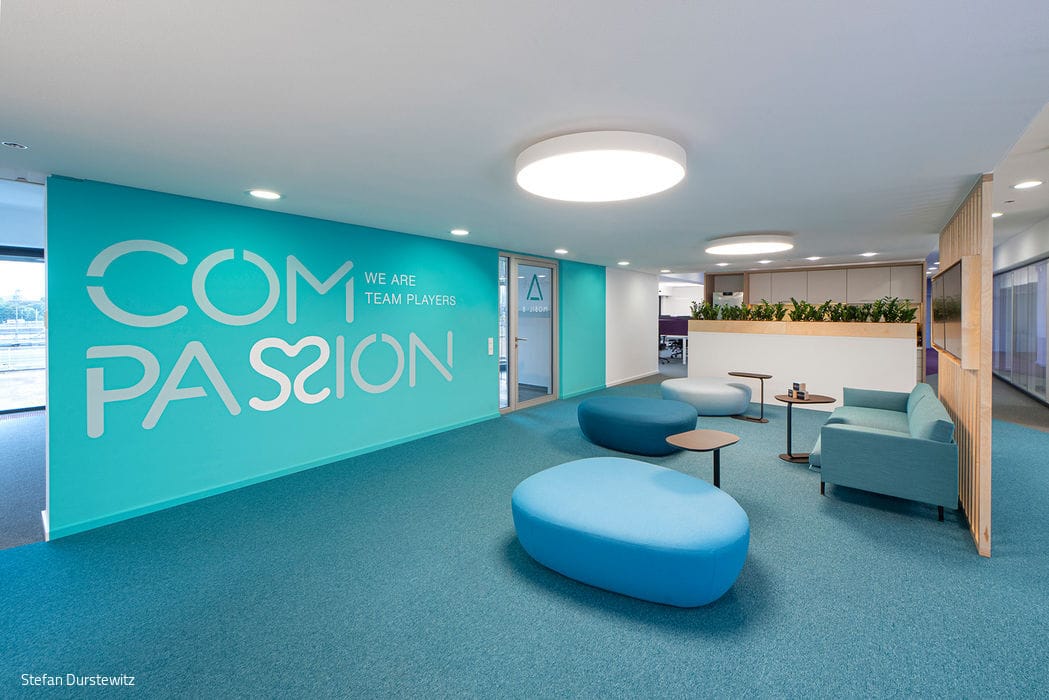
A riot of colour
A vibrant colour strategy defines the new workspaces of this IT innovator
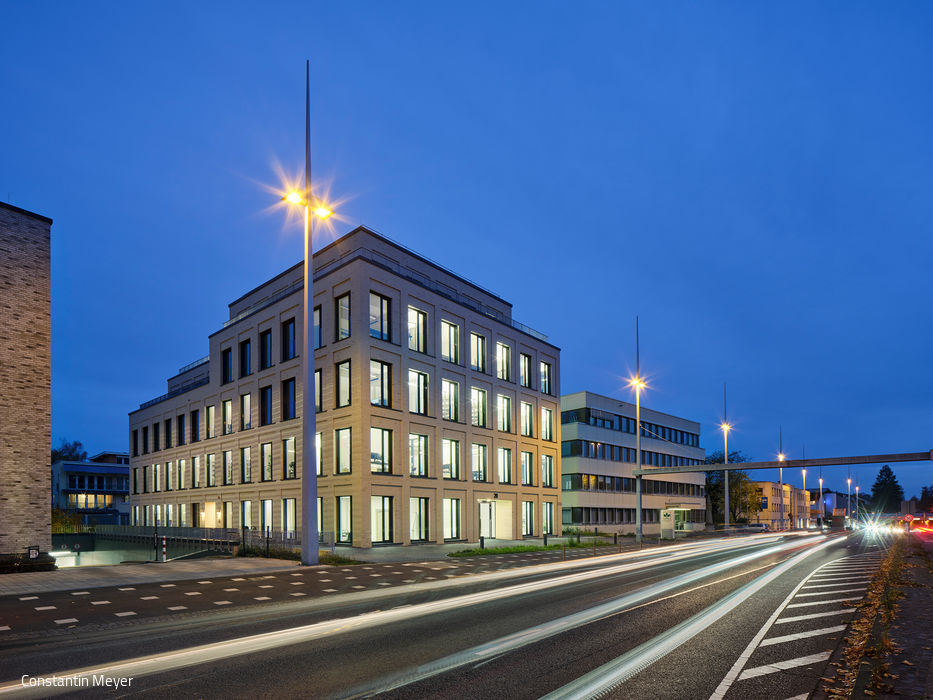
A striking architectural icon
The headquarters of a housing developer in Bad Godesberg: architecture with ambition and sustainability at its core.
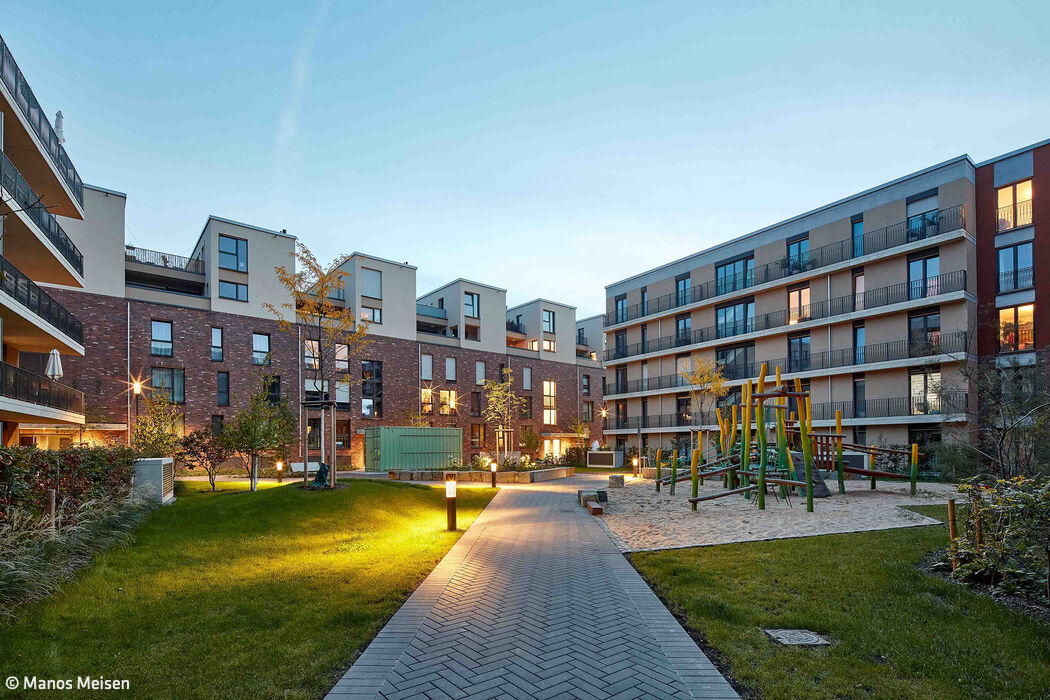
The power of composition
Kwartier Werk in Ehrenfeld: Where diversity and vitality define the neighbourhood.
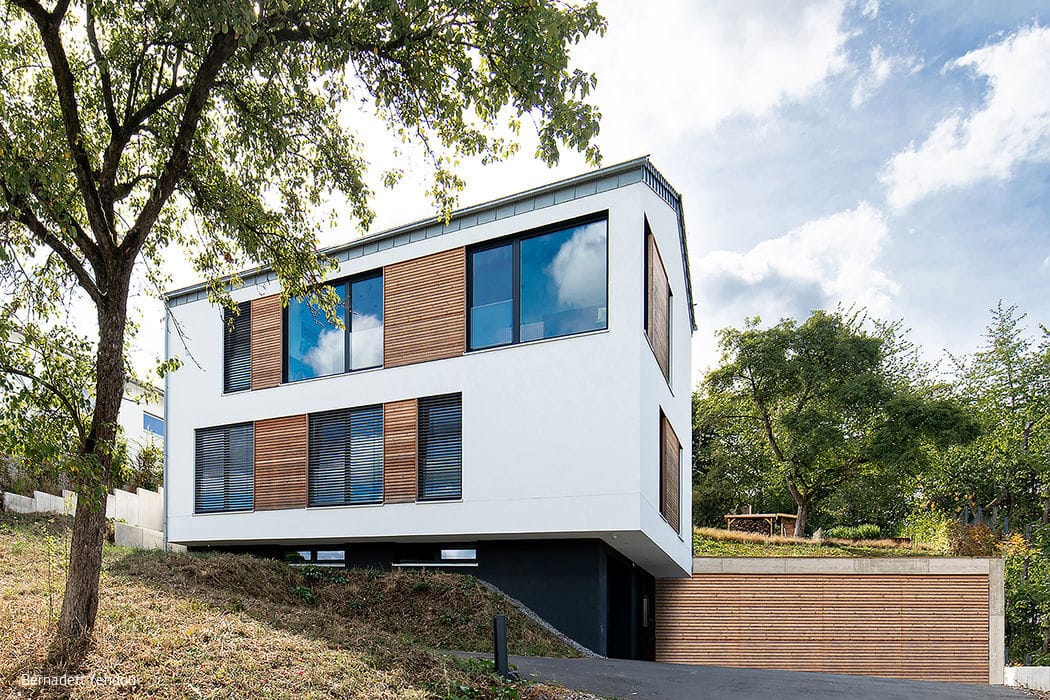
Suspended in Space
Modern Lightness on the Slope: A Contemporary Hillside Home