


Asymmetric design
A single-storey gabled house in Ratingen that flexibly adapts to the family's spatial needs
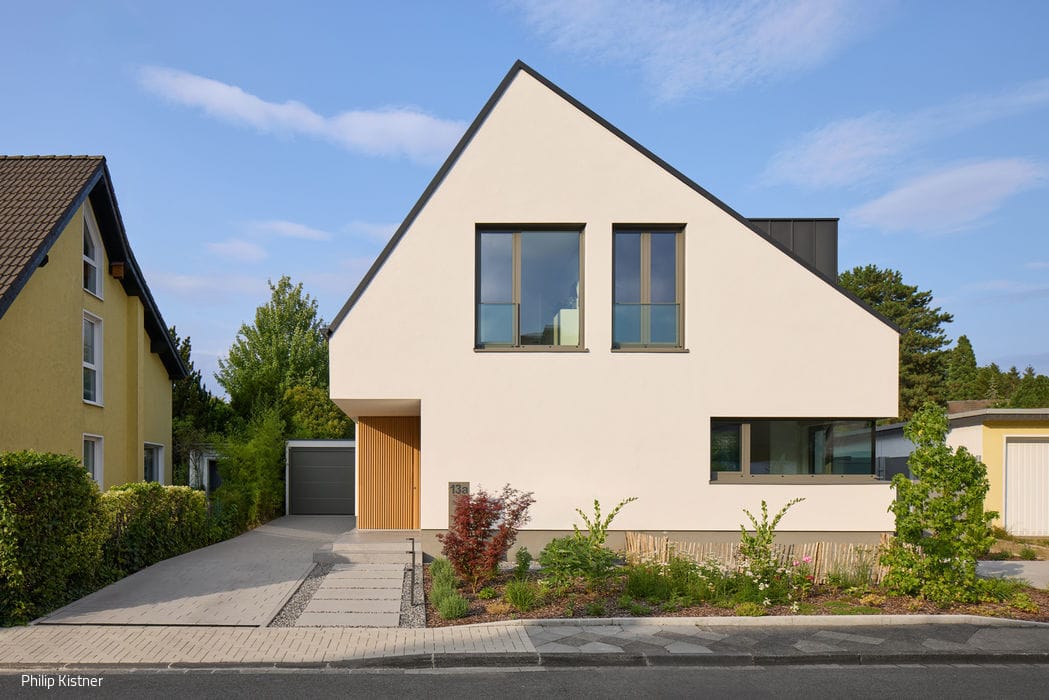
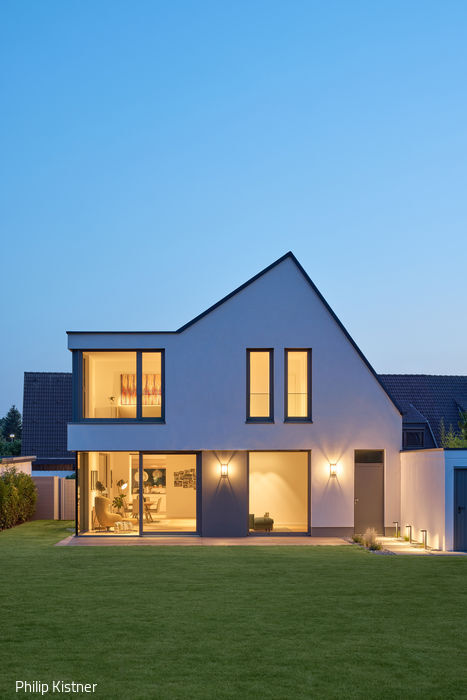
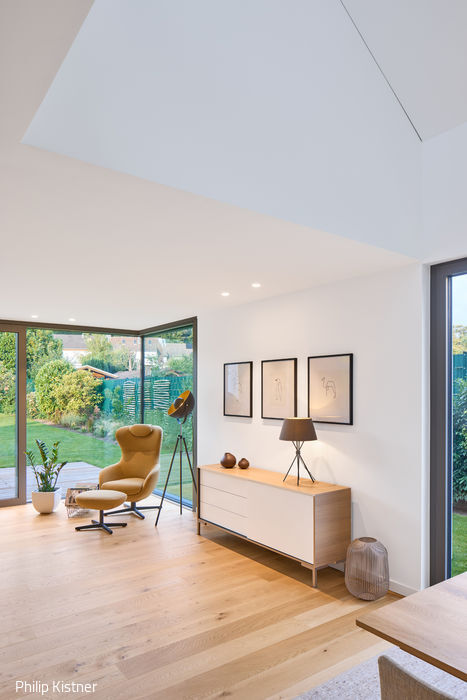
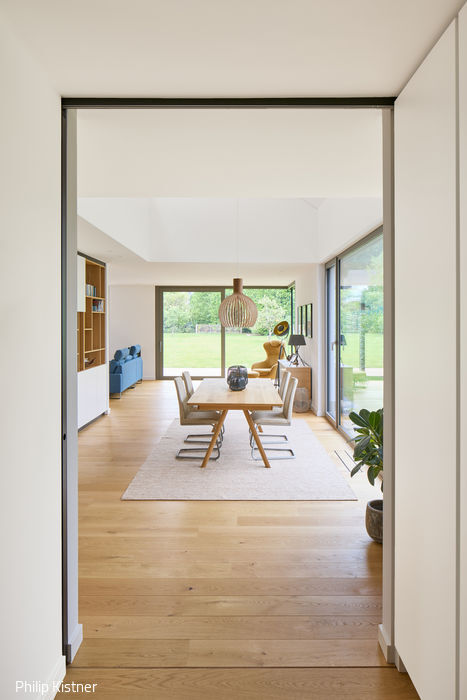
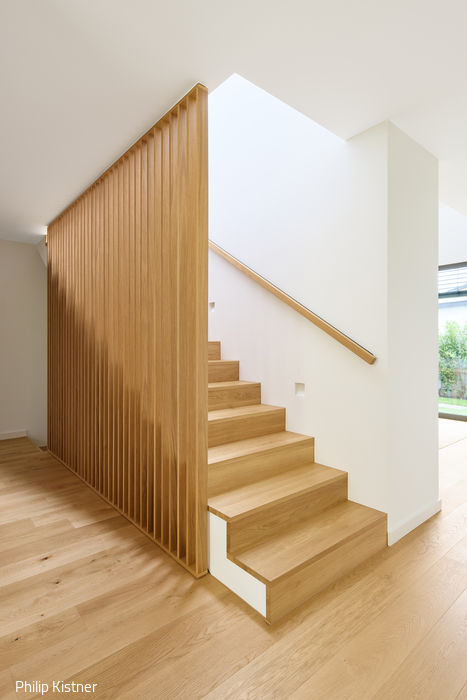
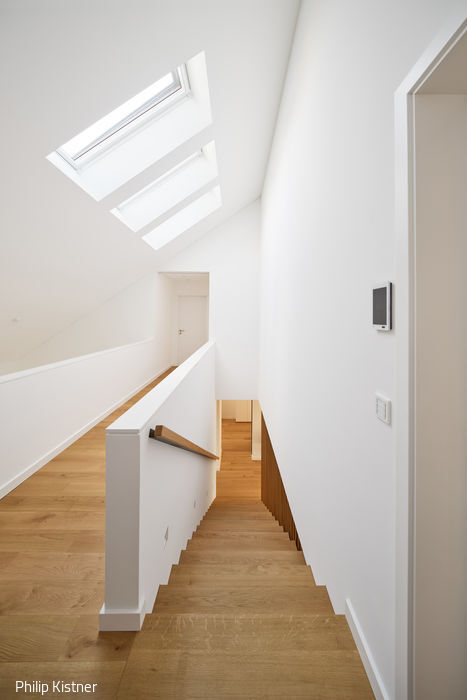
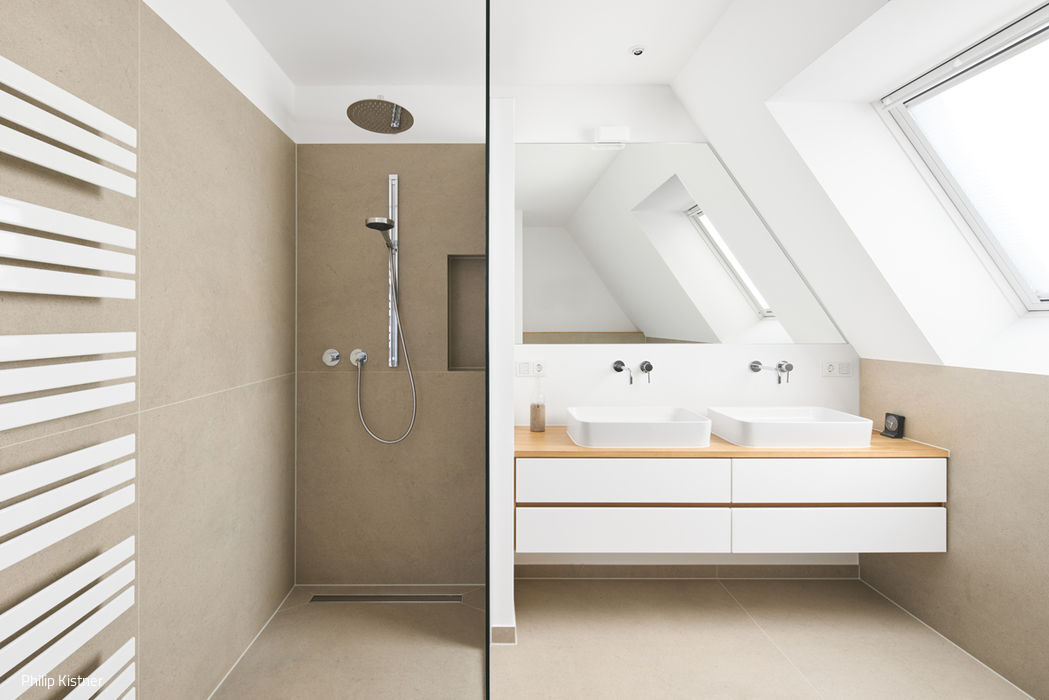
A young family set out to make their dream home a reality. Initially drawn to an older gabled house, they soon discovered it would require extensive renovation. The Ratingen-based architecture firm Lücker Beckmann assessed the situation and concluded that a new build offered the superior solution. They crafted a design that honors the classic gabled house aesthetic while reimagining it for contemporary living.
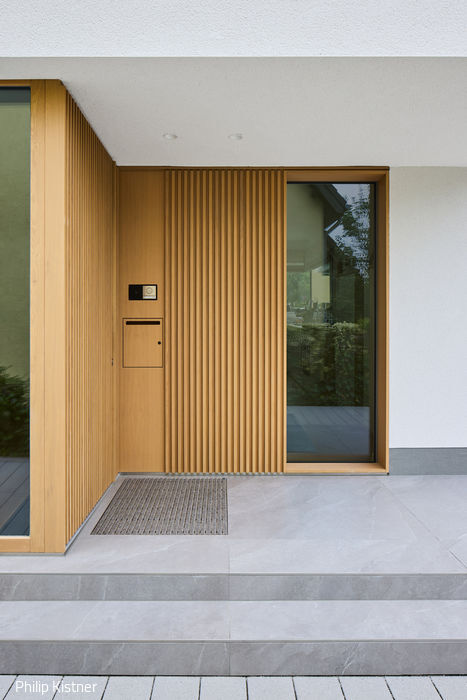
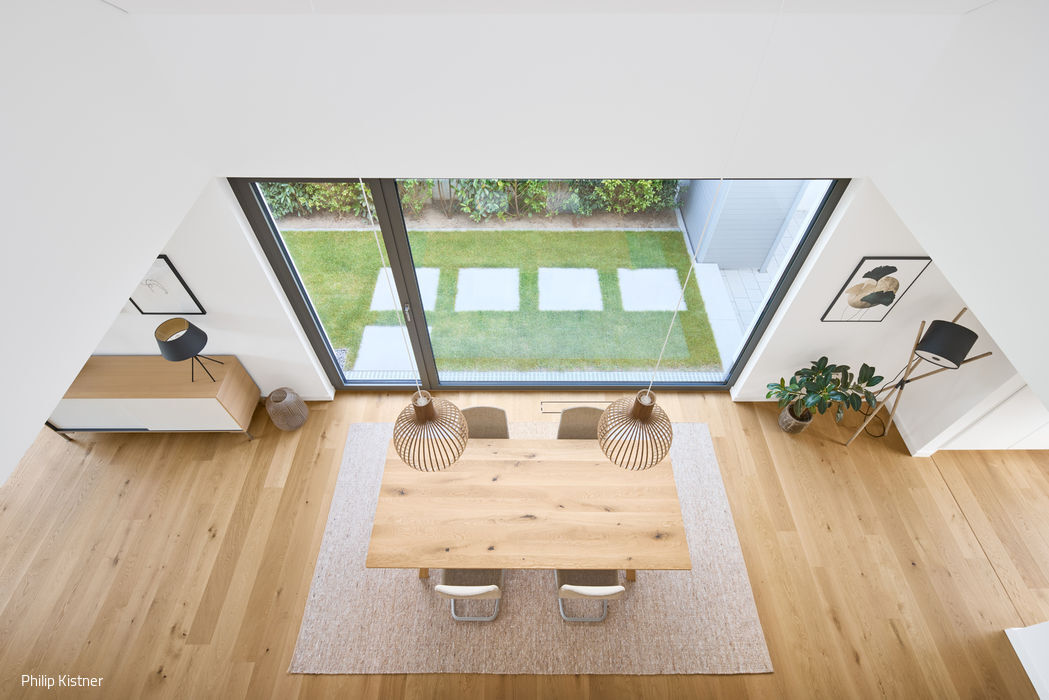
The clients envisioned a modern, open-plan home where individual zones could be flexibly separated when needed, yet remain spacious and unified. Their initial planning application—for a single-storey structure with high knee walls and a flat gable roof—was rejected by the building authority, as it exceeded the eaves heights of neighboring buildings. Undeterred, the architects redesigned the home as a street-facing gable structure with a single main floor topped by an asymmetrically staggered attic in varying roof pitches, complete with two south-east-facing dormers. The result: a bespoke residence spanning approximately 230 m² with adaptable functional zones. The ground floor flows seamlessly from the entry hall into a generously glazed living and dining area overlooking the garden, with the street-facing kitchen nearby and easily separated by sliding partitions. The dining table takes center stage—literally—with a dramatic vertical void rising through the attic's pitched ceiling, crowned by three skylights that flood the space with natural light. Upstairs, a gallery bathed in daylight bridges the master suite and two children's bedrooms, each with its own ensuite bathroom. The master bath is notably spacious, complete with a dressing room, and a dormer carved into the gable roof grants the bedroom a picturesque garden view. Wood became the design's defining material throughout: both flooring and stairs feature three-layer solid oak planking, while the staircase balustrade and front door were custom-crafted in oak per the architects' specifications. An air-source heat pump with radiant floor heating provides climate control, while a heat-recovery ventilation system ensures optimal air quality. Smart home technology via a KNX system orchestrates all building systems seamlessly.
Photography Credits:
Philip Kistner
www.philipkistner.com
(Published in CUBE Düsseldorf 04|23)
Reinterpreting the Collection
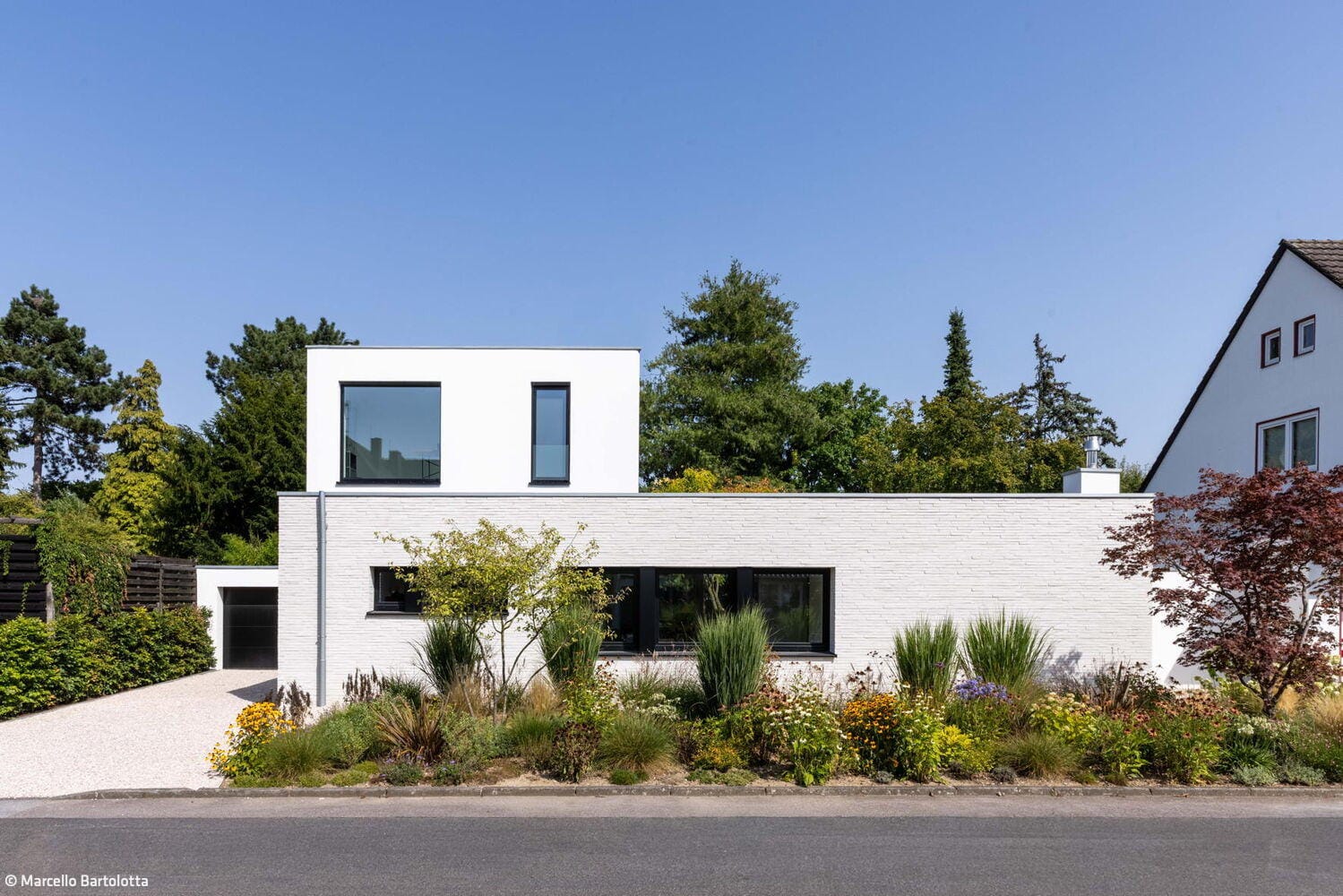
A bungalow thoughtfully expanded, reorganized, and refined through minimalist design
Sustainable and Restrained
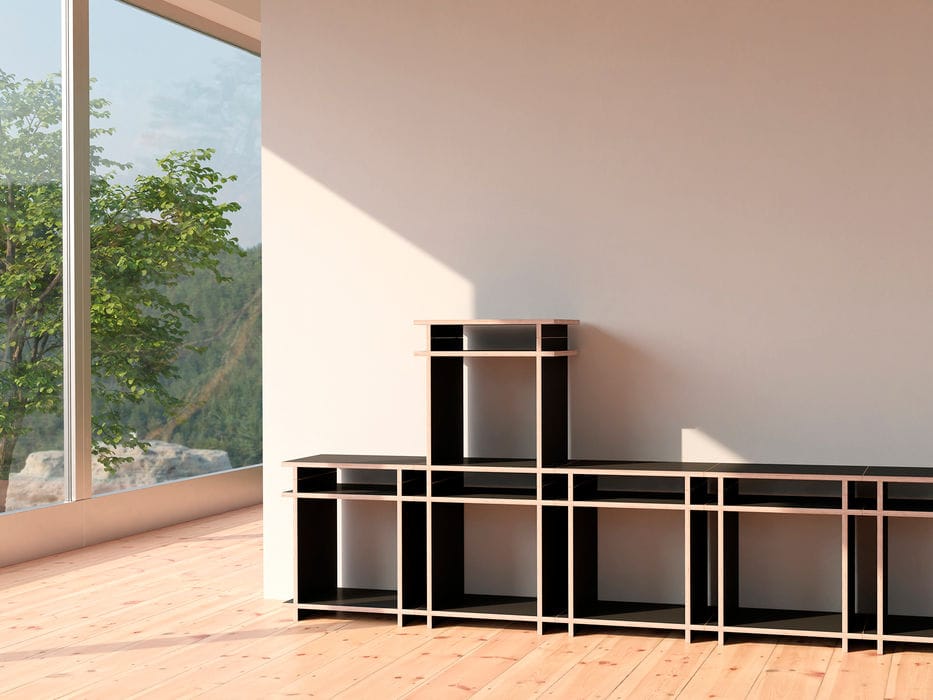
"Less is Future"—this principle shapes every aspect of KIYO's design and production.

Dialogue in Tight Quarters
A Düsseldorf primary school gains a modern canteen and sports hall

With clear design language
Residential tower with underground garage – a contemporary homage to modernism