


Making Every Square Meter Count
Office and residential building on an extremely narrow hillside plot, defined by its distinctive brick façade
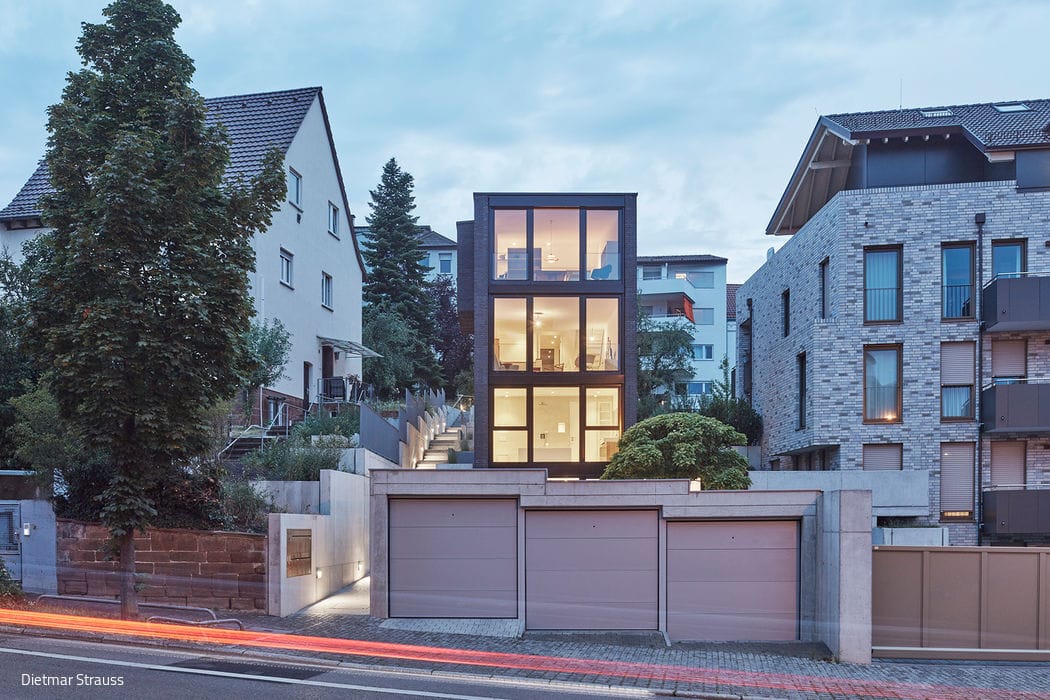
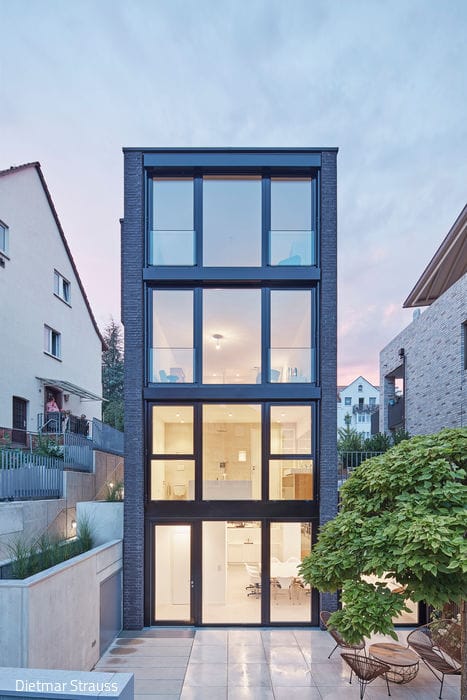
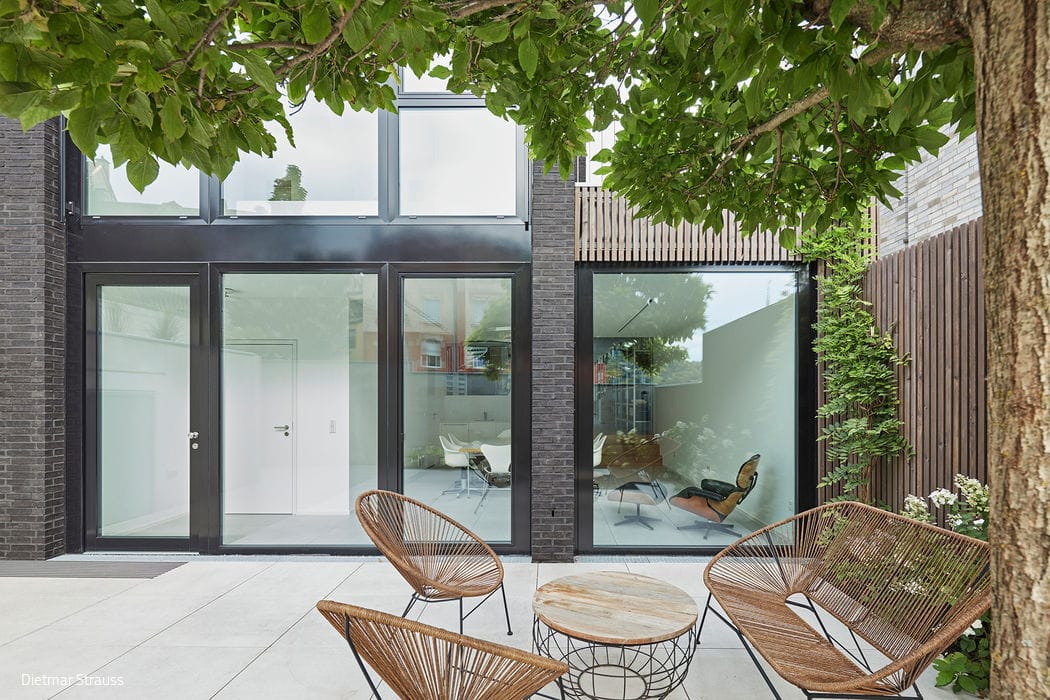
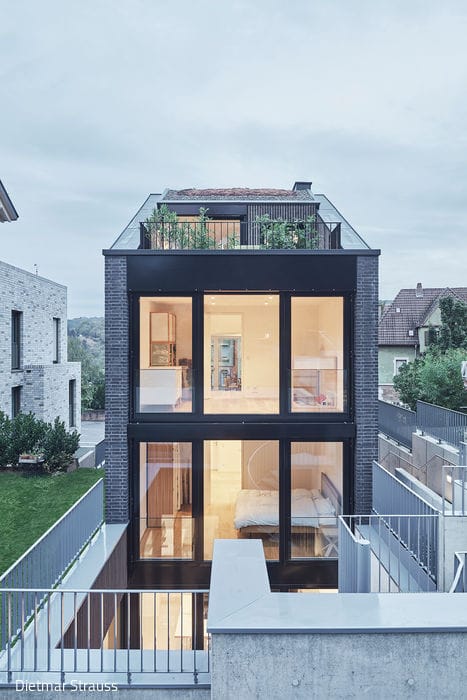
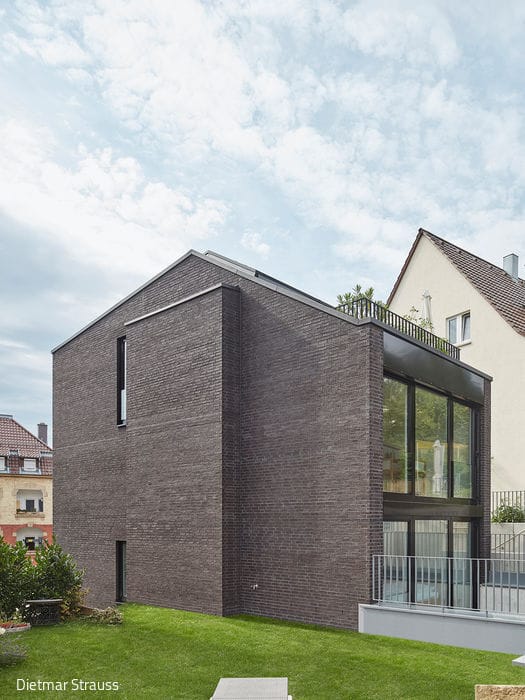
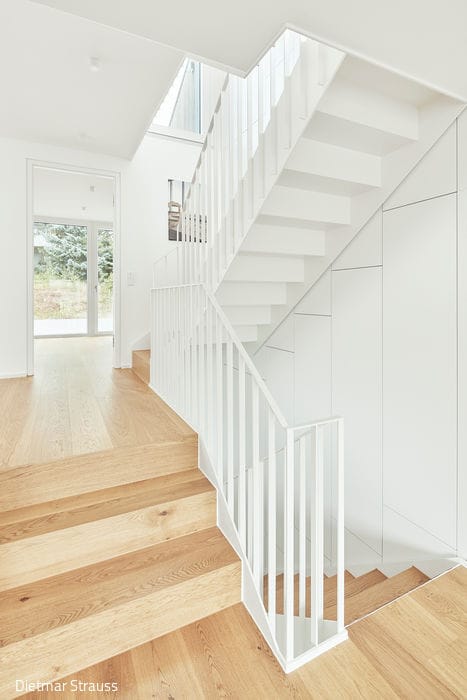
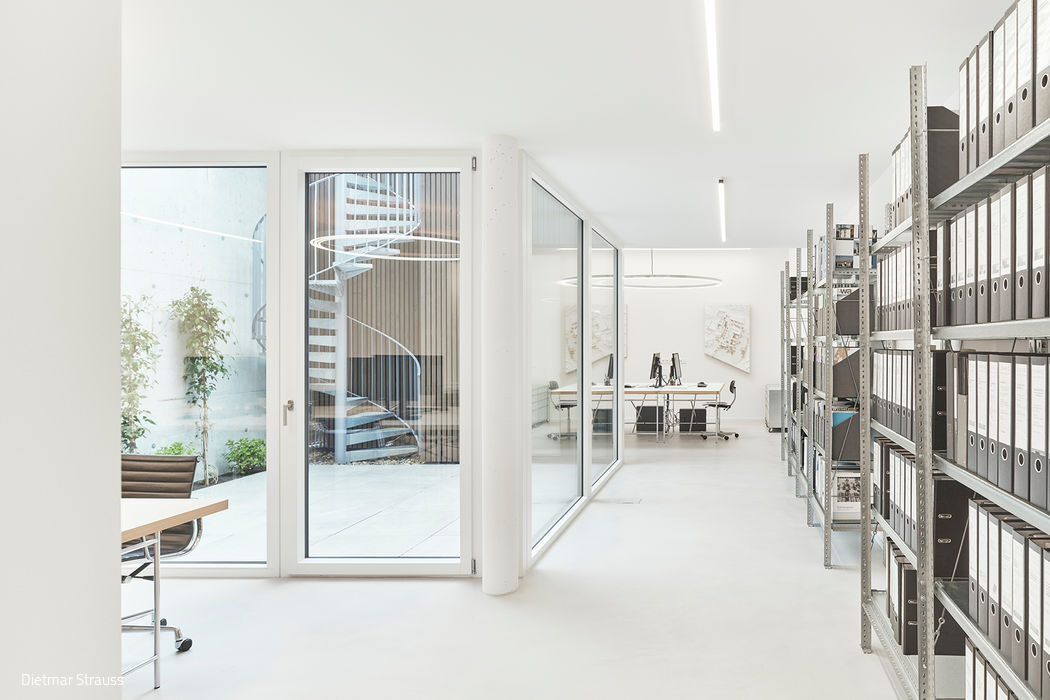
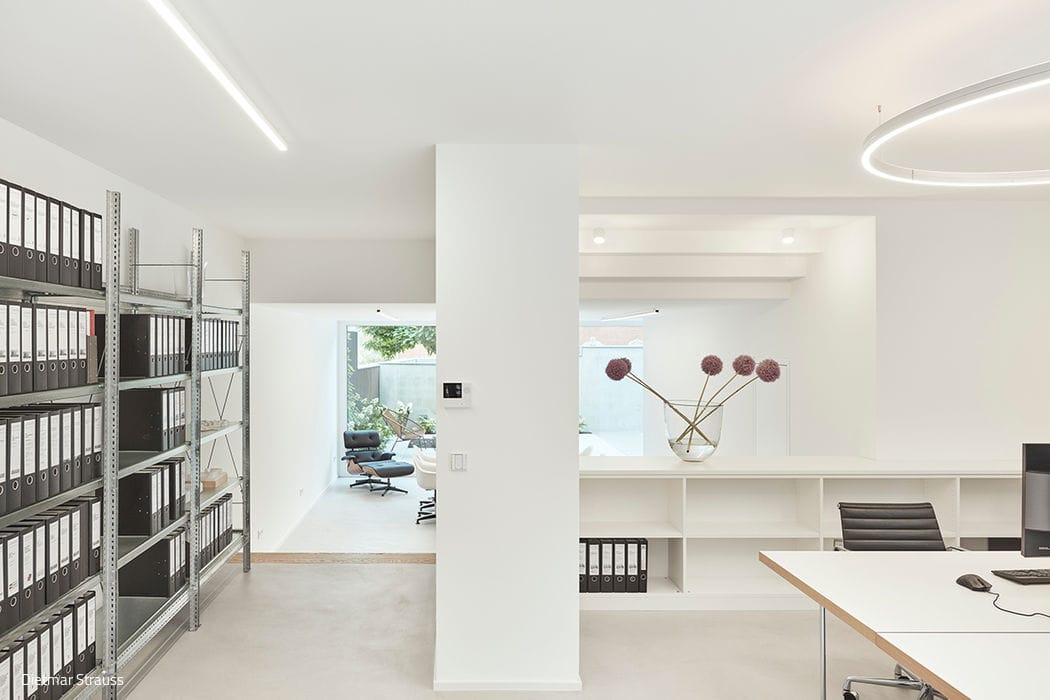
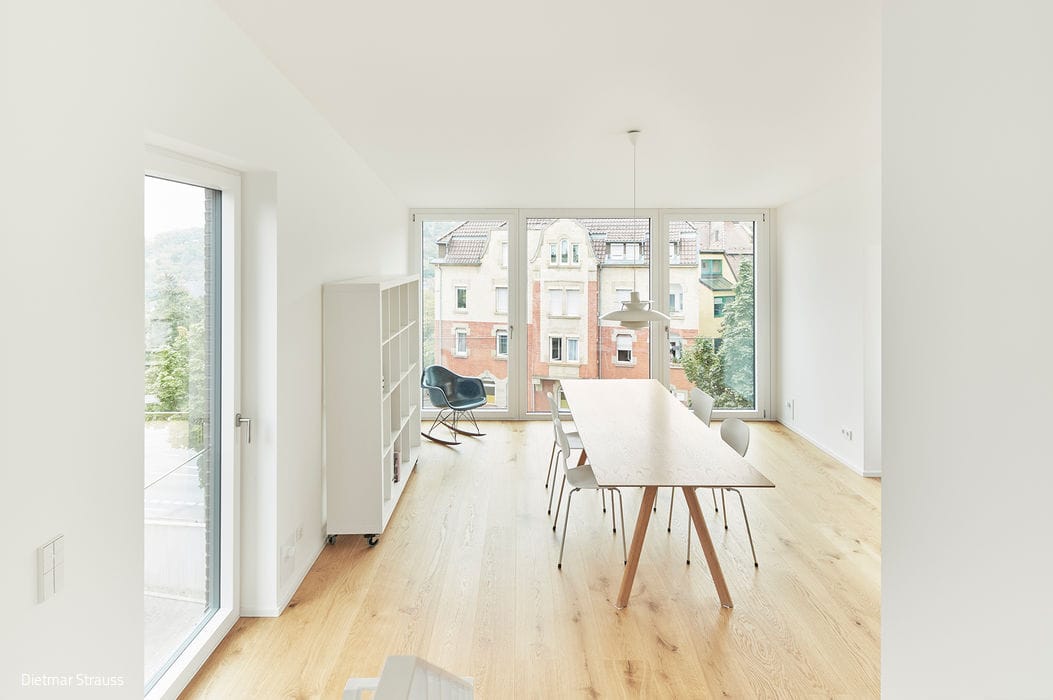
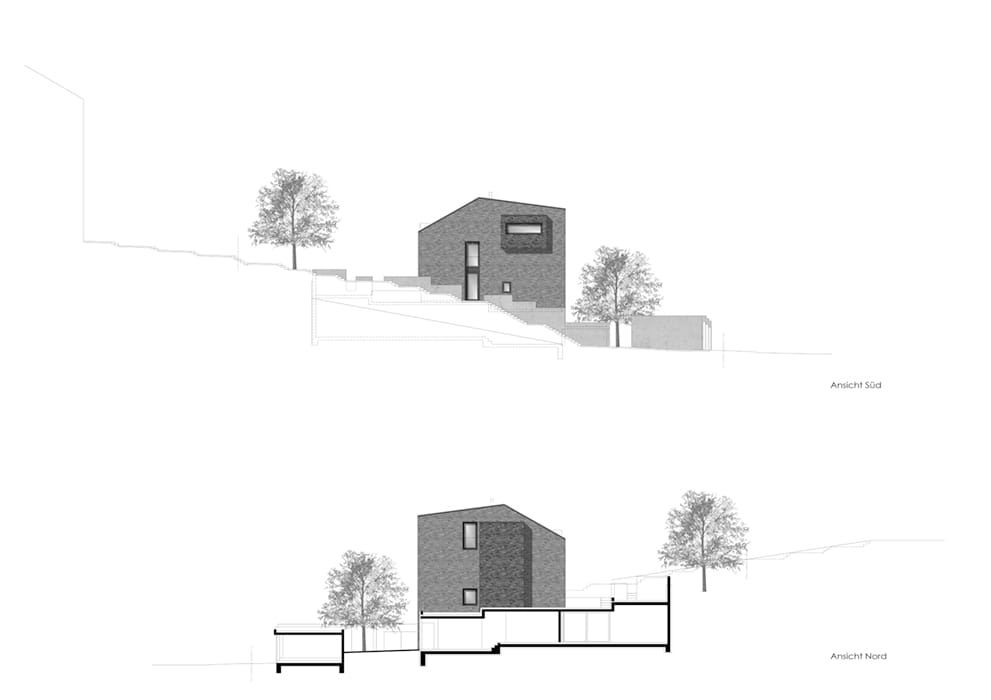
"The narrow plot and steep slope presented real challenges," explains architect Benedikt Pedde of Loweg Architects. Yet the location—a mere ten meters wide and 420 m²—is exceptional. At first glance, this townhouse appears to be a simple tower, but it's far more sophisticated. The ground floor, hidden behind the street-facing garage, extends outward on the right and pushes deep into the hillside, creating roughly 130 m² of office space for six employees—nearly equivalent to the combined living area across three floors above. A central atrium floods the office with natural light while serving as a secondary emergency exit. Three levels of planted courtyards offer private retreats for relaxation. The residential section features two external bay windows that maximize usable space: a south-facing glazed attic bay window frames panoramic views, while a three-story window band along the staircase incorporates a floor-to-ceiling built-in closet for ample storage. Every room except bathrooms and bedrooms flows openly, with interiors deliberately restrained to white surfaces, polished concrete, and wood. The extensively planted gable roof appears flat from the street but gradually rises toward the rear, revealing a generous garden terrace with sweeping views.
For the building envelope, Loweg Architects chose fired clay brick alongside glass—a thoughtful decision reflecting the neighborhood's architectural character, with historic brick villas opposite and a contemporary light-brick apartment building from 2016/17 nearby. This townhouse holds its ground through both its slender profile and a distinctive material choice: dark brown-anthracite Eco-Brick Moana water-struck brick, featuring a subtly textured surface and the characteristic relief patterns of traditional water-struck masonry. This slim-format brick is roughly 45 mm narrower than standard bricks, enabling optimal use of the tight site. "Seven centimeters versus the usual 11.5 cm may seem modest," notes Pedde, "yet across the building's full height, this difference alone yields approximately four additional square meters of usable space." Beyond spatial efficiency, the brick delivers meaningful environmental benefits. Its narrow profile reduces the carbon footprint by 20 to 30 percent per square meter of façade compared to conventional facing bricks. The townhouse achieves KfW 55 energy efficiency certification through its combination of double-shell exterior walls with brick cladding, a high-efficiency condensing boiler paired with radiant floor heating, and triple-glazed wood-aluminum windows.
www.wienerberger.de
www.loweg-architekten.de
Photography Credits:
Dietmar Strauß
www.dietmar-strauss.de
(Published in CUBE Stuttgart 04|21)

Exceptional Design
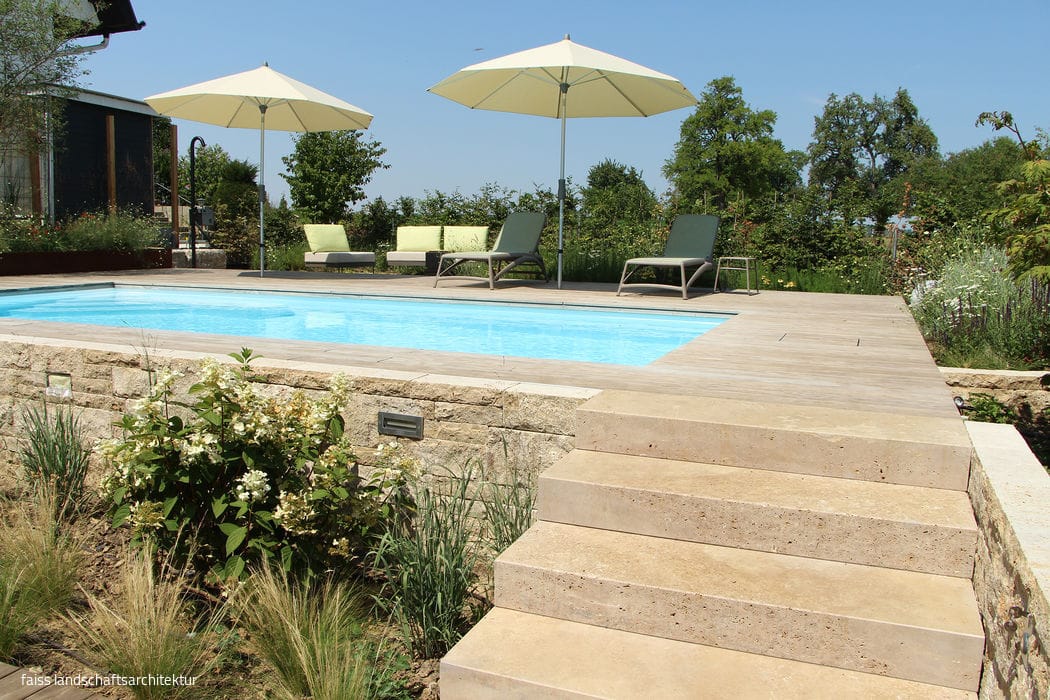
A complete garden transformation: pool, walkways, and endless discovery around every corner.
Inspired by the Forest
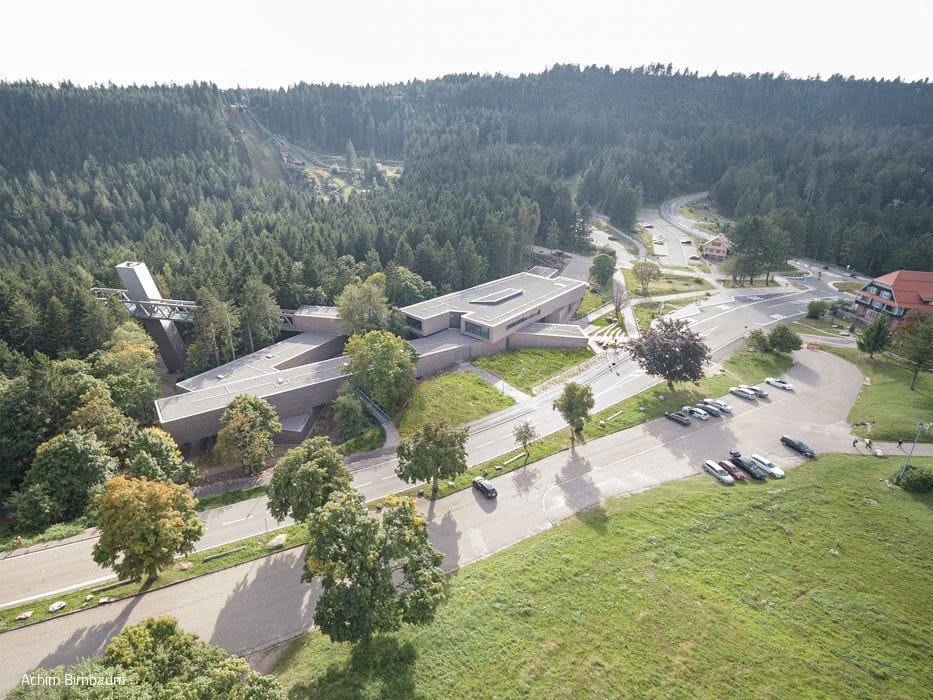
A Sustainable Education Centre in the Black Forest Champions the Power of Wood
Recycled Glass as Façade
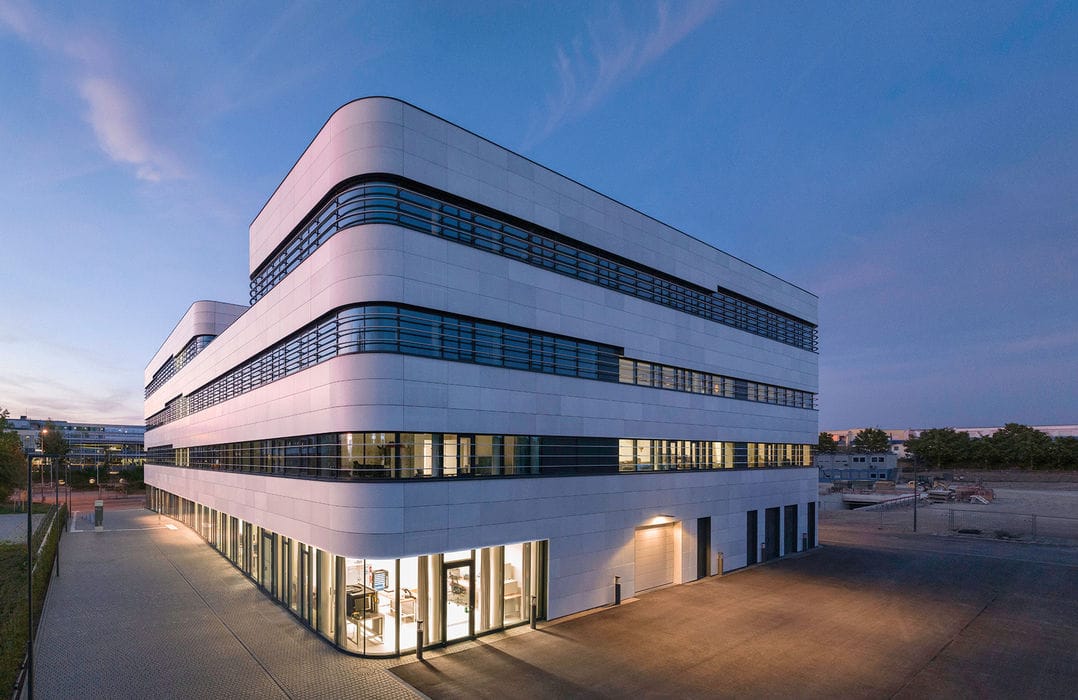
A New Institute Building: Offices, Laboratories, and Technical Spaces in Compact, Dynamic Harmony
Function and landscape connection
Company headquarters—administration and warehouse logistics—gracefully oriented toward the nature reserve