


Steel-Framed House
Architecture with wit and understated elegance
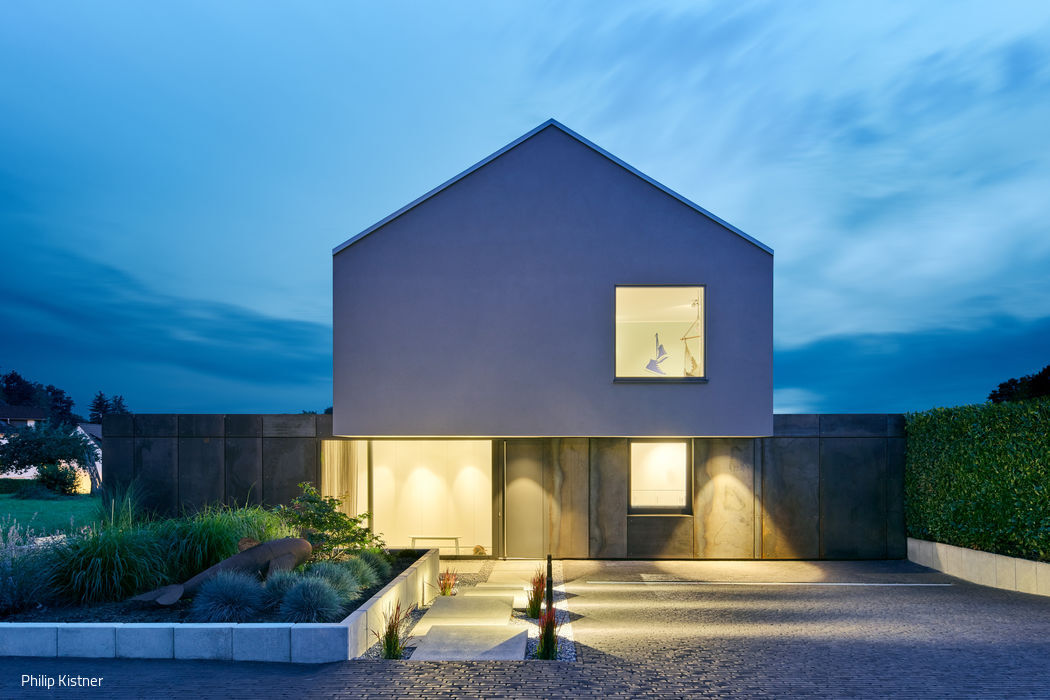
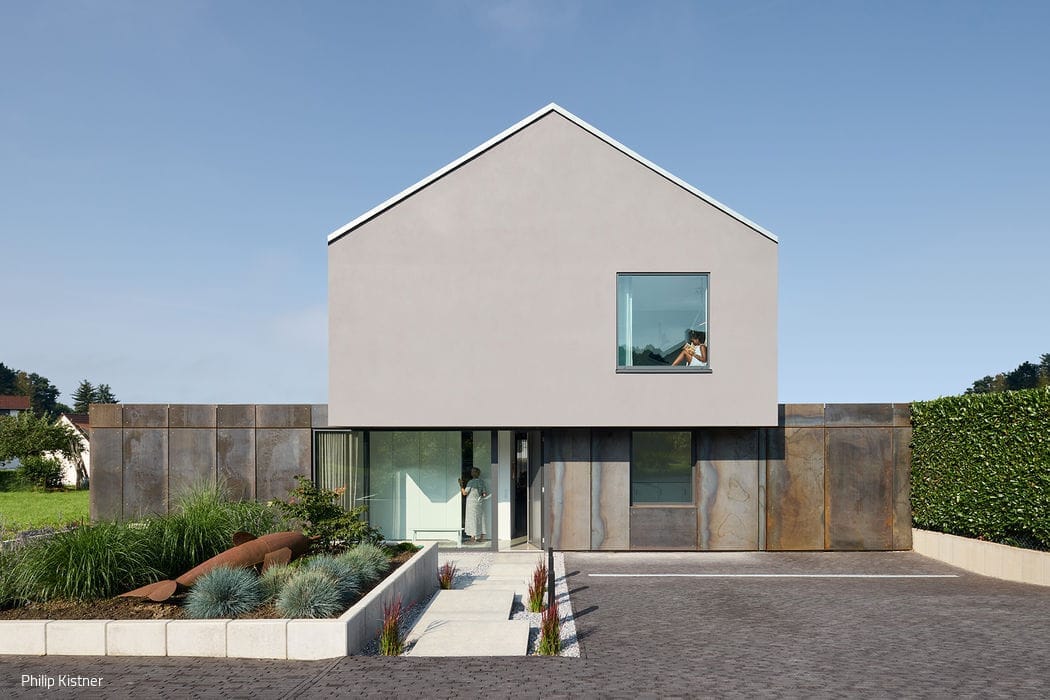


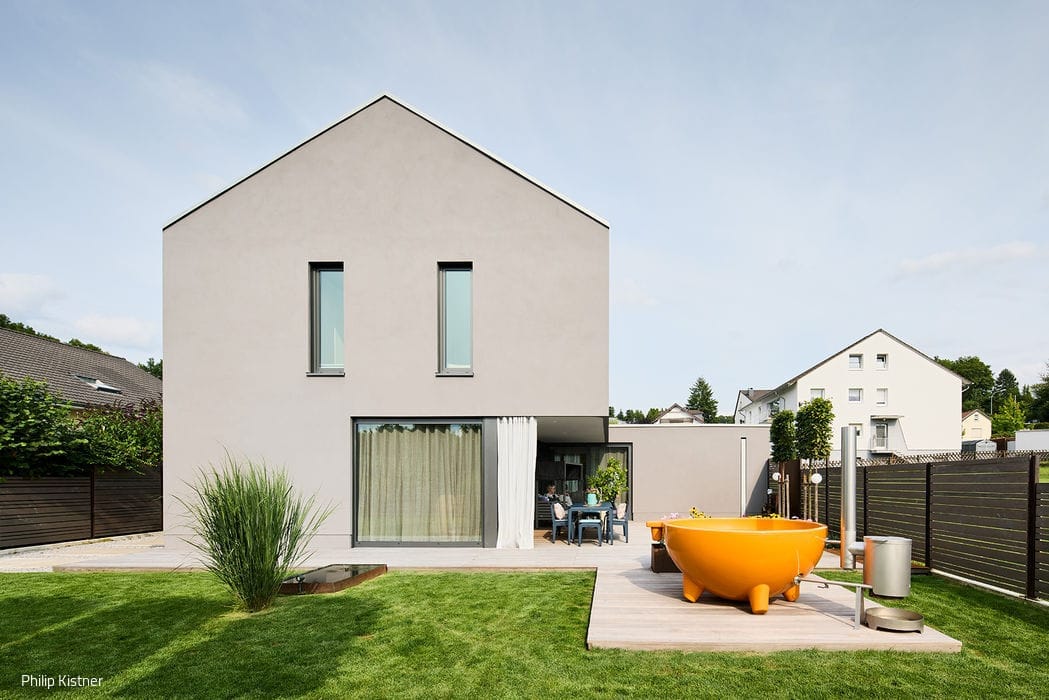
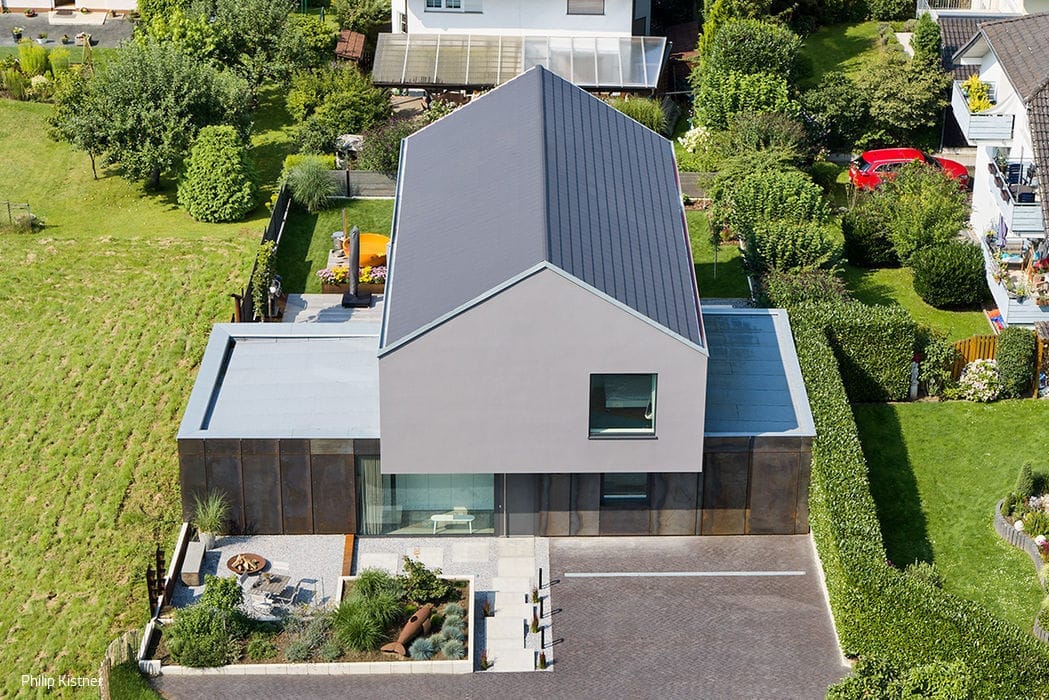




Luxus zeigt sich in den kleinen Dingen oft stärker als in großen Gesten. So muss es auch nicht immer das mehrere tausend Quadratmeter große Grundstück sein, auf dem der Traum vom eigenen Wohnen entstehen kann. Einer Familie reichten 560 m², zudem in zweiter Reihe gelegen, um ein Haus ganz nach ihren Vorstellungen von Architekt Klaus Mäs erstellen zu lassen. Fast schon humorvoll stapeln sich die beiden Baukörper übereinander – das archetypische Obergeschoss liegt um neunzig Grad verdreht auf dem quaderförmigen Erdgeschoss. Grauer Putz oben, rostroter Cortenstahl unten, so entsteht eine spielerische Leichtigkeit.
Verbinden, verschränken, überlagern sind Charakterzüge, die sich durch das gesamte Haus und seine Außenräume ziehen. Im Erdgeschoss gehen Küche, Wohn- und Esszimmer fließend ineinander über und fluten durch die großen Fensterschiebetüren hinaus auf die Terrasse, die sich in den Garten erweitert. Dieser tragende Wohnbereich ist dem gemeinsamen Entspannen, Unterhalten und Genießen gewidmet. Hier heißt die Familie Gäste willkommen, dürfen Licht und die Umgebung Teil des Innenraums werden.
Diese freundliche Offenheit erstreckt sich bis ins Obergeschoss, das sich über einen Luftraum mit dem Erdgeschoss verschränkt. Hinauf führt eine zweiläufige Treppe, die im ersten Teil noch den offenen Charakter des Erdgeschosses übernimmt. Die filigrane Konstruktion aus schwarz gebeiztem Stahl hebt sich deutlich von den weißen Wänden und dem zartgrauen Fußboden ab. Der obere, mit Stäbchenparkett belegte Teil der Treppe verschwindet hinter einer weißen Brüstung und deutet damit den Beginn des privateren Bereichs an. Im Obergeschoss geleitet eine Galerie zu den Schlafzimmern und Bädern, die raumhohe, aber großteils schmale Fensteröffnungen haben.
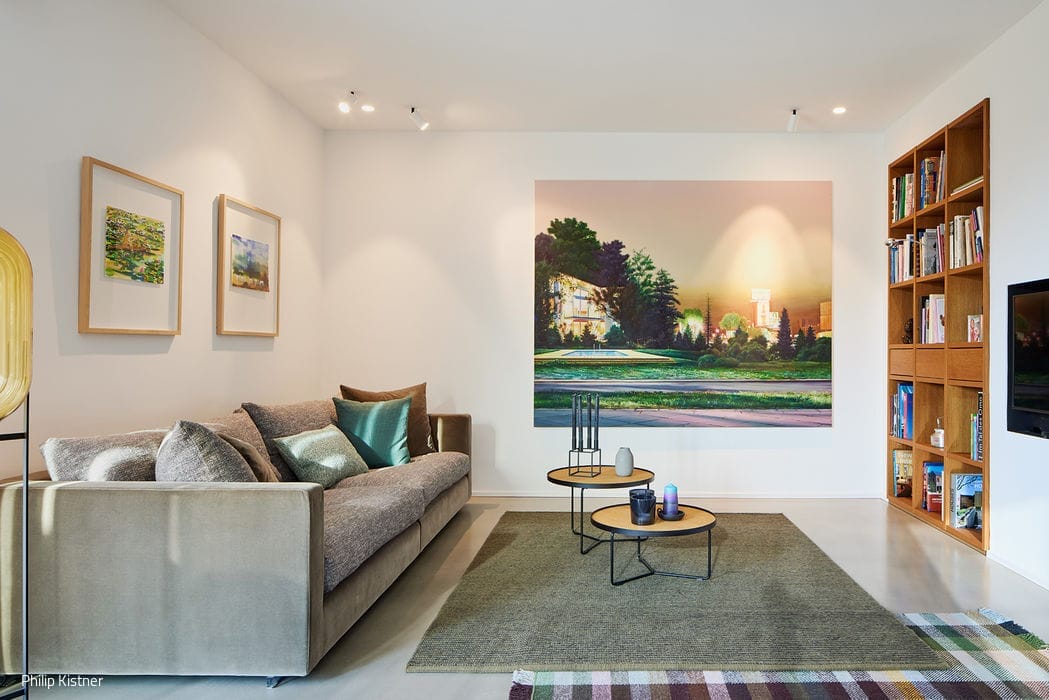
Den Rahmen für das fröhliche Leben im und um das Haus herum bilden Sichtbeton, Stahl und Holz. Wie selbstverständlich fügen sich Möbel in die Räume, umschmeicheln Stoffe die Flächen und lässt die Beleuchtung die Räume zu unterschiedlichen Tageszeiten ganz verschieden wirken. Hier kommt die Handschrift des Bauherrn hervor, der Inneneinrichter des Kölner Unternehmens Raumordnung ist. Auch bei der Kunst im Haus zeigt sich der Geschmack der Familie, die schon lange unterschiedlichste Werke sammelt. Wie selbstverständlich nehmen sie ihren Platz ein und werden Teil des Gefüges aus Architektur und Innenausstattung. Ein wenig scheint es sogar, als wären die Räume extra dafür entworfen worden, dass dieses Kunstwerke hier zur Geltung kommen. Eine Bereicherung sind sie allemal.
Wohnfläche: 175 m²
Grundstücksgröße: 560 m²
Bauzeit: 2019–2020
Bauweise: Massivbau in monolithischer Bauweise
Energiekonzept: Luft-Wasser-Wärmepumpe
Photography Credits:
Philip Kistner
www.philipkistner.com
(Published in CUBE Cologne Bonn 03|22)


Views Worth Discovering
A garden pavilion and carport anchor a new home within an established neighbourhood
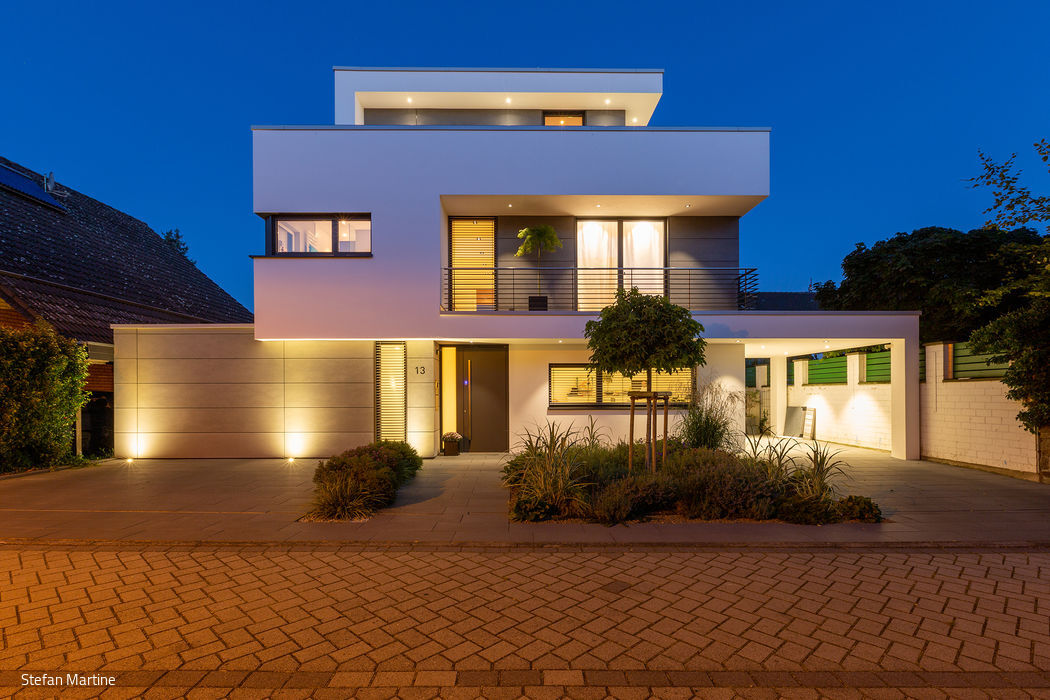
Custom Design
For architects, designing, planning, and building are only part of the story—living in their creations completes it.
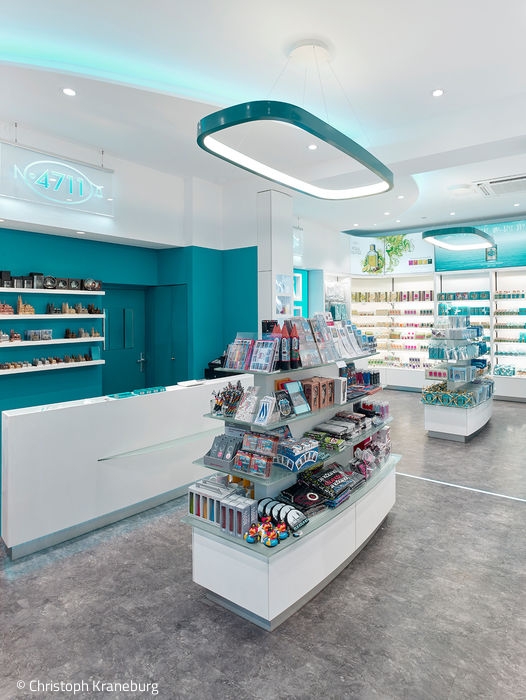
A new order
The shop is divided into two purposeful zones: souvenirs in the front, the 4711 collection in back.

Respectfully Densified
Residential Complex in Bonn-Endenich Brings New Life to the Schumannhaus District