


One roof, one vision
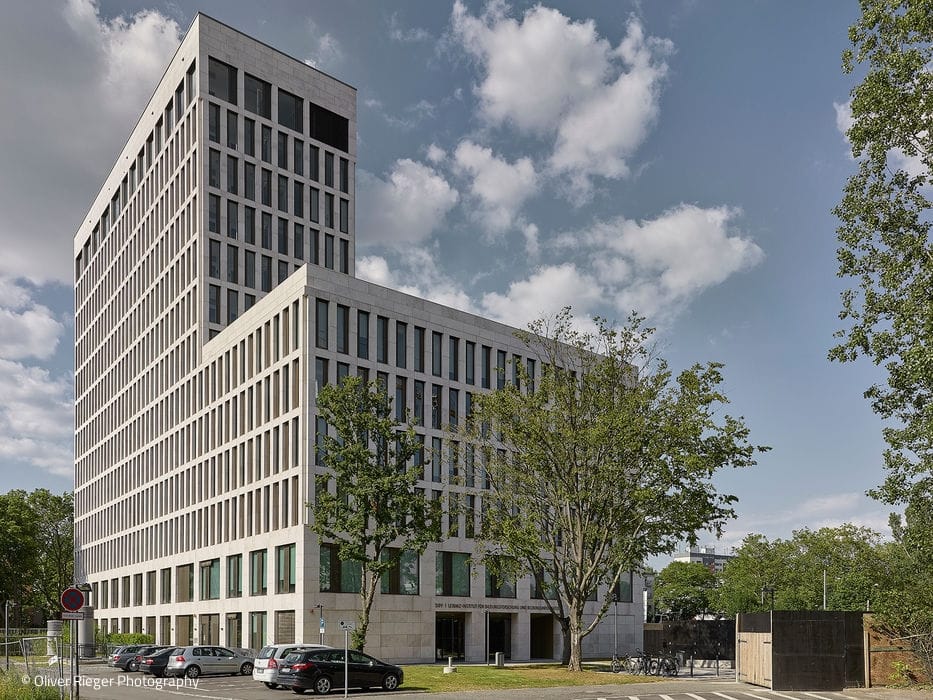
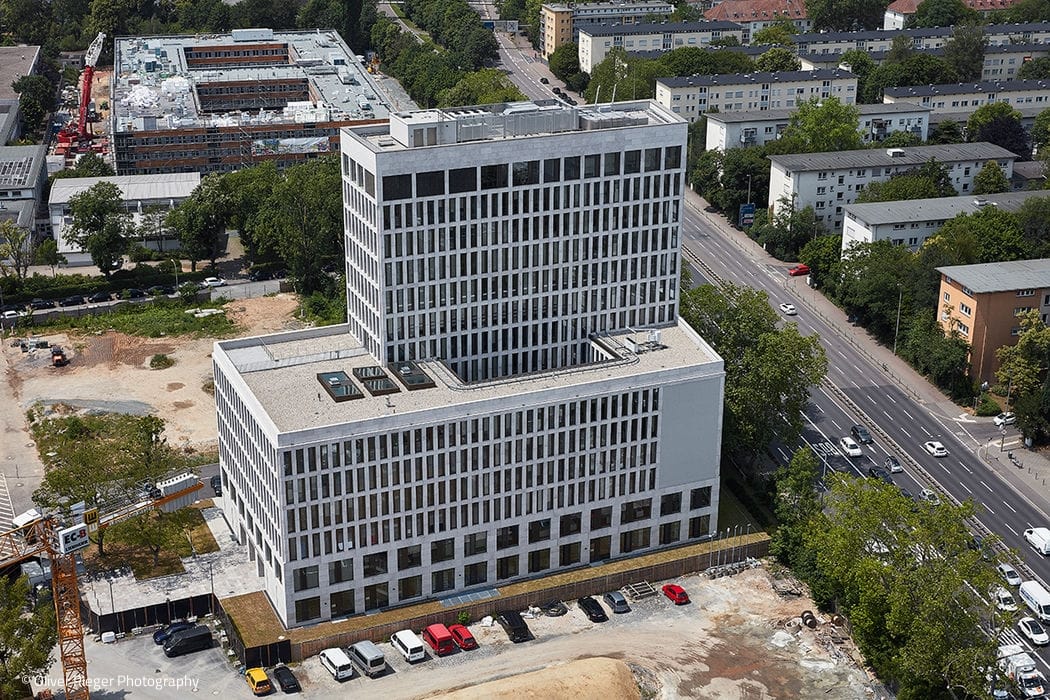
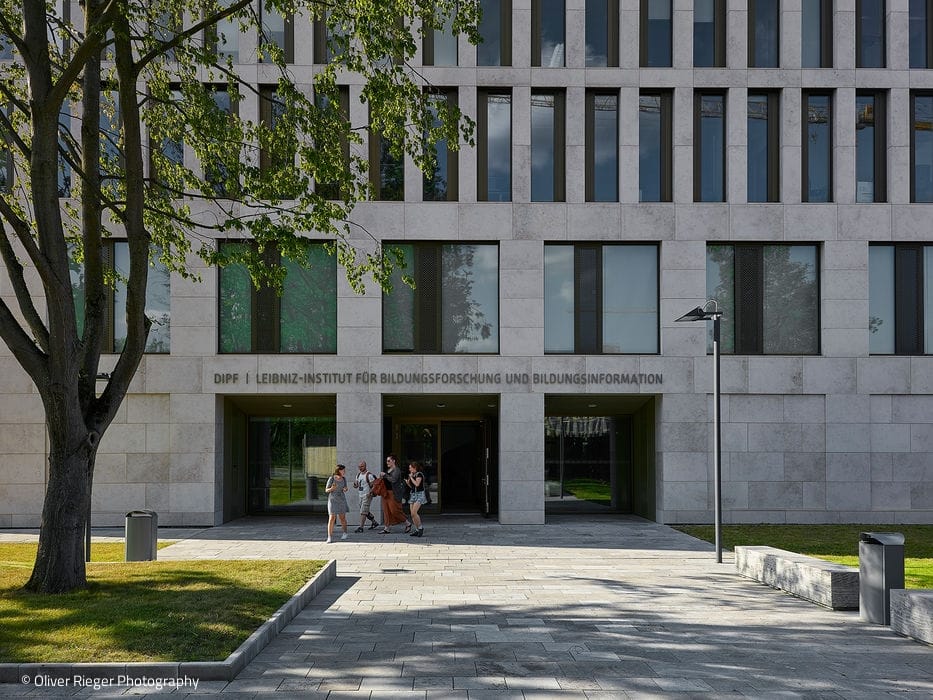
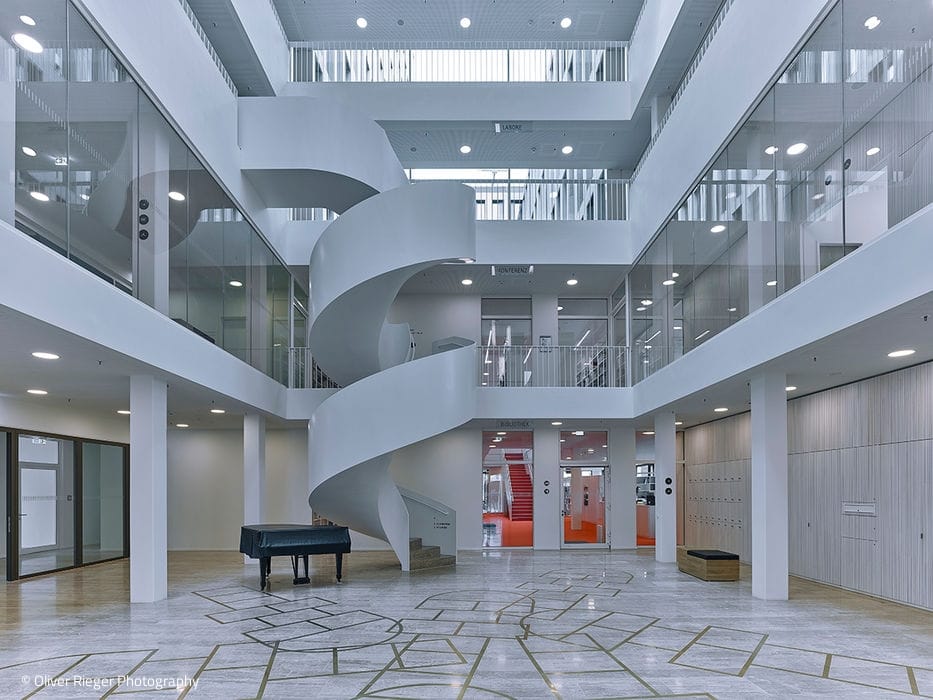
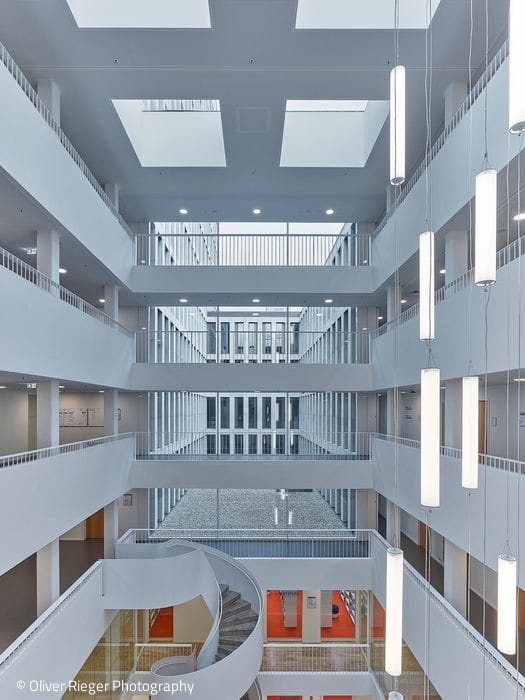
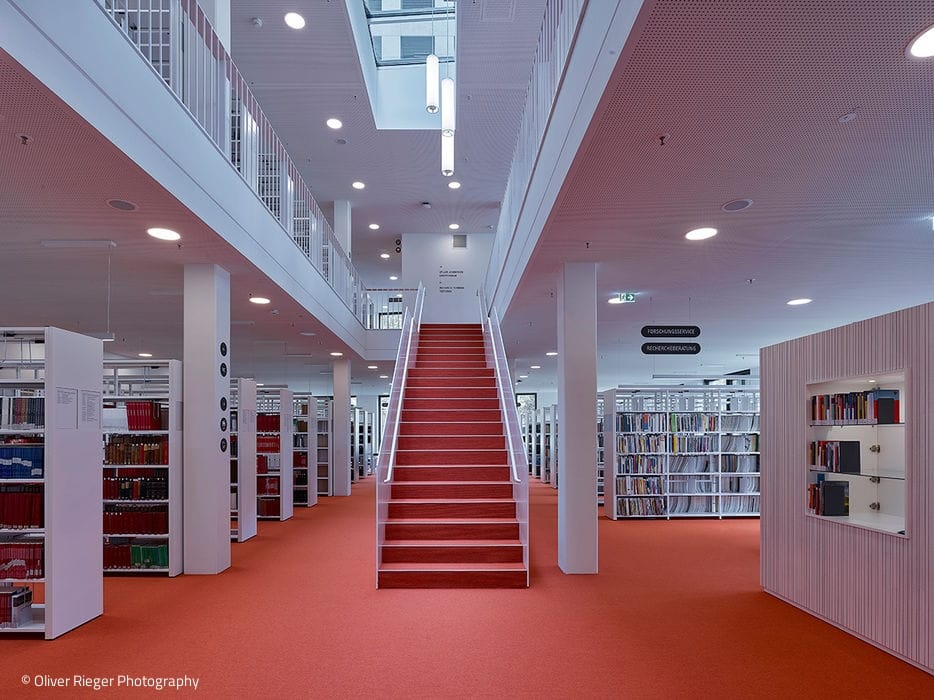
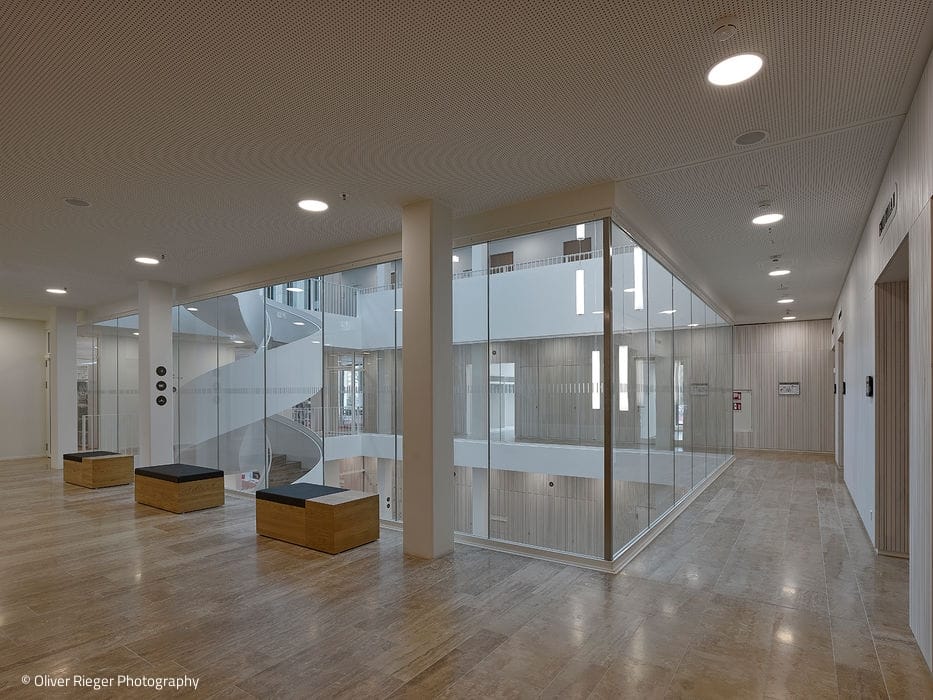
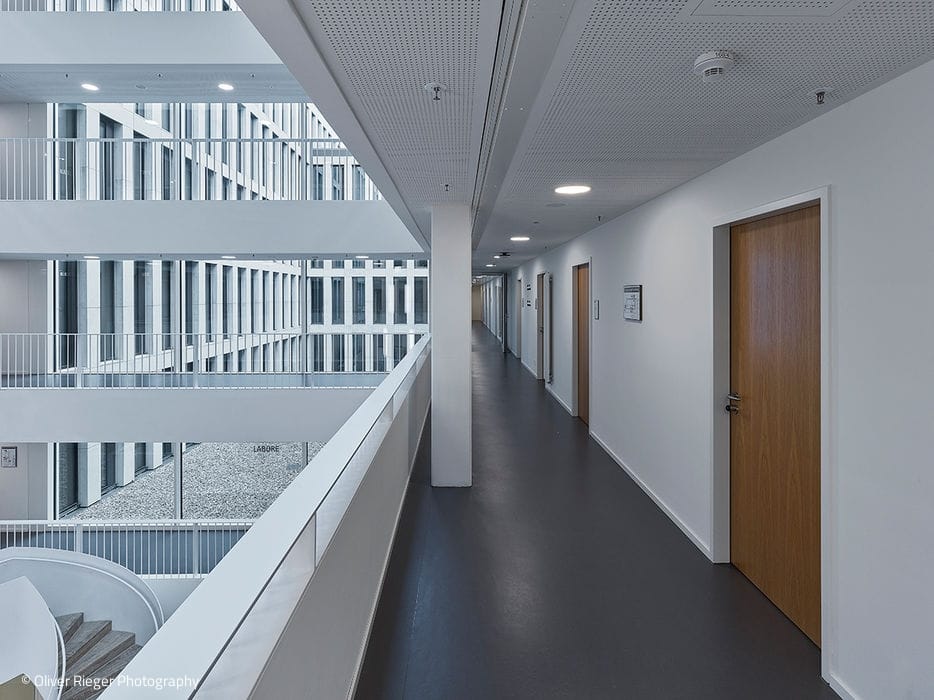
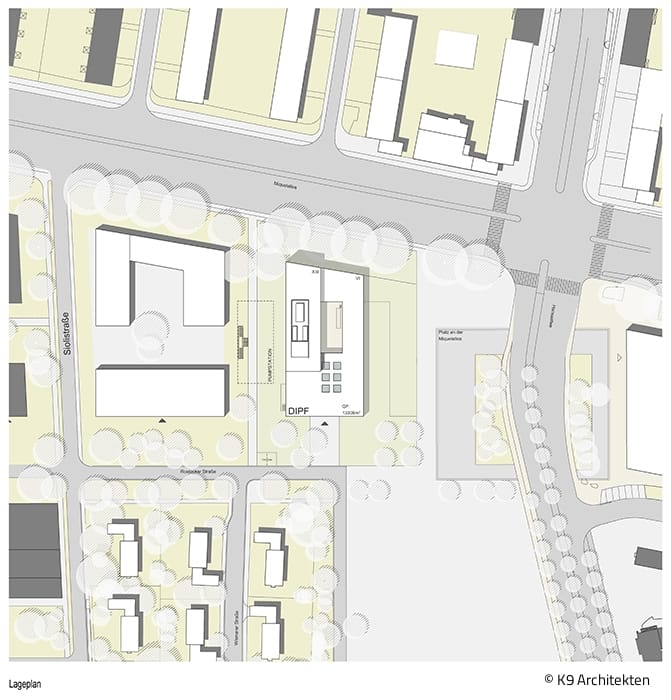
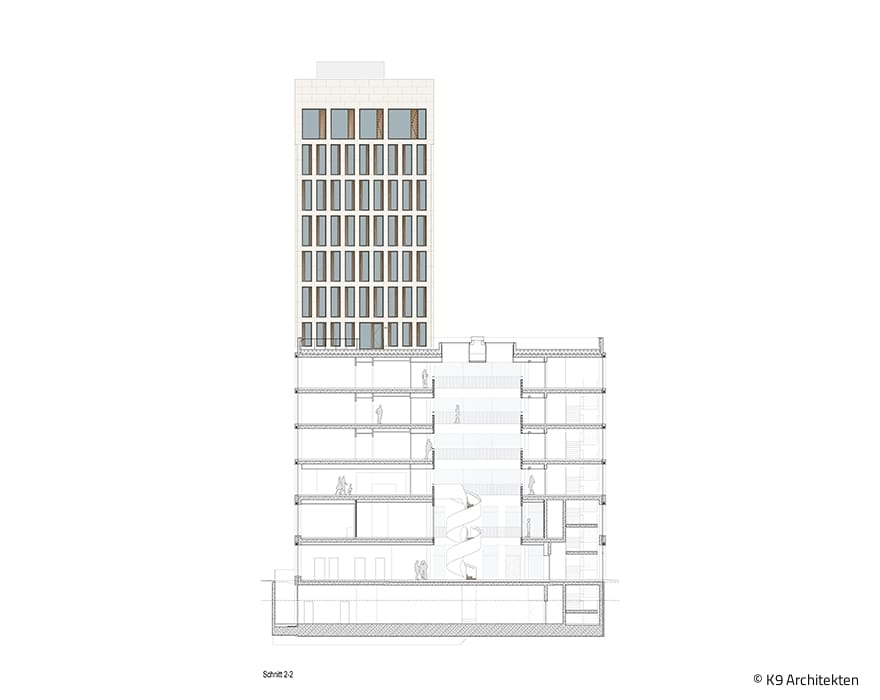
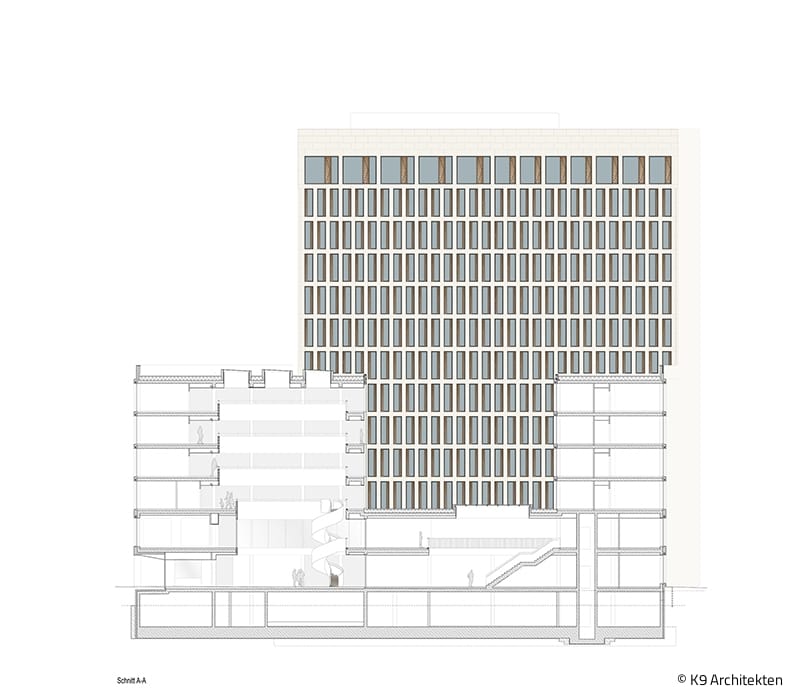
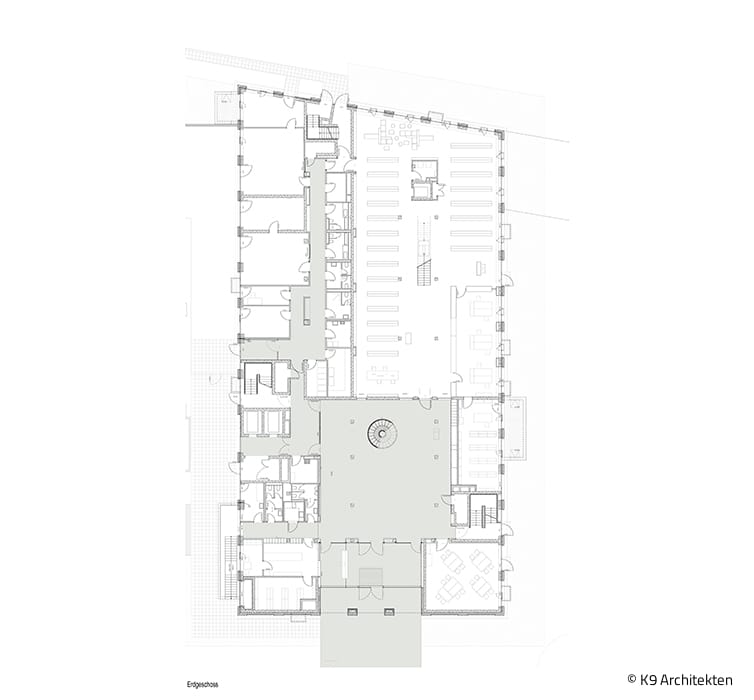
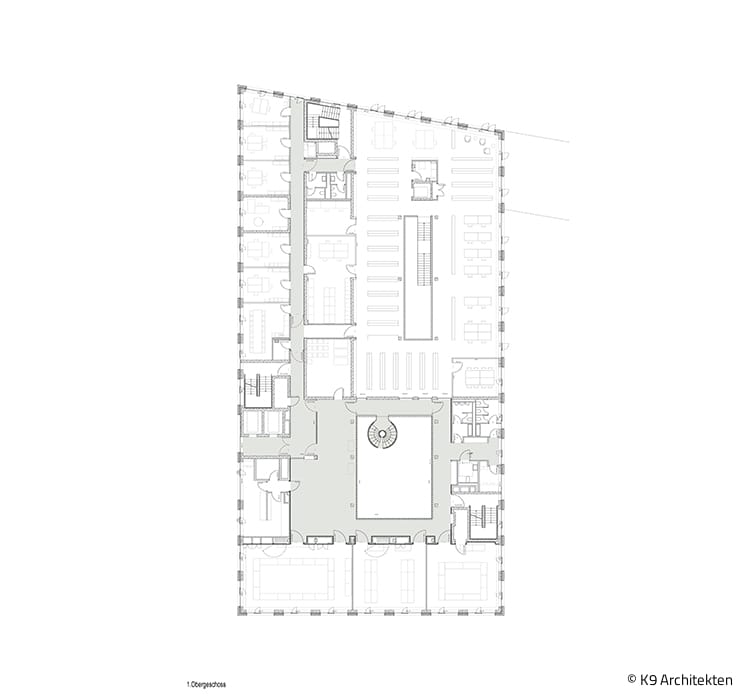
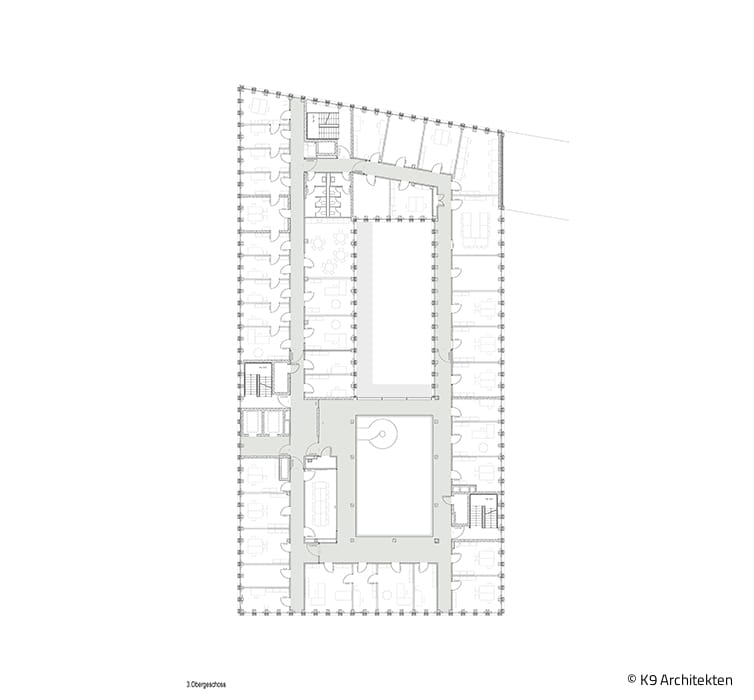
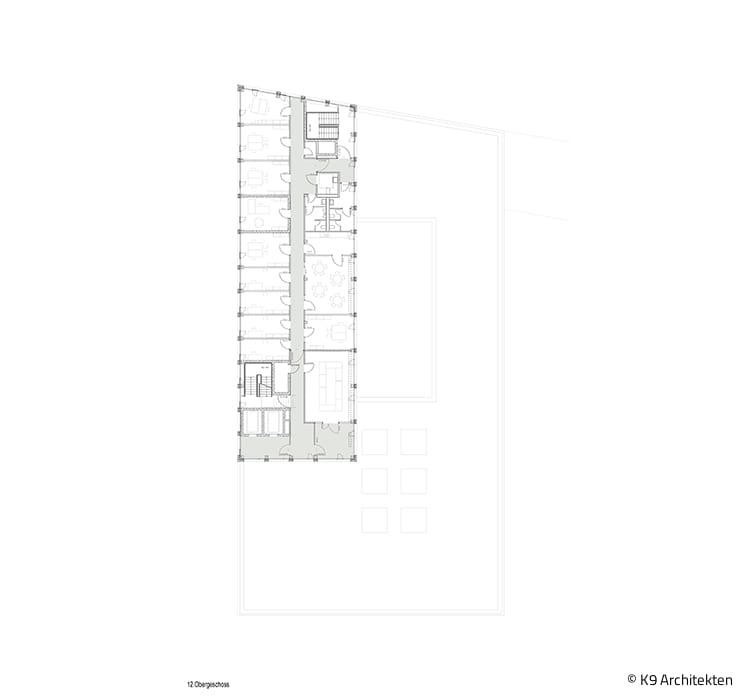
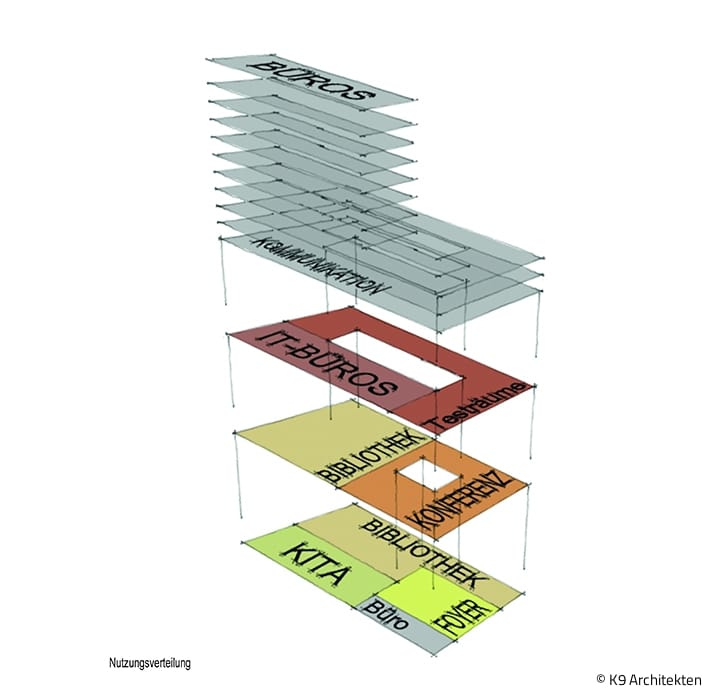
The DIPF | Leibniz Institute for Research and Information in Education had outgrown its Schlossstraße location. A new building would consolidate staff previously scattered across different sites while accommodating future expansion. Equally important: relocating to the Goethe University's Westend campus would deepen collaboration between the institutions. Designed by Freiburg-based K9 Architekten, the new DIPF headquarters stands at approximately 50 metres tall—currently the campus's tallest building. Rising at the campus's north-western gateway, this striking high-rise serves as a distinctive landmark. Across 13 floors, the architects integrated offices, a laboratory complex with examination rooms, conference facilities, a library, and space for a childcare centre. Though its height sets it apart, the building connects thoughtfully to its surroundings: narrow window grids framed in natural stone echo other campus structures, while the entrance—accessible directly from the campus grounds—signals institutional belonging. The covered atrium beyond the entrance becomes the building's circulatory heart, distributing visitors throughout its various functions. Since the institute's library welcomes external researchers, it sits prominently opposite the entrance, opening directly onto the foyer.
The high-rise creates a distinctive civic landmark at the campus's north-western gateway. Across 13 storeys, the architects seamlessly integrated offices, a laboratory complex with examination rooms, conference spaces, a library, and a childcare facility. While the building's height makes it visually distinct, its design language—narrow window grids in natural stone frames—establishes a conversation with neighbouring structures. The entrance, accessed directly from the campus grounds, reinforces the building's identity as part of the larger community. Beyond the threshold lies the open atrium, a connective space that orients visitors through the building's various functions. The library, intentionally positioned directly opposite the entrance and flowing into the foyer, welcomes scholars and researchers from beyond the institution.
"The covered atrium creates a unified space—a circulatory hub that orchestrates both vertical and horizontal movement throughout the building," says Wolfgang Borgards. At its heart, an arresting spiral staircase directly links the foyer to the conference area on the first floor and the second floor's test rooms. Two elevators ensure efficient circulation and full accessibility across all levels.
K9 Architekten's design emerged victorious from a competitive process that drew 21 firms. The jury's decision hinged on the project's "compelling urban design integration" and its impressive entrance sequence—a multi-storey foyer with intuitive wayfinding that clearly connects all functional zones.
Photography Credits:
Oliver Rieger Photography
www.oliverrieger.com
(Published in CUBE Frankfurt 03|19)
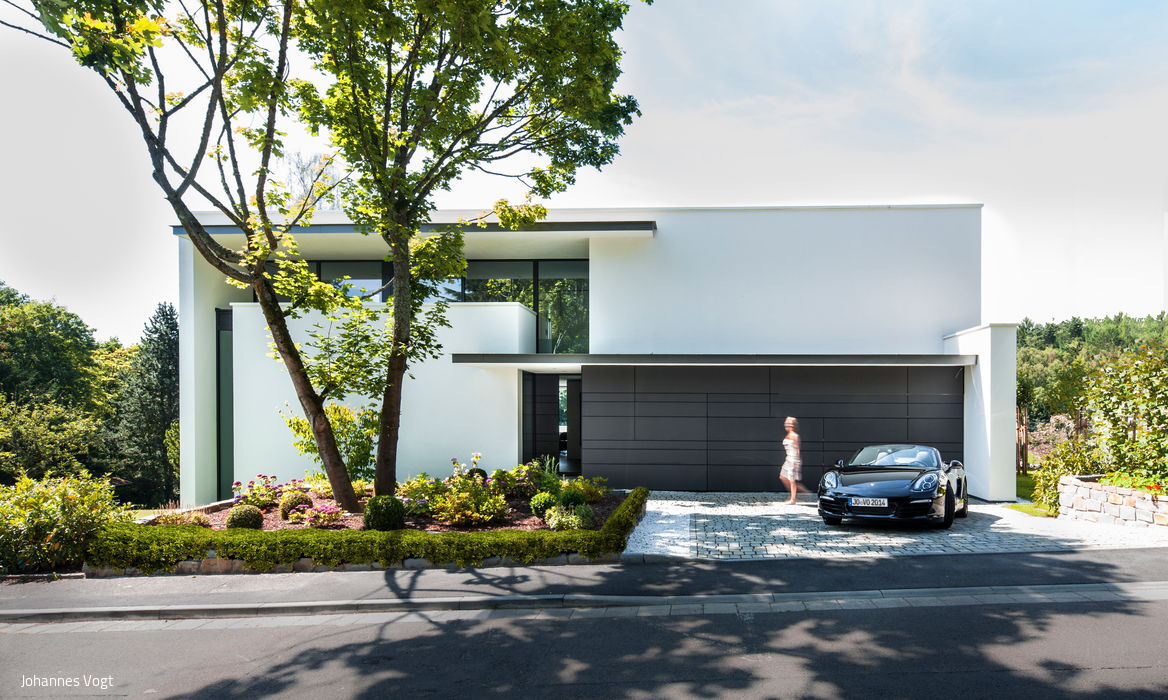
Graceful and Elegant
A Villa Balancing Openness and Privacy
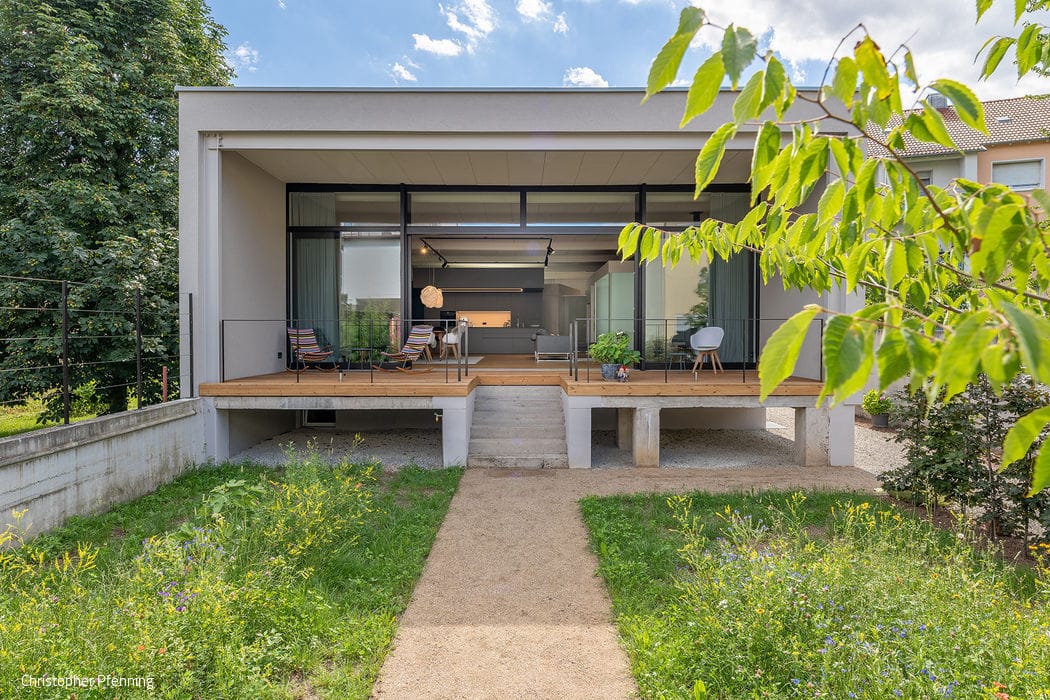
Warehouse Transformed into Loft
Thoughtful Reuse: Where Sustainability Meets Contemporary Living
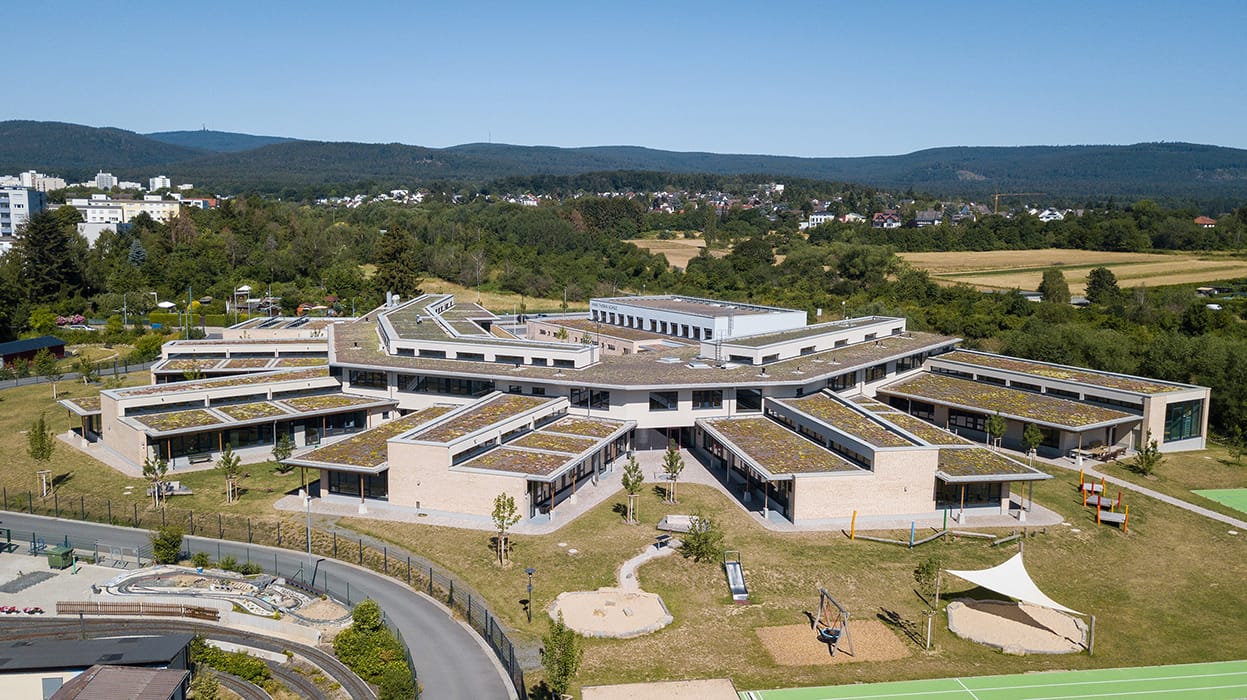
Orientation & Identity
New School Building: Designed for Learning, Living, and Growth
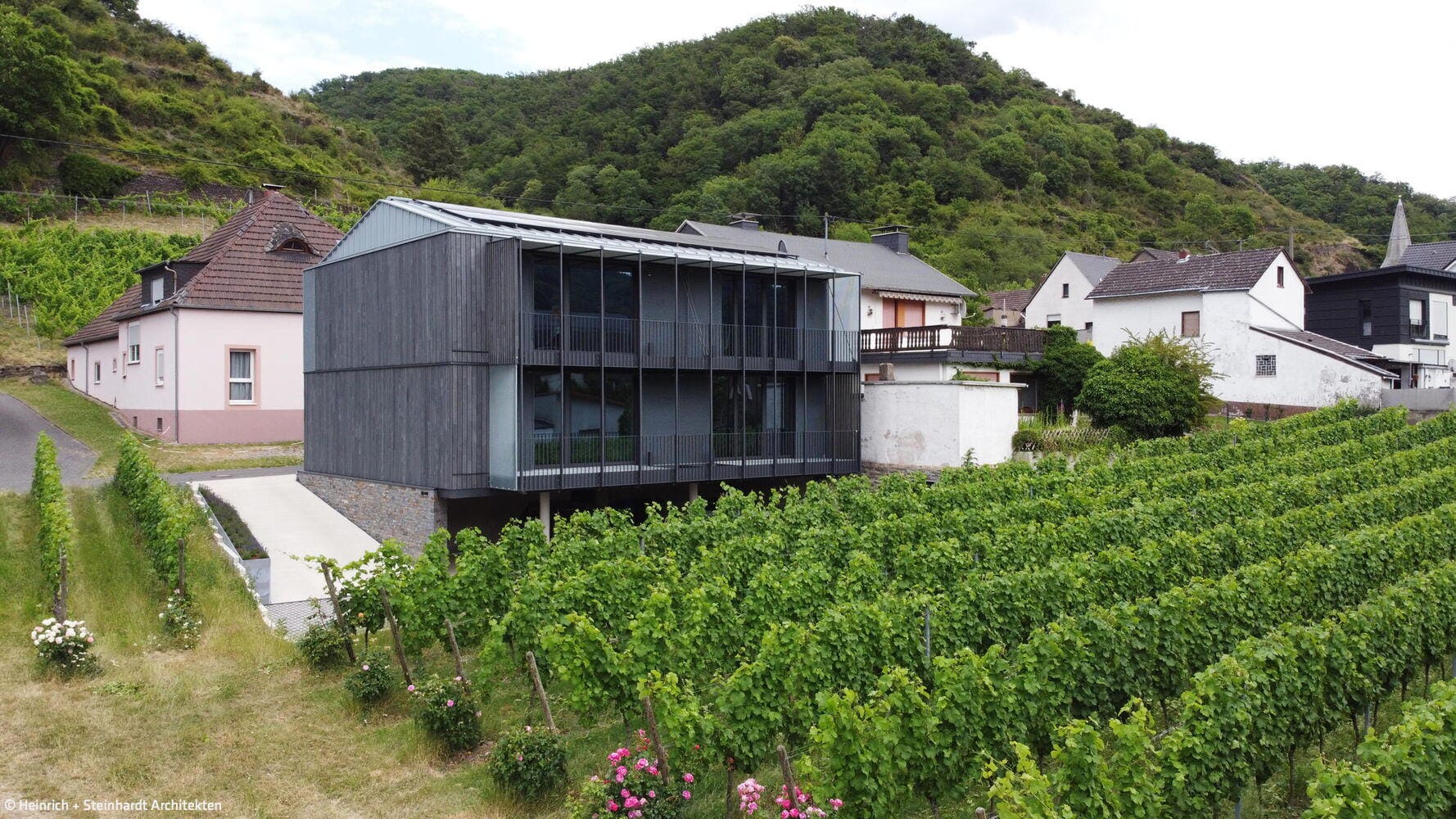
Confident & Respectful
The winery's guesthouse has deep local roots and a strong presence