


Revitalized with Purpose
Former industrial sites in the city centre transformed into buildable land
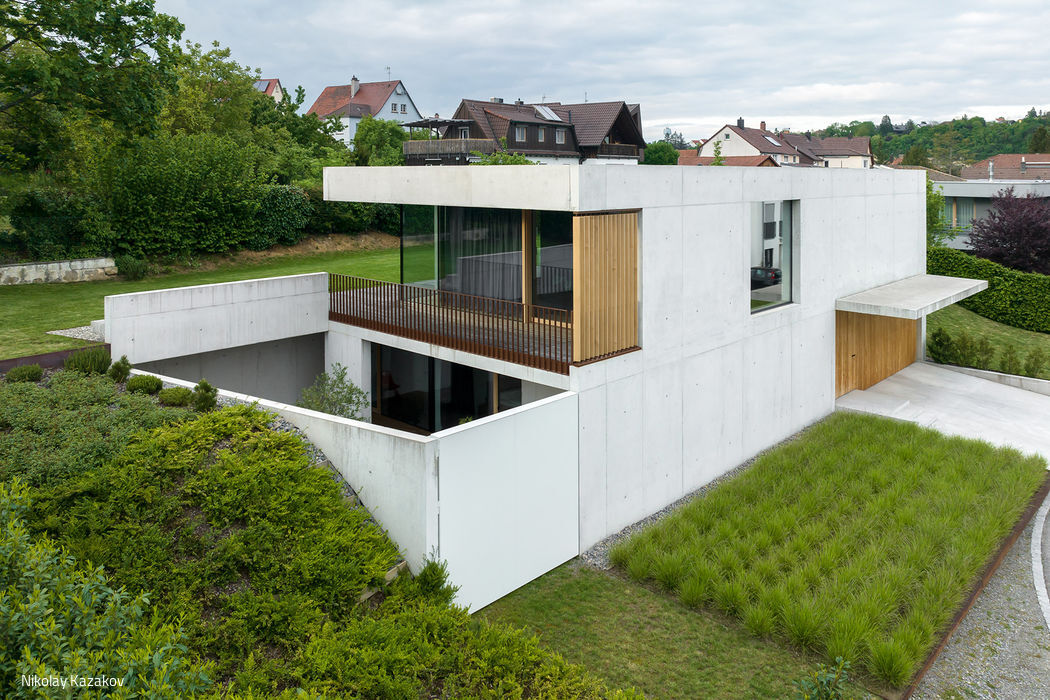
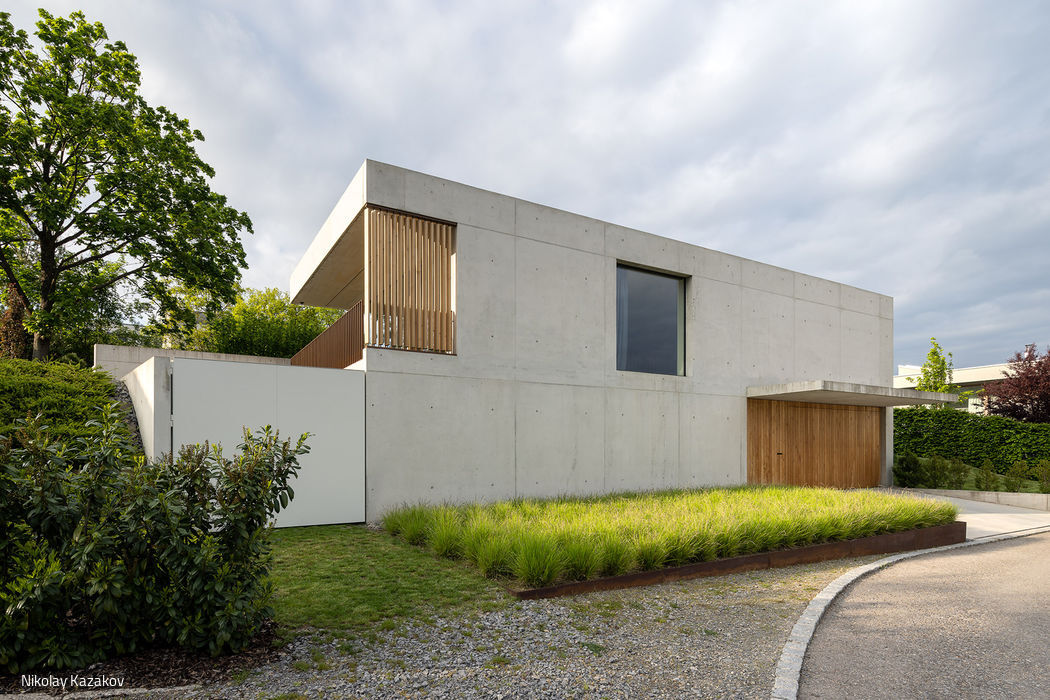
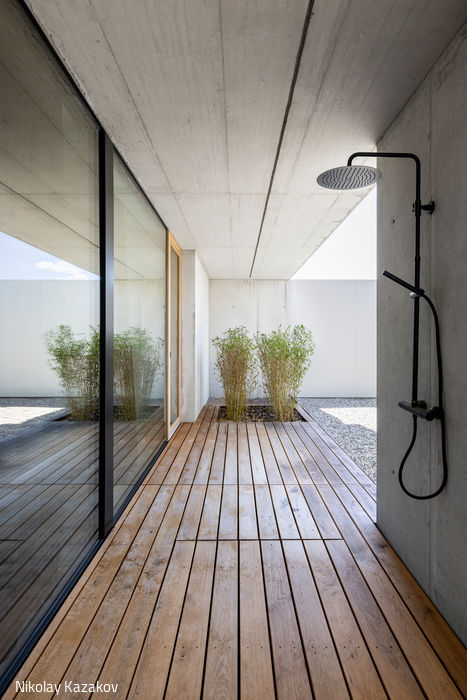
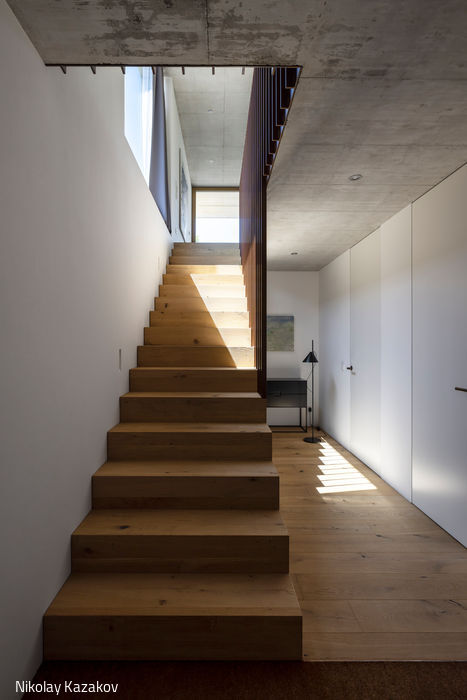
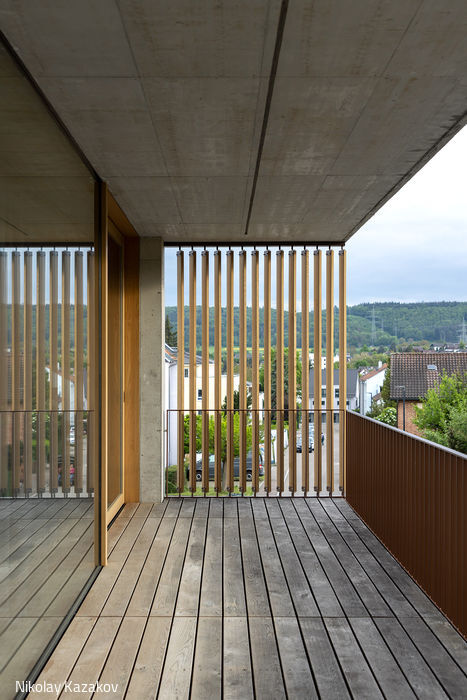
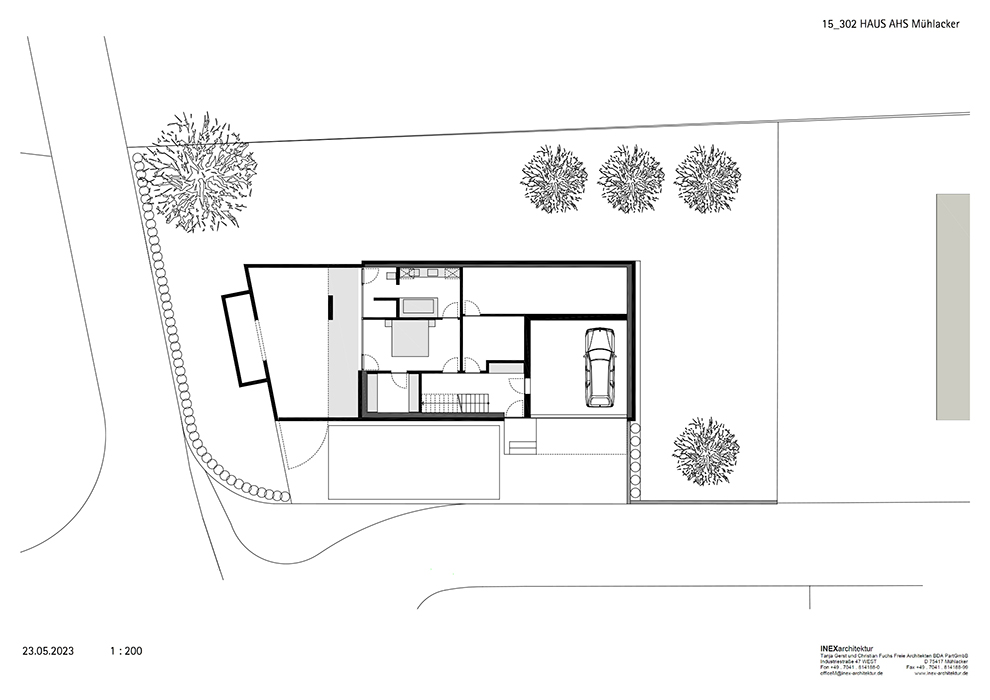
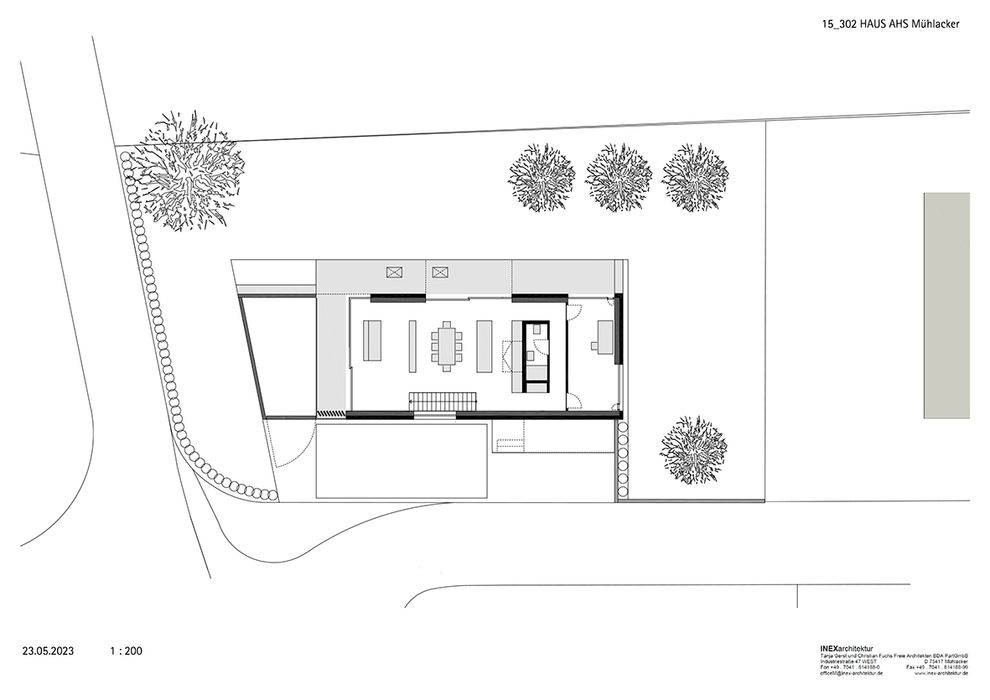
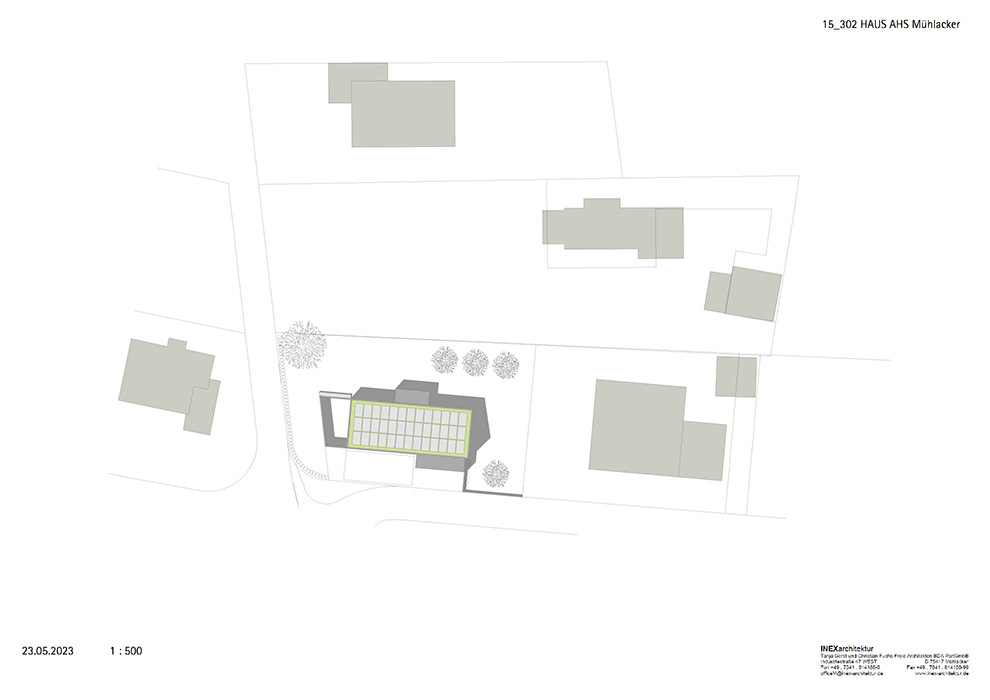
Vacant since the late 1990s, this plot on the edge of a residential neighbourhood had fallen into disrepair, its landscape overtaken by wild growth. The demolition of a dilapidated industrial hall and storage buildings, followed by site clearance, unlocked the potential for three new residences in a prime location.
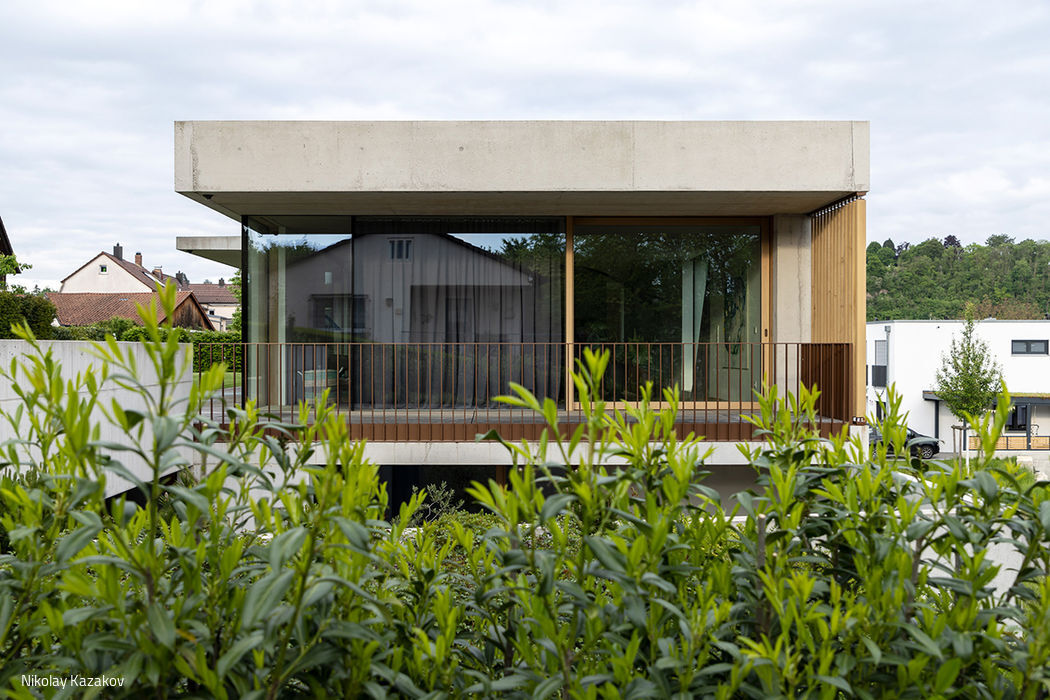
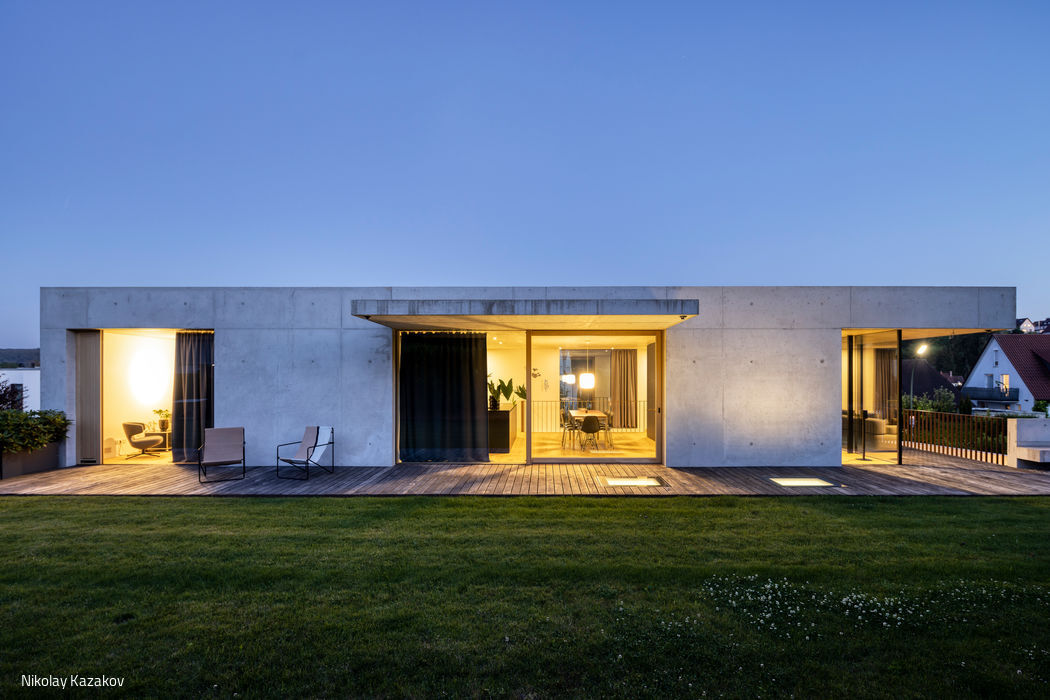
Anchoring the newly established residential street, this two-storey flat-roofed residence sits on an 820 m² plot at its western entrance. Architect Tanja Gerst's extended design integrates seamlessly into the streetscape, yet stands apart—both formally and aesthetically. Constructed using in-situ concrete skeleton framing, the building's untreated velvety grey exterior walls contrast strikingly with interior spaces: lime-plastered and white-painted walls define the private realm. Generously overhanging canopies and thoughtfully articulated outdoor areas provide natural sun protection and foster an inviting living climate, eliminating the need for mechanical shading. Material selection reflects deliberate restraint—concrete and oak—choosing substances that endure without demanding intensive upkeep. Oak extends across interior floor surfaces and outdoor areas alike, while exposed, untreated concrete ceilings maintain visual honesty. The two-storey living space unfolds toward a sheltered garden through expansive north and west-facing glazing. An open-plan living, dining, and kitchen zone extends westward onto a loggia. Private bedrooms on the entry level face an inward-oriented courtyard, shielded from the street. Service spaces and an integrated garage occupy the eastern, hillside portion of the structure. A single staircase connects both floors within 180 m² of living area.
A geothermal heat pump and mechanical ventilation system manage winter heating and summer cooling with precision. Efficient capillary interior insulation amplifies their effectiveness, while rooftop photovoltaic panels ensure energy independence. Every material choice reflects a commitment to sustainable, climate-responsive building: short transport routes, regionally sourced production, and timeless materials that resist wear and obviate costly maintenance. This project embodies inward-focused development—breathing new life into a once-abandoned industrial site.
Photography:
Nikolay Kazakov
www.kazakov.de
(Published in CUBE Stuttgart 02|23)

School with freedom
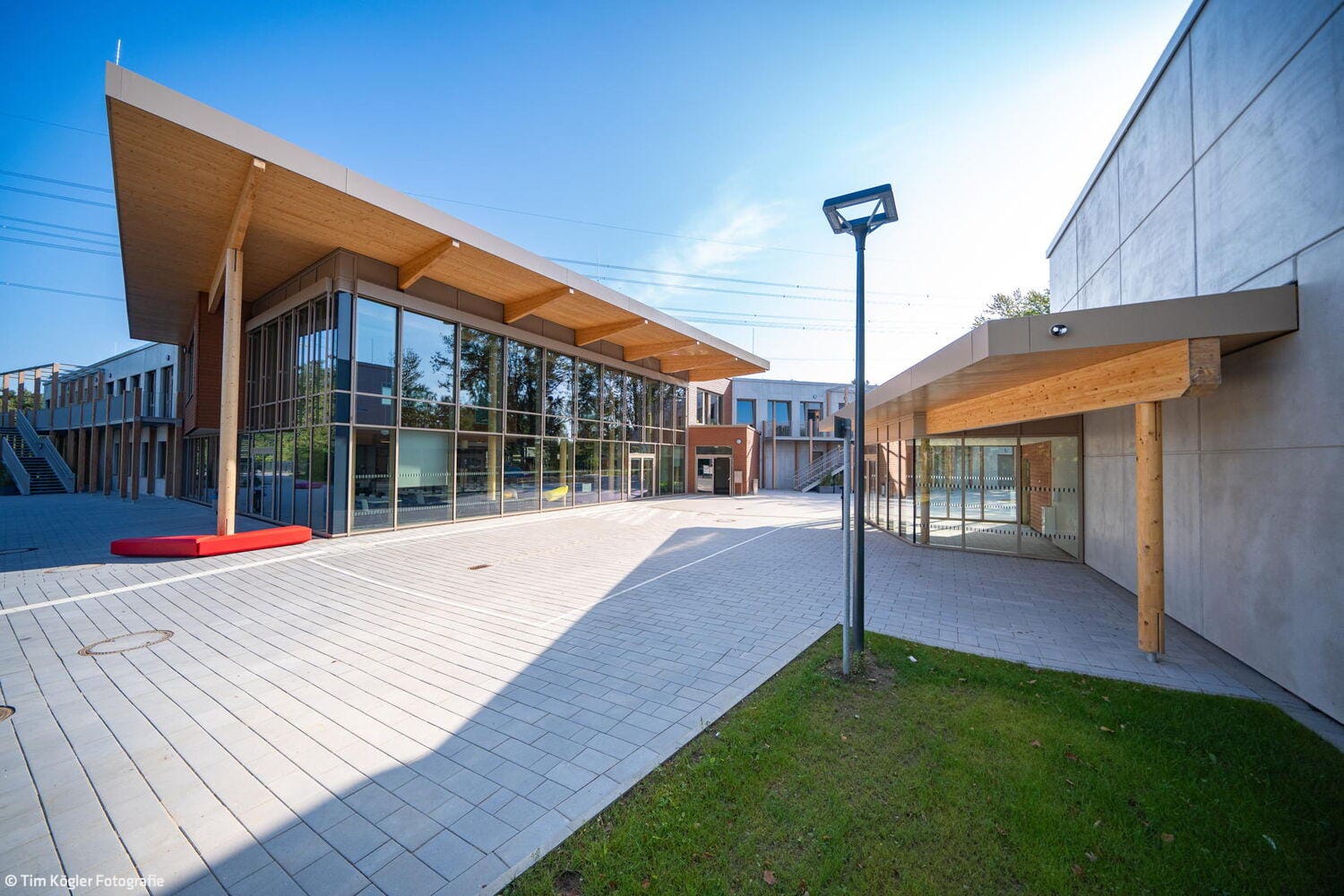
New three-form primary school with canteen and dynamic outdoor spaces
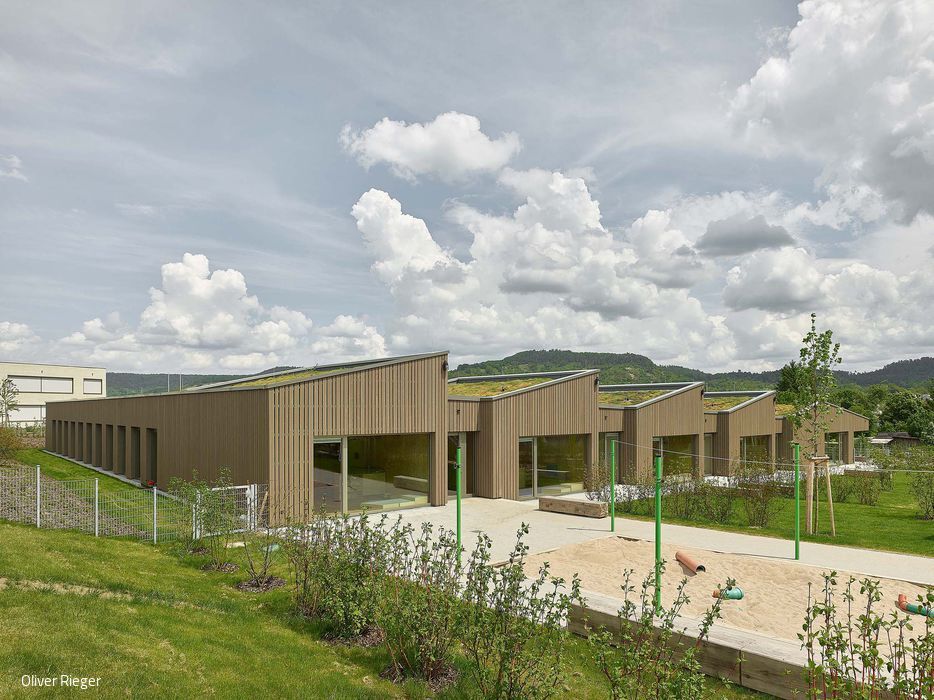
Nature's playground
Sustainable kindergarten as terraced atrium house—topography becomes experience
Tailored Solutions
Wolfgang A. Lüchow and Andreas Macke design products and lighting that matter
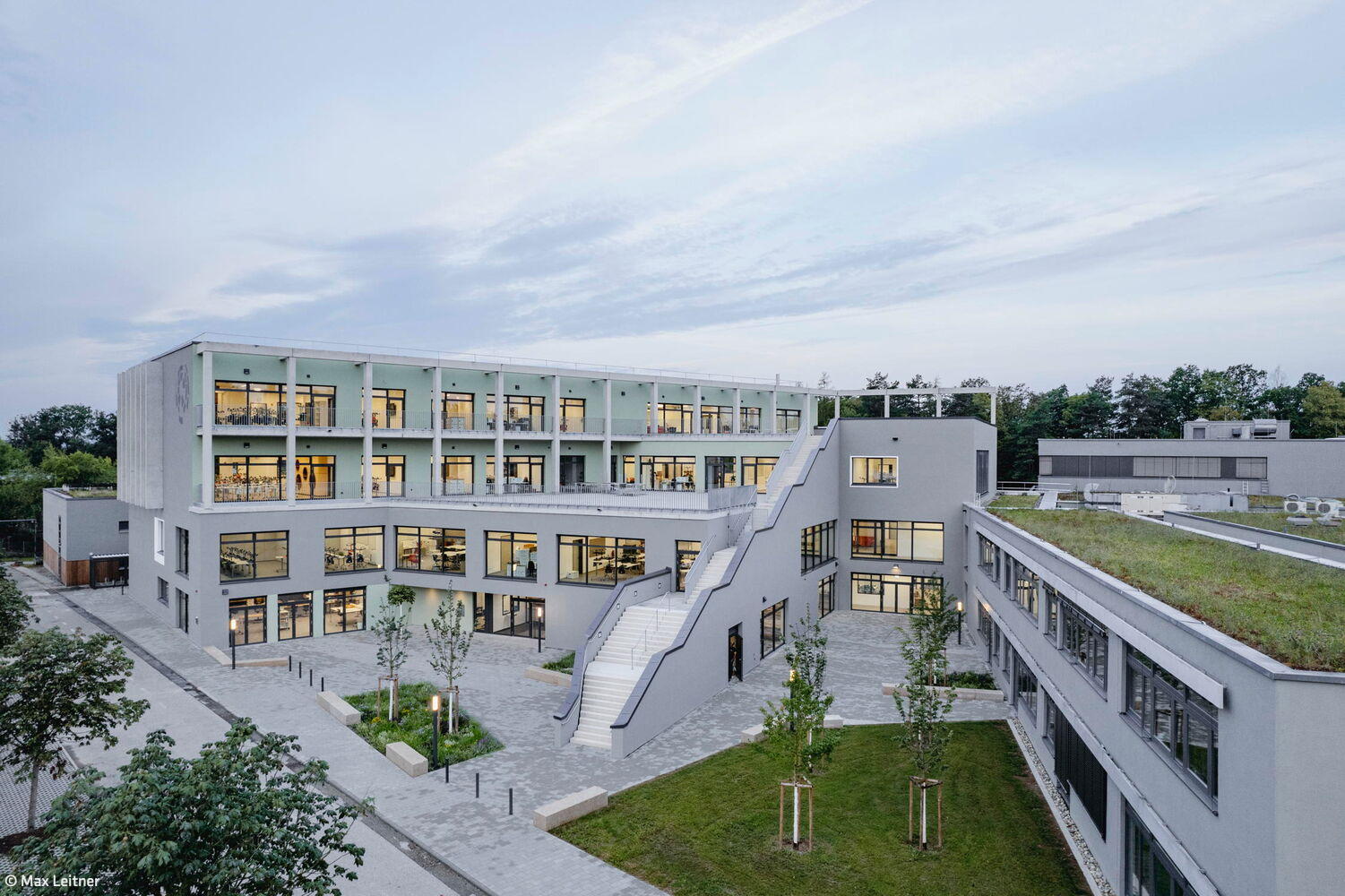
Cosmopolitan Vision
The International School's new extension creates an inspiring learning environment.