


Adaptive Reuse and Urban Repair
A former bakery in Dünnwald is transformed into contemporary residential space
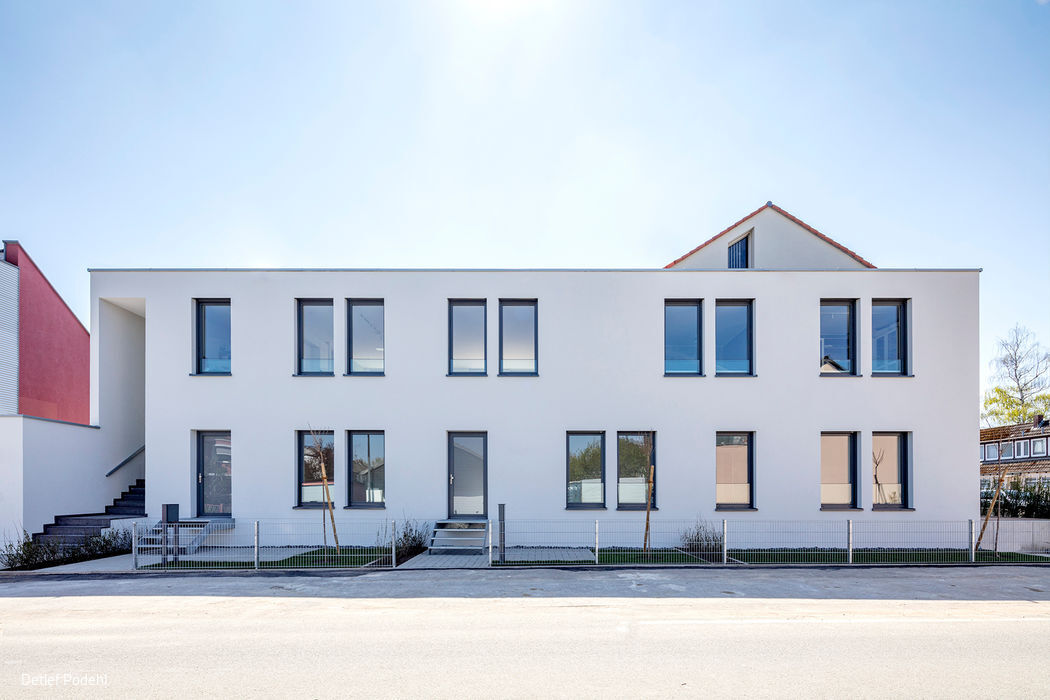


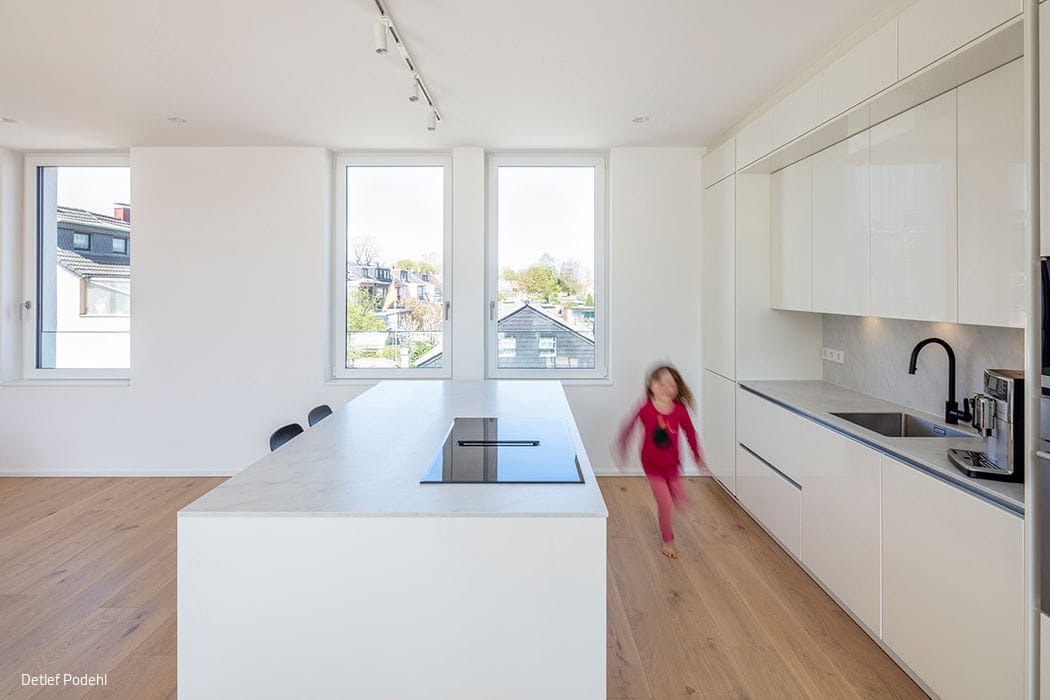


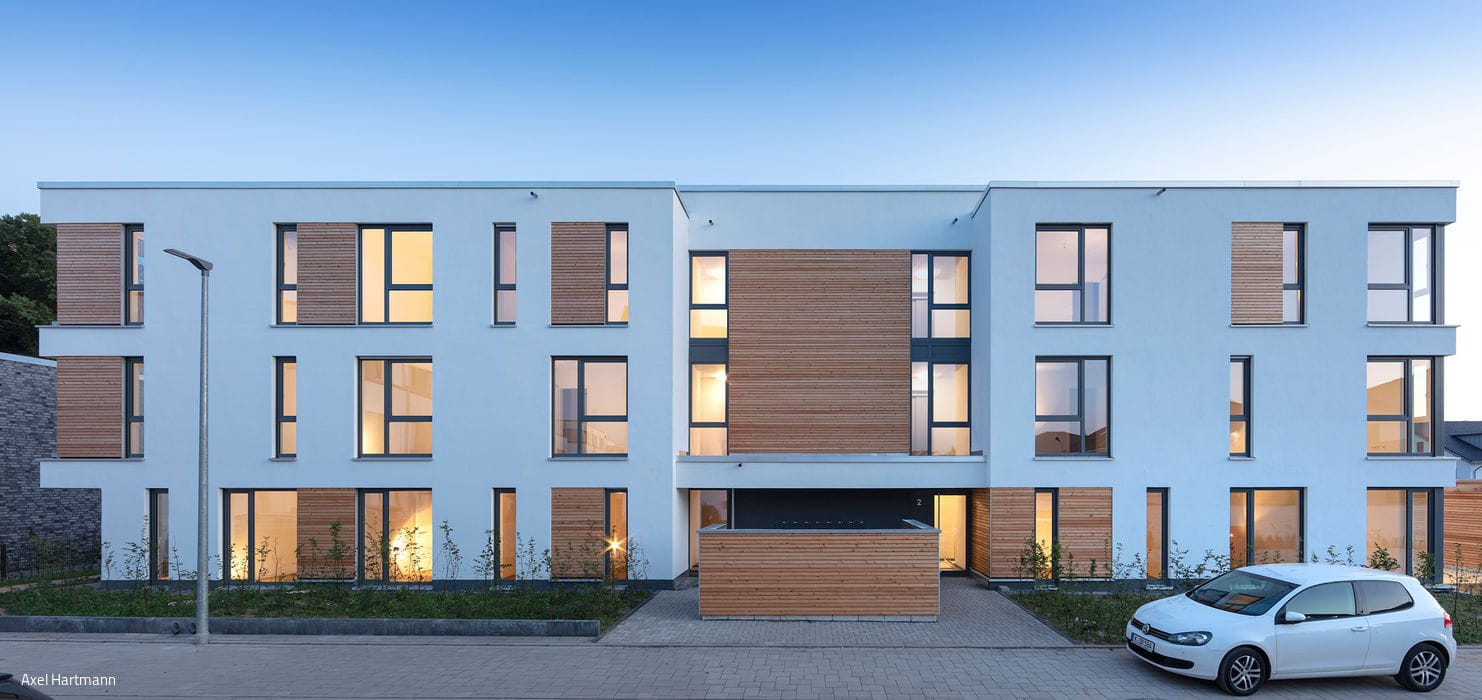
Adaptive reuse and infill development are essential strategies for creating much-needed residential space within established urban areas. In the Cologne neighborhood of Dünnwald, a former bakery served as the catalyst for this transformation: the long-established commercial site was converted by Cologne-based architecture firm HPA+ into a multi-family residential building with four individual units, each with their own private outdoor spaces.
The existing structure was as heterogeneous as its surrounding urban context: situated at the end of a row of buildings on a street corner, the former bakery occupied the entire ground floor of the three-story residential building as a retail space. This was complemented by a single-story outbuilding pragmatically added during the post-war reconstruction period, which housed the bakery operations. Leveraging existing building regulations, the outbuilding was preserved and expanded: on one hand, the structure was widened into the parcel; on the other, it was heightened on the street side. This approach created two townhouse-like residential units of approximately 70 m² each on the ground floor, which—despite limited available space—feature their own entrance with front garden and, on the opposite side, an elevated terrace loggia with an attached pocket garden below. A third unit, accessed via the existing staircase of the residential building, combines the former retail space with an additional portion of the outbuilding to form a generously proportioned 100 m² apartment with a southeast-facing terrace overlooking the front garden. A covered exterior staircase leads to the new upper floor of the outbuilding: the spacious 136 m² apartment is equipped with a roof terrace on the garden side and spans the complete width of the units below. Parking spaces for the additional residential units were accommodated in the front garden strip of the existing building as well as in a double garage directly adjacent to the outbuilding. In this way, a diverse urban mix of well-lit, thoughtfully designed apartments was created within a relatively compact footprint—varied in typology and orientation.
The facade design of the expanded structure proved to be a particular design challenge: the new window and loggia openings had to integrate the existing openings of the former outbuilding. The result speaks for itself: the resulting facade composition is varied yet orderly. Through this redesign, the previously nondescript street elevation gained a distinctive, recognizable character.
Photography Credits:
Detlef Podehl
www.podehl.com
(Featured in CUBE Cologne Bonn 02|22)

Open and Diverse
Coco Office Campus in Northern Cologne: Reinvented Public Spaces
Compact Yet Flowing
A family home in Bergisch Gladbach that opens generously to the garden

Renewed and Yet Preserved
The Ossendorfer Gartenhöfe are replacing an old housing estate in a sustainable manner and without requiring tenants to move
Loft Character for Art
A redesigned floor plan creates functional freedom