


Clarity Reclaimed
Revitalizing a terraced house reinterprets the design ideals of openness and light
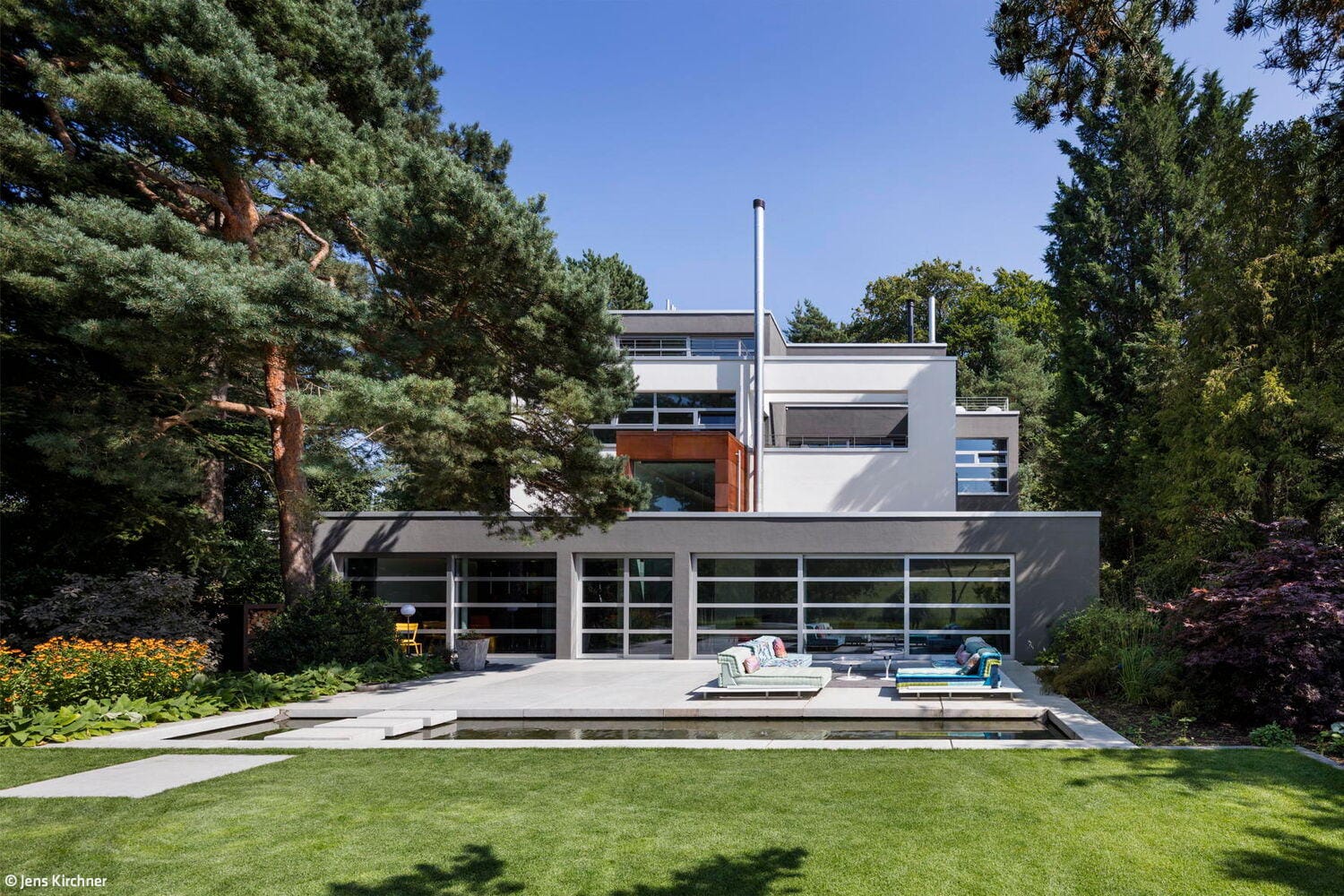
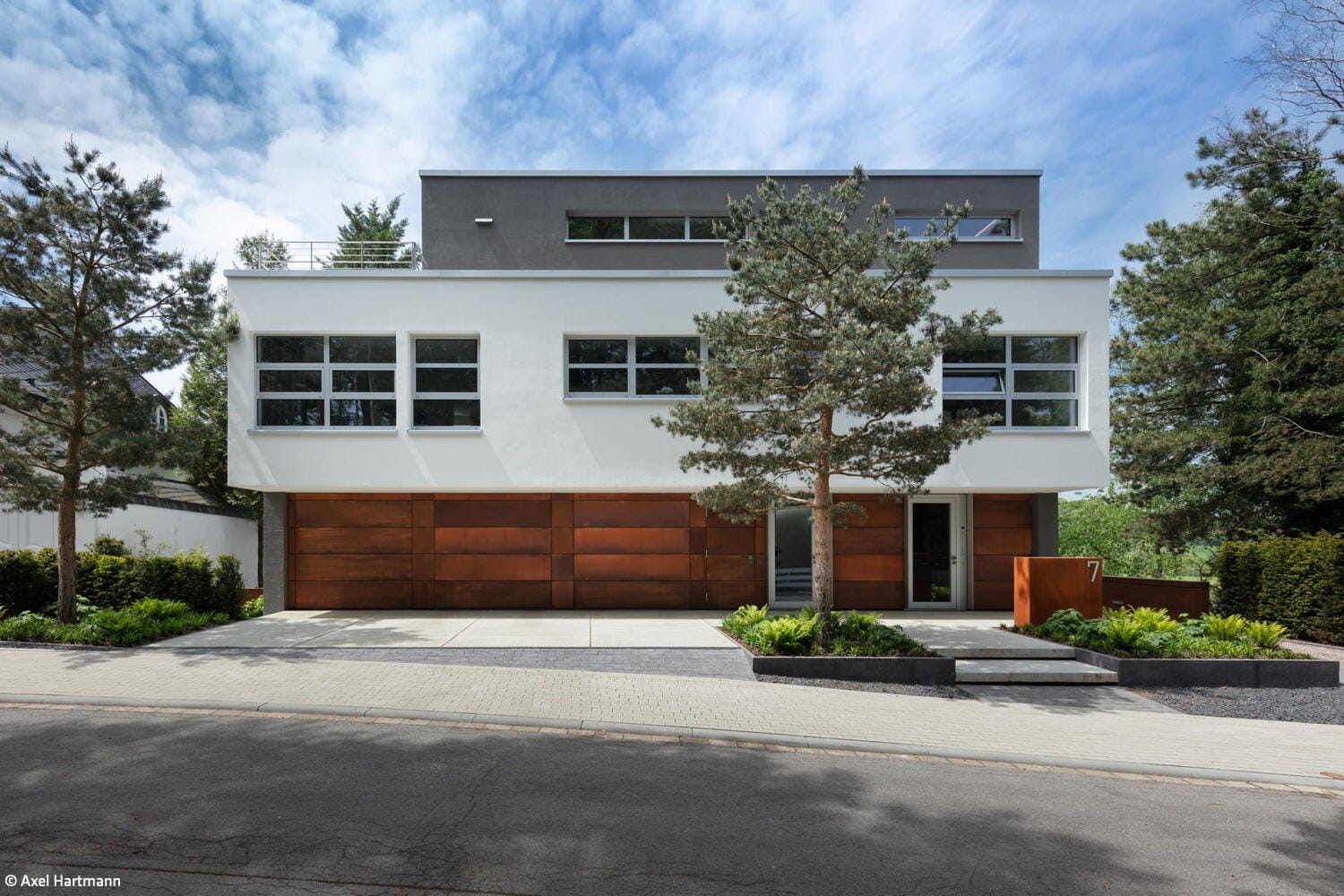
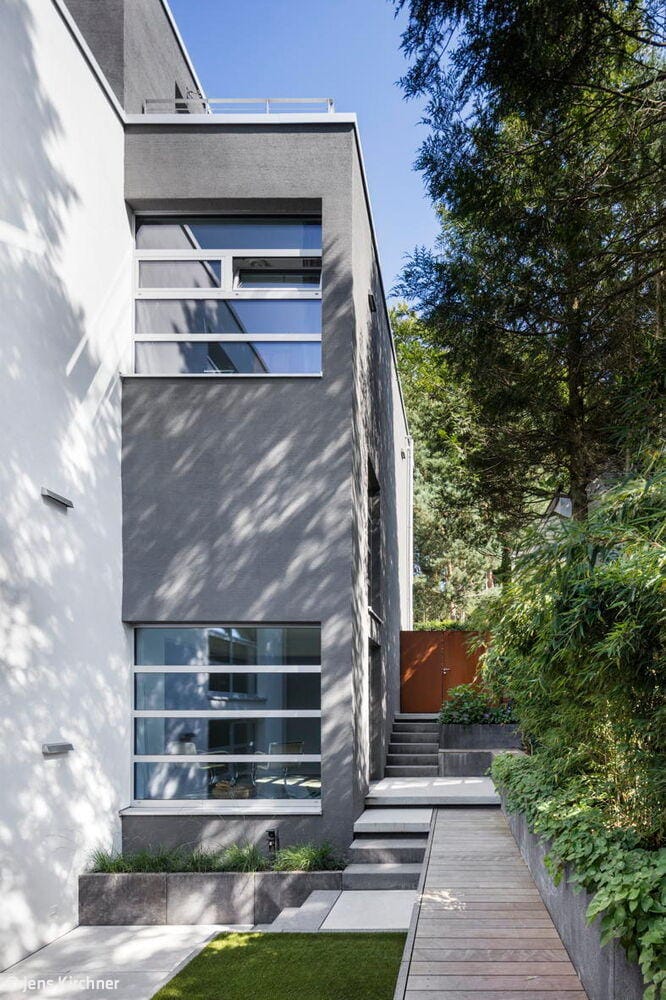
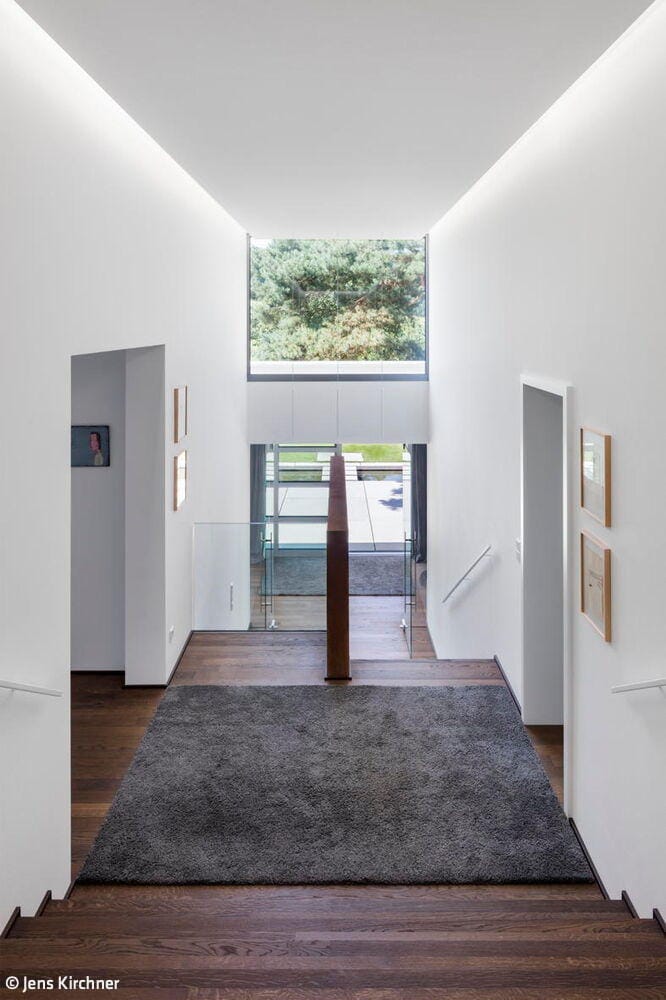
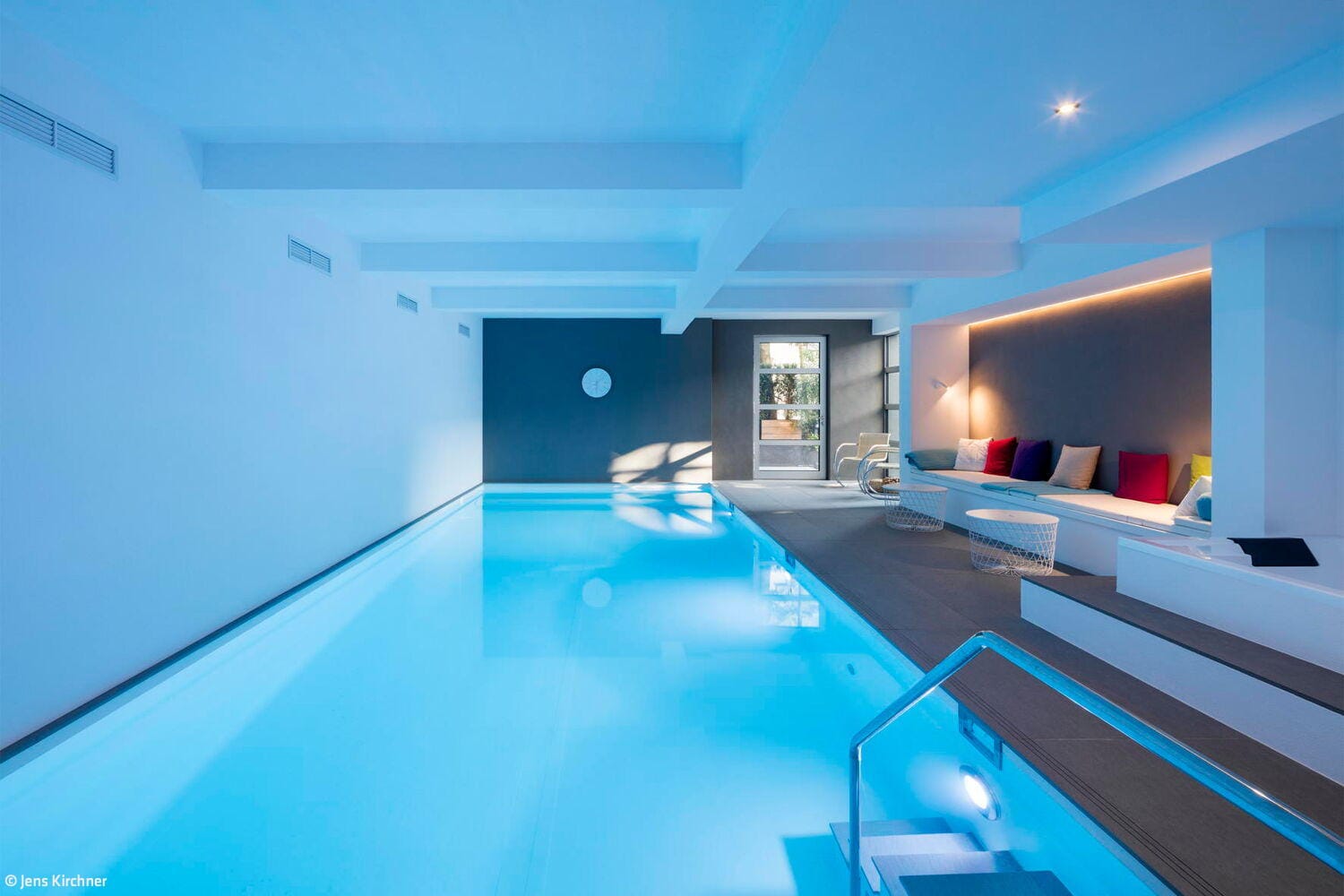
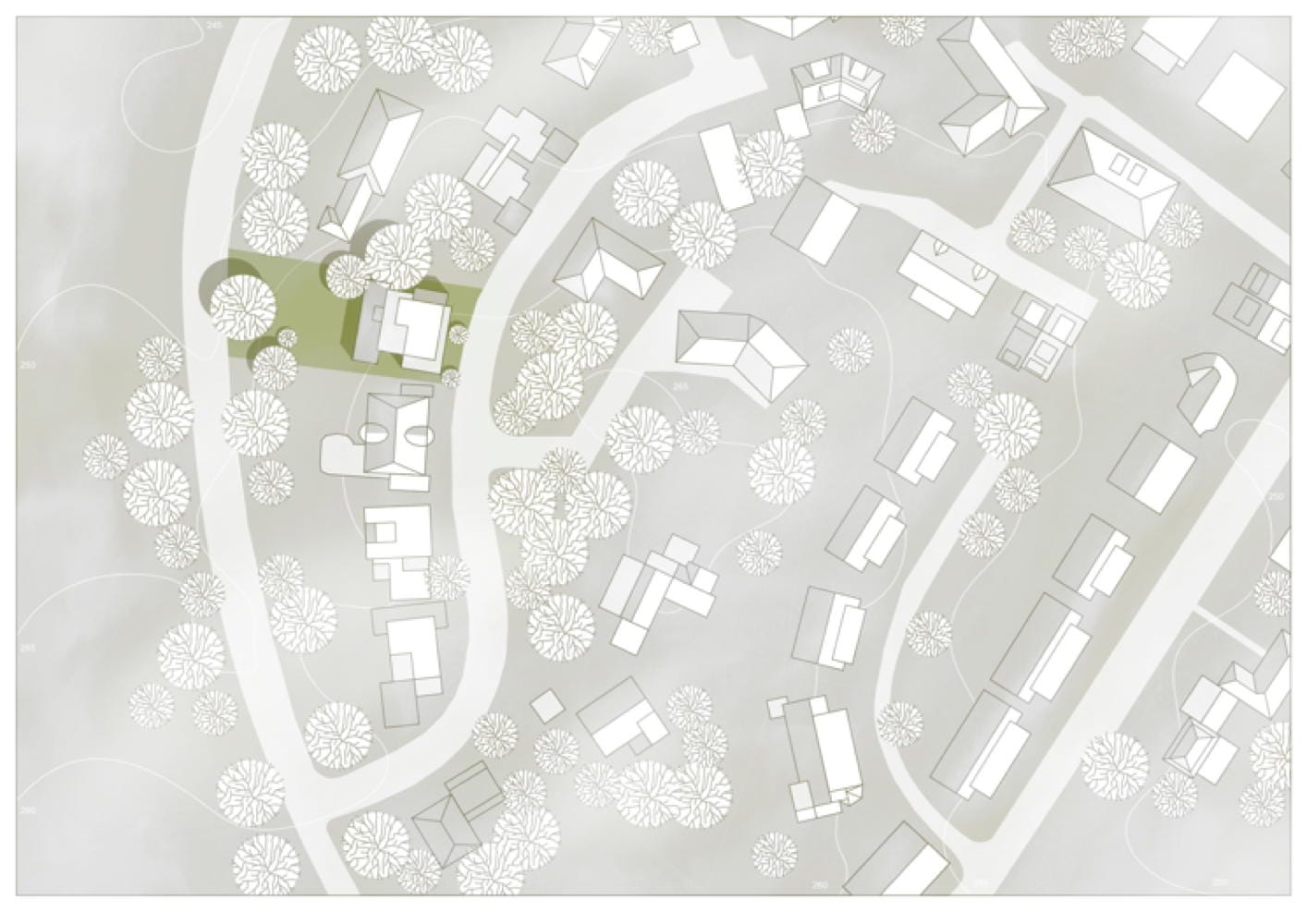
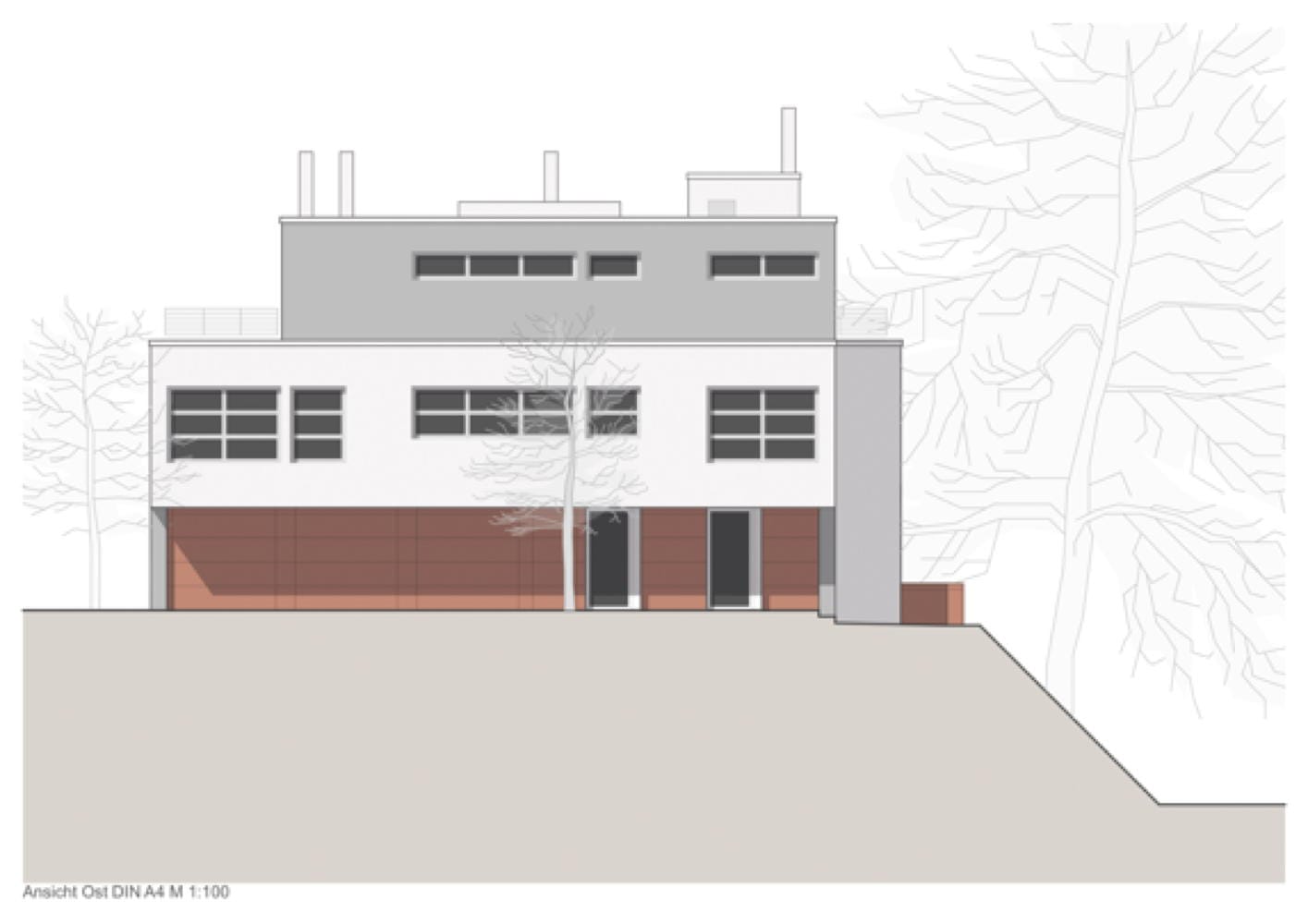
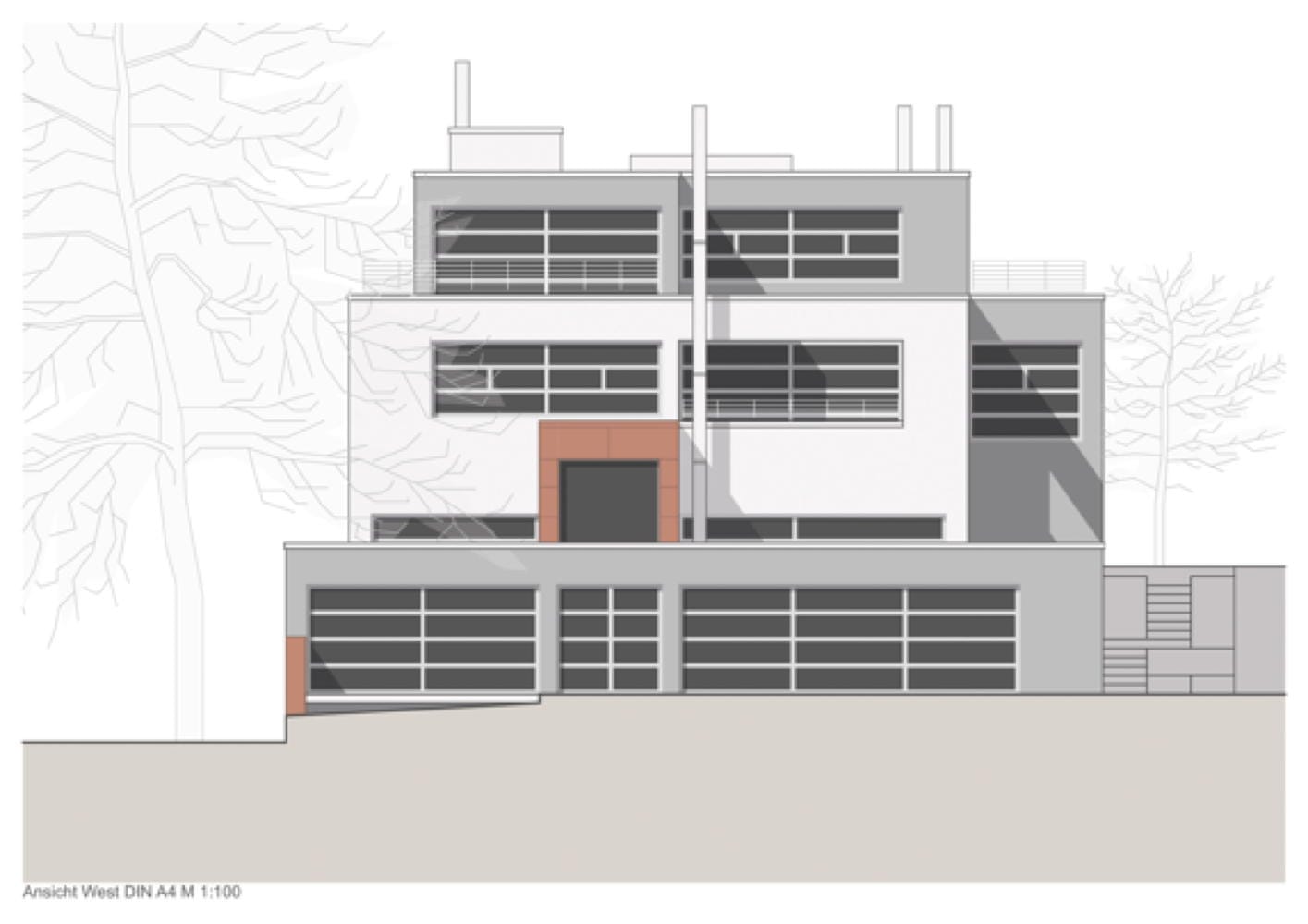
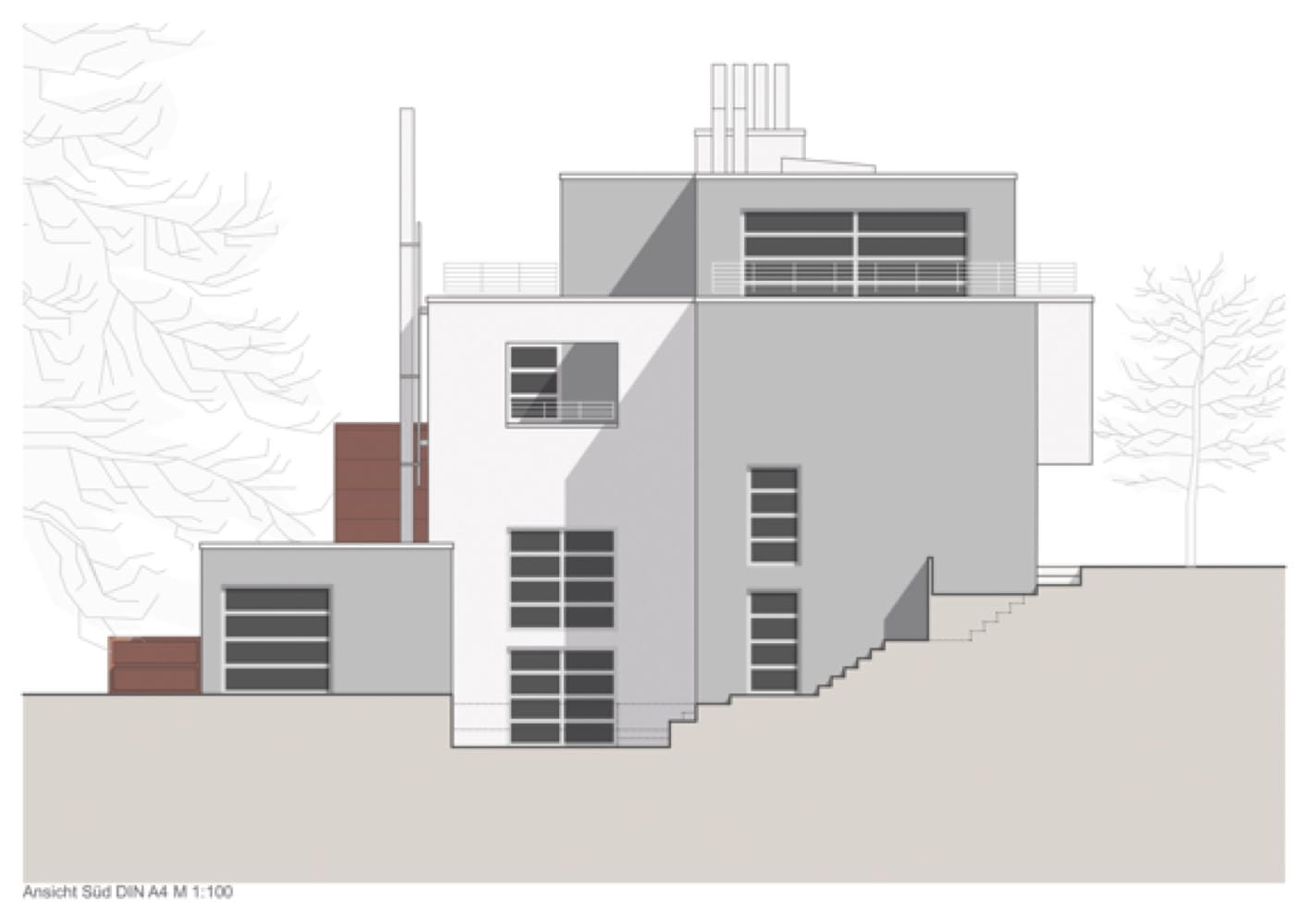

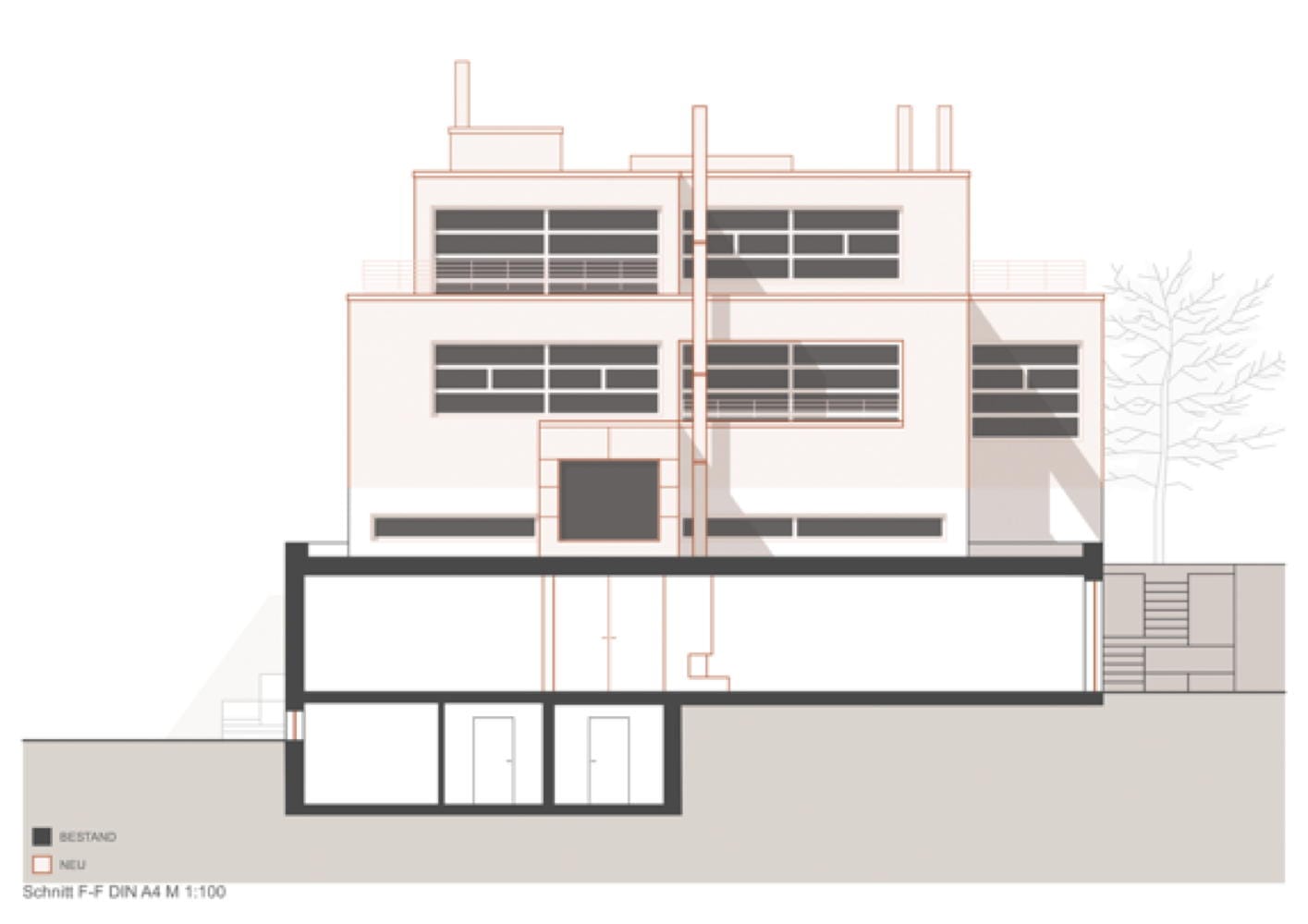
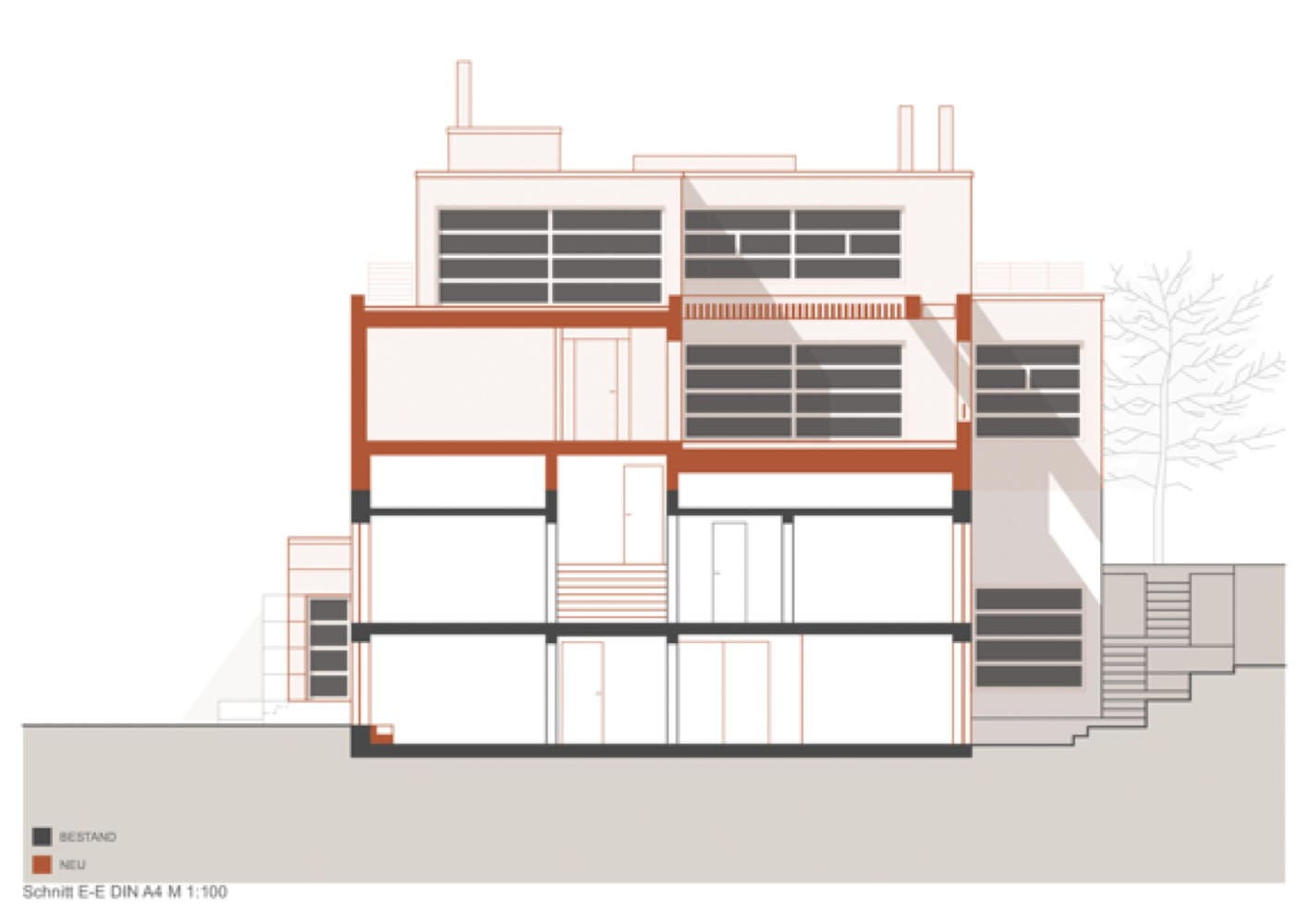
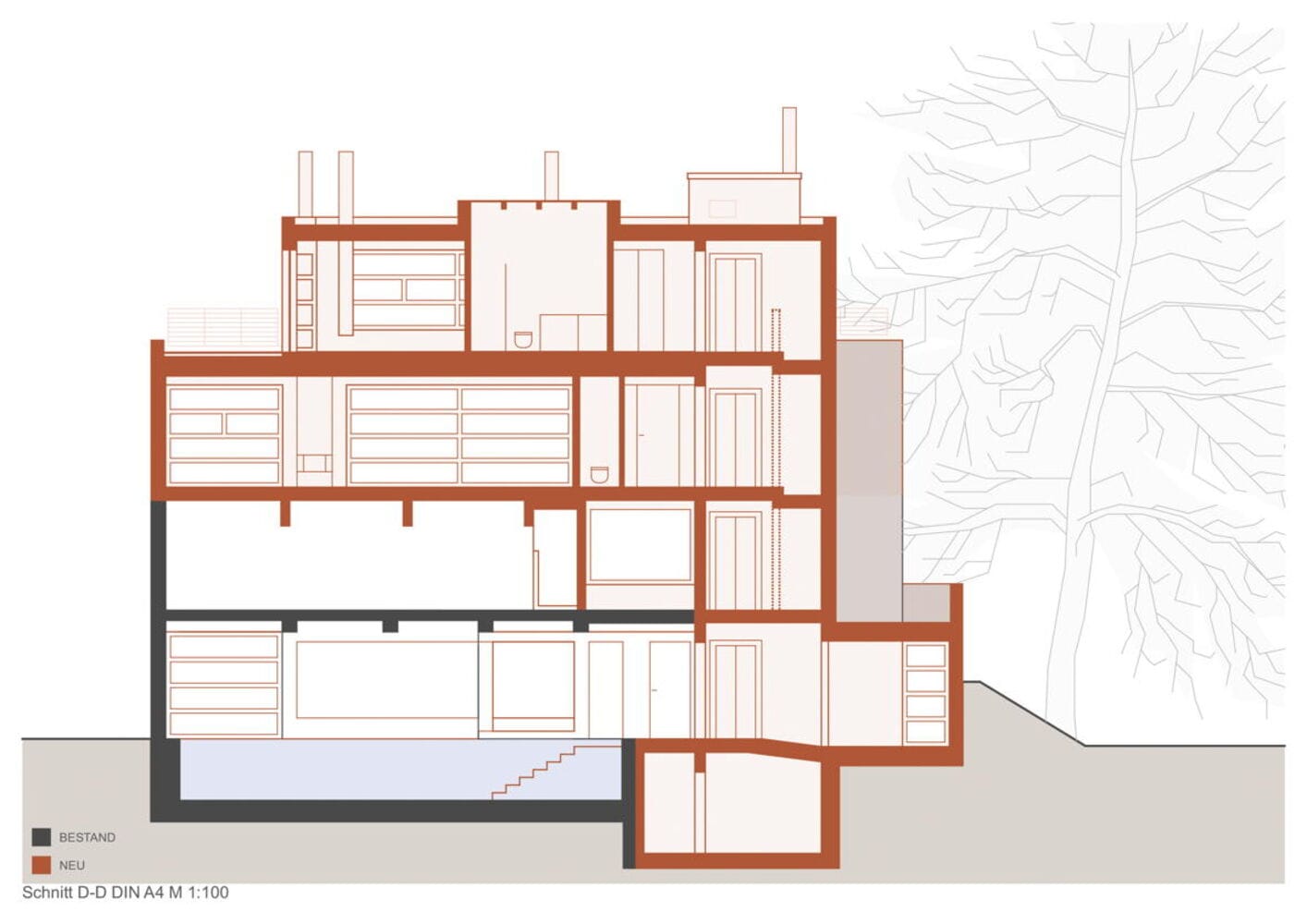
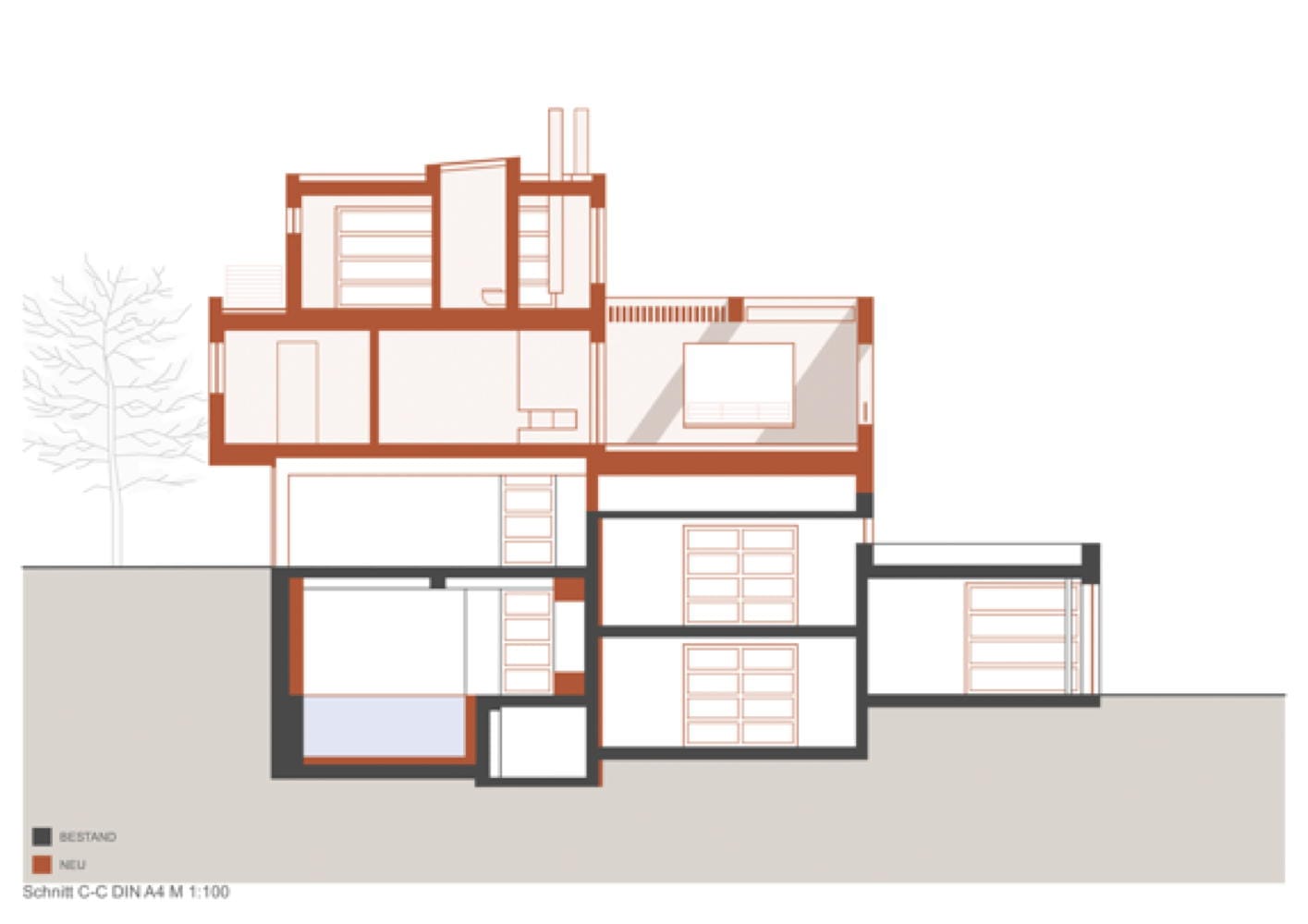
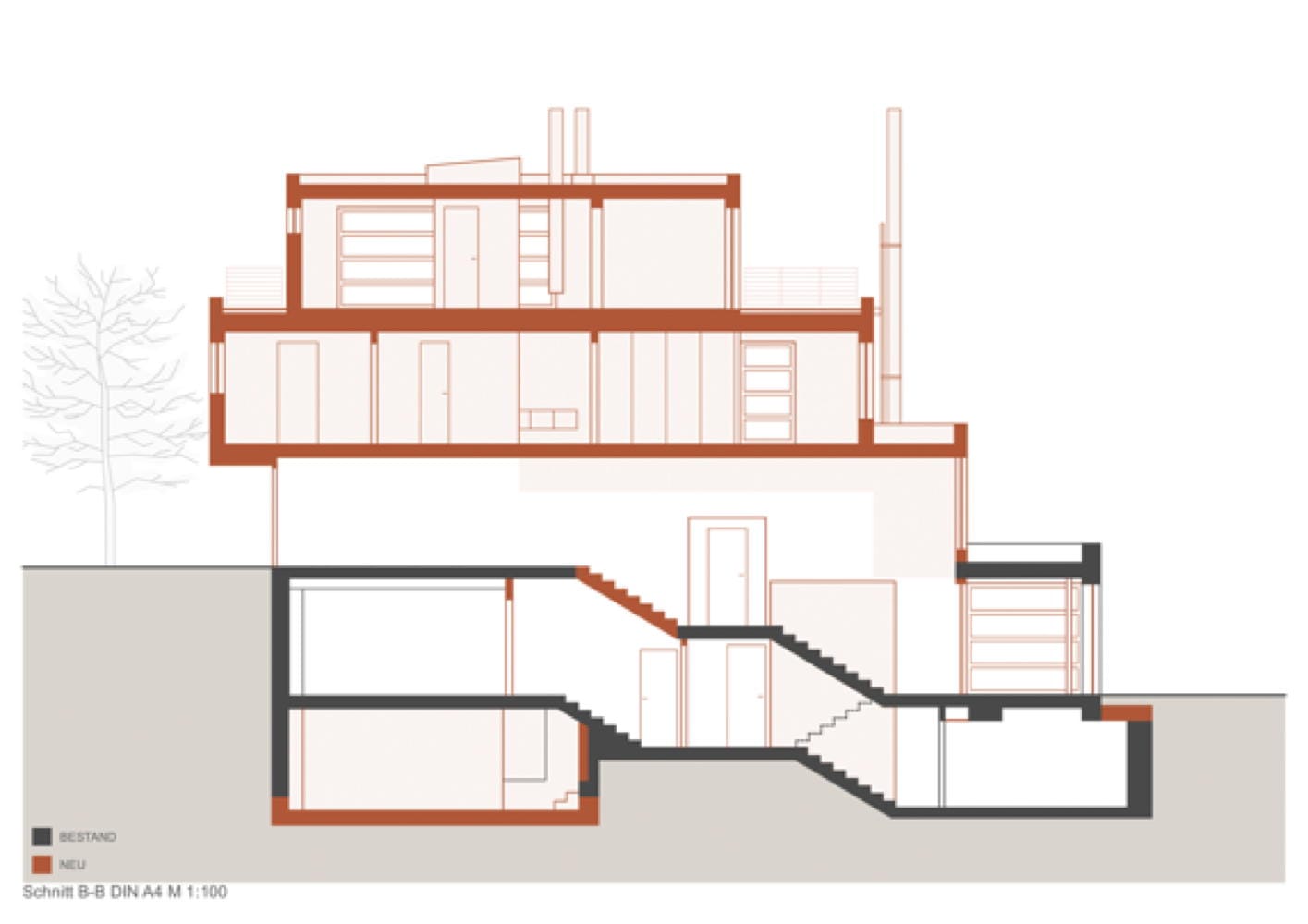
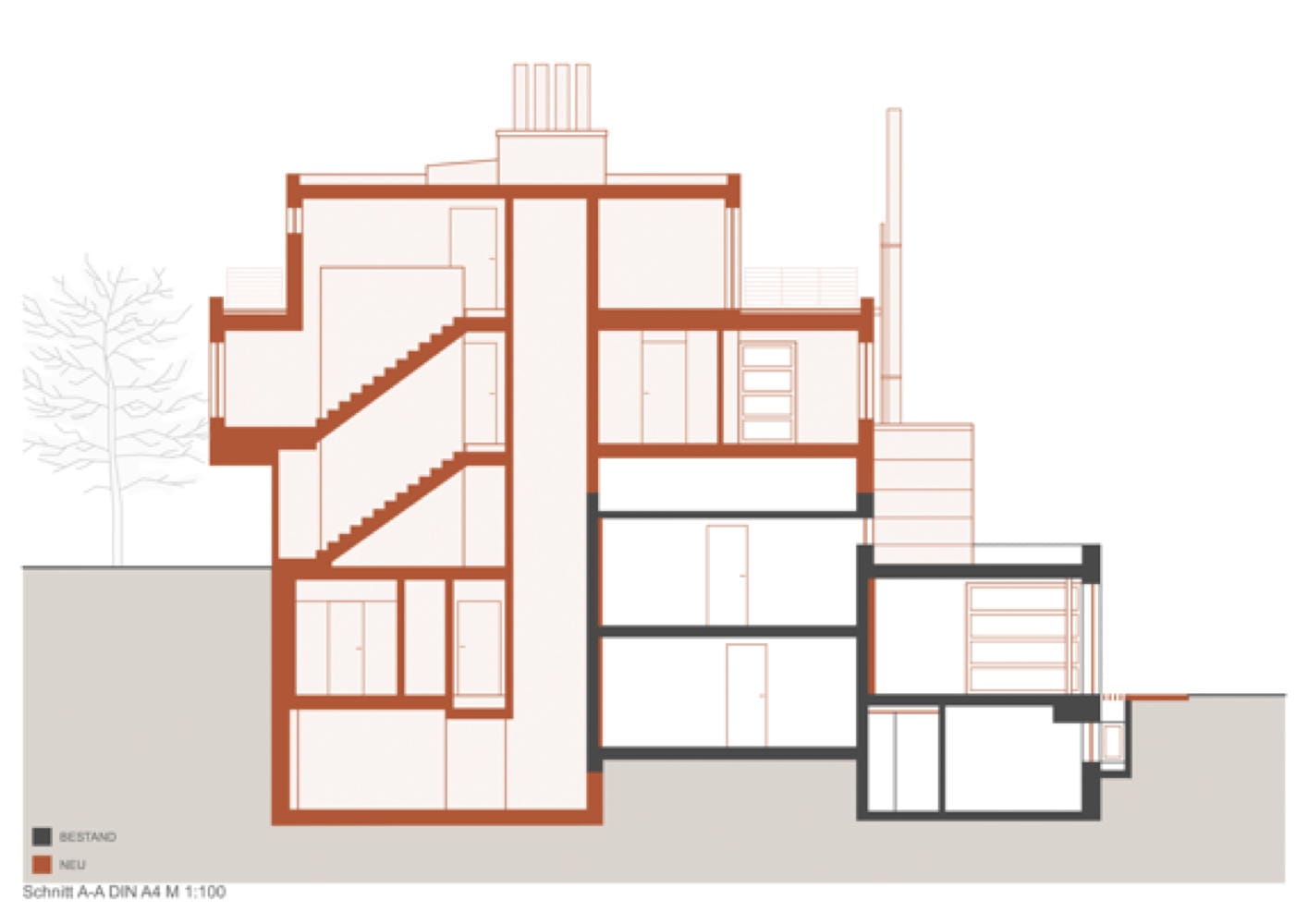
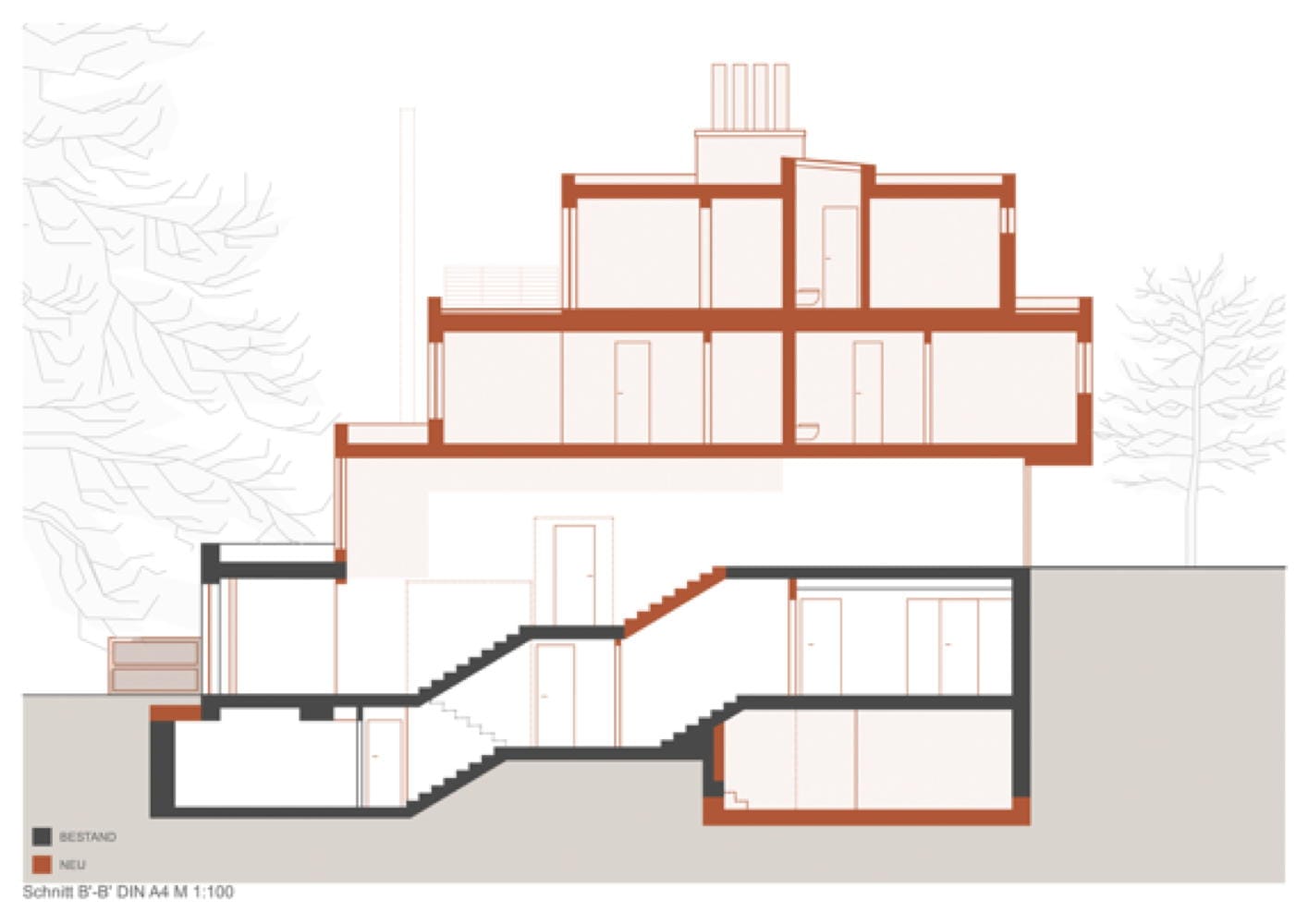

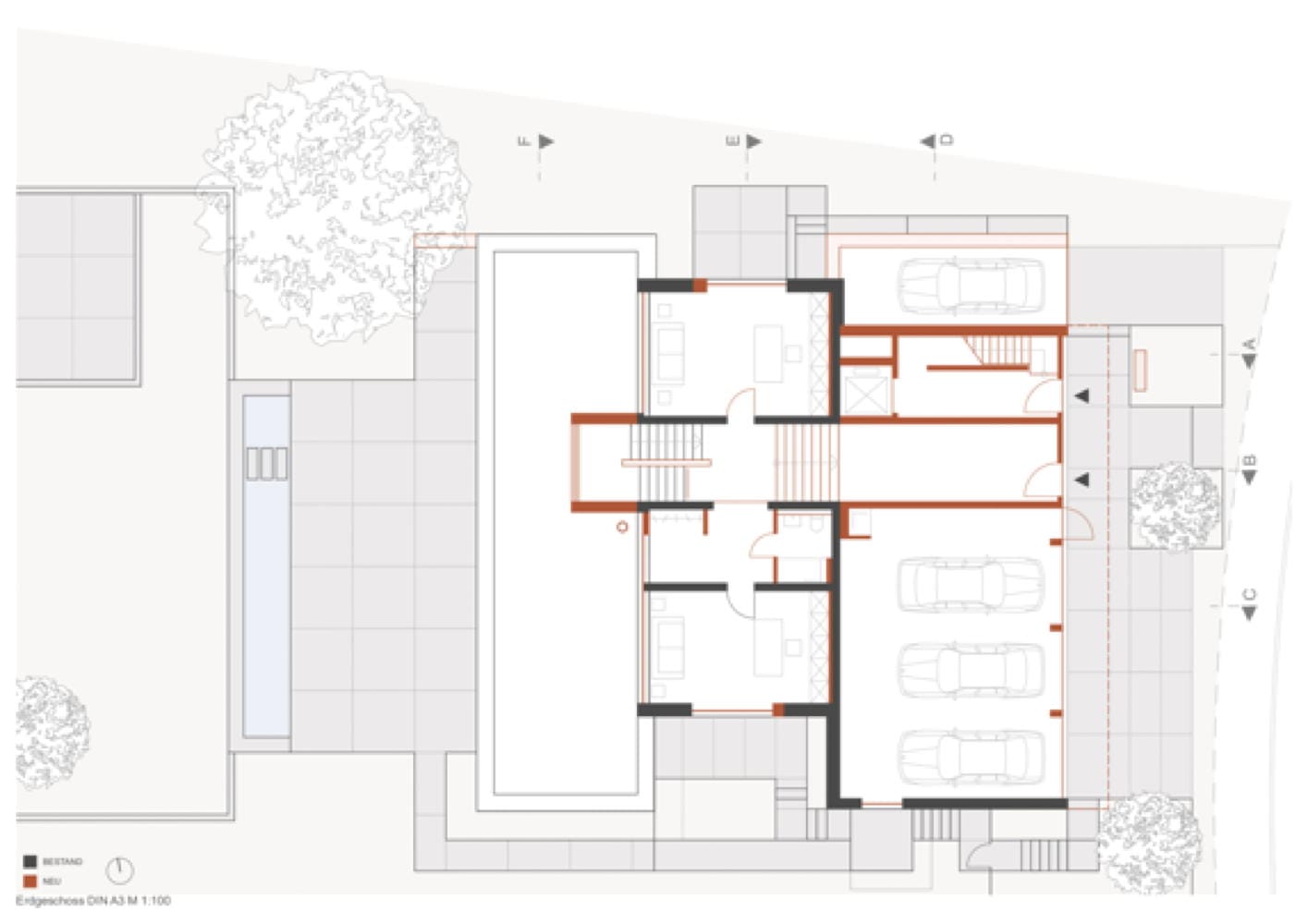
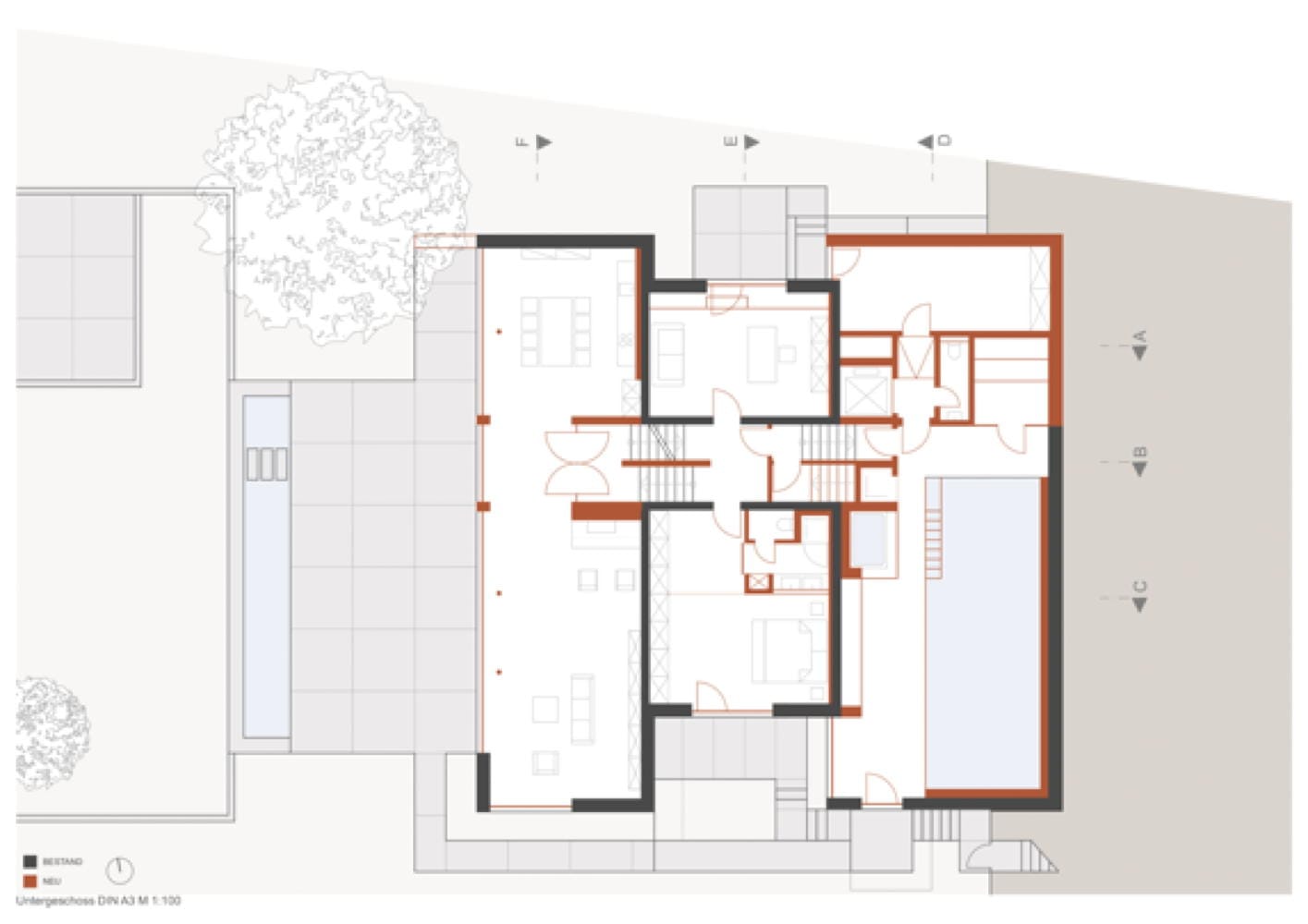

In 1970, renowned RWTH professor Renate von Brause designed a split-level terraced house on a wooded hillside. Three staggered volumes—street-facing wing, central section, and garden wing—articulated the residence into distinct functional levels: a single-family home with an interior pool in the basement and a guest apartment at entry level. A central staircase, running perpendicular to this stepped composition, unified all levels while choreographing the interplay between public and private space. Skylights punctuating this axis flooded the interior with natural light and created striking sightlines to the mature trees beyond.
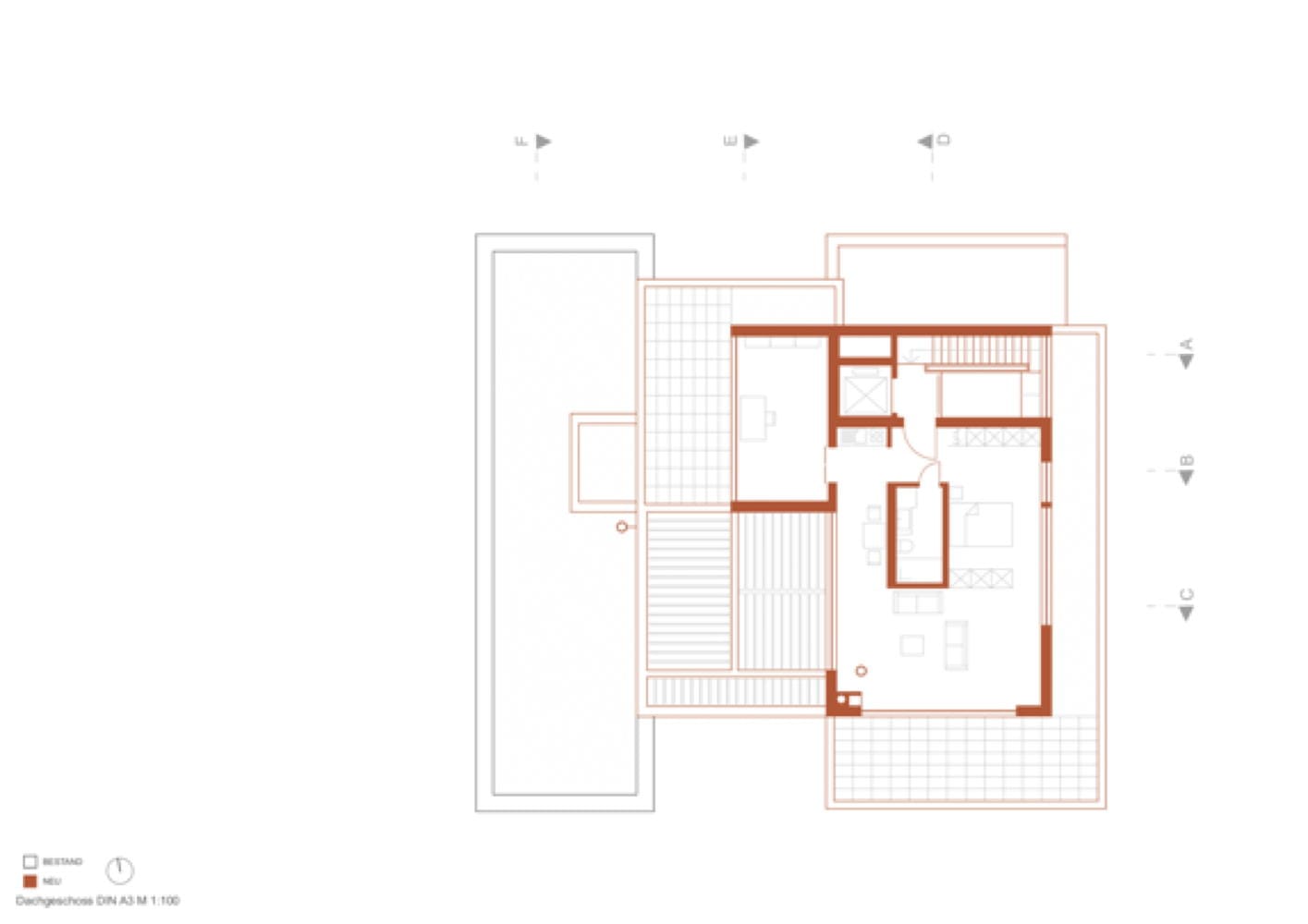
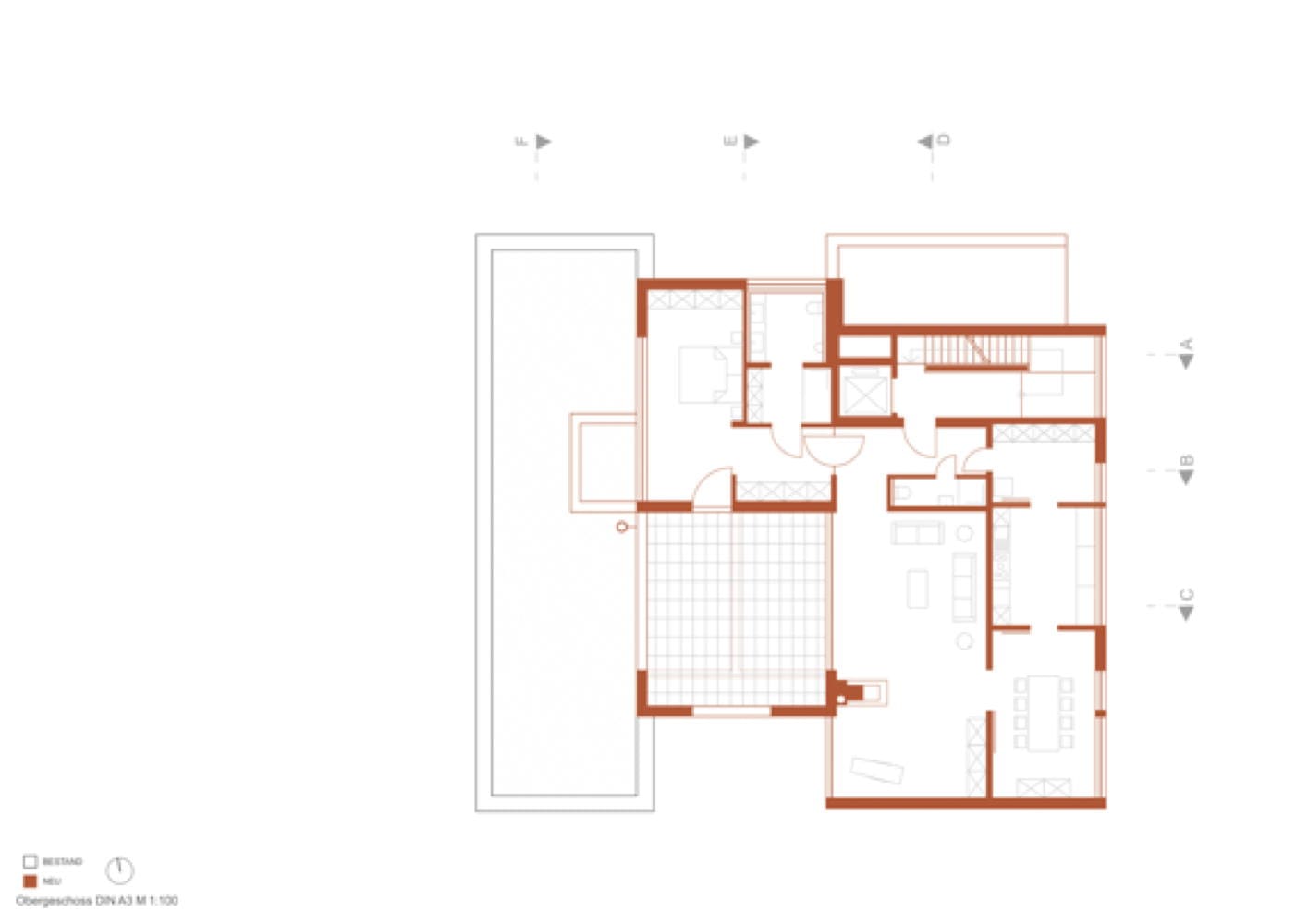
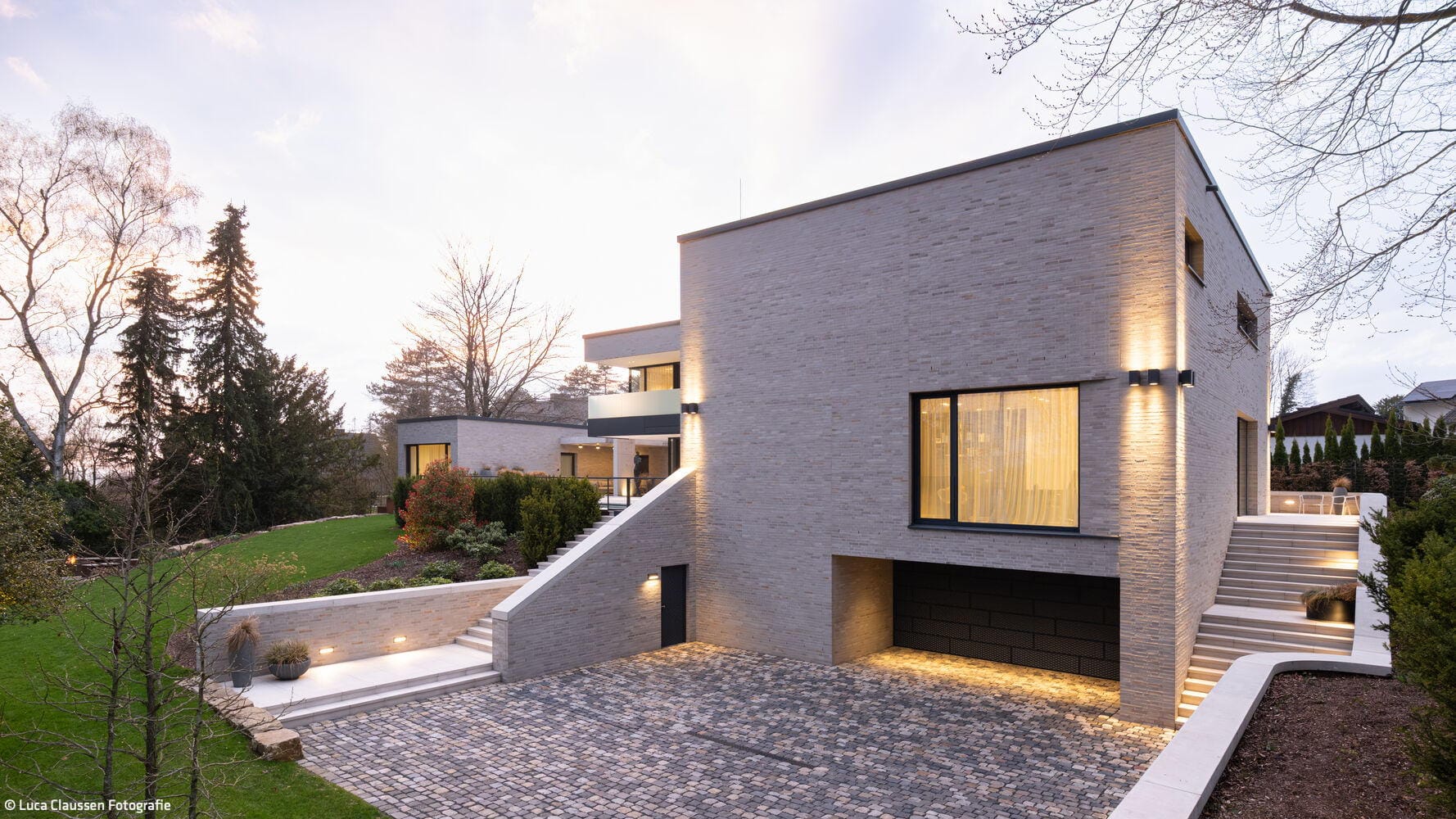
An ill-conceived 1982 expansion of the street-facing wing—complete with a hipped roof and dormers to accommodate another apartment—undermined these qualities. The building's once-crisp horizontal clarity was compromised, the generous entrance grew dim, and the spatial drama of the staircase dissolved. The architects Hoppe's recent renovation finally restored the original vision. "We removed the hipped roof, re-emphasized the building's layered composition, and reinterpreted the design principles of openness and light for contemporary living," explains Thomas Hoppe. The renovation preserves the house's three-part structure while introducing two new residential units in the upper floors and attic for the owners' parents and children. A new, full-height skylight punctuates the end of the circulation spine, flooding the building's core with light once more.
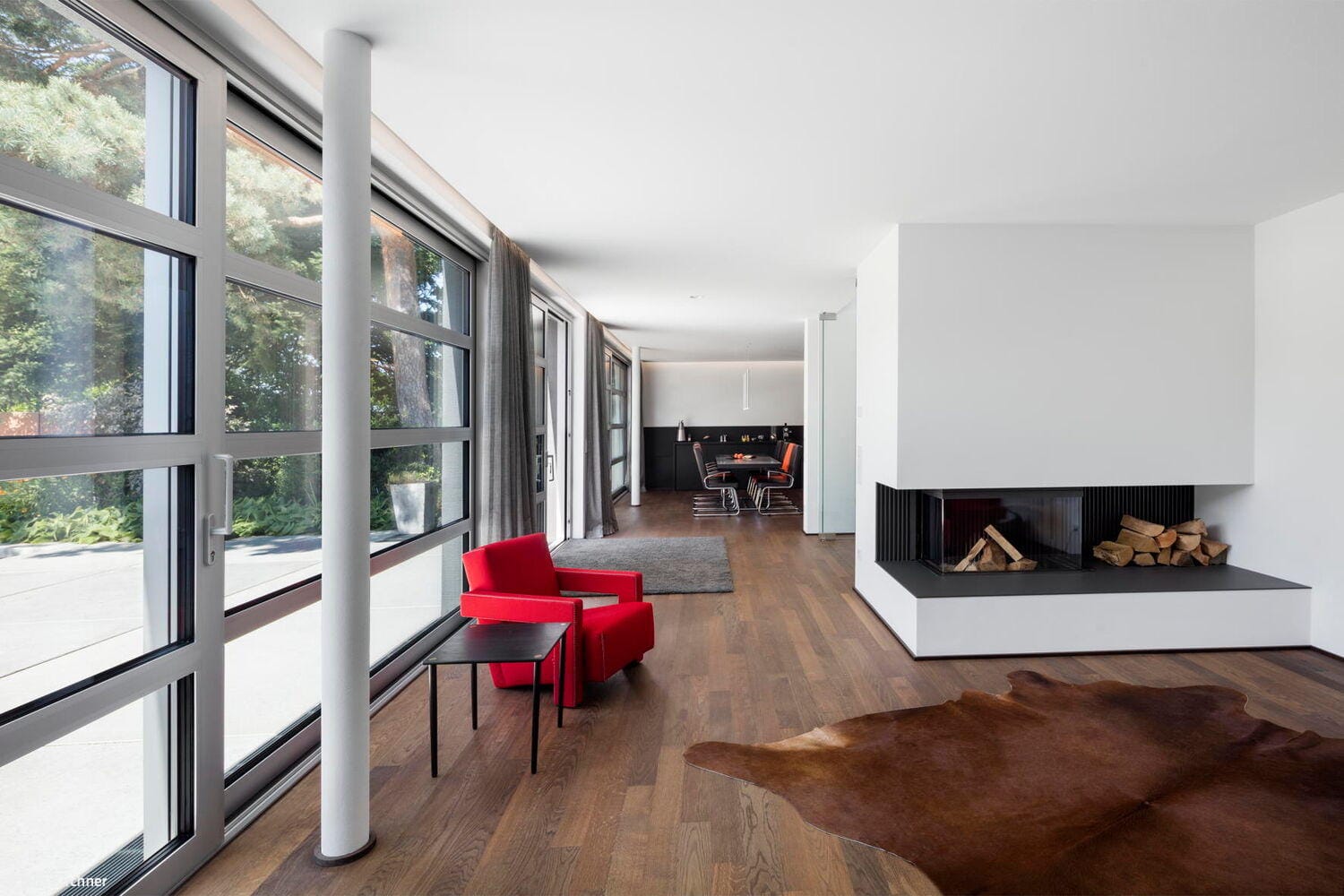
The existing pool has been reimagined as an accessible wellness zone—a gathering place for all three generations. The garden facade of the central wing was stepped back by half a story, creating floor-to-ceiling glazing and expansive terraces. Each residential unit features its own fireplace: traditional fireplaces on the lower and middle levels, and a sculptural suspended "Slim Focus" in the attic. The material and color palette reinforce the home's refined, modular cubic vocabulary both inside and out.
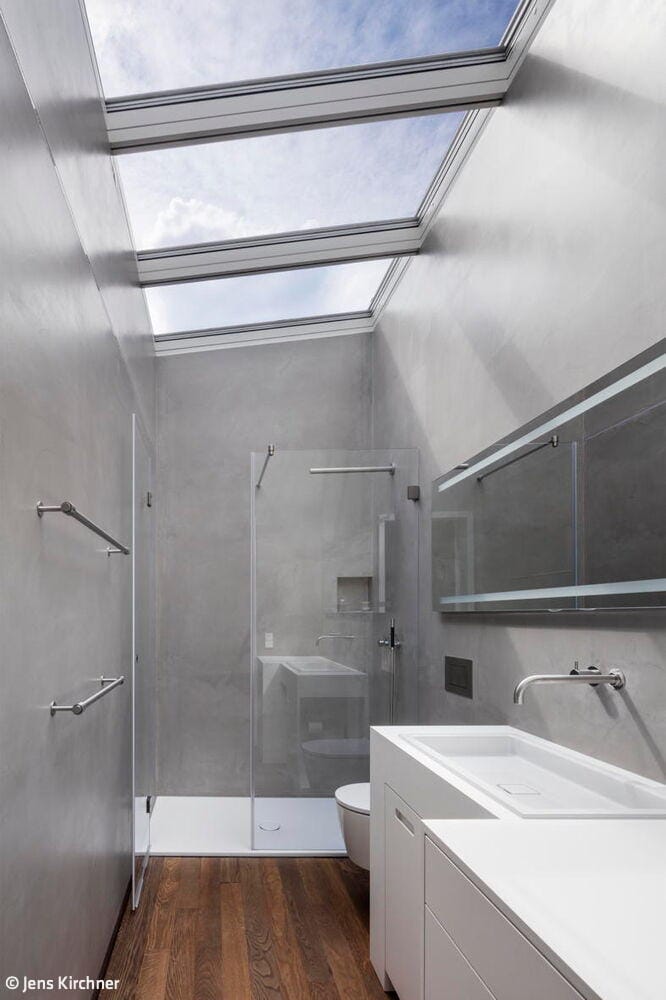
The building envelope combines white smooth plaster, anthracite broom-finished plaster, and Corten steel-clad façade panels, while the interior showcases white walls, grey concrete-troweled surfaces in wet areas, freestanding rust-red wall elements, and smoked oak flooring. The expansion increased the gross floor area from 715 m² to 1,027 m² – yet the true achievement is qualitative: the terraced house has reclaimed its original clarity and spatial dynamism.
Photography:
Jens Kirchner
www.jens-kirchner.com
Axel Hartmann
www.ah-fotografie.de
(Published in CUBE Cologne 04|25)
Open and Interactive
An Ehrenfeld extension creates an urban retreat with abundant shared spaces
No More Shaking or Shivering
A Dental Practice in Frechen Designed for Calm
Relaxed Residential Street
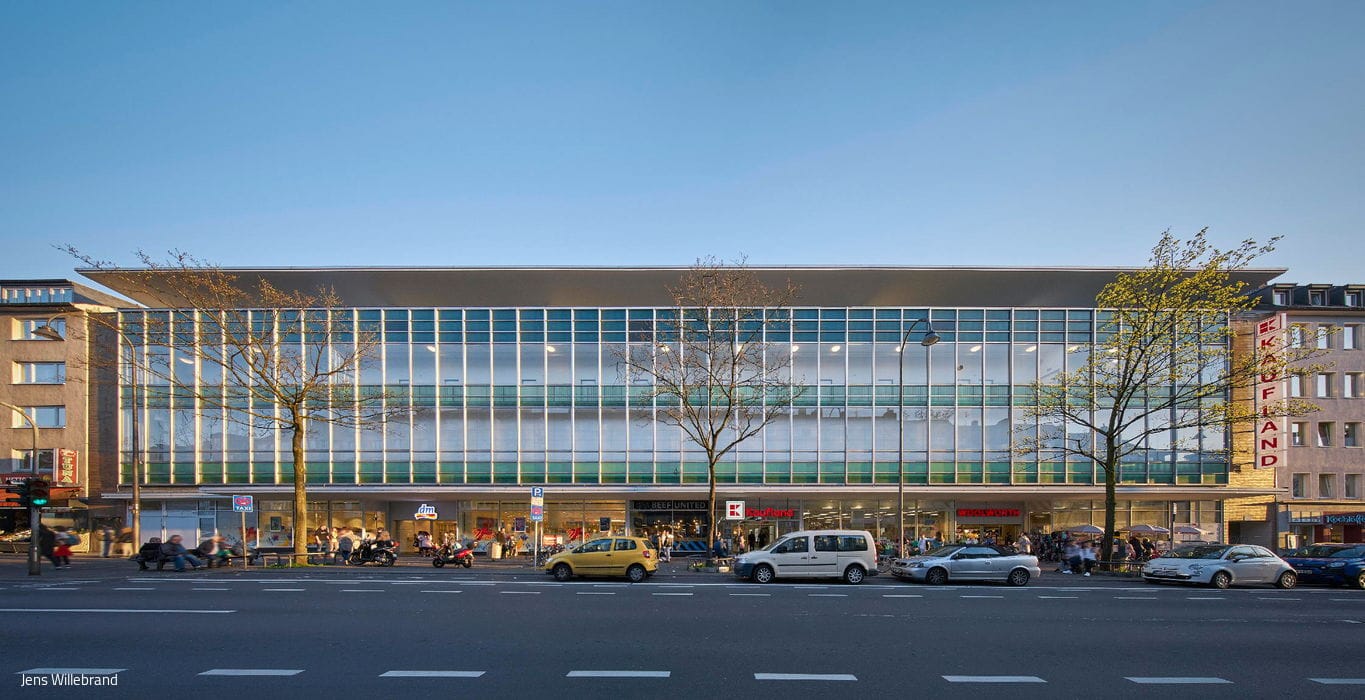
A Department Store Reimagined: Kalk's New Mixed-Use Quarter Blends Commerce and Community
Spaces for Agile Work
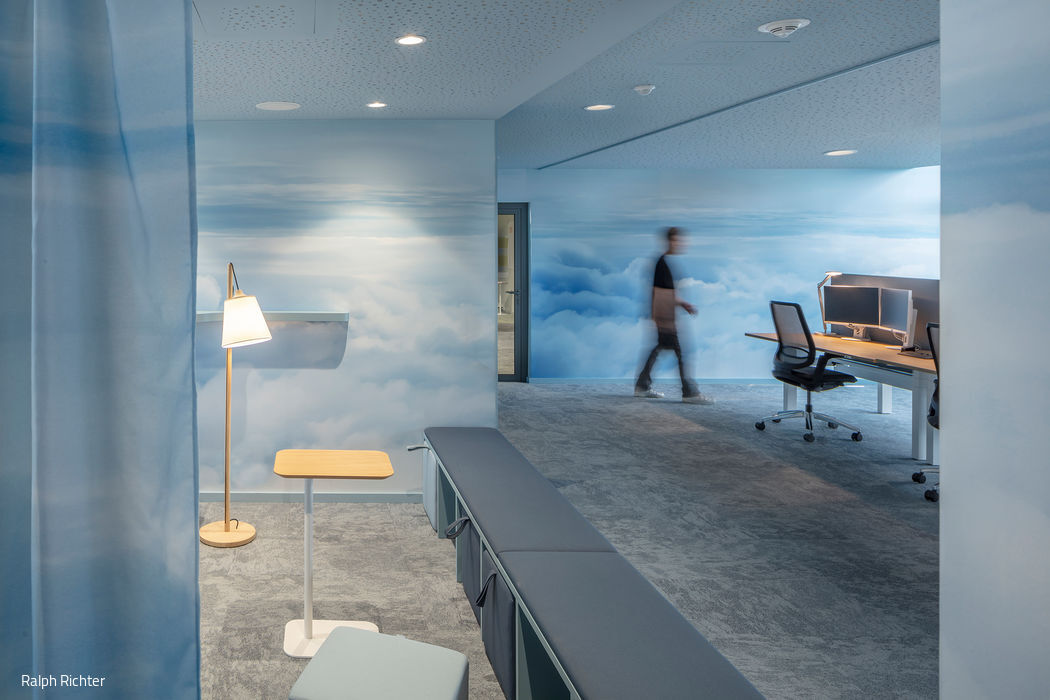
Gothaer Insurance's Workplace: Where Creativity, Communication, and Well-Being Thrive