


Circular and Sustainable
Work, Celebrate, and Vacation in a Timber Construction Quarter on the Baltic Coast
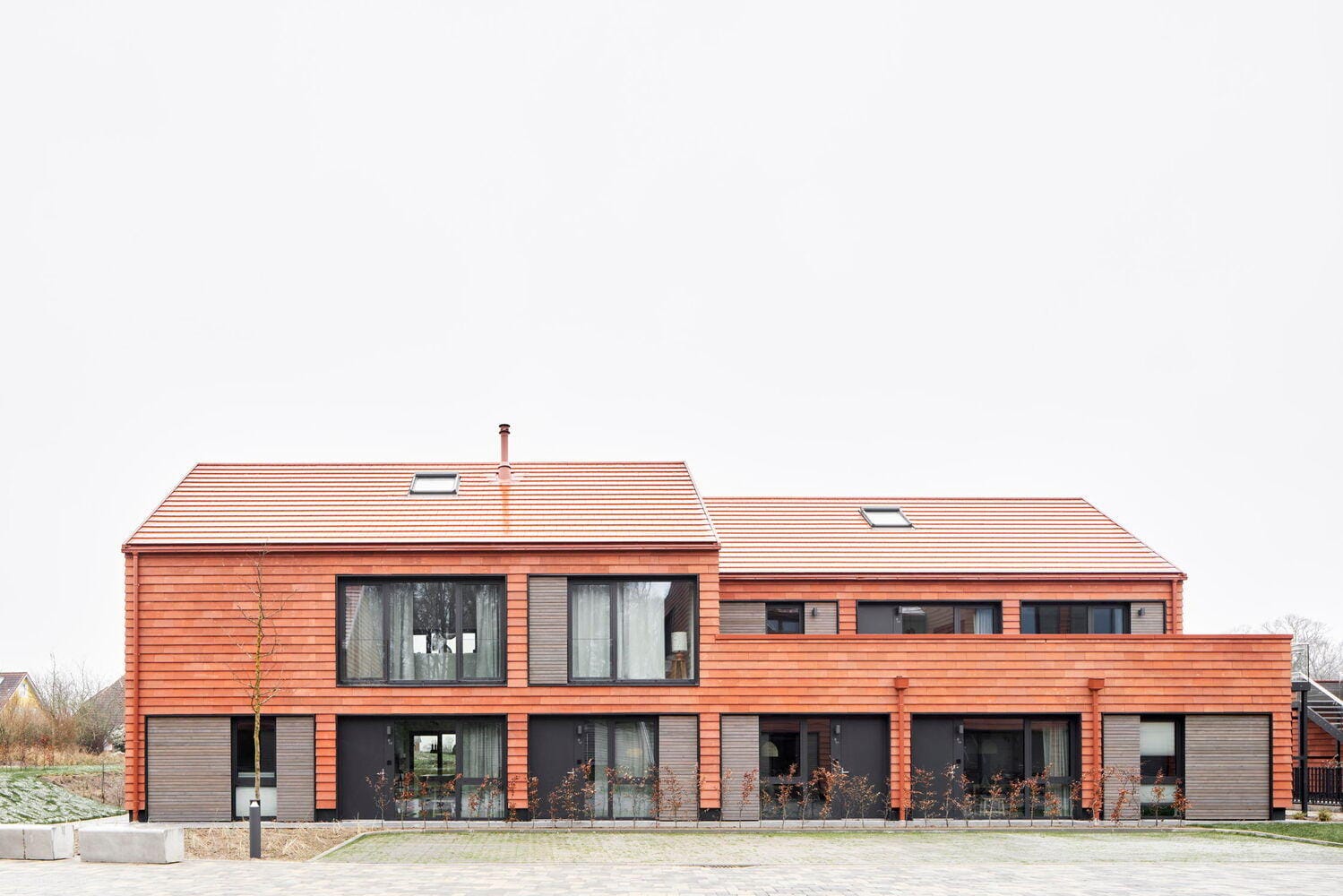


On the grounds of a former school in Hohwacht, near the Baltic seashore, the architecture firm A.ONE Studio has created the apartment complex "De ole School"—a development that integrates seamlessly with the existing landscape while exemplifying sustainable design principles. The five building volumes are oriented around a linear spine that fosters community and exchange. Thirty variably sized apartments are accessed directly from this central axis, allowing each unit to maintain its individual character. Through diverse residential typologies, the quarter offers rich variety: apartments ranging from two to ten persons, spanning 52 to 149 m², available as standard units, maisonettes, or lofts—all featuring outdoor spaces. The development serves equally well for work, team events, celebrations, or vacation getaways. Each unit features a central service zone containing bathroom, toilet, kitchen, or stairs. The flowing living area, naturally lit from two sides, serves as the generous heart of every unit, accommodating cooking, dining, socializing, and relaxation. Interior planning was developed by Studio Deli.
The clear geometry of the building volumes is accentuated by a continuous cladding of tactile ceramic facade panels. Large-format windows characterize the external appearance and dissolve the boundary between interior and exterior. The structures were erected using a combination of solid timber and prefabricated timber frame construction. This approach enabled the buildings, including roof covering on a reinforced concrete foundation, to be completed in a maximum of three weeks. The energy system is based on an innovative concept integrating sustainable technologies and forward-looking solutions, with the goal of achieving carbon-neutral energy supply. Heating and hot water are provided centrally via an air-source heat pump and distributed across the site through a district heating network to individual units. Within the apartments, warmth is delivered through radiant floor heating and can be individually controlled via smart home automation. Complementing this is roof-integrated photovoltaics, which supplies the highest possible proportion of carbon-neutral renewable energy to power the heat pump system. The "De ole School" complex was recognized as a best practice by the Center of Competence for Green Transformation in Tourism at the Federal Ministry for Economic Affairs and Energy: the project exemplifies circular construction principles for vacation apartments while achieving minimal emission standards.
www.aone.studio
www.deoleschool.de
Photography:
Annika Feuss
www.annikafeuss.com
Britta Soennichsen
www.brita-soennichsen.de
(Published in CUBE Hamburg 01|26)
Making a Difference in Barmbek
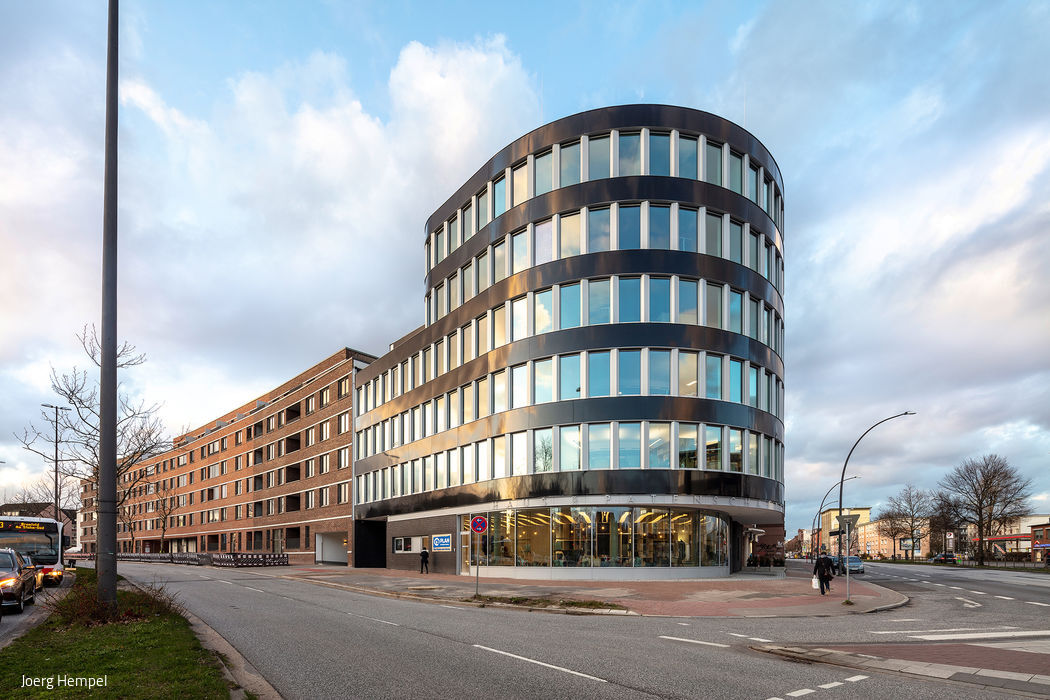
Plan International's House of Sponsorships

A Special Place
Material, colour and light reveal the essence of space

Self-Evident Design
From their earliest years, children in this kindergarten experience the quality and beauty of timber construction.
A Place to Feel at Home
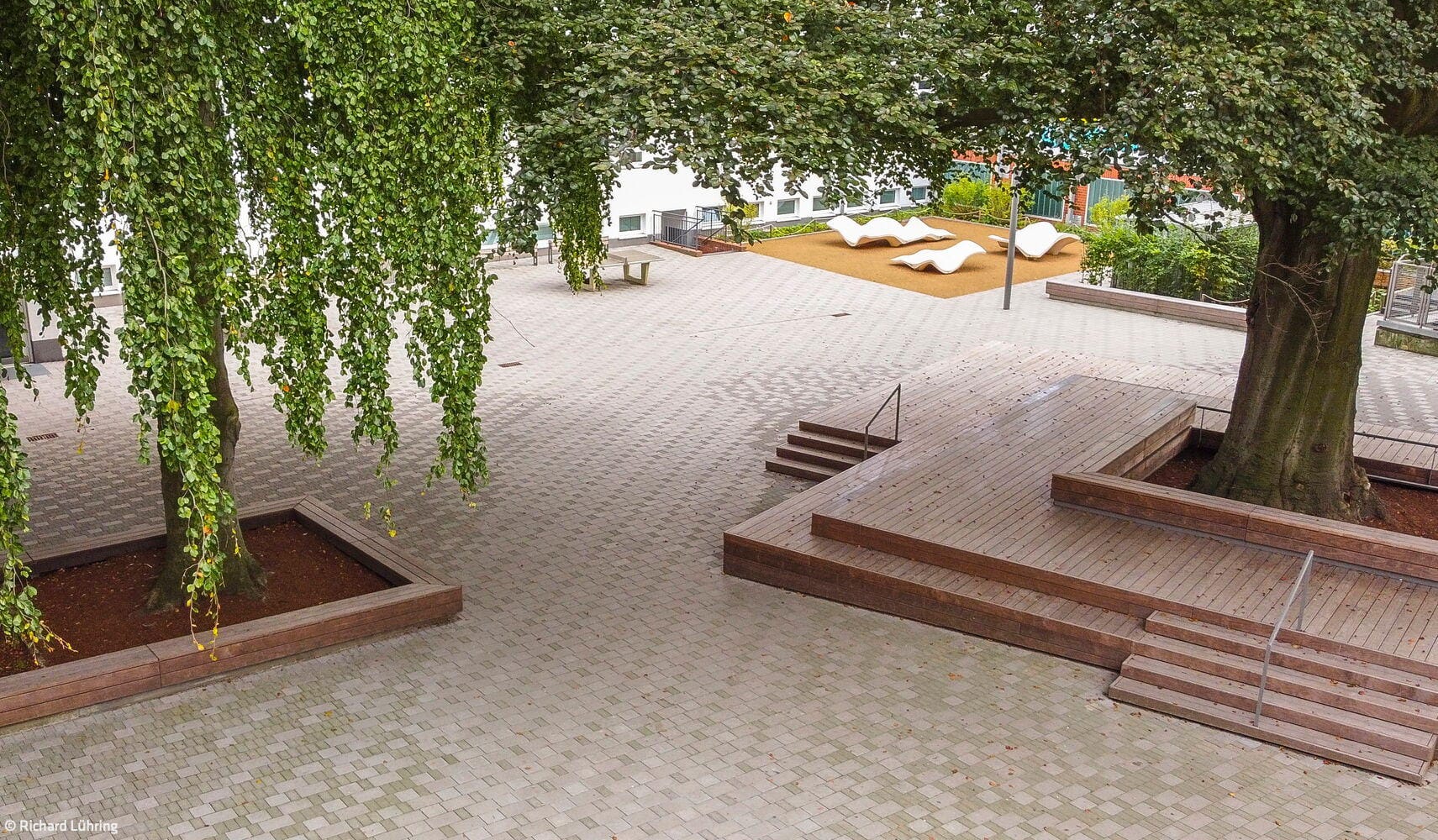
The redesign of a schoolyard preserves a historic beech tree while creating a versatile open space