


A Modern Interpretation
This townhouse in Lübeck's founding district pays eloquent respect to its historical roots
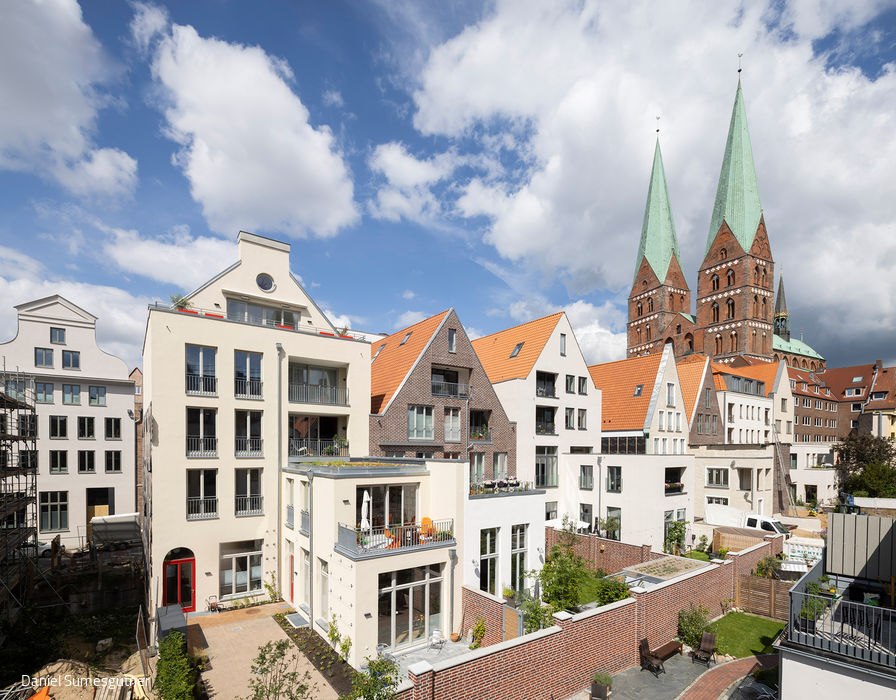
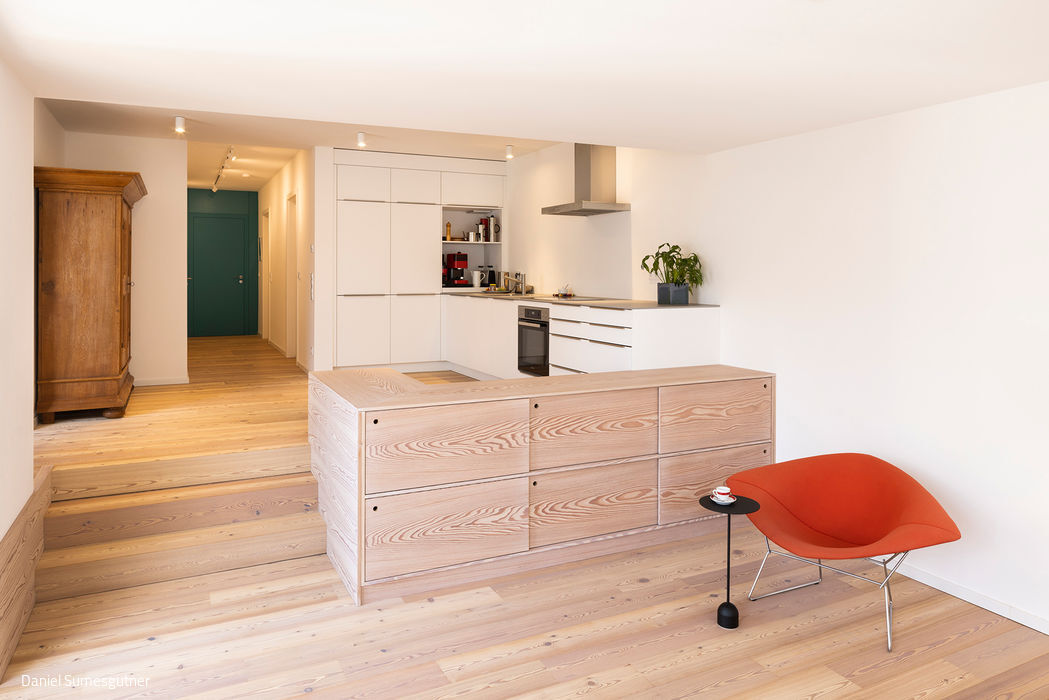
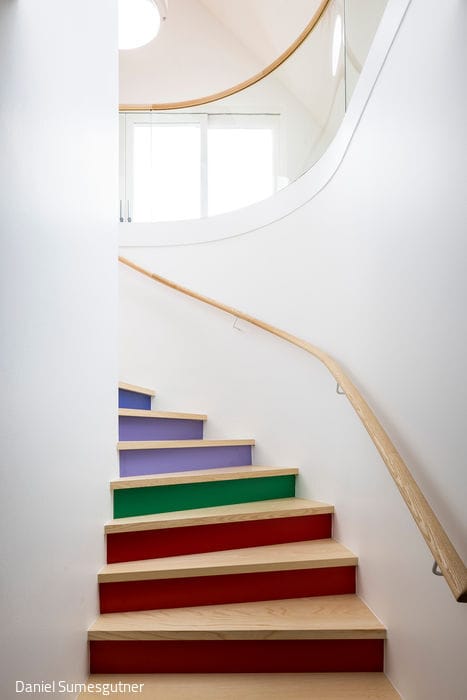
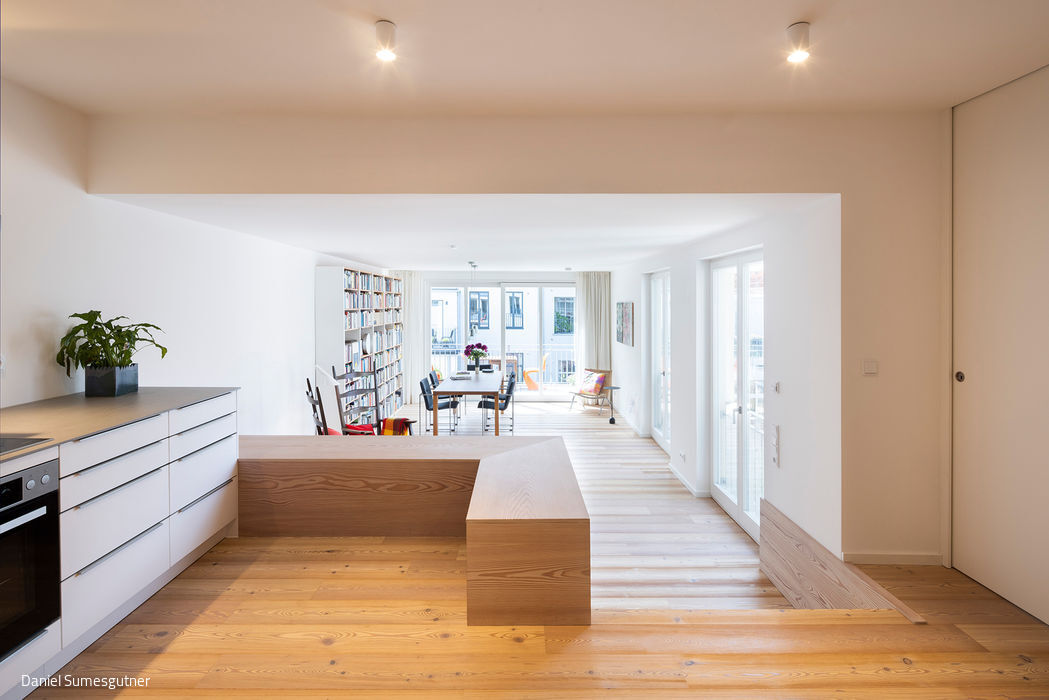
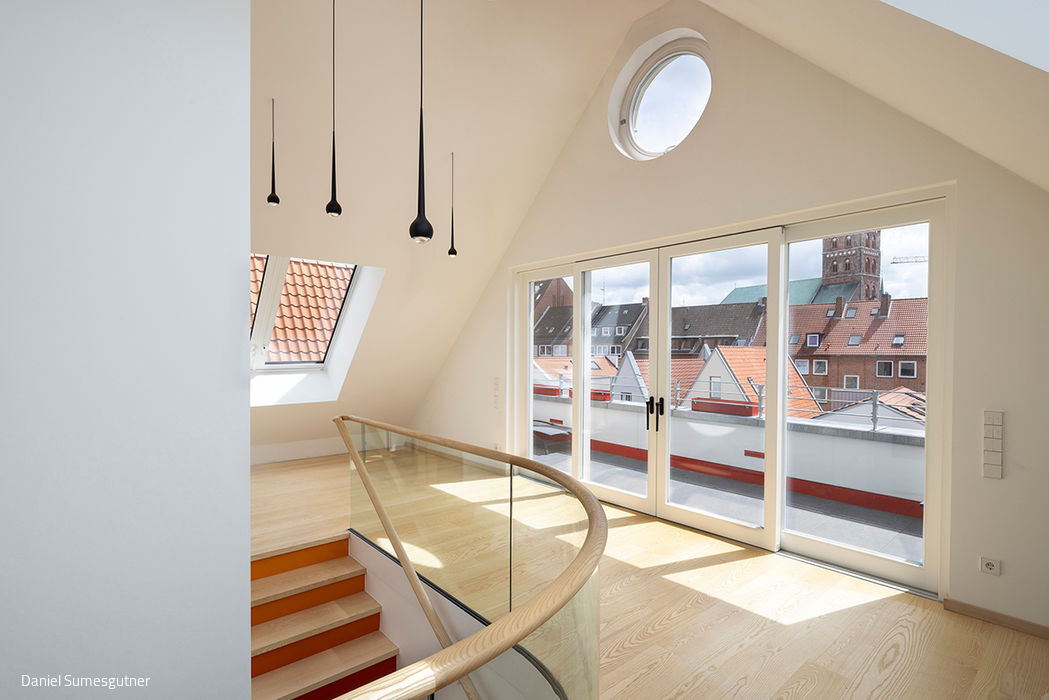
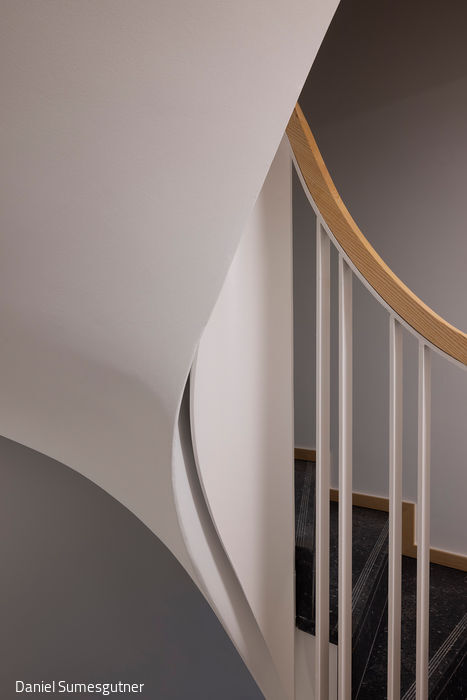
The Gründungsviertel was once the beating heart of Lübeck—a flourishing merchant quarter nestled in the western section of the UNESCO World Heritage Site between St. Mary's Church and the Trave River. Devastated by wartime bombing, the district was rebuilt in the 1950s with a design that departed from its historical layout, introducing two large freestanding structures and a public car park. Following their removal and comprehensive archaeological investigations, the 10,000 m² site—comprising 38 individual plots—has undergone systematic redevelopment since 2017. The new quarter takes its cues from the past: reclaimed parcel divisions, urban density, street patterns, restored building lines, gabled houses, and mixed-use programming all echo the district's former character. The city sold the plots to individual developers and building cooperatives, with half offered at fixed prices to ensure accessibility for families with children and alternative housing models.
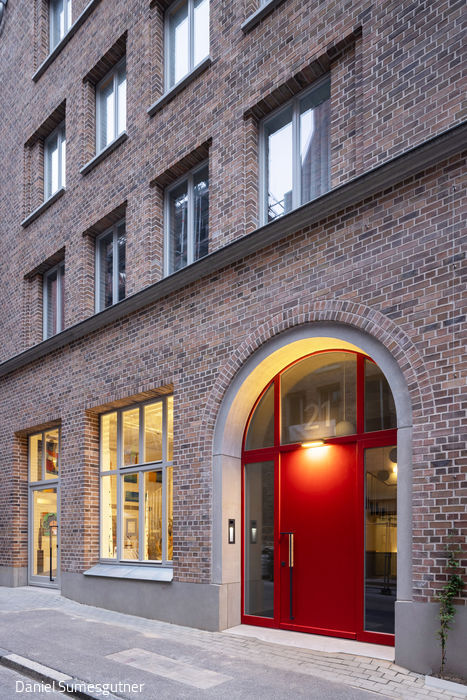
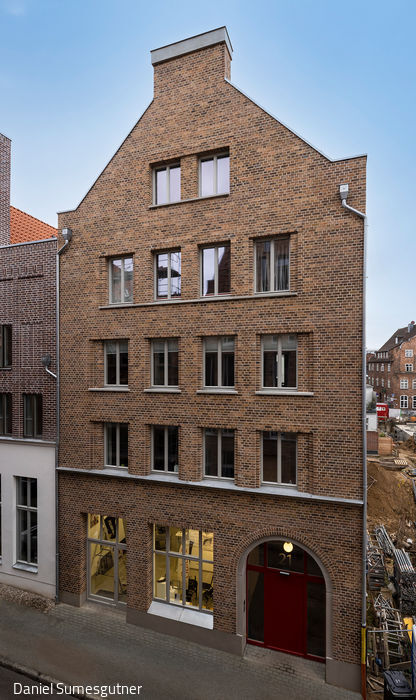
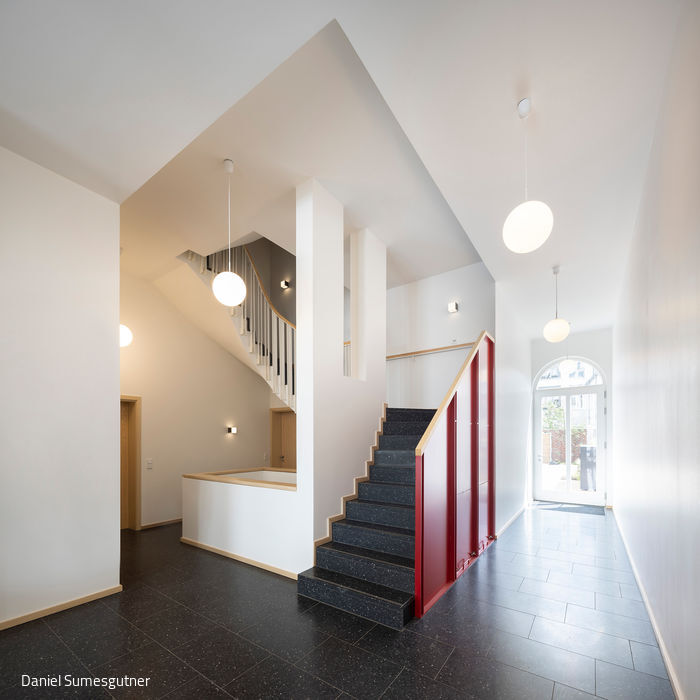
Hamburg architect Helge Tischler won first prize in an international design competition for façade innovation. At Fischstraße 21, he created this townhouse for a five-party building cooperative—a project that demanded reconciling distinct visions while delivering five bespoke residences (ranging from 65 to 145 m²) and a compact commercial space for an art gallery.
The street façade features subtly iridescent brown-reddish facing bricks from Petersen Tegl, capturing the tactile warmth of traditional Lübeck townhouses. A prominent cornice marks the transition from street level to the main façade, which gains distinctive depth through carefully graduated vertical window reveals. The upper gable section, with its assertive profile, confidently references the district's architectural heritage. The ground floor rises to 4 metres—harking back to the characteristic Lübeck hall house typology—and incorporates a mezzanine level as the historical precedent suggests. This generous public zone now serves as a vibrant social hub, activating the streetscape. The third and fourth storeys house a light-filled maisonette. The courtyard façade, rendered in pale plaster, reinterprets key elements of its street-facing counterpart. Loggias and roof terraces respond to contemporary living standards. The gardens, like their historic counterparts, are divided by traditional red-brick "glint walls."
Photography Credits:
Daniel Sumesgutner
www.sumesgutner.de
(From CUBE Hamburg 03|22)


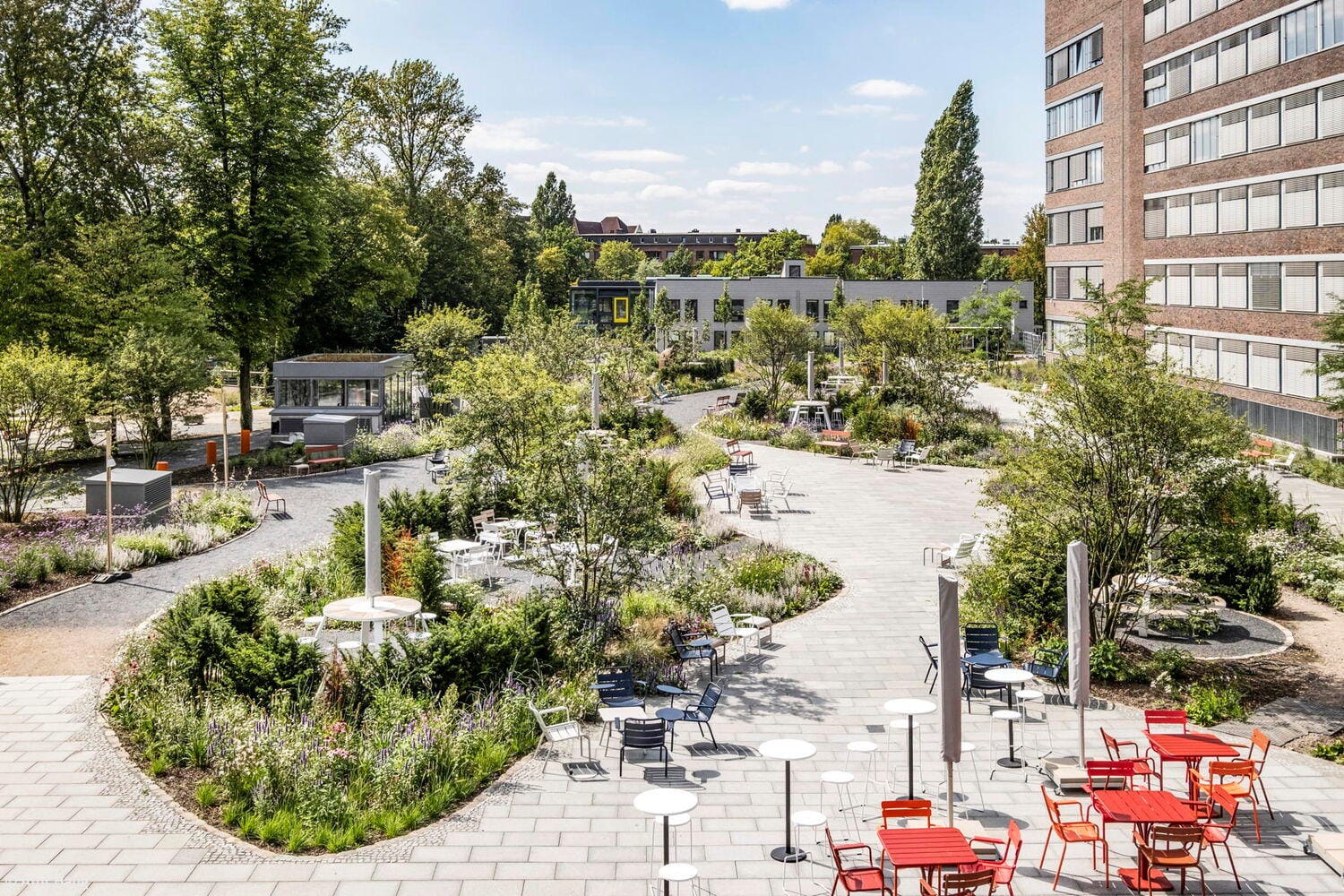
Working in the Garden
Generously planted green spaces embody New Work philosophy at a reimagined company campus.

The Office as a Space of Possibilities
At Beiersdorf Campus, every activity finds its perfect setting.
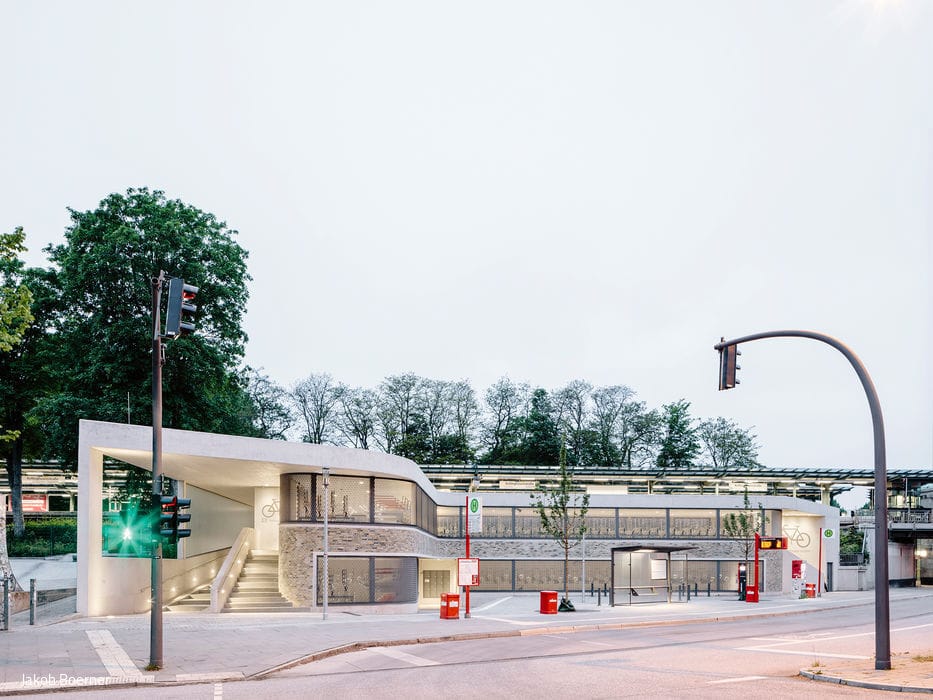
600 new parking spaces
Hamburg's first bicycle parking facility marks a new mobility milestone at Kellinghusenstraße

Flowing Spaces
After comprehensive renovation and reimagining, this 19th-century villa reclaims its former grandeur