


From Stable to Studio
A masterful restoration of the landmark Crescent House on Elbchaussee
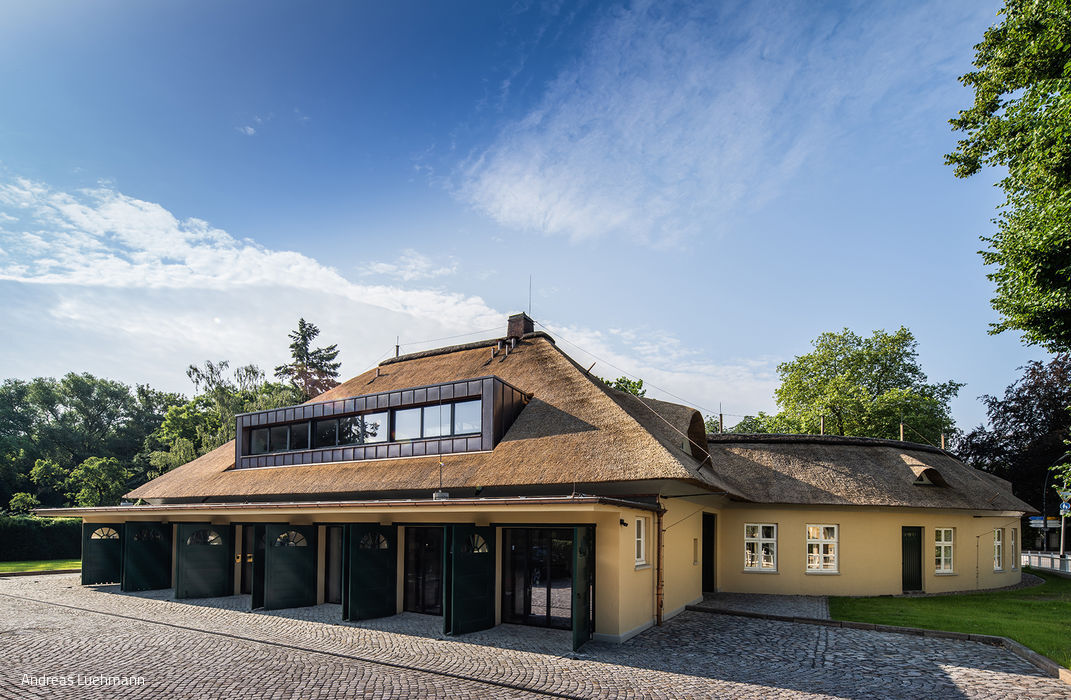
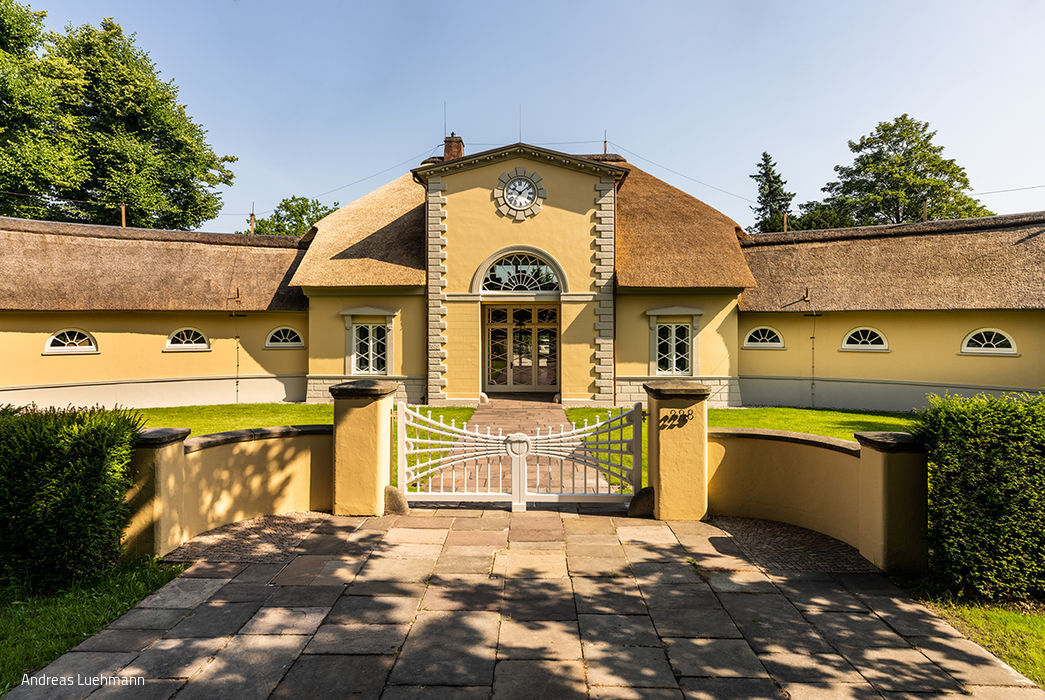
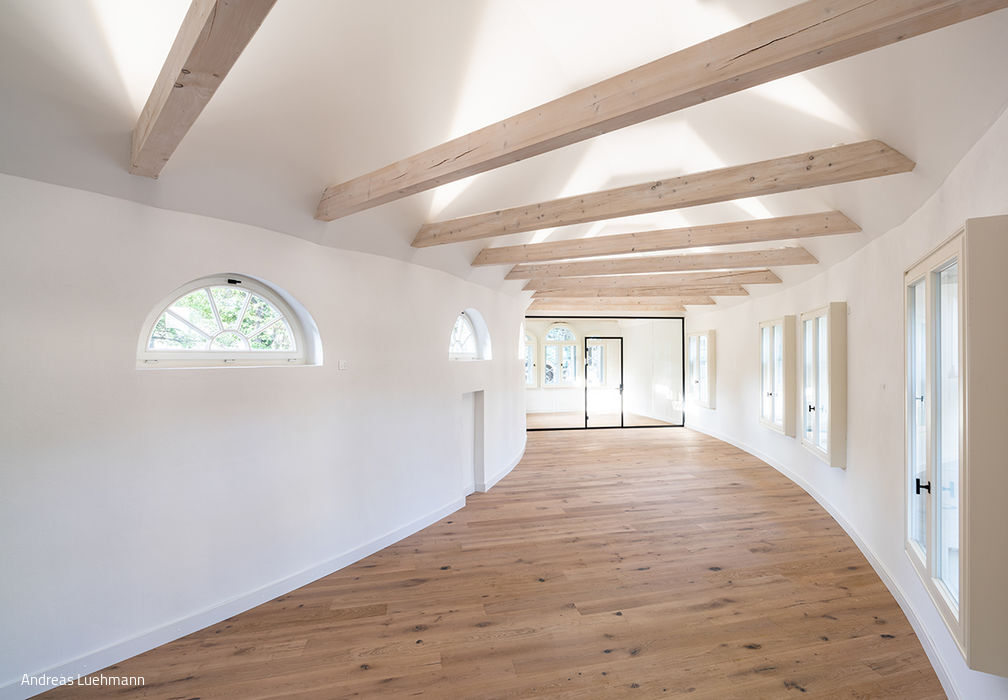
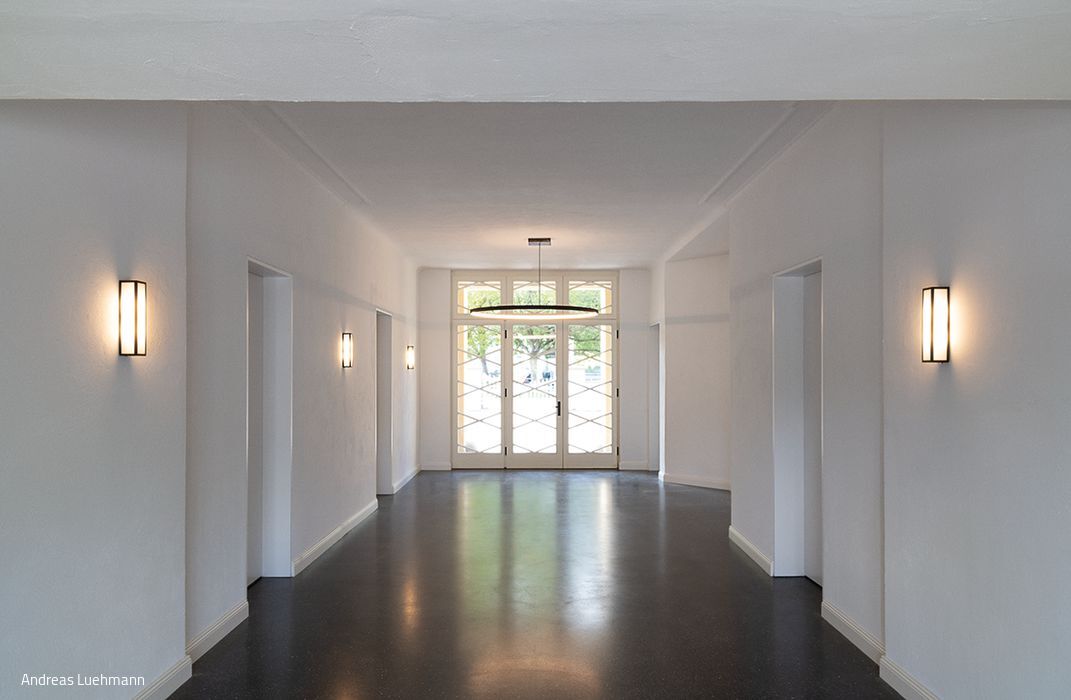
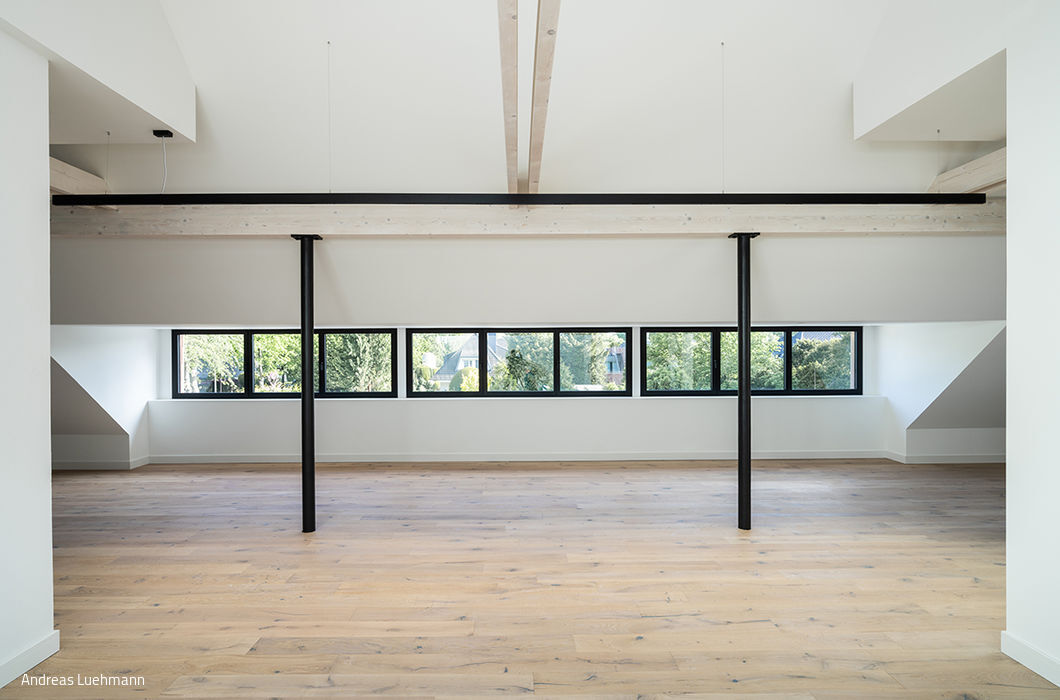
The Crescent House on Elbchaussee exemplifies the country house heritage of Hamburg's Elbe suburbs. Originally constructed as a stable building on merchant John Thornton's estate in 1796 by Christian Frederik Hansen, it was destroyed by fire in 1820 and subsequently rebuilt by Hansen's nephew, Johann Matthias Hansen, in the distinctive form that survives today. Over the following centuries, the structure underwent multiple renovations. Beginning in 1913, the side wings were converted into residential apartments, with integrated garages added to the rear in 1935. Additional modifications followed between 1958 and 1970. Until late 2015, the building functioned as administrative offices, with small apartments occupying the wings. In 2018, the Hermann Reemtsma Foundation acquired the property and commissioned a comprehensive restoration.
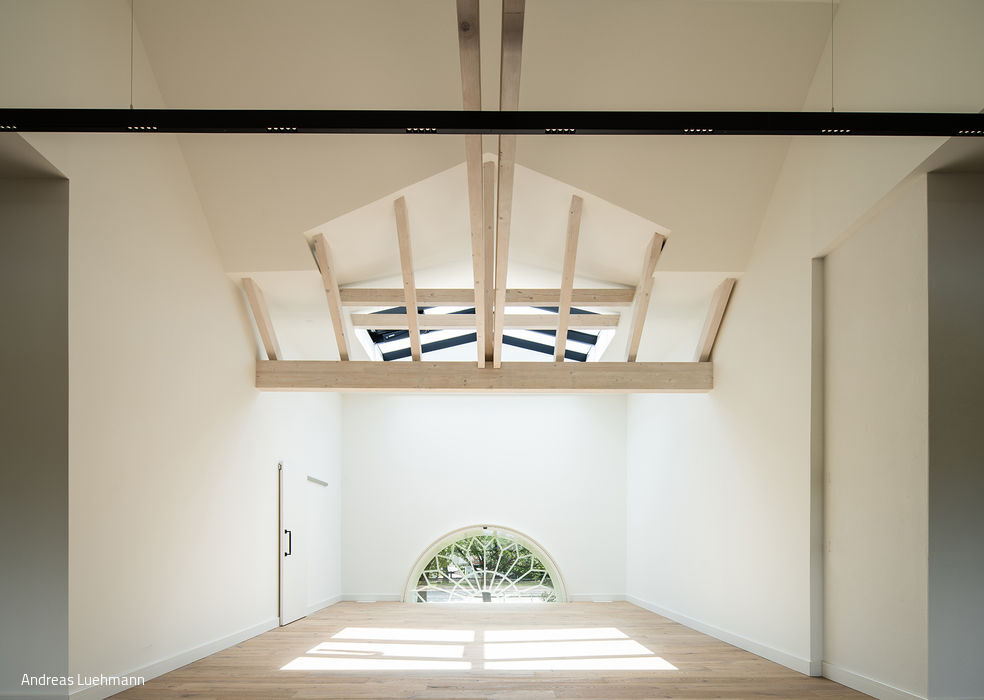
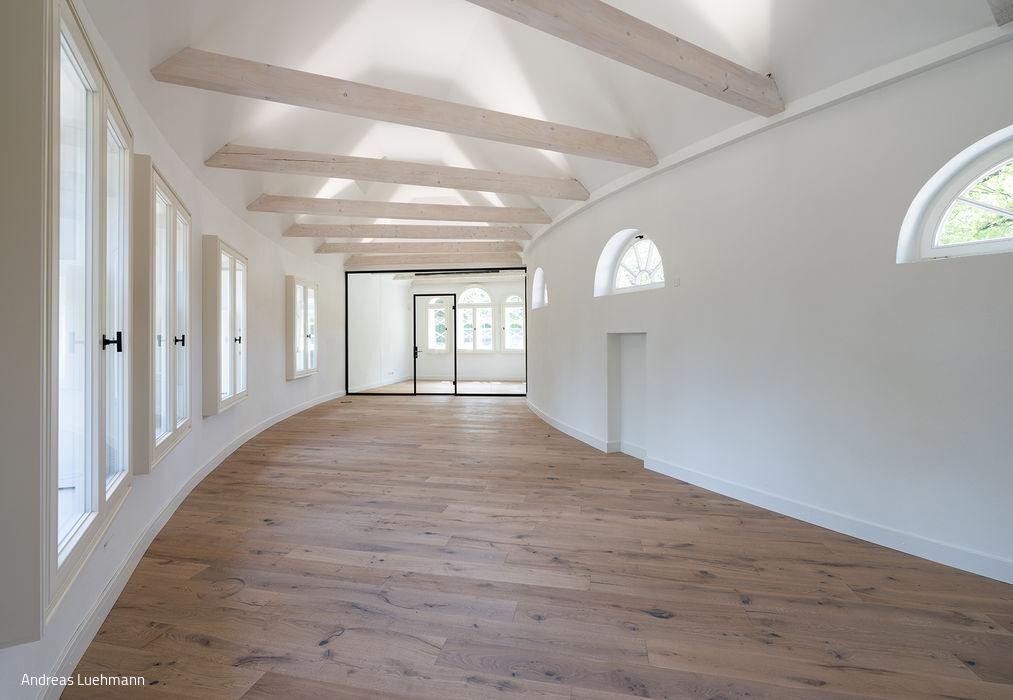
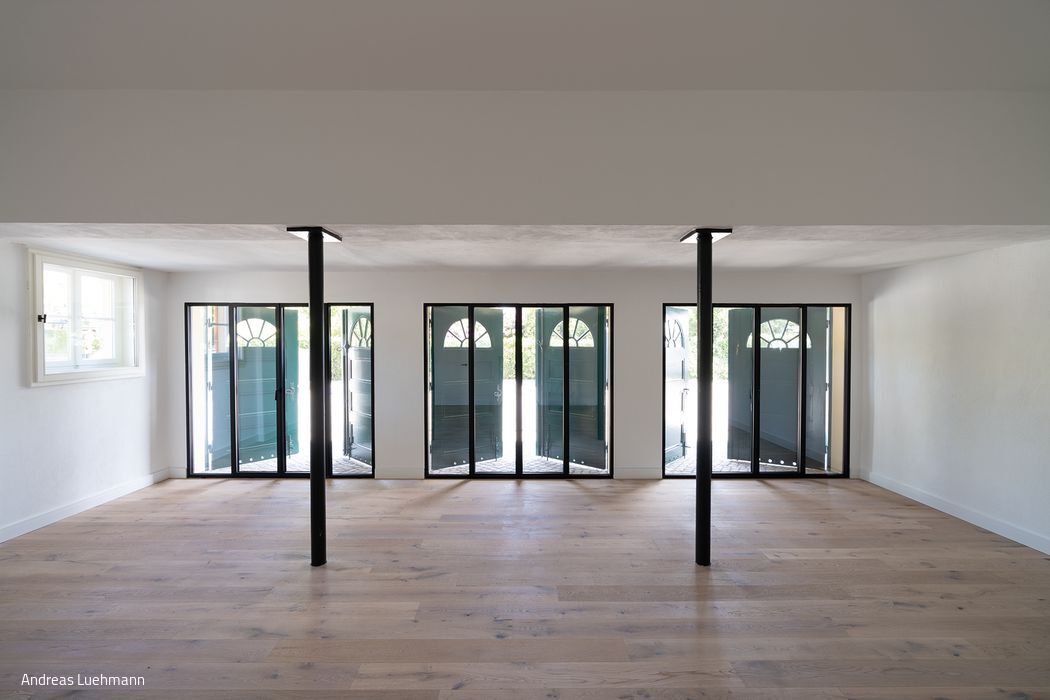
Klaus and Schulz Architects' design transforms the space into modern offices while respecting its heritage—the exterior remains virtually unchanged. A new central entrance hall flows into rear office areas within the two-storey central section, developed in close dialogue with the heritage preservation authority and crowned with a copper-clad dormer. The former garage door openings now feature expansive glazed steel frames, preserving the original wooden doors. A large skylight cuts through the shallow gable roof, flooding both wings with natural light. The contaminated roof structure and thatched covering were rebuilt with enhanced energy performance. All external walls received highly effective thermal insulation plaster. The existing windows, doors, and gates were carefully restored and fitted with interior glazing to create box windows—significantly improving acoustic and thermal performance. Contemporary building systems meet today's standards seamlessly. The entire space is now leased to a single tenant.
Detailed restoration analysis shaped every decision. The color palette draws directly from 1913: ochre façade, light grey eaves and quoins, dark green doors and gates, and soft white for the historic window frames. In June, the Patriotic Society recognized the project with its prize for exemplary monument preservation and historic building conservation in Hamburg.
Photography Credits:
Andreas Lühmann
www.luehmannshot.me
(From CUBE Hamburg 03|22)


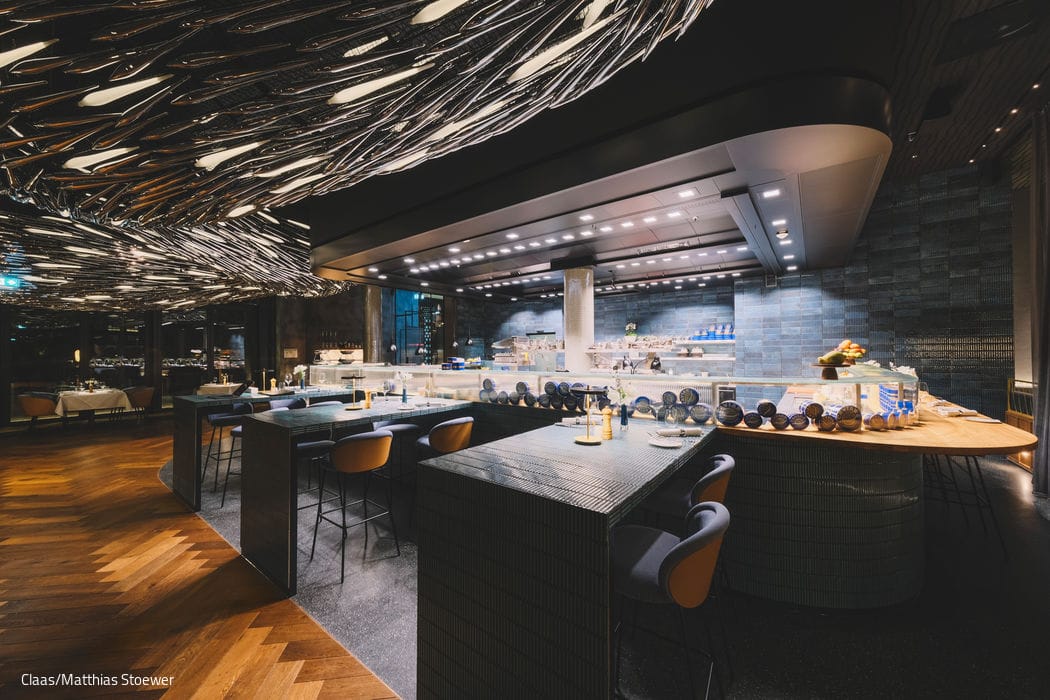
Dining with a View
The Perfect Setting for Culinary Discovery in HafenCity's Newest Restaurant
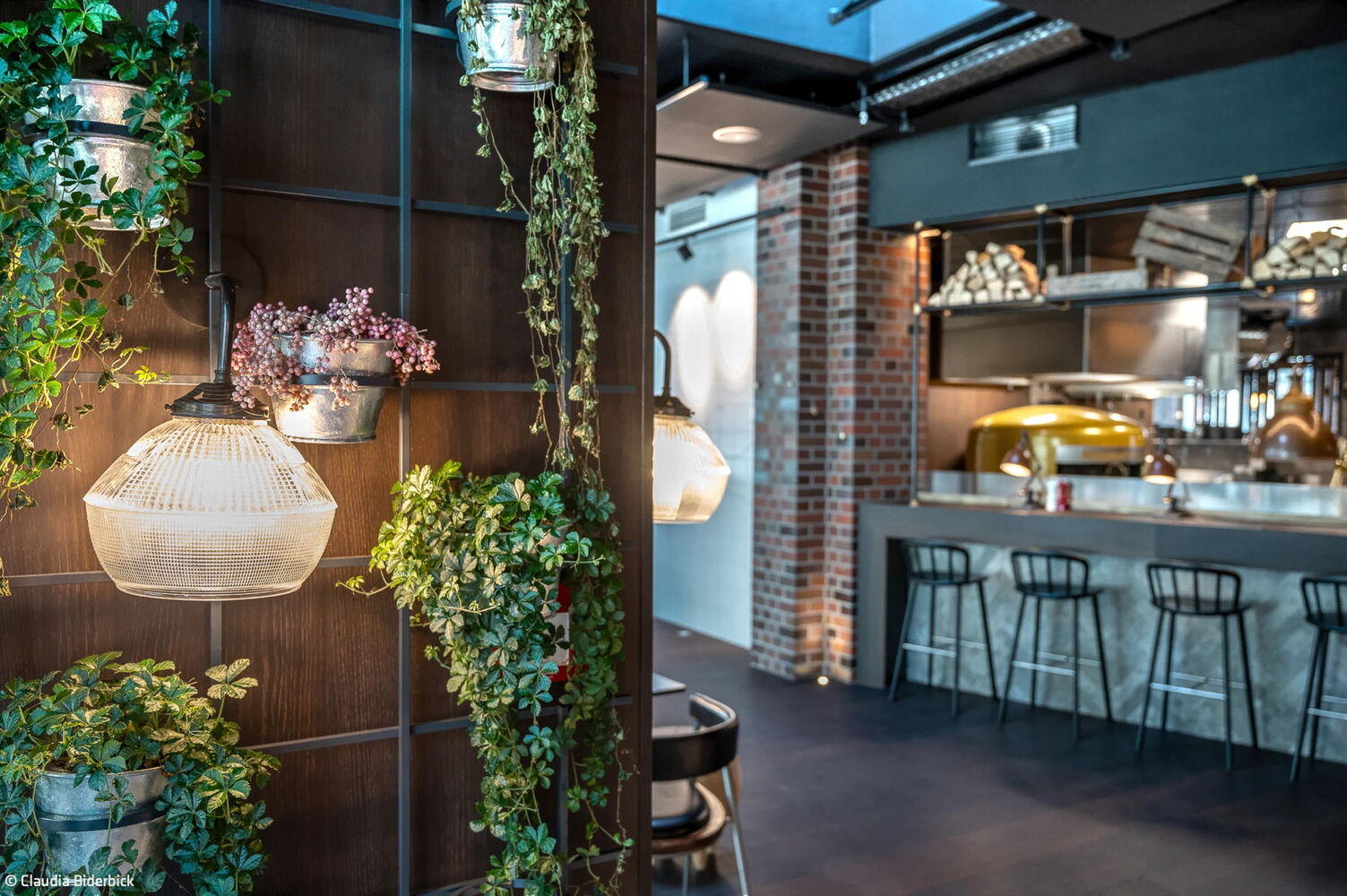
Seamlessly Connected
Fresh Design for a Contemporary Take on the Classic Steakhouse
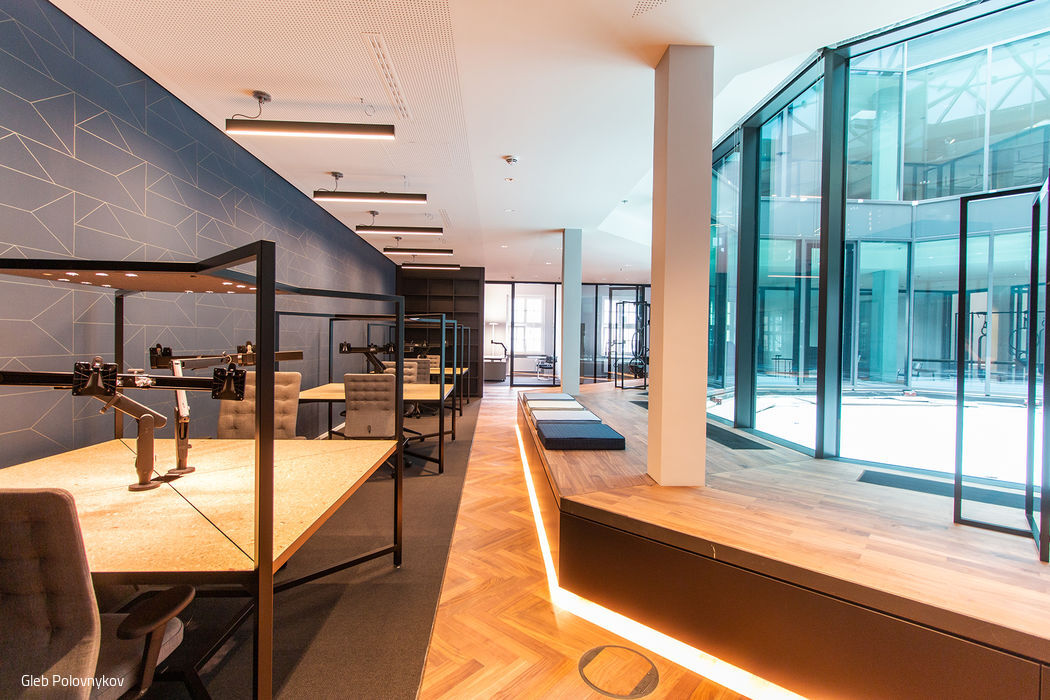
Reinventing Work Environments
Modern Office Design Meets Historic Architecture
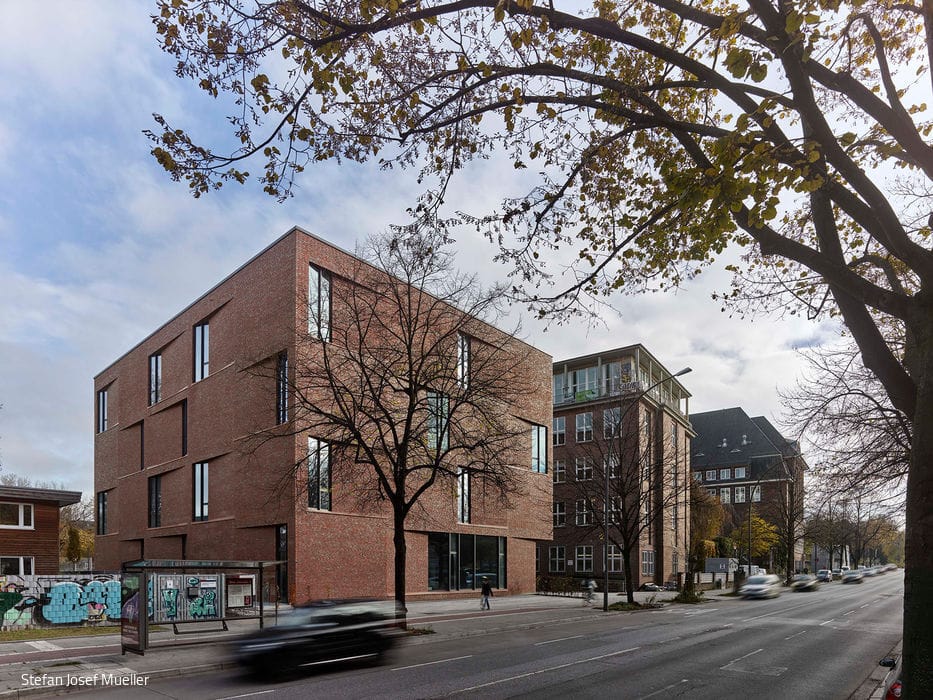
Space for Art
The HFBK at last has the studio spaces its master's students desperately need.